Toys Born from Happy Accidents
Some of the most beloved toys in history weren’t supposed to be toys at all. Engineers tried to solve wartime problems, chemists experimented with materials for completely different purposes, and inventors worked on serious projects that failed in unexpected ways.
When things went wrong, though, someone smart enough recognized that the mistake might be worth something after all. These happy accidents turned into playthings that defined childhoods for generations, proving that sometimes the best ideas come from plans gone sideways.
The toys sitting in stores today owe their existence to luck as much as skill. Here’s how mistakes became memories.
The Slinky walked away from its inventor

Naval engineer Richard James worked on springs in 1943, trying to develop a way to keep sensitive equipment stable on ships during rough seas. He knocked one of his test springs off a shelf by accident, and instead of falling straight down, it started walking across the floor in a series of arcs.
James watched it move and immediately knew he had something special, though it had nothing to do with naval equipment. He spent two years testing different metals and tensions before finding the perfect design, and his wife Betty came up with the name Slinky, which perfectly described how the toy moved down stairs.
Play-Doh started as wallpaper cleaner

Noah McVicker worked for his family’s soap company in the 1930s when he created a putty designed to clean coal residue off wallpaper. The product worked great for its intended purpose, removing soot without damaging the paper underneath.
His nephew Joseph McVicker later ran the company, and when a teacher mentioned that her students needed softer modeling clay, Joseph realized the wallpaper cleaner would be perfect. He removed the cleaning agents, added bright colors and a pleasant smell, renamed it Play-Doh, and started selling it to schools in 1956.
Silly Putty bounced into existence during wartime

Engineer James Wright mixed boric acid with silicone oil in 1943 while trying to create synthetic rubber for the war effort. His experiment produced a strange substance that bounced higher than regular rubber, stretched without breaking, and could copy newsprint when pressed against it.
The government didn’t want it for anything practical, so Wright sent samples to engineers around the world hoping someone would find a use. Marketing consultant Peter Hodgson eventually saw its potential as a toy, packaged it in plastic Easter eggs, and sold it at toy stores where it became an instant hit.
Super Soaker started as a heat pump experiment

Lonnie Johnson worked as a NASA engineer on the Galileo mission to Jupiter in 1982 when he experimented with a heat pump prototype in his bathroom. The device accidentally shot a powerful stream of water across the room when a connection failed.
Johnson immediately saw the potential for a high-powered water gun and spent years developing it while working his day job. He licensed the design to Larami in 1989, and when it launched in 1990 as the Super Soaker, it became one of the best-selling toys in America within two years, generating over $200 million in sales.
Popsicles froze by mistake
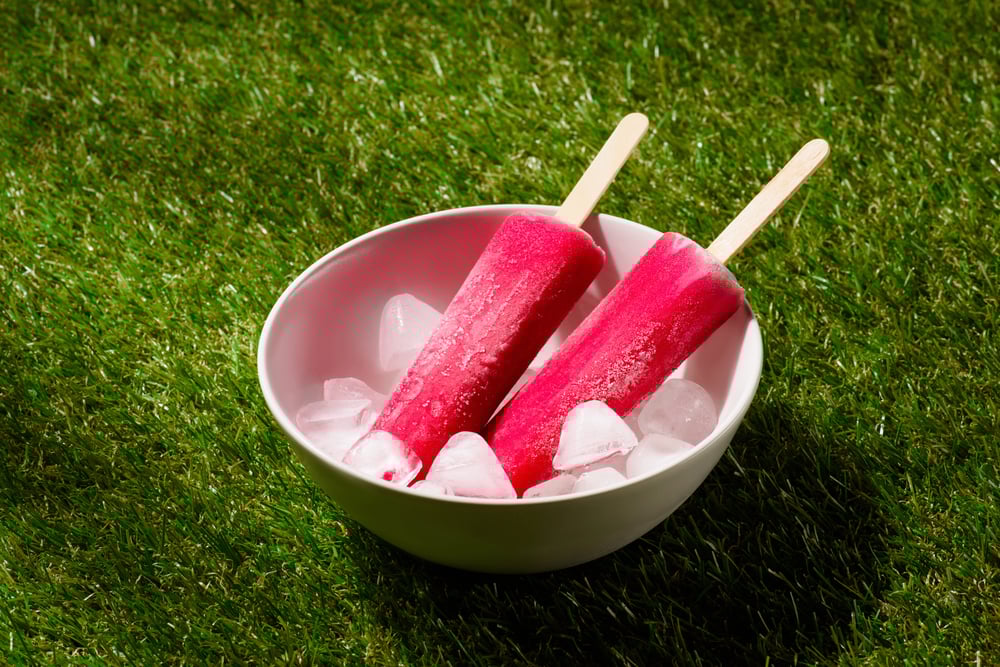
Eleven-year-old Frank Epperson mixed soda powder with water on a cold night in 1905 and left the cup outside with the stirring stick still in it. When he found it the next morning, the mixture had frozen solid around the stick.
He didn’t do anything with his frozen treat for nearly 20 years, until 1922 when he served them at a fireman’s event where people loved them. He called them Epsicles at first, combining his name with icicle, but later changed the name to Popsicle after his kids started calling them that.
Bubble Wrap wasn’t meant for popping

Engineers tried to create textured wallpaper in 1957 by sealing two shower curtains together, which trapped air bubbles between the layers. The wallpaper idea failed completely because nobody wanted bubbly walls in their homes.
The inventors then tried marketing it as greenhouse insulation, which also flopped. IBM finally found a use for it in 1960 as protective packaging material for their new computers during shipping.
The satisfying pop of those bubbles turned packing material into a stress-relief toy that people still can’t resist squeezing today.
Magic 8 Orb answered questions by chance

Albert Carter, son of a Cincinnati clairvoyant, invented a fortune-telling device in the 1940s. His original design looked nothing like the toy version people know today.
When Alabe Crafts bought the rights, they redesigned it into the pool-like sphere format as a promotional item for a movie. The toy flopped initially until they added the classic 20 responses floating in blue liquid that would appear when you turned it over.
Nobody planned for it to become a decision-making toy, but kids and adults started using it that way anyhow.
Colorforms began at a design school party

Harry and Patricia Kislevitz threw a party in 1951 where they decorated their apartment with flexible vinyl cutouts. Guests loved playing with the shapes, moving them around to create different designs on the walls.
The couple realized they had stumbled onto something fun and started packaging vinyl shapes with black laminated paperboard backgrounds. Kids could create scenes without scissors, glue, or paint, and the pieces stuck and restuck without losing their grip.
Sets featuring cartoon characters and movie themes made Colorforms a household name.
Lincoln Logs came from earthquake-proof buildings
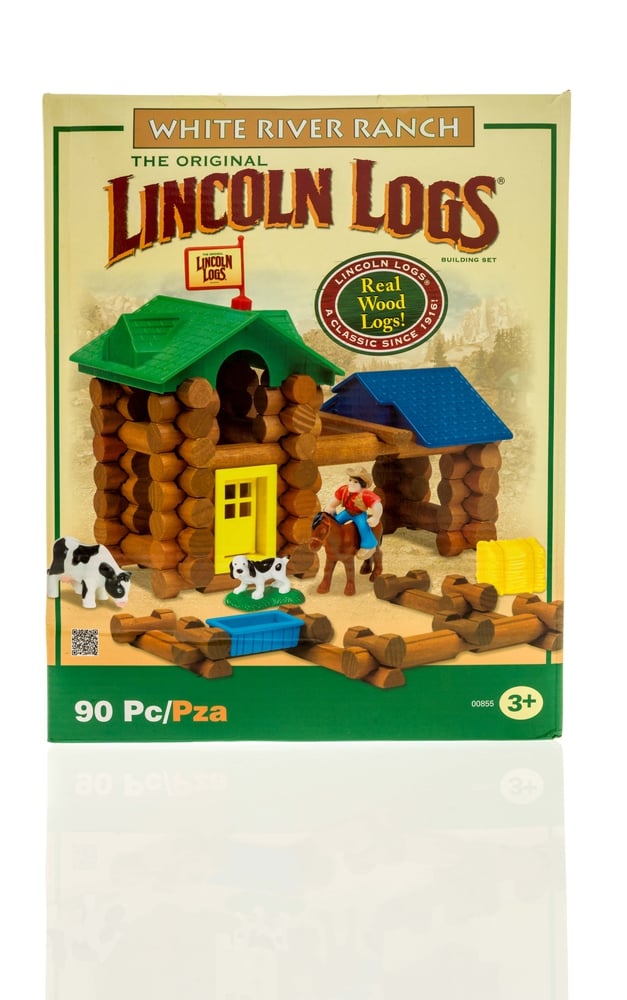
Architect John Lloyd Wright assisted his famous father Frank Lloyd Wright on Tokyo’s Imperial Hotel, which featured an earthquake-resistant design with interlocking beams. The younger Wright created miniature toy logs that fit together the same way between 1916 and 1917.
He marketed them as representing the spirit of America, with instructions to build Abraham Lincoln’s childhood cabin. The notched design that prevented buildings from collapsing during earthquakes became the same feature that let kids stack wooden logs without toppling their creations.
Hula Hoops spun from Australian bamboo

Wham-O founders heard about Australian children playing with bamboo hoops in gym class and decided to create a plastic version in 1958. They didn’t invent the concept of spinning hoops around your waist, which had existed in various cultures for centuries, but they accidentally created a craze that swept America.
The company sold 100 million Hula Hoops in the first year alone, though sales dropped dramatically once the market became saturated. Later versions with round bearings inside that made whooshing sounds helped revive interest.
Etch A Sketch drew from aluminum powder

French electrician André Cassagnes worked with aluminum powder in the 1950s when he noticed that pencil marks showed through it. He developed a drawing toy that used internal wires to scrape aluminum powder off the inside of a screen, creating visible lines.
When he demonstrated his invention at a toy fair in Germany, it caught no attention at all. Ohio Art Company eventually licensed it and renamed it Etch A Sketch, launching it right before Christmas 1960.
Kids loved the challenge of drawing with two knobs that controlled horizontal and vertical lines.
Matchbox cars fit in a matchbox by accident

Lesney Products made die-cast toys in England after World War II, but struggled to compete with larger toy companies. Jack Odell’s daughter wanted to bring a toy to school, but rules said it had to fit in a matchbox.
Odell created a tiny brass road roller small enough to fit, and when other parents saw it, they wanted them for their kids too. Lesney started producing small die-cast vehicles and packaging them in boxes designed to look like matchboxes.
The tiny size that started as a school rule became the brand’s defining feature.
Silly String aimed to heal broken bones

Leonard Fish and Robert Cox worked on developing a spray-on cast for broken bones in 1972, hoping to replace heavy plaster casts with something lighter. Their aerosol foam formula never worked for medical purposes, but they realized it was incredibly fun to spray around.
They pitched it to Wham-O executives by walking into the office and spraying a can directly at an executive, who immediately had them escorted out. Despite that disastrous meeting, Wham-O eventually bought the rights and Silly String became a party staple and the bane of janitors everywhere.
Koosh orbs came from a dad helping his kids

Scott Stillinger wanted to help his young children learn to catch without the pain of missed grabs. He experimented with different materials and designs in his garage, eventually creating a soft sphere made of thousands of rubber filaments.
The final design looked like a crazy pom-pom and felt nothing like traditional orbs, but it was perfect for small hands. He named it Koosh after the sound it made when caught, and when it launched in 1988, it sold millions.
Teachers started using them as stress relievers and fidget toys long before those terms became trendy.
Water Wiggle sprayed wildly out of control

Flying sideways first, Water Wiggle spun through air without stopping. Every burst jumped in a new direction once it broke free.
A twisty surprise shaped its charm when Wham-O introduced the Water Wiggle during the sixties. Shaped like a bell, the nozzle hooked to a garden hose sent water spinning every which way.
Movement had no pattern at all – yet somehow that randomness sparked delight. Instead of steady streams, bursts leapt sideways, forward, even backward without warning.
Children darted after it across wet grass, laughing each time it veered unexpectedly. Households soon noticed risks near glass panes or parked vehicles.
Without planning it, chaos became the whole point. Safety issues later pulled it off shelves altogether.
Still, those who ran behind it on summer afternoons never forgot how wild it felt.
Silly Bandz stretched from a business card idea

Out of nowhere came Robert Croak, tired of plain looped rubber bands. Shapes sparked his curiosity – why not make them look like creatures, things, icons?
Silicone took form in the early two thousands, quietly at first. Suddenly children saw value beyond snapping – they swapped, gathered, showed off on wrists.
Word spread fast; excitement built without warning. Classrooms turned into swap zones, teachers losing ground to playground deals.
Authorities stepped in, rules drawn to stop mid-lesson trades. A brief storm it was, loud then gone.
Still, for a stretch, those tiny molded rings popped up wherever kids roamed. Proof sits quiet: even the simplest item can gather meaning.
When mistakes make the best memories

A surprise twist turned dull moments into playthings nobody saw coming. What began as sticky gunk meant for walls found new life in kids’ hands instead.
A medical mist meant for injuries? It burst into colorful confetti when no one was looking.
Even a left-behind coil learned how to hop down stairs like magic. Minds focused on fixing real issues stumbled upon fun without meaning to.
Ideas that flopped where they were supposed to shine somehow lit up elsewhere. Spotting such lucky turns needs imagination just like careful blueprints do.
When work veers off track now and then, maybe the detour holds the brighter path.
More from Go2Tutors!

- The Romanov Crown Jewels and Their Tragic Fate
- 13 Historical Mysteries That Science Still Can’t Solve
- Famous Hoaxes That Fooled the World for Years
- 15 Child Stars with Tragic Adult Lives
- 16 Famous Jewelry Pieces in History
Like Go2Tutors’s content? Follow us on MSN.