Unfinished Mega-Projects Around the World
There’s something haunting about an unfinished mega-project. Not a small construction site that got abandoned—we’re talking about billion-dollar visions that got halfway to completion before someone ran out of money, political will, or sanity.
These skeletal monuments to human ambition sit around the world like architectural ghosts, reminding us that dreaming big and actually finishing are two very different things. Let’s take a tour of some of the most impressive projects that never quite made it to the finish line.
Sagrada Familia, Barcelona
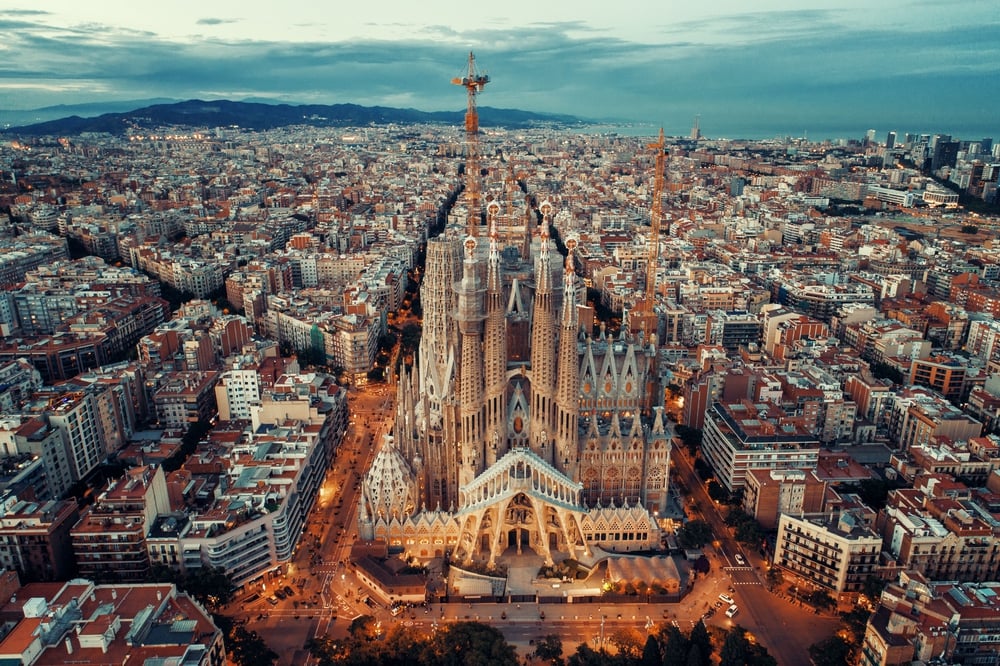
Okay, this one’s technically still under construction rather than abandoned, but it’s been going since 1882. That’s 143 years and counting (which is absolutely insane when you think about it).
Antoni Gaudí started this Catholic basilica and knew he’d never live to see it finished—he died in 1926 after being hit by a tram, with the church maybe 15-25% complete. The project has survived the Spanish Civil War, funding crises, architect disputes, and COVID-19.
Current estimates say it might be finished by 2026, which would make it a mere 144-year construction project. The whole thing is funded by tourism and private donations, so basically the church is paying for itself by being famously unfinished, which is a pretty good business model if you think about it.
It’s actually beautiful though, genuinely worth visiting even in its incomplete state.
Ryugyong Hotel, North Korea
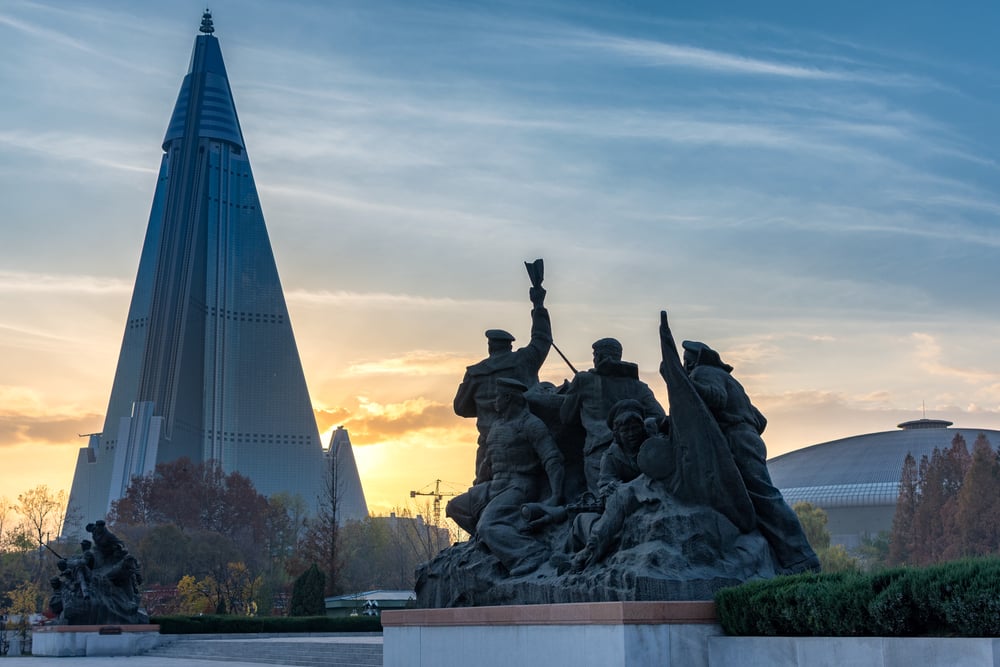
This pyramid-shaped skyscraper in Pyongyang is 105 stories tall and has been under construction since 1987. It was supposed to be the world’s tallest hotel and a symbol of North Korean superiority.
Instead, it became a symbol of their economic problems (and poor construction planning, and international isolation, and probably ten other things). Construction stopped in 1992 when North Korea ran out of money and also realized the building had some serious structural issues.
It sat there as an empty concrete shell for 16 years—the tallest unoccupied building in the world. Work resumed in 2008, they added glass facades by 2011, and it looks finished from the outside now, but the interior is still incomplete and there’s no opening date.
Most experts think it’s structurally unsound and will never actually open, but it makes for a striking piece of the Pyongyang skyline, which might be all it was ever really for.
Wonderland Amusement Park, China

Outside Beijing, there’s an abandoned amusement park called Wonderland that was supposed to be the largest in Asia. Construction began in 1998, but developers ran into financial problems and disputes with the local government over land use.
Work stopped in 2008. What remains is genuinely eerie.
A massive fairy-tale castle surrounded by empty fields. Rusting roller coaster frames. Concrete pathways leading nowhere.
For years, local farmers grew corn around the abandoned structures, which created this surreal juxtaposition of agricultural life and failed capitalist dreams. The site was finally demolished in 2013, but photos of it during its abandoned phase became iconic images of China’s real estate speculation problems.
The Highway to Nowhere, Papua New Guinea
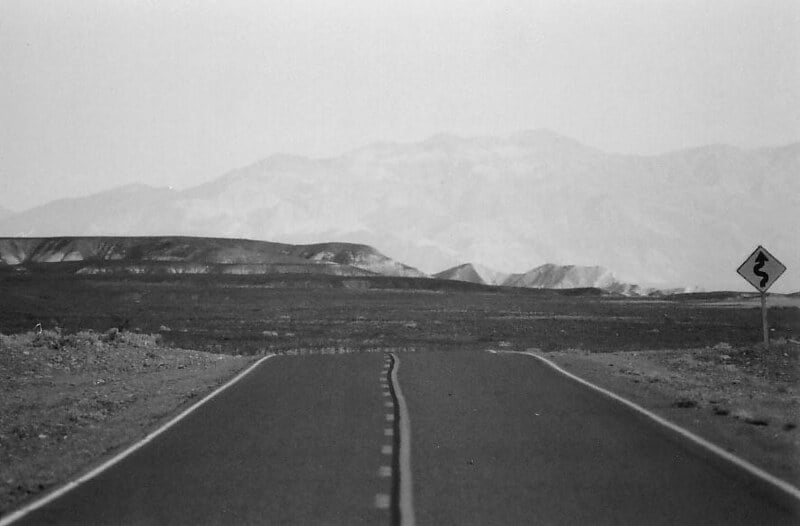
There’s a stretch of the Highlands Highway in Papua New Guinea that just… stops. The project to connect coastal cities to the highland regions started with great ambition and international funding, but sections of it remain incomplete decades later due to funding issues, difficult terrain, tribal land disputes, and political corruption.
Some parts are paved and functional. Other sections are gravel roads that turn into mud rivers during rain.
And some portions just end abruptly at cliff faces or river crossings that were never built. It’s functional enough to be used but incomplete enough to be perpetually frustrating, which might be worse than being entirely abandoned.
Bataan Nuclear Power Plant, Philippines
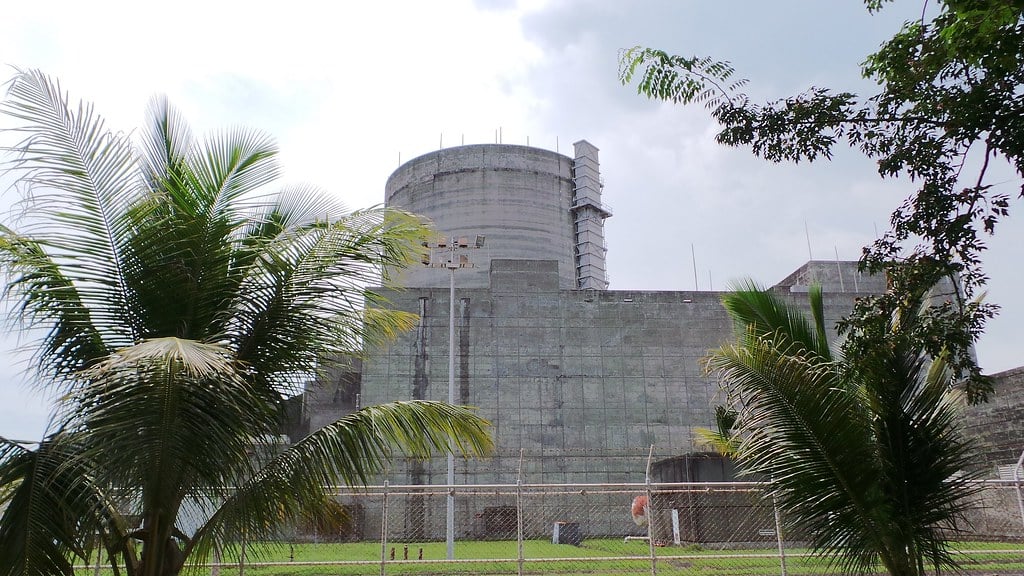
This is a completed nuclear power plant that never generated a single watt of electricity. Built in the 1970s and 1980s under Ferdinand Marcos, it was finished in 1984 but never opened. Partly this was because of safety concerns—it was built near a volcano and an earthquake fault line, which seems like spectacularly bad planning.
Partly it was because the Chernobyl disaster in 1986 made everyone nervous about nuclear power. But mostly it was because Marcos was overthrown and the new government didn’t want to deal with it (also there were corruption allegations, the cost had ballooned from $500 million to $2.3 billion, the usual).
So now the Philippines has a complete, mothballed nuclear plant sitting there as a tourist attraction and a cautionary tale about corruption and poor site selection. The country still talks about maybe activating it someday, but probably not.
The Russian Woodpecker

Near Chernobyl, there’s a massive Soviet over-the-horizon radar system called Duga that was supposed to detect incoming missiles during the Cold War. It’s an array of metal towers and antennae that looks like something from a science fiction movie (or like a giant woodpecker, hence the nickname—the signal it transmitted sounded like a tapping noise that interrupted radio broadcasts worldwide).
The facility was abandoned when the Soviet Union collapsed, and now it sits in the Chernobyl Exclusion Zone, slowly rusting. You can visit it as part of Chernobal tours now, which is wild because you’re looking at a Cold War relic in a nuclear disaster zone.
It never really worked properly anyway—the Americans just learned to ignore its signal, and the whole project was obsolete before it was finished.
Berlin Brandenburg Airport

This deserves mention because while it eventually opened in 2020, it was supposed to open in 2011. That’s nine years of delays, technical failures, and escalating costs that turned it into an international embarrassment for German engineering prowess (which is really saying something).
Everything went wrong. The fire safety system didn’t work. The smoke extraction system was installed backward. Cables weren’t labeled properly. Escalators were the wrong length. Planning was chaotic.
At one point there were 66,000 documented construction defects. The cost exploded from €2 billion to over €7 billion. It became a running joke in Germany—”when will BER open?” Eventually it did open, during a pandemic, which is cosmically funny timing.
Crazy Horse Memorial, South Dakota

Not far from Mount Rushmore, there’s been an effort since 1948 to carve an even larger mountain monument depicting Crazy Horse, the Lakota warrior. It was started by sculptor Korczak Ziolkowski and is still being worked on by his family.
The face was completed in 1998 (after 50 years), but the entire figure—which will show Crazy Horse on horseback—is nowhere near done. Estimates suggest it might take another 50-100 years to complete, if it’s ever completed at all.
The family has refused federal funding to maintain independence, which is admirable but also means progress is glacially slow. It’s unclear if this is an unfinished mega-project or just an extremely long-term project, but either way, most people alive today won’t see it completed.
Yacyretá Dam, Argentina-Paraguay Border

This hydroelectric dam was started in 1983 and took 21 years to complete—sort of. It was declared “finished” in 2011, but it’s never operated at full capacity due to environmental and resettlement issues.
The project displaced thousands of people, destroyed wetlands, and the rising water levels created problems that were never fully resolved. Former Argentine President Carlos Menem called it a “monument to corruption,” which is harsh but probably accurate.
The costs spiraled, timelines extended, and the actual power generation has never met original projections. It works, technically, but not as intended, which makes it both finished and unfinished simultaneously.
Forest City, Malaysia

This is a newer entry to the list—a Chinese-developed mega-project to build an entire city for 700,000 people on artificial islands off the coast of Malaysia. Construction started in 2014, and while buildings have been completed, almost nobody lives there.
The city is mostly empty. Finished apartment towers with no residents. Streets with no traffic. Amenities with no customers. It was primarily marketed to Chinese buyers, but then Chinese capital controls made it difficult for them to purchase foreign property, and Malaysian sentiment toward Chinese developments soured.
So now it exists as a ghost city, completed but unoccupied, which is philosophically interesting—is a finished building that nobody uses really finished, or is occupancy part of completion?
The Trans-Siberian Highway Gaps

The Trans-Siberian Highway is supposed to connect St. Petersburg to Vladivostok—a distance of about 11,000 kilometers across Russia. Most of it exists, but there are still significant gaps where the “highway” is just a dirt road, or doesn’t exist at all and you have to detour hundreds of kilometers, or becomes impassable during certain seasons.
The Amur Highway section, which runs through the Russian Far East, is particularly problematic. Parts of it flood annually.
Other sections are just gravel. Russia keeps announcing plans to complete it properly, but the economic reality of paving thousands of kilometers of road through Siberian wilderness for relatively few users means it probably won’t happen anytime soon.
Superphénix Fast Breeder Reactor, France

This was supposed to be the future of nuclear power—a fast breeder reactor that generated more fuel than it consumed (through plutonium breeding). France built it in the 1970s and 1980s at enormous cost. It went online in 1986 but was plagued with technical problems and shutdowns.
It operated for maybe a total of one year over its entire lifetime before being permanently shut down in 1998. The whole facility is now being decommissioned, a process that will take until 2030 and cost billions.
It’s technically a completed project that failed, but the incomplete decommissioning means it’s still not really finished—it’s just abandoned in a different way.
New World Island, UAE
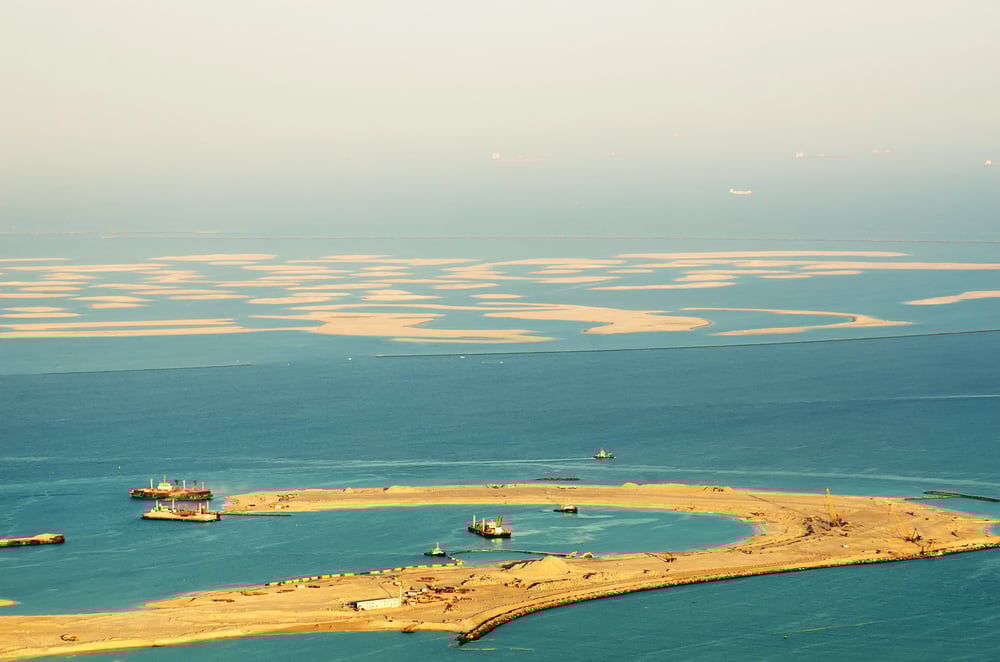
Before the 2008 financial crisis, Dubai was building artificial islands like they were going out of style (which, it turns out, they were). The World Islands project—300 artificial islands arranged to look like a world map from above—was one of the most ambitious.
Some islands were sold and developed. But many weren’t, and after 2008 the whole project stalled. Islands are eroding back into the sea.
Most are empty. It’s not abandoned exactly—some parts are finished and occupied—but the grand vision of a complete world map of private islands is definitely not happening.
You can see them from space on Google Maps, slowly dissolving back into the Persian Gulf, which is somehow poetic.
The Cost of Dreaming Too Big

These projects represent trillions of dollars collectively, countless work hours, political careers, and human displacement. Some will eventually be finished.
Others will be demolished. Most will just sit there, slowly decaying, monuments to the gap between vision and execution.
But maybe that’s okay. Maybe unfinished mega-projects serve a purpose as warnings, as reminders that ambition needs to be matched with realistic planning, sustainable funding, and political stability.
Or maybe they’re just expensive mistakes that we keep making because humans are fundamentally optimistic about our ability to bend reality to match our blueprints, evidence to the contrary notwithstanding. Either way, they’re fascinating to look at, these would-be wonders that never quite were.
More from Go2Tutors!

- The Romanov Crown Jewels and Their Tragic Fate
- 13 Historical Mysteries That Science Still Can’t Solve
- Famous Hoaxes That Fooled the World for Years
- 15 Child Stars with Tragic Adult Lives
- 16 Famous Jewelry Pieces in History
Like Go2Tutors’s content? Follow us on MSN.



