Unusual Ways Historical Figures Earned Fortunes
Most people assume great fortunes come from respectable ventures — shipping empires, land ownership, clever inventions.
History tells a different story.
Some of the wealthiest figures in human history built their riches through methods that ranged from bizarre to borderline unethical, often capitalizing on chaos, desperation, or resources no one else thought valuable.
These weren’t typical merchant princes or industrial titans.
They were opportunists who spotted gold where others saw garbage, literally in some cases.
The paths to wealth throughout history reveal something uncomfortable about human nature and economic systems.
While some fortunes were built on genuine innovation, others exploited legal loopholes, market manipulation, or sheer audacity.
Here’s a closer look at some of the most unconventional ways historical figures amassed their wealth.
Marcus Crassus and the Burning City

Ancient Rome had a serious fire problem.
Wooden structures packed tightly together, open flames for cooking and heating, no organized firefighting service — blazes were a regular occurrence.
Marcus Licinius Crassus, one of Rome’s wealthiest men, saw opportunity in the smoke.
He assembled a private fire brigade of about 500 men, yet his business model was ruthless even by Roman standards.
When a building caught fire, Crassus and his crew would show up quickly.
Rather than immediately fighting the flames, he’d negotiate with the property owner on the spot.
The price dropped rapidly as the fire spread.
Desperate owners often sold for a fraction of the property’s value.
Only after Crassus secured the deal would his men start extinguishing the flames.
If the owner refused to sell, Crassus simply let the building burn to the ground, then purchased the charred remains at rock-bottom prices.
This strategy made Crassus extraordinarily wealthy.
At his peak, he owned most of Rome — commanding a fortune estimated at 200 million sesterces, roughly equivalent to the entire annual treasury of Rome.
His wealth gave him political power, eventually forming the First Triumvirate with Julius Caesar and Pompey.
The method was legal, technically entrepreneurial, though absolutely predatory.
The Guano Rush

Bird droppings don’t sound like the foundation of an empire.
Yet in the mid-1800s, dried seabird excrement became one of the most valuable commodities on earth.
Guano, accumulated over centuries on islands off the coast of Peru, contained exceptionally high levels of nitrogen, phosphate, and potassium.
European and American farmers discovered it made spectacular fertilizer — far superior to anything previously available.
The Peruvian government initially controlled the guano trade through contracts with merchant houses.
Families like the Gibbs became fabulously wealthy as middlemen, with William Gibbs building a fortune that made him one of the richest men in Britain.
The trade was so lucrative that the United States passed the Guano Islands Act in 1856, allowing Americans to claim any unclaimed island containing guano deposits.
Nearly 100 islands were claimed under this law.
The working conditions on these islands were horrific.
Chinese contract laborers — often tricked or forced into service — worked in brutal heat surrounded by ammonia fumes so strong they caused respiratory problems and temporary blindness.
Many died on the islands.
The fortunes built on guano came at tremendous human cost, though this barely registered with the merchants profiting from the trade.
By the time synthetic fertilizers emerged in the early 1900s, the guano barons had already banked their millions.
John Law’s Paper Empire
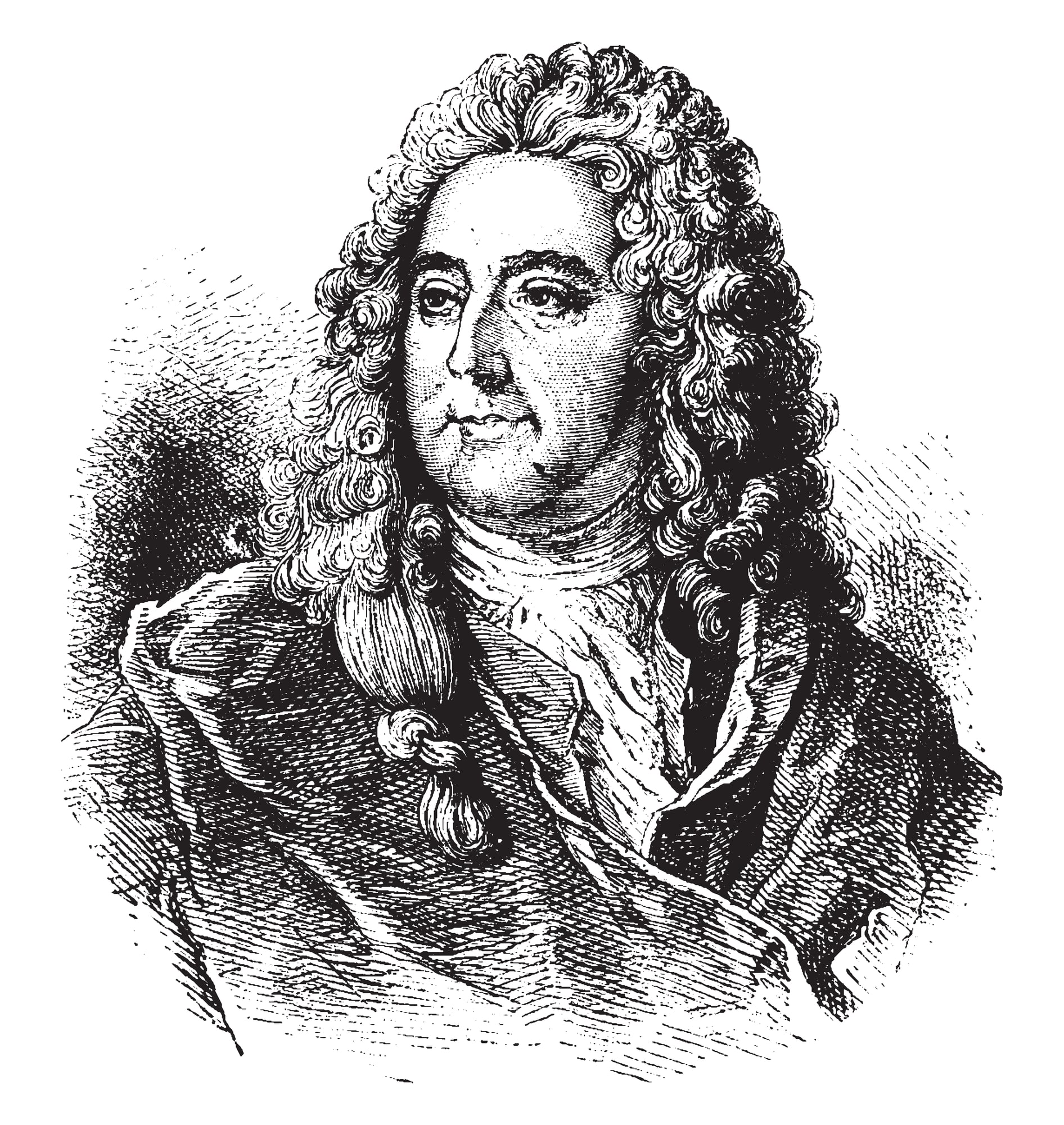
John Law was a Scottish economist, convicted murderer, and one of history’s most spectacular financial con artists.
After fleeing Britain following a duel, he landed in France during the financially desperate reign of Louis XV.
Law convinced the regent that he could solve France’s crushing debt through a revolutionary idea: paper money backed by the theoretical wealth of French colonial Louisiana.
In 1716, Law established the Banque Générale, which issued paper notes.
He then created the Mississippi Company, granted a monopoly on trade with French Louisiana and other colonies.
Law promoted Louisiana as a land of unimaginable riches — full of gold and profitable opportunities.
The reality was swampland and struggling settlements, though Parisian investors didn’t know that.
Share prices skyrocketed as speculation fever gripped France.
Law’s personal fortune grew astronomically as the bubble inflated.
He became Controller General of Finances, essentially running France’s economy.
At the peak, shares in the Mississippi Company traded for 40 times their original value.
Then reality caught up.
Investors began demanding gold for their paper notes.
The bank couldn’t deliver, and the entire system collapsed in 1720.
Law fled France in disgrace, dying penniless in Venice nine years later.
His brief fortune came entirely from manipulating public perception and printing money backed by nothing but hype.
Tulip Mania Speculators

The Dutch Golden Age brought prosperity, global trade networks, and an inexplicable obsession with tulip bulbs.
During the 1630s, tulips became status symbols among wealthy Dutch merchants.
Rare varieties with vibrant color patterns commanded extraordinary prices, while the market quickly transformed from genuine collectors to pure speculators who never intended to plant a single bulb.
Futures contracts emerged, allowing people to buy and sell tulips that hadn’t even been grown yet.
Prices for rare bulbs reached absurd levels.
Single bulbs sold for more than skilled craftsmen earned in a decade.
One particularly prized bulb reportedly sold for the equivalent of an Amsterdam canal house.
Ordinary citizens mortgaged homes and businesses to join the speculation, convinced prices would keep rising forever.
The inevitable crash came in February 1637.
Within weeks, tulip prices collapsed to a fraction of their peak.
Many speculators were ruined, though recent historical research suggests the economic impact was less catastrophic than popular accounts claim.
The fortunes made during tulip mania were built entirely on collective delusion and the ability to exit the market before everyone else panicked.
Those who sold near the peak walked away wealthy.
Those who believed their own hype lost everything.
Hetty Green’s Extreme Frugality

Henrietta ‘Hetty’ Green took an unusual path to becoming one of America’s wealthiest women.
She inherited a substantial fortune from her father’s whaling and shipping business, then multiplied it through astute investments and legendary cheapness.
Green’s financial acumen was genuine, yet her penny-pinching became pathological — directly contributing to growing her wealth.
She wore the same black dress until it turned green with age.
She ate cold oatmeal to avoid heating costs.
She worked from a desk in a bank rather than rent office space.
When her son injured his leg, she reportedly sought free medical clinics rather than paying for proper treatment.
The leg eventually required amputation, though historians debate whether her frugality directly caused this outcome.
She moved constantly between cheap boarding houses to avoid establishing legal residence and paying taxes.
Green’s investment strategy was conservative and contrarian.
She bought during panics when prices crashed, sold during booms.
By the time of her death in 1916, she’d amassed between 100 and 200 million dollars — equivalent to several billion today.
Her fortune came not from innovation or even particularly unusual investments, but from refusing to spend money on virtually anything, including basic comforts.
The wealth accumulated because almost nothing left her accounts.
Patent Medicine Fortunes

Before modern drug regulation, entrepreneurs built massive fortunes selling bottled concoctions that promised to cure everything from consumption to baldness.
The ingredients were often worthless, sometimes dangerous, and frequently included opium, alcohol, or cocaine.
Marketing was everything, and nobody marketed better than Thomas Adams and his chewing gum empire.
Adams didn’t invent chewing gum, though he revolutionized it.
After a failed attempt to use chicle as a rubber substitute, he realized people might chew it for pleasure.
He added flavoring, packaged it appealingly, advertised relentlessly.
Adams became wealthy not from medical claims but from creating a habit.
Others in the patent medicine trade made fortunes from more dubious products, particularly before the Pure Food and Drug Act of 1906 forced some honesty in labeling.
The Lydia Pinkham Vegetable Compound made its namesake’s family wealthy while claiming to cure ‘female complaints’ with a mixture that was roughly 18 percent alcohol.
William Radam’s ‘Microbe Killer’ promised to cure all diseases by killing germs, despite containing mostly water with sulfuric acid and red wine.
These fortunes evaporated when regulations arrived, though not before making their creators extraordinarily rich.
Why Audacity Still Pays

These unusual fortunes share common threads that remain relevant.
Each required spotting value or opportunity invisible to others — whether that meant recognizing the potential in bird waste or understanding market psychology during a speculative bubble.
Many operated in legal gray areas or during periods of minimal regulation, taking advantage of systems not yet designed to prevent exploitation.
The fortunes also reveal an uncomfortable truth about wealth accumulation.
Ethical considerations often took a backseat to profit maximization.
Crassus watched buildings burn, guano barons exploited laborers, patent medicine sellers peddled dangerous concoctions.
These weren’t respectable industrialists building railroads or steel mills.
They were opportunists who prioritized enrichment over social responsibility, and history remembers their wealth far more than their methods.
What made these approaches ‘unusual’ in their time has often become standard practice in refined form.
Modern venture capitalists still bet on hype and exit before crashes.
Disaster capitalism continues in various guises, while market manipulation and regulatory arbitrage remain paths to wealth for those willing to push boundaries.
The tactics evolved and became more sophisticated, yet the underlying opportunism that built these historical fortunes never really disappeared.
More from Go2Tutors!

- The Romanov Crown Jewels and Their Tragic Fate
- 17 Halloween Costumes Once Considered Taboo
- Famous Hoaxes That Fooled the World for Years
- 15 Child Stars with Tragic Adult Lives
- 16 Famous Jewelry Pieces in History
Like Go2Tutors’s content? Follow us on MSN.