Unusual Ways That Animals Trick Their Predators
Nature has always been a master class in deception. Walk through any forest, peer into any ocean, or scan any meadow, and you’ll witness an ongoing performance where survival depends on the quality of the act.
Animals have spent millions of years perfecting their cons, developing tricks so sophisticated they’d make professional magicians jealous. These aren’t just simple camouflage patterns or basic hiding techniques — these are elaborate schemes involving fake deaths, identity theft, and psychological warfare that would impress any con artist.
Playing Dead
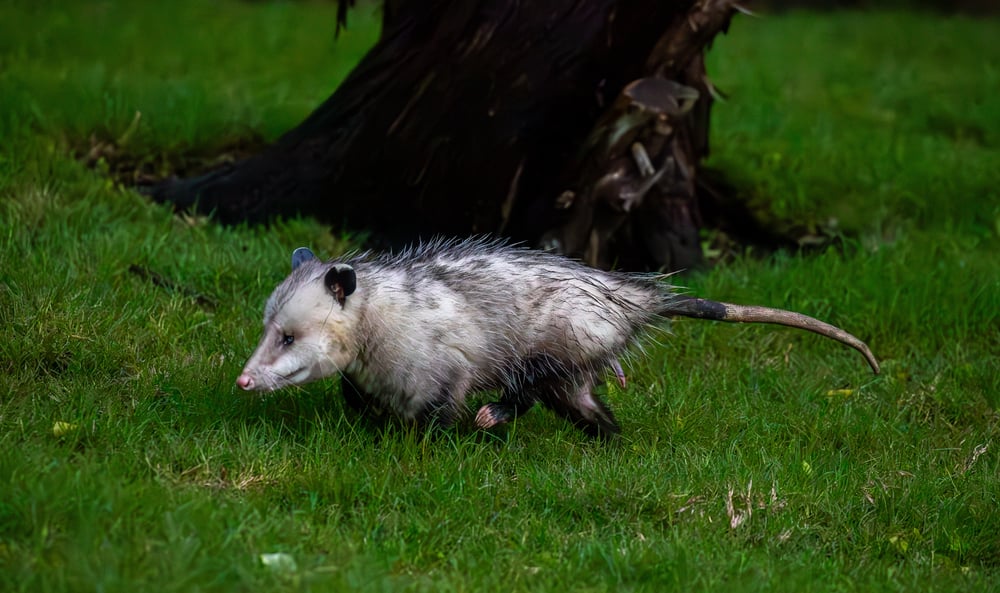
Opossums didn’t invent this move, but they perfected it. The moment danger appears, they collapse. Heart rate drops.
Breathing becomes barely detectable. They even release a foul smell to sell the performance.
Predators lose interest fast — dead meat that’s already rotting isn’t appealing to most hunters.
Mimicking Dangerous Species
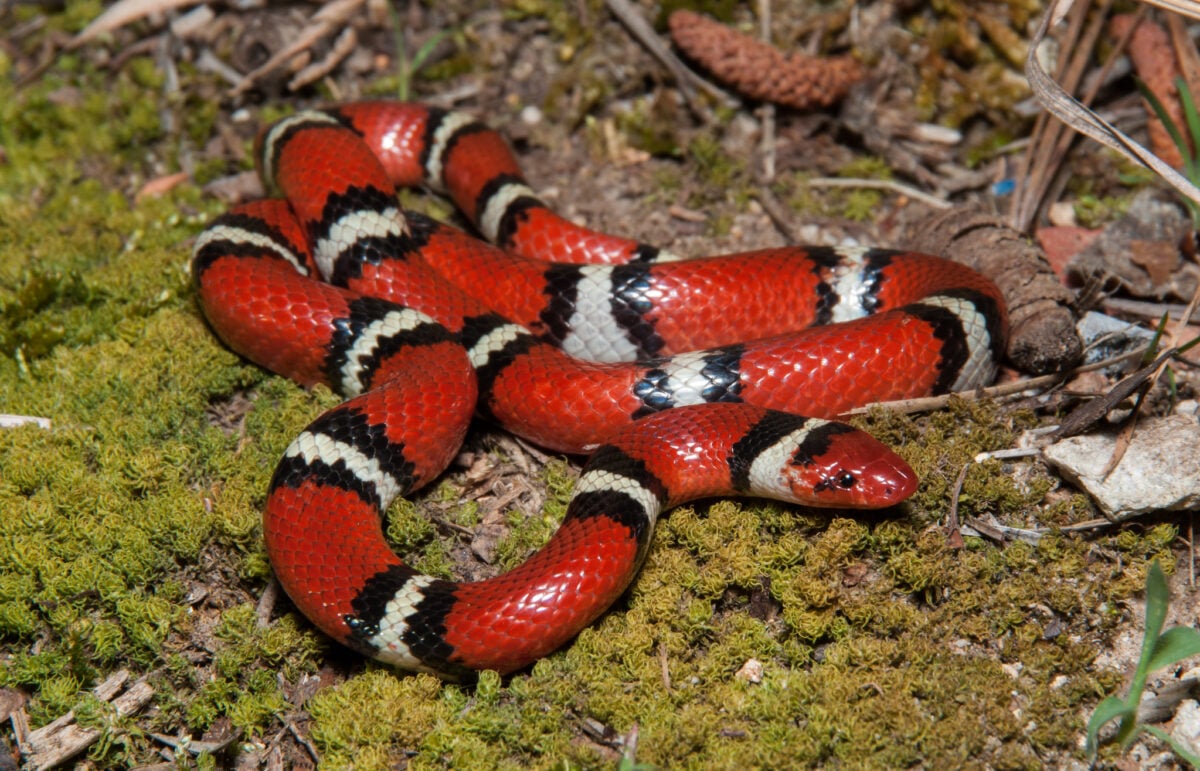
Harmless animals steal the reputation of their deadlier cousins. Scarlet kingsnakes wear the same red, yellow, and black bands as coral snakes.
Predators can’t tell the difference and won’t risk finding out. The kingsnake gets all the protection with none of the venom production costs.
False Eye Spots

Butterfly wings (and those of many moths) often display what look like enormous eyes staring back at potential threats, which creates a peculiar psychological effect on predators who suddenly find themselves wondering if they’re looking at something much larger and more dangerous than they initially assumed. The spots don’t just mimic eyes — they often appear exactly where you’d expect to find the face of a much bigger animal.
So when a small bird swoops down expecting an easy meal, it’s confronted with what appears to be the head of an owl or snake. The hesitation that follows is usually long enough for the real prey to escape.
Tail Autotomy
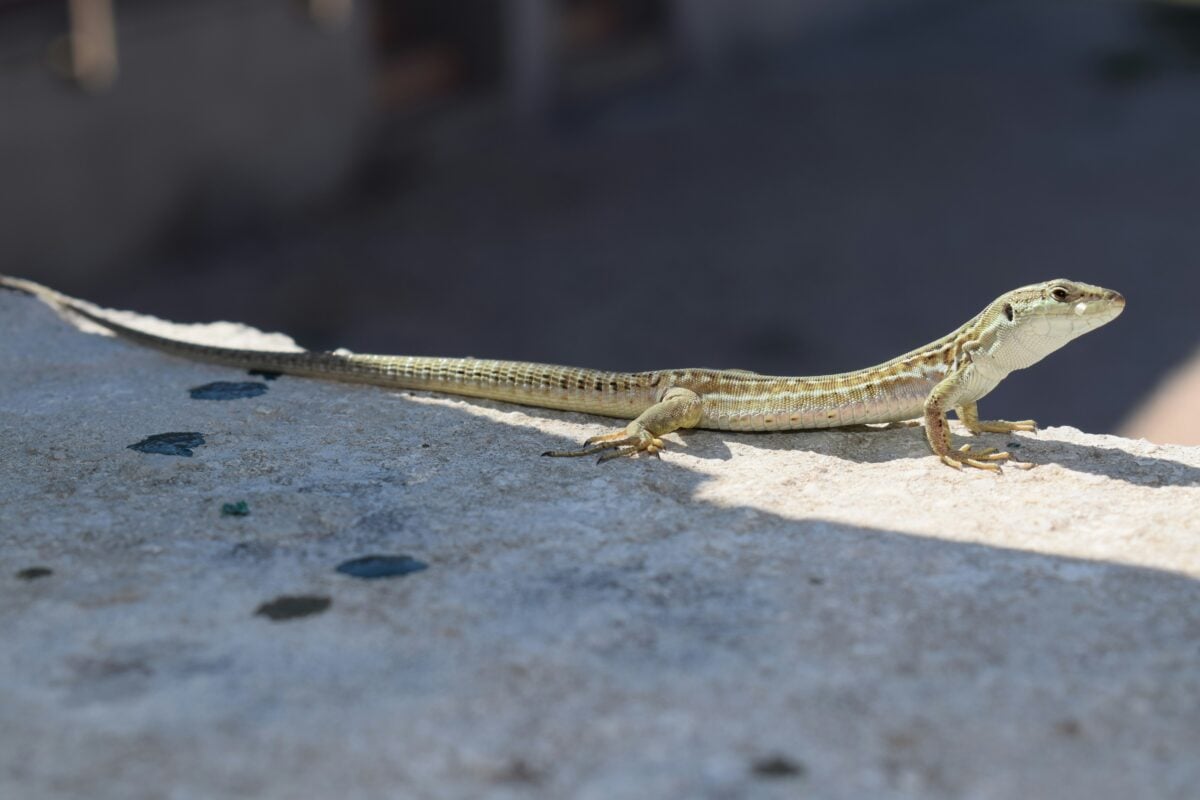
Lizards treat their tails like detachable decoy devices. When grabbed, the tail breaks off and keeps writhing for several minutes. The predator focuses on the moving tail while the lizard escapes.
Growing a new tail takes energy, but it beats being eaten. Some species have perfected this so well they can control exactly where the break occurs.
Chemical Warfare
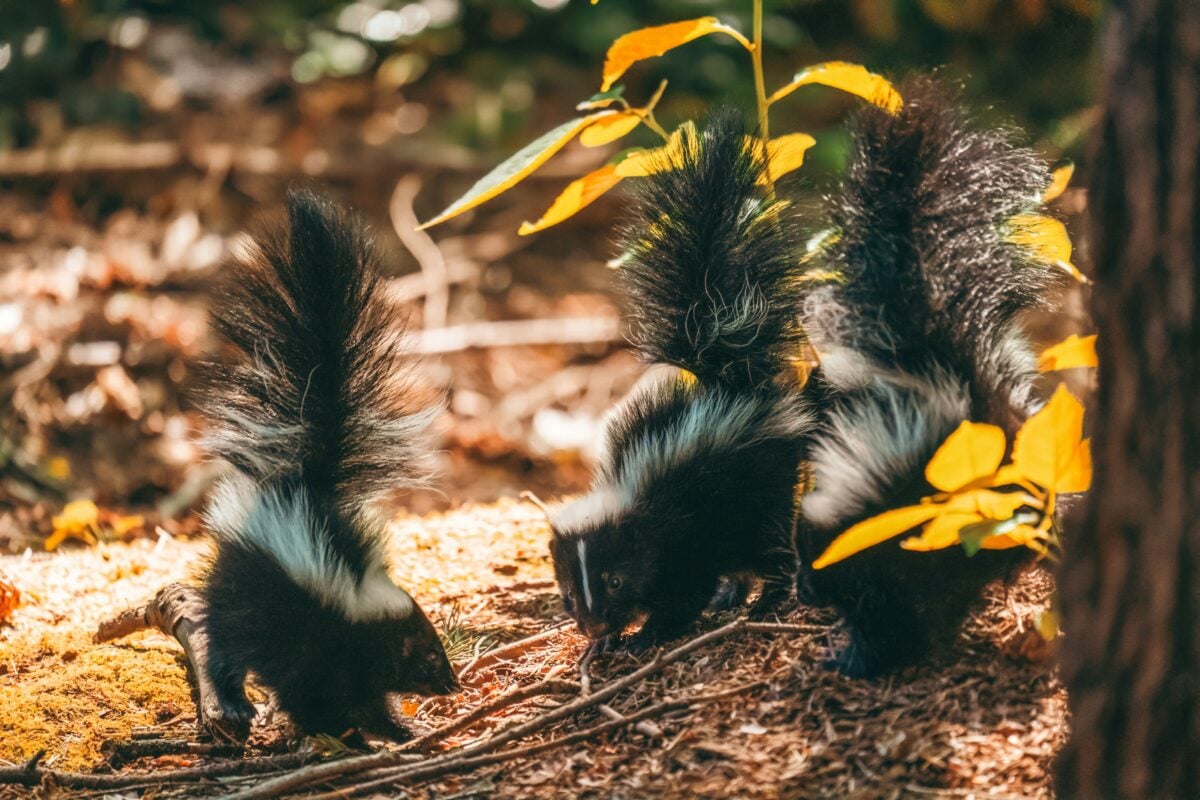
Skunks have turned scent into a weapon. Their spray is accurate up to 10 feet and the smell lingers for weeks.
Most predators learn to avoid the black and white warning pattern after one encounter. The reputation does most of the work — actual spraying becomes rare.
Size Illusion
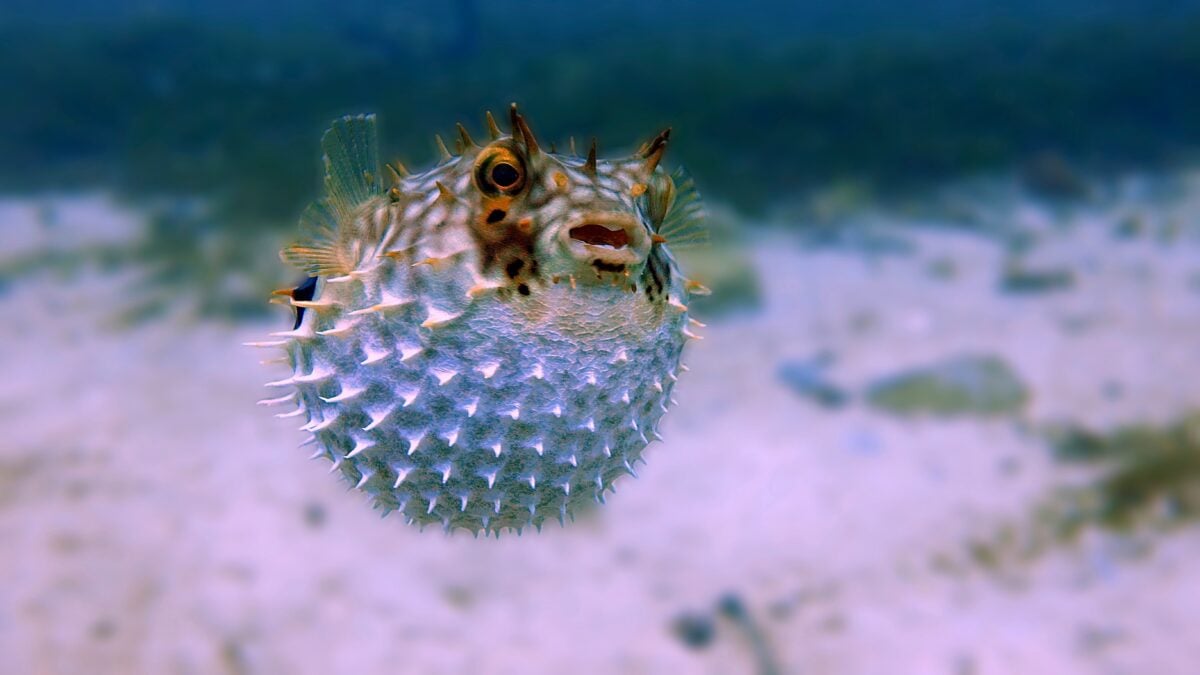
Pufferfish approach the problem of being small and relatively defenseless in an ocean full of larger predators by employing what amounts to an instant transformation — when threatened, they gulp water (or air, if they’re out of water) and inflate themselves into a spiky, inedible sphere that’s often three times their normal size. The spikes aren’t just for show: they contain toxins that make the fish genuinely dangerous to consume.
But even without the poison, the sudden size change is often enough to startle a predator into retreating. It’s the aquatic equivalent of a magician’s trick, except the consequences of seeing through the illusion are genuinely life-threatening.
And the fish commits fully to the performance — once inflated, they’re essentially immobilized until they deflate, which makes this a high-stakes gambit that only works if the bluff is convincing enough to end the encounter immediately.
Group Confusion
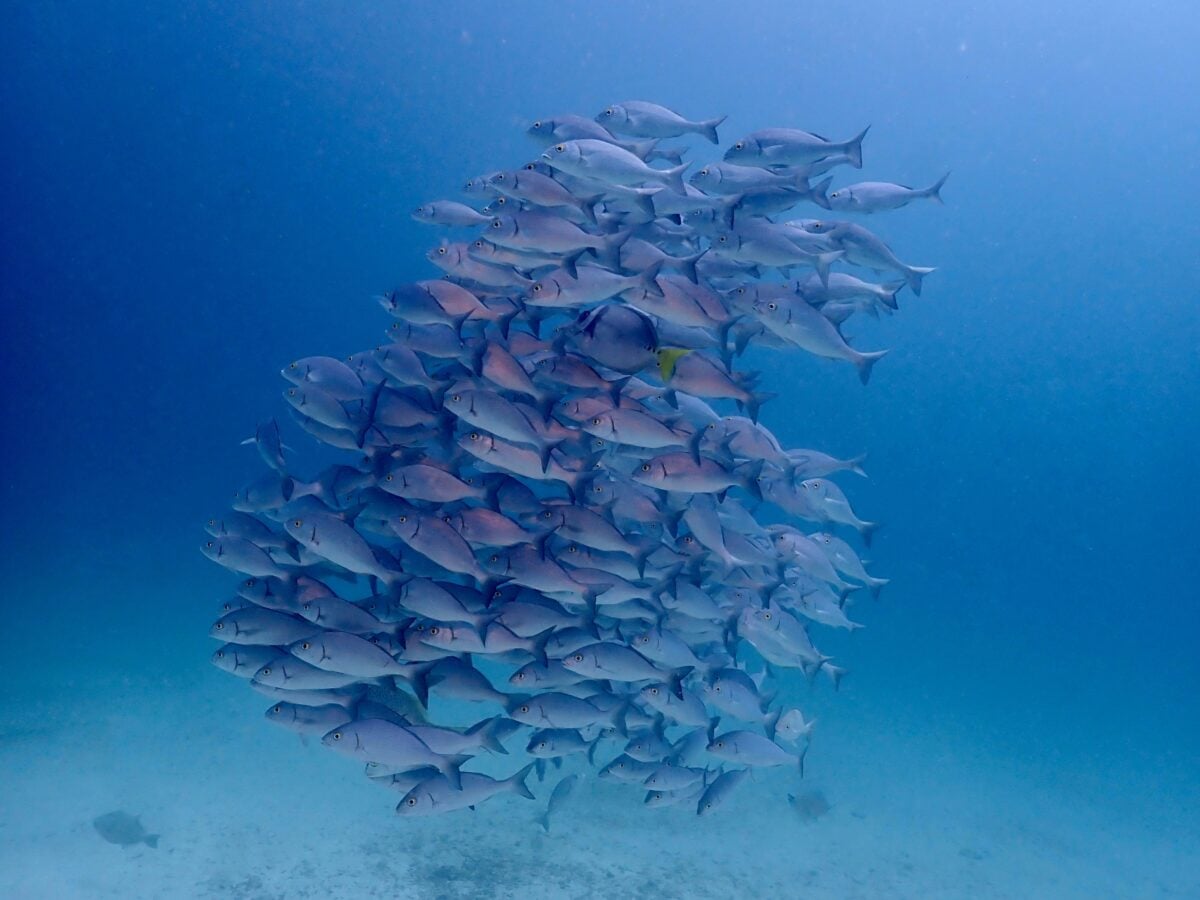
Schooling fish don’t just swim together for company. When a predator attacks, the school explodes into synchronized chaos. Hundreds of fish moving in perfectly coordinated patterns create a visual overload.
The predator can’t focus on any individual target. By the time it picks one fish, the school has reformed elsewhere.
Startle Displays
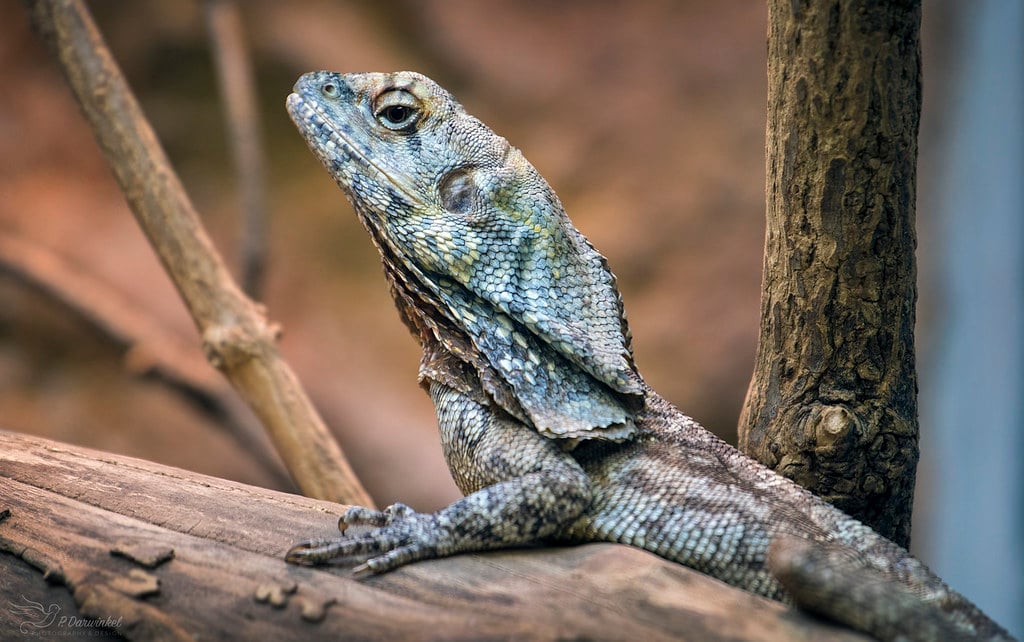
Frilled lizards look ordinary until threatened. Then they open a massive collar around their neck, rear up on their hind legs, and hiss loudly.
The transformation is instant and dramatic. A small lizard suddenly appears to be a much larger, more aggressive creature.
Most predators decide the encounter isn’t worth the risk.
Tool-Assisted Deception
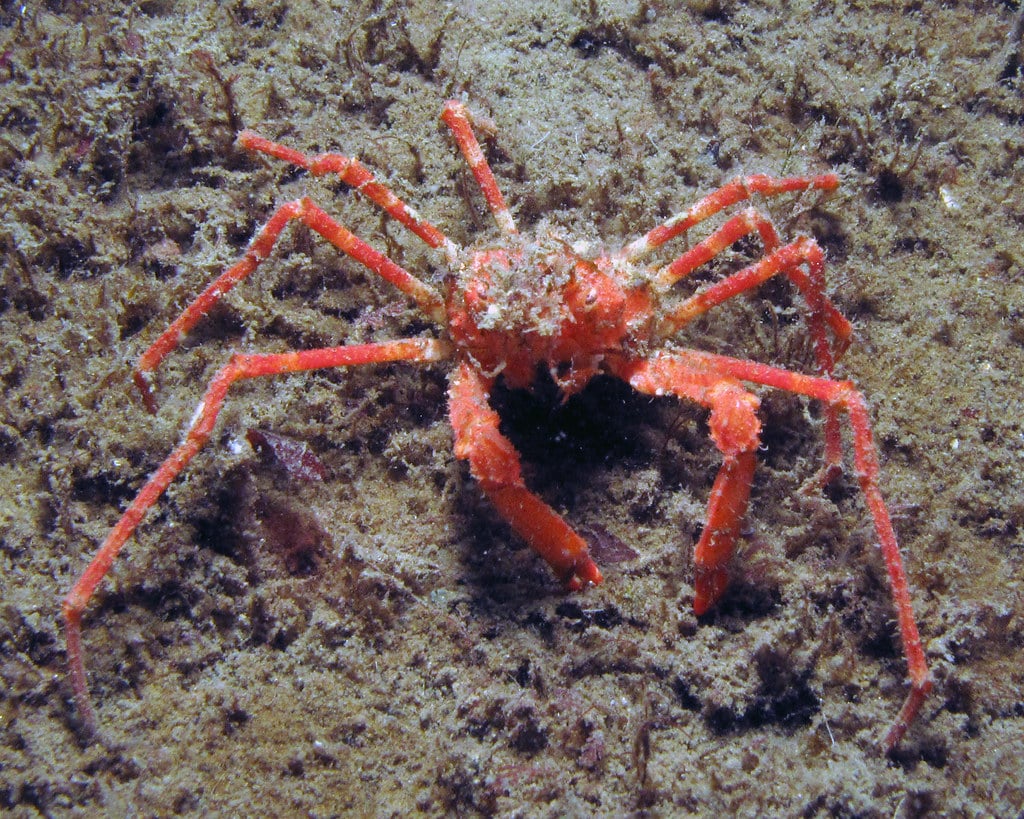
Decorator crabs collect pieces of sponge, algae, and small animals, then attach them to their shells like living camouflage suits. They don’t just grab random materials — they select items that match their current environment and replace them when they move to different areas.
The crab becomes invisible by becoming its surroundings. Some species even cultivate specific types of algae on their shells, farming their own disguise materials.
It’s environmental adaptation taken to an artistic level, where survival depends on having an eye for design and the patience to maintain an ever-changing costume that must be convincing enough to fool predators who are actively hunting for exactly their shape and size.
Fake Injury Performance
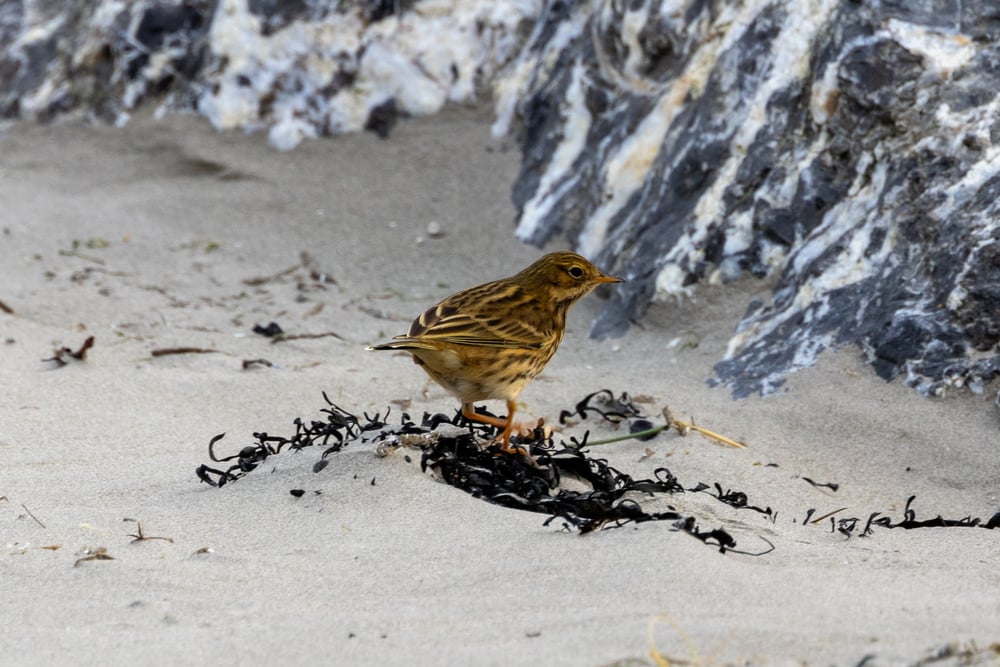
Ground-nesting birds have mastered the art of misdirection. When a predator approaches their nest, the parent bird will suddenly appear nearby, dragging one wing as if it’s broken.
The predator sees an easy target — a wounded bird that can’t fly — and gives chase. The bird leads the threat away from the nest, then suddenly recovers and flies off.
Bioluminescent Misdirection

Deep-sea creatures use light as a weapon of confusion. Some squid eject clouds of glowing particles instead of ink.
The light shows disoriented predators in the dark ocean depths. While the predator is distracted by the floating light display, the squid escapes into the darkness.
Sound Mimicry

Lyrebirds don’t just copy other bird songs — they reproduce chainsaw sounds, car alarms, and camera shutters with perfect accuracy. In the wild, they use this ability to confuse predators about what’s actually in the area.
A predator might hear the call of a dangerous bird species and decide to hunt elsewhere.
Ant Impersonation
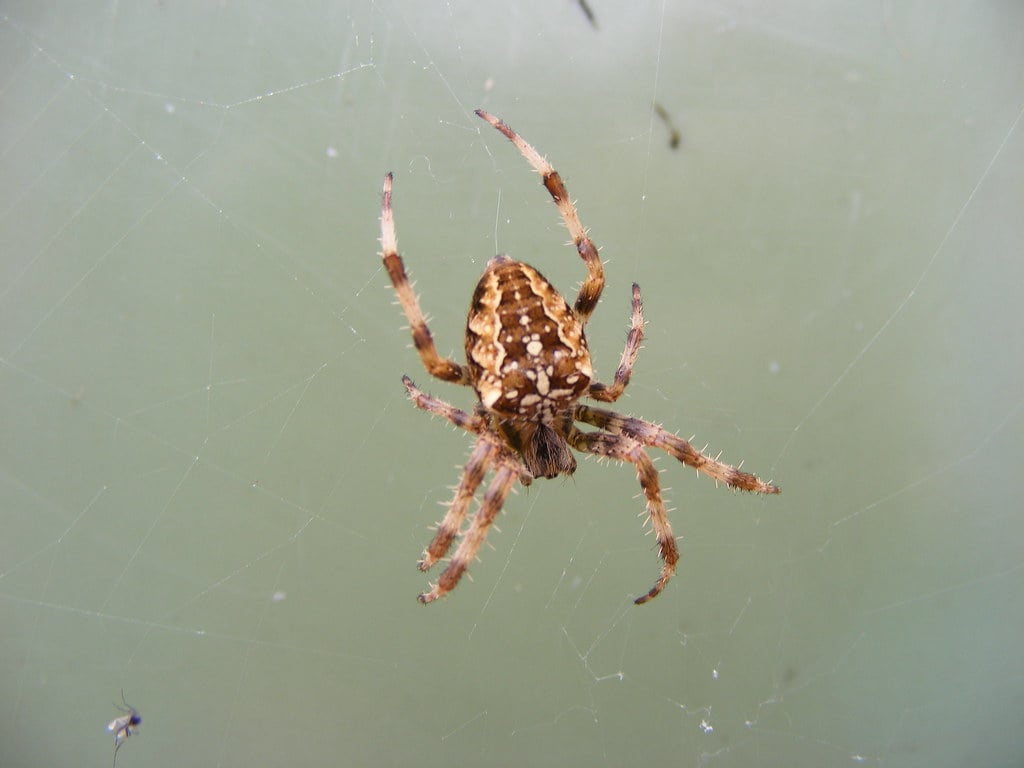
Some spiders have evolved to look exactly like ants. They hold their front legs up like antennae and move in the jerky, purposeful way ants do.
Since most predators avoid ants (they taste terrible and often bite or sting), the spiders get protection by joining the least popular item on the menu.
False Head Deception
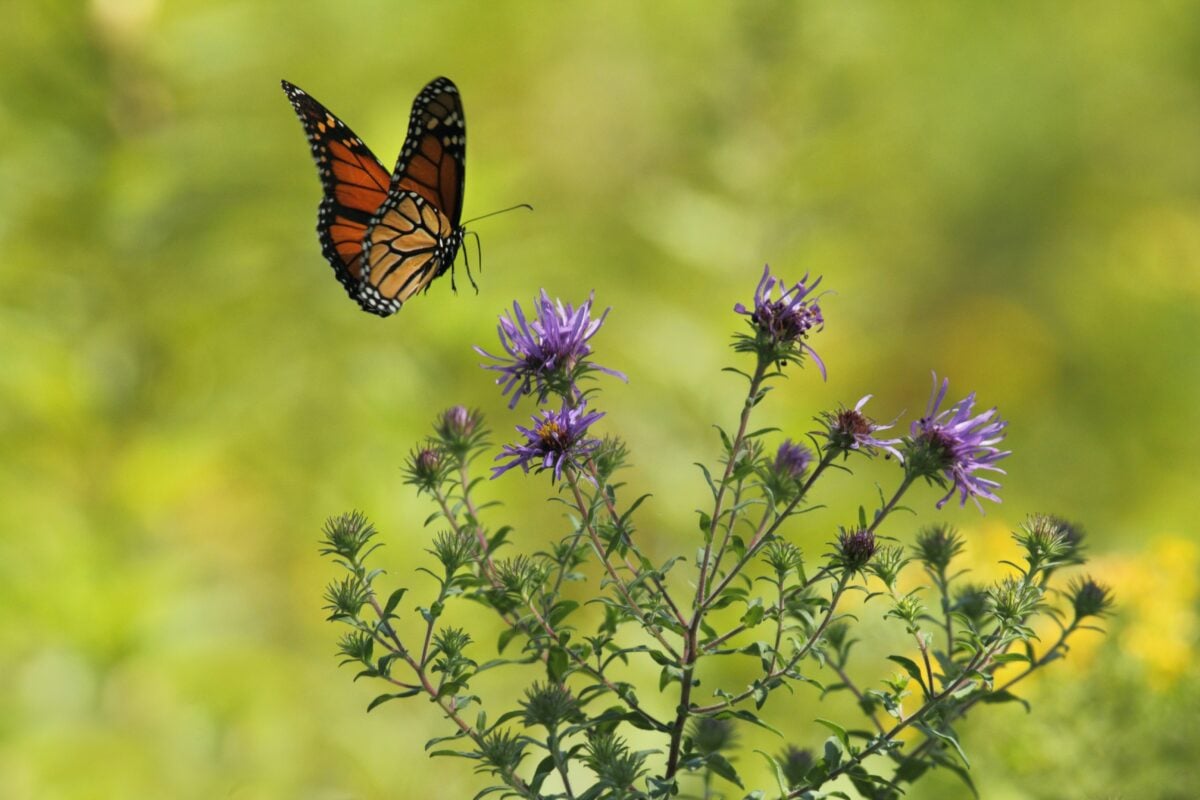
Many butterflies and small fish have evolved what appears to be a head at the wrong end of their body — complete with eye spots and sometimes even fake antennae or fins that look like they should be doing the steering. When a predator attacks what it thinks is the head, expecting to deliver a killing blow, it instead gets a mouthful of tail while the real head (and brain) swims or flies off in the opposite direction.
The deception works because predators instinctively aim for the head, and the fake head is often more prominent and colorful than the real one. Some fish even swim backward when threatened, selling the illusion that they’re moving in the direction their fake head is pointing.
It’s a simple trick with a profound effect: the predator’s best attack becomes a wasted opportunity, and by the time it realizes the mistake, its meal has disappeared.
The Art of Survival
These deceptions reveal something profound about the relationship between predator and prey. Success doesn’t always go to the strongest or fastest — sometimes it goes to the best actor.
Each trick represents millions of years of refinement, tested against the ultimate critic: a predator that will kill you if your performance isn’t convincing. The animals that master these techniques don’t just survive — they thrive in a world where being yourself can be the most dangerous thing you do.
More from Go2Tutors!

- The Romanov Crown Jewels and Their Tragic Fate
- 13 Historical Mysteries That Science Still Can’t Solve
- Famous Hoaxes That Fooled the World for Years
- 15 Child Stars with Tragic Adult Lives
- 16 Famous Jewelry Pieces in History
Like Go2Tutors’s content? Follow us on MSN.