Vast Museums by Display Area
Floating through some enormous museum shifts something subtle inside. Not just size, but the way it bends your steps, slows your breath, reshapes focus.
A glance won’t do here; moments pile up quietly instead. Presence matters more than checklist ticking.
Space pulls you in before art even gets a chance.
It’s easy to get museum sizes wrong. Some places look big at first glance, yet most of their rooms hold boxes, labs, or offices instead of exhibits.
What counts isn’t total floor count – it’s what people walk through. The real story lies in gallery space alone: where art and eyes meet.
Behind-the-scenes corners don’t shape moments like standing face-to-face with a painting does.
Take a step into the biggest museums on Earth, measured by space used for exhibits. Their scale hints at how countries shape their own histories.
What fills these halls says much about who decides which past gets shown.
Louvre Museum
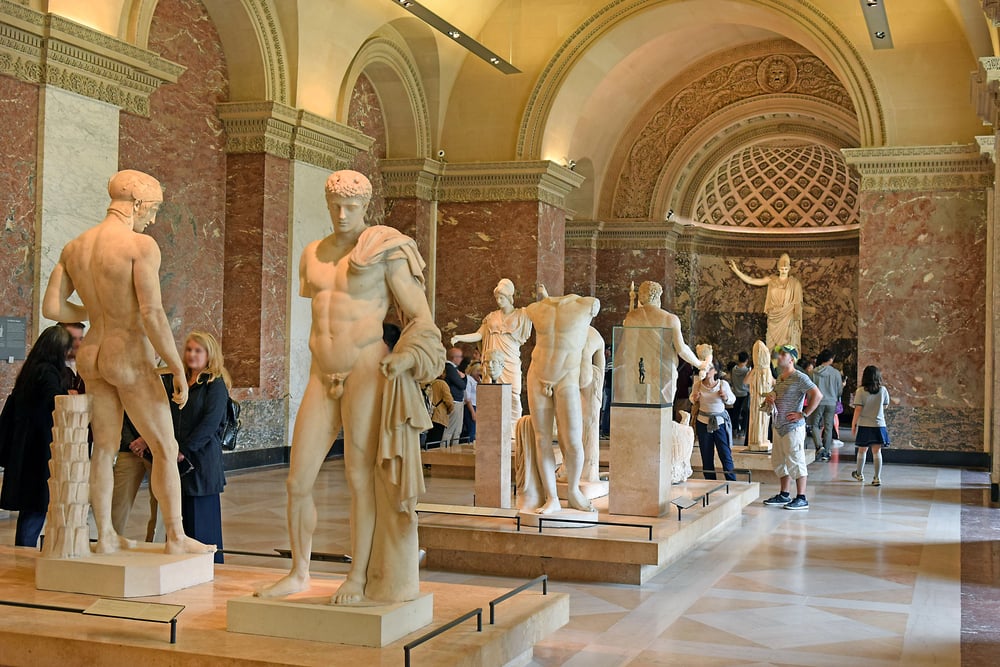
The Louvre is often described as the world’s largest museum, and by display area, that reputation holds up. Its public galleries span roughly 782,000 square feet, spread across a former royal palace that grew layer by layer over centuries.
Walking through the Louvre feels like moving through time as much as art, with medieval foundations sitting beneath grand nineteenth-century halls.
That scale allows the museum to present an astonishing range of material, from ancient civilizations to European painting. Even so, only a fraction of its collection is on view at any one time.
The vast display area is less about showing everything and more about giving masterpieces room to breathe. Crowds can be intense, but the building’s size softens the pressure, allowing quieter moments even on busy days.
State Hermitage Museum

The State Hermitage Museum rivals the Louvre in ambition, with public display space estimated at around 719,000 square feet. Housed in a complex of historic buildings along the Neva River, including the Winter Palace, it reflects Russia’s long-standing desire to assert cultural authority alongside political power.
The Hermitage’s galleries unfold in a stately, almost ceremonial rhythm. Paintings, sculptures, and decorative arts are arranged in rooms that once hosted imperial life, which adds a layer of historical texture to the viewing experience.
The sheer volume of space makes it clear that this was never intended to be a modest institution. It was built to impress, and it still does.
National Museum of China

Located on Tiananmen Square, the National Museum of China offers approximately 700,000 square feet of exhibition space. This immense scale reflects the museum’s dual mission: presenting both ancient Chinese civilization and the modern history of the nation-state.
Few museums attempt such a broad narrative under one roof.
The building itself is modern and imposing, designed to handle enormous visitor numbers. Wide galleries and high ceilings allow for large-scale installations and expansive historical displays.
The size is not just about spectacle; it supports a carefully constructed national story that stretches across thousands of years, reinforcing continuity as much as progress.
Metropolitan Museum of Art
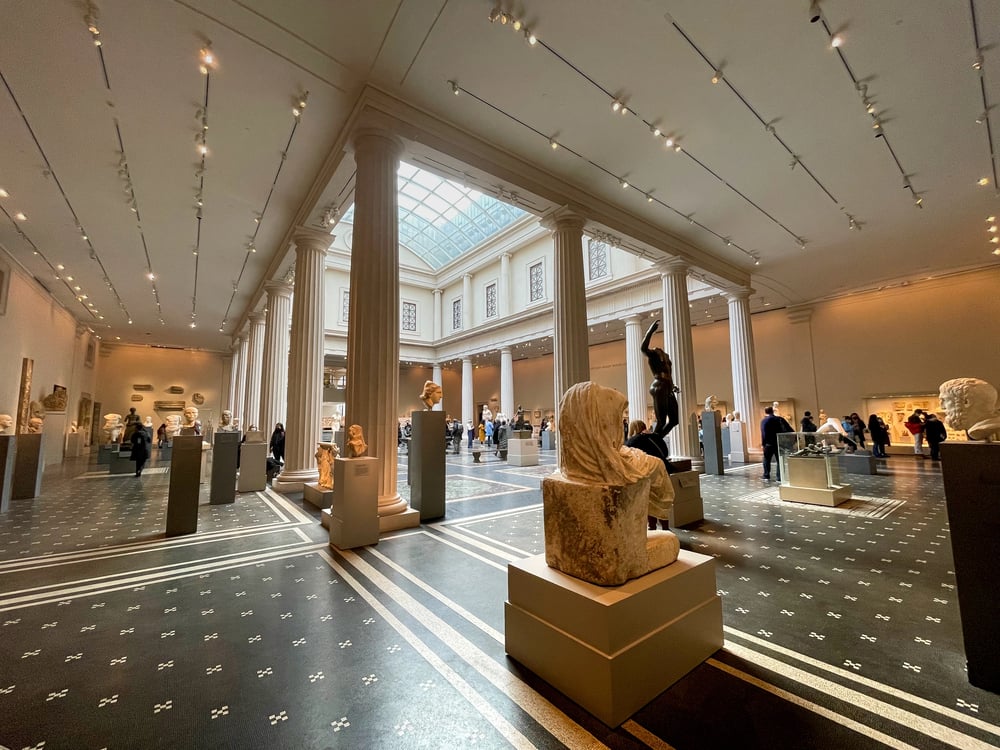
The Metropolitan Museum of Art, commonly known as the Met, provides roughly 632,000 square feet of public gallery space. Situated along Central Park, it combines encyclopedic ambition with an urban sensibility shaped by generations of expansion.
Each wing reflects a different moment in the museum’s growth.
What makes the Met’s scale distinctive is how seamlessly it moves between cultures and eras. Ancient temples, medieval cloisters, and modern painting galleries coexist within a single institution.
The generous display area allows visitors to drift between worlds without feeling rushed, reinforcing the idea of art as a shared global inheritance rather than a fixed canon.
Smithsonian National Museum of Natural History

With around 325,000 square feet of exhibition space, the National Museum of Natural History is one of the largest museums of its kind. Its galleries are designed to handle big ideas and even bigger objects, from towering fossils to immersive environmental displays.
The scale here serves education as much as wonder. Wide corridors and expansive halls accommodate school groups, families, and researchers alike.
By dedicating so much display area to natural science, the museum underscores the importance of understanding the planet as a complex, interconnected system rather than a collection of isolated facts.
Tokyo National Museum

The Tokyo National Museum offers approximately 269,000 square feet of gallery space across several buildings in Ueno Park. Unlike single-structure giants, its size is distributed, creating a campus-like experience that encourages slower, more deliberate exploration.
The museum’s display area supports a deep focus on Japanese art and archaeology while also accommodating significant collections from across Asia. The spacious galleries allow delicate objects to be shown with restraint, emphasizing craftsmanship and material detail.
In this setting, space is used to create clarity rather than spectacle.
British Museum
The British Museum’s public display area totals around 400,000 square feet, making it one of the most expansive museums in Europe. Its neoclassical architecture and central Great Court create a sense of openness that carries through much of the building.
That scale supports a sweeping, if sometimes contested, global narrative. Galleries move from ancient Mesopotamia to Africa, Asia, and the Americas, often within a short walk.
The size allows these stories to sit side by side, encouraging comparison while also highlighting the weight of curatorial choices.
Vatican Museums

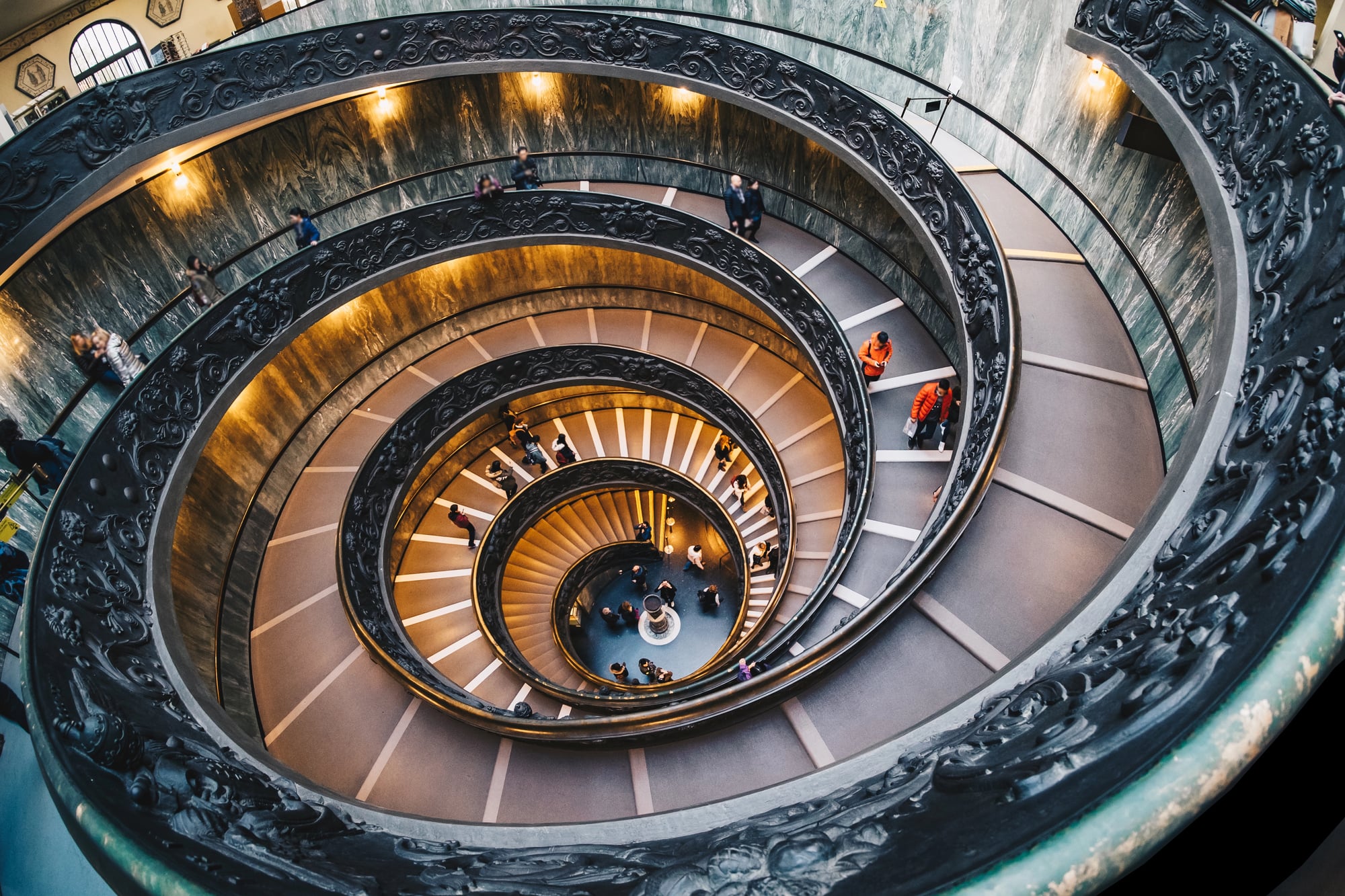
The Vatican Museums encompass roughly 460,000 square feet of exhibition space, woven through a complex of historic buildings. Rather than one continuous gallery, the experience unfolds as a sequence of corridors, rooms, and chapels that gradually lead toward the Sistine Chapel.
The scale here feels cumulative rather than open. Each gallery adds another layer of artistic and religious history, building a sense of abundance through progression.
By the time visitors reach the end, the sheer volume of visual information becomes part of the experience itself.
Prado Museum
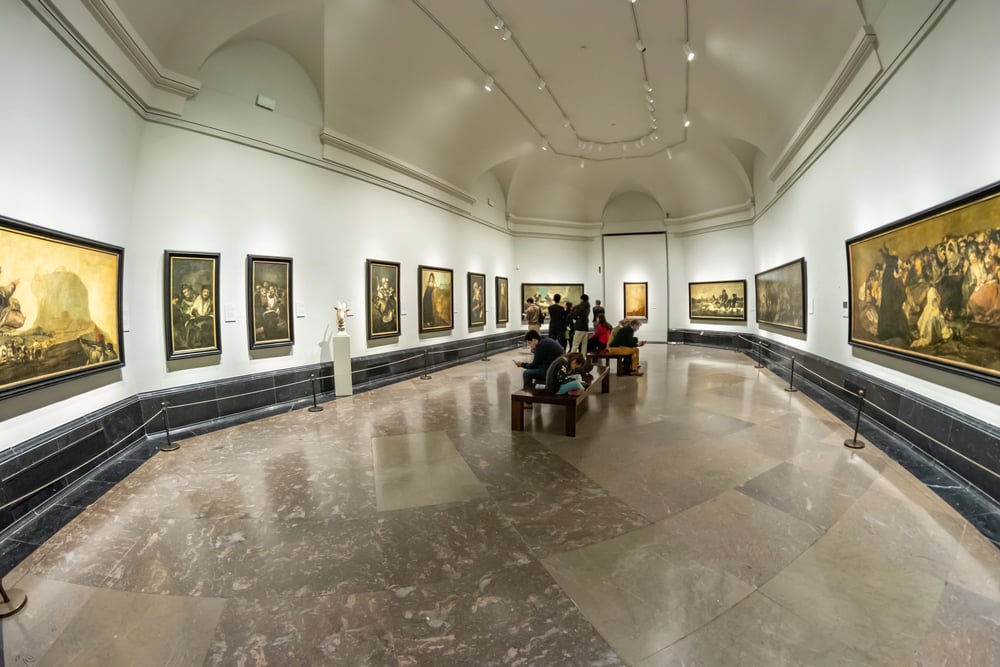
While smaller than some global giants, the Prado Museum’s approximately 240,000 square feet of display space earns its place through density and focus. Its galleries are dedicated primarily to European painting, particularly Spanish masters, and the generous room sizes allow major works to command attention.
The Prado’s scale supports depth rather than breadth. Visitors are encouraged to slow down and engage deeply, moving through rooms that feel cohesive and intentional.
Here, vastness is expressed through emphasis rather than excess.
National Gallery of Art

The National Gallery of Art in Washington, D.C., offers roughly 400,000 square feet of public exhibition space spread across two main buildings. Connected by an underground concourse, the museum balances classical architecture with modern design.
This layout allows the gallery to present a broad sweep of Western art while maintaining a sense of order. The size supports large temporary exhibitions alongside a substantial permanent collection.
It reinforces the idea of the museum as a living institution rather than a static archive.
Why Space Shapes the Museum Experience

Big museums gain weight not from size alone. What matters grows clear when space shapes sight – how exhibits speak, narratives form, bodies flow.
Room layout decides if artifacts breathe or bump, linger or flee.
Slowly, big museums became signs of deep cultural goals. Choices shape what gets shown, stored, held close.
When everything moves fast, these places stay wide open, unhurried. Being large says clearly: certain tales take time.
Room matters when meaning grows step by step.
More from Go2Tutors!

- The Romanov Crown Jewels and Their Tragic Fate
- 13 Historical Mysteries That Science Still Can’t Solve
- Famous Hoaxes That Fooled the World for Years
- 15 Child Stars with Tragic Adult Lives
- 16 Famous Jewelry Pieces in History
Like Go2Tutors’s content? Follow us on MSN.



