Villages Balanced on Stilts Above the Sea
People have always found ways to live in places that seem impossible. Some communities built their homes on cliffs, others dug into mountains, and a few decided the best spot was right above the water.
These stilt villages aren’t just clever engineering. They’re proof that humans can adapt to almost any environment when they need to.
Let’s look at some of the most fascinating water communities around the world and what makes them so special.
Kampong Ayer

This collection of water villages in Brunei has existed for over 600 years. Around 30,000 people call these stilted neighborhoods home, making it one of the largest water settlements on the planet.
The houses connect through a maze of wooden walkways that stretch for miles, and residents zip between buildings on boats like other people might walk down a sidewalk. Schools, mosques, fire stations, and even a police station all sit on stilts above the Brunei River.
Ganvie

About 20,000 people live in this African village built entirely on Lake Nokoué in Benin. The Tofinu people originally moved onto the water to escape slave traders in the 1700s, since their enemies had a religious taboo against attacking people on water.
Today the village thrives with markets, schools, and churches all connected by canoes instead of cars. Fishermen lower basket traps into the water right beneath their homes, and kids learn to paddle before they learn to walk.
Inle Lake villages

Several communities float on Myanmar’s second largest lake, where the Intha people have perfected a unique lifestyle. These villagers grow vegetables on floating gardens made from water hyacinth and lake soil.
Fishermen here developed a distinctive rowing style where they wrap one leg around an oar and balance on the other, leaving both hands free to handle nets. The stilted monasteries and markets create a scene that looks like it belongs in another century.
Tai O

Hong Kong’s last surviving fishing village sits where a river meets the sea on Lantau Island. The tan-colored stilt houses crowd together so tightly that residents can practically shake hands across the narrow waterways.
Locals still dry fish on racks outside their homes, filling the air with the smell of shrimp paste and salted seafood. A rope ferry pulls people across the main channel, and the whole place feels frozen in time despite being just a short bus ride from one of the world’s most modern cities.
Bocas del Toro

Several communities in this Panamanian archipelago chose water over land for their foundations. Bocas Town itself sprawls across multiple islands with neighborhoods extending out over the Caribbean Sea on weathered wooden posts.
The brightly painted houses and businesses create a patchwork of colors above the turquoise water. Locals walk across creaky boardwalks to visit neighbors, and at high tide it looks like the entire town might float away.
Lake Titicaca communities

The Uros people built more than 100 floating islands from totora reeds on this massive lake between Peru and Bolivia. These aren’t ancient relics either.
The islands need constant maintenance, with fresh reeds added to the top as the bottom layers rot away. Families live in reed houses on reed platforms, cooking on reed fires while their reed boats bob nearby.
Everything smells like wet grass, and the whole surface bounces slightly when you walk on it.
Palafitos of Chiloe

These colorful stilt houses line the shores of Chiloe Island in southern Chile, their reflections shimmering in the cold Pacific waters. Built by fishing families who needed easy boat access, the palafitos nearly disappeared until preservation efforts saved them.
The houses perch just above the tide line, painted in bold reds, yellows, and blues that pop against the gray sky. At low tide you can walk underneath them, but high tide brings the water right up to the floorboards.
Skoghall

This small community in Sweden included several houses built on stilts over Lake Vänern in the early 1900s. Workers at the local pulp mill constructed these homes to maximize waterfront access.
The tradition has mostly faded, but a few structures remain as reminders of when living directly over the water made practical sense for people whose livelihood depended on the lake. Swedish winters meant these residents needed serious insulation and heating to stay comfortable.
Rawa Island

The Bajau people, sometimes called sea nomads, built stilt villages across various islands in Malaysia. Their houses cluster around the shores of Rawa and other islands in the region.
These communities relied entirely on fishing and diving for their survival. Modern pressures have changed their lifestyle significantly, but the stilt villages remain as a connection to their maritime heritage.
Young people now often move to land-based towns for education and work.
Tonle Sap floating villages
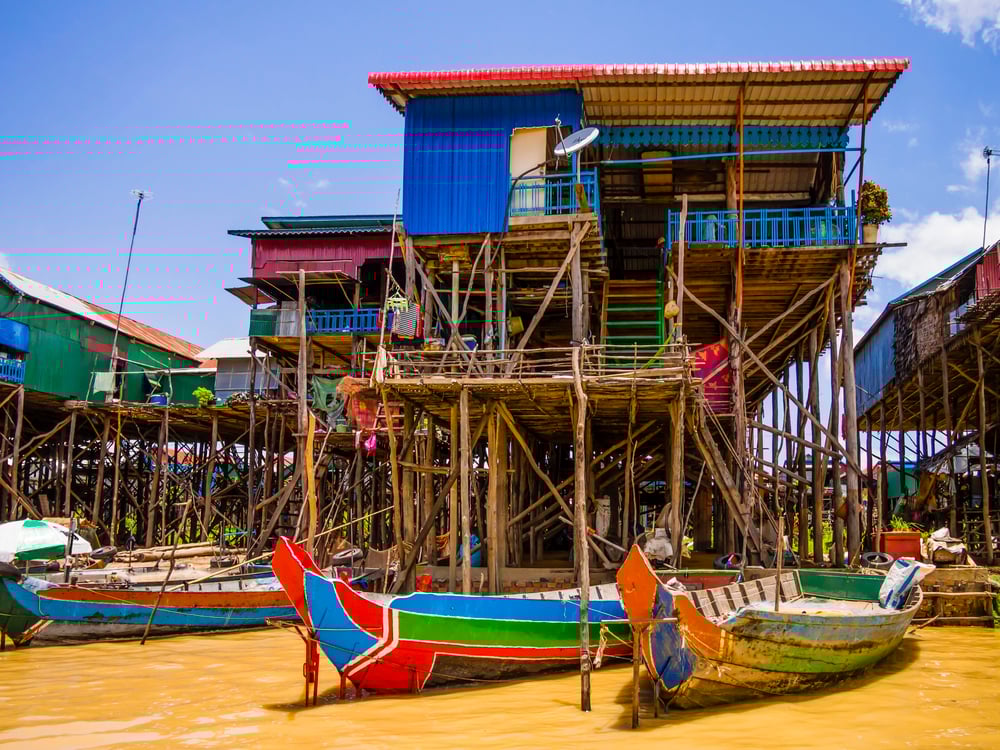
Cambodia’s great lake swells to six times its dry season size during monsoons, and several villages adapt by floating on massive bamboo rafts. Houses, pig pens, basketball courts, and even Catholic churches rise and fall with the water level.
Entire neighborhoods drift slightly with the current, anchored loosely to the lakebed. During the rainy season, the lake becomes one of the world’s most productive fisheries, and these floating communities position themselves right where the action happens.
Sorong

Parts of this Indonesian city extend out over the water on extensive stilt platforms. The communities here mix traditional wooden houses with newer concrete structures, all elevated above the sea.
Laundry hangs between buildings, kids jump from docks into the water below, and small boats serve as the primary transportation. The neighborhoods feel like a cross between a town and a marina, with all the sounds and smells of ocean life drifting up through the floorboards.
Wanli Seawall Village

This community along China’s northeastern coast built homes on stilts as protection against storm surges and flooding. The structures line up along defensive seawalls, creating a unique skyline where houses meet ocean infrastructure.
Fishermen here faced harsh conditions from the Yellow Sea, and elevating their homes provided crucial protection during typhoon season. The village shows how stilt construction served practical purposes beyond just maximizing space or following tradition.
Lobitos

A cluster of houses first rose here when oil work began, built on pilings over the sea. Long after drilling stopped, people stayed, finding ways to live off fish, then later from visitors who come for the waves.
Structures cling to the water’s edge, propped up on weathered wood. A rickety dock stretches out beyond the breakers, unchanged through decades.
Salt coats every surface. The rhythm of crashing water fills each day.
Few things besides tide and wind shape life so completely.
Siargao Island communities

On Siargao Island, some villages still raise their houses high above wetlands using strong posts driven into the mud. When storms sweep through, the water rushes beneath instead of tearing walls apart.
Heat lingers less where air moves freely under rooftops built this way. Creatures like snakes find it harder to climb up into sleeping areas.
Over time, people began pouring concrete rather than chopping timber for support beams. Still, the shape and idea behind these lifted homes look just about how they always did.
At the spot where water greets the house
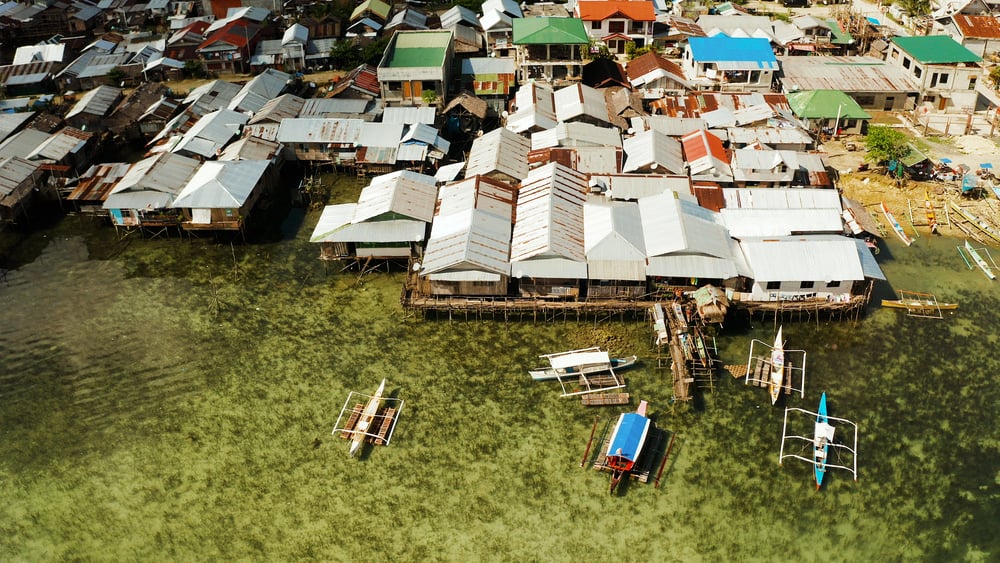
Out on the water, life takes shape without soil or streets. Some groups found ways around shifting tides – floating villages rose where others saw only lakes.
Not every settlement stays strong now; rising waters and city dreams pull youth away. Change creeps in slowly, yet roots hold fast where old knowledge meets new needs.
Survival often means adjusting without losing what made them unique long ago.
More from Go2Tutors!

- The Romanov Crown Jewels and Their Tragic Fate
- 13 Historical Mysteries That Science Still Can’t Solve
- Famous Hoaxes That Fooled the World for Years
- 15 Child Stars with Tragic Adult Lives
- 16 Famous Jewelry Pieces in History
Like Go2Tutors’s content? Follow us on MSN.



