Vintage Toy Commercials That Sold Imaginations
Saturday morning cartoons came with a specific ritual. Kids planted themselves inches from the television screen, cereal bowl in hand, waiting for both their favorite shows and the commercials between them.
Those toy ads weren’t just selling products. They sold entire worlds, adventures, and the promise that life could transform into something extraordinary with the right action figure or board game.
The commercials from the 70s, 80s, and early 90s understood something fundamental about childhood. They knew how to make plastic and cardboard look like portals to other dimensions.
Hot Wheels

Mattel turned miniature cars into high-speed drama with orange tracks that twisted through impossible loops. The commercials showed these tiny vehicles defying gravity while a deep-voiced announcer made every race sound like life or death.
Kids watching didn’t see die-cast metal and plastic. They saw real cars performing stunts that professional drivers couldn’t attempt.
The camera angles made everything look bigger and faster than reality, and that gap between commercial and actual play never seemed to bother anyone.
Lite-Brite

Hasbro’s light-up pegboard got commercials that felt almost hypnotic. The ads showed colored pegs creating glowing pictures in darkened rooms while soft music played in the background.
Parents probably appreciated the quiet, creative angle, but kids just wanted to make things glow. The way those commercials made simple light and plastic pegs look like serious art gave the toy an appeal that lasted decades.
Cleaning up hundreds of tiny pegs scattered across carpet didn’t make it into the ads, naturally.
Hungry Hungry Hippos

The frantic chaos of this game translated perfectly to television. Commercials featured kids slamming levers while plastic hippos gobbled up marbles in a feeding frenzy that looked genuinely intense.
The sound design alone sold the toy, with all those clicking, clacking noises suggesting wild competition. The hippos had names and distinct colors, giving them personality despite being chunks of plastic attached to springs.
That simple mechanic paired with energetic advertising made it impossible to resist asking for one.
G.I. Joe action figures

Hasbro’s military action figures came with commercials that resembled movie trailers. Each ad featured elaborate battle scenes with vehicles, playsets, and dozens of characters engaged in conflicts that seemed genuinely important.
The ‘knowing is half the battle’ PSA segments at the end added educational weight to what was essentially military toy marketing. Those commercials created an entire universe with heroes and villains, storylines and rivalries.
Kids didn’t just want one G.I. Joe. They wanted the whole collection to recreate those epic battles.
Barbie Dream House

Mattel’s commercials for Barbie’s mansion made suburban living look like absolute paradise. The ads showed an impossibly perfect pink house with working elevators, pools, and more rooms than most actual homes.
Everything was pastel, everything sparkled, and Barbie seemed to live a life of pure leisure and glamour. The commercials tapped into fantasies about adulthood and independence while keeping everything safe and plastic.
That tension between grown-up themes and child-friendly execution made the Dream House feel special.
Transformers

Hasbro’s robots in disguise got some of the most action-packed commercials ever made for toys. The ads showed Autobots and Decepticons battling while transformation sequences happened at lightning speed.
Real hands never appeared in these commercials. The toys moved on their own, fighting, transforming, and racing across alien landscapes.
That presentation made the toys look autonomous and alive rather than plastic figures requiring constant manipulation.
Easy-Bake Oven

Kenner sold actual cooking to children through commercials that made the process look simple and safe. The ads featured kids creating tiny cakes using a light bulb as a heat source, then proudly serving their creations.
The product bridged play and real life by producing actual food, even if those cakes were small enough to finish in two bites. Parents saw a toy that taught responsibility and cooking skills.
Kids saw independence and the chance to make real desserts without adult help.
Mr. Potato Head

Hasbro’s commercials for this classic toy emphasized the countless silly faces possible with different combinations of parts. The ads leaned into humor, showing various absurd configurations while upbeat music played.
Unlike action-oriented toy commercials, these spots celebrated creativity and goofiness. The toy didn’t promise adventure or competition.
It offered the chance to make something ridiculous and laugh about it. That simpler appeal worked because not every toy needed to be about saving the world or winning races.
Super Soaker

Larami’s water blaster commercials made summer look like a battlefield. The ads showed kids in backyards armed with these pressurized water guns, soaking each other in slow-motion shots that emphasized the power and range.
Everything looked more intense than typical water play, with the Super Soaker presented as serious equipment rather than a simple toy. The commercials understood that kids wanted to feel powerful and the toy delivered on that promise.
Traditional water guns suddenly looked pathetic compared to these pump-action blasters.
Crossfire

Milton Bradley created one of the most memorable commercial jingles for this spinning target game. The ad featured two players firing orb bearings across a board while flames and dramatic lighting made the whole thing look dangerous and exciting.
The song (‘You’ll get caught up in the Crossfire’) became more famous than the game itself. The commercial’s production values exceeded what the actual game could deliver, but that didn’t matter.
The intensity and energy made kids want to experience even a fraction of what they saw on screen.
Simon
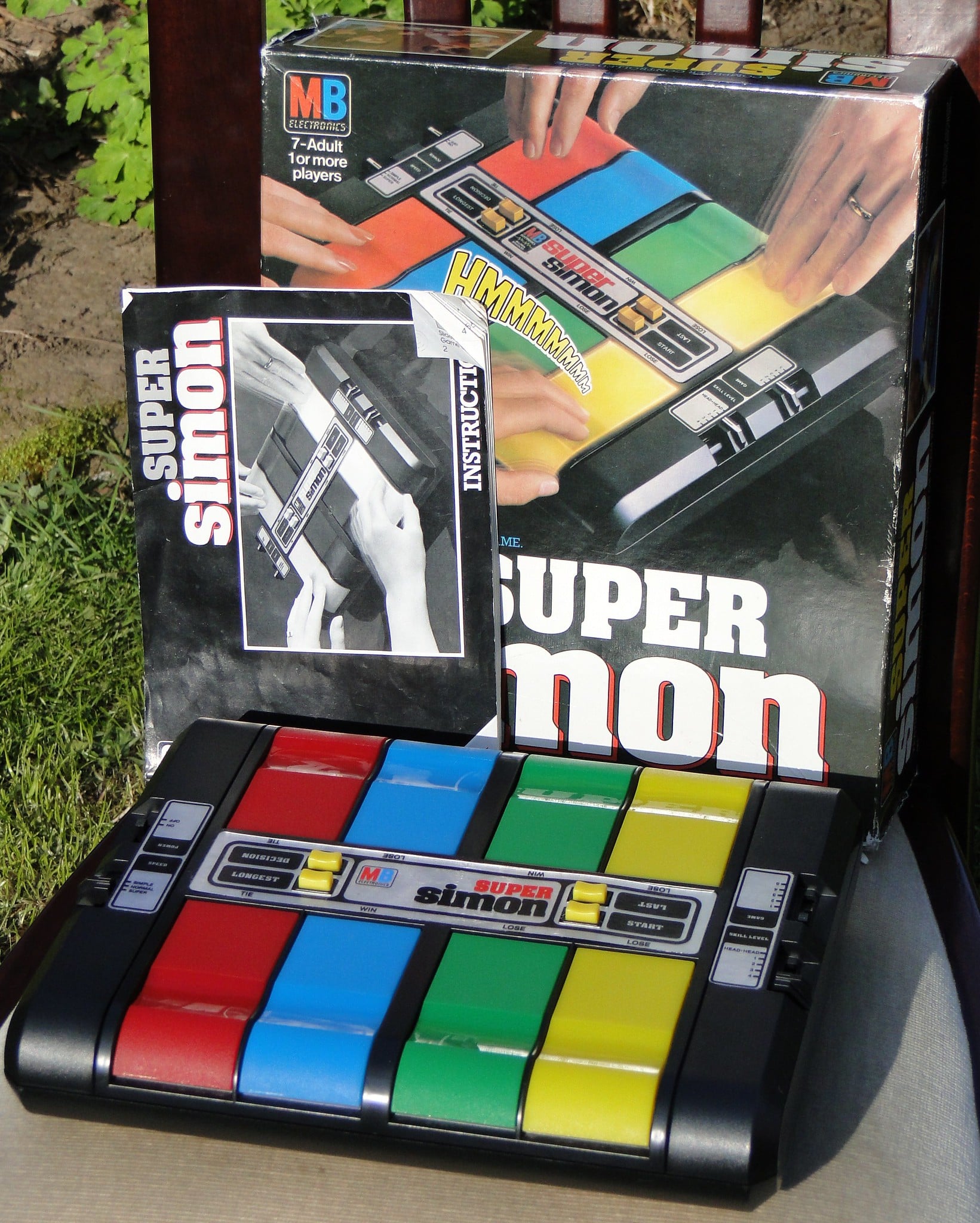
Milton Bradley’s electronic memory game got surprisingly dramatic commercials. The ads showed the glowing, beeping device in dark rooms while players concentrated intensely on repeating increasingly complex patterns.
The commercials made a simple memory test look like a genuine challenge worthy of respect. The electronic sounds and lights seemed almost futuristic in the late 70s and early 80s, giving Simon an appeal beyond its basic gameplay.
That serious tone distinguished it from more chaotic toy commercials of the era.
Nerf orbs

Parker Brothers initially marketed these foam orbs with commercials emphasizing indoor play. The ads showed kids throwing Nerf products inside houses without breaking anything, a novelty that appealed to parents nervous about indoor roughhousing.
The commercials carefully demonstrated the soft, safe nature of the foam while still making the play look fun. That balance between parental approval and kid appeal made Nerf commercials work on multiple levels.
The product delivered on its promise, which helped build trust in the brand.
Spirograph
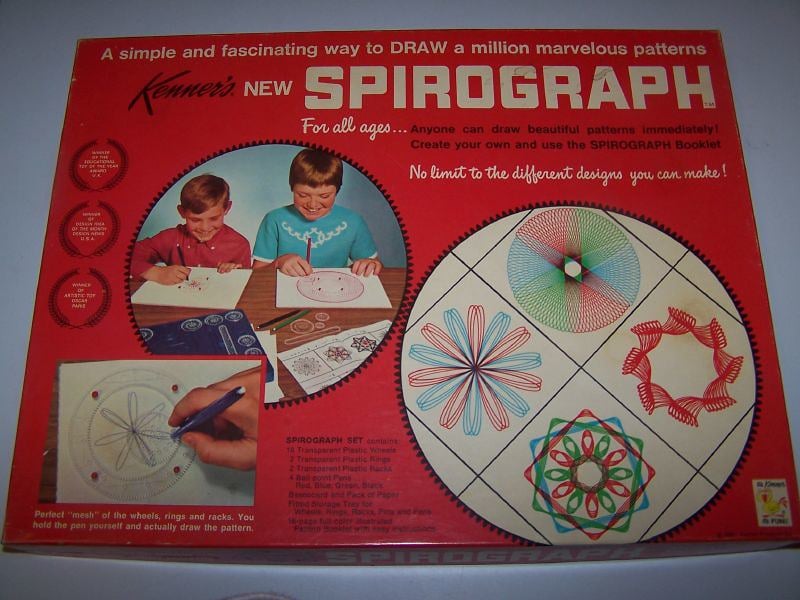
Kenner’s geometric drawing toy got commercials that showcased the intricate designs possible with its gears and pens. The ads had a calming, almost meditative quality compared to the chaos of action toy commercials.
Kids watching could see exactly what the toy produced, and those complex patterns looked impressive enough to make the effort seem worthwhile. The commercials didn’t oversell or exaggerate.
They simply showed the actual creative potential, which proved sufficient. That honesty made the toy feel more legitimate than products relying purely on fantasy.
Rock ‘Em Sock ‘Em Robots

Marx Toys created memorable commercials for these dueling robots by emphasizing the knockout mechanic. The ads showed two players frantically punching buttons while the robots threw punches until one head popped up.
The simple gameplay translated perfectly to television, requiring no explanation beyond what viewers could immediately see. The competitive element and the satisfying knockout moment made the toy appealing for its directness.
Those commercials understood that sometimes the simplest concepts work best, especially when they involve hitting things until something pops.
Pogo Stick

Folks selling pogo sticks ran flashy clips of youngsters leaping sky-high while spinning or flipping mid-air. These spots played out under bright sun, on slick pavement, with grinning kids acting like hopping was no big deal.
Truth is, most attempts ended in tumbles and sore knees, yet the dream kept pulling people in. Floating above ground – even just in your mind – was enough to hook young imaginations.
Wanting more airtime than physics allowed turned a tricky gadget into something timeless.
Talkboy

Tiger Electronics pushed this cassette gadget through ads that focused on how it could alter your voice. It blew up when featured in ‘Home Alone 2,’ yet the marketing spotlighted record-and-play functions kids rarely saw in toys.
Kids were seen capturing their speech, then replaying it faster or slower – turning basic tech into amusement. This mix of actual use and creative play gave the Talkboy a vibe of being handy while still entertaining.
Ads spun a plain device into something every child needed.
Slip ‘N Slide

Wham-O’s pitches made backyards feel like splash zones. You’d see children dashing down golden sheets soaked in sprays – giggling, slipping, living that sunny dream.
Truth was messier: muddy knees, bumpy turf, sometimes a rough tumble. Still, those clips bottled real seasonal happiness.
No need for tech talk or lists – the idea spoke for itself. Showing raw playtime worked way better than selling specs.
Play-Doh

Kenner’s clay hit screens with spots highlighting cool builds, sidestepping any talk of cleanup. Scenes had children shaping flawless figures using kits and cutters, vivid hues flashing under lights.
You couldn’t sniff it through TV speakers, yet anyone who squeezed Play-Doh knows that unique aroma stuck just like the squishy feel. Ads pushed imagination and fun, skipping how shades always blended into muddy lumps later.
This edited version sold well since the early thrill seemed real enough.
Off the display into your mind

Old toy ads made us expect things real life could never deliver. Most times, the toys just didn’t work like they did on screen, while actual playrooms stayed messy, nothing like the shiny setups shown.
Yet somehow, that difference didn’t kill the fun at all. Children adjusted quickly, minds stretched what was missing, still today, years after, people remember those clips clearly.
The ads worked – not by showing how the toys really looked, yet by tapping into what kids truly felt inside. That bond stuck deeper than just facts ever could, while moments from lazy Saturday cartoons outlived the playthings bought that same day.
More from Go2Tutors!

- The Romanov Crown Jewels and Their Tragic Fate
- 13 Historical Mysteries That Science Still Can’t Solve
- Famous Hoaxes That Fooled the World for Years
- 15 Child Stars with Tragic Adult Lives
- 16 Famous Jewelry Pieces in History
Like Go2Tutors’s content? Follow us on MSN.



