Why Kids in the Seventies and Eighties Had a Completely Different Childhood Experience
There was a time when a child’s world ended at the edge of the neighborhood — and that was considered fine. Parents in the seventies and eighties operated on the assumption that children were resilient, resourceful, and capable of surviving an afternoon without adult oversight.
What that era produced was a generation shaped by boredom, minor injury, and the particular thrill of being genuinely unsupervised.
The gap between that childhood and the one most kids experience today is not simply a matter of nostalgia. The rules, the risks, the rhythms of daily life, and the expectations placed on children were fundamentally different — in ways that feel almost unrecognizable from where things stand now.
The Unsupervised Afternoon

After school in the seventies and eighties meant one thing: go outside and come back before dark. There was no scheduled activity waiting, no parent tracking a location on a phone, and no structured agenda.
Kids organized their own games, settled their own disputes, and figured out how to fill the hours. Modern children’s physical territories are estimated to be roughly 90 percent smaller than those of children in the 1970s — a statistic that says something real about how dramatically the freedom to roam has contracted.
The Latchkey Generation
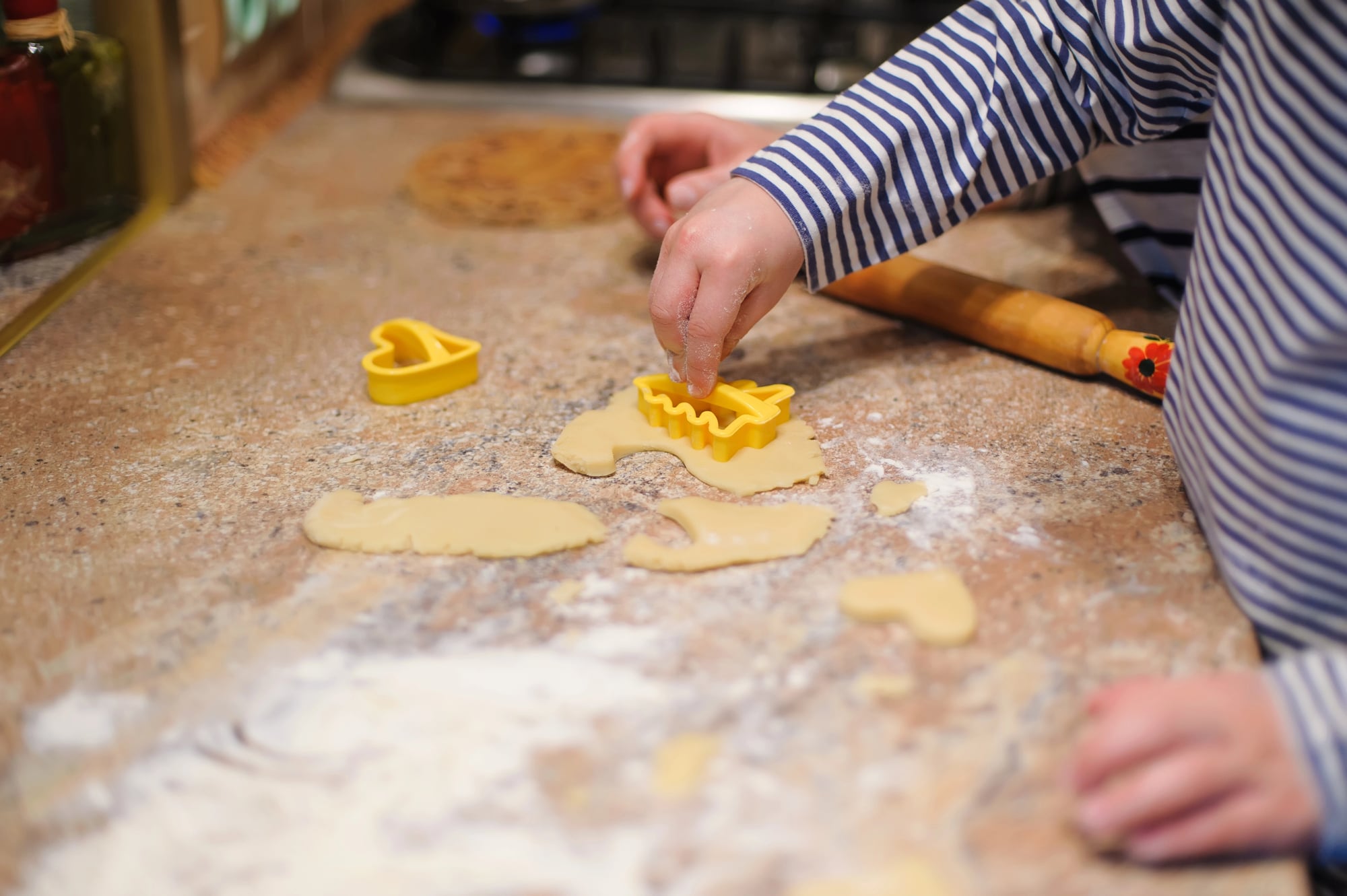
By the 1980s, a significant portion of American children came home from school to an empty house, let themselves in with a key worn on a string around the neck, and managed the hours until a parent returned from work. They made their own snacks, started dinner, and occasionally handled genuine emergencies without an adult nearby.
The term “latchkey kid” entered the cultural vocabulary not as a criticism but as a neutral descriptor of an ordinary reality.
A Single Phone, Fixed to the Wall
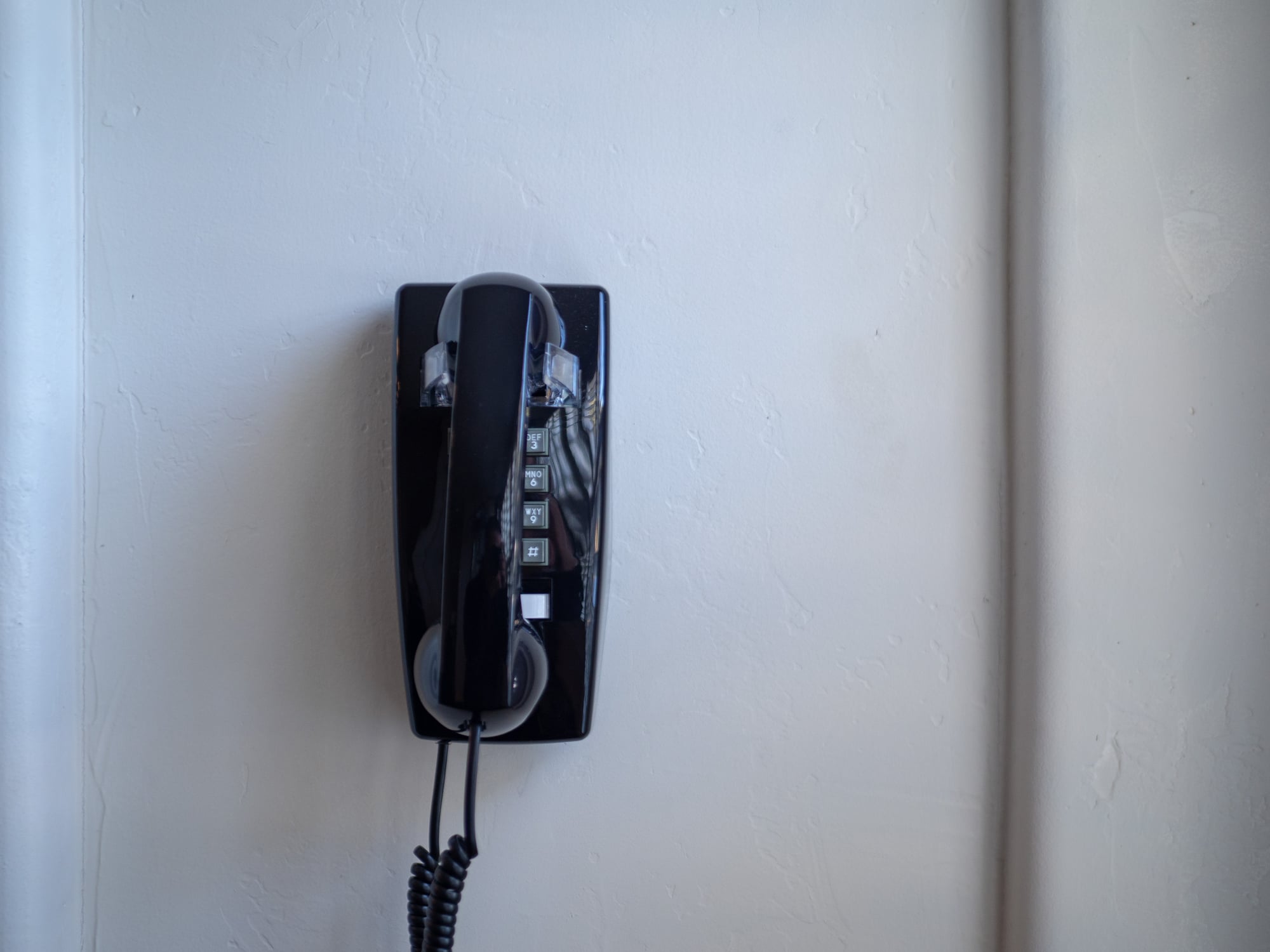
Every household had one telephone — a rotary model in the seventies, a push-button in the eighties — anchored by a cord to a single spot in the kitchen or hallway. If someone was using it, you waited.
If you wanted privacy, you stretched the cord as far as it would go and hoped for the best. The idea of a child having a personal communication device was not merely absent; it was genuinely unimaginable.
Saturday Morning Was Sacred

From roughly 7 a.m. to noon, ABC, NBC, and CBS ran back-to-back cartoons: Super Friends, Scooby-Doo, The Bugs Bunny/Road Runner Show, He-Man, and dozens more. Children set their alarms, planted themselves in front of the television with a bowl of cereal, and did not move.
Missing an episode meant actually missing it — there was no streaming, no recording for most families, no second chance. That scarcity turned a TV schedule into a weekly ritual that the entire generation shared.
TV Signed Off for the Night

After a certain hour — usually around midnight — the broadcast channels shut down entirely. A test pattern filled the screen, sometimes accompanied by a tone, until morning programming resumed.
Children who stayed up too late on a Friday night looking for something to watch eventually found nothing. The idea of 24-hour children’s programming, let alone on-demand content, belonged to the future.
Riding in Cars Without Restraint

In the early 1970s, many vehicles lacked functional seat belts for rear passengers, and enforcement of what laws existed was minimal. Children rode in the back seats of station wagons with no restraints, slept across the rear parcel shelf on long trips, and tumbled around cargo areas freely.
The Family Ties and Cosby Show era depicted children in cars with a casualness about rear-seat safety that would be illegal throughout the United States today.
Metal Playgrounds on Concrete

The playground equipment of the 1970s was constructed from steel, bolted to asphalt or gravel, and designed with a cheerful indifference to injury. Two-story spiderweb climbing domes, merry-go-rounds that could reach genuine speed, and slides that became surface-of-the-sun temperature in summer were standard features.
Falls were onto hard ground. Burns from metal in August were expected.
The injuries were real, and they were considered part of learning to navigate the physical world.
Lawn Darts in the Backyard

Lawn darts — marketed as Jarts — were weighted metal projectiles with sharp tips, approximately a foot long, that players threw in arcs toward plastic rings on the ground. They were sold in toy stores and played in family backyards for decades.
After thousands of emergency room visits, documented skull penetrations, and the death of a seven-year-old girl in California, the Consumer Product Safety Commission banned them in 1988. The remarkable thing is not that they were dangerous, but that this took as long as it did.
Lead Paint in the Home

The federal government banned lead-based paint in residential properties in 1978, which means that any child growing up in a home built before that year was living with a material now understood to cause severe neurological damage, particularly in young children. The paint was favored for its durability and vivid color.
Generations of children chewed on window sills, picked at peeling walls, and inhaled dust during renovations with no awareness of what they were absorbing.
Riding Bikes Without Helmets

Through the seventies and deep into the eighties, children cycled everywhere without head protection of any kind. There were no design standards for bicycle helmets and no widespread awareness of head injury risk.
The helmet existed as a piece of racing equipment, not a childhood accessory. Laws requiring children to wear helmets while cycling eventually spread through 21 states and Washington D.C., but for the generation growing up before those laws, a scraped knee was the expected worst outcome of a bike crash.
The Encyclopedia Was the Internet

Research meant going to the bookshelf and pulling out the relevant volume of the family encyclopedia — usually the Britannica or World Book — or making a trip to the library. If the encyclopedia’s entry on a subject was outdated, incomplete, or simply wrong, there was no mechanism to discover that.
Children absorbed what the reference books said and moved on. The library’s card catalog, cross-referenced by hand, was the most sophisticated search function available.
Party Lines and Operator-Connected Calls

In rural areas through much of the seventies, telephone service ran on party lines — shared circuits where multiple households used the same line and anyone could pick up the phone and listen to a neighbor’s conversation. Calling a distant number often involved asking a telephone operator to connect the call.
Long-distance charges were high enough that a cross-country phone call was a deliberate event, not a casual check-in.
Corporal Punishment in Schools

Physical discipline from teachers was not only legal but standard practice in most American school districts through the seventies and into the eighties. A principal’s paddle hung in many schools as a matter of course.
Students received corporal punishment for behavioral infractions in ways that would result in criminal charges for a teacher today. The practice has since been banned in most states, though it remains legal in a minority of them.
TV Guide Was Not Optional

Knowing what was on television required a copy of TV Guide — a small, staple-bound magazine published weekly and sold at checkout counters everywhere. Without it, finding a specific show meant flipping through channels manually and hoping to arrive in time.
The magazine ran to millions of copies weekly and was, for decades, one of the highest-circulation publications in the United States. Knowing what was on at 8 p.m. Thursday was, in a practical sense, information that required a physical publication to possess.
The Video Rental Decision Was Irreversible

Renting a film from the video store — Blockbuster from 1985 onward, or any number of independent shops before that — meant making a choice and committing to it. The drive back to exchange a bad selection was a real cost, and many families simply watched whatever they had rented regardless of quality.
Children learned early that the cover of the cassette box was frequently aspirational rather than representative of what was inside.
Smoke in Public Was Everywhere

Adults smoked in restaurants, in offices, on airplanes, and in cars with children present. The non-smoke section of a restaurant was often a loose designation rather than a meaningful barrier.
Children in the seventies and eighties were routinely exposed to second-hand fumes in enclosed spaces as a matter of course, and this was considered sufficiently unremarkable that it required no comment from anyone involved.
Aspirin for Children

Before the link between aspirin and Reye’s syndrome was established and publicized in the early 1980s, children’s aspirin was a routine part of the medicine cabinet. Parents gave aspirin to feverish children without hesitation.
The warning label now standard on aspirin packaging, cautioning against use in children, dates from 1986 — meaning that an entire generation before that date received a medication now understood to carry serious risk in pediatric use during viral illness.
No Car Seats for Infants

Infant car seat design and enforcement lagged well behind the pace of research. Many states didn’t enact mandatory child restraint laws until the mid-1980s, and compliance was patchy even after that.
Infants were routinely held on laps in moving vehicles, and toddlers stood on front seats. The five-point harness system now standard in child car seats was not widely used until the 1990s.
Playing Outside Until Dark Was the Rule, Not the Exception

The standard parental instruction — “be home when the street lights come on” — served as the afternoon’s only schedule. Children organized their own activities, navigated conflicts without mediation, and returned when hungry or when the light failed, whichever came first.
The expectation that children would spend the majority of their free time outdoors without adult supervision was so widely shared that departing from it would have required explanation.
Toy Chemistry Sets With Real Chemicals

Chemistry sets sold to children in the sixties and seventies contained substances — including sodium ferrocyanide, ammonium nitrate, and various acids — that would trigger an immediate recall if included in a children’s product today. The Gilbert U-238 Atomic Energy Lab, sold in the early 1950s, even included actual radioactive material.
By the late seventies, sets had been significantly toned down, but early-decade kits still offered enough chemical variety to cause real injury in unsupervised hands.
Class Photos Were the Only Photographs
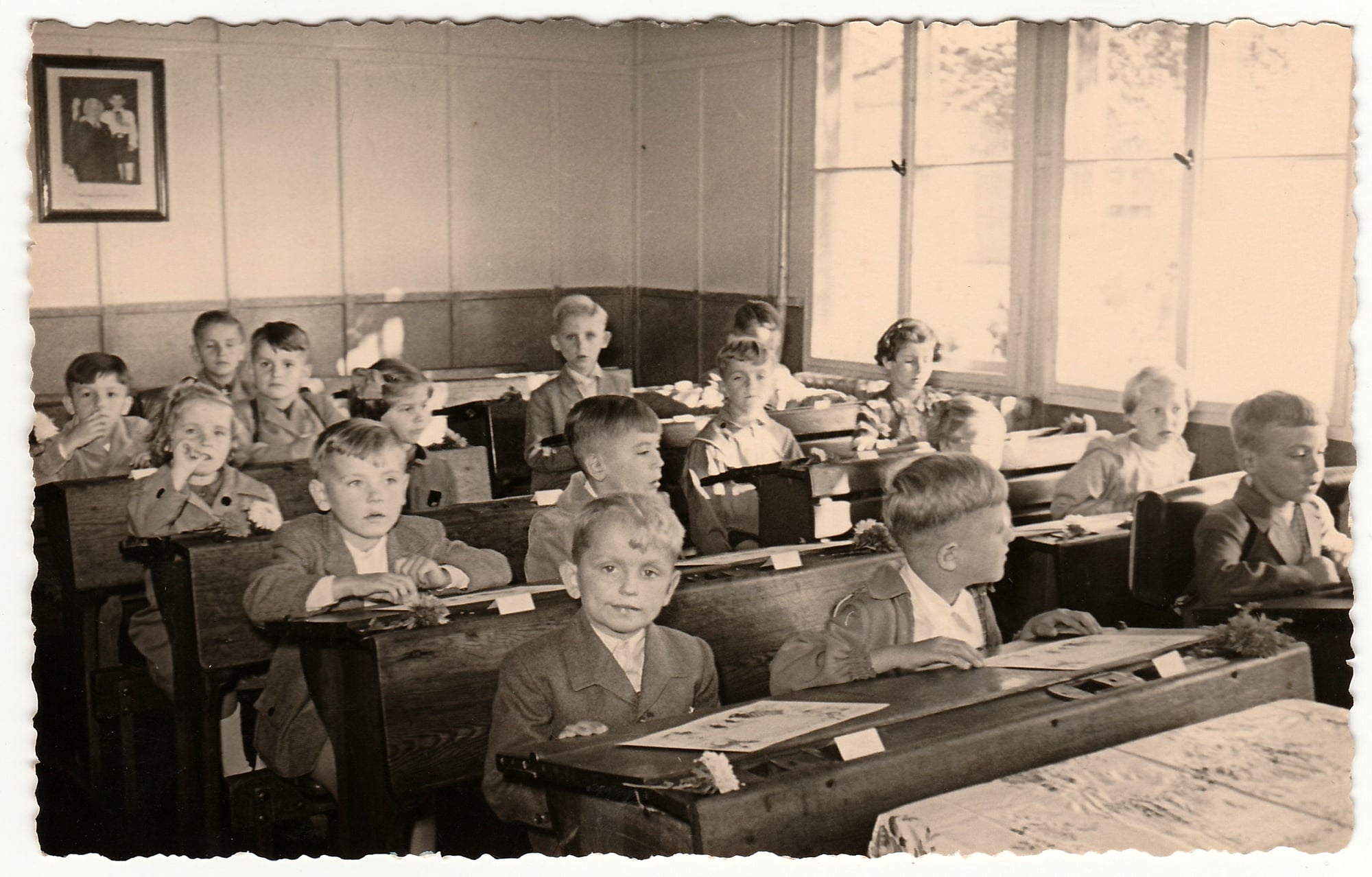
Photographs of children were taken at school once a year, at birthdays, at holidays — occasions that justified loading and advancing film. A roll of 24 exposures, costed against developing fees, meant that photographs were deliberate, finite, and months in the making.
The developed prints arrived at the drugstore counter weeks later. A child might accumulate a few dozen photographs across an entire year.
The idea that a parent would photograph every meal, every expression, or every ordinary afternoon was not merely unusual; the technology made it impossible.
The Report Card Was Final

School grades arrived once a quarter, sealed in an envelope that came home with the child. There was no parent portal, no real-time grade tracking, no email from a teacher flagging a missed assignment.
Parents learned how their children were doing four times a year. Children existed within a system where academic performance was periodically revealed rather than continuously monitored, which gave them a degree of independence from parental scrutiny that has since been systematically closed.
Encyclopedia Salesmen at the Door

One recurring fixture of the seventies suburban household was the encyclopedia salesman — a person who arrived uninvited and attempted to convince parents that a complete set of reference volumes was an investment in their children’s future. The argument worked often enough to sustain entire sales forces.
Those sets, purchased in installments and arranged on a dedicated shelf, then served as the primary source of factual knowledge in the home for the next fifteen years.
The Generation Gap Was Real and Wide
.

Television, music, and entertainment fragmented less in the seventies and eighties than they do today, which meant children and parents often consumed some of the same media — but the cultural gap between generations was considered a natural feature of growing up, not a problem to be managed. A teenager’s room was their private domain, largely unmonitored.
Adolescence was understood as a period of deliberate separation from parental oversight, and most parents of the era accepted this as the way things were supposed to go.
When the School Day Ended, the Day Ended

There was no homework portal, no digital assignment tracker, no notification system alerting a parent that a child had a project due Friday. Schoolwork happened at school, and what came home was managed by the child.
The volume of homework assigned to elementary students in particular has increased substantially in the decades since, and the infrastructure for tracking it in real time has transformed the boundary between school and home into something much more permeable than it once was.
The Particular Boredom That Built Things

The absence of constant stimulation produced something that is now in short supply: unstructured time with nothing to fill it. Children of the seventies and eighties invented games from available materials, built things from whatever was in the garage, read books because there was nothing else to do at 3 p.m. on a rainy Tuesday, and developed the habit of entertaining themselves.
The boredom was real, sometimes genuinely tedious, and it was also the condition under which most of what they remember from childhood actually happened.
The Street Was a Social Network

Neighborhoods functioned as loose communities in which children moved freely between yards and houses, knocked on doors without calling ahead, and built friendships based on proximity rather than curated preference. Kids who lived on the same block became close whether or not they would have chosen each other from a larger pool.
That randomness produced friendships across ability levels, temperaments, and interests that structured activities rarely replicate.
What That Childhood Built

The generation that grew up with metal playgrounds, unscheduled afternoons, and the street as their only option developed a particular relationship with self-sufficiency that later cohorts absorbed more slowly. Whether that came from necessity or from a culture that trusted children to handle more than they were given credit for is a question without a clean answer.
What is clear is that the gap between that era and the present one is not simply a matter of technology or safety standards. It reflects a deep shift in assumptions about what children need, what they can handle, and what a childhood is supposed to be for.
Both eras have their defenders. The arguments on each side tend to reveal more about the person making them than about which approach produced better outcomes.
More from Go2Tutors!

- The Romanov Crown Jewels and Their Tragic Fate
- 13 Historical Mysteries That Science Still Can’t Solve
- Famous Hoaxes That Fooled the World for Years
- 15 Child Stars with Tragic Adult Lives
- 16 Famous Jewelry Pieces in History
Like Go2Tutors’s content? Follow us on MSN.