Why Mount Everest Keeps Getting Taller
Have you ever looked at a mountain and questioned whether its height has changed from day to day? Although most of us consider mountains to be immutable, permanent giants, Mount Everest has an intriguing secret: it is actually growing taller every year.At 29,032 feet above sea level, Everest isn’t content to be the highest mountain in the world.
Researchers have found that this magnificent mountain grows by about 1-2 millimeters per year, which is about the thickness of a penny or two stacked together.Even though that may not seem like much, it adds up to some very remarkable height gains over thousands of years.
Here’s a list of 15 compelling reasons why Mount Everest keeps reaching for the sky, defying what we might expect from such an ancient geological wonder.
Tectonic Plate Collision
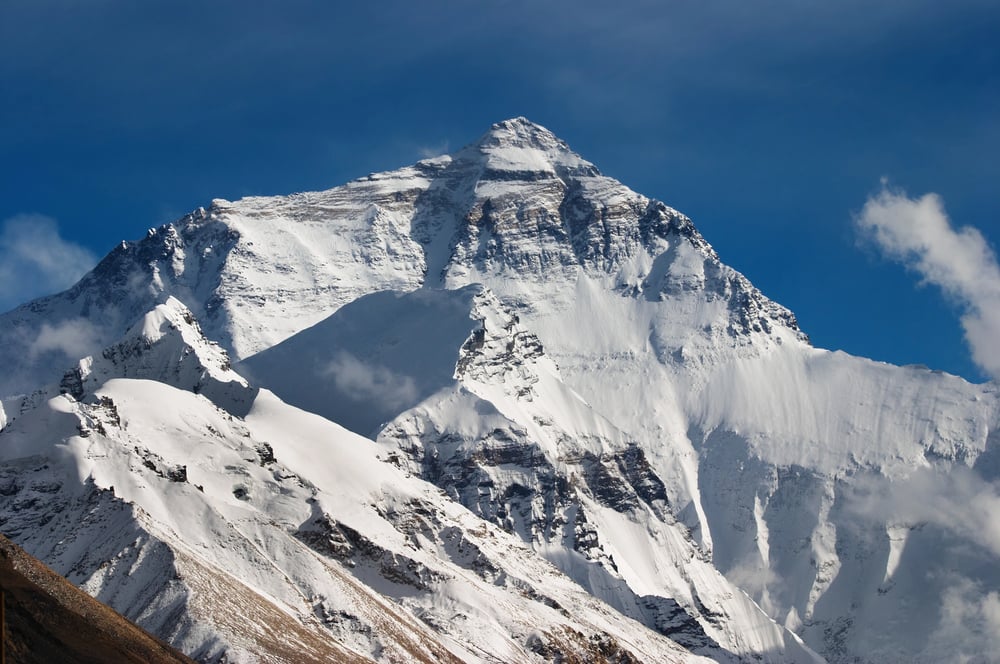
The biggest player in Everest’s growth story is an epic geological smashup that’s been happening for 50 million years. Picture two massive puzzle pieces slowly crunching together—that’s essentially what’s occurring between the Indian and Eurasian tectonic plates.
The Indian plate is still pushing northward into Asia at about 2 inches per year, creating enormous pressure that forces the land upward. This continental collision is like a slow-motion car crash that’s been ongoing since your great-great-grandmother’s time, multiplied by millions.
River System Changes

Here’s where things get really interesting. About 89,000 years ago, something dramatic happened that scientists are calling ‘river piracy.’
The powerful Kosi River essentially hijacked the flow of the nearby Arun River, creating a supercharged waterway that carved away massive amounts of rock and soil from the Himalayan foothills. This altered erosion patterns in the region, which may have contributed indirectly to uplift throughout the Himalayas.
Isostatic Rebound
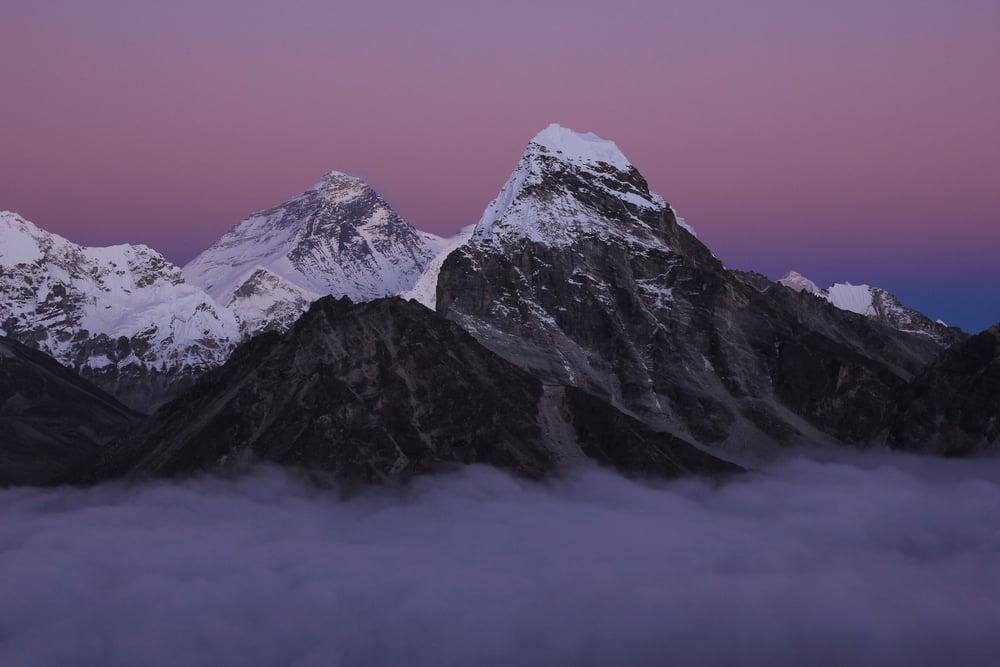
This fancy scientific term describes what happens when the Earth’s crust bounces back after losing weight. When those ancient rivers washed away tons of rock and sediment, the underlying crust became lighter and literally rebounded upward, like a compressed sponge expanding when pressure is released.
Scientists estimate this process may have contributed to regional uplift throughout the Himalayas over thousands of years. It’s basically the Earth’s way of saying, ‘Well, if you’re going to take away all that heavy stuff, I’m just going to pop up a bit higher.’
Ongoing Geological Forces
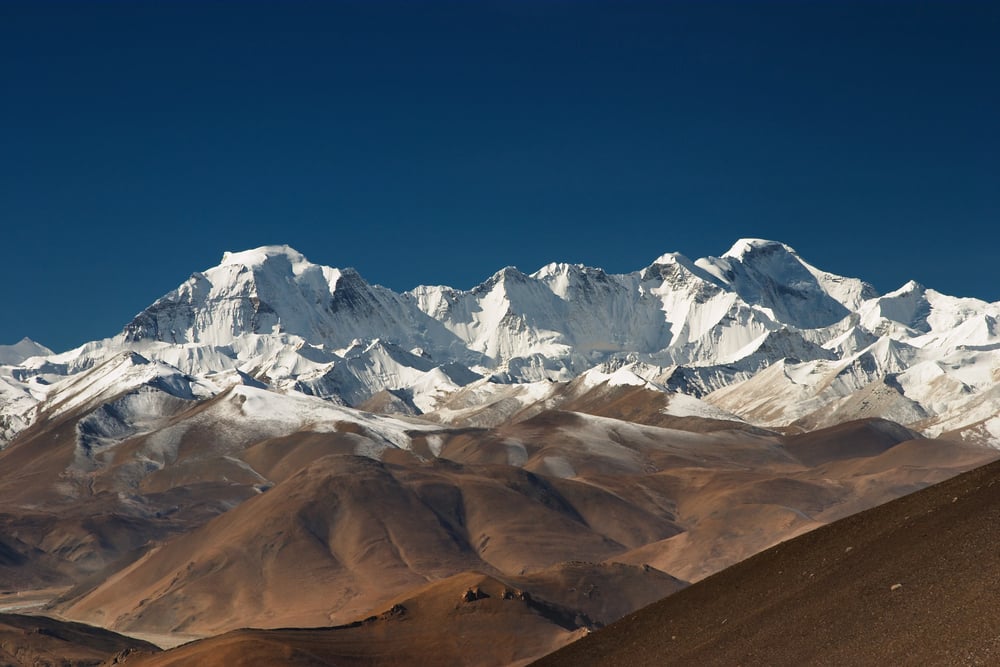
Mount Everest sits in one of the most geologically active regions on Earth, where massive forces are constantly at work beneath our feet. The Main Himalayan Thrust fault system continues to push rock formations upward and northeastward, creating a dynamic environment where the mountain literally can’t sit still.
These geological forces operate on timescales that make human lifespans look like brief moments, yet their effects are measurable and consistent year after year.
Earthquake Activity

Earthquakes in the Himalayan region can actually cause Everest to shift in various ways depending on how the ground moves during seismic events. The 2015 Nepal earthquake, for example, caused the mountain to shift slightly southwest, though the height change was negligible.
These dramatic geological events can cause localized rises or drops, though Everest’s long-term growth is driven mainly by the ongoing plate collision. It’s like the mountain occasionally gets a sudden jolt during particularly intense geological moments, but the overall trend keeps moving upward.
Erosion and Uplift Balance

While wind, water, and ice constantly work to wear down Everest’s surfaces, the upward forces from tectonic activity are currently winning this geological tug-of-war. The mountain gains height faster than erosion can remove it, though this balance could theoretically shift over geological time periods.
Imagine trying to fill a bucket that has a small pit in the bottom—as long as you pour water in faster than it leaks out, the water level keeps rising.
Continental Drift History

Everest’s growth story begins with an incredible journey that started about 200 million years ago when the supercontinent Pangea began breaking apart. The landmass that would become India started as an island near Australia and took an epic geological road trip northward, traveling at surprisingly fast speeds of nearly 30 feet per century.
This ancient voyage set the stage for the dramatic collision that would eventually create the Himalayas and continue driving Everest’s growth today.
Crustal Thickening

As the Indian plate continues pushing into the Eurasian plate, the Earth’s crust in the Himalayan region becomes thicker and more compressed. This process, called crustal thickening, forces rock layers to buckle upward rather than spreading outward, contributing to Everest’s vertical growth.
Think of it like squeezing a tube of toothpaste from the bottom—all that pressure has to go somewhere, and in Everest’s case, it goes up.
Marine Fossil Evidence
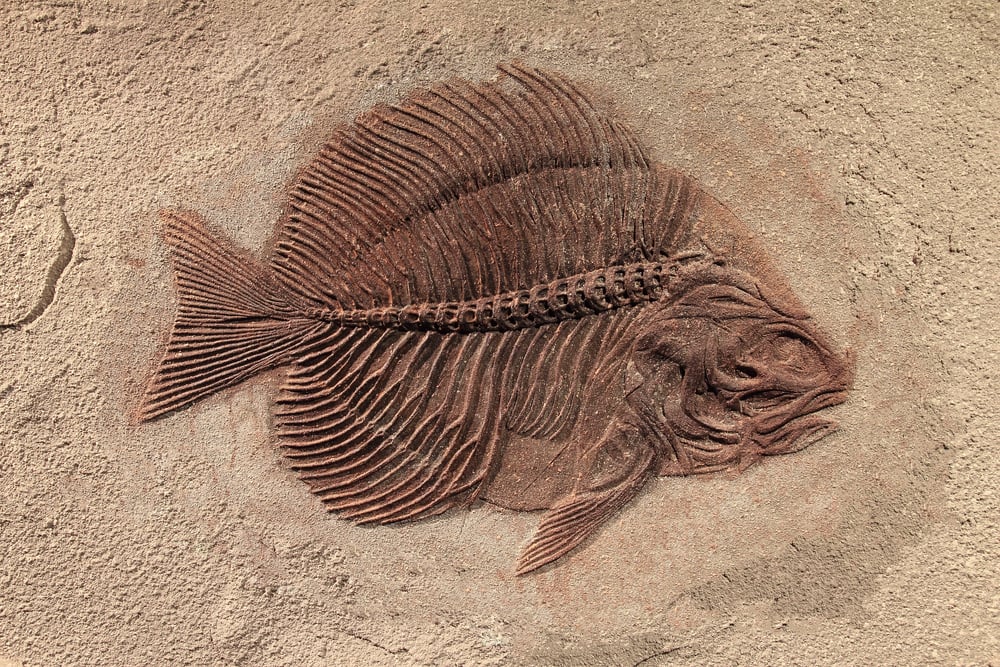
One of the most mind-blowing aspects of Everest’s formation is that its summit contains limestone filled with marine fossils that are 450 million years old. These ancient sea creatures, now frozen in rock nearly 6 miles above sea level, provide proof of the incredible geological forces that lifted former ocean floors to create the world’s tallest peak.
It’s literally a piece of ancient ocean bottom that’s been elevated to touch the sky.
Modern Measurement Technology

Recent advances in satellite technology and GPS systems have allowed scientists to measure Everest’s growth with unprecedented precision. The official height of 29,032 feet was established in 2020 through a collaborative effort between Nepal and China, representing a gain of about 2.8 feet from previous measurements.
This technology helps us understand that what we once thought was a static mountain is actually a dynamic, growing geological feature.
Glacial Weight Loss

As climate change causes glaciers on Everest to retreat and lose mass, this reduction in weight contributes to the mountain’s upward movement through isostatic rebound. Less ice pressing down on the mountain means less gravitational force holding it in place, allowing the underlying rock to rise slightly.
It’s similar to how you might bounce up a little when someone heavy gets off a trampoline you’re both standing on.
Mantle Convection

Deep beneath Everest, heat and convection currents in the Earth’s mantle indirectly fuel the tectonic collision that uplifts the mountain. These massive circulation patterns of hot, semi-liquid rock provide the driving force behind plate movement, which in turn creates the pressure that pushes Everest skyward.
Think of it as the planet’s internal engine creating the power that moves continents and builds mountains, though there’s no direct magma pushing up under Everest itself
When Giants Dance: The Future of Earth’s Tallest Peak

The history of Mount Everest’s ascent links us to both prehistoric geological processes and recent scientific findings that are revolutionizing our knowledge of the formation and evolution of mountains. Everest’s height gain is the result of forces acting over wildly disparate timescales, ranging from tectonic collisions that started when dinosaurs roamed the earth to river systems that altered their course 89,000 years ago.
Scientists predict that the mountain will continue to grow for millions of years to come as the Indian plate continues its northward journey, despite its gradual but steady ascent toward the heavens. Even the most seemingly permanent aspects of our planet are always changing, but typically too slowly for us to notice, as this continuous geological dance serves as a reminder.
The next time you see a picture of Mount Everest, keep in mind that the mountain is actually higher now than it was when the picture was taken, and it will be slightly higher tomorrow.
More from Go2Tutors!

- The Romanov Crown Jewels and Their Tragic Fate
- 13 Historical Mysteries That Science Still Can’t Solve
- Famous Hoaxes That Fooled the World for Years
- 15 Child Stars with Tragic Adult Lives
- 16 Famous Jewelry Pieces in History
Like Go2Tutors’s content? Follow us on MSN.



