Why Some of the World’s Most Dangerous Roads Still Attract Drivers on Purpose
There is a road in Bolivia where memorial crosses outnumber guardrails. A highway in Alaska with three service stations across 414 miles, where a breakdown in winter could be fatal hours before anyone finds you.
A stretch of Norwegian coastline where ocean waves crash directly over the asphalt in storms. All of them attract visitors on purpose.
All of them are actively sought out. The question of why is more interesting than it first appears.
The appeal is never just one thing. Scenery, engineering, reputation, solitude, the particular quality of attention that genuine risk demands — these combine differently on every road.
What the most visited dangerous roads share is not recklessness but a specific kind of gravity: they ask more of a driver than a highway does, and that asking is, for many people, precisely the point.
North Yungas Road, Bolivia — The Road That Became a Destination
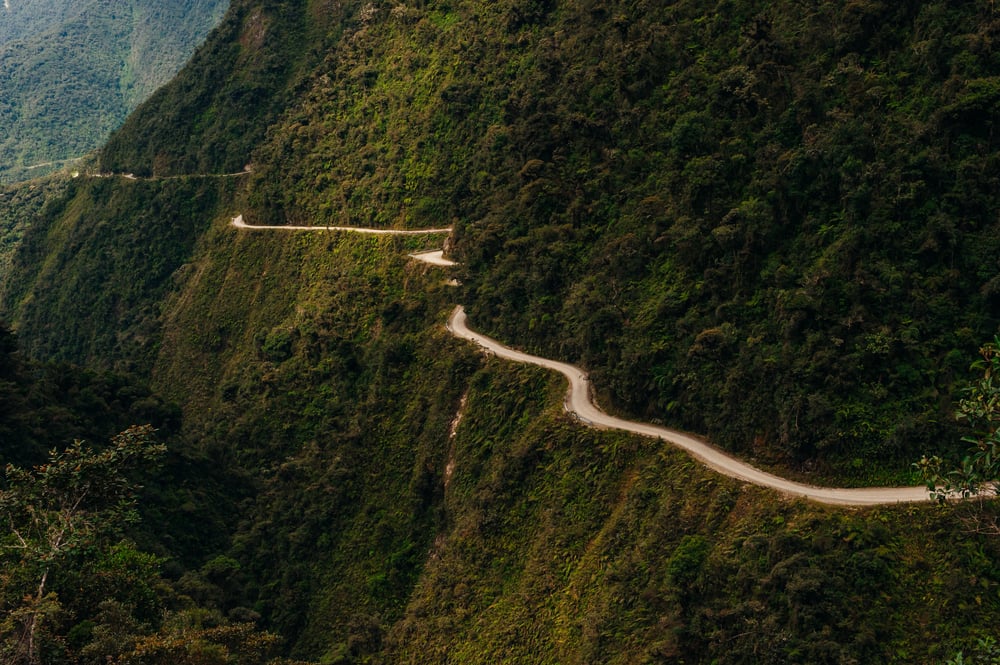
Known globally as the Death Road, Bolivia’s North Yungas Road killed an estimated 200 to 300 people per year before a bypass highway opened in 2006. Cut into the Andean mountainside in the 1930s by Paraguayan prisoners of war, the 43-mile route descends nearly 11,800 feet from the Andean pass near La Paz to the jungle town of Coroico, narrowing in places to barely 10 feet wide, with no guardrails and cliff drops of up to 2,000 feet. When the bypass opened and truck traffic shifted, the Death Road became a tourist attraction — specifically a mountain biking route.
Thousands of visitors now cycle it each year. The crosses marking fatalities remain. So does the appeal.
The James Dalton Highway, Alaska — Extreme Isolation as the Attraction
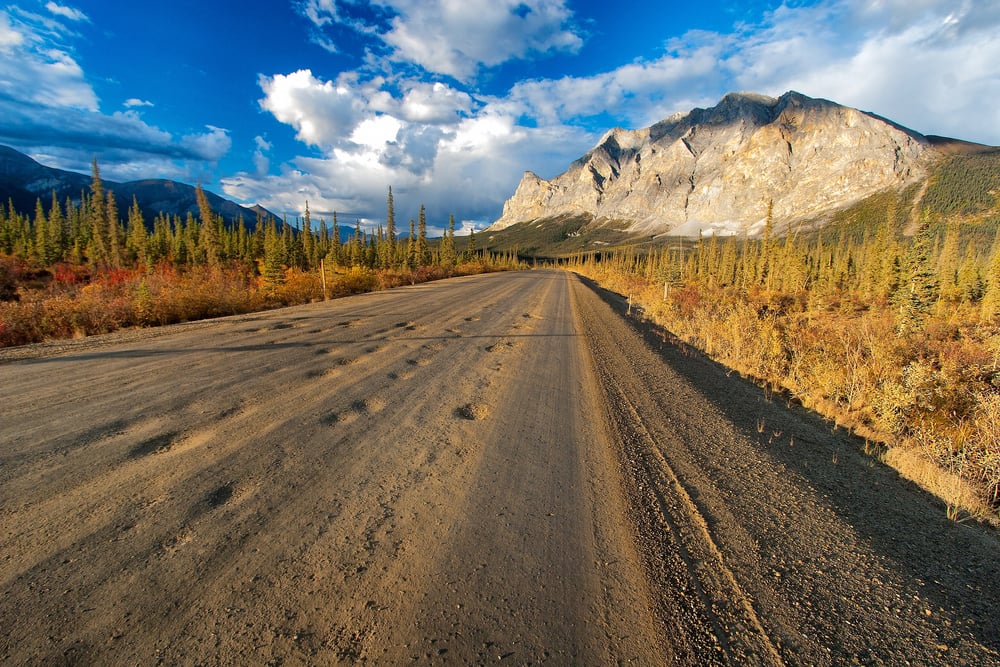
Built in 1974 to supply the Trans-Alaska Pipeline, the Dalton Highway runs 666 kilometers from Fairbanks to Deadhorse at the Arctic Ocean — through one of the most remote and unforgiving landscapes in North America. There are three towns on the entire route and no cell phone coverage.
Hazards include ice fog, whiteout conditions, flying gravel from heavy trucks, moose and caribou on the road, temperatures that drop below -50 degrees Celsius, and the simple reality that help is hours away if something goes wrong. The highway was opened to general traffic in 1981 and was made famous internationally by the television series Ice Road Truckers.
Visitors who drive it describe it as one of the most clarifying experiences of their lives.
The Karakoram Highway, Pakistan and China — Engineering Ambition at 15,400 Feet
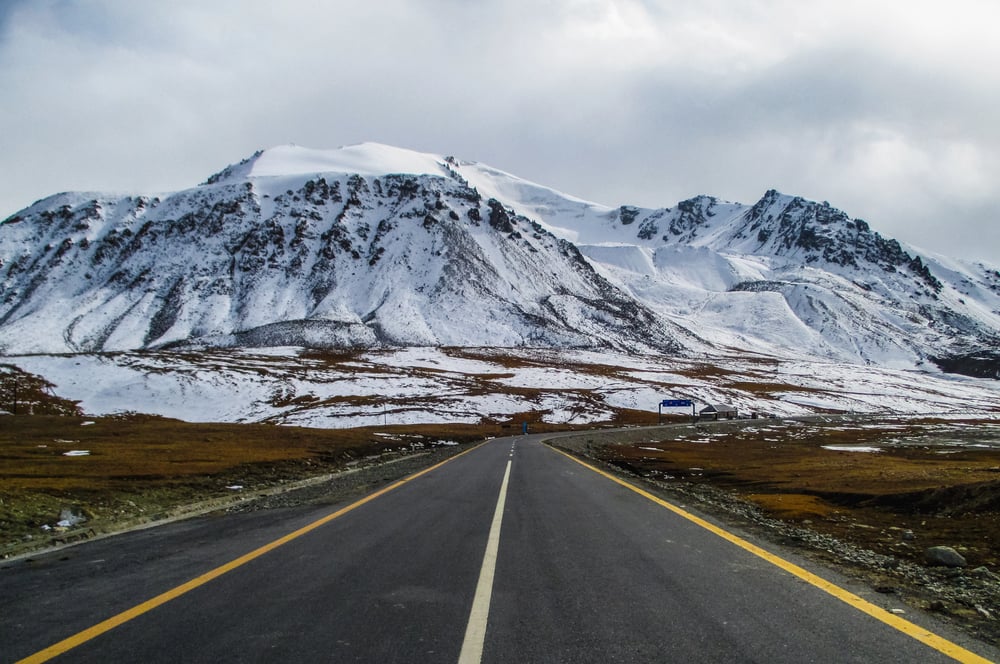
The Karakoram Highway connects Pakistan and China across the highest paved road on the planet, reaching 15,400 feet above sea level through the mountain range that contains K2 and several of the world’s fourteen 8,000-meter peaks. Its construction between 1959 and 1986 cost over 900 workers their lives to rockslides and altitude sickness.
Travelers on the highway today navigate hairpin turns, sheer drops, rockfall zones, and sections prone to flooding and seasonal closure. It has been described as an eighth wonder of the world by road engineers, and the scenery it passes through — glaciers, ancient fortresses, the Hunza Valley — makes it one of the most visually spectacular drives anywhere.
Stelvio Pass, Italy — 48 Hairpin Turns and Nothing to Apologize For
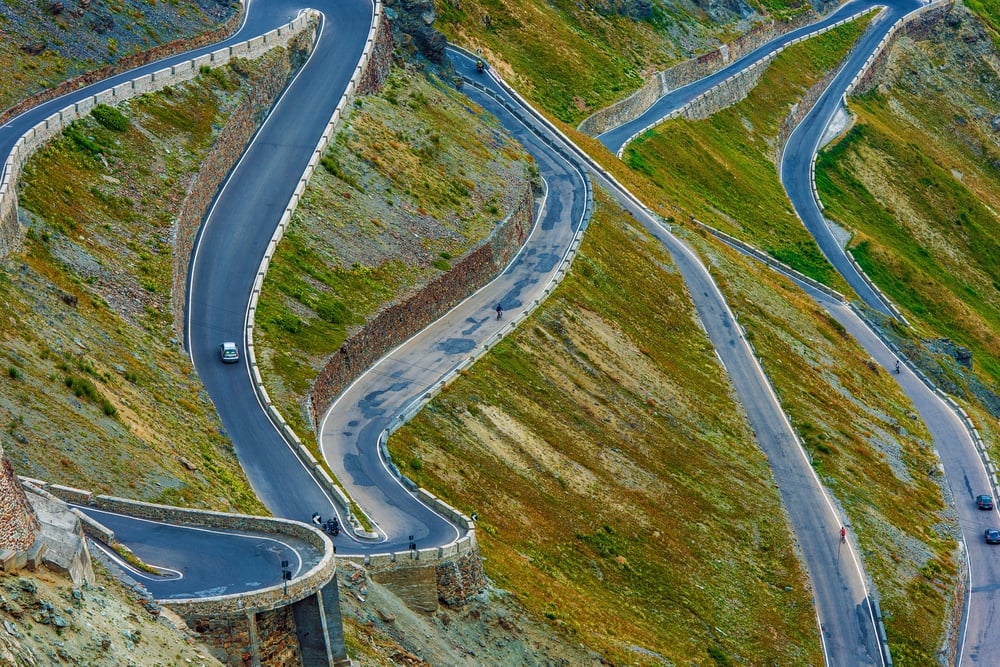
Stelvio Pass in the Eastern Alps reaches just over 9,000 feet and descends through 48 numbered hairpin turns, the original road dating to the 1820s when it was built as a military route. Top Gear named it the greatest driving road in the world in 2008 and the designation stuck.
It’s open only between May and November, during which time it fills with motorcyclists, sports car drivers, and cyclists who come specifically for the challenge of the bends. There are no illusions about why people come: the road is its own reason.
It is not particularly dangerous for a well-prepared driver in good conditions, but the exposure, the altitude, and the concentration it demands create a driving experience unlike almost anything else in Europe.
The Transfăgărășan Highway, Romania — A Communist-Era Folly That Became a Must-Drive
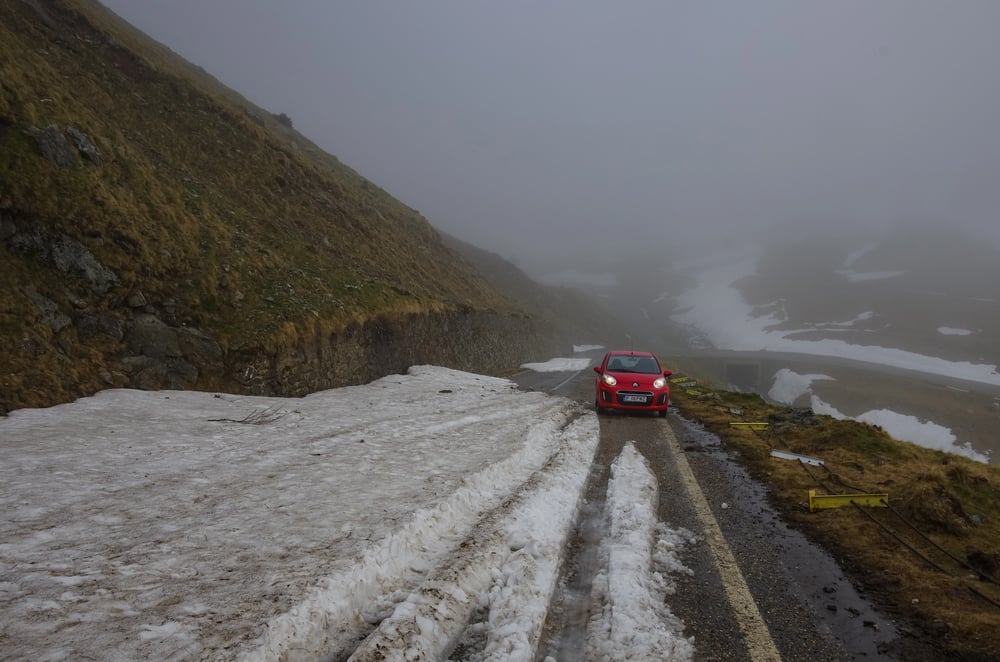
Nicolae Ceaușescu ordered the Transfăgărășan Highway built across the Carpathian Mountains in 1970 following the Soviet invasion of Czechoslovakia — the idea was to provide a military evacuation route across the mountains. It was constructed in little over a year at significant human cost.
The result is a 90-kilometer road that climbs to 2,042 meters through pine forests, past glacial lakes, and along sheer faces, with a tunnel near the summit and a series of sharp switchbacks that close between October and June each year due to snow. Top Gear called it “the best road in the world” in 2009. That assessment drove an immediate increase in tourist traffic from which Romania has never fully recovered — in the best possible sense.
Trollstigen, Norway — 11 Bends, Each Named After a Construction Worker
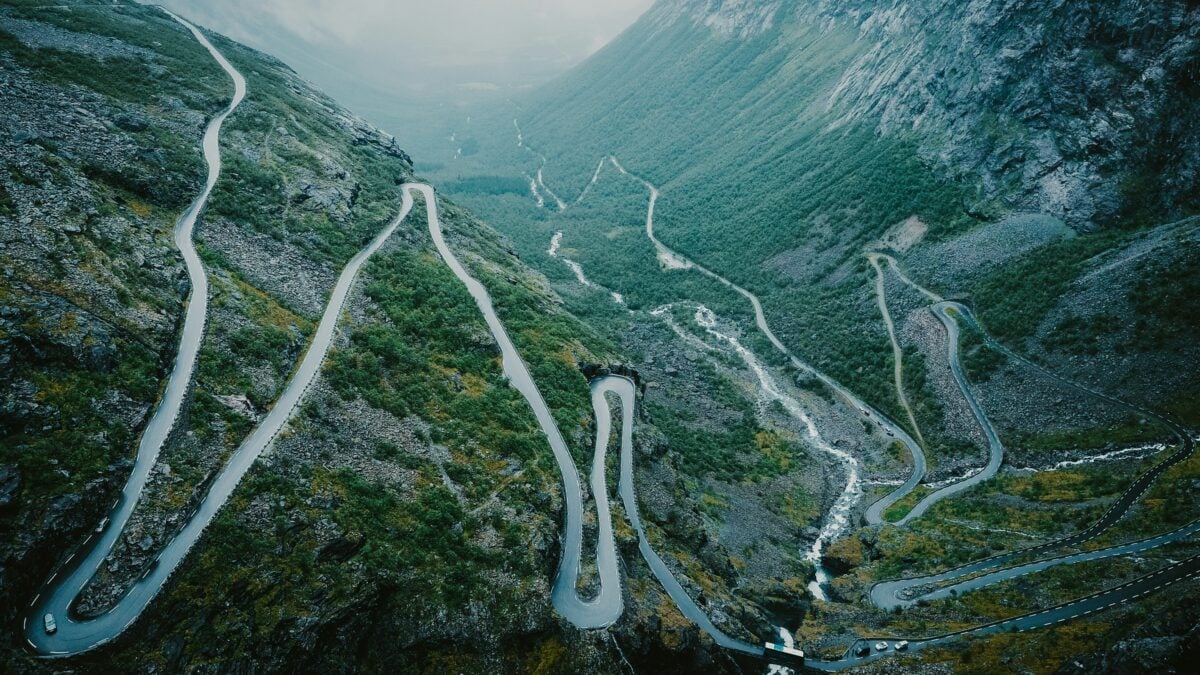
Trollstigen — which translates roughly as the Troll’s Path — winds up a Norwegian mountain face through 11 sharp bends, each named after one of the workers who hand-carved sections of the road into the rock after construction began in 1928. It opened as a transport passage in 1939 and has since become one of Norway’s most visited attractions. A waterfall runs alongside the road for much of its length.
The road closes in winter and is accessible on foot via a viewing platform during the shoulder season. The combination of engineering spectacle and dramatic landscape makes it one of the handful of roads in the world that people specifically travel to Norway to drive.
The Atlantic Ocean Road, Norway — A Road That Storms Regularly Try to Reclaim
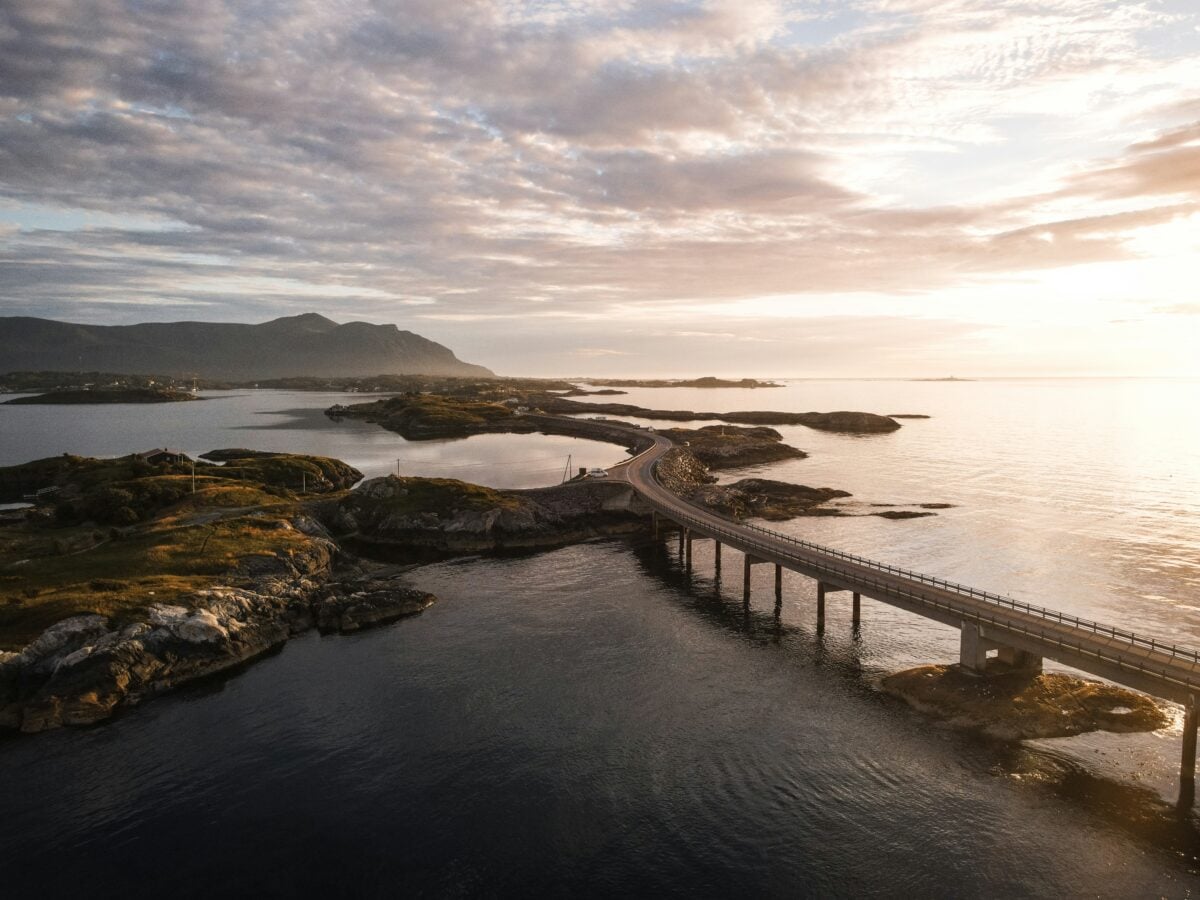
Eight kilometers of highway stretched across an archipelago of small islands off Norway’s western coast, built between 1983 and 1989 — during which the construction site was struck by 12 North Atlantic storms. The most famous section is the Storseisundet Bridge, which curves upward so dramatically that from certain angles it appears to dead-end in mid-air.
During winter storms, waves crash directly over the roadway and onto vehicles. The Atlantic Ocean Road was voted Norway’s construction achievement of the century in 2005, and car manufacturers use it regularly for commercials precisely because of the drama of the seawater on the asphalt.
In good weather, it is simply magnificent. In a storm, it is something altogether different.
The D915, Turkey — Listed as the Most Dangerous in Europe
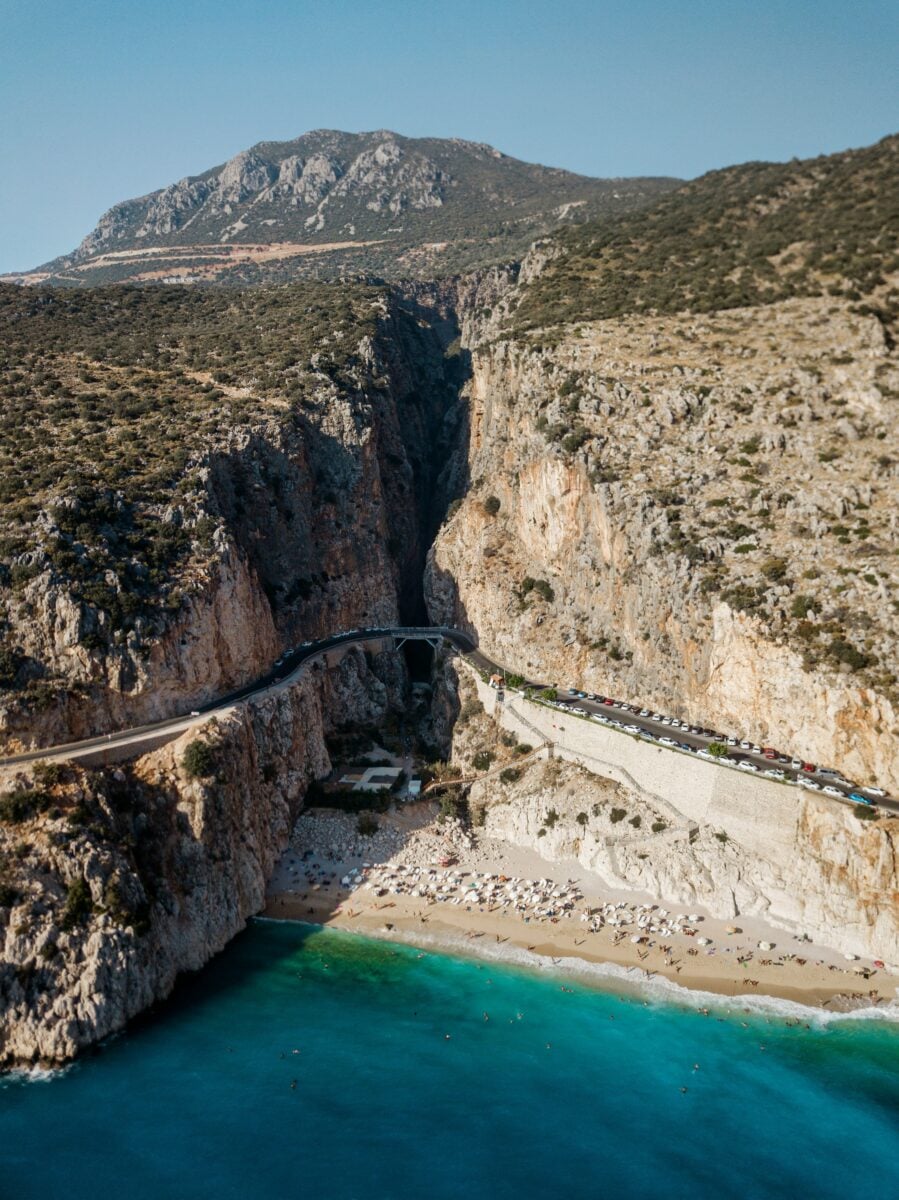
The D915 — the old road through the Çoruh Valley in northeastern Turkey — has been ranked by road safety analysts as one of the most dangerous driving routes in Europe, rated more perilous than Bolivia’s Death Road on at least one international analysis. The road winds along the edge of the Çoruh River gorge through steep mountain terrain, with minimal infrastructure, unpredictable surface conditions, and local traffic that includes heavy agricultural vehicles on sections barely wide enough for one lane.
Travelers who drive it are rewarded with extraordinary gorge scenery that most Western tourists have never seen.
The Sichuan-Tibet Highway, China — 15 Days If Everything Goes Wrong
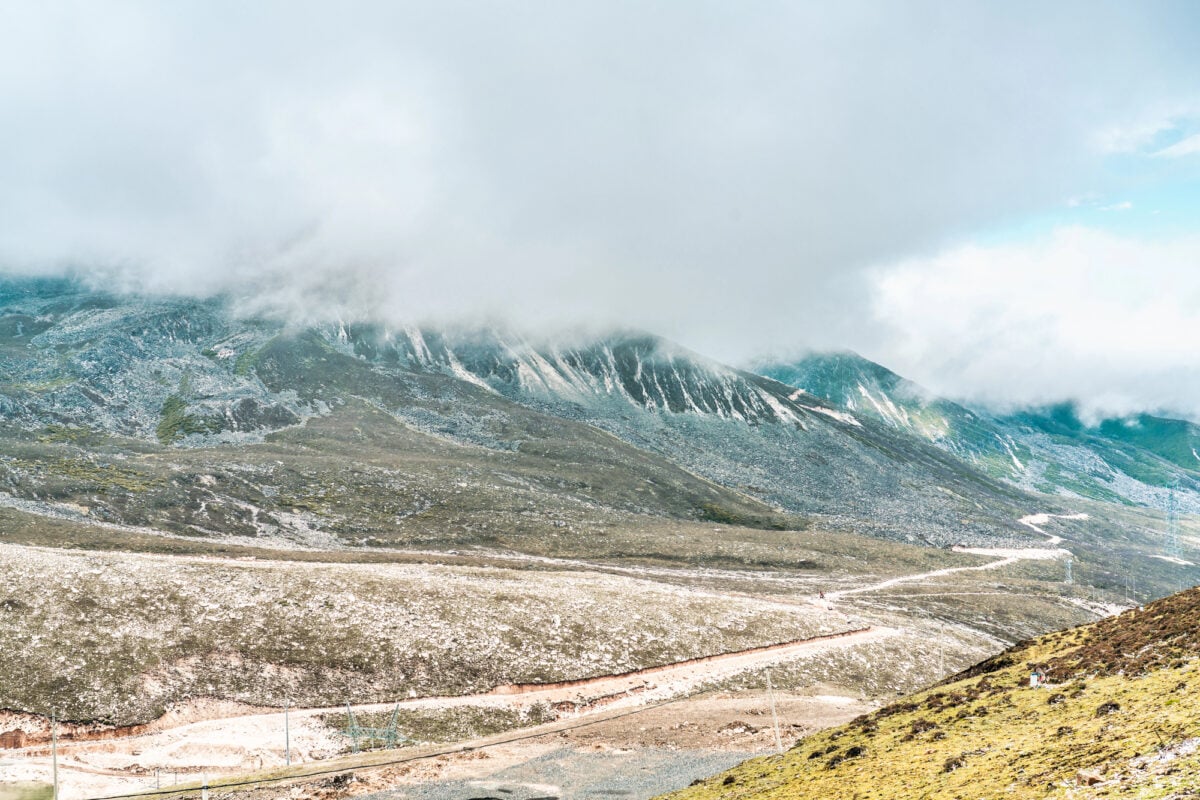
The highway connecting Chengdu in Sichuan province to Lhasa in Tibet crosses multiple mountain passes above 5,000 meters, passes through active avalanche and landslide zones, and runs on sections where the road has been carved into near-vertical cliff faces. Travel on the entire route can take up to 15 days in heavy traffic, with delays caused by rockslides, road closures, and the simple logistics of moving through some of the most geographically complex terrain on Earth.
The scenery — snow-capped peaks, deep gorges, Tibetan monasteries perched on mountainsides — is regarded by travelers who complete the journey as among the most extraordinary in Asia.
Le Passage du Gois, France — A Road That Disappears Twice a Day
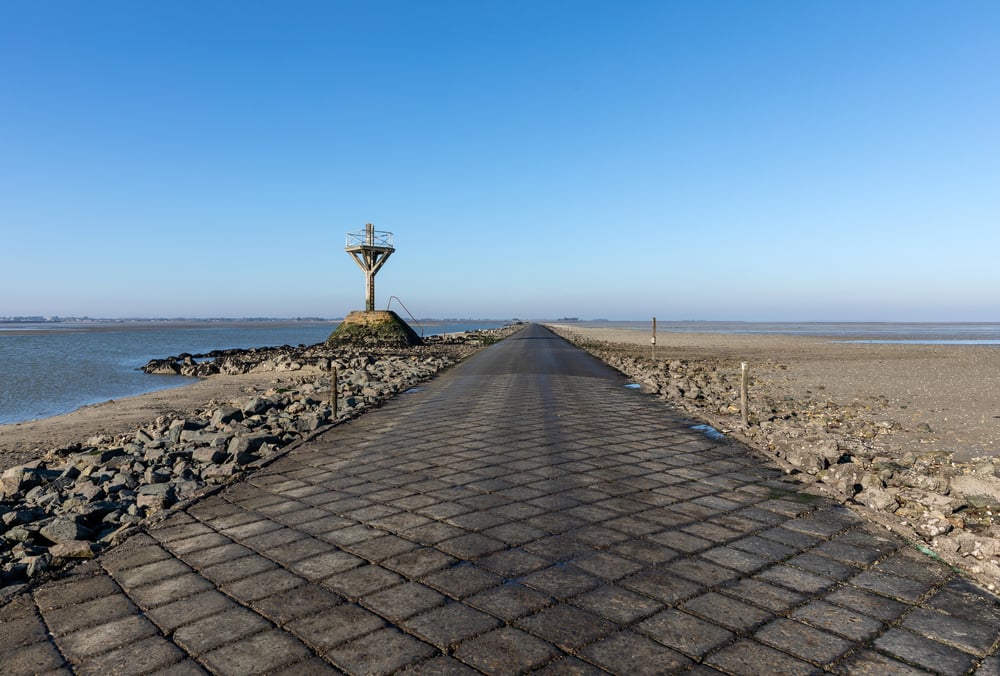
The Passage du Gois is a causeway connecting the island of Noirmoutier to the French mainland across a tidal flat. Twice a day, the sea covers it entirely.
Timing is everything: drivers who misjudge the tide find themselves stranded in the rising water, and the causeway’s surface is frequently slippery with algae when it re-emerges. Concrete refuges on tall pillars dot the causeway for stranded travelers, which implies that being stranded is something the road’s designers considered likely.
It is 4.1 kilometers long, and the window during which it is safely passable varies daily. It appears on French road maps with a tide table annotation. People cross it on purpose, including cyclists competing in the Tour de France, which has used it as a dramatic stage opening.
Canning Stock Route, Western Australia — 1,150 Miles of Nothing
The Canning Stock Route is not a road in any conventional sense. It is 1,150 miles of unformed dirt track crossing the Western Australian desert between Wiluna and Halls Creek, originally blazed in the early 1900s to move livestock and now passable only by 4WD vehicles with significant additional fuel and water capacity. There are no services, no fuel, and limited water along most of the route.
The full journey takes two to three weeks. It is considered one of the most extreme off-road adventures on Earth, and a small but committed community of 4WD enthusiasts completes it each year, some of them returning repeatedly because the absolute remoteness and the desert landscape are unlike anything accessible by ordinary road.
The Fairy Meadows Road, Pakistan — Gravel, Switchbacks, No Barriers
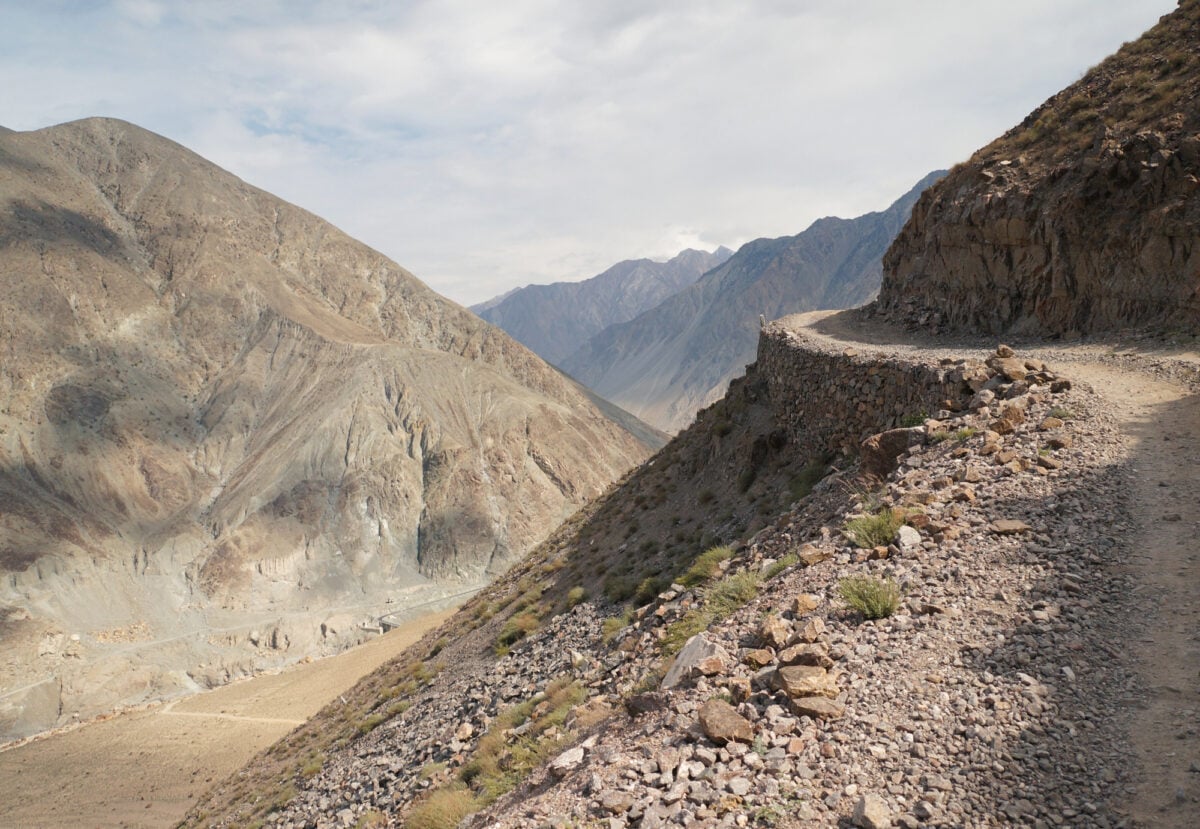
The track up to Fairy Meadows in northern Pakistan — the base camp area for Nanga Parbat, the world’s ninth-highest mountain — climbs through a series of narrow gravel switchbacks with no barriers and sheer drops on one side. It is too narrow for conventional vehicles in many sections, and jeep drivers who work the route are specialists in their own right.
At the top, the meadow opens onto a view of Nanga Parbat’s north face that climbers and trekkers travel from every continent to see. The road itself is the price of admission for anyone who doesn’t want to walk the entire distance from the bottom, and most people decide the jeep ride is the right call.
Guoliang Tunnel Road, China — Carved by Villagers With Hand Tools
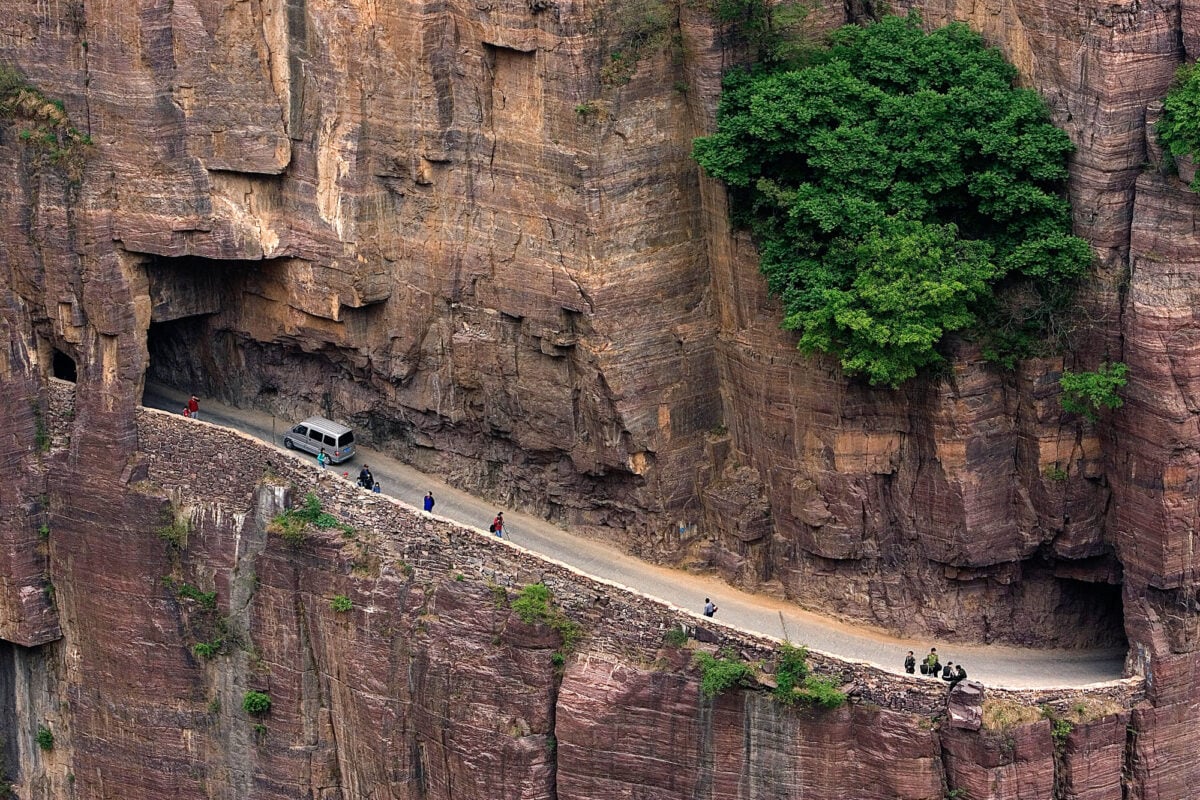
In 1972, the villagers of Guoliang in Henan Province, having waited decades for a road to connect their clifftop village to the outside world and receiving no government assistance, dug one themselves. Using hand tools, 13 villagers worked for five years to carve a 1,200-meter tunnel through the cliff face.
The tunnel is barely wide enough for a vehicle and is punctuated by irregular window openings that look out over the valley below — which serve as both light sources and, in some sections, the only thing preventing drivers from losing track of where the edges are. Tourists now visit the road specifically to drive through a tunnel built by determined villagers with hammers and chisels, and the village is no longer isolated.
Skipper’s Canyon Road, New Zealand — Gold Rush History on a Narrow Ledge
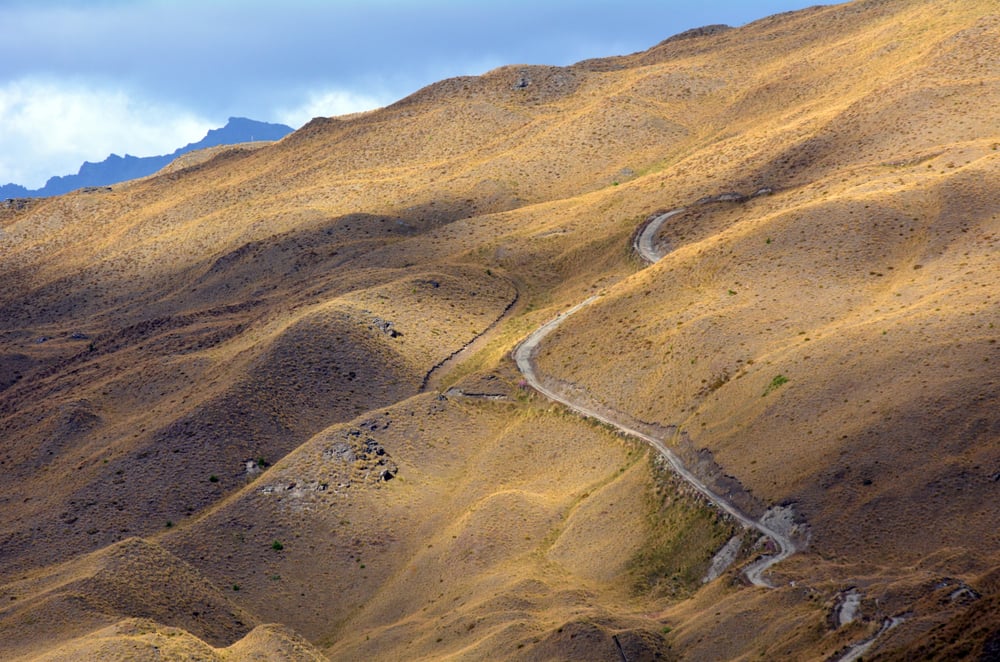
Carved during the gold rush of the 1860s into the schist rock walls above the Shotover River near Queenstown, Skipper’s Canyon Road is a one-lane dirt track along a cliff face that modern rental car companies prohibit their vehicles from using — explicitly and in writing. Driving it requires a hire vehicle with specific permission, and the road conditions change significantly with weather.
The scenery is extraordinary: the canyon walls drop hundreds of meters to the river below, and the historical character of a road unchanged since the 1860s makes it genuinely unlike anything built to modern standards. Local tour operators run jeep excursions for visitors who want the experience without the rental car liability clause problem.
What Dangerous Roads Actually Demand
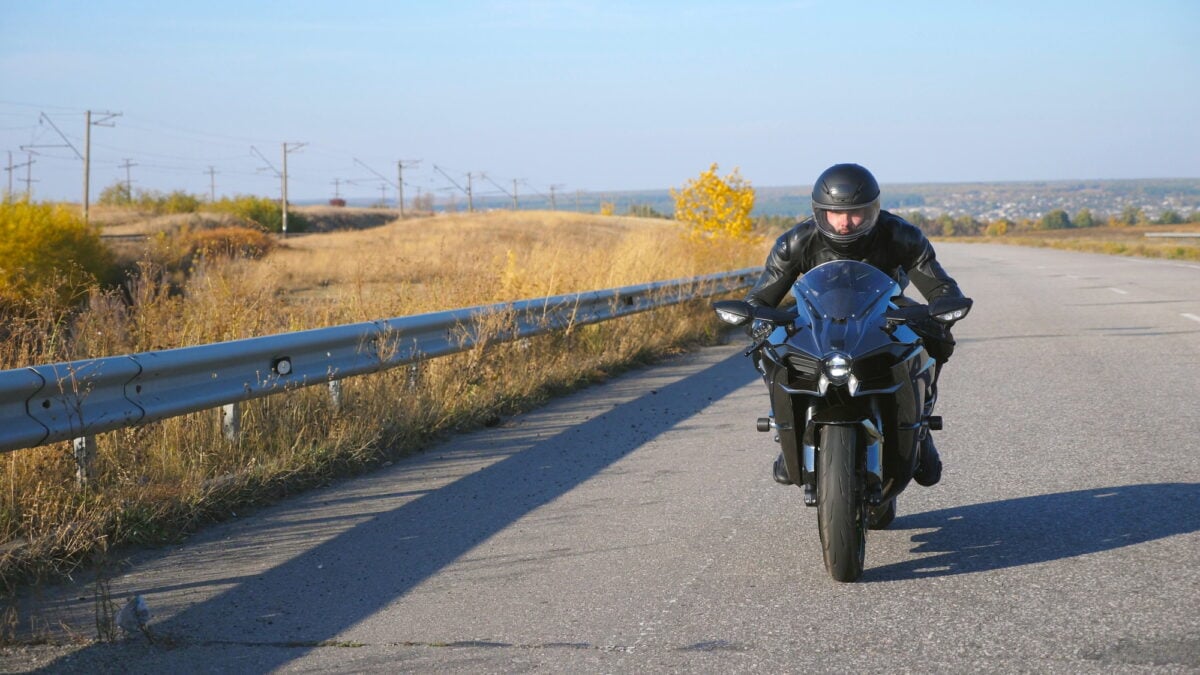
A road that demands full attention delivers something most modern driving does not: complete presence. A suburban commute can be done on autopilot and frequently is. The Dalton Highway, the Death Road, the hairpin bends of the Stelvio — these require the driver to be entirely in the moment.
That quality of attention, which feels uncomfortable to describe without sounding like a self-help book, is nonetheless a real experience, and it is the most honest explanation for why people seek these roads out. There is also the honesty of them.
Dangerous roads do not pretend to be something they are not. The crosses on the Death Road are not hidden.
The warning signs on the D915 are not understated. The tide tables for Le Passage du Gois are published because the tide is coming regardless of whether you’ve read them.
These roads extend a straightforward invitation: pay attention, proceed with care, and the reward is commensurate. The drivers who take them seriously generally agree that it is.
More from Go2Tutors!

- The Romanov Crown Jewels and Their Tragic Fate
- 13 Historical Mysteries That Science Still Can’t Solve
- Famous Hoaxes That Fooled the World for Years
- 15 Child Stars with Tragic Adult Lives
- 16 Famous Jewelry Pieces in History
Like Go2Tutors’s content? Follow us on MSN.



