13 Highest Cable Car Rides You Can Take Around the World
There’s something uniquely thrilling about stepping into a small cabin and trusting gravity-defying engineering to carry you thousands of feet above the ground. Cable cars transform the act of getting somewhere into the destination itself, offering perspectives that hiking trails and scenic drives simply can’t match.
The higher they climb, the more dramatic the payoff becomes — mountain peaks spreading endlessly in every direction, valleys shrinking to miniature scale below your dangling feet. The world’s highest cable car rides don’t just offer transportation; they provide front-row seats to some of the planet’s most spectacular terrain.
From glaciated Alpine peaks to desert mountains that seem to scrape the sky, these aerial journeys push the boundaries of both human engineering and natural beauty.
Sandia Peak Tramway
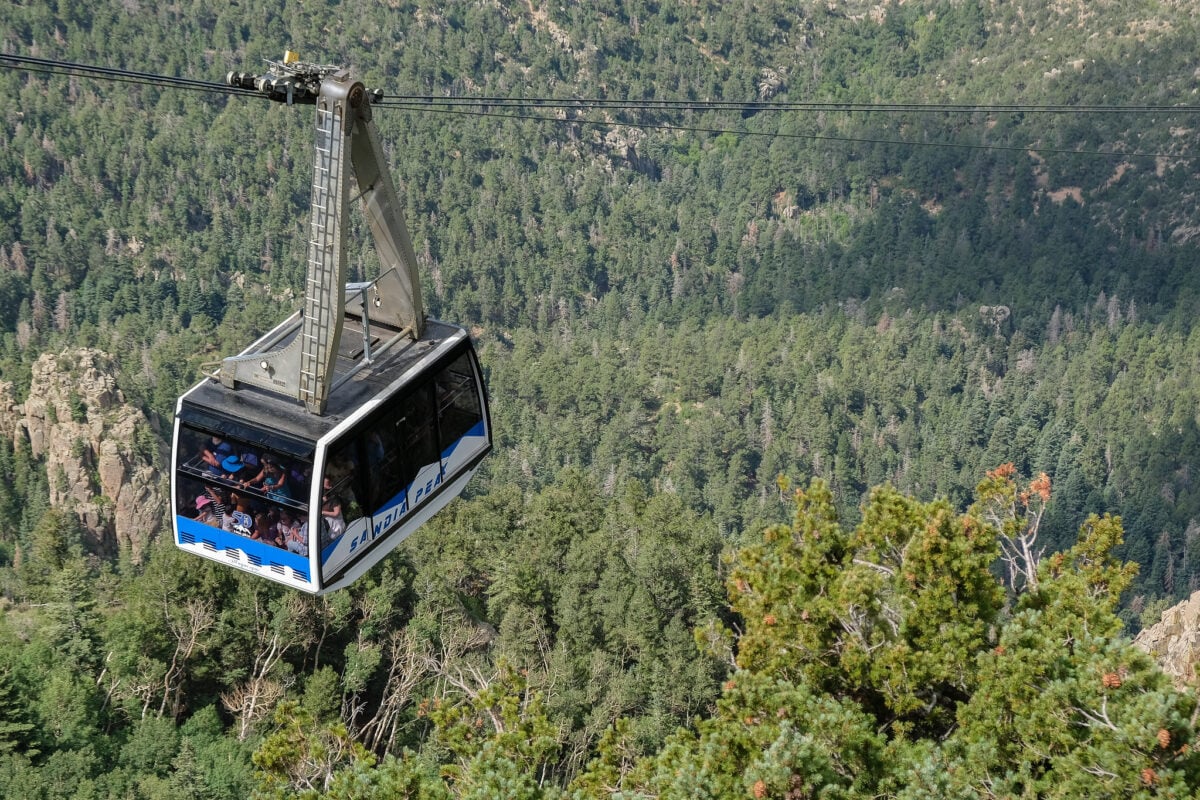
The Sandia Peak Tramway outside Albuquerque climbs 10,378 feet above sea level. That’s higher than most people will ever stand without boarding an airplane.
The ride covers 2.7 miles of desert landscape that shifts from high desert scrub to dense alpine forest. At the top, the entire Rio Grande Valley spreads below like a detailed topographical map.
On clear days, you can see mountain ranges 100 miles away.
Peak 2 Peak Gondola
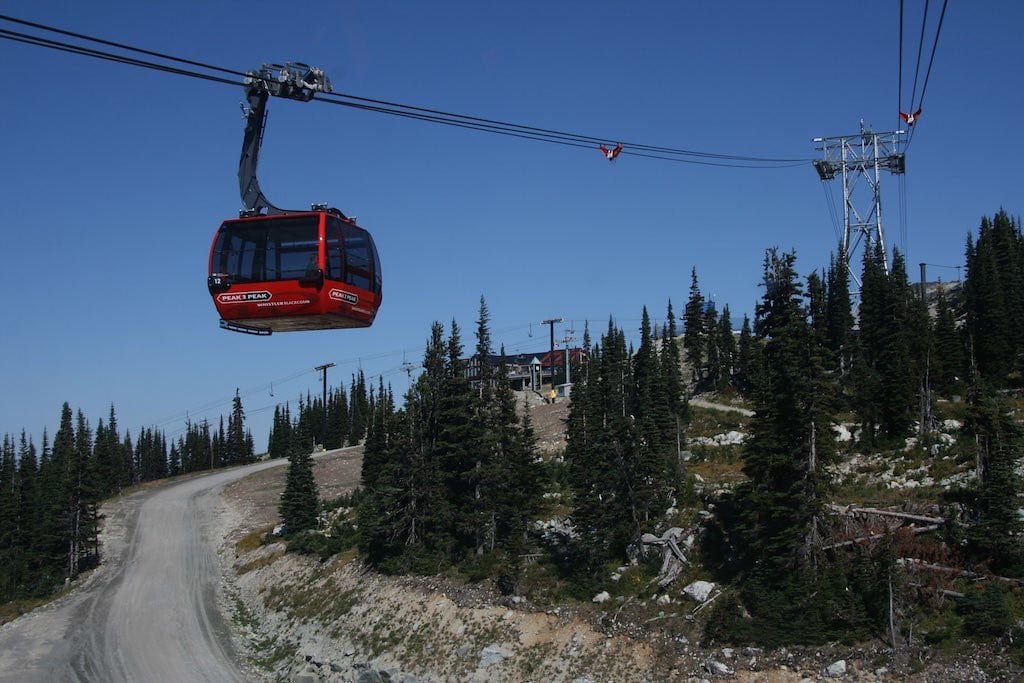
Whistler’s Peak 2 Peak Gondola doesn’t hold back when it comes to showing off (and why should it, really, given that it connects two separate mountains while dangling passengers 1,427 feet above the glacier-carved valley between them). The ride reaches 7,160 feet above sea level, but the elevation becomes secondary to the engineering marvel of the thing — which is saying something, because the views across the Coast Mountains are genuinely spectacular.
So you’re suspended in a glass box, essentially, watching ancient ice formations and jagged peaks slide past while trying not to think too hard about the fact that you’re crossing one of the longest unsupported gondola spans in the world. The whole experience feels like someone dared a bunch of engineers to build something impossible, and instead of backing down, they built something that makes you question whether you’re still bound by the same physics as everyone else.
Merida Cable Car

Think of a cable car ride as a meditation on altitude, and Venezuela’s Merida system becomes something close to transcendence. The cars climb through cloud forests that cling to Andean slopes, each station revealing a different ecosystem as they ascend toward 15,633 feet above sea level — the highest cable car destination on the planet.
The air thins as you rise, and the landscape below transforms from tropical vegetation to something that belongs on another planet entirely. By the final station, you’re breathing the same thin air that mountain climbers know well, surrounded by peaks that seem to pierce the sky.
Genting Skyway

Malaysia’s Genting Skyway carries passengers 5,732 feet above sea level through rainforest that hasn’t changed much since the Pleistocene epoch. The gondolas glide over jungle canopy so dense that the ground disappears entirely, creating the sensation of floating above an endless green ocean.
The engineering here deserves recognition — building a cable car system through tropical rainforest means dealing with humidity, sudden weather changes, and terrain that doesn’t cooperate with human plans. And yet the ride feels smooth enough that you forget about the complexity until you step out at the top and realize how far you’ve traveled vertically through one of the world’s most challenging environments.
Roosevelt Island Tram
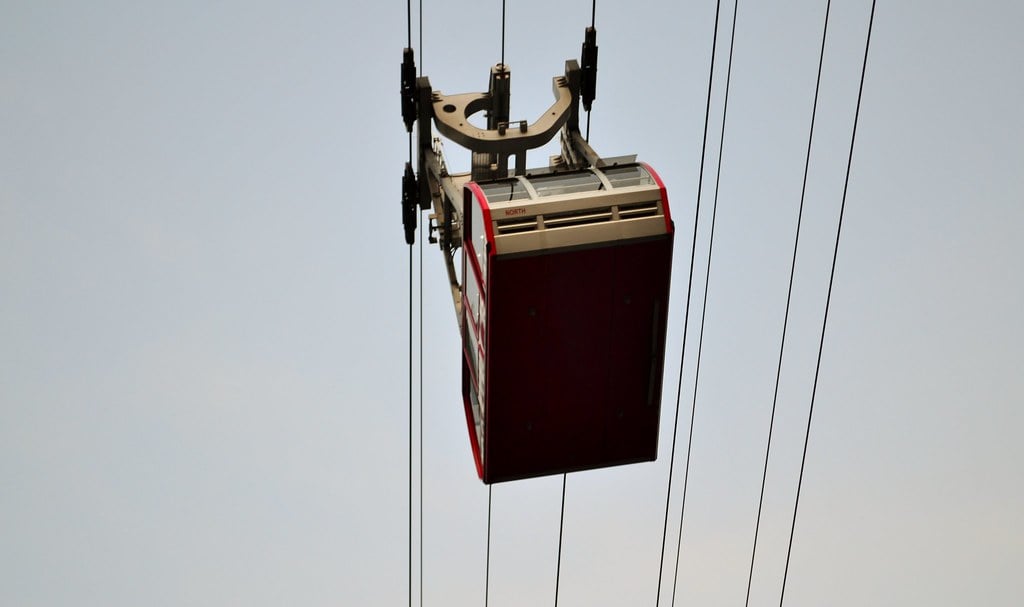
New York’s Roosevelt Island Tram reaches only 250 feet above the East River, which sounds modest until you consider that those 250 feet offer the best aerial view of Manhattan that public transportation can provide (and for the price of a subway ride, which makes every other cable car experience seem wildly overpriced by comparison). The tram has been ferrying passengers since 1976, back when Roosevelt Island was still a curiosity rather than a legitimate neighborhood, and it continues to prove that height isn’t everything when the view includes the Chrysler Building, the United Nations, and the geometric complexity of Midtown stretching toward the horizon.
So you’re suspended above one of the world’s busiest waterways, watching tugboats navigate around you while glass towers reflect the changing light — and somehow, despite covering less than half a mile, the three-minute ride manages to reframe an entire city from a perspective that most New Yorkers never experience.
Zhangjiajie Tianmen Mountain
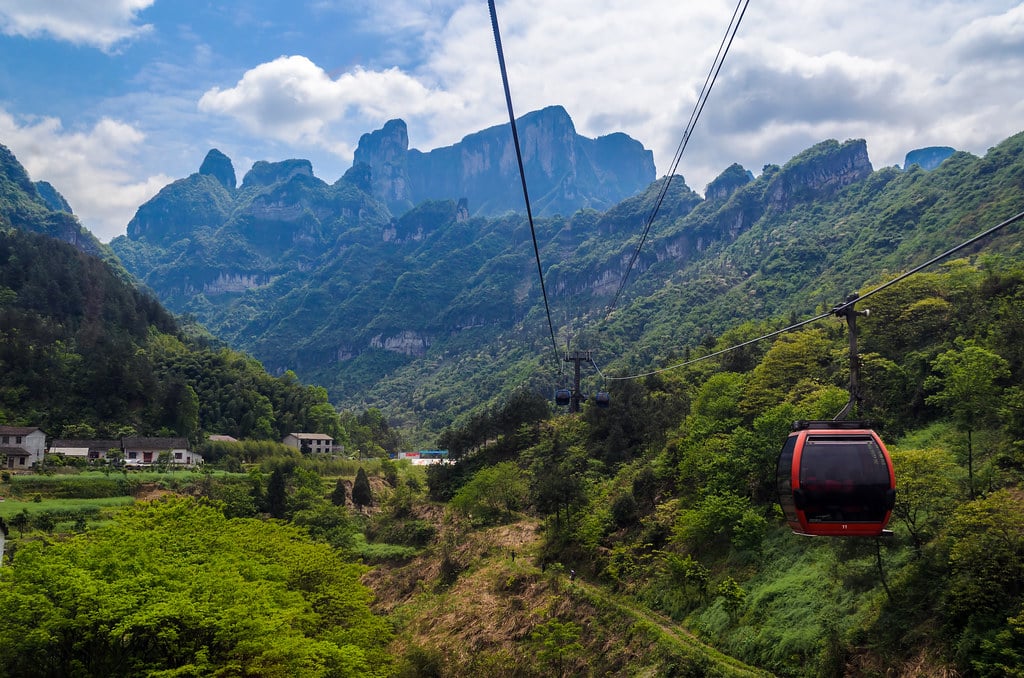
Zhangjiajie’s cable car climbs to 4,265 feet, but the elevation barely hints at what makes this ride memorable. The journey covers nearly five miles of terrain that inspired the floating mountains in Avatar — limestone pillars that rise from the valley floor like ancient skyscrapers.
The cable car threads between these stone towers, offering close-up views of formations that seem to defy basic geology. Most often clings to the peaks, creating moments when the gondola emerges from cloud cover to reveal an entirely new landscape spread below.
Palm Springs Aerial Tramway
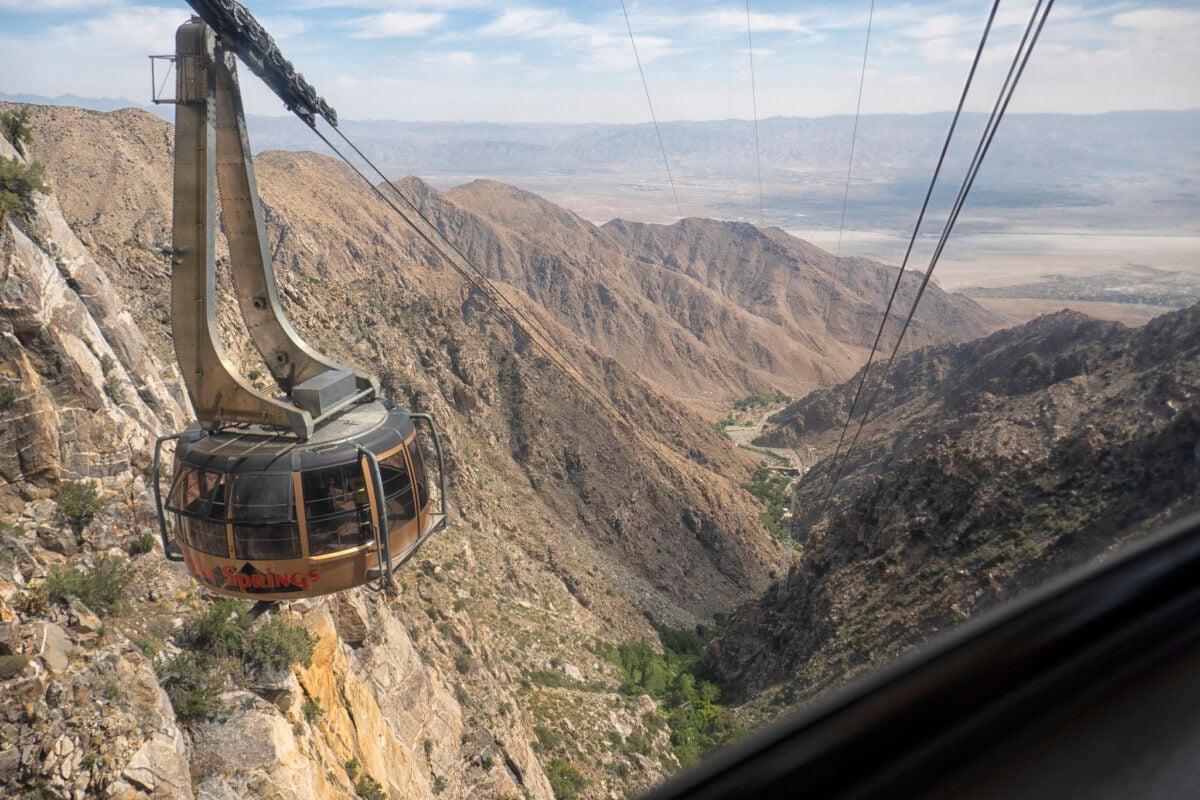
The Palm Springs Aerial Tramway climbs from desert floor to alpine forest in 10 minutes, gaining 5,873 feet in elevation and crossing several climate zones in the process. The rotating cars make a complete revolution during the ride, ensuring that every passenger gets the full panoramic view as the Sonoran Desert shrinks away below.
At the bottom, temperatures can reach 110 degrees in summer. At the top, you might need a jacket. The contrast feels like traveling between seasons rather than simply changing elevation.
Doppelmayr Garaventa Group
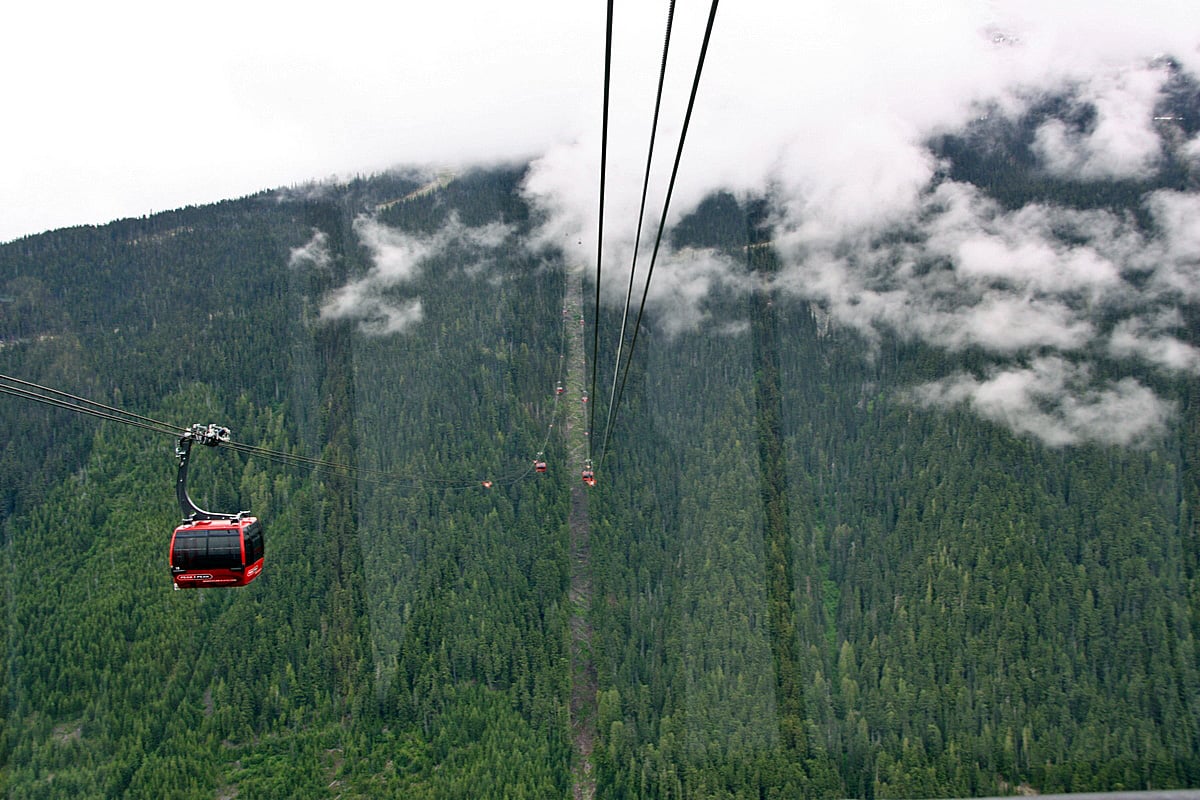
The Aiguille du Midi cable car in Chamonix, France, reaches 12,605 feet (3,842 meters) above sea level (which puts you roughly at the same elevation as many commercial aircraft cruise at, except instead of being sealed inside a pressurized cabin, you’re dangling in a small metal box watching Mont Blanc grow larger through the windows). The ride covers two sections, with a transfer station at Plan de l’Aiguille, and the second section is where things get genuinely dramatic — the cable stretches across glacier-carved valleys and crevasse fields that would take mountaineers hours to cross on foot.
So you’re suspended above some of the most technical alpine terrain in the world, watching climbers who look like ants making their way up routes that have been testing human limits for over a century. And yet the most striking thing isn’t the technical climbing happening below, but how the landscape seems to expand infinitely in every direction: Swiss peaks to the east, Italian summits to the south, and French Alpine ranges stretching toward horizons that blur into sky.
Ngong Ping 360

Lantau Island’s cable car system carries passengers 2,070 feet above sea level, but the real draw isn’t the elevation — it’s the journey over Hong Kong’s most untouched terrain. The gondolas glide above forests and reservoirs that feel completely removed from the urban density that defines the rest of the territory.
On clear days, the South China Sea stretches toward the horizon, dotted with islands that most Hong Kong residents never think about. The contrast between the city’s relentless development and this preserved landscape becomes stark from above, revealing a side of Hong Kong that ground-level exploration rarely shows.
Banff Gondola

The Banff Gondola climbs to 7,486 feet above sea level, offering views of the Canadian Rockies that make most other mountain ranges seem understated by comparison. The ride reveals layer after layer of peaks stretching toward the horizon, each ridge revealing another set of summits beyond it.
From the observation deck, the Bow Valley spreads below like a detailed relief map. Rivers snake between peaks, and the town of Banff looks like a small collection of buildings dropped into wilderness that extends in every direction.
The scale of the landscape becomes apparent only from this elevation — ground-level views simply can’t capture how the mountains continue beyond what the eye can see.
Jungfraujoch

The Jungfraujoch railway in Switzerland technically isn’t a cable car, but the final destination sits at 11,332 feet above sea level, surrounded by glaciers and peaks that define Alpine scenery. The journey involves multiple trains and takes over two hours, but the payoff is standing at the highest railway station in Europe.
The observation deck offers views of the Aletsch Glacier, the largest glacier in the Alps, stretching toward Italy like a frozen river. The air is thin enough that visitors feel the altitude, and the landscape looks like something from the early days of Earth’s formation.
Ganbala Pass Cable Car

Tibet’s Ganbala Pass cable car reaches 15,400 feet above sea level, making it one of the highest cable car rides on the planet. The elevation alone makes this ride notable, but the landscape adds another dimension entirely — barren peaks that stretch toward horizons unmarked by vegetation or human development.
The air at this altitude requires adjustment. Passengers often feel lightheaded, and the thin atmosphere makes colors appear more saturated against the stark mountain landscape.
Prayer flags flutter in wind that feels different at this elevation, and the silence between peaks carries a weight that lower altitudes can’t match.
Ropeway to Gulmarg
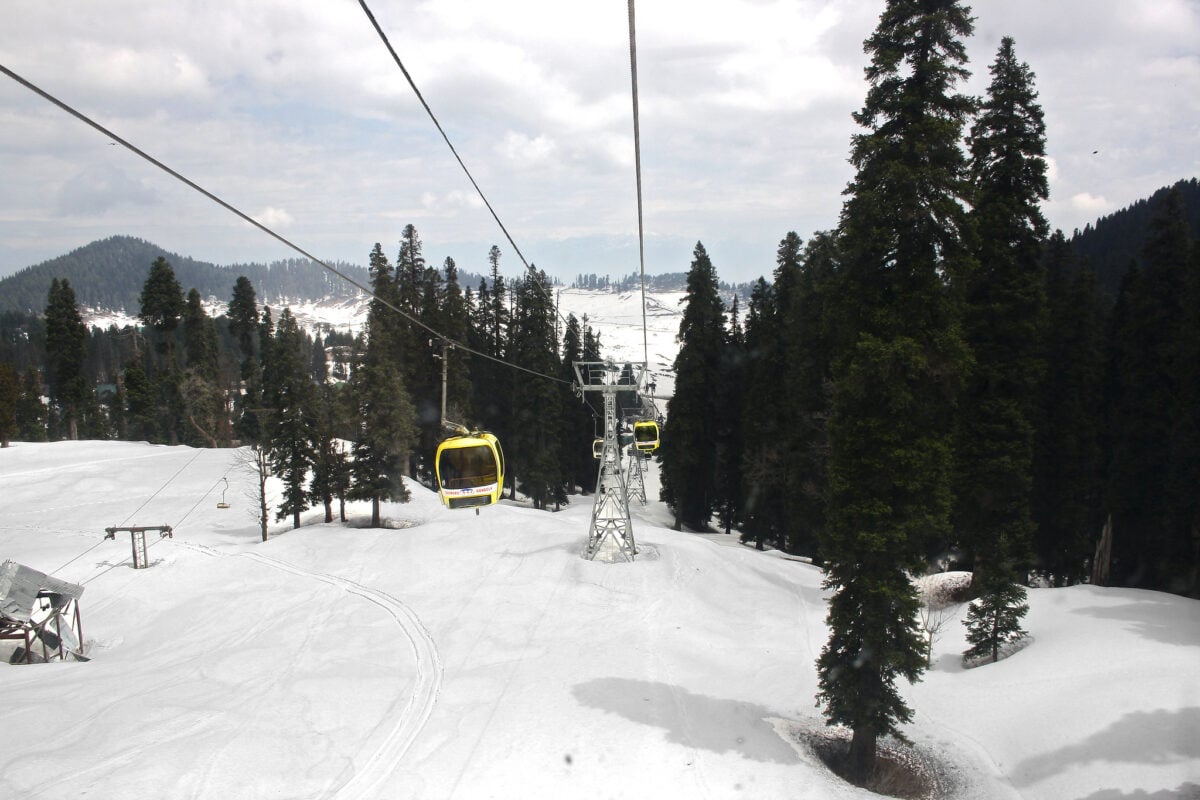
Kashmir’s Gulmarg Gondola reaches 13,400 feet above sea level in two stages, climbing through terrain that shifts from meadows to alpine desert as elevation increases. The second phase of the ride offers views of peaks that stretch toward Pakistan and China, creating a panorama that spans multiple countries.
Winter transforms Gulmarg into a ski destination, with powder snow that rivals anywhere in the world. Summer reveals meadows filled with wildflowers, creating a landscape that explains why Kashmir has inspired poets for centuries.
The cable car makes both seasons accessible to visitors who wouldn’t otherwise experience this elevation.
Above the Ordinary

The highest cable car rides around the world share something beyond their impressive elevations and engineering achievements. They offer moments of genuine perspective — not just the literal bird’s-eye view, but the kind of shift in scale that reminds passengers how vast the planet really is.
Standing at 15,000 feet and watching mountain ranges extend beyond the horizon does something that photographs and descriptions can’t quite capture. These rides represent human determination to reach places that were once accessible only to the most committed climbers and adventurers.
The fact that a 10-minute cable car ride can deliver experiences that once required days of technical mountaineering speaks to both our engineering capabilities and our persistent desire to see the world from impossible angles.
More from Go2Tutors!

- The Romanov Crown Jewels and Their Tragic Fate
- 13 Historical Mysteries That Science Still Can’t Solve
- Famous Hoaxes That Fooled the World for Years
- 15 Child Stars with Tragic Adult Lives
- 16 Famous Jewelry Pieces in History
Like Go2Tutors’s content? Follow us on MSN.