14 Forgotten Travel Methods People Once Relied On
Before cars dominated every street and planes crossed every sky, people moved through the world in ways that seem almost fantastical today. These weren’t just different modes of transportation — they were entirely different relationships with distance, time, and the landscape itself.
Stagecoaches were misery on wheels. Bone-jarring rides over rutted roads.
Cramped quarters with strangers. Frequent breakdowns in the middle of nowhere.
Yet they connected entire continents. The Butterfield Overland Mail ran 2,800 miles from Missouri to California, changing horses at stations that became the first towns in empty territories.
Passengers endured three weeks of dust, danger, and discomfort because it was still the fastest way to cross America.
Canal Barges
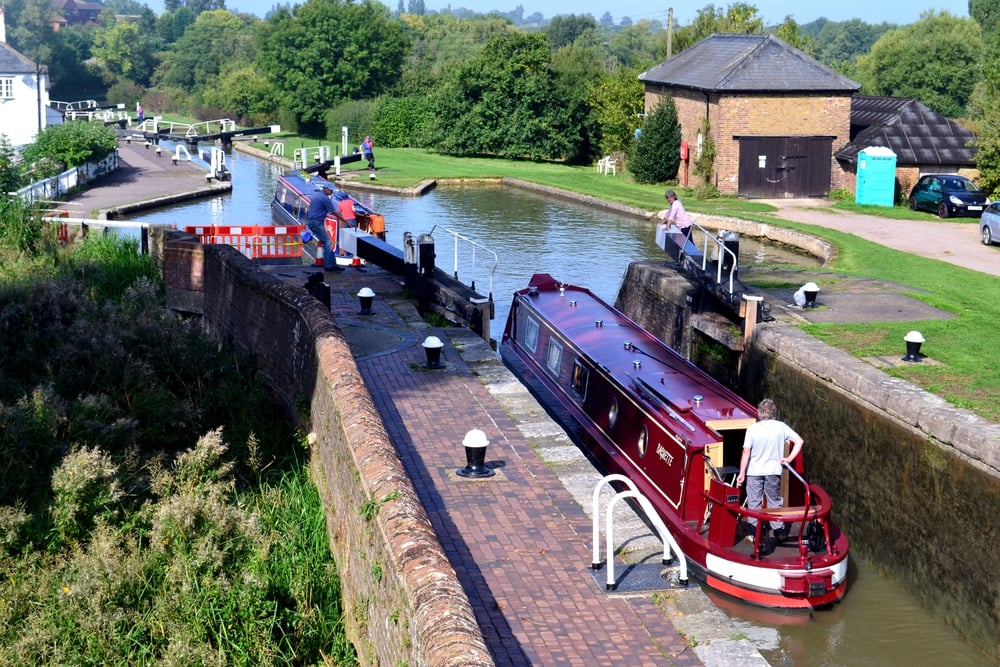
The canal systems were like highways made of water, threading through landscapes in ways that defied the obvious path. A barge could carry thirty tons of cargo (and a handful of passengers) at walking speed, following routes that connected rivers across mountain ranges and through territories where roads didn’t exist.
The Erie Canal turned New York City into America’s dominant port not because of its harbor, but because of a 363-mile ditch that let goods flow from the Great Lakes to the Atlantic without unloading a single crate.
But here’s what made canal travel particularly strange: the pace was so slow that passengers would often step off the barge to walk alongside it, stretching their legs while keeping up easily with the mule-drawn vessel (which rarely moved faster than four miles per hour).
So entire families would spend weeks drifting through the countryside at the speed of a leisurely stroll, sometimes walking on towpaths, sometimes riding on deck — a journey that was part transportation, part migration, part extended camping trip through waterways that had been carved by hand.
Ox Carts
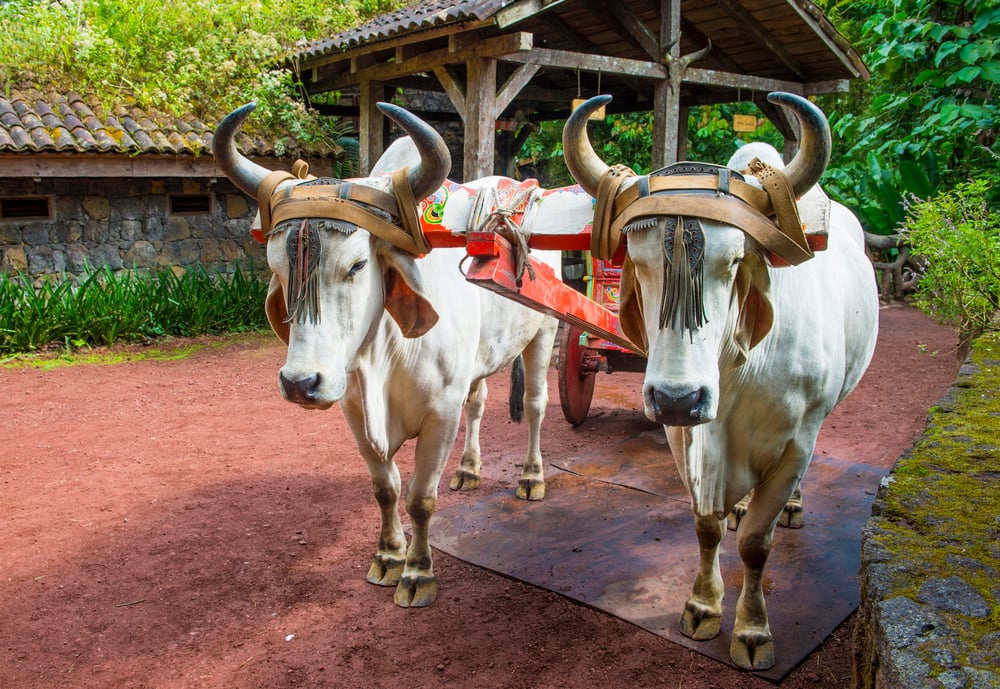
There’s something almost stubborn about choosing oxen over horses — slower, less impressive, but reliable in ways that mattered more than speed. An ox could pull twice its weight across terrain that would break a horse, survive on grass that wouldn’t sustain a mule, and keep going long after more spirited animals had given up.
Ox carts moved at two miles per hour on good days. Families walking the Oregon Trail often moved faster on foot than their possessions moved in the wagon.
The pace taught patience that’s hard to imagine now — covering fifteen miles was a successful day, twenty miles was exceptional, and thirty miles was the kind of achievement worth writing about in diary entries that still exist today.
Dog Sleds
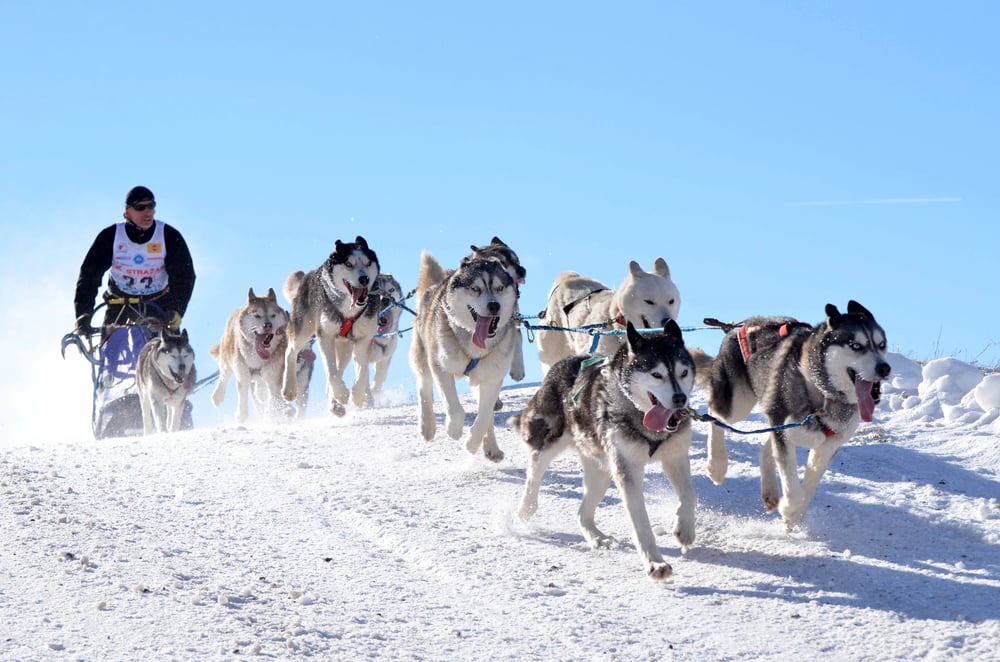
Dog sledding was never just about the dogs, though the relationship between musher and team carried a weight that no mechanical partnership could match. It required reading snow conditions the way sailors read wind — understanding that what looked like solid ground might be river ice that wouldn’t hold, that certain textures meant temperatures dropping faster than you could prepare for, that a dog’s hesitation at a seemingly clear path usually meant something your eyes couldn’t detect yet.
The Iditarod covers 938 miles across Alaska. Before snowmobiles, before bush planes, that distance was covered by teams that knew each other’s breathing patterns, that could navigate by scent when blizzards made visibility meaningless.
And yet the most remarkable thing wasn’t the distance — it was how quietly they moved. Unlike engines, a dog team could travel through winter landscapes without announcing itself for miles, slipping across frozen terrain like they belonged there.
Sedan Chairs
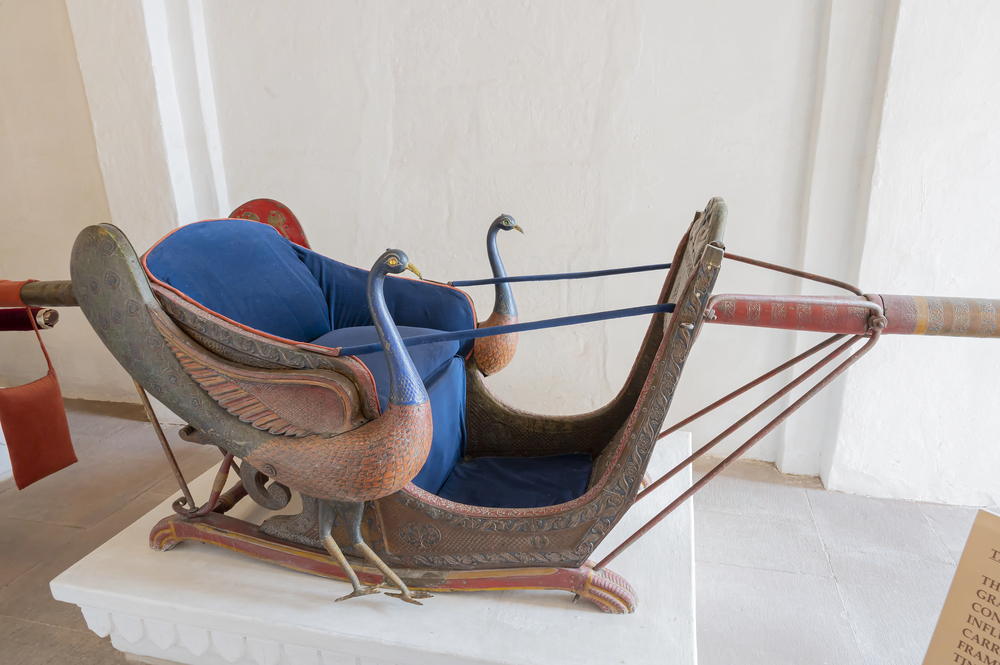
Sedan chairs were transportation for people who refused to walk but couldn’t ride. Simple concept: two poles, an enclosed seat, four shoulders to carry the whole arrangement through streets too narrow for carriages or terrain too rough for wheels.
The wealthy used them to avoid muddy streets and maintain dignity. Everyone else used them when injury or illness made walking impossible.
Two people could carry an adult passenger up staircases, through crowded markets, or along mountain paths where no wheeled vehicle could go. Inefficient by every modern measure, but effective enough that they persisted in some cities well into the 20th century.
Palanquins

A palanquin was essentially a bed that traveled, carried by teams of bearers who moved in synchronized steps across distances that would exhaust any individual walker. What made them remarkable wasn’t the luxury (though the elaborate versions commissioned by nobility could be genuinely spectacular, with silk curtains and carved decorations), but the infrastructure they required: networks of relay stations where exhausted bearers could be replaced by fresh teams, routes that had been surveyed and maintained specifically for human carriers rather than animals or wheels.
The rhythm of palanquin travel created its own relationship with landscape — faster than walking but slow enough to notice details, elevated above ground level but still close enough to smell what was growing or cooking nearby.
And since the passenger wasn’t walking, palanquin journeys could continue after dark, guided by bearers who knew familiar routes well enough to navigate by feel and memory. So people traveled through nights in ways that were both more comfortable and more vulnerable than any other method — suspended in a moving room between teams of strangers whose endurance determined how far and how safely you’d go.
River Rafts
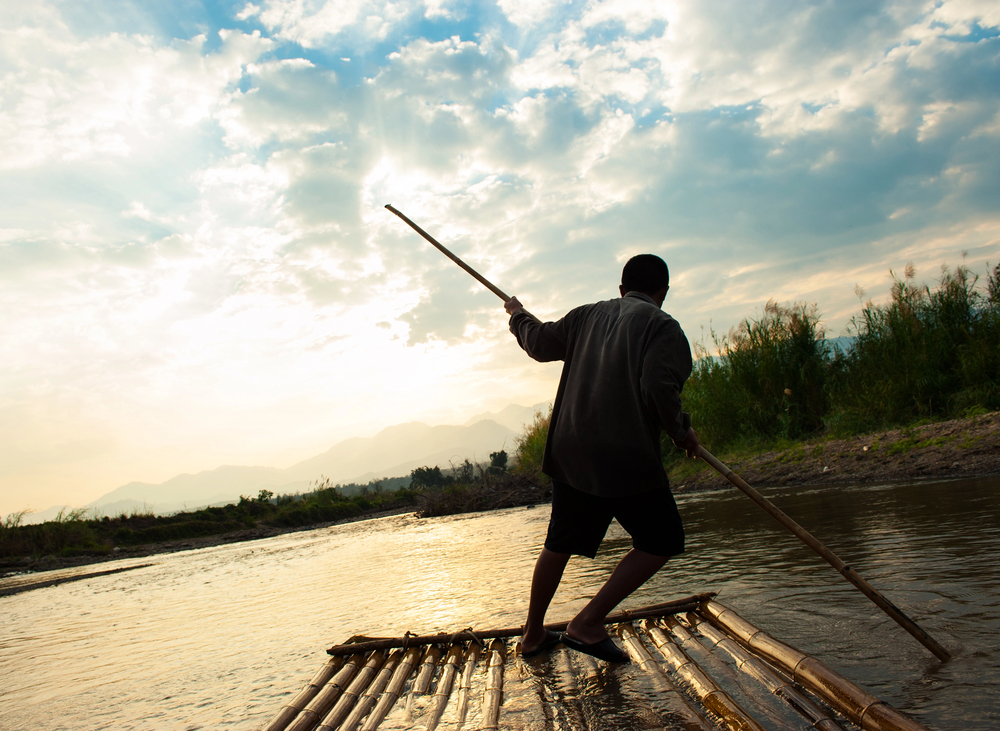
Rivers were the first highways, and rafts were the most basic way to follow them. Cut some logs, lash them together, trust the current to do most of the work.
No sophisticated engineering required, which also meant no sophisticated solutions when things went wrong. Raft travel was one-way transportation — you could float downstream but getting back upstream meant walking.
Entire families would build rafts to carry everything they owned down the Mississippi, then abandon the logs in New Orleans and start over wherever they’d landed. The river decided the speed, the weather decided the safety, and the raftsmen decided only when to start and where to try stopping.
Camel Caravans
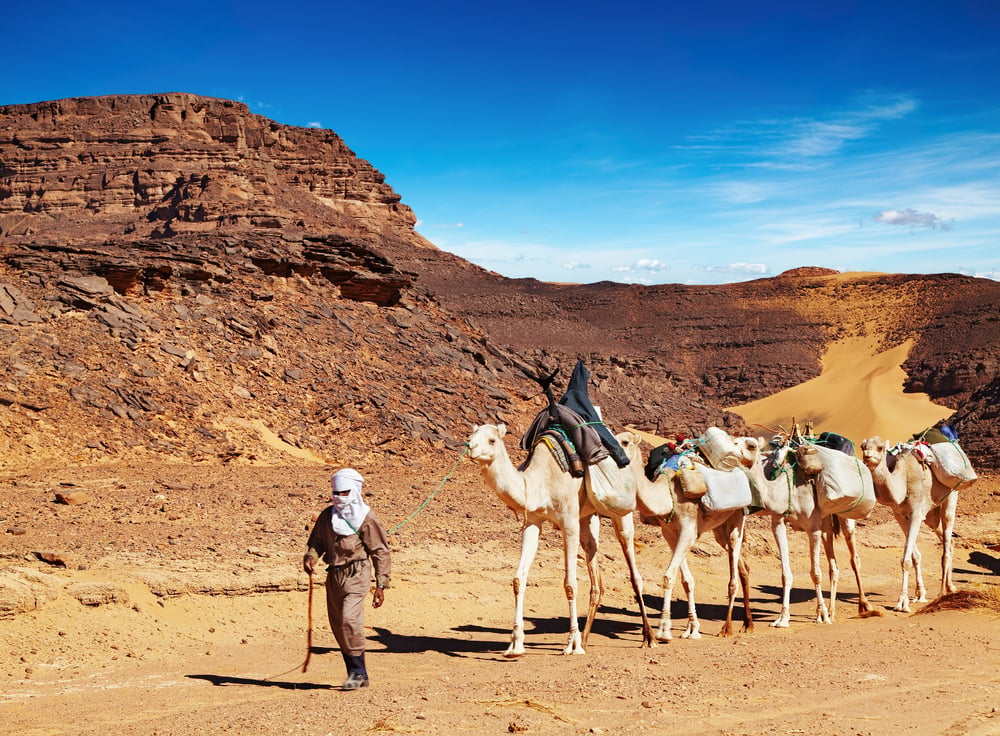
Camels were built for distances that break everything else. They could carry 400 pounds across deserts while drinking water every few days rather than every few hours.
Their feet didn’t sink in sand. Their attitude toward discomfort was professional.
Caravan routes connected continents before ships found reliable ocean passages. The Silk Road wasn’t a single path but a network of camel routes that moved goods and people across 4,000 miles of mountains, deserts, and political boundaries.
Travel times were measured in months. Success was measured in survival. A camel caravan that completed its journey intact was a significant economic event for everyone involved.
Donkey Trains
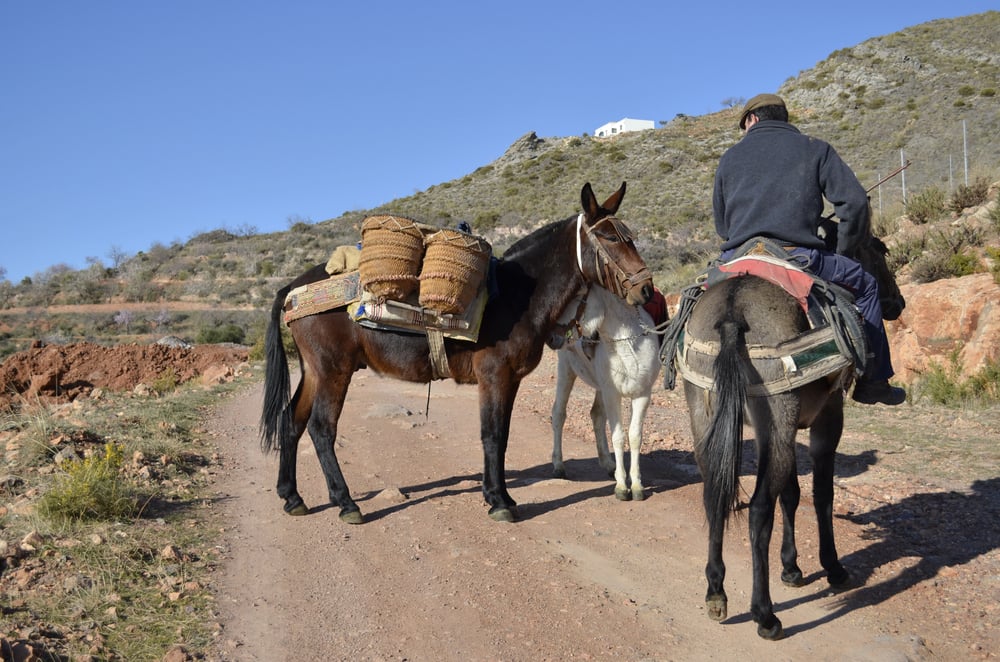
Picture a line of donkeys threading single-file up mountain paths that look barely wide enough for a confident hiker, each animal carrying supplies that weigh nearly as much as the donkey itself, following routes that existed only because generations of pack animals had worn them into the stone.
Donkey trains moved goods into places where no cart or wagon could go — mining camps perched on cliffsides, villages tucked into valleys accessible only through passes that closed completely in winter, trading posts that existed specifically because they sat at the intersection of trails that wheeled vehicles couldn’t navigate.
But what made donkey trains particularly ingenious was their flexibility: unlike a wagon that needed a road, or a boat that needed a river, a donkey train could improvise. If rockslides blocked the usual path, the lead animal could find an alternative route and the rest would follow.
And donkeys, despite their reputation for stubbornness, were actually remarkably good at making independent decisions about safety — they’d refuse to cross unstable ground that looked fine to human eyes, or stop suddenly when they sensed weather changing faster than their handlers had noticed.
Rickshaws
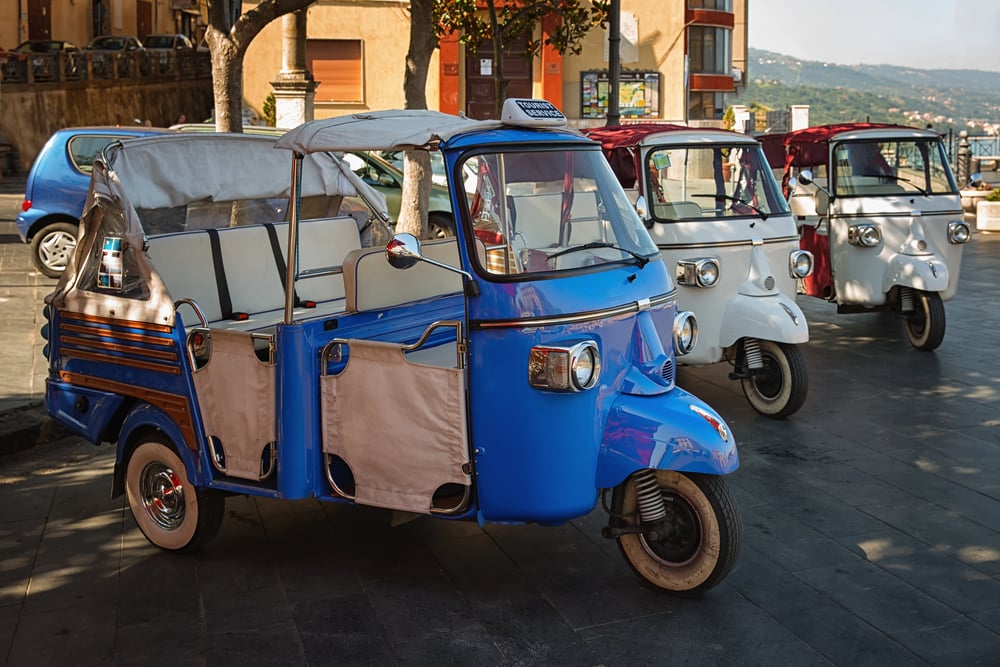
A rickshaw was the most direct possible relationship between passenger and transportation: one person pulling another person through city streets at whatever speed their legs could sustain.
No fuel required, no feeding or stabling animals, no mechanical parts to maintain or replace — just human endurance applied to wheels and basic engineering.
The efficiency was undeniable in crowded urban areas where larger vehicles couldn’t navigate narrow alleys or sudden turns. A skilled rickshaw driver could move through traffic patterns that would stop carts or carriages completely, taking routes that existed only for pedestrians but carrying passengers who couldn’t or wouldn’t walk those distances themselves.
But the system also created economic relationships that were uncomfortably direct — your transportation costs were literally someone else’s physical labor, paid for by the mile or by the hour in ways that made the exchange impossible to ignore.
Litters

Litters were stretchers that traveled. Two long poles with a platform or fabric slung between them, carried by teams of people who could navigate stairs, narrow doorways, or rough terrain where no wheeled conveyance could go.
They weren’t luxurious — comfort wasn’t the point. Litters moved people who couldn’t move themselves: the injured, the elderly, the sick, or occasionally the important.
The carrier team determined everything about the journey — speed, route, rest stops, safety. Passengers were completely dependent on the strength and judgment of people they often barely knew.
Pack Trains
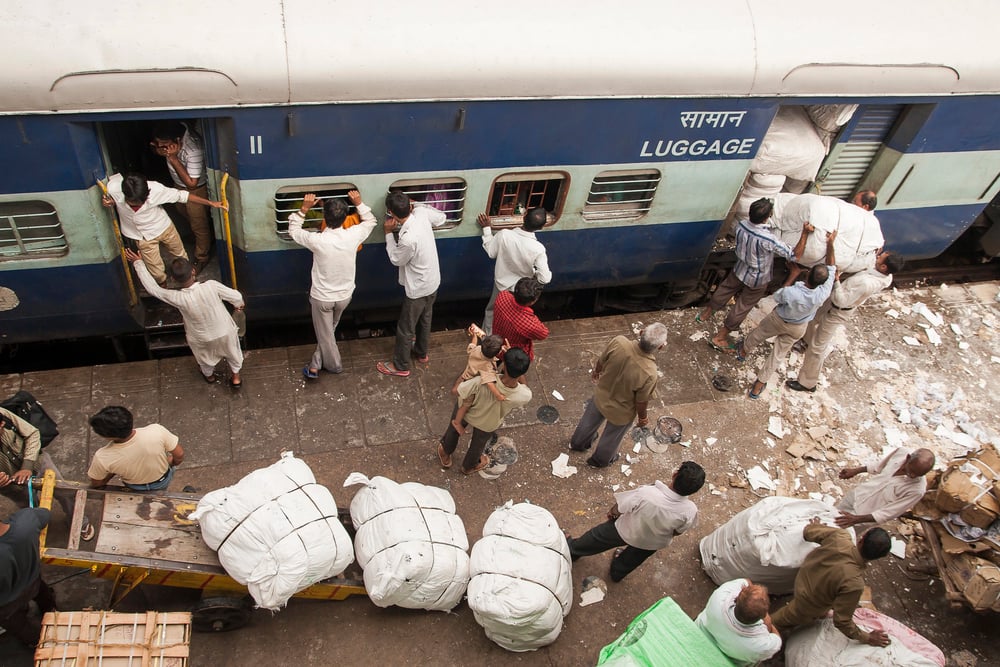
Pack trains turned the limitations of mountain terrain into transportation systems that could move surprising amounts of cargo into places that seemed completely inaccessible. Each animal carried what it could manage, and trains of twenty or thirty pack animals could supply entire communities through winter months when other supply routes became impossible.
The knowledge required wasn’t just about animals — it was about reading landscape in ways that let you predict where streams would be crossable, where weather patterns would create dangerous conditions, where to find grazing that could sustain the animals between destinations.
Pack train leaders developed reputations based on their ability to get cargo through safely, which meant understanding dozens of variables that could turn a routine supply run into a disaster.
And yet pack trains also created some of the most remote commerce in human history: trading posts and settlements that existed only because pack animals could reach them, communities that were economically connected to distant cities even though they were geographically isolated by terrain that defeated every other form of transportation.
Yak Trains
Yaks were mountain specialists — animals that functioned at altitudes where horses struggled and in temperatures that made other livestock unproductive. A yak train could carry goods across Himalayan passes at elevations where the air was too thin for most pack animals to work effectively.
The routes they followed connected civilizations that were otherwise completely isolated by geography. Tibetan trade routes crossed mountain ranges that took weeks to navigate, through terrain where weather could shift from manageable to lethal without warning.
Yak trains moved through these conditions regularly because yaks were physically adapted to them and because the alternative was no trade at all.
Reindeer Sleds
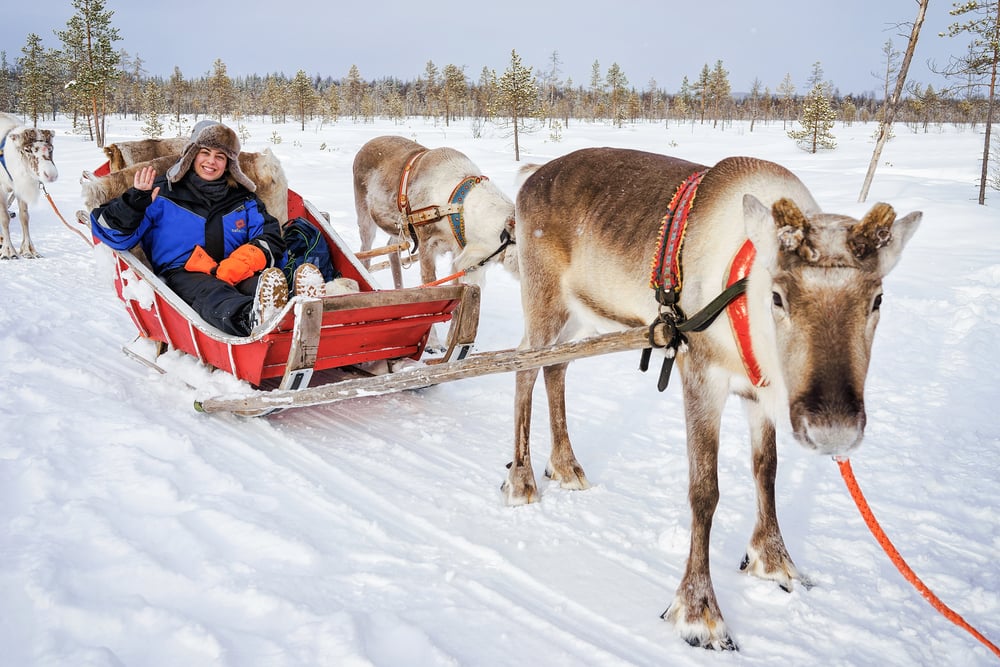
Reindeer sleds moved through Arctic landscapes where no other transportation method was practical. Reindeer could find food under snow that looked barren to other animals.
They could navigate across frozen rivers, through forests too dense for larger animals, and over terrain that shifted with seasons in ways that made permanent roads impossible.
The relationship between herder and reindeer was more complex than most human-animal partnerships because reindeer remained essentially wild — they chose to cooperate rather than being forced into domestication.
Sled travel required reading the animals’ responses to conditions that human senses couldn’t detect, trusting their navigation instincts across landscapes that offered few landmarks, and accepting that the journey would happen at whatever pace the reindeer considered sustainable.
When Distance Had Different Meaning
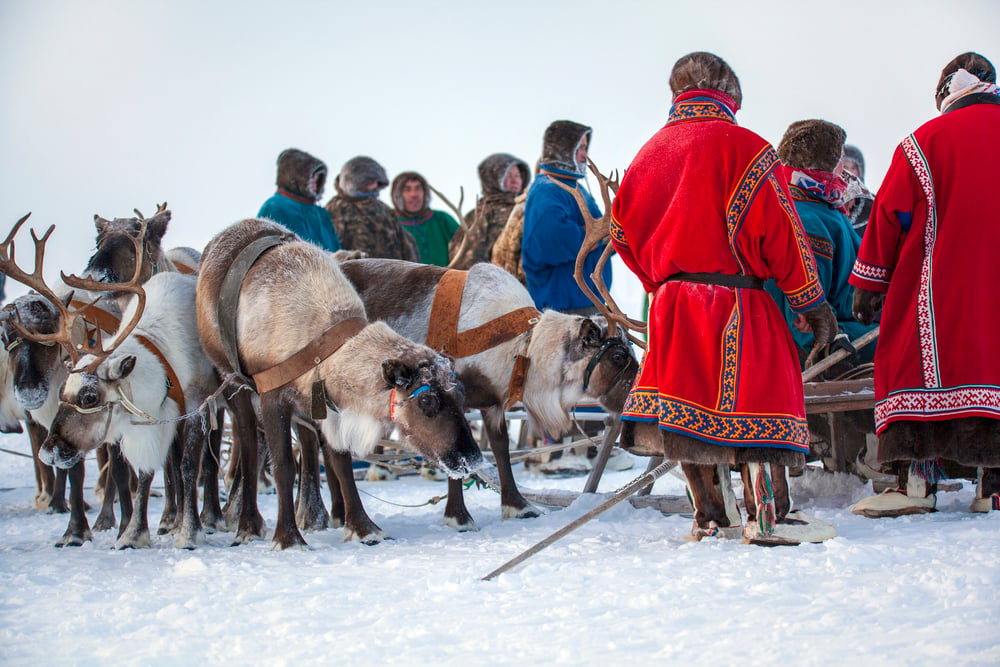
These forgotten methods weren’t just slower versions of modern transportation — they were entirely different relationships with distance and time. A journey that now takes six hours once took six weeks, which meant planning that accounted for weather changes, seasonal variations, and the simple reality that leaving in spring might mean arriving in summer.
The patience these methods required feels almost impossible to imagine now. But they also offered something that modern speed has eliminated: travel as gradual transition rather than sudden relocation.
You didn’t just arrive somewhere different — you experienced the slow change of landscape, climate, and culture that made distant places feel earned rather than simply accessed.
More from Go2Tutors!

- The Romanov Crown Jewels and Their Tragic Fate
- 13 Historical Mysteries That Science Still Can’t Solve
- Famous Hoaxes That Fooled the World for Years
- 15 Child Stars with Tragic Adult Lives
- 16 Famous Jewelry Pieces in History
Like Go2Tutors’s content? Follow us on MSN.



