14 Jellyfish Facts That Seem Unbelievable
Jellyfish might look simple, but they’re anything but ordinary. Found in oceans all around the world, these gelatinous drifters have a long and mysterious history—and some of the strangest features in the animal kingdom. Their soft, flowing forms hide bizarre adaptations that continue to baffle scientists and challenge our understanding of biology. You’ve probably seen jellyfish at the beach or in an aquarium, but there’s a lot more going on beneath those translucent bodies. Here is a list of 14 jellyfish facts so bizarre they seem like science fiction rather than biological reality.
An Immortal Jellyfish Exists
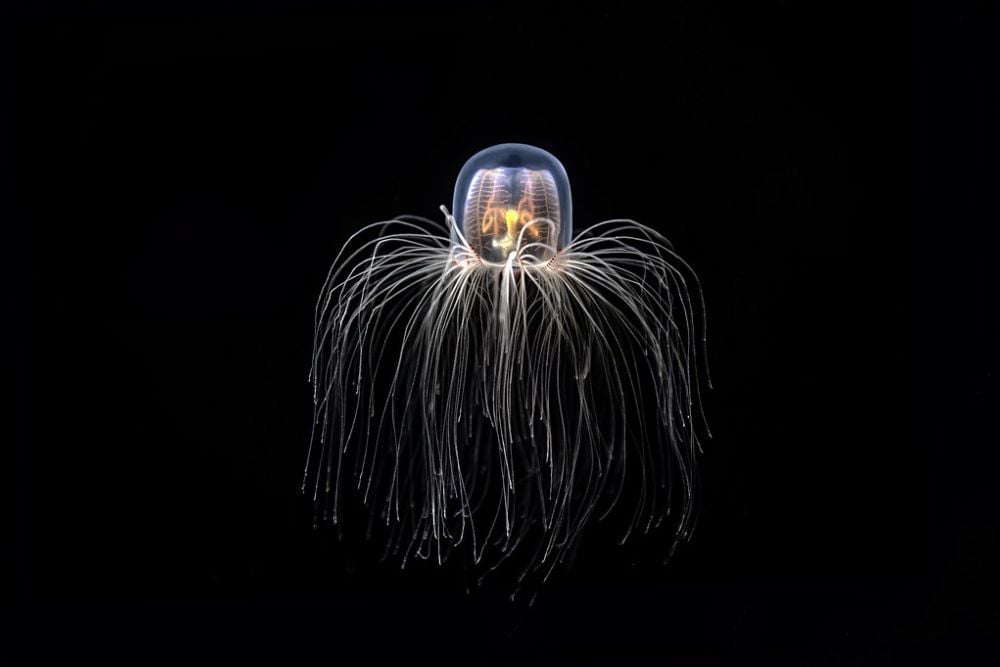
Turritopsis dohrnii, a species of jellyfish, has successfully attained biological immortality by a process known as cellular transdifferentiation. These jellyfish may basically hit the reset button on their life cycle by reverting from their mature medusa form back to their juvenile polyp stage in response to physical harm, malnutrition, or simply old age.
Under the right circumstances, this extraordinary capacity enables them to continuously cycle between adult and juvenile forms, avoiding death indefinitely. Since no other animal is known to be able to fully reverse its life cycle, researchers are hoping that this phenomenon may provide light on human aging and cellular regeneration.
They Have No Brain or Central Nervous System

Jellyfish have survived and thrived for over half a billion years without ever evolving a brain or central nervous system. Instead, they operate using a simple nerve net—a loose arrangement of nerves spread throughout their bodies that can detect basic stimuli like touch, light, and chemicals in the water.
This decentralized system allows them to respond to their environment, find food, and avoid predators despite lacking any centralized processing center. Their success with such minimal neural equipment challenges our understanding of what constitutes biological intelligence and the necessary components for evolutionary success.
Like Go2Tutors’s content? Follow us on MSN.
Their Bodies Are Almost Entirely Water
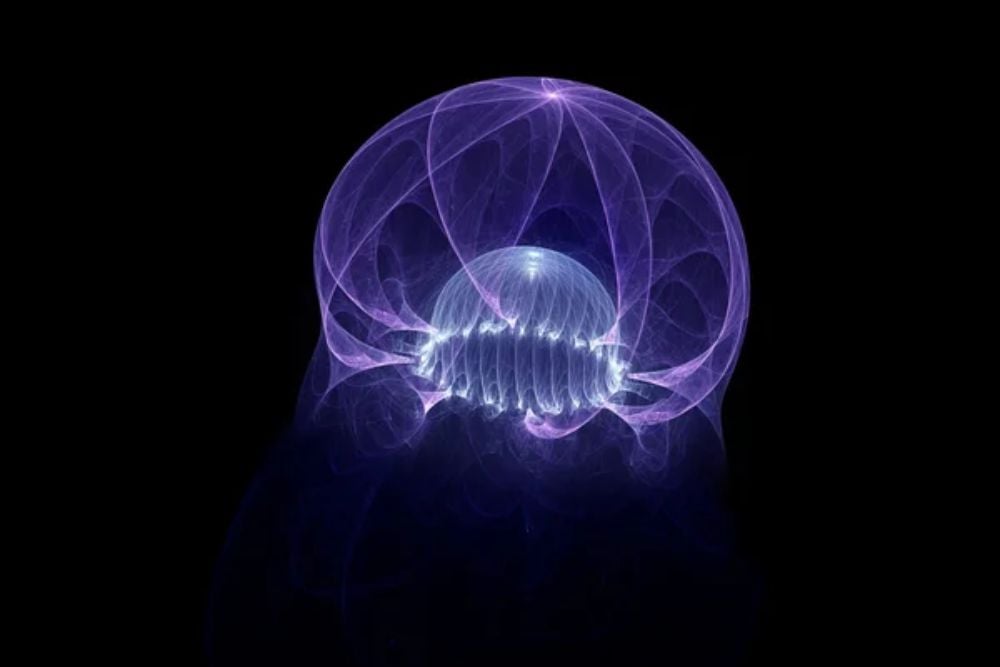
The body of a typical jellyfish consists of roughly 95% water, making them among the most insubstantial complex animals on Earth. Their gelatinous bodies contain just a thin layer of cells holding their watery contents together—which explains why they dry out to almost nothing when washed ashore.
This unusual composition gives them several survival advantages: near-invisibility in water, neutral buoyancy that requires minimal energy expenditure, and the ability to passively drift with ocean currents. Some deep-sea species are so transparent and
They Live Without Specialized Systems

Jellyfish lack nearly all the organ systems considered essential for complex animal life. They have no respiratory, circulatory, or excretory systems, and lack a centralized digestive system. Oxygen simply diffuses directly through their thin outer layer into their cells, and nutrients from digested prey pass through the lining of their gastrovascular cavity directly into nearby tissues.
Waste products diffuse out through the same thin membranes, eliminating the need for specialized excretory organs. This radical simplicity has proven remarkably effective, allowing them to flourish in environments where more complex organisms struggle to survive.
Their Stomachs Serve as Mouths

A jellyfish’s mouth doubles as its anus, with a single opening handling both food intake and waste elimination. After capturing prey with their tentacles, jellyfish pull the food into their bell-shaped body through an opening that leads directly to their gastrovascular cavity.
Once digestion is complete, the indigestible remains are pushed back out through this same opening. Some species can even turn their entire body inside out to clean their digestive cavity after particularly messy meals—talk about a thorough cleaning! This simple anatomical arrangement has remained essentially unchanged for hundreds of millions of years.
Like Go2Tutors’s content? Follow us on MSN.
They Need Sleep Even Without a Brain

The box jellyfish (Chironex fleckeri) carries enough venom to kill 60 adult humans within minutes. Its toxin attacks the heart, nervous system, and skin cells simultaneously, causing excruciating pain and, in severe cases, cardiac arrest within minutes of envenomation.
Unlike many venomous creatures that use venom primarily for defense, box jellyfish actively hunt fish using their toxic tentacles. Each tentacle contains millions of microscopic cnidocysts—specialized cells that explosively discharge venom-filled barbs upon contact.
What makes these jellyfish particularly dangerous isn’t just their potent venom but their active swimming ability, allowing them to pursue prey rather than simply drifting with the currents.
They Have No Red Blood Cells

Jellyfish don’t have red blood cells or hemoglobin like we do. Instead, their circulatory fluid consists of seawater with various dissolved proteins and nutrients that diffuse directly through their gelatinous tissues. Oxygen simply passes through their thin epidermal layer directly into their cells without requiring specialized transport molecules.
This simplified system works because no cell in a jellyfish’s body is ever far from the external environment, eliminating the need for complex oxygen delivery systems. Their extremely energy-efficient metabolism allows them to thrive despite this seemingly primitive circulatory arrangement.
They Can Regenerate Lost Tentacles
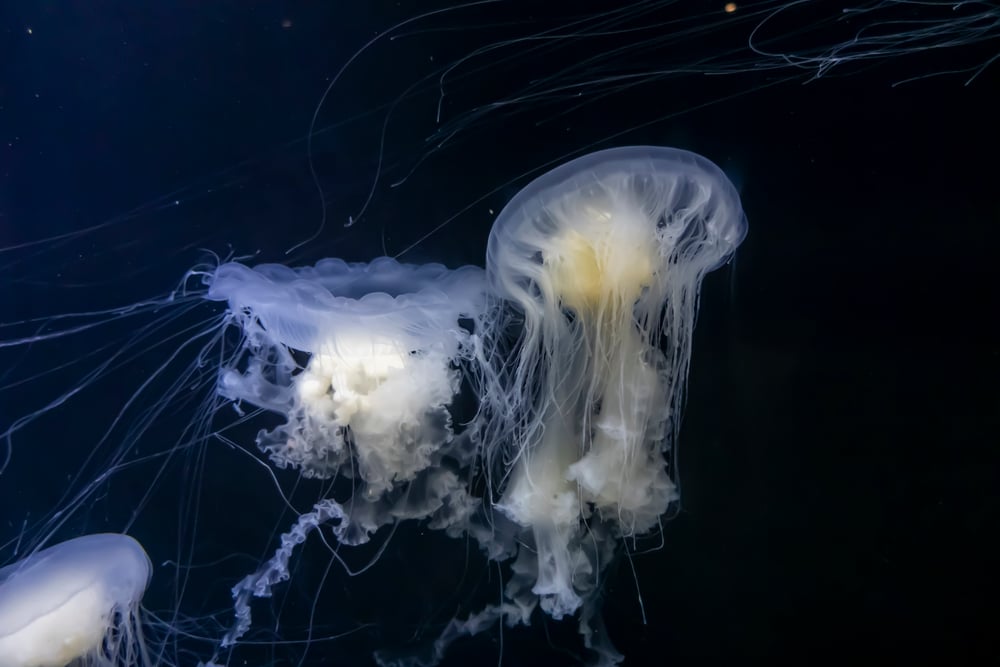
Many jellyfish species can regrow tentacles within days after losing them to predators or injury. Some species can regenerate tentacles that stretch up to 100 feet long, complete with millions of new stinging cells.
This remarkable regenerative capacity extends beyond just tentacles—many species can repair significant damage to their bell-shaped bodies as well. Unlike human healing, which often leaves scars or imperfect repairs, jellyfish regeneration typically produces tentacles identical to the originals in both form and function.
Scientists studying this process have identified unique stem cell populations that enable this extraordinary regenerative capability, which far exceeds what most complex animals can achieve.
Like Go2Tutors’s content? Follow us on MSN.
Some Jellyfish Have 24 Eyes Despite Having No Brain

Box jellyfish possess a sophisticated visual system comprising 24 eyes of four different types, despite having no central brain to process the information. These eyes are grouped into clusters called rhopalia, with each cluster containing a statocyst for orientation and different eye types for various visual tasks. Some eyes detect light levels, others perceive color, and the most complex can form actual images similar to human eyes.
Remarkably, these eyes connect directly to swimming muscles rather than a central processor, allowing automatic responses to visual stimuli. This distributed processing system enables box jellyfish to navigate complex environments and actively hunt prey without centralized neural control—a truly alien approach to vision.
Massive Groups Can Shut Down Power Plants
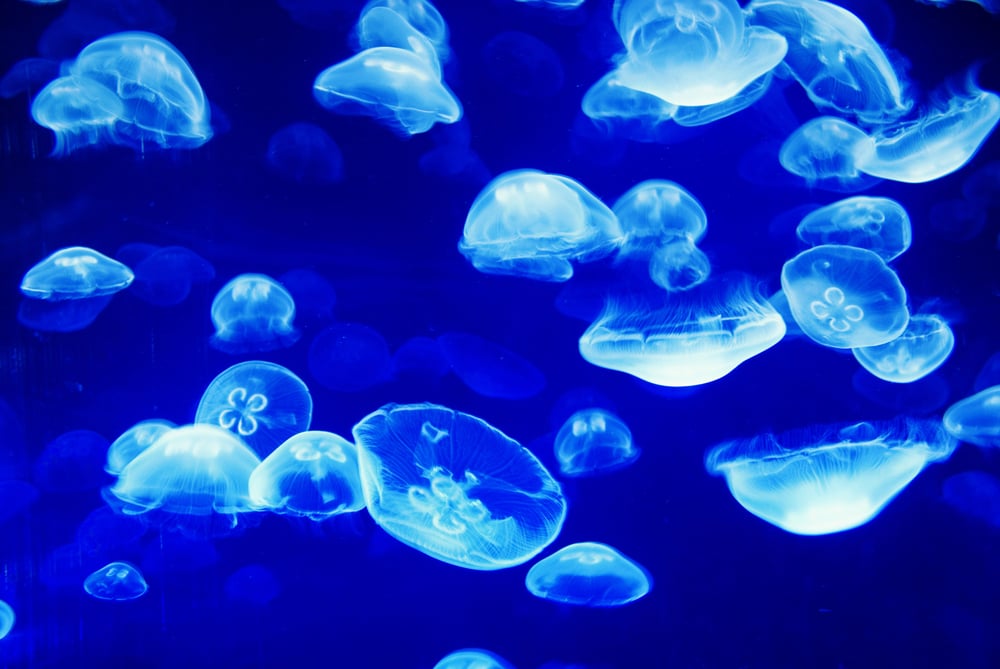
When jellyfish gather in massive groups called blooms, they can shut down critical infrastructure and alter entire marine ecosystems. In 1999, a massive jellyfish bloom clogged the cooling intakes of a nuclear power plant in the Philippines, causing a complete blackout for 40 million people.
Similar incidents have disabled aircraft carriers, desalination plants, and fishing operations worldwide. These blooms can contain billions of individuals covering hundreds of square miles of ocean, with some areas reaching densities of 400 jellyfish per cubic meter.
Climate change, overfishing, and ocean acidification appear to be increasing both the frequency and size of these problematic blooms in recent decades.
They Are Older Than Dinosaurs

Jellyfish have existed virtually unchanged for at least 650 million years, making them among the oldest continuously surviving animal groups on Earth. Fossilized jellyfish impressions from the Cambrian period reveal anatomical features remarkably similar to modern species, suggesting their basic body plan has remained effective through multiple mass extinction events.
They predate not only dinosaurs but also many fundamental aspects of terrestrial ecosystems, including trees and insects. While countless other animal groups have risen and fallen over the eons, jellyfish have persisted through e
Like Go2Tutors’s content? Follow us on MSN.
Some Release Stinging Venom Clouds

Several jellyfish species, including the upside-down jellyfish (Cassiopea), can release clouds of toxic mucus containing thousands of stinging cells. This venom-filled mucus, scientifically termed cassiosomes, contains the same stinging structures found in tentacles but can operate independently in the water column.
Marine biologists only formally described this phenomenon in 2020, despite swimmers having experienced the mysterious ‘stinging water’ sensation for decades. These mobile stinging cells function almost like autonomous weapons, capturing microscopic prey and deterring predators without the jellyfish needing to make direct contact.
This unusual adaptation effectively expands their danger zone well beyond their physical bodies.
They Have Been Raised in Space

Jellyfish have proven remarkably adaptable to spaceflight, successfully reproducing and developing in zero gravity during experiments aboard space shuttles and the International Space Station. NASA scientists discovered that jellyfish raised in space develop gravity-sensing structures differently than their Earth-bound counterparts, yet can still function effectively in the microgravity environment.
Upon returning to Earth, however, these space-born jellyfish struggled to orient themselves properly in normal gravity—they just couldn’t figure out which way was up! These experiments provide valuable insights into how gravity affects development across species, potentially helping scientists understand how humans might eventually reproduce during long-duration space missions.
Nature’s Ancient Survivors

The extraordinary adaptations of jellyfish reveal nature’s astounding capacity for creating successful organisms through radically different evolutionary paths than our own. While humans have invested in complex brains, intricate organ systems, and specialized tissues, jellyfish demonstrate that simplicity, efficiency, and adaptability can be equally viable long-term survival strategies.
As climate change and ocean acidification threaten marine ecosystems worldwide, these ancient survivors are once again demonstrating their remarkable resilience, often thriving in deteriorating conditions that challenge more complex organisms. Their continued success forces us to reconsider our understanding of evolutionary fitness and reminds us that intelligence and complexity represent just one possible path through the ever-changing landscape of natural selection.
More from Go2Tutors!

- 18 Unexpectedly Valuable Collectibles You Might Have Lying Around
- 15 Things Every Teenager in the ’70s Did That Teens Today Wouldn’t Understand
- 15 Strange Things People Have Tried to Ban (And Failed)
- 15 Inventions That Were Immediately Banned After Being Created
- 20 Actors Who Were Almost Cast in Iconic Roles
Like Go2Tutors’s content? Follow us on MSN.



