14 Photos Showing Life On a Modern Navy Destroyer
Most people have never set foot on a warship. And if your only reference points are movies, you probably picture something dramatic — alarms blaring, officers barking orders, missiles streaking across the sky.
Real life on a destroyer looks nothing like that. Most days are quieter, more routine, and honestly more interesting than Hollywood ever bothers to show.
These 14 photos — pulled from public Navy archives and official ship documentation — give you a more honest look at what day-to-day life actually looks like aboard one of the most capable surface combatants in the world.
The Flight Deck During Helicopter Operations
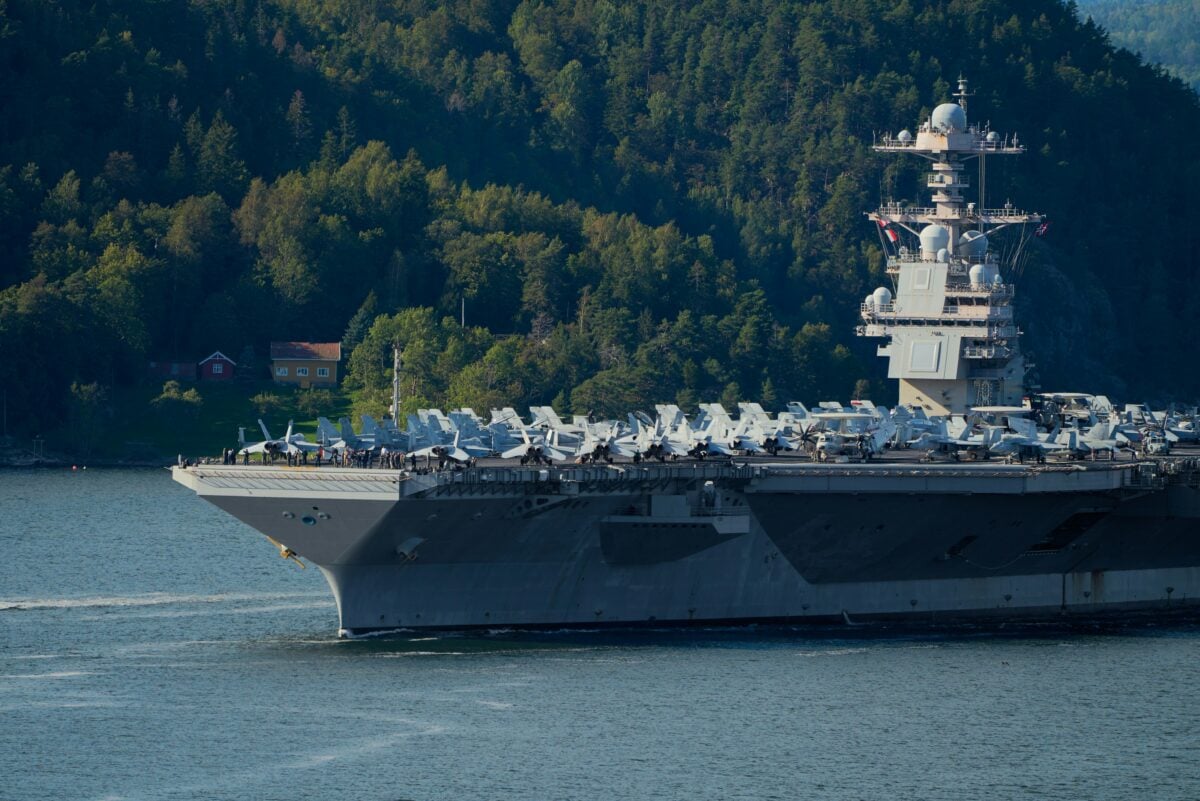
A destroyer’s flight deck is one of the most controlled environments on the ship. Crew members wear color-coded jerseys — yellow for directors, green for maintenance, purple for fuel handlers — and everyone moves with precision.
The deck is small, the rotors are loud, and the margin for error is essentially zero. Watching a coordinated landing operation in rough seas is something else entirely.
The Combat Information Center

This is the nerve center of the ship. Banks of screens display radar tracks, sonar contacts, and data feeds from multiple sources simultaneously.
It’s deliberately dim in here — easier to read the displays that way. The crew members stationed here monitor threats and coordinate responses around the clock.
During general quarters, this room fills up fast.
Sailors Eating in the Mess Deck

Three meals a day, every day, for hundreds of people. The galley crew works harder than most people realize.
A destroyer typically feeds between 280 and 330 sailors depending on the class, and the food is surprisingly decent by most accounts. The mess deck doubles as a gathering space — you’ll see card games, phone charging, and conversations happening between shifts.
A Berthing Compartment
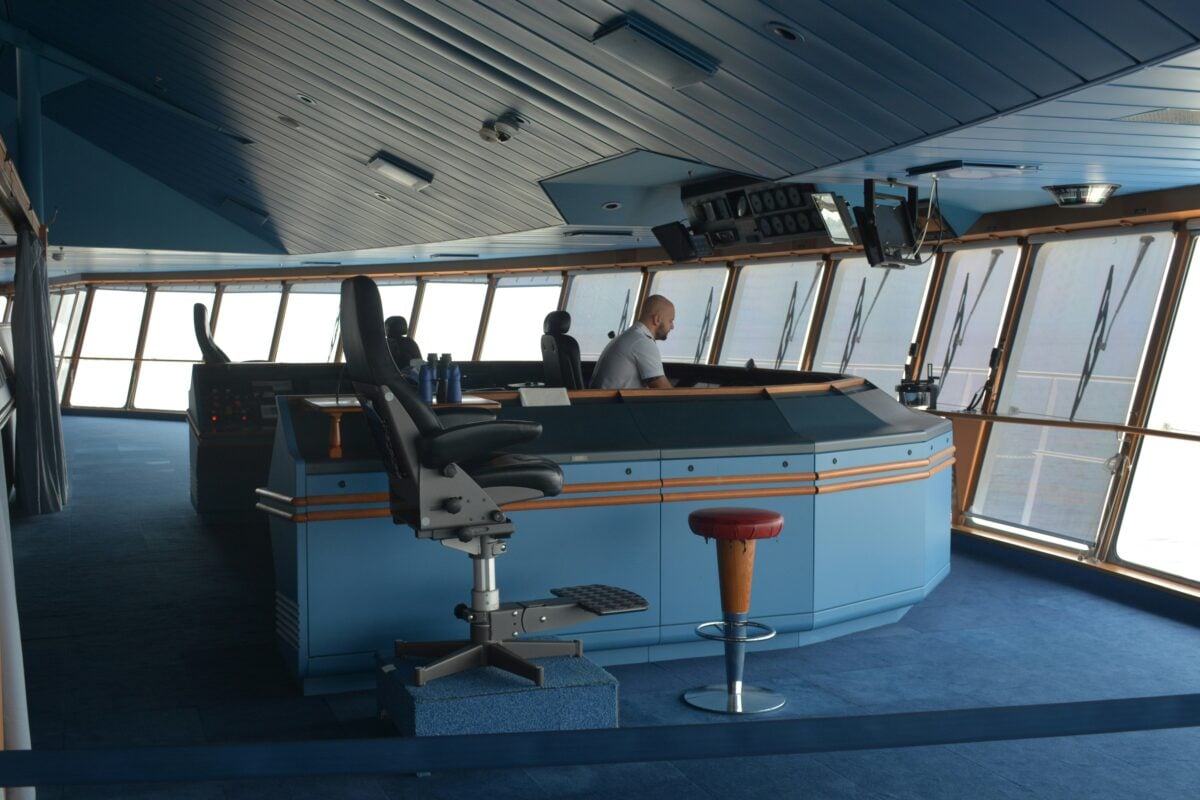
Sleep happens in tight quarters. Sailors are assigned racks stacked three high, with a thin curtain for privacy and a small storage locker underneath.
If you’re 6’2″, you learn quickly how to navigate your space. Ships are loud even when nothing dramatic is happening — the hum of machinery, the ventilation system, the occasional clang of metal on metal.
Sailors get good at sleeping through it.
Maintenance on the 5-Inch Gun

The Mk 45 5-inch gun is one of the most visible features on a modern destroyer. Keeping it operational is an ongoing job.
You’ll often see gunner’s mates elbow-deep in components, running diagnostics or replacing worn parts. It fires a round roughly the size of a fire hydrant, and the maintenance schedule reflects that level of responsibility.
The Bridge During a Watch

The bridge is where the ship is actually driven. Officers and enlisted watchstanders track speed, heading, traffic, and weather from a room with panoramic windows and a wall of navigation equipment.
During transits through busy shipping lanes, tension runs higher. In the open ocean, the mood is calmer.
Night watches, when the lights go red to preserve everyone’s vision, have their own quiet atmosphere.
Physical Training on the Fantail

There’s no gym in the traditional sense — just a small space with weights and equipment crammed into whatever area can be carved out. The fantail, the rear deck of the ship, gets used for running laps and bodyweight workouts when the weather cooperates.
Some sailors log serious miles back there. When the sea kicks up, training moves indoors or gets skipped entirely.
A Damage Control Drill
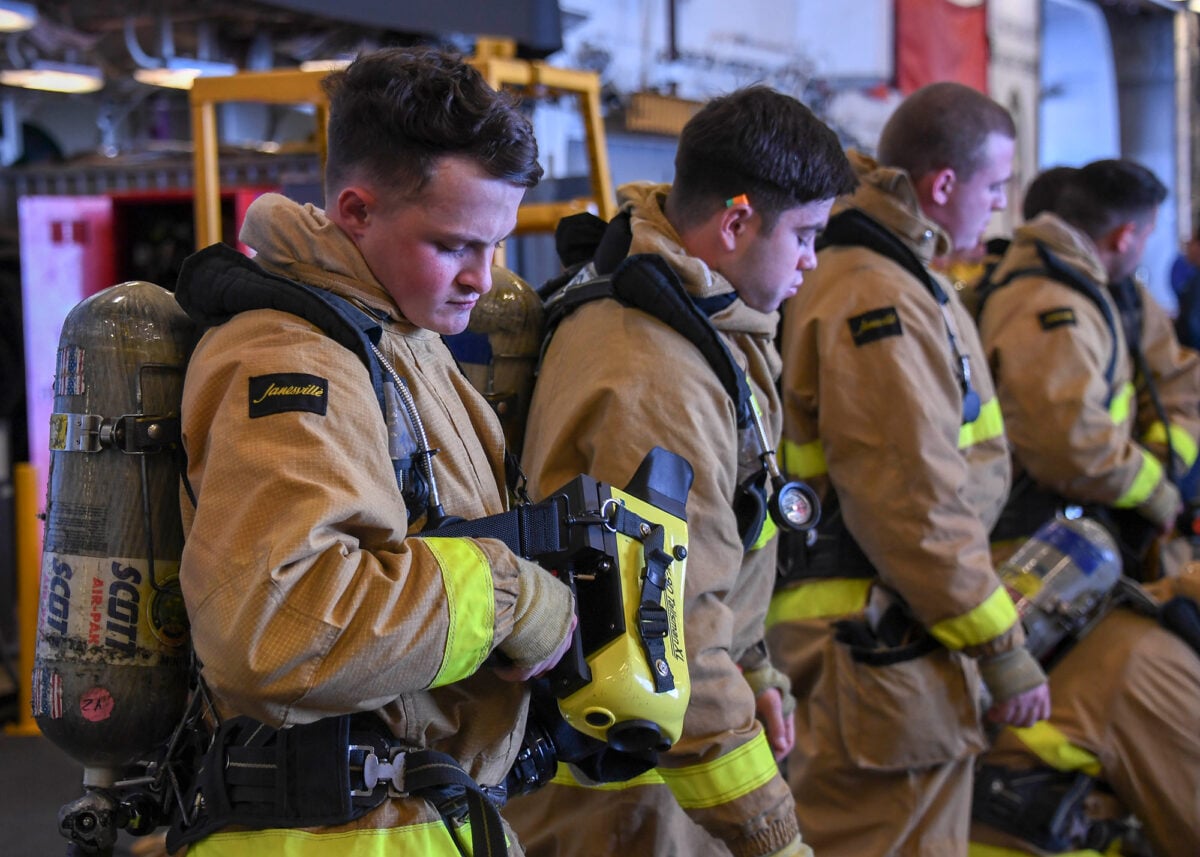
Every sailor on a Navy ship trains for damage control regardless of their primary job. Fire, flooding, and hull breaches are all rehearsed regularly.
You’ll see sailors in full firefighting gear dragging hoses through narrow passageways, their visibility limited, moving on instinct built from hundreds of repetitions. It’s not glamorous.
It’s also not optional.
The Engineering Spaces

Below decks, the engineering crew keeps the ship moving. Gas turbine engines, electrical distribution systems, and water-making equipment all require constant attention.
It’s hot down here, and loud in a way that makes conversation difficult without hand signals. The engineers tend to have a different relationship with the ship than most — they know every system intimately, which gives them a particular kind of pride in their work.
Vertical Launch System Cells

The VLS is one of the defining features of an Arleigh Burke-class destroyer. Ninety-six cells, each capable of holding a Tomahawk cruise missile, an antisubmarine rocket, or a surface-to-air missile, sit flush with the deck forward and aft of the bridge.
You don’t see them doing much most of the time. Armament technicians inspect and maintain them on schedule, and the cells stay closed unless there’s a reason to open them.
A Medical Exam in the Ship’s Clinic

Aboard destroyers, medical care comes down to a tight team – often just a physician assistant backed by several hospital corpsmen. When someone twists an ankle or runs a fever, they head straight there, even if the ship is days from shore.
This compact space packs tools and supplies for urgent cases too, handling what absolutely cannot wait. You might find dental fixes tucked into the schedule, though most crew members cross their fingers they won’t require one.
Foot traffic stays constant, each person arriving with something needing attention.
Night Watch on the Bridge Wing

Out there on the bridge wing at two in the morning, it’s only you, the wind, then endless dark water stretching away. Watchkeepers stay out here no matter the storm, eyes sweeping through binoculars for things radar overlooks.
When skies are sharp and distant from land, stars crowd so thick most folks never witness anything like it. Crew members bring up these moments regularly while listing what lingers after they leave the sea.
Underway Replenishment

Moving vessels linking up out at sea? Something the Navy pulls off without fuss, every now and then.
One ship glides close – a supply tanker – tossing ropes over as they crawl along together. Fuel flows, crates shift, shells move between decks while waves roll under them.
They float steady, never closer than a football field’s length, often longer, holding that gap like clockwork. Hands on deck tug cables, adjust pulleys, wrestle wind-blown lines by raw strength.
When it clicks, the whole thing seems too fluid to be real.
Returning To Port Following Deployment

Out past the breakwater, the hull cuts through gray water under a flat sky. Dress whites stand stiff along the railings, faces turned landward.
Onshore, small figures wave, some clutching cardboard held high with marker scrawl. Tugs nudge the bow like cautious hands guiding something heavy.
Silence settles on the bridge – not empty, but full of things unsaid. Decades fade, yet that stillness stays sharp in memory.
The Spaces Between

Missing pictures often capture the heart of things best. Hours pass while waiting, nothing changes.
Midnight talks in dim hallways stick around longer than expected. Little habits form when days blur together – how the crew takes coffee, always the same.
Some jokes begin early, keep going without reason. Steel and circuits make the ship move.
Still, hundreds call it home for months straight. The strength comes from metal, yes – yet also how things move through it.
What flows inside holds weight too.
More from Go2Tutors!

- The Romanov Crown Jewels and Their Tragic Fate
- 13 Historical Mysteries That Science Still Can’t Solve
- Famous Hoaxes That Fooled the World for Years
- 15 Child Stars with Tragic Adult Lives
- 16 Famous Jewelry Pieces in History
Like Go2Tutors’s content? Follow us on MSN.