14 Rules of Etiquette That Surprise Visitors
When traveling to a new country or region, you might accidentally commit a social faux pas without even realizing it. What seems perfectly normal in one culture can be downright offensive in another. Cultural norms and social expectations vary wildly across the globe, often catching unprepared travelers off guard.
Here is a list of 14 etiquette rules from around the world that frequently surprise visitors and might help you avoid an awkward situation on your next trip.
Removing Your Shoes

In many Asian countries, such as Japan, Korea, and Thailand, it’s expected that you remove your shoes before entering someone’s home. This custom extends beyond private residences to certain restaurants, temples, and even some shops.
The practice stems from both practical cleanliness concerns and spiritual beliefs about separating the outside world from the sanctity of the home.
Never Refuse Food

In Middle Eastern and Mediterranean cultures, it is very impolite to refuse food or drink when offered. They are very proud of their hospitality, and refusing something that they have prepared is refusing their friendship.
Even though you are full, the polite thing to do is to take a little and eat slowly to enjoy their generosity.
Like Go2Tutors’s content? Follow us on MSN.
Punctuality Perceptions

Being even five minutes late is considered impolite in the cultures of Germany and Switzerland, where being on time is seen as a sign of respect. On the other hand, if you turn up for a dinner party in Latin America precisely on time, you might find your host still taking a shower.
Different cultures have quite different ideas on time; some see it as inflexible, while others treat it more as a suggestion than a law.
Tipping Traditions
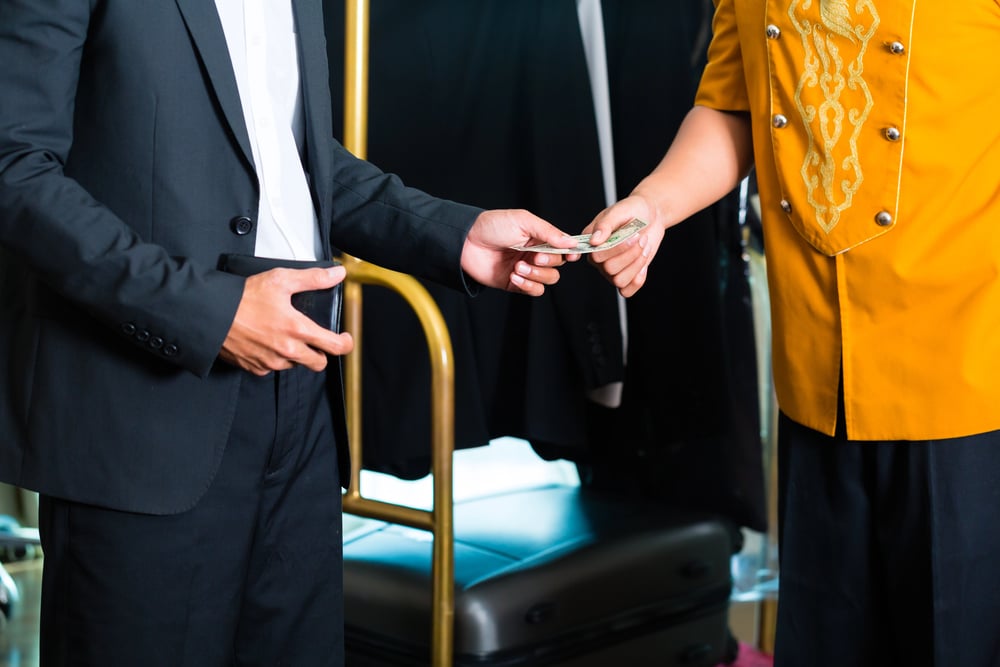
Tipping at restaurants can be considered offensive in Japan, but Americans are used to leaving 15-20%. Excellent service is not seen as something that needs extra pay in Japan, but rather as a regular expectation.
In contrast, service fees are usually covered by the bill in nations like Australia and Iceland, thus tipping is not required and can even be embarrassing.
Direct Eye Contact

Long-term eye contact can be perceived as hostile or disrespectful in many Asian and Middle Eastern cultures, particularly when interacting with elders or other authority figures. In contrast, Americans and many Europeans view direct eye contact as a sign of honesty and attentiveness.
Many first-time tourists lack the cultural awareness necessary to strike the correct balance.
Like Go2Tutors’s content? Follow us on MSN.
Volume Control

Americans often don’t realize how loudly they speak until traveling abroad. In countries like Finland and Japan, speaking loudly in public spaces is considered intrusive and improper.
The contrast becomes particularly noticeable on public transportation, where in some cultures, near silence is the norm, while in others, animated conversations are perfectly acceptable.
Table Manners

In China, slurping noodles loudly is a compliment to the chef, showing enjoyment of the meal. Try this in a fine dining establishment in France, however, and you’ll receive disapproving glances from every direction.
These contradictory expectations around dining noise exist across numerous cultures and frequently trip up travelers.
Hand Gestures

The seemingly innocent ‘thumbs up’ gesture is widely understood as positive in Western cultures but can be highly offensive in parts of the Middle East and West Africa, equivalent to raising the middle finger. Even more surprising, the common ‘OK’ sign made with thumb and forefinger can be vulgar in Brazil and Turkey, making innocent communication suddenly problematic.
Like Go2Tutors’s content? Follow us on MSN.
Queuing Customs

Brits are famous for their orderly queuing for everything from bus stops to bar service. This expectation can lead to culture shock when visiting countries like China or Italy, where forming neat lines isn’t always the cultural norm.
What looks like pushing or cutting to a British or American visitor might simply be the standard way of boarding public transportation in another culture.
Business Card Protocol

In Japan and South Korea, business cards are exchanged with a level of ceremony that surprises Western visitors. Cards should be presented and received with both hands, examined carefully, and never written on or placed in a pocket immediately.
This ritual reflects the importance placed on professional relationships and proper respect for someone’s professional identity.
Personal Space Expectations

Northern Europeans and Americans typically maintain a larger bubble of personal space than those from Mediterranean or Middle Eastern cultures. What feels like comfortable conversational distance to an Italian might feel uncomfortably close to a Swede.
These unspoken spatial expectations often lead to an unconscious dance as one person steps forward while the other steps back.
Like Go2Tutors’s content? Follow us on MSN.
Gift-Giving Guidelines

Bringing a gift when invited to someone’s home is standard practice in many cultures, but the specifics vary enormously. In China, clocks are inappropriate gifts because they’re associated with death, while in Russia, giving an even number of flowers is reserved for funerals.
These subtle distinctions can transform a well-intentioned gesture into an accidental insult.
Dining Etiquette

Finishing everything on your plate in China or India shows the host they provided enough food, while in the Philippines or Egypt, it suggests you weren’t given enough. These contradictory signals around food consumption leave many travelers uncertain about whether to clean their plates or leave a small amount behind.
Greeting Protocols

The appropriate greeting varies dramatically across cultures, from the French practice of ‘la bise’ (cheek kisses) to the Japanese bow or the firm American handshake. Even within Europe, the number of cheek kisses changes from country to country, creating awkward moments when someone goes in for a third kiss while their counterpart has already pulled away after two.
Like Go2Tutors’s content? Follow us on MSN.
Cultural Intelligence Matters

These etiquette differences highlight how deeply cultural expectations are embedded in our daily interactions. Being aware of these variations doesn’t just help prevent embarrassing moments—it demonstrates respect for the places and people you visit. The most successful travelers approach new cultures with curiosity rather than judgment, understanding that their own customs are equally perplexing to others.
Understanding these unspoken rules might seem overwhelming, but locals typically appreciate genuine efforts to respect their customs, even when mistakes happen. After all, these cultural differences are what make travel such a rich, eye-opening experience that broadens our perspective on how diverse human societies can be.
More from Go2Tutors!

- 18 Unexpectedly Valuable Collectibles You Might Have Lying Around
- 20 Little-Known Historical Battles That Had Huge Consequences
- 20 Historical Artifacts That Scientists Can’t Explain
- 15 Inventions That Were Immediately Banned After Being Created
- 20 Actors Who Were Almost Cast in Iconic Roles
Like Go2Tutors’s content? Follow us on MSN.