14 Secret Military Testing Islands in the Pacific
The Pacific Ocean stretches across a third of the planet, and somewhere in all that blue water sits an island where things explode at regular intervals. Not volcanic eruptions or natural disasters — something far more deliberate and controlled.
Military testing islands dot the Pacific like classified thumbtacks on a map, each one serving purposes that most civilians never think about and many governments prefer not to discuss. These islands exist in a strange category of real estate.
Too remote for tourism, too important for abandonment, too sensitive for Google Street View. Some appear on maritime charts with warnings that make recreational boaters think twice.
Others exist in bureaucratic gray areas where jurisdiction gets complicated and questions about what happens there receive answers heavy on national security jargon and light on actual details.
Johnston Atoll
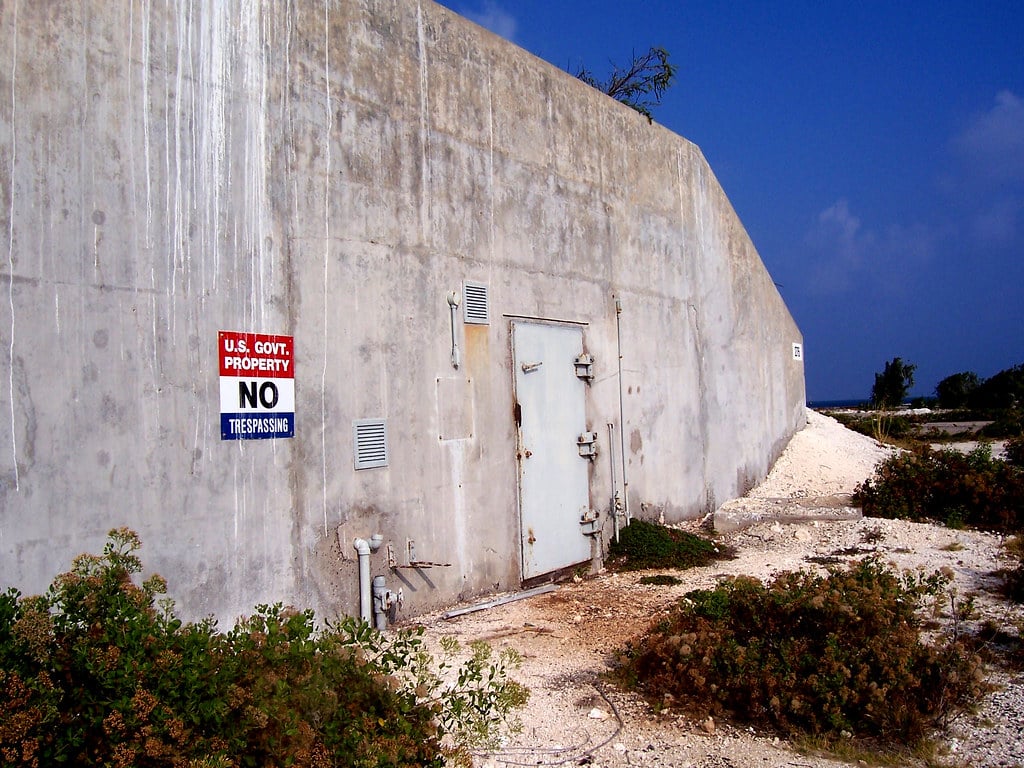
Johnston Atoll knows secrets. Four small islands connected by a shared history of things that shouldn’t exist anywhere, let alone in the middle of the Pacific.
The atoll served as a testing ground for high-altitude nuclear detonations during the 1960s — the kind of experiments that sound like science fiction until you realize they actually happened. Operation Dominic sent nuclear warheads into space above this remote location, creating electromagnetic pulses that knocked out streetlights in Hawaii, 800 miles away.
After the nuclear testing ended, Johnston became a storage and disposal site for chemical weapons, including Agent Orange and other materials too dangerous for mainland handling. Today, the island remains abandoned but monitored.
The cleanup efforts removed the most hazardous materials, but Johnston Atoll exists in a state of permanent caution — a place where decades of military testing left invisible marks that make it unsuitable for normal human activity.
Wake Island
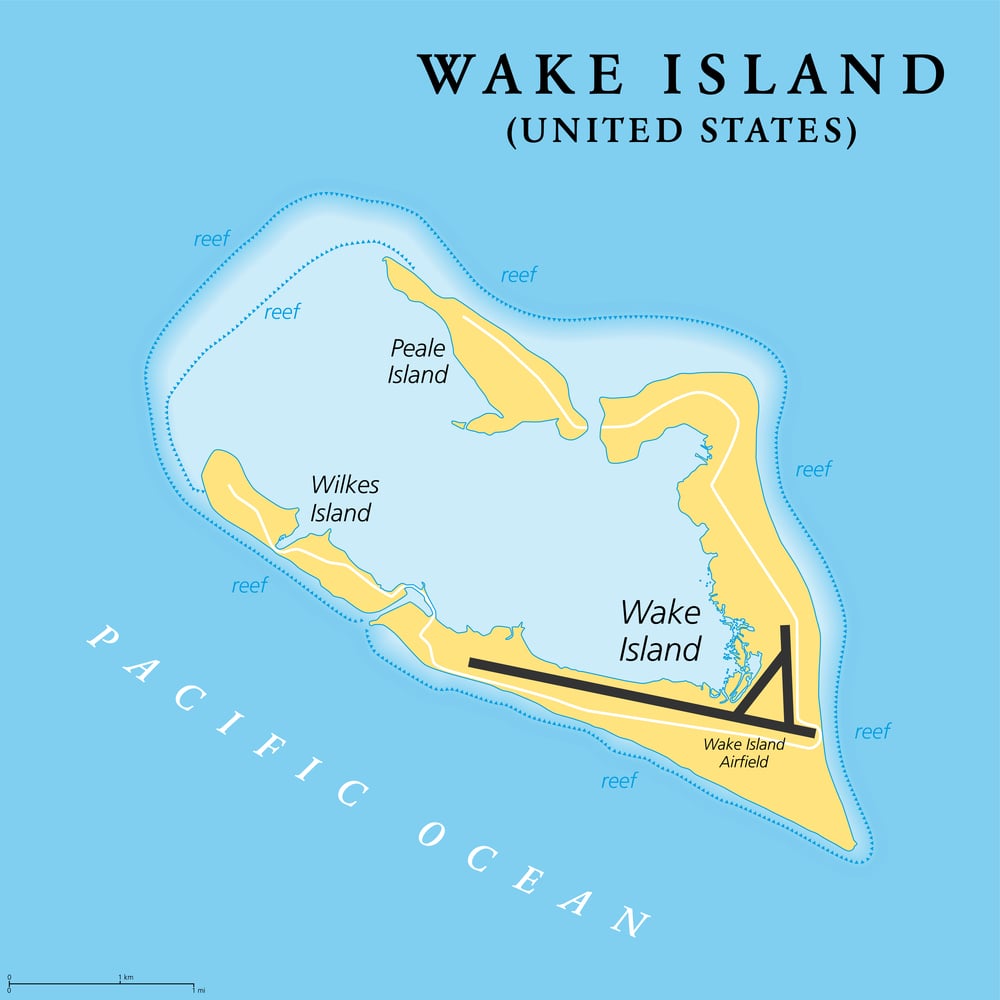
Wake Island doesn’t waste time on subtlety. This small coral atoll sits 2,300 miles west of Hawaii and has been a strategic military outpost since before World War II, but its role in weapons testing often gets overshadowed by its wartime history.
During the Cold War, Wake Island became a crucial link in the Pacific Missile Range, serving as a tracking station for intercontinental ballistic missile tests launched from California. The island’s position made it perfect for monitoring the flight paths and impact zones of experimental weapons systems (though the missiles themselves landed much farther west, in the open ocean near Kwajalein Atoll).
So Wake Island became one of those places where people in windowless rooms tracked bright dots moving across radar screens — dots that represented the cutting edge of nuclear deterrence strategy. But the island’s testing role evolved beyond simple tracking: Wake also hosted experiments in military communications, satellite technology, and missile defense systems.
And yet, because of its small size and remote location, much of what actually happened there remains classified decades later. The island continues to serve military functions today, though the specific nature of current operations stays deliberately vague.
Enewetak Atoll
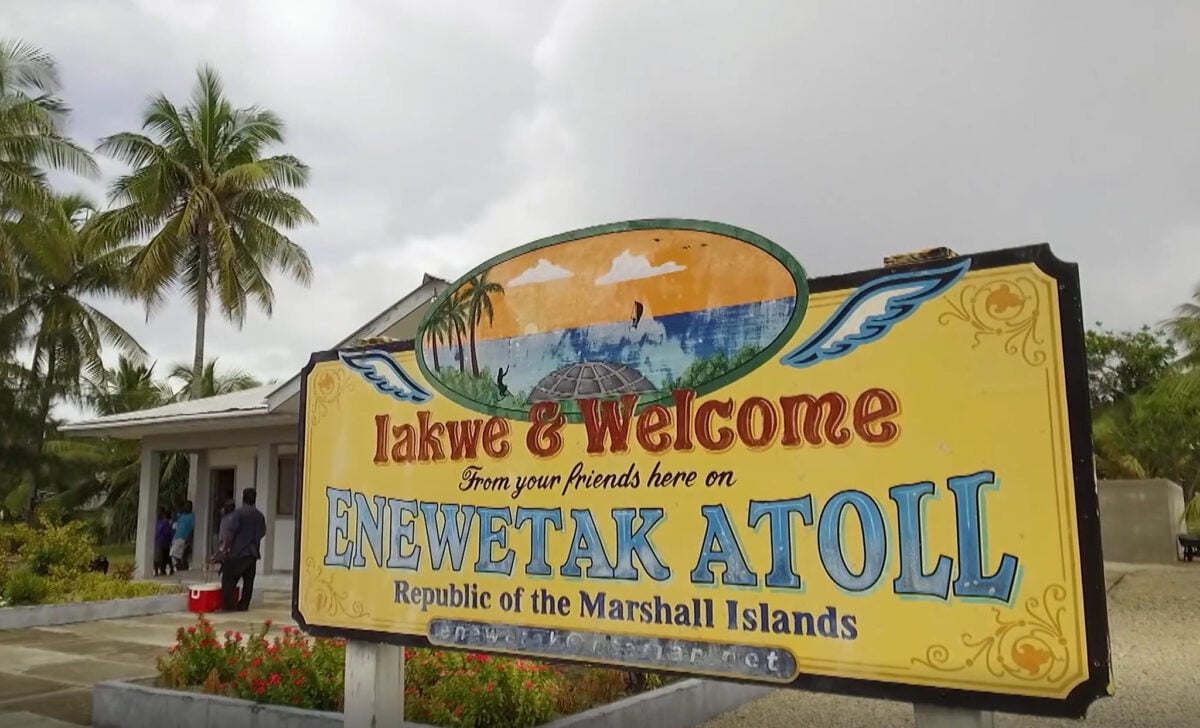
Enewetak Atoll picked up where the US nuclear testing site left off. After the initial round of nuclear testing, the military needed another location in the Marshall Islands for continued weapons development — somewhere that could handle larger explosions and more complex experimental designs.
Between 1948 and 1958, Enewetak hosted 43 nuclear tests, including some of the most powerful weapons ever detonated by the United States. The first hydrogen bomb test, Ivy Mike in 1952, completely vaporized the island of Elugelab and left a crater more than a mile wide.
That test alone released energy equivalent to 10.4 megatons of TNT — roughly 700 times more powerful than the bomb dropped on Hiroshima. The island simply ceased to exist, replaced by a pit in the ocean floor.
But Enewetak’s testing program went beyond sheer destructive power. The atoll became a laboratory for understanding how thermonuclear weapons worked, how to make them more efficient, and how to design warheads for different military applications.
The tests conducted here directly influenced the nuclear weapons that would form the backbone of American deterrence strategy during the Cold War. Today, Enewetak remains largely uninhabitable due to residual radiation, though cleanup efforts have made parts of the atoll marginally safer than they were immediately after testing ended.
Kwajalein Atoll

Kwajalein Atoll operates like a combination airport control tower, laboratory, and target range rolled into one sprawling military installation. This Marshall Islands location serves as the impact site for intercontinental ballistic missiles launched from Vandenberg Air Force Base in California — a 4,200-mile journey that ends with experimental warheads splashing down in the lagoon.
The atoll’s unique geography makes it ideal for missile testing: a large lagoon surrounded by small islands, providing both impact zones and observation platforms. Military personnel stationed on Kwajalein track incoming missiles, collect data on their performance, and recover components for analysis (when there are components left to recover, which isn’t always the case).
The testing program here focuses heavily on missile defense systems — both perfecting the interceptor missiles designed to shoot down incoming threats and understanding how enemy missiles might behave during an actual attack. And Kwajalein keeps busy.
The facility conducts dozens of missile tests each year, making it one of the most active weapons testing sites in the world. The island also serves as a tracking station for space launches and satellite operations, though missile testing remains its primary function.
Residents of nearby islands have grown accustomed to the sight of vapor trails streaking across the sky at predictable intervals — the visible signature of weapons systems most people will never see up close.
Christmas Island (Kiritimati)

Christmas Island exists in a category of places that look peaceful until you learn what happened there. This coral atoll in the Republic of Kiribati served as the staging area for British nuclear weapons testing during the late 1950s — a series of experiments that brought Cold War tensions to one of the most remote locations on Earth.
Between 1957 and 1958, Britain conducted nine nuclear tests at Christmas Island as part of Operation Grapple, an effort to develop hydrogen bomb technology independent of American assistance. The tests included both air drops and ground-level detonations, with yields ranging from relatively small experimental devices to multi-megaton thermonuclear weapons that could be seen from hundreds of miles away.
The largest test, Grapple Y, produced a 3-megaton explosion that temporarily made Christmas Island one of the brightest spots on the planet (at least for the few seconds the fireball lasted, which turned out to be bright enough and long enough to cause permanent eye damage to observers who looked directly at it without proper protection). But the testing program at Christmas Island differed from American operations in important ways.
British scientists were working with limited resources and incomplete knowledge of hydrogen bomb design, leading to a series of experiments that were often as much about basic research as weapons development. The island served not just as a testing ground, but as a laboratory for understanding nuclear physics under extreme conditions.
Today, Christmas Island has been largely decontaminated and supports a small population, though remnants of the testing infrastructure remain scattered across the atoll.
Malden Island

Malden Island knows how to disappear from conversations about nuclear testing, despite hosting some of the most powerful British weapons experiments in the Pacific. This uninhabited coral island, also in Kiribati, served as an extension of the Christmas Island testing program when scientists needed a location for ground-level detonations that were too dangerous to conduct near populated areas.
Three nuclear tests took place at Malden Island in 1957, all of them air-dropped weapons detonated at low altitude to simulate battlefield conditions. The tests were designed to understand how nuclear weapons would perform as tactical battlefield tools rather than strategic city-destroyers — a distinction that mattered enormously for military planning but made little practical difference to the island itself.
The explosions vaporized large sections of the coral surface and left craters that remain visible today. The island’s complete lack of permanent residents made it ideal for testing weapons that produced significant radioactive fallout.
Unlike atolls with native populations, Malden offered a testing site where radiation exposure was purely a technical problem rather than a humanitarian crisis. The isolation came with logistical challenges — everything needed for the tests had to be shipped in, and evacuation procedures were complicated by the island’s remoteness — but it provided British scientists with a place to conduct experiments that would have been impossible closer to populated areas.
French Polynesia (Moruroa and Fangataufa)

French Polynesia learned what it meant to be strategically located when France decided it needed its own nuclear weapons testing program. Between 1966 and 1996, the atolls of Moruroa and Fangataufa hosted 193 nuclear tests — a three-decade program that made these South Pacific locations the center of French military nuclear development.
The testing began with atmospheric detonations that could be seen from Tahiti, despite the 750-mile distance between Moruroa and the main population centers. Early tests used devices suspended from balloons or dropped from aircraft, creating the iconic mushroom clouds that appeared in news footage around the world (and generated considerable international protest, particularly from neighboring countries that received radioactive fallout without being consulted about the testing schedule).
But France eventually moved to underground testing in response to international pressure and the Comprehensive Test Ban Treaty negotiations. So the underground phase proved even more intensive than the atmospheric period — 147 tests conducted by drilling deep shafts into the coral atolls and detonating nuclear devices far below the surface.
And yet this approach created different problems: the repeated underground explosions weakened the geological structure of both atolls, leading to concerns about structural collapse and radioactive material leaking into the surrounding ocean. But the testing program continued until 1996, making France the last country to conduct nuclear weapons tests in the Pacific. Today, both atolls remain under French military control, with access restricted due to lingering radiation levels.
Palmyra Atoll

Palmyra Atoll sits like a footnote in the history of Pacific military testing, overshadowed by the more dramatic nuclear experiments conducted elsewhere but significant in its own quiet way. This privately-owned American territory served various classified military functions during and after World War II, including weapons testing programs that remain partially classified decades later.
During the Cold War, Palmyra’s remote location and existing military infrastructure made it useful for testing non-nuclear weapons systems, communications equipment, and surveillance technology. The atoll’s position roughly halfway between Hawaii and American Samoa provided an ideal location for experiments that required isolation but not the extreme security measures necessary for nuclear testing.
Military personnel used Palmyra to test everything from experimental radar systems to prototype military vehicles, taking advantage of the island’s varied terrain and controlled access. The island also served as a tracking station for missile tests conducted elsewhere in the Pacific, providing an additional data collection point for weapons launched from California or other testing sites.
Today, Palmyra operates primarily as a nature preserve, but remnants of its military testing past remain scattered across the island — concrete foundations, abandoned equipment, and restricted areas that hint at activities that occurred far from public scrutiny.
Midway Atoll

Midway Atoll earned its place in history books for the decisive World War II battle fought in its waters, but its role in postwar military testing often gets overlooked in favor of more dramatic stories. The atoll’s strategic location and existing military infrastructure made it a valuable site for Cold War-era weapons testing and surveillance programs.
The military used Midway as a testing ground for anti-aircraft weapons systems, radar technology, and communications equipment during the 1950s and 1960s. The island’s position in the central Pacific made it ideal for intercepting and monitoring Soviet military communications, leading to the installation of sophisticated listening equipment that transformed Midway into one of America’s most important intelligence gathering stations.
The weapons testing conducted here focused primarily on defensive systems — the kind of equipment designed to protect military installations from aerial attack. Midway also served as a refueling and staging area for military aircraft conducting classified missions throughout the Pacific, including flights related to weapons testing programs at other locations.
The atoll’s long runways and deepwater harbor could accommodate the largest military aircraft and ships, making it a crucial logistical hub for operations that required extended range and heavy equipment. Today, Midway operates as a wildlife refuge, but the military maintains certain facilities for ongoing Pacific operations.
Howland Island

Howland Island carries the peculiar distinction of being famous for an aviation disaster while quietly serving military testing purposes that receive far less public attention. This small coral island, best known as Amelia Earhart’s intended refueling stop, later became a testing site for military equipment designed to operate in extremely isolated conditions.
During the Cold War, military engineers used Howland to test communications equipment, navigation systems, and survival gear under the kind of harsh, remote conditions that characterized many Pacific military operations. The island’s tiny size — less than two square miles — and complete lack of natural resources made it an ideal proving ground for equipment that needed to function reliably with minimal support infrastructure.
Military personnel would deploy experimental systems to Howland and monitor their performance over extended periods, simulating the conditions troops might face on isolated Pacific islands during wartime. The testing program at Howland also included experiments in renewable energy systems, water purification technology, and emergency shelter designs — the kind of unglamorous but crucial equipment that determines whether military operations succeed or fail in remote locations.
These tests rarely made headlines, but they contributed directly to military capabilities throughout the Pacific region.
Baker Island

Baker Island operates in the shadow of more famous testing sites, conducting military experiments that focus on endurance rather than explosive power. This uninhabited coral island south of Howland became a testing ground for equipment and procedures designed to function in some of the harshest conditions on Earth.
Military engineers used Baker Island to test solar power systems, desalination equipment, and automated monitoring devices that needed to operate without human intervention for months or years at a time. The island’s extreme isolation — it sits more than 1,600 miles from the nearest populated area — provided perfect conditions for understanding how military equipment would perform when repair and maintenance became impossible.
These tests often lasted for years, with equipment left on the island to see how long it would continue functioning under constant exposure to salt spray, extreme heat, and Pacific storms. The island also served as a testing site for experimental building materials and construction techniques designed for rapid military deployment.
Engineers would construct temporary facilities using prototype materials and monitor their performance over time, developing the kind of knowledge that would prove crucial for establishing military bases in remote locations during wartime.
Jarvis Island

Jarvis Island specializes in the kind of military testing that happens slowly and receives little attention but ultimately determines whether ambitious military operations actually work in practice. This remote coral island became a proving ground for long-term survival and sustainability systems designed to support military operations far from conventional supply lines.
The military used Jarvis to test experimental agriculture techniques, alternative energy systems, and water conservation methods that could potentially support small military outposts for extended periods without resupply. These experiments often ran for years, with automated systems left to operate independently while military personnel monitored their performance remotely.
The island’s harsh environment — extreme heat, minimal rainfall, constant wind — provided ideal conditions for understanding the limits of various technologies and techniques. Jarvis also hosted tests of experimental communications equipment designed to maintain contact with military units operating in extremely remote locations.
The island’s position in the central Pacific made it useful for understanding how radio signals would propagate across vast ocean distances under different atmospheric conditions. These tests contributed to the development of military communications systems that could maintain contact with scattered Pacific operations regardless of weather or atmospheric interference.
San Clemente Island

San Clemente Island brings military testing closer to the continental United States while maintaining the isolation necessary for weapons experiments that would be impossible anywhere else. Located 60 miles west of San Diego, this Navy-controlled island serves as one of the most active military testing sites in the Pacific.
The island hosts testing programs for everything from precision-guided munitions to experimental aircraft systems, taking advantage of its varied terrain and controlled airspace to conduct experiments that require both security and realistic conditions. Military personnel use San Clemente to test new weapons systems against realistic targets, develop tactics for amphibious operations, and train with equipment that will eventually be deployed throughout the Pacific region.
The island’s proximity to mainland military facilities allows for more complex testing programs that would be logistically impossible at more remote locations. San Clemente also serves as a testing ground for environmental remediation techniques, as military scientists work to understand how weapons testing affects marine ecosystems and develop methods for minimizing long-term environmental damage.
These experiments have implications for military operations throughout the Pacific, where environmental concerns increasingly influence military planning and operations.
Farallon Islands

The Farallon Islands maintain their secrets well, despite sitting just 27 miles west of San Francisco. These rocky outcrops served as a nuclear waste dumping site from 1946 to 1970, when military and civilian organizations disposed of radioactive materials in the deep waters surrounding the islands.
Military testing at the Farallons focused primarily on understanding how radioactive materials would behave in marine environments — research that proved crucial for developing nuclear weapons and nuclear-
More from Go2Tutors!

- The Romanov Crown Jewels and Their Tragic Fate
- 13 Historical Mysteries That Science Still Can’t Solve
- Famous Hoaxes That Fooled the World for Years
- 15 Child Stars with Tragic Adult Lives
- 16 Famous Jewelry Pieces in History
Like Go2Tutors’s content? Follow us on MSN.