15 Before And After Images Of Historical Bridges
There’s something almost unsettling about seeing a familiar bridge stripped back to its earliest form. The cables not yet strung.
The towers half-built. The river below, unchanged and indifferent.
Bridges tend to feel permanent once they’re up, but every single one of them had a beginning — a time when the idea of crossing that stretch of water seemed almost impossible. These 15 bridges tell that story.
Some took decades. Some claimed lives during construction.
All of them changed the places they connected.
1. Brooklyn Bridge, New York City (1869–1883)

When construction began on the Brooklyn Bridge, Brooklyn and Manhattan were separate cities. The East River between them was a genuine obstacle — ferries were the only option, and winter ice made even those unreliable.
Early photographs from the 1870s show the two granite towers rising out of the water with nothing connecting them but air. Workers called it “the bridge to nowhere.”
The finished structure, with its iconic Gothic arches and suspension cables fanning out like a harp, became one of the most recognizable images in American history. Seeing those two states of the bridge — bare towers and finished span — makes the scale of the achievement feel real in a way that just reading about it doesn’t.
2. Golden Gate Bridge, San Francisco (1933–1937)
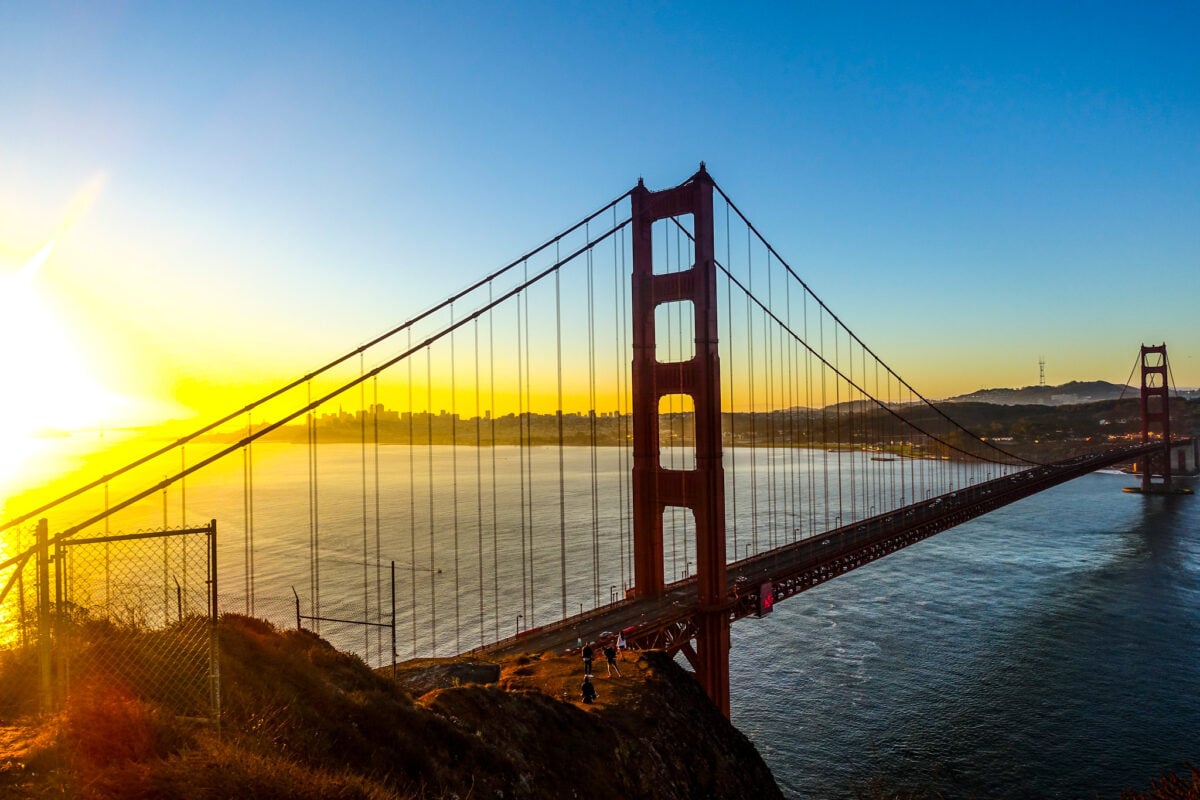
The Golden Gate strait was considered by many engineers to be unbridgeable. Strong currents, deep water, and frequent fog made it a genuinely difficult site.
During construction, photographs show a single tower standing alone in the water, cables barely begun, the Marin Headlands still separated from San Francisco by open water. The finished bridge, painted in that distinctive “international orange,” changed the Bay Area permanently.
The before image — just a tower and a prayer — makes the completed span look almost miraculous.
3. Sydney Harbour Bridge, Australia (1923–1932)

Few bridge construction sequences are as visually dramatic as the Sydney Harbour Bridge. Because of the arch design, both halves of the bridge were built simultaneously from opposite shores, inching toward each other over nine years.
Old photographs show two curved arms reaching toward each other but not yet touching — a gap still splitting the sky above the harbour. The moment the two halves met in September 1930 drew a crowd.
The completed bridge became so central to Sydney’s identity that locals started calling it “the Coathanger.” The before shots — those two arms outstretched and waiting — are striking precisely because they look so unfinished for so long.
4. Tower Bridge, London (1886–1894)
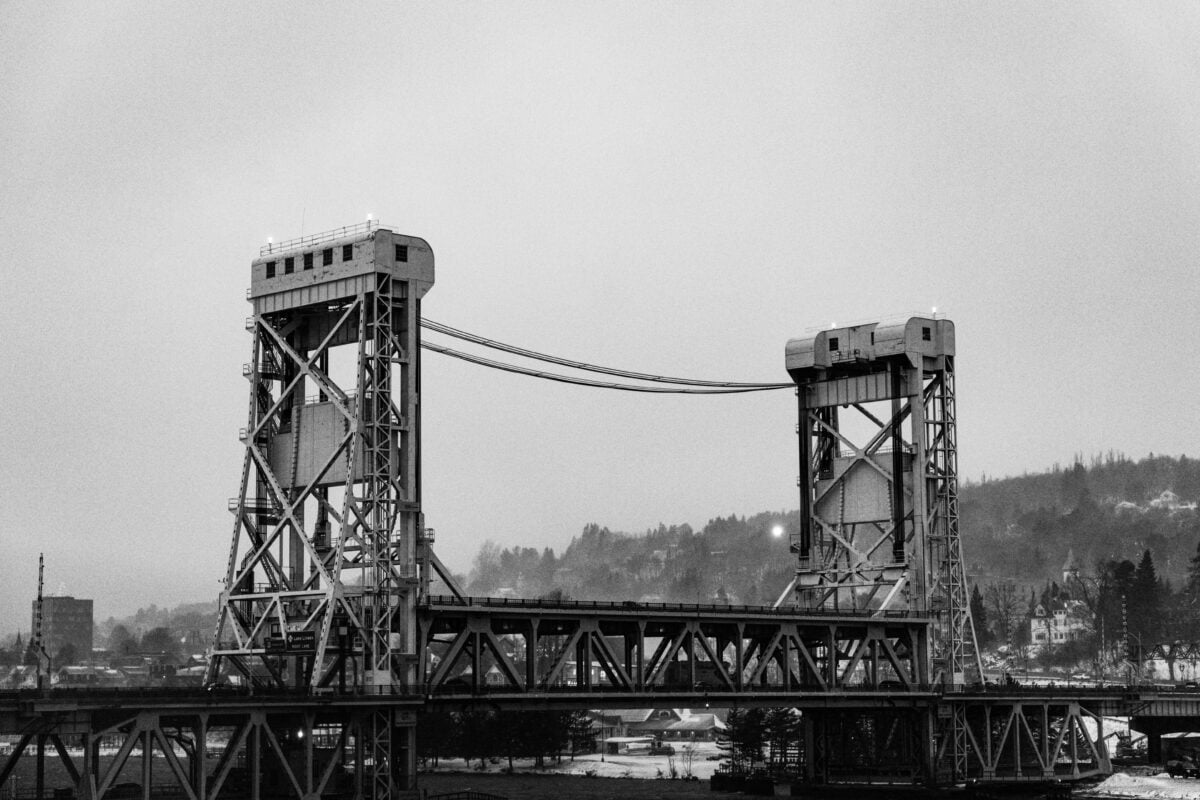
Before Tower Bridge existed, the Pool of London — the stretch of the Thames downstream from London Bridge — was crossed by ferry or not at all. Construction photographs from the late 1880s show the two towers standing without their connecting walkways or bascule mechanism, surrounded by scaffolding and cranes.
The finished bridge is so Gothic in its design that many visitors assume it’s medieval. It isn’t — it was built to blend with the nearby Tower of London.
Side-by-side images of the skeletal construction and the finished structure show just how much decorative stonework went on top of what is essentially a steel frame.
5. Forth Rail Bridge, Scotland (1883–1890)
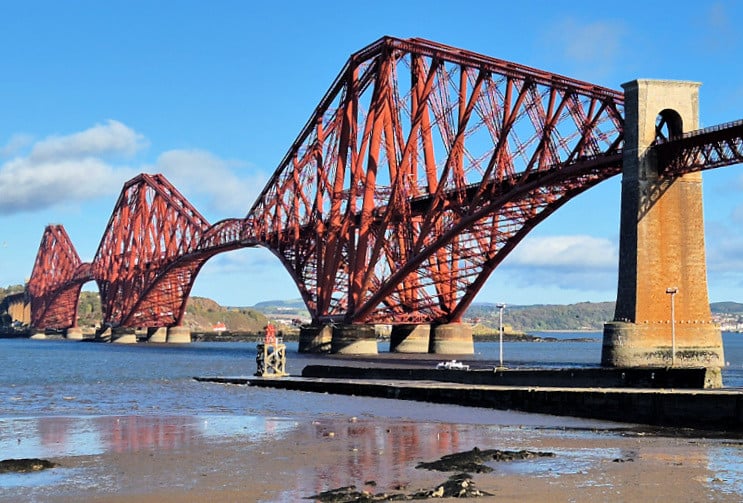
The Forth Rail Bridge was built in the shadow of disaster. The Tay Bridge had collapsed in 1879, killing everyone on a train crossing it during a storm.
When construction began on the Forth crossing, engineers had something to prove. Early photographs show the cantilever arms extending out over the Firth of Forth with little apparent support.
Workers perched on exposed steel hundreds of feet in the air. The finished bridge — those three massive double cantilevers in dark red — became a symbol of Victorian engineering confidence.
Comparing the sparse early construction photos to the completed structure shows how much of the bridge’s visual mass comes from the completed lattice steelwork.
6. Ponte Vecchio, Florence (1345)
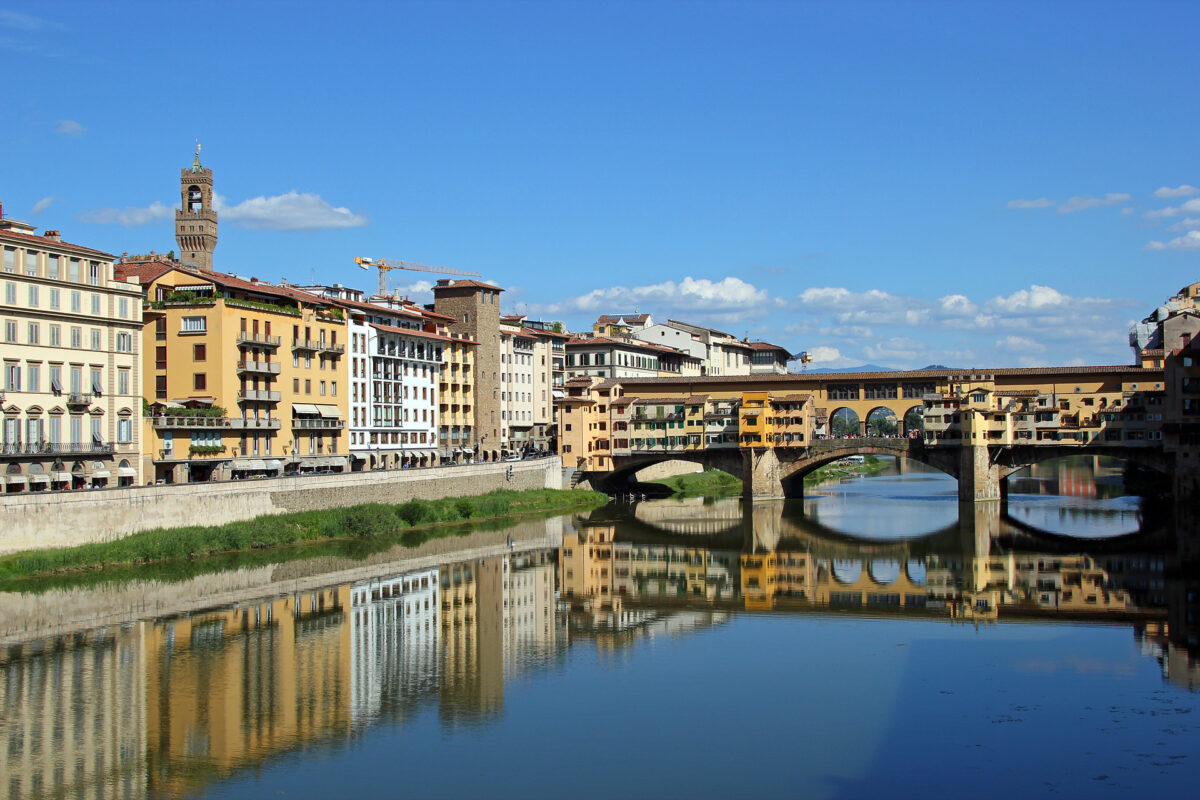
The Ponte Vecchio as you see it today is actually a rebuilt version — the original Roman bridge on that site was washed away by floods more than once. Medieval illustrations show the bridge’s earlier incarnations as simpler, less cluttered spans across the Arno.
The current bridge, completed in 1345, is covered with shops built right onto the structure — a feature common in medieval times but rare today. What looks in early sketches like a plain stone arch became, over centuries, a dense corridor of jewelers and goldsmiths, the buildings hanging over the water on wooden brackets.
The transformation from bare bridge to built-up market street happened so gradually that no single “after” image captures it.
7. Clifton Suspension Bridge, Bristol (1831–1864)
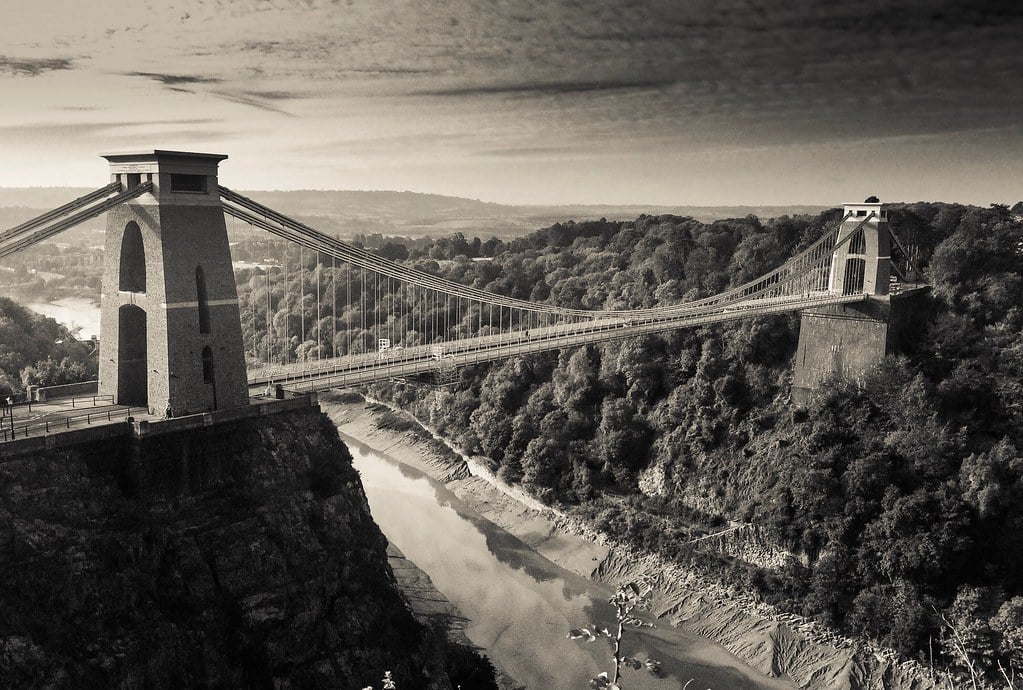
Isambard Kingdom Brunel won the design competition for the Clifton Suspension Bridge in 1831, but the bridge wasn’t finished until 1864 — five years after his death. Photographs from mid-construction show the towers standing above the Avon Gorge, chains not yet strung, the gap between them enormous.
Brunel never saw it completed. The bridge was finished by colleagues as a tribute to him.
The contrast between those early photographs of isolated towers and the finished bridge — graceful and delicate-looking above the 245-foot gorge — carries a certain weight when you know the backstory.
8. Millau Viaduct, France (1996–2004)

The Millau Viaduct is the tallest bridge in the world — its highest pier reaches 336 meters. But before it existed, the valley of the Tarn River below was crossed by a road that wound down into the valley and back up the other side, creating a notorious traffic bottleneck that turned summer drives through the region into long, miserable jams.
Construction photographs show the piers rising out of the valley floor like thin needles, decks not yet attached, the structure looking almost impossibly fragile. The finished viaduct — deck surface running in a gentle curve above the cloud line — looks like it belongs in a different century than the winding valley road it replaced.
9. Rialto Bridge, Venice (1588–1591)
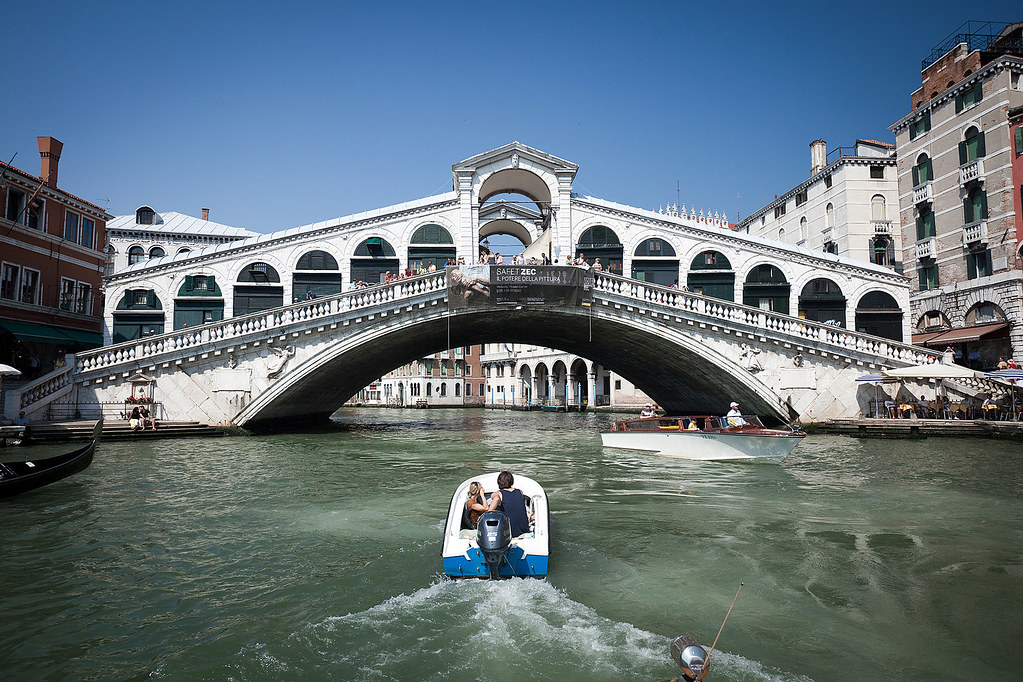
For most of Venice’s history, the Rialto Bridge was the only way to cross the Grand Canal on foot. Before the current stone structure was built, the crossing was a wooden drawbridge — paintings and engravings from the 14th and 15th centuries show a low, flat structure with a moveable central section to let tall-masted boats through.
The stone bridge that replaced it, with its single arch and two rows of shops along the top, was controversial at the time. Michelangelo and Palladio both submitted competing designs that were rejected.
What came out of the process is the bridge that still stands today, and comparing those early depictions of the wooden crossing to the completed stone arch shows just how dramatically the Canal’s most famous landmark changed.
10. Manhattan Bridge, New York City (1901–1909)
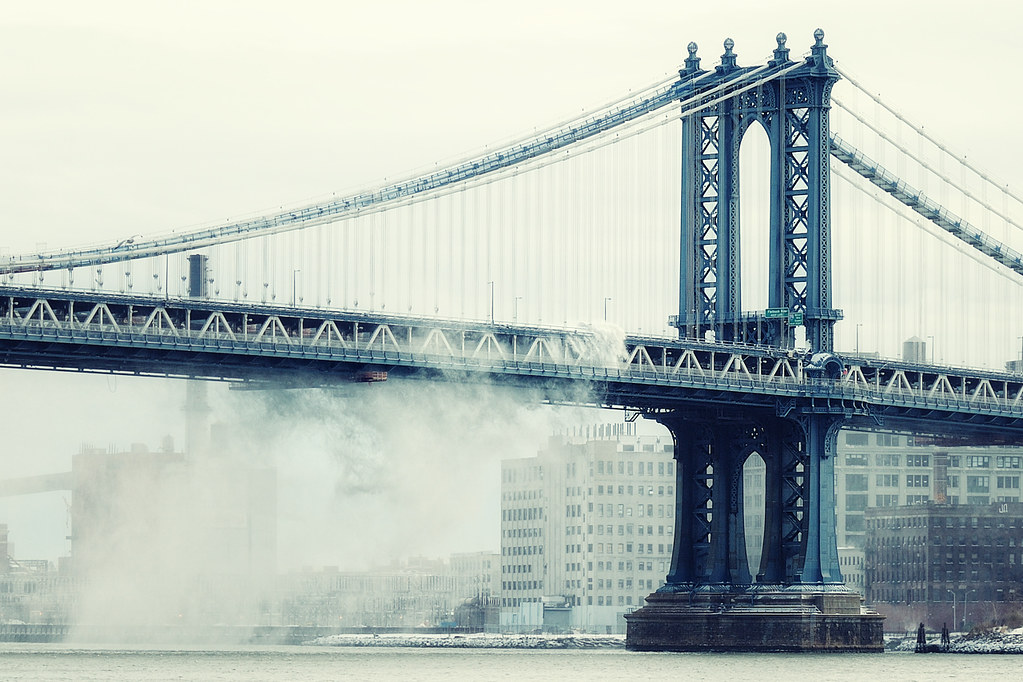
The Manhattan Bridge doesn’t get the attention the Brooklyn Bridge does, but it’s worth looking at what the East River crossing looked like before it existed. Early 20th-century photographs show the construction site at the Bowery, cables beginning to be draped between the towers, the anchorages under construction on both shores.
The finished bridge carries more subway lines than any other in New York City. Comparing the construction-era images — cranes, bare steel, open water — to photographs of the completed span loaded with trains makes the engineering achievement feel concrete in a way that statistics alone don’t.
11. Tsing Ma Bridge, Hong Kong (1992–1997)

The Tsing Ma Bridge connects Lantau Island to the main urban area of Hong Kong, and its construction coincided almost exactly with the handover of Hong Kong from British to Chinese administration. Photographs from the early 1990s show the towers being assembled over the Ma Wan Channel, the deck sections not yet connected, the island of Ma Wan still isolated.
The finished bridge — one of the longest suspension bridges in the world, and the longest carrying both road and rail — opened in time to connect the new international airport on Lantau to the city. The before-and-after contrast isn’t just structural.
The landscape around the bridge changed too, with the airport development reshaping the island entirely.
12. Pont du Gard, Southern France (circa 50 AD)

The Pont du Gard isn’t a road bridge — it’s a Roman aqueduct, built to carry water across the Gardon River to the city of Nîmes. When it was built, it was part of a 50-kilometer water supply system.
There are no construction photographs, obviously. But Roman-era illustrations and modern archaeological reconstructions show what the structure looked like when it was in active use: plastered exterior surfaces, water flowing in the covered channel along the top, the surrounding landscape much more heavily cultivated than it appears today.
Two thousand years of erosion, plant growth, and partial dismantling have stripped away the plaster and changed the surroundings considerably. The “before” here is a reconstruction, not a photograph — and that gap in evidence is itself part of the story.
13. Öresund Bridge, Denmark–Sweden (1995–2000)

From Copenhagen to Malmö, a bridge now spans the stretch of water dividing Denmark and Sweden. Before that, ferries carried people back and forth in roughly 45 minutes.
Images taken during building work in the late nineties reveal how the structure – carrying both trains and cars – reached outward from each coastline. Water remained wide between the ends.
In the center, workers shaped Peberholm, an island built by hand, piece by piece.
Fifty years ago, nobody walked between these skyline clusters daily; today they do.
After the span launched in 2000, job travel reshaped completely across urban zones. Ferries once limited movement; now foot traffic flows steady each dawn instead.
Visual shifts show clearly on maps, although deeper changes run beneath – labor ties strengthened, neighborhoods intertwined. Daily routines evolved because of steel links overhead, not just coastal views.
14. Tappan Zee Bridge / Governor Mario M. Cuomo Bridge, New York (1952 / 2017–2018)
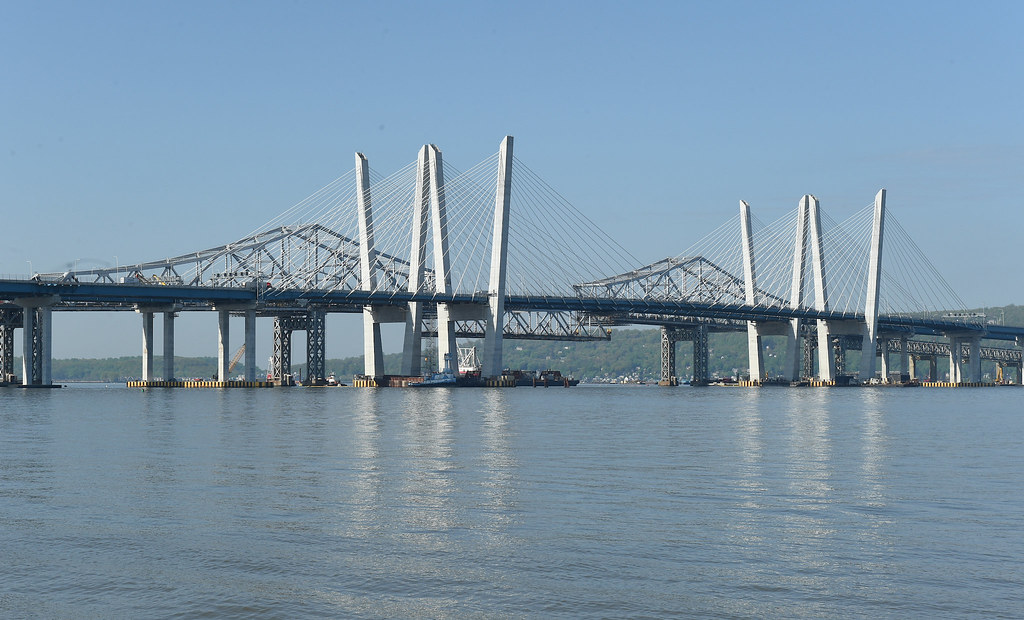
This odd example skips construction drama – instead, it shows a swap. Though finished in 1952, the first Tappan Zee span linked areas across the Hudson, just above NYC.
Come the 2010s, engineers labeled it shaky underneath. Right beside the original span rose the fresh Governor Mario M. Cuomo crossing, its shape slicing through sky while the past lingered just feet away.
For a short run of months, two bridges cut across the Hudson River like twin scars. Snapshots snapped during 2017 into 2018 frame them – aged Tappan Zee crouched low, cables taut above it in sleek lines.
One slouches with age, pavement cracked under years; the newer lifts high on steel threads, angular, crisp. Once traffic shifted to the replacement, wrecking crews moved in, peeling apart what had stood since midcentury.
Seeing those parallel structures share water and the horizon feels off-kilter, almost unreal.
15. Kintai Bridge Japan 1673
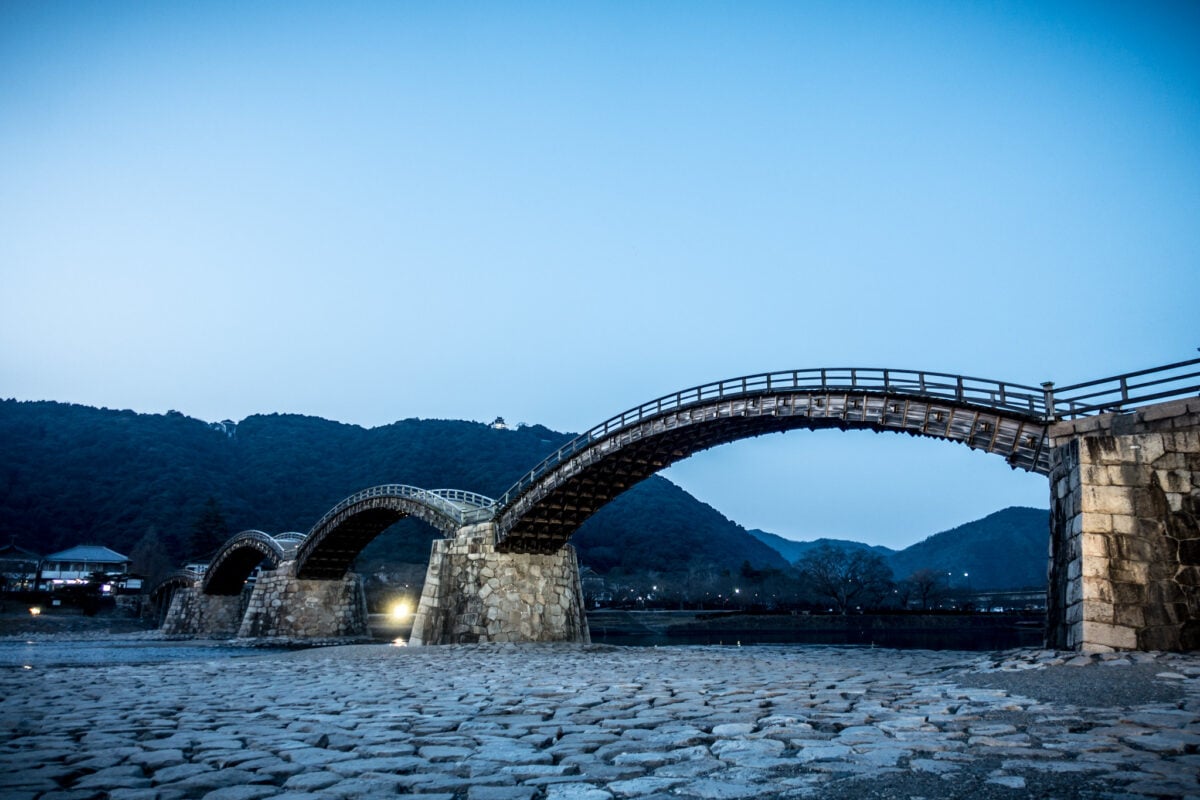
A wooden arch stands across the water at Iwakuni – this one called Kintai Bridge – rising again each time storms knocked it down. Three hundred fifty years carry stories of collapse, then rebuilding, again and again.
After wind and rain swept through in 1950, nothing remained of the first structure. Workers shaped new timbers into place by 1953, restoring what had vanished.
Later, decades on, another careful revival brought older details back to life. Old photos, taken before the big storm of 1950, reveal a worn yet whole structure – five timber frames crossing the Nishiki River like outstretched arms.
After the typhoon passed through, later images captured those same arches broken apart, drifting slowly downstream on murky water. Though restored first in 1953 and then again over time, builders followed earlier plans closely each round.
Yet every version used fresh wood, replaced piece by piece without pause. This raises something quiet to consider: when planks are swapped one after another until nothing remains of the old ones, is it still the very same bridge standing there?
What the Water Remembers
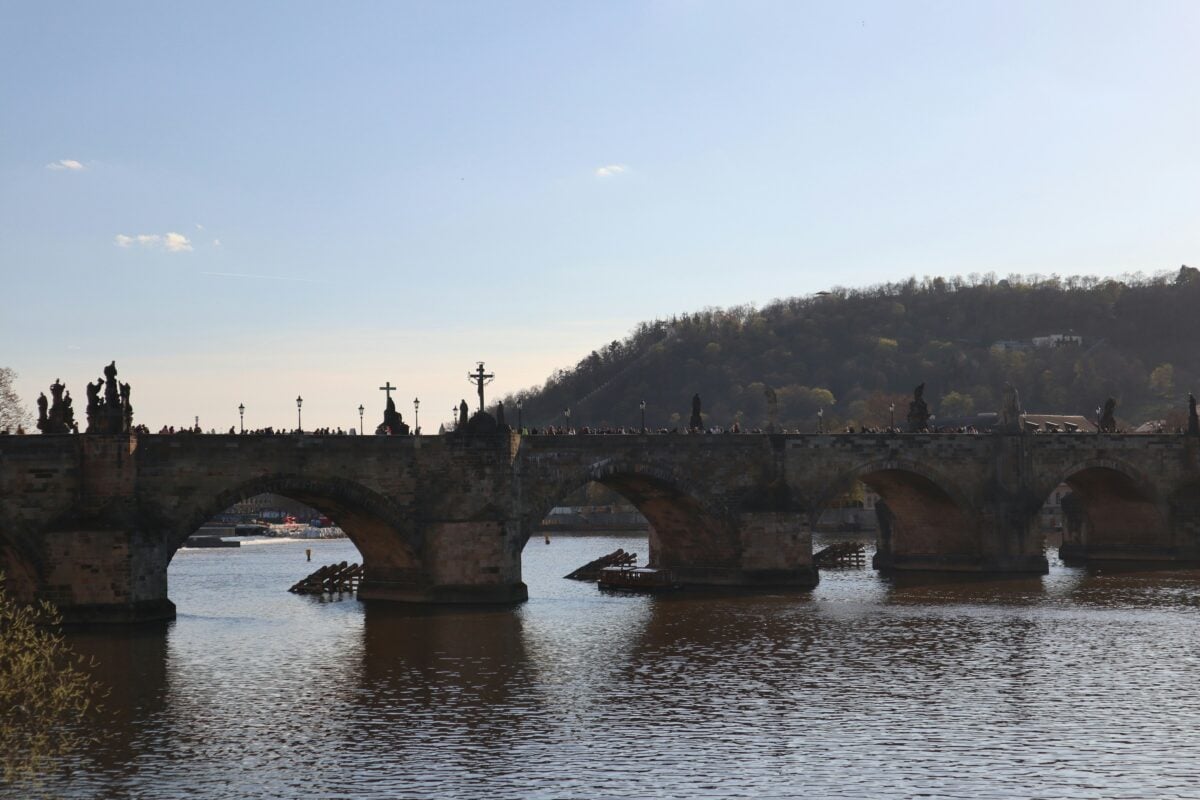
The rivers remained the same. In place still sat the gorges, unmoved through years.
Yet people shifted how they thought about passage – then came the long effort, full of risk, heavy cost, just to reach the other side. Patience shows up more than plans when you study those old photos.
Fourteen long years passed while workers built the Brooklyn span. At Clifton, the bridge finished after its creator had gone.
Time erased the original Kintai version – rebuilt piece by piece since. Nothing lasts unless someone decides, again and again, to bring it back.
Down below, the water never stops its flow.
More from Go2Tutors!

- The Romanov Crown Jewels and Their Tragic Fate
- 13 Historical Mysteries That Science Still Can’t Solve
- Famous Hoaxes That Fooled the World for Years
- 15 Child Stars with Tragic Adult Lives
- 16 Famous Jewelry Pieces in History
Like Go2Tutors’s content? Follow us on MSN.