15 Inventions We Still Can’t Recreate Today
Despite all our technological advances and scientific breakthroughs, there are still ancient and historical inventions that leave modern engineers scratching their heads. These aren’t just curiosities gathering dust in museums—they represent lost knowledge, forgotten techniques, and mysteries that our smartphones and satellites can’t solve. Some disappeared due to war, others because their creators took secrets to the grave, and a few simply defied the natural laws we thought we understood.
From concrete that gets stronger underwater to flames that couldn’t be extinguished, these inventions remind us that innovation isn’t always linear. Here is a list of 15 inventions that continue to baffle our best minds and most advanced laboratories.
Damascus Steel

Medieval swordsmiths in Damascus created steel so superior that it could slice through European armor like butter, yet modern metallurgists still can’t figure out exactly how they did it. The distinctive watered pattern indicated a unique crystalline structure that gave the steel incredible strength and flexibility.
Roman Concrete

Roman concrete structures have stood for over 2,000 years while modern concrete starts cracking after a few decades. The Romans mixed volcanic ash with lime and seawater, creating a chemical reaction that actually made their concrete stronger over time when exposed to saltwater.
Greek Fire

The Byzantine Empire’s secret weapon was a liquid fire that burned on water and couldn’t be extinguished with traditional methods. Byzantine engineers guarded the formula so carefully that when the empire fell, the knowledge died with them.
Stradivarius Violins

Antonio Stradivari crafted violins in 17th-century Italy that produce a sound quality no modern violin maker has successfully replicated. Scientists have studied everything from the wood density to the varnish composition, but something about his technique remains elusive.
Ulfberht Swords

Viking swords marked with ‘+ULFBERHT+’ contained steel so pure that it shouldn’t have been possible to create with medieval technology. The metallurgy was so advanced that some historians believe the steel was imported from as far away as India.
Lycurgus Cup
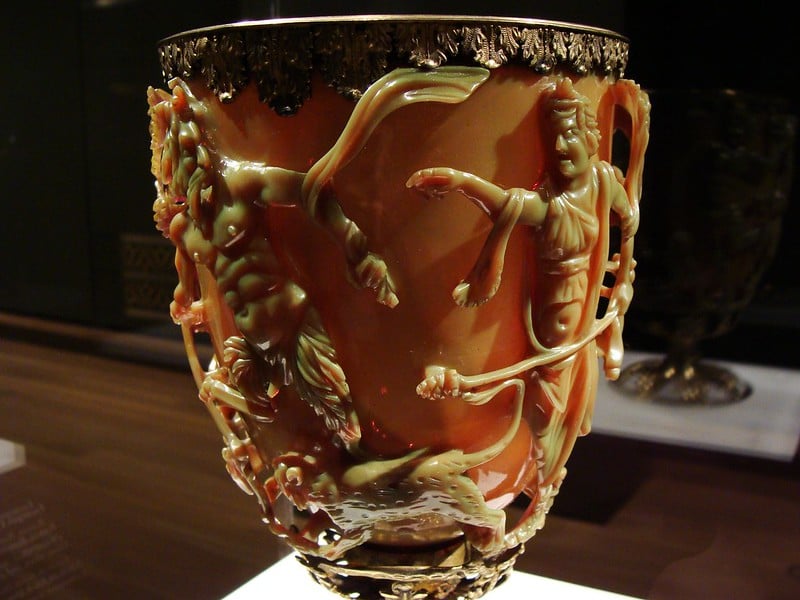
This 4th-century Roman cup appears jade green when lit from the front but glows ruby red when illuminated from behind. The Romans somehow achieved nanotechnology 1,600 years before we had the tools to understand what they’d accomplished.
Antikythera Mechanism
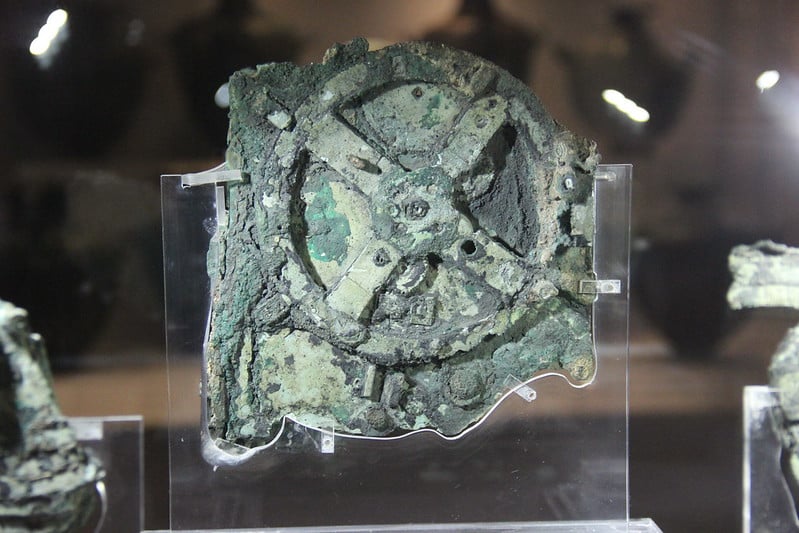
This ancient Greek device from around 100 BCE was essentially an analog computer that could predict eclipses and track planetary movements with stunning accuracy. While we understand how it worked, we can’t explain how ancient craftsmen achieved such precision without modern machining tools.
Wootz Steel

Indian metallurgists created wootz steel using techniques that produced the raw material for Damascus steel, but the exact process died out in the 18th century. The steel had a unique crystalline structure that modern science can approximate but not perfectly duplicate.
Silphium

This ancient contraceptive and flavoring herb was so valuable that it appeared on Roman coins, but we harvested it to extinction around the 1st century CE. Despite extensive botanical searches, no one has definitively identified what plant silphium actually was.
Flexible Glass

Roman historians wrote about a craftsman who demonstrated unbreakable flexible glass to Emperor Tiberius, only to be executed when the emperor realized it could crash the value of precious metals. Recent discoveries suggest the Romans achieved chemical compositions we don’t fully understand.
Mayan Blue

This vibrant blue pigment used in Mayan art has survived for over 1,000 years without fading, despite being exposed to tropical heat and humidity. The Maya somehow bound indigo dye with clay in a way that modern chemists can’t replicate.
Chinese Earthquake Detector

Zhang Heng’s bronze earthquake detector from 132 CE could reportedly sense earthquakes hundreds of miles away and indicate their direction using bronze dragons and pendulums. We can’t recreate a device this sensitive using only mechanical components and bronze craftsmanship.
Ignis Fatuus

Medieval accounts describe mysterious lights that could be captured in bottles and used for illumination without any apparent fuel source. The specific methods for capturing and preserving these lights were never recorded, leaving modern science puzzled.
Ferro Fluid Sculptures
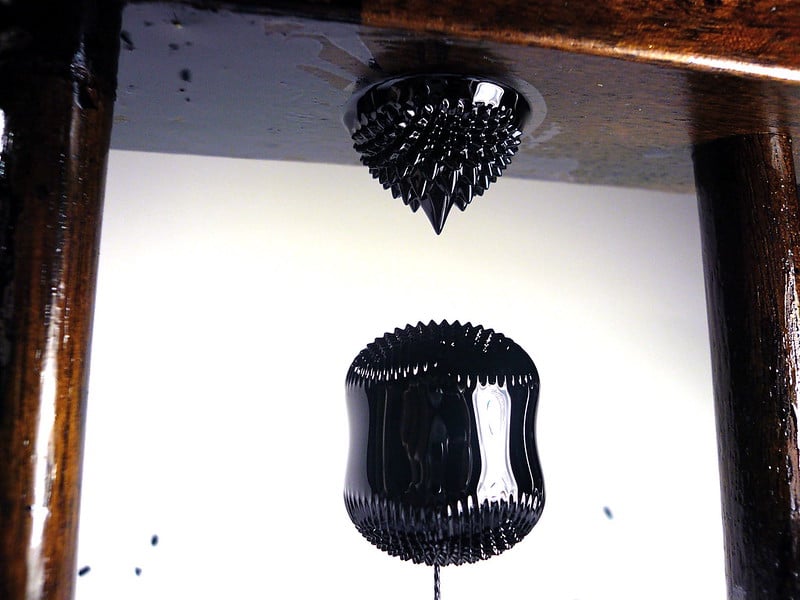
Medieval Islamic inventors apparently created liquid metal sculptures that moved and changed shape in response to magnetic fields, as described in texts from Baghdad’s House of Wisdom. The specific formulations were lost when the Mongols destroyed the city’s libraries in 1258.
Mitridatium

This universal antidote developed by King Mithridates VI contained 54 ingredients and supposedly protected against all known poisons. Without knowing the exact proportions and preparation methods, we can’t determine whether it actually worked or was simply an elaborate placebo.
When Ancient Wisdom Meets Modern Puzzles

These lost inventions remind us that human ingenuity has always found ways to push beyond the apparent limits of available technology. Whether through patient experimentation, lucky accidents, or insights we’ve somehow forgotten, ancient inventors achieved results that our advanced civilization still struggles to understand. Their successes suggest that innovation often depends less on sophisticated equipment and more on creative problem-solving and careful observation. Perhaps the real lesson isn’t that we’ve lost these specific techniques, but that we’ve gained too much confidence in assuming our current methods are always superior.
More from Go2Tutors!

- 16 Historical Figures Who Were Nothing Like You Think
- 12 Things Sold in the 80s That Are Now Illegal
- 15 VHS Tapes That Could Be Worth Thousands
- 17 Historical “What Ifs” That Would Have Changed Everything
- 18 TV Shows That Vanished Without a Finale
Like Go2Tutors’s content? Follow us on MSN.