15 Most Popular Holiday Myths That Are Totally Fiction
The holidays come wrapped in traditions so old and familiar they feel like fact. Stories passed down through generations, repeated in movies, sung in carols, and accepted without question.
But scratch beneath the surface of these beloved tales, and you’ll find something surprising: many of our most cherished holiday beliefs are complete fabrications.
Some myths emerged from marketing campaigns. Others grew from misunderstood history or convenient storytelling.
A few simply sounded better than the truth. Yet these fictional narratives have become so deeply embedded in our cultural celebration that questioning them feels almost sacrilegious.
The real stories behind our holiday traditions are often more fascinating than the myths that replaced them. They reveal how folklore evolves, how commerce shapes culture, and how sometimes the most comforting lies become the most enduring truths.
Pilgrims Ate Turkey at the First Thanksgiving

The Pilgrims never touched turkey at their 1621 harvest celebration. Records from the event mention “fowl” (likely duck or goose) and venison brought by the Wampanoag tribe.
Turkey became the Thanksgiving centerpiece centuries later when Sarah Josepha Hale lobbied for a national holiday. She suggested the bird in her writings, and it stuck.
The three-day feast bore little resemblance to modern Thanksgiving. No cranberry sauce, no pumpkin pie, no football games.
Just a harvest celebration between two groups trying to survive in an unfamiliar world.
Santa Claus Always Wore Red and White

Coca-Cola didn’t invent Santa’s red suit, but they didn’t need to—the damage was already done by other commercial interests. Before the 1800s, Santa appeared in green, brown, blue, and yes, sometimes red.
Political cartoonist Thomas Nast standardized the red outfit in his 1870s illustrations for Harper’s Weekly, decades before Coke’s famous advertising campaigns.
The modern Santa is a mashup of Saint Nicholas (a 4th-century bishop), Dutch folklore, and American marketing. Each culture that touched the story added something new, until the original saint became unrecognizable.
Jesus Was Born on December 25th

December 25th was chosen for reasons that had nothing to do with Jesus’s actual birth date (which remains unknown and was likely sometime between spring and fall, based on shepherds tending flocks outdoors). The Roman Catholic Church selected this date in the 4th century to coincide with existing pagan festivals—particularly Sol Invictus, the “Unconquered Sun” celebration.
It was brilliant religious politics, actually: instead of fighting established winter solstice traditions, the church absorbed them. People could keep their familiar rhythms of celebration while gradually shifting the meaning.
And it worked so well that most Christians today assume December 25th has biblical significance, when the Bible offers no date at all.
But here’s what makes this myth particularly stubborn (and this is where things get interesting, because you start to see how deeply commerce and spirituality became intertwined): once you establish a date, you can build an entire economy around it. Christmas markets, seasonal employment, gift-giving deadlines—all of it hinges on that arbitrary December date that someone chose 1,700 years ago for political convenience.
The Wise Men Were Three Kings Who Visited Baby Jesus
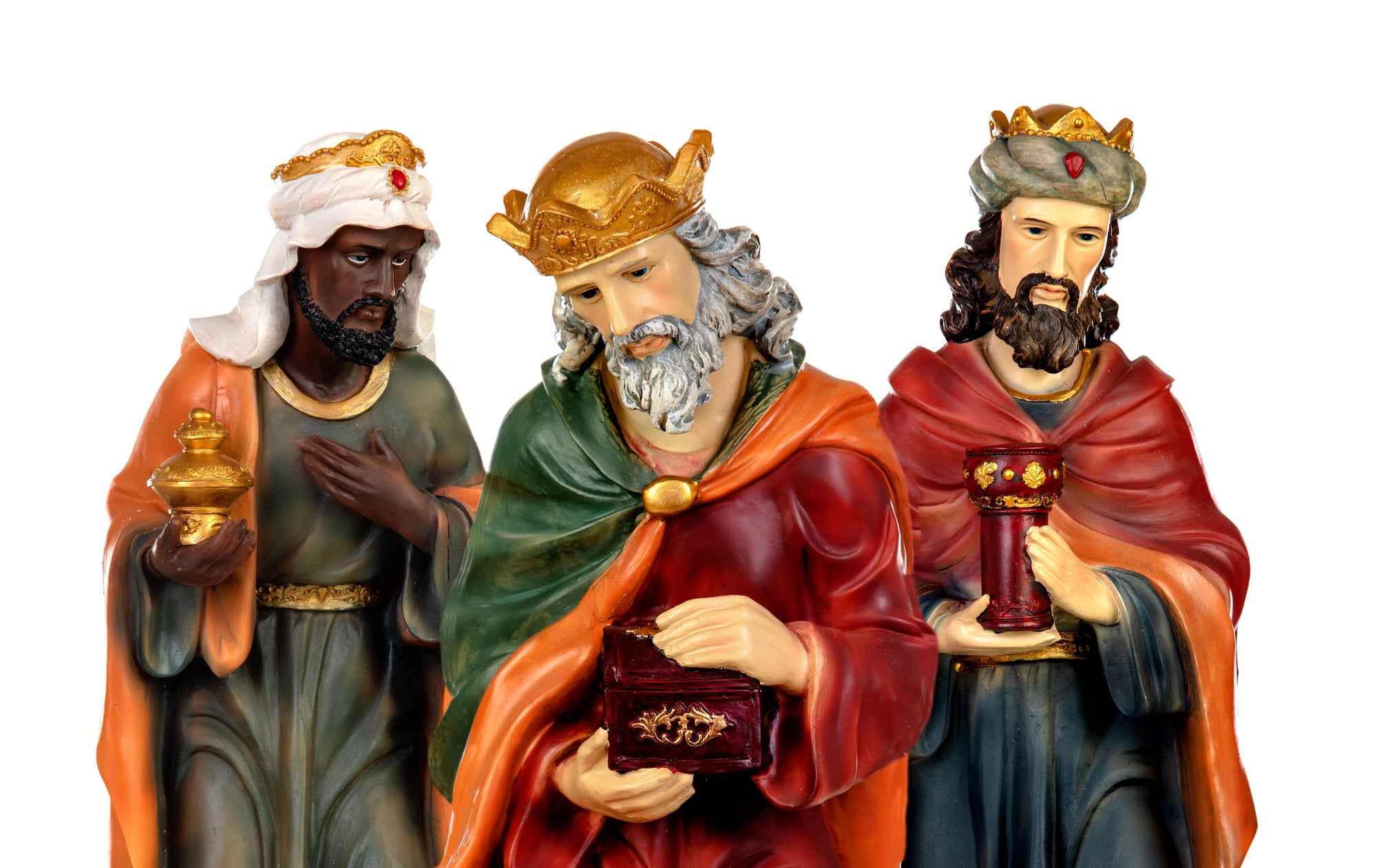
The Bible mentions “wise men” or “magi” but never specifies how many came to see Jesus. The number three comes from the three gifts mentioned—gold, frankincense, and myrrh—but that’s just assumption.
There could have been two wise men with multiple gifts each, or twenty wise men who pooled their resources.
They also weren’t kings, despite what the Christmas carol claims. The original Greek text describes them as “magoi”—likely astronomers or scholars from Persia or Babylon who studied celestial events.
The “kings” element was added later to fulfill Old Testament prophecies about kings bringing gifts to the Messiah.
Most importantly, they didn’t arrive at the stable on Christmas night. According to Matthew’s Gospel, they found Jesus as a young child in a house, possibly months or even years after his birth.
Candy Canes Were Created to Represent Jesus

The candy cane origin story reads like perfect Sunday School material: a 17th-century choirmaster created the hooked shape to represent a shepherd’s crook, the white color for Jesus’s purity, and later added red stripes for his blood. It’s a beautiful tale that connects a simple candy to profound religious symbolism.
None of it happened. Candy canes existed as plain white sugar sticks for centuries before anyone added stripes or religious meaning.
The red stripes appeared in the early 1900s, likely for aesthetic reasons rather than theological ones. The religious symbolism was retrofitted onto an existing candy, not designed into it from the beginning.
Food historians find no evidence of the choirmaster story or intentional Christian symbolism in early candy cane production. Sometimes a curved piece of candy is just a curved piece of candy.
Poinsettias Are Deadly Poisonous

Every December brings the same warning: keep poinsettias away from children and pets because they’re lethal. This myth has such staying power that many hospitals still include poinsettias on their dangerous plant lists, despite decades of evidence proving otherwise.
The truth is wonderfully anticlimactic. A child would need to eat roughly 500 poinsettia leaves to become seriously ill, and even then, the worst likely outcome would be an upset stomach.
The American Journal of Emergency Medicine published a study tracking over 22,000 poinsettia exposures—none resulted in death, and 96% required no medical treatment whatsoever.
The myth traces back to an unconfirmed 1919 story about a child dying after eating poinsettia leaves. One unverified account became accepted medical wisdom for over a century.
Meanwhile, truly dangerous holiday plants like mistletoe berries get far less attention.
Christmas Trees Are an Ancient Christian Tradition

Christmas trees feel so fundamentally Christian that many assume they’ve been part of the faith since the beginning. The decorated evergreen seems to naturally belong in the story of Jesus’s birth—a symbol of eternal life in the depths of winter, pointing toward hope and resurrection.
But Christianity managed without Christmas trees for its first 1,500 years. The tradition started in Germany during the Renaissance, likely growing from pagan winter solstice practices that involved bringing greenery indoors.
Martin Luther may have added candles to a tree (though that story is also disputed), but the decorated Christmas tree remained a regional German custom for centuries.
Christmas trees didn’t reach America until German immigrants brought the practice in the 1800s. Even then, many American Christians initially rejected Christmas trees as pagan symbols that had no place in proper religious observance.
The tradition only became widely accepted after Queen Victoria was depicted with a Christmas tree, making it fashionable rather than foreign.
Black Friday Is the Biggest Shopping Day of the Year

Retailers have spent decades building Black Friday into a cultural phenomenon, complete with midnight openings, doorbusting deals, and breathless media coverage of consumer stampedes. The narrative is simple: Black Friday represents the peak of American shopping, the day when retailers finally turn a profit for the year.
Black Friday consistently ranks among the top ten shopping days, but it’s rarely number one. Online shopping, extended sales periods, and the rise of Cyber Monday have spread holiday spending across weeks rather than concentrating it into a single day.
Many retailers now start “Black Friday” deals in early November, diluting the significance of the actual day.
The “black ink” explanation for the name is also questionable. The term originally described the chaos and congestion that overwhelmed Philadelphia police when shoppers flooded the city the day after Thanksgiving.
Retailers later rebranded it as an accounting metaphor—moving from red ink (losses) to black ink (profits)—because that sounded more appealing than admitting the day was named for urban mayhem.
Mistletoe Brings Good Luck and Romance

Mistletoe hangs in doorways every December, carrying centuries of romantic tradition and promises of good fortune. The custom feels ancient and mystical—surely something so widespread must have deep historical roots connecting love, luck, and this particular plant.
The kissing tradition is relatively recent, probably starting in 18th-century England. Before that, mistletoe appeared in various cultural practices: Celtic druids considered it sacred, Norse mythology connected it to peace and love, and medieval Europeans hung it for protection against witchcraft and lightning strikes.
But these different traditions didn’t naturally flow into our modern mistletoe customs. Someone—historians aren’t sure who—decided to combine the plant’s vague associations with love and protection into a specific kissing ritual.
The practice caught on because it provided a socially acceptable excuse for public affection during an era when such behavior was normally frowned upon.
The “good luck” element seems to be pure marketing, added to make mistletoe sound more appealing to customers who might not be interested in the romantic aspects.
The Twelve Days of Christmas Refers to a Secret Christian Code

The song “The Twelve Days of Christmas” supposedly contains hidden religious symbolism that allowed persecuted Christians to practice their faith in secret. According to this interpretation, the partridge in a pear tree represents Jesus, the two turtle doves are the Old and New Testaments, the three French hens symbolize faith, hope and charity, and so forth through all twelve verses.
This explanation makes for compelling storytelling, but it’s completely fabricated. The song originated as a secular party game called “Forfeit” where players had to remember increasingly complex verses or pay a penalty.
Religious symbolism was never part of the original intent.
The “secret Christian code” interpretation appeared in the 1990s and spread rapidly through email forwards and Christmas newsletters. It felt plausible because persecution of Christians has occurred throughout history, and hidden religious meanings do exist in some historical texts and songs.
But “The Twelve Days of Christmas” isn’t one of them. Sometimes a golden ring is just a golden ring, and sometimes a calling bird is just a calling bird.
Rudolph Has Always Been Part of Christmas Lore

Rudolph feels eternal, like he’s been guiding Santa’s sleigh since the beginning of time. His story carries all the hallmarks of ancient folklore: the outcast who becomes the hero, the disability that transforms into a superpower, the redemption that comes from being different.
Rudolph was invented in 1939 by Robert May, a copywriter for Montgomery Ward department store. The company wanted to create their own Christmas character for a promotional booklet instead of buying the rights to existing stories.
May wrote Rudolph’s tale in a single year, and Montgomery Ward distributed 2.4 million copies.
The character became a cultural fixture after May’s brother-in-law, Johnny Marks, turned the story into the song “Rudolph the Red-Nosed Reindeer.”
Bing Crosby recorded it in 1947, and it became an instant hit. Within a decade, Rudolph had become so embedded in Christmas tradition that most people forgot he was younger than their grandparents.
Eggnog Is a Traditional English Holiday Drink

Eggnog shows up at every American holiday gathering, thick with tradition and historical weight. The drink feels distinctly old-world, something that surely traveled from English manor houses to colonial American tables, carrying centuries of refined holiday celebration across the Atlantic.
American colonists likely invented eggnog by combining various European drinks that contained eggs, cream, and alcohol. English posset, German eierpunsch, and Spanish ponche all contributed elements, but none of them were eggnog as we know it.
Americans created their own hybrid drink and then assumed it must have come from somewhere else.
The name probably comes from “noggin,” a small wooden cup used for serving alcohol, though even that etymology is disputed.
What’s certain is that eggnog became popular in America before it gained traction in England, making it one of the few holiday traditions that traveled east across the Atlantic rather than west.
George Washington had his own eggnog recipe that called for rye whiskey, rum, and brandy—all in the same batch. Colonial Americans took their holiday drinks seriously, even if they had to invent them from scratch.
Boxing Day Has Something to Do with Boxing

Boxing Day sounds like it should involve either the sport of boxing or the opening of gift boxes, both of which seem to fit naturally into post-Christmas activities. The name suggests something obvious and physical—either athletic competition or the aftermath of Christmas morning present unwrapping.
Boxing Day comes from the medieval practice of giving “Christmas boxes” (money or gifts) to servants and tradespeople the day after Christmas. Wealthy families would provide extra compensation to the people who served them throughout the year, allowing these workers to visit their own families on December 26th.
The tradition had nothing to do with pugilistic sports, which weren’t associated with the holiday until much later.
In some countries, Boxing Day became a popular day for sporting events, including boxing matches, which probably reinforced the mistaken connection between the holiday’s name and the sport.
Modern Boxing Day varies dramatically by country. In the UK, it’s a bank holiday focused on shopping and football.
In Canada, it’s become their equivalent of Black Friday. In Australia, it kicks off the cricket season.
But none of these activities have anything to do with the original meaning of “boxing” that gave the holiday its name.
New Year’s Resolutions Started with the Romans

Romans did make promises to their god Janus at the beginning of each year, but their resolutions looked nothing like modern self-improvement pledges. Roman New Year promises were primarily about civic duty and moral behavior toward others, not personal goals like losing weight or learning new skills.
The Romans also celebrated New Year in March, not January. When Julius Caesar reformed the calendar and moved New Year to January, the tradition shifted along with it, but the focus remained on civic and religious obligations rather than individual betterment.
Our modern concept of New Year’s resolutions—personal goal-setting focused on self-improvement—emerged much later, probably in the 17th and 18th centuries.
The shift from communal moral obligations to individual lifestyle goals reflects broader cultural changes about personal responsibility and self-optimization that would have been foreign to ancient Romans.
The high failure rate of modern resolutions would probably puzzle ancient Romans too. Their promises to Janus were considered sacred obligations, not casual lifestyle experiments that could be abandoned by February.
The Holiday Season Has Always Been Commercialized

Every December brings complaints about the commercialization of Christmas, usually accompanied by nostalgic references to simpler times when the holidays were purely about family and faith rather than shopping and spending. This narrative suggests that commerce corrupted an originally pure celebration.
But there’s never been a non-commercial Christmas in America. Gift-giving became central to the holiday in the 1800s, the same era when department stores started creating elaborate Christmas displays and Santa Claus began appearing in advertisements.
Mass-produced Christmas cards appeared in the 1840s, artificial Christmas trees were being sold by the 1880s, and mail-order Christmas catalogs existed before the Civil War.
The “traditional” Christmas that people remember from their childhoods was already heavily commercialized.
What changes isn’t the presence of commerce, but its form and scale. Every generation thinks the previous generation celebrated more authentically, but the thread of commercial activity runs through the entire history of American Christmas celebration.
Even the complaints about commercialization have become traditional. Editorial writers have been lamenting the commercial corruption of Christmas for over 150 years, suggesting that the tension between sacred and secular elements has always been part of the holiday’s character.
The Magic Lives in the Myths We Keep

These fifteen fictions have become more powerful than the facts they replaced. Santa’s red suit outsells historical accuracy every December.
Families gather around traditions that would horrify the Pilgrims who supposedly started them. Children leave milk and cookies for a figure invented by department store copywriters, while parents carefully arrange candy canes that carry no religious meaning whatsoever.
And that’s exactly as it should be. The myths we choose reveal more about our values than the history we inherit.
We kept the stories that emphasize generosity, inclusion, redemption, and wonder. We discarded the parts that no longer serve us and invented new traditions that do.
The best holiday myths aren’t true—they’re better than true. They’re the stories we tell because they help us become the people we want to be, if only for a few weeks each year.
More from Go2Tutors!

- The Romanov Crown Jewels and Their Tragic Fate
- 13 Historical Mysteries That Science Still Can’t Solve
- Famous Hoaxes That Fooled the World for Years
- 15 Child Stars with Tragic Adult Lives
- 16 Famous Jewelry Pieces in History
Like Go2Tutors’s content? Follow us on MSN.



