15 Rare Images from the Very First Modern Olympic Games
Picture this: Athens, 1896. The world’s first modern Olympic Games are about to unfold, and photography is still a relatively new technology. Most cameras require long exposure times, heavy equipment, and considerable skill to operate.
Yet somehow, a handful of photographers managed to capture moments from this historic event that would otherwise be lost to time.These images aren’t just photographs—they’re windows into a completely different era of athletic competition.
No corporate sponsors plastering every surface. No television cameras.
No synthetic tracks or high-tech equipment. Just athletes from 14 nations gathering to revive an ancient tradition, completely unaware they were creating the foundation for the world’s most watched sporting event.
What makes these photographs so remarkable isn’t their technical quality (many are grainy, poorly lit, or slightly blurred), but their authenticity. They show the Games as they actually were: intimate, experimental, and utterly unlike the massive spectacle we know today.
Opening ceremony at the Panathenaic Stadium
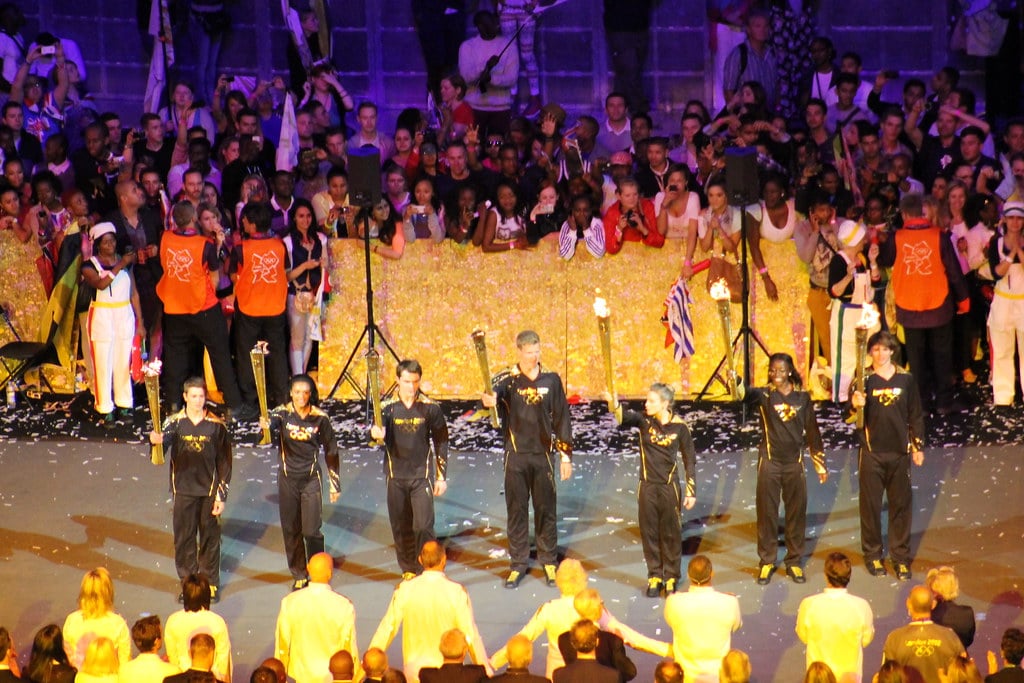
The crowd looks impossibly formal. Men in dark suits and bowler hats fill the marble seats while King George I of Greece presides from the royal box.
There’s something almost parliamentary about the whole scene—as if they’re gathered to witness a diplomatic summit rather than athletic competition.
Pierre de Coubertin among the officials
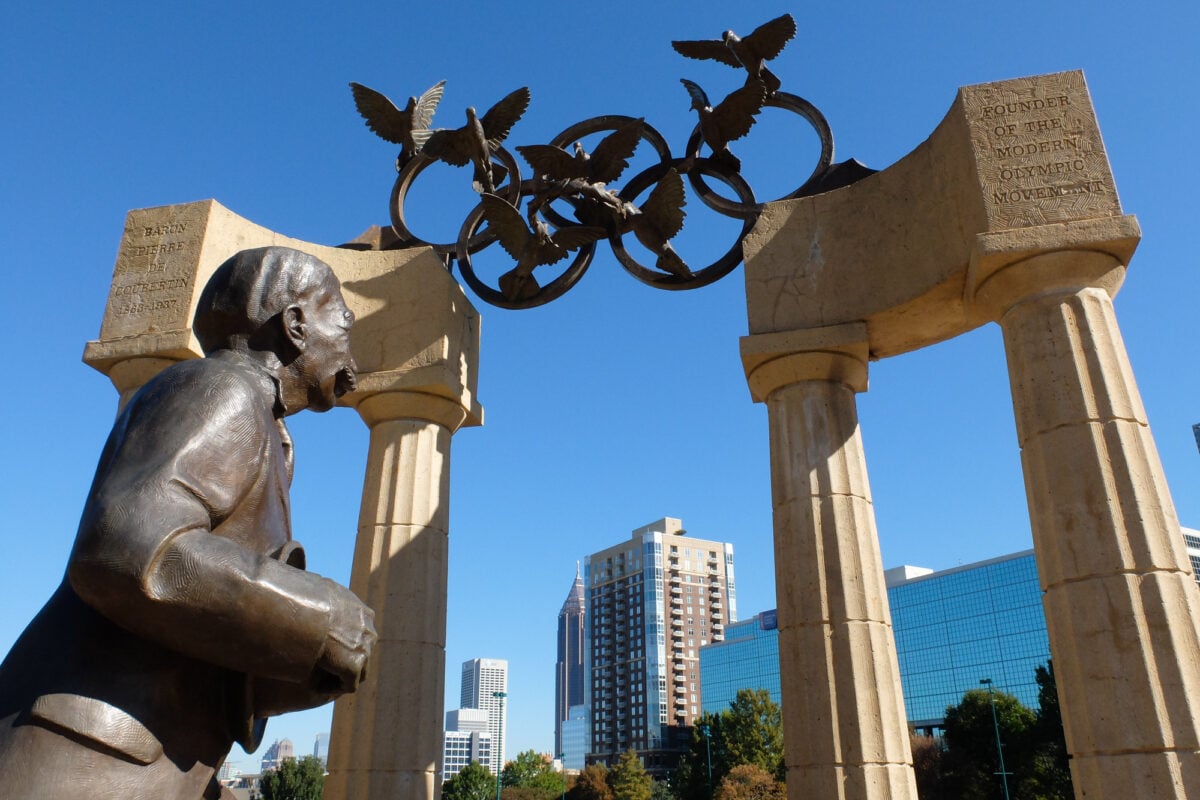
Most people know de Coubertin founded the modern Olympics, but seeing him in this photograph changes everything. He looks younger than expected, standing slightly apart from the other officials with an expression that’s hard to read.
Nervous excitement, maybe. The weight of wondering whether his ambitious experiment will actually work.
The marathon runners at the starting line
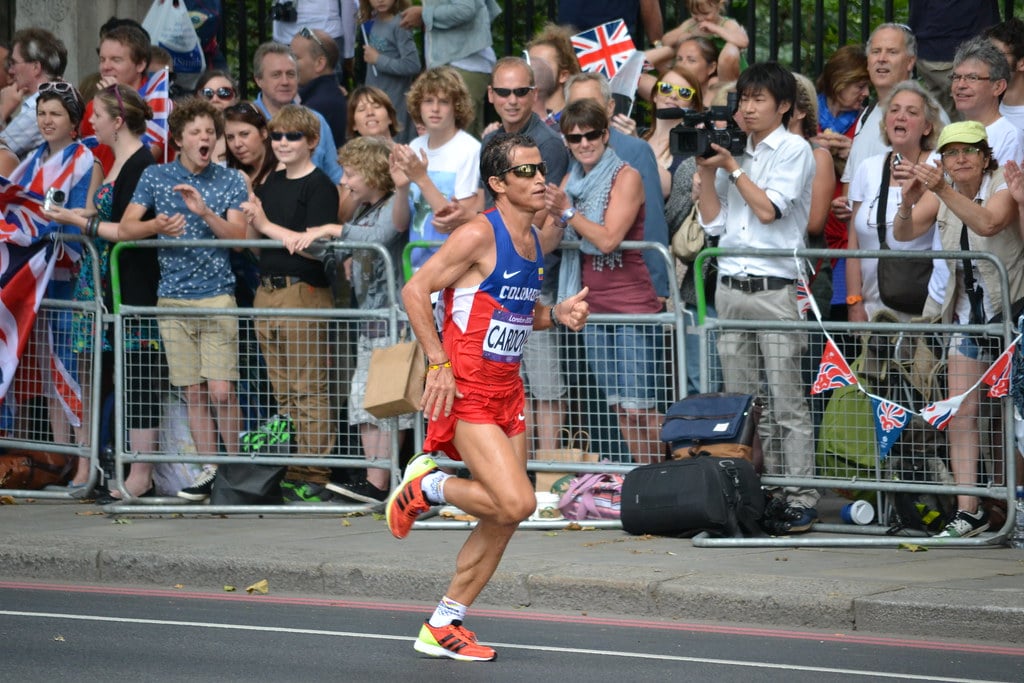
So here they are (and there aren’t many of them): seventeen men preparing to run from Marathon to Athens along roughly the same route as the legendary messenger Pheidippides. No starting blocks, no fancy running gear—just men in what look like street clothes gathered on a dirt road.
And yet this humble beginning would become the most prestigious event in all of Olympic competition, the marathon that every serious distance runner dreams of winning, the race that closes every Summer Games with a procession into the main stadium as the crowd rises to honor not just the winners but everyone who finished. But there’s something else happening in this image.
The runners are looking directly at the camera with the kind of self-consciousness that comes when someone’s trying to capture a moment they suspect might be important later.
Spyridon Louis crossing the marathon finish line
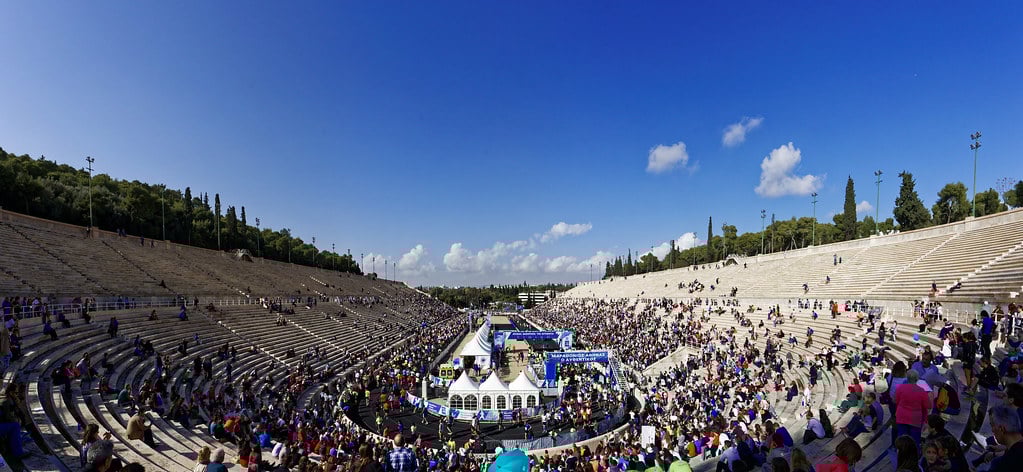
This might be the most important sports photograph ever taken. Louis, a Greek postal worker, is entering the Panathenaic Stadium to win the marathon—the only running event Greece would claim in their own Games. The crowd has erupted.
Two Greek princes are actually running alongside him. You can almost hear the noise through the static image.
The tennis tournament on dirt courts
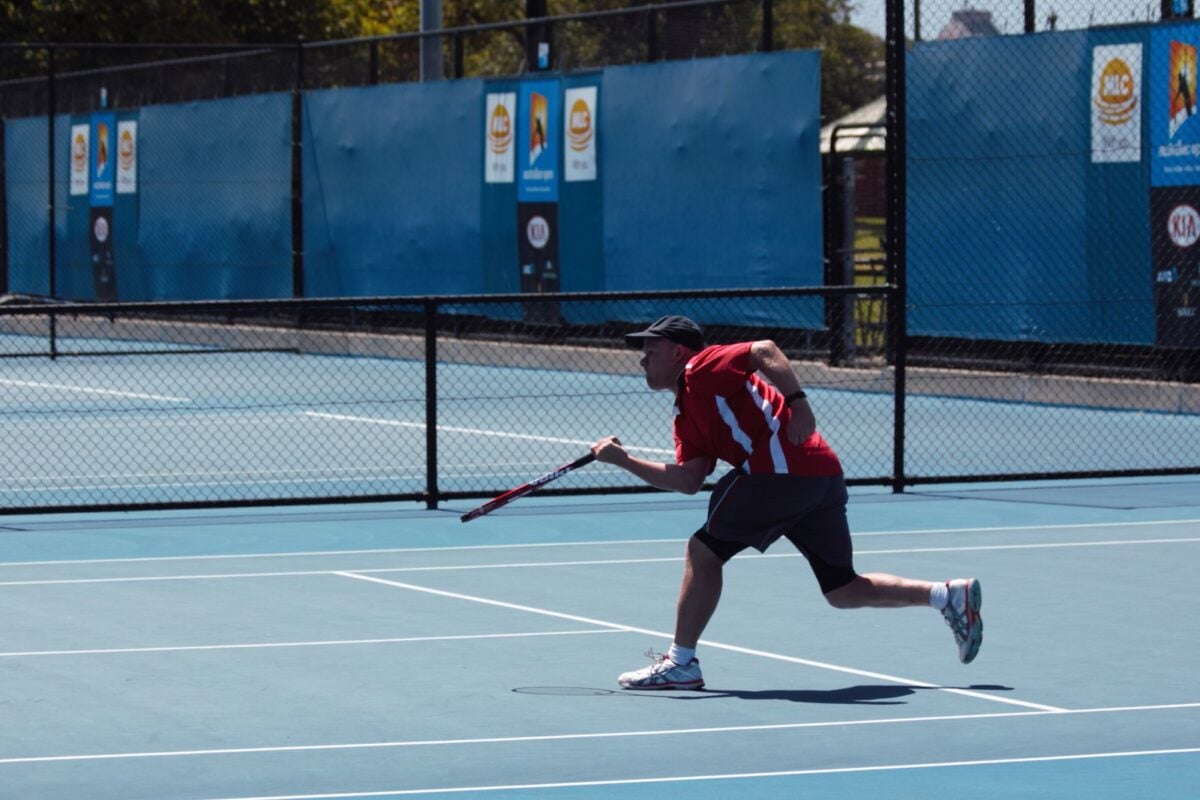
Tennis in 1896 operated by completely different rules—literally (the scoring system was different) and socially (women weren’t allowed to compete, though they would be four years later in Paris). The courts were dirt, the nets were lower, and the players wore long pants and formal shirts that would make today’s athletes laugh.
There’s something almost garden-party-like about the whole scene, which makes sense because tennis was still very much a sport for the upper classes, played at country clubs and private estates rather than the democratic, worldwide game it would eventually become. And yet these men were serious competitors who had traveled from across Europe to test themselves against the best players available—which is saying something when you consider that travel in 1896 meant long train journeys and steamship crossings that could take weeks.
The photograph shows spectators sitting on simple wooden benches, leaning forward with genuine interest rather than the distracted, smartphone-scrolling attention that characterizes so much modern spectatorship.
The cycling track at Neo Phaliron
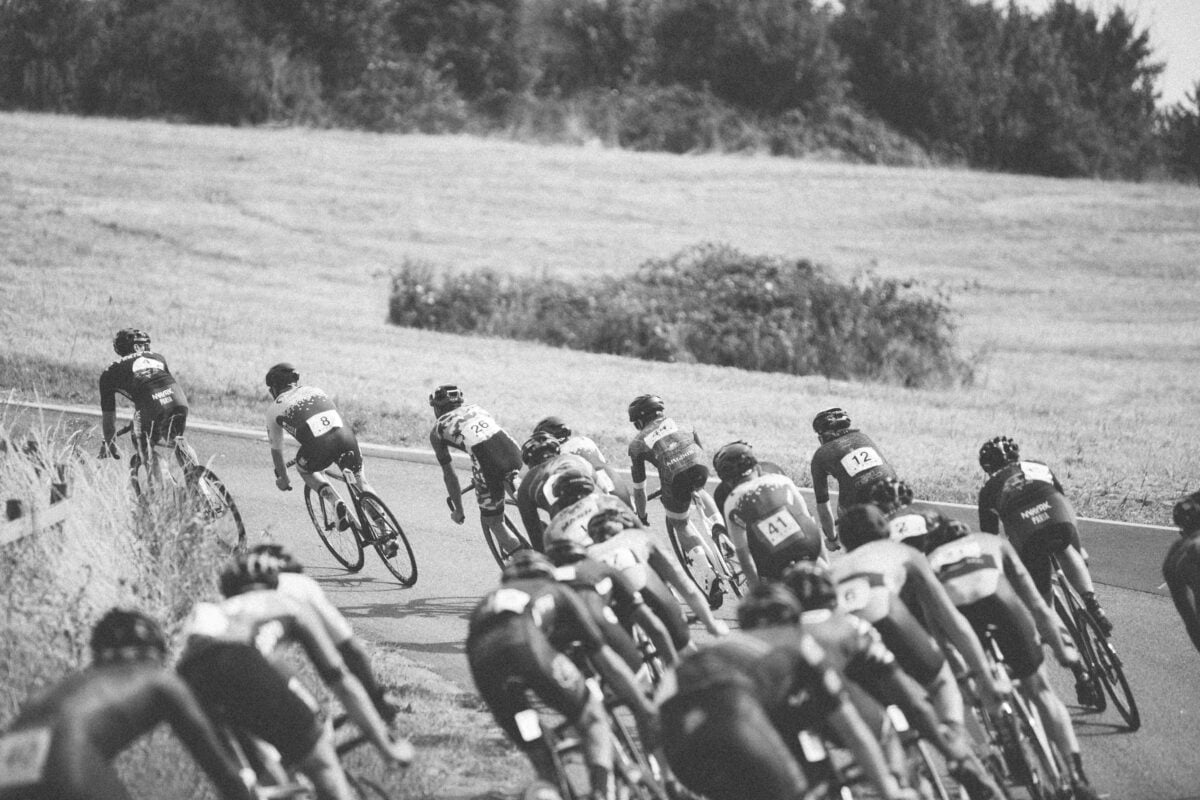
The track is just dirt. Not even well-groomed dirt—it looks like someone marked off a rough oval and called it good enough.
The cyclists are riding what appear to be standard roadway bicycles, nothing specialized for racing. Modern cyclists spend tens of thousands of dollars on equipment that might save them seconds over a race.
These guys showed up with whatever they had.
Swimming in the Bay of Zea
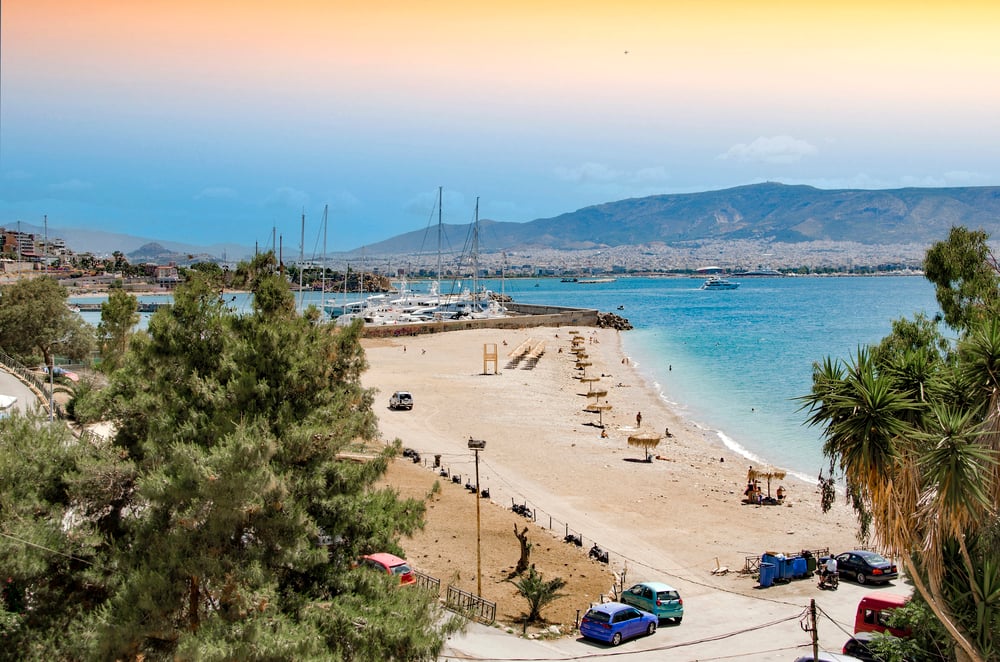
This image captures something that would be unthinkable today: Olympic swimmers competing in open water, in the Mediterranean Sea, in April (which means the water was cold), with no lanes, no pool walls to grab for rest, nothing but salt water and endurance. The swimmers are barely visible as small dark shapes against the choppy surface, which somehow makes their effort more impressive rather than less—they’re so far from shore, so alone out there in conditions that have nothing to do with the controlled environments we associate with competitive swimming.
But perhaps this was closer to swimming as it actually exists in the world: unpredictable, uncomfortable, dependent on your ability to adapt to whatever the water gives you rather than expecting the water to adapt to you. And there’s something else worth noticing in this photograph: the small boats following the swimmers belong to officials and spectators who rowed out to watch, because this was before the era when you could simply buy a ticket and expect the event to come to you.
The gymnastics competition indoors
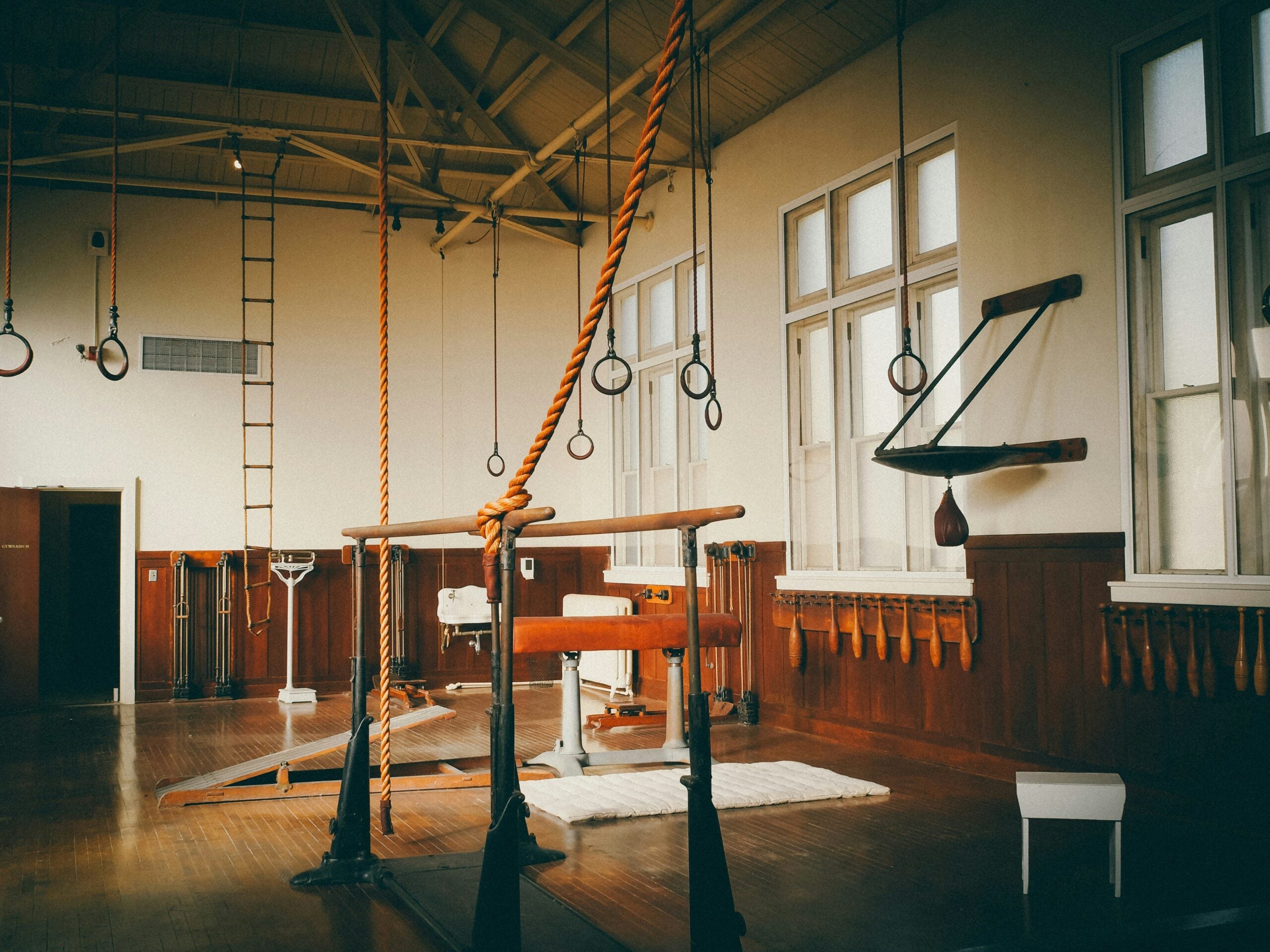
Formal gymnastics looks different when performed by men wearing full-length uniforms. The equipment appears to be standard parallel bars and rings, but everything feels more restrained than modern gymnastics—more about strength and control than the explosive aerial moves that define the sport today.
The audience is tiny. Maybe fifty people scattered across simple benches.
The weightlifting platform
Here’s something that will surprise you: the first Olympic weightlifting competition took place not in some purpose-built facility, but on what appears to be a wooden platform set up outdoors. The lifters are wearing street clothes—long pants, regular shirts, some even in jackets—and the weights themselves look like they were borrowed from a local gymnasium (because they probably were).
There’s no specialized Olympic equipment, no rubber bumper plates that can be safely dropped, no platform designed to absorb impact. Just men testing their strength against metal bars and iron plates while a small crowd watches from wooden chairs arranged in no particular order.
But look at their faces: completely serious, focused in a way that transcends their amateur circumstances. They knew they were competing for something that had never existed before.
The fencing competition
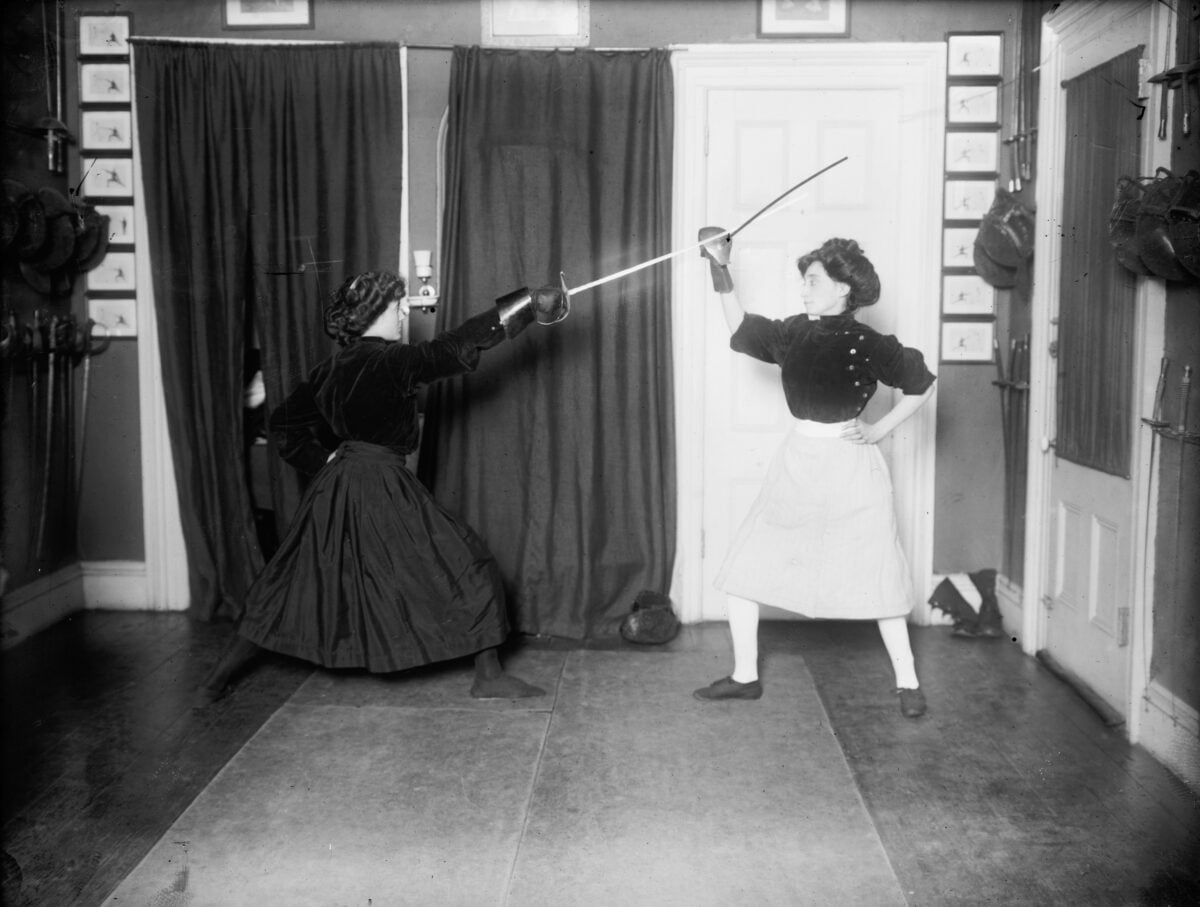
Fencing photographs well because the sport requires such precise positioning. Even in 1896, you can see the classical lines that define good technique—the extended arm, the controlled footwork, the careful distance between opponents.
The judges wear formal dark suits and appear to be taking notes by hand. No electronic scoring systems, no instant replay. Just experienced fencers watching carefully and making calls based on what they observed.
The track and field athletes warming up
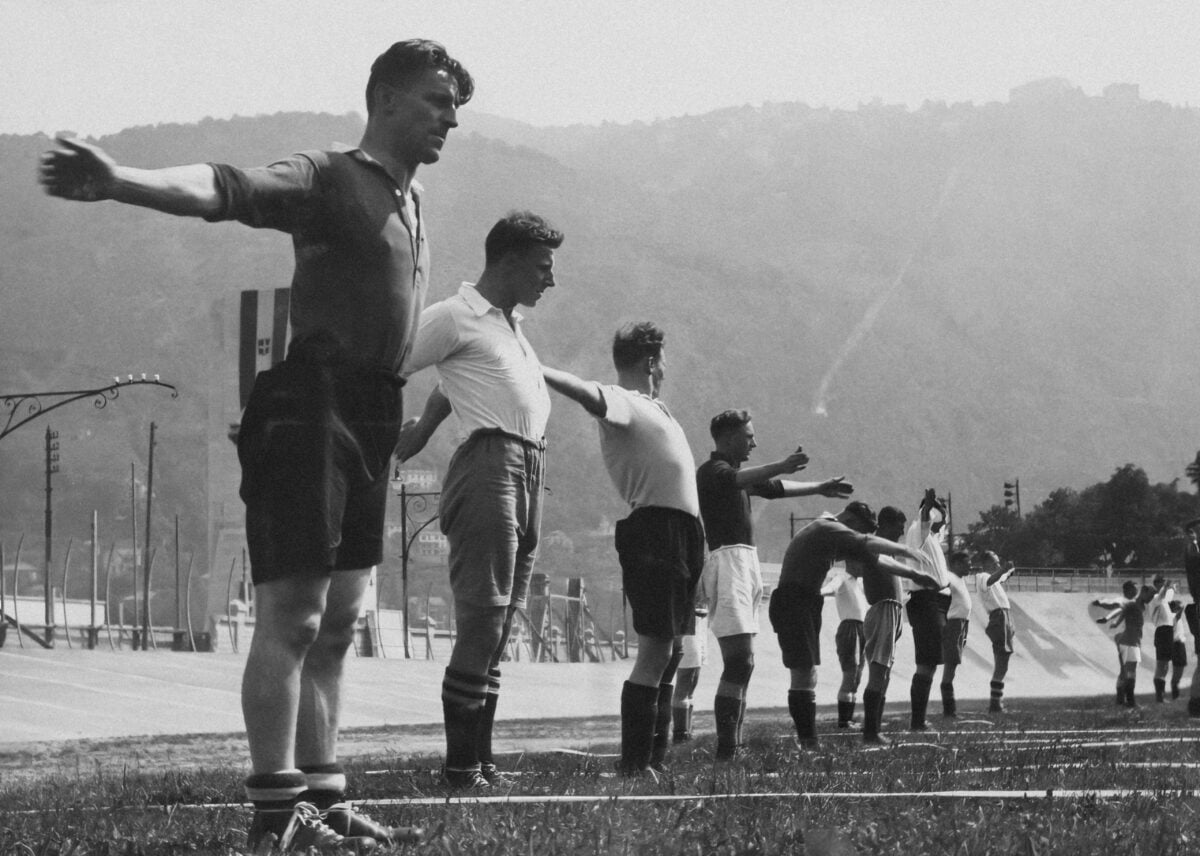
This might be the most telling image of all. Athletes stretching and preparing for their events, but they’re doing it in street clothes—wool pants, regular shoes, cotton shirts. No warm-up suits, no specialized training gear, no team uniforms to speak of.
They look like office workers who decided to have a track meet during lunch break.
The shot put competition
The shot put ring is just a circle scratched into the dirt. The implement appears to be a standard iron orb—nothing manufactured specifically for Olympic competition.
The athlete’s form looks surprisingly modern, though his outfit (full-length pants and a collared shirt) definitely doesn’t.
Spectators in the marble seats
Families have brought picnic baskets. Children are sitting on their fathers’ shoulders.
Women are holding parasols to shield themselves from the Mediterranean sun. It’s the kind of relaxed, community atmosphere that modern Olympics—with their security checkpoints and corporate hospitality areas—can’t quite replicate.
These people look like they’re attending a local festival that happens to include some athletic competition.
The closing ceremony preparations
The final photograph shows officials arranging prizes and medals on a simple table while athletes gather informally nearby. No elaborate ceremony, no national anthems played for television audiences around the world—just a straightforward acknowledgment of who won what, followed presumably by everyone heading home to resume their regular lives.
The athletes would return to their jobs (many were students or held regular employment), the officials would pack up their equipment, and the Panathenaic Stadium would go quiet again. There was no guarantee these Games would ever happen again, no four-year cycle already planned, no International Olympic Committee with a permanent headquarters and a multi-billion-dollar budget.
And yet something important had been proven: people from different countries could gather peacefully to compete in athletic events, and both the competitors and the spectators would find the experience meaningful enough to consider doing it again.
When simplicity carried more weight
These photographs remind you that the most important developments often look unimpressive while they’re happening. No one at the 1896 Games could have predicted that this small gathering in Athens would grow into a global phenomenon that temporarily stops wars and commands the attention of billions.
But maybe that’s exactly why it worked. Without the pressure of massive expectations or commercial demands, these athletes and organizers were free to focus on the essential question: what happens when people come together to test themselves against the best competition available?
The answer, captured in these faded images, was something worth preserving.
More from Go2Tutors!

- The Romanov Crown Jewels and Their Tragic Fate
- 13 Historical Mysteries That Science Still Can’t Solve
- Famous Hoaxes That Fooled the World for Years
- 15 Child Stars with Tragic Adult Lives
- 16 Famous Jewelry Pieces in History
Like Go2Tutors’s content? Follow us on MSN.



