15 Strange Communication Methods Used by Ancient Spies
Espionage has been around as long as humans have had secrets worth stealing. Long before encrypted phones and digital dead drops, ancient civilizations developed ingenious ways to pass sensitive information without detection.
Some methods were so clever they remained undetected for centuries, while others were so bizarre they seemed like the work of imagination rather than practical spycraft. The creativity of these early intelligence networks reveals something fascinating about human nature: when survival depends on secrecy, people will find ways to hide messages in the most unexpected places.
From tattooed scalps to trained animals, ancient spies turned ordinary objects and everyday situations into vehicles for covert communication.
Shaved Heads and Growing Hair

Ancient Greek spies perfected one of history’s most patient communication methods. They shaved a messenger’s head completely bald, tattooed the secret message directly onto the scalp, then waited for the hair to grow back completely before sending the person on their mission.
The messenger would travel to their destination looking perfectly normal. Upon arrival, they’d shave their head again to reveal the hidden message.
Slow, but absolutely undetectable during transport.
Invisible Ink from Bodily Fluids

Spies discovered that certain bodily fluids could serve as invisible ink when heated. Urine, saliva, and milk would disappear when dried but reappear as brown text when the paper was warmed near a fire.
The Romans (and this is where things get particularly resourceful) found that fresh urine worked especially well because of its organic compounds that react to heat. A blank piece of paper could carry an entire military plan, visible only when someone knew to apply the right temperature.
And since everyone had access to the “ink,” no special materials needed to be procured or smuggled.
Wax Tablet Secrets

Here’s something that feels almost like a magic trick: ancient spies would write a message on a wooden tablet, cover it with a thin layer of wax, then write a completely different, innocent message on top of the wax surface. The recipient would simply scrape away the wax to reveal the real message underneath.
The beauty of this method lies in its multiple layers of protection — if someone suspected the innocent message was fake, they might scrape off some wax expecting to find the real message, only to discover what appeared to be blank wood (because they hadn’t removed all the wax). Even paranoid enemies would often stop looking after the first scrape revealed nothing.
But persistence revealed everything.
Trained Swallows Carrying Messages

Chinese spies developed an elaborate system using trained swallows to carry messages across enemy territory. Unlike carrier pigeons, swallows were smaller, faster, and less likely to be noticed or shot down by suspicious soldiers.
The messages were written on rice paper in incredibly small script, rolled into tiny tubes, and attached to the birds’ legs with silk thread. Swallows could cover vast distances and had an extraordinary ability to navigate back to specific locations.
What made this method particularly effective was timing — swallows naturally migrate in large flocks, so a single message-carrying bird would be invisible among hundreds of others.
Messages Hidden in Food

Spies embedded secret communications inside everyday food items with surgical precision. Bread was particularly useful — bakers could hide rolled-up messages inside loaves during the baking process, creating what looked like perfectly normal food that could pass through any checkpoint without suspicion.
Hard cheeses worked even better for long-distance communication. A message could be wrapped in oiled cloth, inserted into a wheel of cheese while it was still soft, then aged normally.
Months later, the cheese would be cut open at its destination to reveal the perfectly preserved intelligence. Guards searching for contraband rarely bothered to slice open someone’s dinner.
Knotted Cord Systems

The Inca developed an intricate communication system called quipu that used colored cords with specific knots to convey complex information. Different colors represented different subjects, knot types indicated numbers or concepts, and the position of knots along the cord provided additional meaning.
What made this perfect for espionage was its complete innocence — to anyone unfamiliar with the system, quipu looked like simple rope or decorative cord work. A spy could carry detailed military intelligence disguised as craft supplies or personal belongings.
The system was so sophisticated it could convey numerical data, narrative information, and even abstract concepts, all hidden in what appeared to be colored string.
Mirror and Sunlight Signals

Ancient armies used polished bronze mirrors to send coded messages across vast distances using reflected sunlight — a method so effective that variations of it were still being used in modern military operations centuries later.
The system worked through timed flashes — short flashes for dots, longer ones for dashes, with pauses indicating letter breaks. But what made it particularly clever for espionage was its deniability: if enemy forces spotted the flashing, the signaler could simply claim they were polishing their equipment or adjusting their gear.
Since polished metal reflecting sunlight was completely normal on any battlefield.
Tattooed Slaves as Living Messages

Perhaps the most extreme method involved using human beings as permanent, walking messages. Spies would tattoo crucial information onto slaves or servants, then send them on routine errands to deliver intelligence without anyone realizing the person themselves was the message.
The tattoos were often disguised as decorative designs or religious symbols, but contained coded information that only the recipient would know how to interpret. A geometric pattern might indicate troop movements, while religious imagery could convey timing for coordinated attacks.
The slaves could be questioned, searched, and even detained without revealing their true purpose — because the message was literally written on their skin in a code that looked like personal decoration.
Messages in Musical Compositions

Musicians traveling between cities provided perfect cover for espionage operations — they had legitimate reasons to move freely across territories, perform for wealthy and powerful audiences, and maintain contacts in multiple locations that would have seemed suspicious for anyone else.
The genius was in the music itself: specific note sequences, rhythmic patterns, or song choices could convey coded information to listeners who knew what to listen for. A particular melody might indicate that an attack was planned for the next full moon, while variations in tempo could specify which gates would be left unguarded.
The audience would enjoy the performance, completely unaware that military intelligence was being transmitted through the entertainment. Even if authorities suspected something, proving that a song contained coded messages was nearly impossible.
Music is subjective, and what sounds like espionage to one person sounds like artistic expression to another.
Hollow Shoe Heels

Cobblers became unwitting accomplices to ancient spy networks by creating shoes with secret compartments carved into the heels. The hollow space was just large enough to hold rolled-up messages, sealed with wax to protect against moisture, and covered with a thin layer of leather that made the shoes appear completely normal.
Travelers could walk hundreds of miles carrying sensitive intelligence literally under their feet, passing through security checkpoints and border crossings without arousing suspicion. The compartments were designed to be opened only with a specific technique — pressing on certain points of the heel in a particular sequence.
Even if someone found the shoes, they might not discover the hidden messages.
Apparently Innocent Jewelry

Rings, bracelets, and amulets served as miniature safes for secret communications. Craftsmen created intricate pieces that could be opened through hidden mechanisms — a ring that twisted apart to reveal a small compartment, or a pendant with a false back that concealed rolled-up messages.
Women were particularly effective at this type of espionage because jewelry was expected and unremarkable on them. A female spy could attend social gatherings, diplomatic meetings, or religious ceremonies while carrying detailed intelligence inside what appeared to be decorative accessories.
The hiding places were so well-concealed that even if someone suspected the jewelry contained secrets, finding the actual mechanism to open it required specific knowledge of how each piece was constructed.
Specially Trained Cats

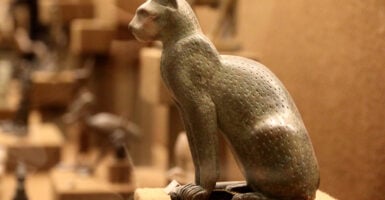
Egyptian spies discovered that cats made excellent covert messengers for short-distance communication within cities. Unlike dogs, cats moved through urban areas without attracting attention — they belonged everywhere and nowhere, slipping through gaps in walls, climbing over rooftops, and entering buildings without anyone questioning their presence.
Small messages would be attached to specially made collars that looked like ordinary pet accessories. The cats were trained to travel between specific locations at regular intervals, appearing to wander randomly while actually following predetermined routes.
If anyone tried to catch them, cats being cats would simply disappear into whatever crack or crevice was handy, making them nearly impossible to intercept.
Messages Written on Eggs

Duck and chicken eggs provided an unexpected medium for secret communication because of their natural properties — eggshells are porous enough to absorb certain inks, but the writing remains invisible until the shell is removed. Spies would write messages directly onto raw eggs using special solutions, then allow the ink to penetrate through the shell and onto the egg white inside.
The eggs could be transported and sold in normal markets without anyone suspecting they contained intelligence. When the recipient cracked open the egg, the message would be clearly visible on the cooked or raw egg white.
The method was particularly clever because eggs were perishable — if the message wasn’t delivered and decoded quickly, the evidence would literally rot away, eliminating any trace of the communication.
Trained Dogs with Hidden Compartments

Military scouts developed an elaborate system using specially trained dogs that appeared to be ordinary pets but actually carried secret compartments built into fake collars or harnesses. The dogs were trained to travel between specific handlers using routes that avoided main roads and checkpoints.
The compartments were designed to look like normal collar decorations or necessary equipment for working dogs. Even if enemy forces stopped and searched the animals, the hidden spaces were nearly impossible to detect without dismantling the entire collar.
Something that would seem excessive when dealing with what appeared to be someone’s pet or working animal.
Clay Seals with Double Messages

Ancient merchants developed a sophisticated system where clay seals appeared to contain routine business information but actually held two completely different messages. The outer surface would be inscribed with normal commercial details — prices, quantities, delivery dates — while a second message was hidden inside the clay itself.
The seals would be broken open normally at their destination, revealing what looked like standard business correspondence. But recipients who knew the system would soak the clay fragments in water, causing them to soften and reveal the real message written on papyrus that had been embedded inside the clay before it hardened.
The method was virtually undetectable because breaking seals was normal practice, and nobody expected to find additional messages inside what appeared to be routine packaging material.
When Secrets Hide in Plain Sight

These ancient methods reveal something profound about the nature of effective communication — the best hiding places are often the most obvious ones. A message written on someone’s head, embedded in their dinner, or carried by their pet succeeds precisely because it exists in the space between suspicion and everyday life.
Modern digital encryption might be more secure, but there’s something admirably human about these old techniques. They required creativity, patience, and an understanding that the most sophisticated technology in the world can’t replace the simple insight that people rarely look for secrets in places where secrets don’t belong.
More from Go2Tutors!

- The Romanov Crown Jewels and Their Tragic Fate
- 13 Historical Mysteries That Science Still Can’t Solve
- Famous Hoaxes That Fooled the World for Years
- 15 Child Stars with Tragic Adult Lives
- 16 Famous Jewelry Pieces in History
Like Go2Tutors’s content? Follow us on MSN.