15 U.S. Ghost Towns and How They Got That Way
In the shadows of America’s progress lie the fascinating remnants of once-thriving communities, now silent testaments to boom-and-bust cycles, natural disasters, and shifting economic tides. These ghost towns offer us a captivating glimpse into our nation’s past, where dreams flourished before vanishing into the dust of history.
Here is a list of 15 remarkable ghost towns across the United States and the compelling stories behind their abandonment.
Bodie, California

High in the Sierra Nevada mountains at nearly 8,400 feet sits what many consider America’s most authentic ghost town. Bodie began in 1859 when prospector W.S. Bodey discovered gold in the hills but tragically died in a blizzard before witnessing the town that would bear his name (with altered spelling).
Following the discovery of a rich gold vein in 1876, Bodie transformed from a small mining camp to a booming town of 10,000 residents by 1880, complete with 65 saloons, numerous brothels, gambling halls, and opium dens. The town earned a reputation for lawlessness so profound that the phrase “Bad Man of Bodie” became California slang for someone with an unusually violent temper.
Residents commonly asked each morning, “Have we a man for breakfast?” – meaning “Did anyone get killed last night?” By 1915, the mines were depleted and Bodie declined rapidly. Today, preserved in a state of “arrested decay” as a California State Historic Park, over 100 structures remain frozen in time, their interiors still stocked with goods as if awaiting customers who will never return.
Rhyolite, Nevada

Just four miles west of Beatty, Nevada, Rhyolite sprang to life in 1905 following the discovery of high-grade gold ore by prospectors Frank “Shorty” Harris and Ernest “Ed” Cross. What began as a two-tent mining camp exploded into a bustling community of 5,000-12,000 people within just six months.
At its zenith between 1907-1908, Rhyolite boasted electric lights, water mains, telephones, two newspapers, a hospital, a school, an opera house, and a stock exchange. Three railroads connected the town to other mining centers, and industrialist Charles M. Schwab invested heavily after purchasing the Montgomery Shoshone Mine in 1906.
But the financial panic of 1907 struck a devastating blow. By 1910, the population had plummeted to 675. The mine closed permanently in 1911, and by 1920, only 14 residents remained.
The final holdout died in 1924, leaving Rhyolite entirely abandoned. Today, impressive ruins including the three-story bank building and the unique bottle house (constructed from 50,000 beer and medicine bottles) make this one of the West’s most photographed ghost towns.
Like Go2Tutors’s content? Follow us on MSN.
Centralia, Pennsylvania
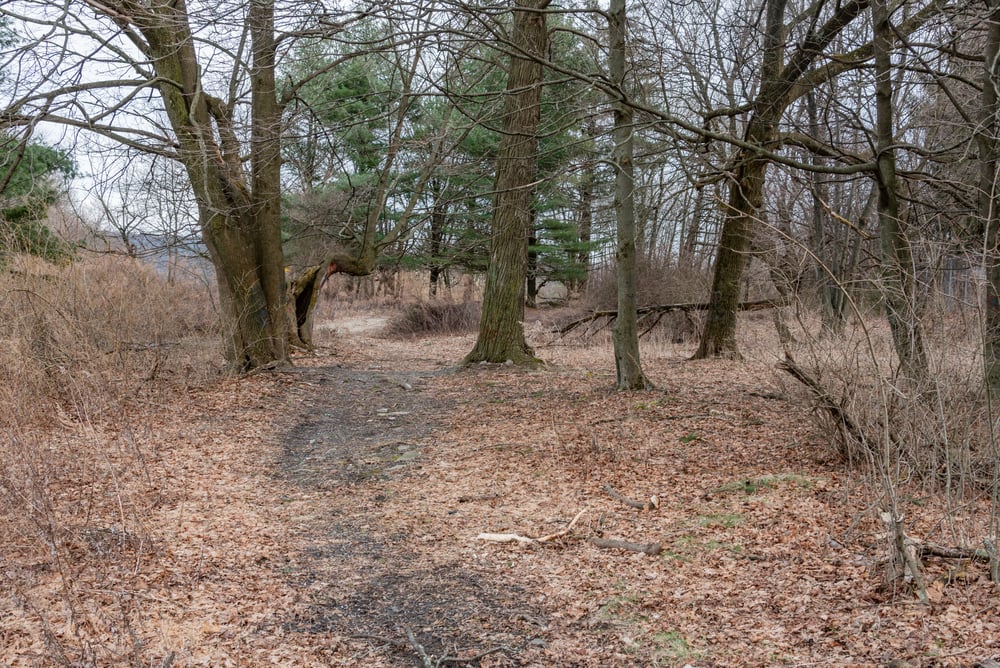
Unlike most ghost towns abandoned due to economic factors, Centralia’s fate was sealed by an apocalyptic disaster that continues today. This once-thriving coal mining town with over 1,000 residents became the victim of an underground mine fire that began in May 1962 and still burns beneath the ruins.
The origins remain disputed, but the most accepted explanation is that the town council’s attempt to clean up a landfill by setting it on fire ignited an unsealed opening that connected to the labyrinth of abandoned coal mines below. Despite numerous attempts to extinguish the flames, the fire spread through coal seams and tunnels, releasing toxic gases and causing the ground to become dangerously hot, reaching over 900 degrees Fahrenheit in some locations.
By the 1980s, sinkholes were opening in yards, toxic gases were seeping into homes, and roads were cracking and buckling. The federal government spent $42 million to relocate residents, and in 1992, Pennsylvania invoked eminent domain on all properties, condemning the entire town.
Today, fewer than five people remain as legal residents, allowed to stay through a 2013 agreement until their deaths. The fire is expected to burn for another 250 years.
St. Elmo, Colorado

Nestled in the Sawatch Range less than 83 miles southeast of Aspen, St. Elmo stands as one of Colorado’s best-preserved ghost towns. Founded in 1880 as a gold and silver mining settlement, it quickly grew to house 2,000 residents with over 150 mines operating in the area.
The town prospered as a whistlestop on the Pacific Railroad, but its fortunes were closely tied to the Alpine Tunnel, which closed in 1910 due to the declining price of silver. With railway access limited, the community’s lifeblood began to drain away.
The final blow came in 1922 when the last train departed, and legend suggests the remaining inhabitants simply boarded that train and never returned. Despite its abandonment, St. Elmo has remarkably withstood the test of time and several fires.
Its well-preserved wooden structures now make it one of America’s most intact ghost towns, where visitors can wander the old dirt streets and peer into the windows of the general store, imagining life during the mining boom.
Cahawba, Alabama

America’s ghost towns aren’t limited to western mining communities. Cahawba holds the distinction of being Alabama’s first state capital from 1820 to 1825, strategically located at the confluence of two rivers.
Initially planned as a grand political center, the site suffered from persistent flooding problems that dampened its prospects from the beginning. After losing its capital status to Selma, Cahawba reinvented itself as a distribution center for cotton shipped down the Alabama River.
During the Civil War, it served as the site of a Confederate prison that held Union soldiers. Following the war, devastating floods in 1865 prompted businesses and residents to relocate, and the legislature’s departure accelerated the town’s decline.
Today, Cahawba is preserved as Old Cahawba Archaeological Park, where visitors can explore abandoned streets, cemeteries, and building ruins while learning about the Native American presence and the freedmen and women who lived there after the Civil War. Ghost hunters are drawn to the site of a spectral “orb” reportedly appearing in a garden maze at one of the former homes.
Like Go2Tutors’s content? Follow us on MSN.
Kennecott, Alaska

Tucked away in America’s last frontier, Kennecott offers a striking example of a remote but technologically advanced mining operation that flourished briefly before economics rendered it obsolete. The town’s origins trace back to 1900 when prospectors discovered copper deposits valued at approximately $200 million near the Kennicott Glacier.
A syndicate led by magnates including J.P. Morgan and the Guggenheim family developed the site into a self-contained company town. Despite its isolation, Kennecott became a model mining community with impressive amenities.
The Kennecott Mining Corporation extracted over $200 million worth of copper between 1911 and 1938, equivalent to billions in today’s currency. As copper prices fell and high-grade ore deposits became depleted, the mines closed in 1938, and the last residents abandoned the town soon after.
Today, the red mill buildings stand in stark contrast against the surrounding glacier and mountains, preserved as part of Wrangell-St. Elias National Park, offers visitors a glimpse into this industrial frontier outpost.
Batsto Village, New Jersey
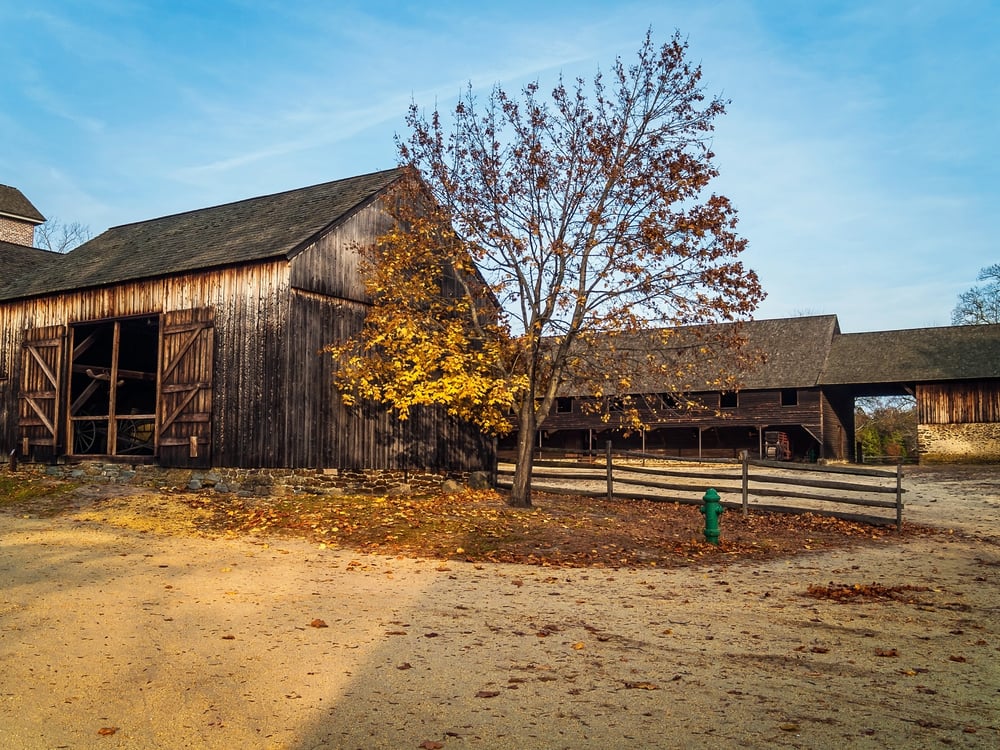
Not all ghost towns were the result of failed mining ventures. Batsto Village in New Jersey’s Pine Barrens began as an iron-manufacturing center in 1766, producing household items and, during the Revolutionary War, supplies for the Continental Army.
The village thrived during the war and for decades afterward, with workers mining bog iron from the region’s streams and smelting it in the village furnace. At its peak, Batsto was essentially a company town with workers’ housing, a company store, a sawmill, a gristmill, and even its own post office.
When the iron industry declined in the mid-19th century, Batsto faced its first abandonment. The property was purchased at auction for $14,000 by businessman Joseph Wharton, who revitalized the community through agriculture.
Upon his death in 1909, Batsto spiraled into its second decline. The state of New Jersey acquired the property in the 1950s and has since restored it as a historic site showcasing early American industry and rural life.
Silver City, California
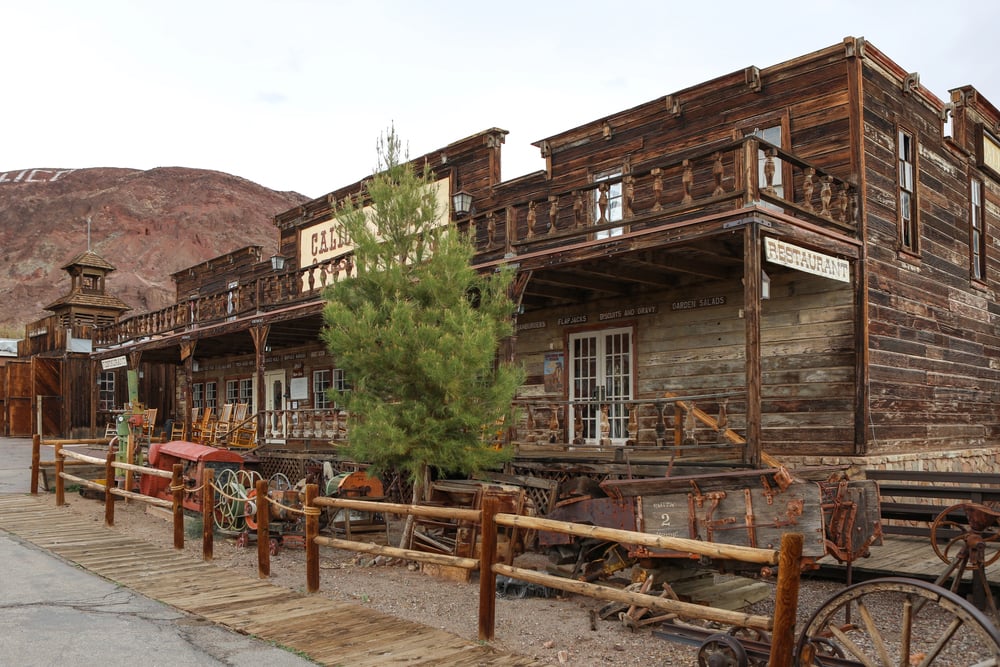
In California’s Kern River Valley lies a ghost town with a remarkable preservation story. Silver City wasn’t abandoned and left to decay like many ghost towns—it was deliberately saved through the passionate efforts of Dave and Arvilla Mills in the 1960s.
When numerous historic buildings from mining camps around California’s Kern County faced demolition, the couple painstakingly dismantled, relocated, and reassembled over 20 structures to create what is now essentially an open-air museum of mining era architecture. The collection includes miners’ housing, various business establishments, and even the old jail.
Despite being a reconstructed rather than an original ghost town, Silver City captures the authentic spirit of the California Gold Rush. Some visitors claim the relocated buildings brought their spirits with them, reporting paranormal activity like bottles floating in midair and windows mysteriously opening and closing by themselves.
Like Go2Tutors’s content? Follow us on MSN.
Thurmond, West Virginia

Tucked away in the rugged New River Gorge, Thurmond tells a different kind of abandonment story—one driven by technological obsolescence rather than resource depletion. Founded as a key stop on the Chesapeake & Ohio Railway, Thurmond was once a booming community that processed millions of dollars through its banks during the early 20th century.
The town’s economy centered around servicing the steam locomotives that transported coal from the surrounding mines. However, when diesel locomotives replaced steam engines in the 1950s, Thurmond’s primary purpose vanished almost overnight.
The elaborate coaling towers and water tanks that had been essential infrastructure suddenly became useless relics. Unlike many ghost towns that are completely abandoned, Thurmond technically still exists as a municipality with fewer than five current residents.
Its train depot now serves as a museum and Amtrak station within the New River Gorge National River park system. The well-preserved Thurmond Historic District offers visitors an unsettling reminder of how quickly prosperity can evaporate when technology advances.
Glenrio, Texas/New Mexico
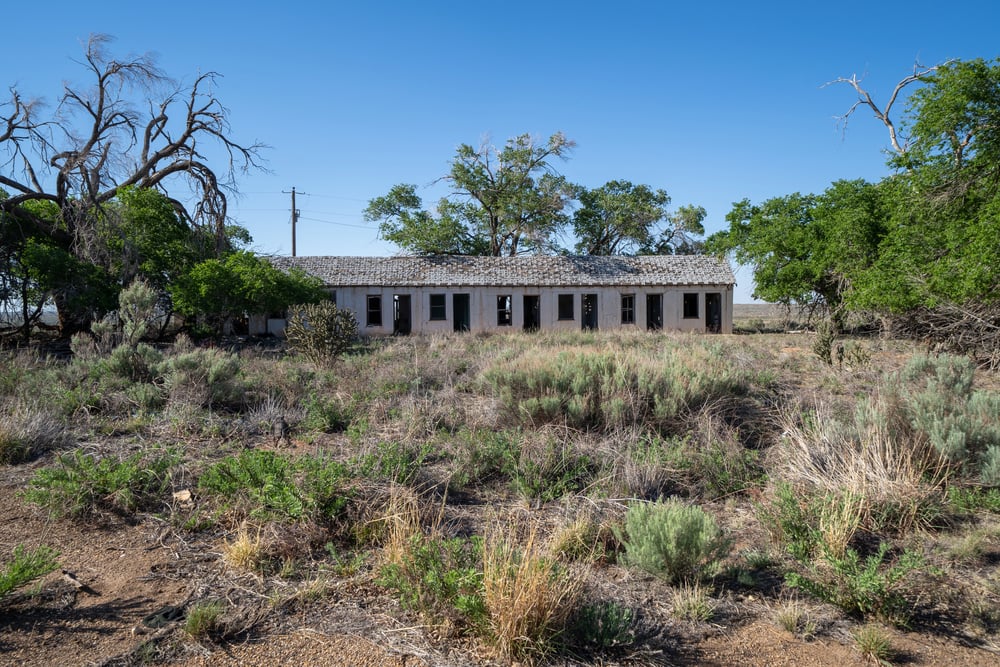
Straddling the Texas-New Mexico border, Glenrio represents the rise and fall of America’s highway culture. During the 1940s through the 1960s, this tiny settlement thrived serving travelers along Route 66, offering gas stations, restaurants, bars, motels, and even a dance hall.
Established in the early 1900s as a railroad town, Glenrio found new life with the automobile age and the development of Route 66 as America’s “Mother Road.” Its unique border position created odd situations—Texas was “dry” while New Mexico allowed alcohol sales, so the town’s bar sat just on the New Mexico side, while Texas-side businesses benefited from that state’s lower gas taxes.
The town’s decline came swiftly after Interstate 40 was completed in 1975, bypassing Glenrio entirely and instantly cutting off its lifeblood of passing travelers. Today, abandoned mid-century gas stations, motels, and restaurants stand as eerie monuments to changing American travel patterns and the communities left behind by interstate highways.
Nevada City, Montana

Sitting roughly 90 miles northwest of Yellowstone National Park, Nevada City represents a different approach to ghost town preservation. Unlike towns left to decay naturally, Nevada City was meticulously restored, primarily by the Bovey family between 1945 and 1978, transforming it into a living museum of Montana’s gold mining era.
Originally established during the 1863 Alder Gulch gold rush, Nevada City briefly flourished alongside its sister town, Virginia City. However, as placer mining gave way to more industrial methods, the town’s significance waned, and it gradually emptied of residents.
Today, Nevada City operates as an open-air museum where visitors can pan for gold, watch historical reenactments of events like “the hanging of Red Yeager,” and ride a 20-minute train between Nevada City and Virginia City. The buildings house a remarkable collection of antique music boxes, player pianos, and other period artifacts.
Adventurous visitors can even stay overnight in authentic pioneer cabins or at the historic Nevada City Hotel.
Like Go2Tutors’s content? Follow us on MSN.
Goldfield, Arizona
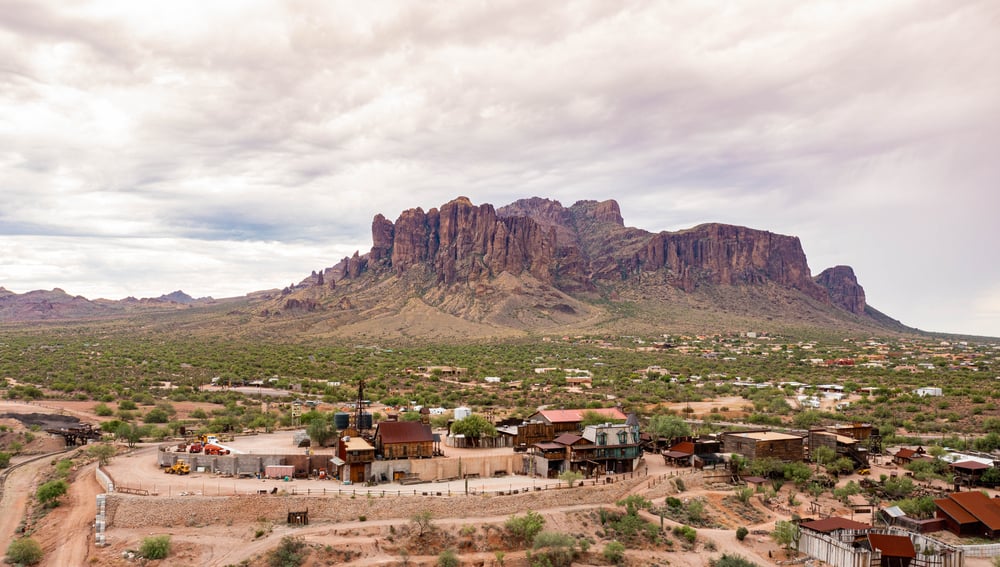
Located about 40 miles east of Phoenix and known as the “gateway to the Superstition Mountains,” Goldfield embodies the full cycle of a mining town—birth, death, and resurrection. The original settlement sprang up in the 1890s when prospectors discovered gold in the area and established the Mammoth Gold Mine.
For five booming years, Goldfield bustled with activity, its main street lined with saloons, a boarding house, a general store, a blacksmith shop, a brewery, a meat market, and a schoolhouse. When the gold ore vein faulted (changed direction and seemed to disappear), miners quickly abandoned the town in search of opportunities elsewhere.
Unlike many ghost towns that remain abandoned, Goldfield has been rebuilt and reimagined as a tourist attraction that captures the Wild West atmosphere. Visitors can watch reenactments of gunfights, ride Arizona’s only narrow-gauge train, tour a historic gold mine, and try their hand at panning for gold.
The town also offers modern adventures like zip lining, horseback riding, and target shooting.
Spokane, South Dakota
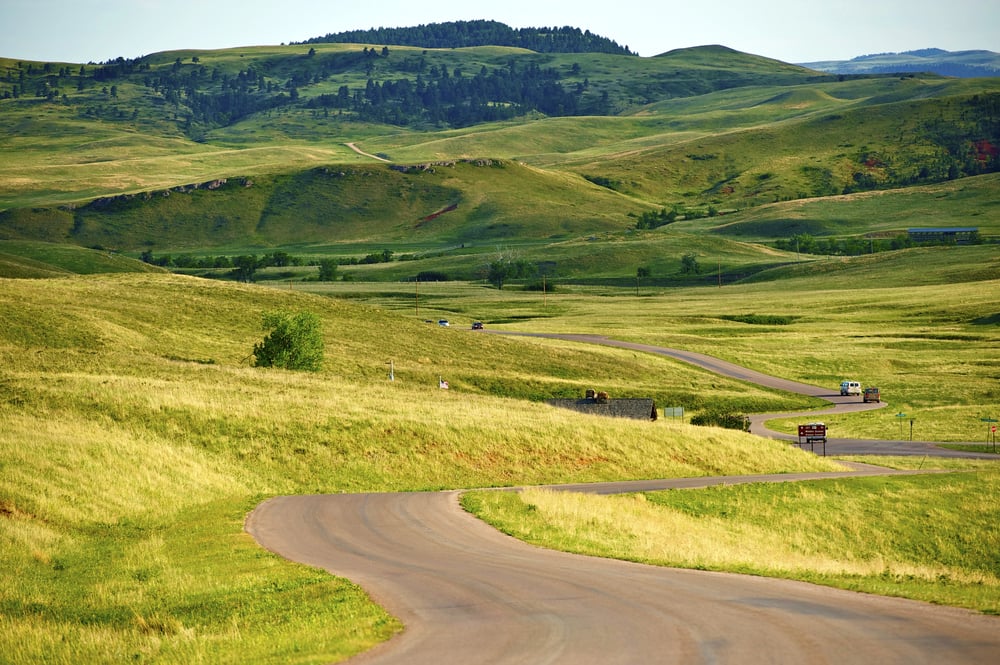
Located about 10 miles southeast of Mount Rushmore National Memorial in South Dakota’s Black Hills, Spokane features one of the area’s largest collections of original ghost town buildings. The town emerged during the Black Hills Gold Rush of the 1870s, when prospectors flooded the region following George Armstrong Custer’s confirmation of gold in the area.
Unlike more famous mining settlements nearby, Spokane never developed into a major center, remaining a small but productive community centered around a stamp mill that processed ore from surrounding mines. The town’s relative obscurity has paradoxically helped preserve it, as there was less incentive to scavenge materials from its buildings after abandonment.
Today, Spokane’s weathered wooden structures provide filmmakers with an authentic backdrop, and the town has been featured in numerous movies. Its saloon has attracted particular attention from paranormal enthusiasts after being featured on the television show “Ghost Adventures” in 2013.
Visitors can experience the eerie atmosphere for themselves through special “Haunted Lockdown” tours of the property.
Blue Heron, Kentucky

Set along the Big South Fork River near the Kentucky-Tennessee border, the Blue Heron Mining Community tells the story of a more recent abandonment than most ghost towns on this list. Operated by the Stearns Coal and Lumber Company from 1937 until 1962, Blue Heron was a complete company town where miners extracted high-quality coal from the rich seams beneath the Cumberland Plateau.
Unlike the lawless boomtowns of the 19th century, Blue Heron represented the more structured, corporate phase of American mining. The Stearns Company provided housing, medical care, schooling, and a company store, creating a self-contained community isolated from the outside world.
The town was abandoned when coal reserves became uneconomical to mine, but its heritage has been preserved as part of the Big South Fork National River and Recreation Area. Today, visitors can explore the atmospheric Blue Heron mining camp with an audio tour and experience the Big South Fork Blue Heron Ghost Train, which provides an aural journey through the town’s abandoned camp while narrating the tales of its storied past.
Like Go2Tutors’s content? Follow us on MSN.
Calico, California
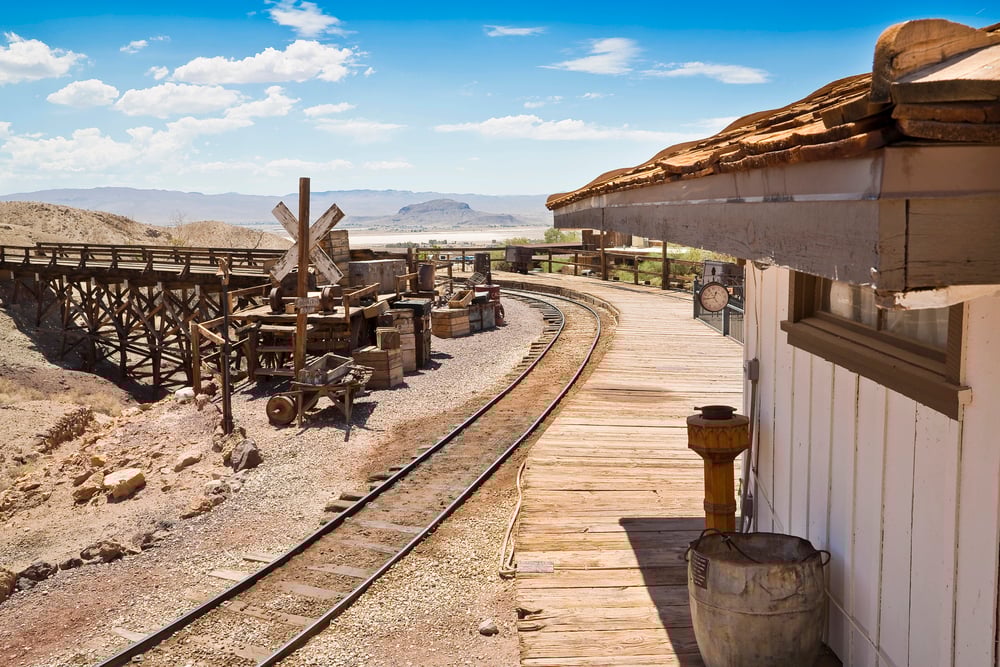
Located in Southern California’s Mojave Desert, Calico was once a silver mining boomtown that produced over $20 million in silver ore between 1881 and 1896 (equivalent to over half a billion dollars today). With more than 500 mines in the area, Calico’s population swelled to 1,200 people at its peak, with the town supporting 22 saloons, multiple hotels, brothels, gambling halls, and a thriving Chinatown.
The end came when silver lost its value after the Silver Purchase Act was repealed in 1893. By 1904, Calico was effectively abandoned as miners moved on to new opportunities. The town might have disappeared entirely if not for Walter Knott (of Knott’s Berry Farm fame), who purchased the ghost town in the 1950s and began restoration efforts.
In 1966, Knott donated the town to San Bernardino County, which now operates it as a county park and tourist attraction. In a compromise between competing ghost towns seeking official recognition, Calico was designated California’s “official state silver rush ghost town” while Bodie became the “official state gold rush ghost town.”
Today, visitors can explore Maggie Mine—the only formerly working mine that’s safe for tours—and take a ride on the Calico Odessa Railroad to see what remains of this once-bustling mining center.
A Living Connection

What makes ghost towns so compelling isn’t just their abandoned buildings or fascinating histories—it’s the tangible connection they provide to America’s past. Walking the silent streets where thousands once bustled about their daily lives offers a profound perspective on the temporary nature of human settlements and the enduring impact of economic forces, technological change, and natural disasters.
From the gold-fevered boomtowns of the West to the coal communities of Appalachia and the forgotten capitals of the South, these ghost towns continue to tell their stories to anyone willing to listen. They stand as reminders of America’s restless spirit, ambition, resilience, and the communities that formed—and dissolved—as the nation expanded across the continent.
More from Go2Tutors!

- 18 Unexpectedly Valuable Collectibles You Might Have Lying Around
- 15 Things Every Teenager in the ’70s Did That Teens Today Wouldn’t Understand
- 15 Strange Things People Have Tried to Ban (And Failed)
- 15 Inventions That Were Immediately Banned After Being Created
- 20 Actors Who Were Almost Cast in Iconic Roles
Like Go2Tutors’s content? Follow us on MSN.