15 Volcanoes That Could Kill Millions
When most people think of volcanoes, they picture dramatic lava flows or spectacular eruptions from a safe distance. The reality is far more sobering. Throughout history, volcanic eruptions have wiped out entire civilizations, altered global climate patterns, and claimed hundreds of thousands of lives in single events. Today, millions of people live within striking distance of some of the world’s most dangerous volcanic systems, creating a ticking time bomb that scientists monitor with growing concern.
Modern volcanic threats aren’t just about lava anymore. When assessing which volcanoes are the most dangerous in the world, several factors come into play, including population density surrounding active volcanoes, the types of magma that emerge during eruptions and each volcano’s eruption history. The most terrifying scenarios involve supervolcanoes capable of global devastation and active volcanoes sitting beneath densely populated areas where millions could perish in minutes.
Here is a list of 15 volcanoes that possess the terrifying potential to kill millions of people in future eruptions.
Yellowstone Caldera, United States

The Yellowstone supervolcano has produced three gargantuan eruptions in the last 2 million years, and each one dwarfed anything in recorded human history. When this geological giant eventually erupts again, its effects would be worldwide, and much of the rest of the country could be blanketed in falling volcanic ash — in some places, it could be more than three feet deep. The resulting catastrophe would shut down transportation systems, collapse buildings from ash weight, and trigger massive agricultural failure across North America.
Campi Flegrei, Italy

Hidden beneath the scenic Bay of Naples lies what many experts consider the most dangerous volcano on Earth. Campi Flegrei is an 18-mile-wide volcanic area, giving it the title of ‘supervolcano,’ with a history of recent, large explosive eruptions and is extremely close to an area that is populated with more than six million people. Recent studies show the volcano is showing troubling signs of awakening, with increased seismic activity and ground deformation suggesting it may be preparing for its first eruption since 1538.
Mount Tambora, Indonesia

This Indonesian giant holds the grim record for the deadliest volcanic eruption in recorded history. The 1815 eruption killed roughly 100,000 people in the immediate aftermath, but far more died over the next several years due to secondary effects that spread all over the globe. The eruption expelled enough ash, rock, and aerosols to block sunshine worldwide, lower the global temperature, and cause crop failures that led to famine and disease. Tambora remains active today, making it a continuing threat to the densely populated Indonesian archipelago.
Mount Vesuvius, Italy
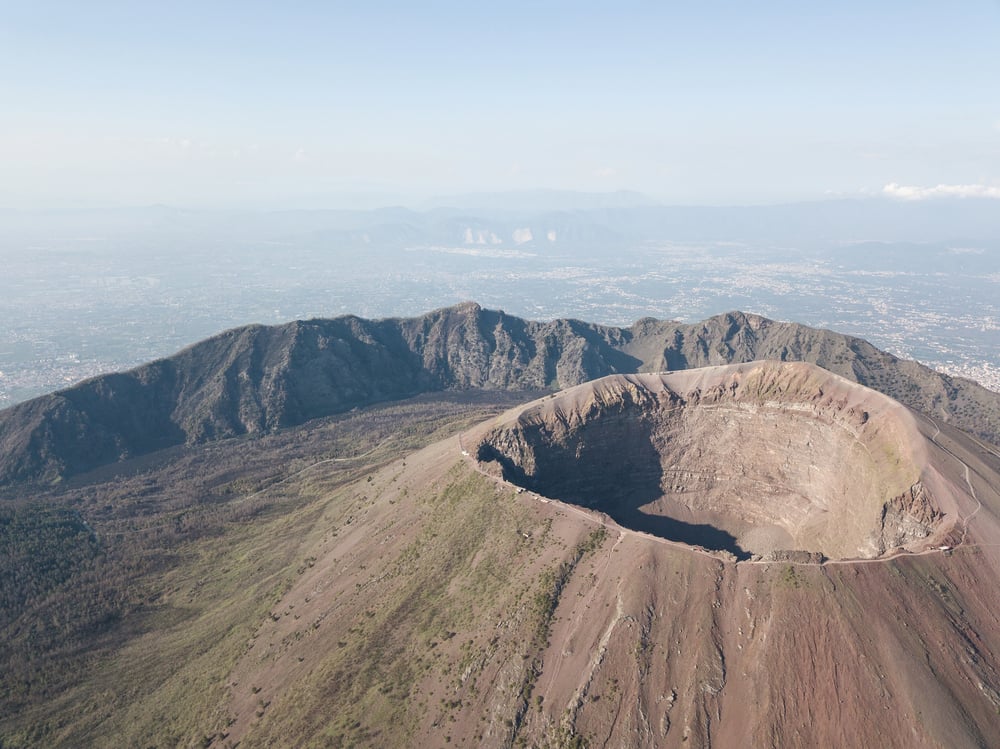
The destroyer of Pompeii continues to loom menacingly over modern Naples and its surrounding metropolitan area. Located near Naples and close to densely populated areas, Mount Vesuvius is infamous for the catastrophic eruption that buried Pompeii in 79 C.E., and today, millions live within its immediate area. Scientists worry that a future Plinian eruption could devastate one of Europe’s most densely populated regions, potentially affecting over three million people who have nowhere to run when the mountain awakens.
Toba, Indonesia
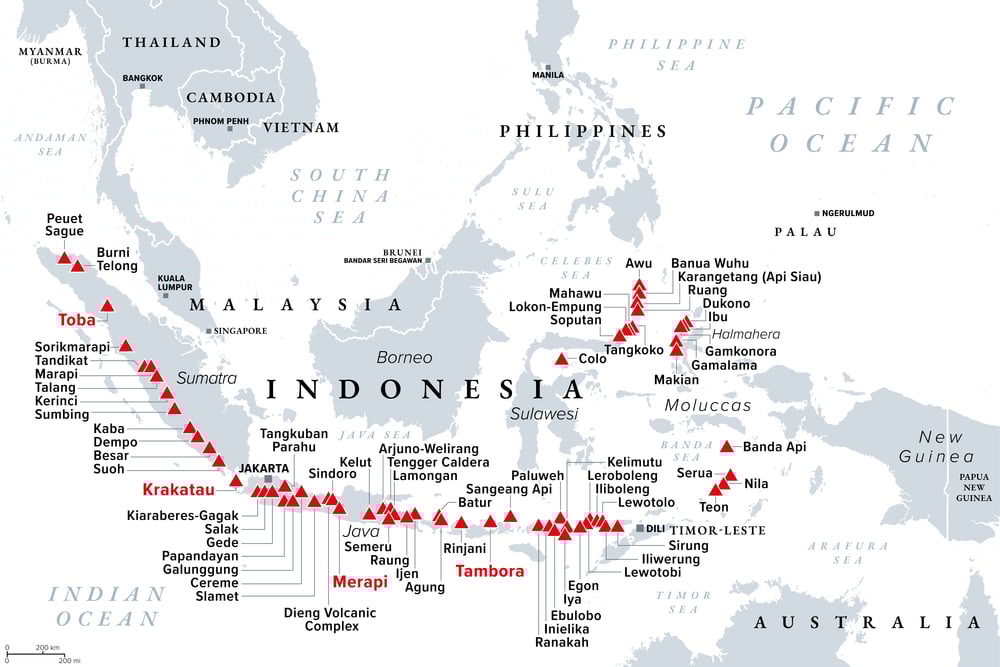
Approximately 74,000 years ago, the Toba supervolcano on Sumatra unleashed what many consider the most devastating eruption in human evolutionary history. The volume of that eruption is estimated at 670 cubic miles (2,800 cubic kilometers), making it the largest eruption in the past two million years. While Toba appears dormant today, its massive caldera system remains intact and could theoretically produce another civilization-ending eruption that would affect the entire planet.
Mount Rainier, United States

This glacier-capped volcano towers over Seattle and Tacoma, creating one of America’s most dangerous volcanic scenarios. More than two million people would be affected by an eruption at Mount Rainier, with huge lahars being the greatest risk posed by an eruption. The combination of extensive glacial ice and steep volcanic slopes means that even a moderate eruption could trigger massive mudflows that would race through populated valleys at highway speeds, giving residents little time to escape.
Popocatépetl, Mexico

Sitting just 44 miles from Mexico City, ‘Popo’ represents an immediate threat to one of the world’s largest metropolitan areas. A large eruption could endanger millions and blanket the city in ash, and its proximity to urban areas makes it one of the most dangerous volcanoes in North America. A large eruption could send a city-sized cloud of ash 20 centimeters thick to descend upon the buildings of Mexico City, clogging drainage lines, poisoning water supplies and ceasing electricity transmission.
Mount Agung, Indonesia

This continuously active volcano has already proven its deadly potential through historical eruptions. Mount Agung’s 1963 eruption lasted 11 months, producing dangerous ash fall and pyroclastic flows that led to more than 1,000 deaths and property damage, and the volcano is located in a region with a population of about four million. Recent eruptions in 2017 and 2018 have reminded the world that Agung remains very much alive and dangerous.
Krakatoa, Indonesia

The 1883 eruption of Krakatoa became synonymous with volcanic devastation after producing one of the loudest sounds in recorded history. A tsunami over 30 metres (100 feet) high followed the explosion and apparent caldera collapse, killing about 36,000 people on the adjacent shores of Java and Sumatra. Today, a new volcanic island called Anak Krakatau (Child of Krakatoa) has grown in its place, and scientists worry it could repeat its parent’s catastrophic performance while sitting between Indonesia’s two most populated islands.
Mount Fuji, Japan
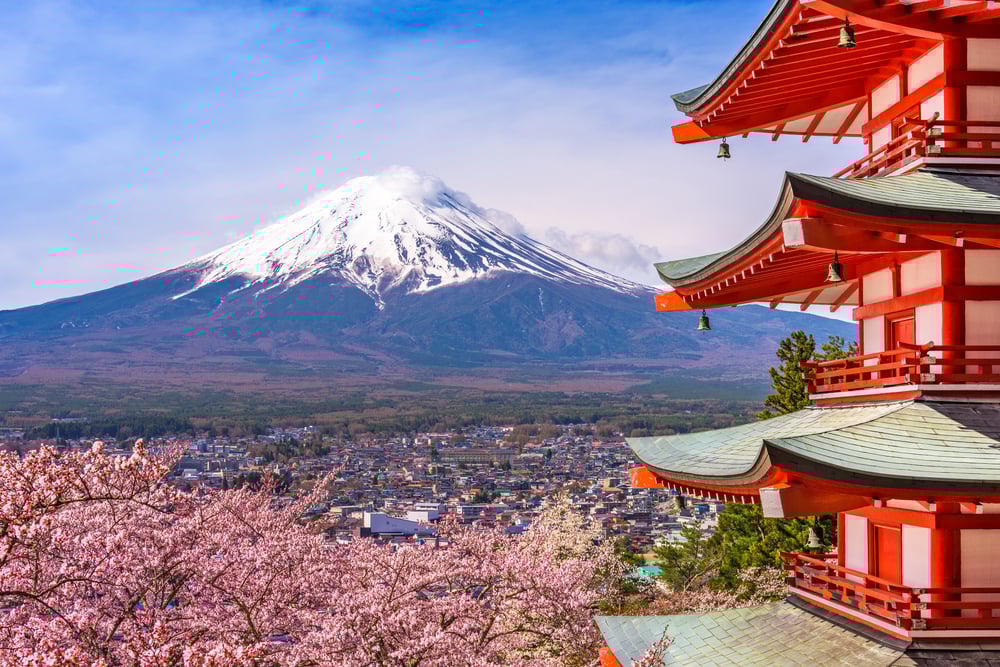
Japan’s iconic mountain may appear peaceful, but it sits dangerously close to the Tokyo metropolitan area and its 37 million residents. Though relatively quiet, researchers warn that an eruption from Fuji could generate pyroclastic flows, devastating lahars, and shroud the nearby metropolis in a blanket of ash. The last confirmed eruption occurred in 1708, and the long period of dormancy has many scientists concerned about mounting pressure within the volcanic system.
Galeras, Colombia

This South American volcano has earned a reputation as one of the most dangerous active volcanoes in the world due to its unpredictable behavior and proximity to populated areas. Galeras sits near the city of Pasto, home to nearly half a million people, and has produced numerous deadly eruptions throughout history. The volcano’s tendency toward sudden, explosive eruptions with little warning makes evacuation planning extremely challenging for local authorities.
Mayon, Philippines

Perfect in its symmetrical cone shape, Mayon volcano in the Philippines harbors a deadly secret beneath its beauty. This highly active stratovolcano has produced over 50 recorded eruptions, many of them devastating to surrounding communities. The volcano’s steep slopes and explosive nature create perfect conditions for pyroclastic flows that can race down the mountainside at incredible speeds, while its location in a densely populated agricultural region puts hundreds of thousands of lives at direct risk.
Cotopaxi, Ecuador

Cotopaxi is one of the world’s tallest volcanoes, with a height of 19,393 feet, and is also one of Ecuador’s most active volcanoes, having produced more than 50 eruptions since the 16th century. What makes Cotopaxi particularly terrifying is its extensive glacial coverage combined with its explosive eruption style. When this giant awakens, the interaction between hot volcanic material and ice creates devastating lahars that can travel enormous distances, potentially reaching populated areas over 60 miles away.
Nevado del Ruiz, Colombia

This seemingly quiet volcano demonstrated its lethal potential in 1985 when a relatively small eruption triggered one of the deadliest volcanic disasters of the 20th century. A brief explosive eruption dumped several million cubic metres of hot pyroclastic fragments onto the ice surrounding the summit crater, sending massive mudflows down canyons that buried much of the town of Armero, killing 22,000 of its inhabitants. The tragedy serves as a stark reminder that even minor eruptions can become major killers when volcanoes interact with ice and water.
Santorini, Greece

The beautiful Greek island of Santorini masks one of the Mediterranean’s most dangerous volcanic systems. Around 3,600 years ago, the Minoan eruption of Santorini was so massive it likely contributed to the collapse of the advanced Minoan civilization and may have inspired the legend of Atlantis. Today, millions of tourists visit the island annually, unaware they’re standing on an active volcanic caldera that retains the potential for another civilization-altering eruption that could devastate the eastern Mediterranean.
The Fires That Never Sleep

These 15 volcanic giants remind us that our planet remains a dynamic and dangerous place where geological forces dwarf human power. Supervolcanoes are proof that volcanoes can be frightening, having drastically altered Earth in the past, and they retain that same potential today. While modern monitoring systems provide better early warning than ever before, the fundamental threat remains unchanged: millions of people continue to live in the shadow of mountains that could erupt with little notice. The question isn’t if these volcanoes will erupt again, but when—and whether humanity will be prepared for the consequences.
More from Go2Tutors!

- The Romanov Crown Jewels and Their Tragic Fate
- 13 Historical Mysteries That Science Still Can’t Solve
- Famous Hoaxes That Fooled the World for Years
- 15 Child Stars with Tragic Adult Lives
- 16 Famous Jewelry Pieces in History
Like Go2Tutors’s content? Follow us on MSN.



