15 World’s Strangest Statues and the Stories Behind Them
Art has always pushed boundaries, but some sculptures take that impulse and run straight off a cliff into pure weirdness. These monuments don’t just commemorate heroes or celebrate history — they celebrate the bizarre, the uncomfortable, and sometimes the downright inexplicable.
From giant babies to headless businessmen, these statues make you stop, stare, and wonder what exactly was going through the artist’s mind.
The Vigeland Sculpture Park Baby
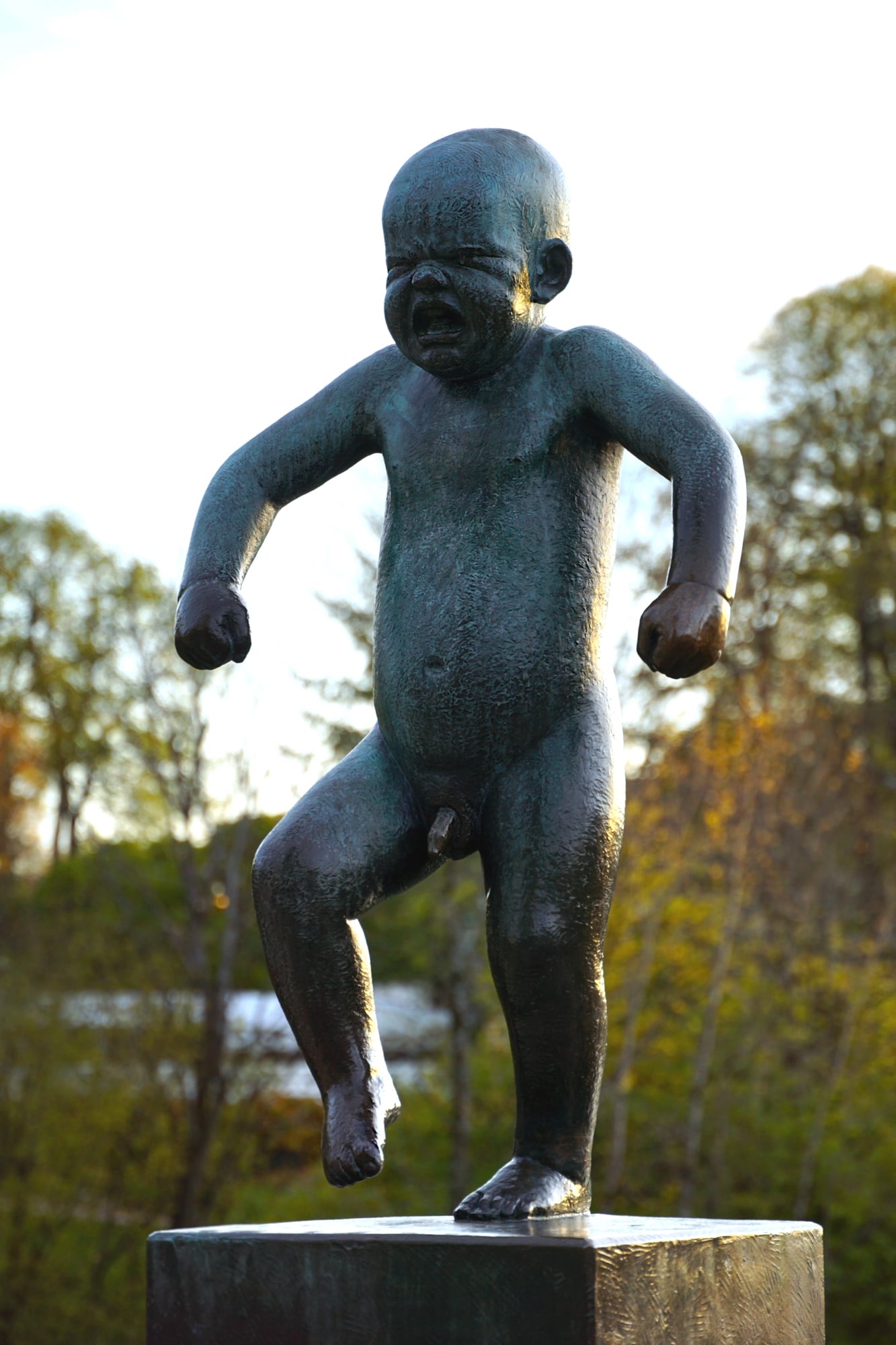
Gustav Vigeland carved over 200 sculptures for Oslo’s Frogner Park, but one stands above the rest in sheer unsettling power. A bronze baby, arms raised, face contorted in what appears to be existential rage about the unfairness of existence itself.
Locals call it “Sinnataggen” — the angry boy. The statue captures something primal.
Pure, undiluted fury at being alive.
Man Hanging Out
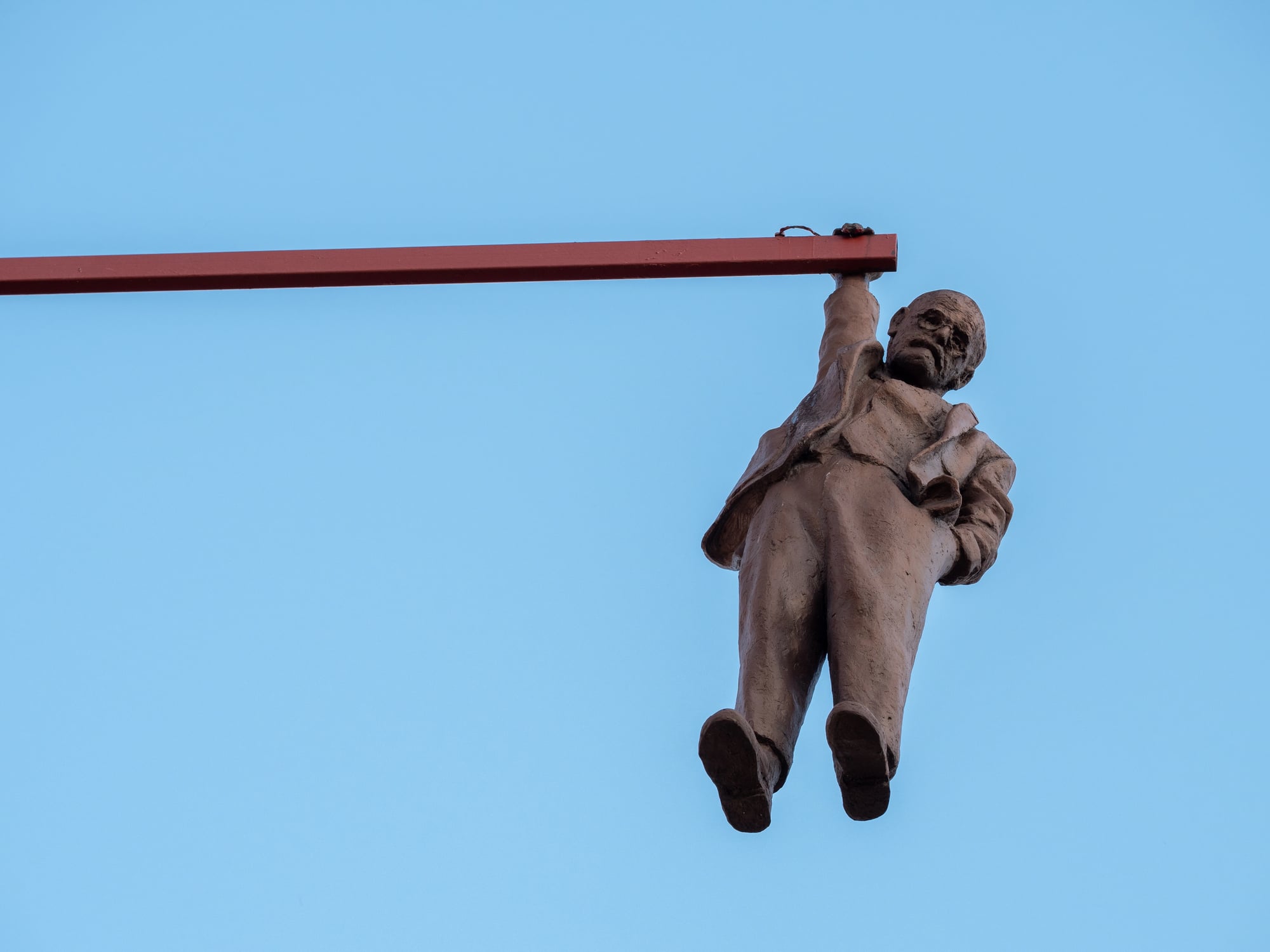
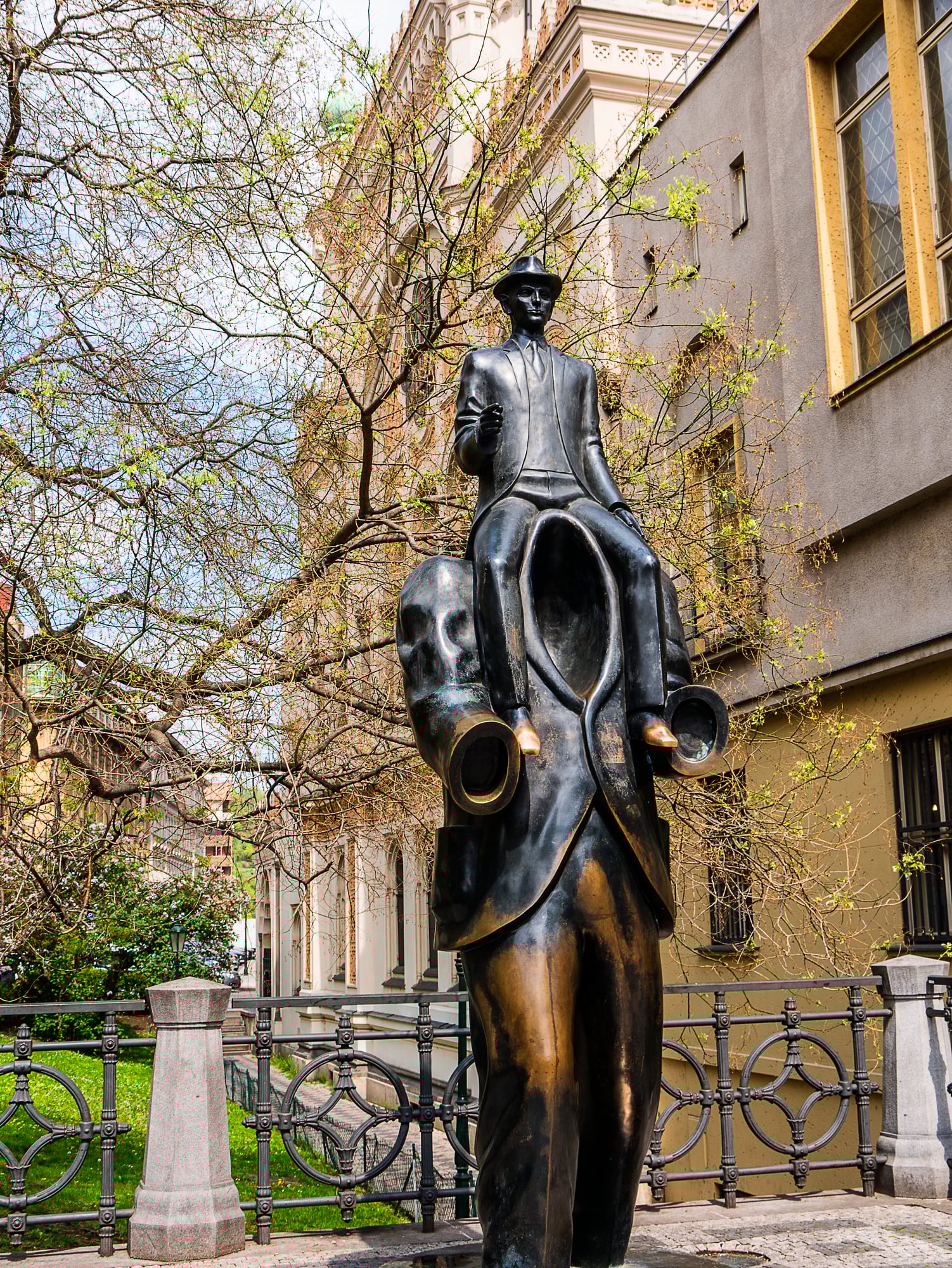
Prague’s Sigmund Freud sculpture dangles from a building by one hand, 30 feet above the street. David Černý created this piece in 1996, and it’s been making pedestrians nervous ever since (though really, when you think about it, isn’t that exactly what public art should do — make people look up from their phones and actually feel something, even if that something is mild anxiety about whether a bronze psychoanalyst is about to plummet onto their heads).
The sculpture references Freud’s theory that humans harbor a death wish, which seems appropriate for a statue that appears perpetually on the verge of letting go. But here’s the thing about Černý’s work: he understands that the most effective art doesn’t comfort you.
And this piece, suspended in that eternal moment between holding on and falling, captures something uncomfortably familiar about the precarious nature of our own grip on things.
Hippo Ballerinas
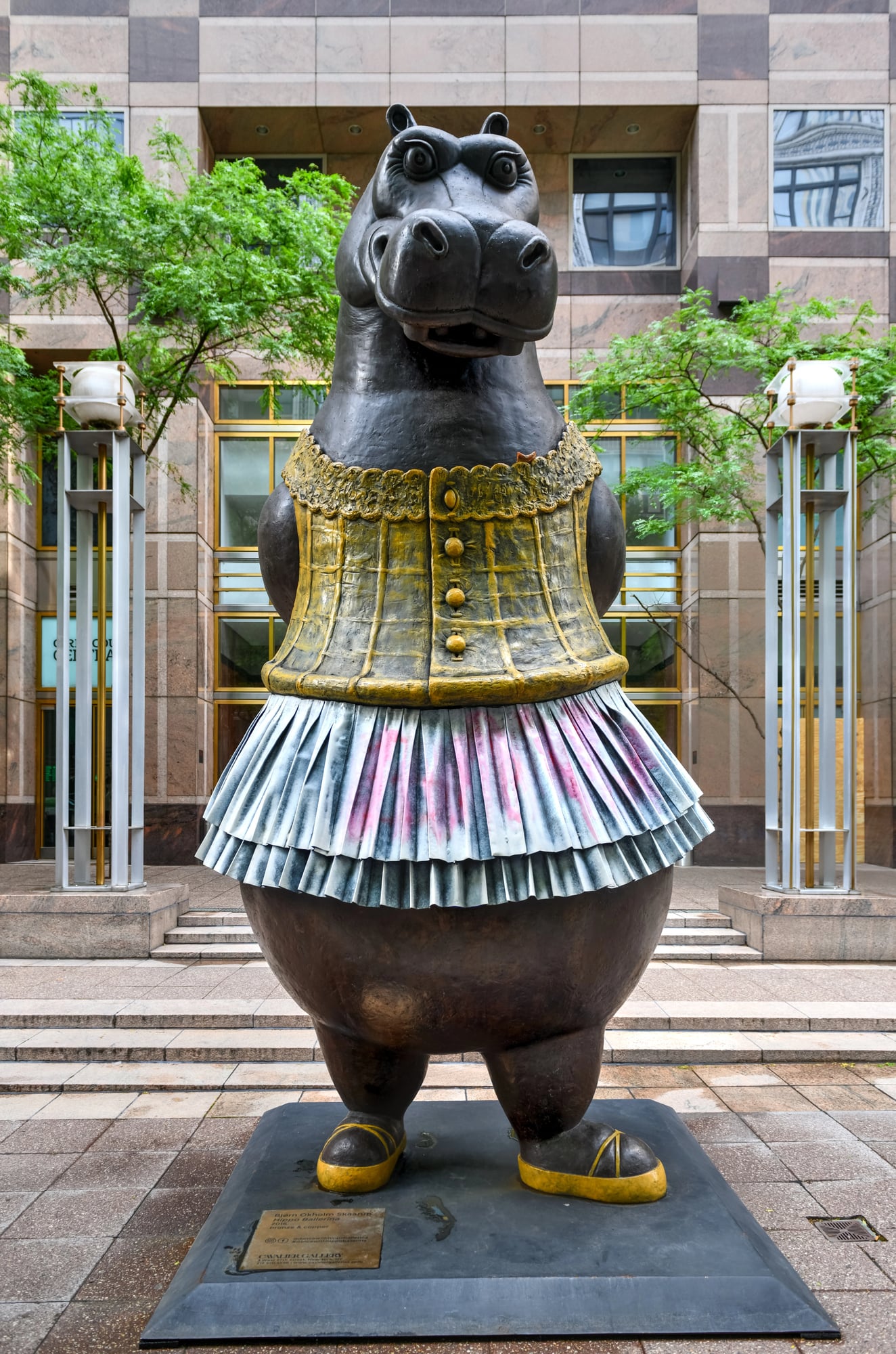
There’s something almost cruel about watching a creature built like a tank attempt poetry in motion. But that’s exactly what happens in Taiwan, where a collection of bronze hippopotamuses perform ballet moves with surprising grace.
The sculptures seem to understand their own absurdity — which makes them unexpectedly moving. These aren’t just novelty pieces playing for cheap laughs.
They’re about finding elegance where it shouldn’t exist, about the gap between what we are and what we dream of becoming. The hippos balance on one leg with the same earnest determination as any dancer at Lincoln Center, and somehow that makes perfect sense.
Nelson Mandela’s Rabbit Ears
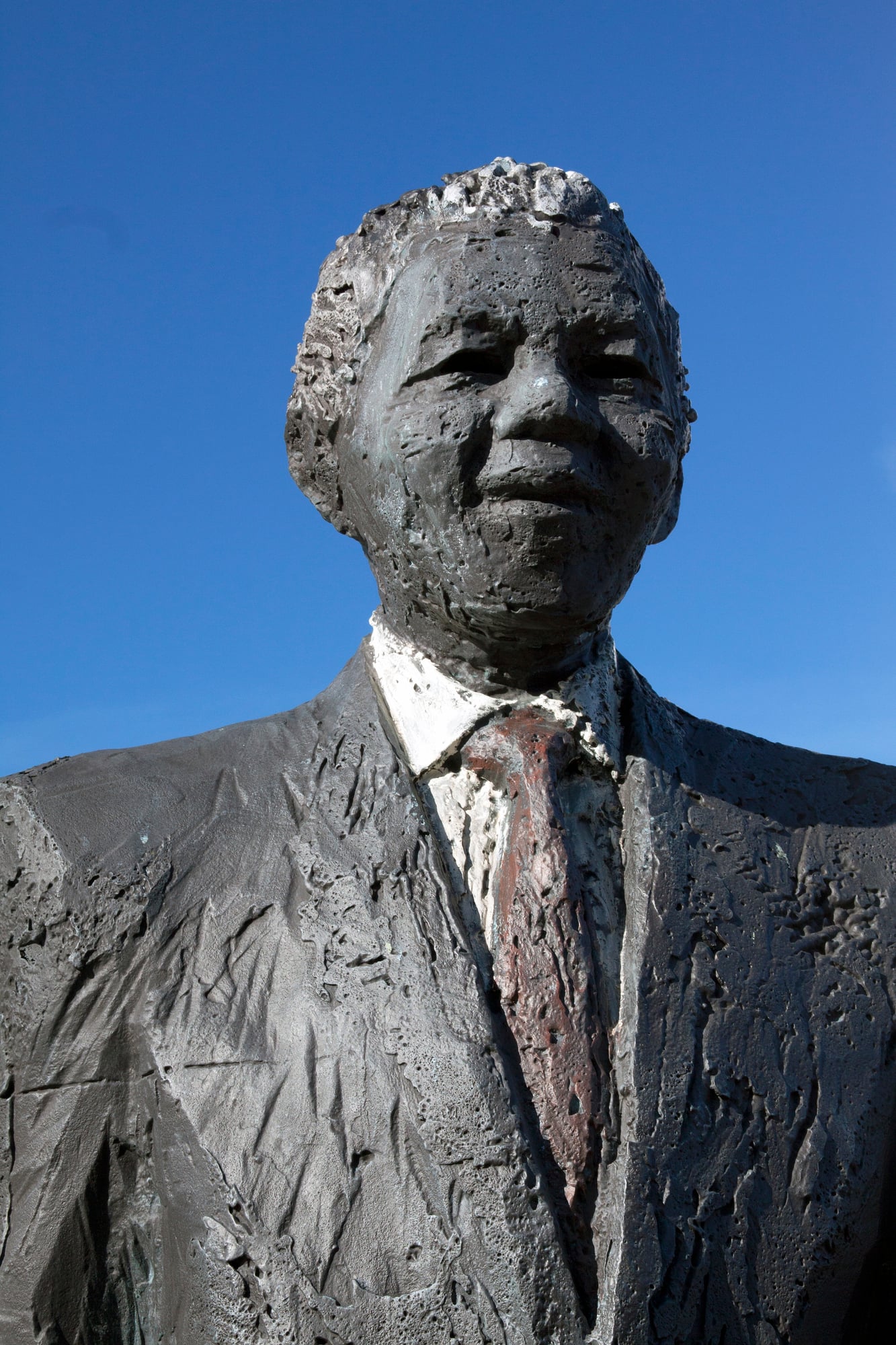
The statue of Nelson Mandela in Pretoria looks dignified from a distance. Up close, there’s a bronze rabbit hidden in his ear.
The sculptors snuck it in as their signature, and it went unnoticed for years until someone with binoculars spotted it. The government was not amused.
Neither was Mandela’s family. But the rabbit stays, because removing it would damage the sculpture.
Sometimes art gets the last word.
Giant Spider Mother
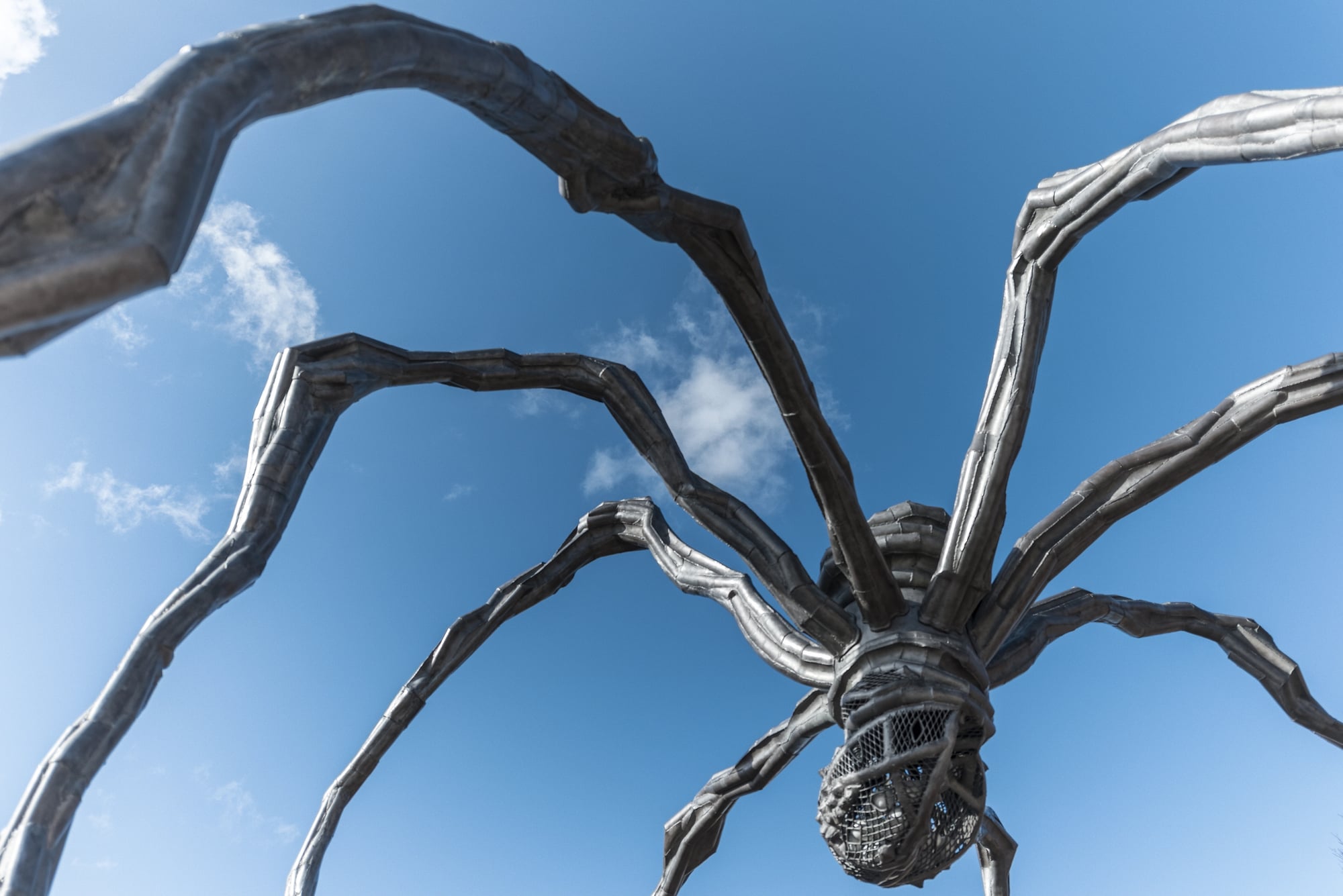
Louise Bourgeois created “Maman” as a tribute to her mother, which makes sense once you understand the metaphor (though it takes some explaining to convince people that a 30-foot bronze spider is actually an expression of maternal love, protection, and the complex web of family relationships that both shelter and ensnare us). The spider carries eggs in a sac beneath her abdomen — life and death, creation and destruction, all bundled together in one towering arachnid.
But there’s something else happening here, something that goes beyond the obvious symbolism: Bourgeois understood that the most powerful emotions often wear frightening faces. And this spider, for all its imposing presence and sharp angles, manages to feel protective rather than predatory — which is saying something, considering that most people’s first instinct around spiders is to run in the opposite direction as quickly as possible.
The Shoes On The Danube Bank
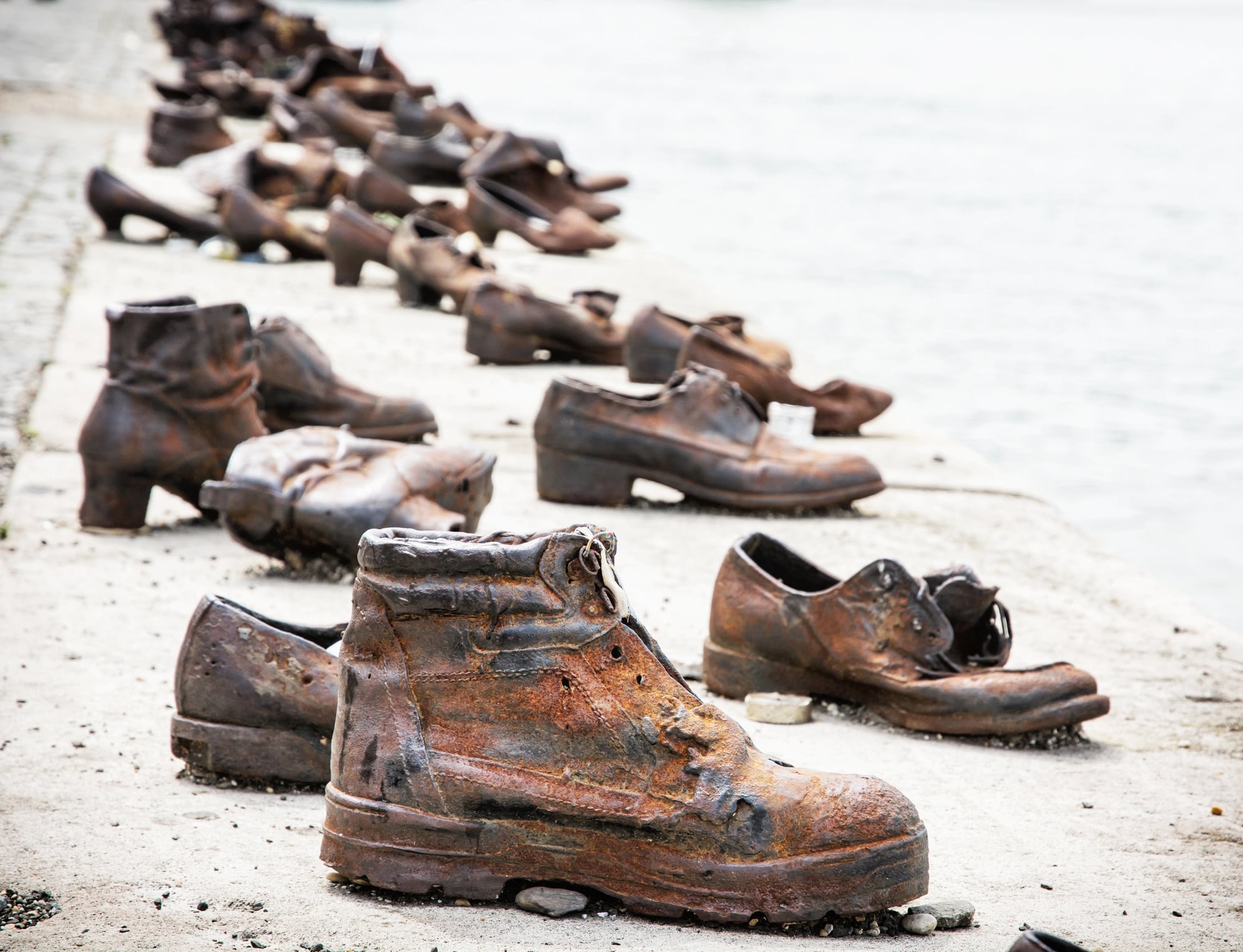
Sixty pairs of bronze shoes sit empty along the Budapest riverbank. They mark the spot where Arrow Cross militiamen ordered Jewish victims to remove their shoes before shooting them into the Danube during World War II.
The shoes remain, waiting for feet that will never return. This isn’t art that asks you to appreciate its technique or interpret its meaning.
It simply asks you to remember. The bronze shoes look worn, lived-in, as if their owners just stepped out of them moments ago.
Which, in the scope of history, they did.
L.O.V.E.
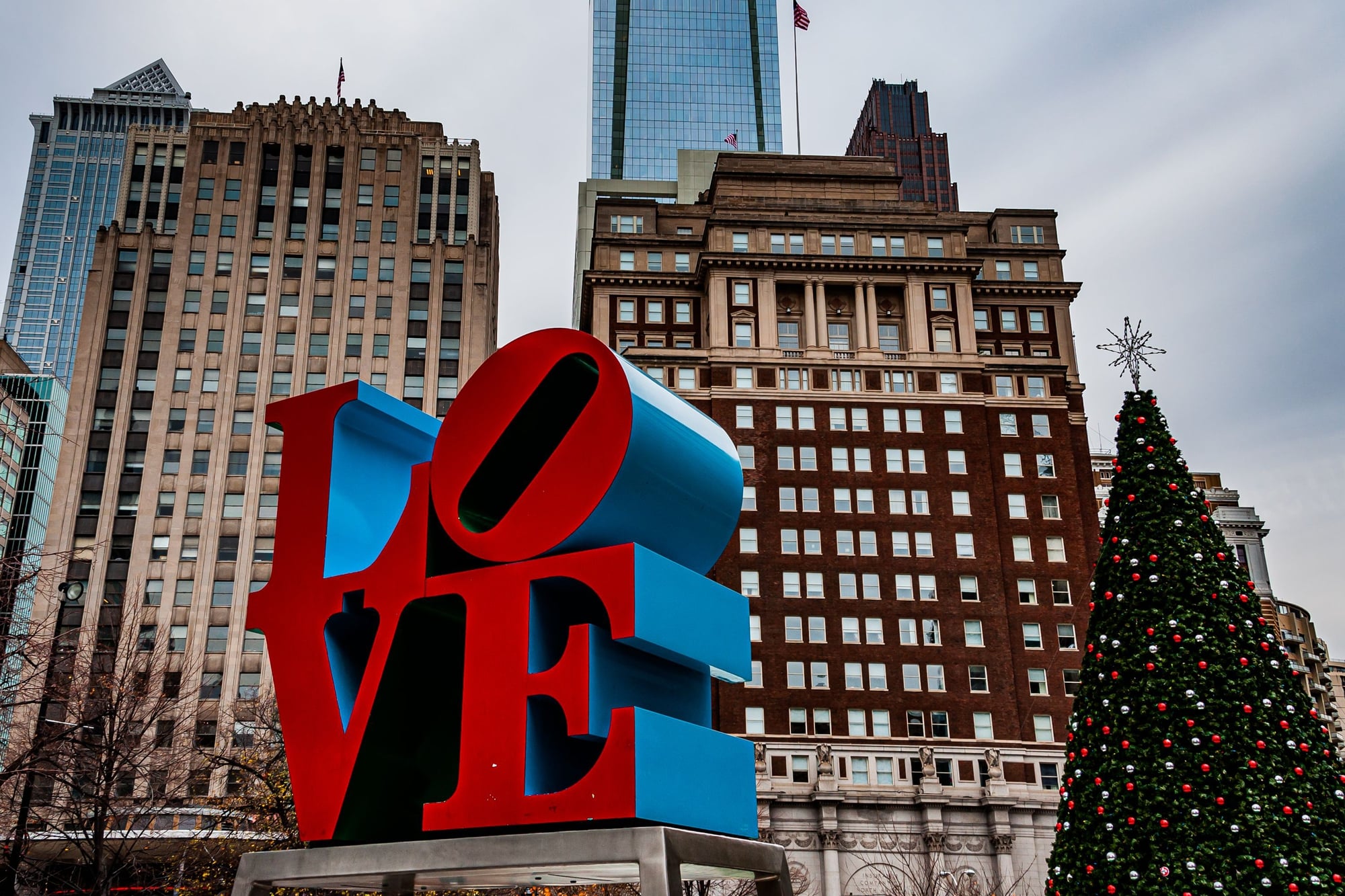
Milan’s financial district got an unusual addition in 2010: a 36-foot marble hand making an obscene gesture. Maurizio Cattelan titled it “L.O.V.E.” and claimed it stood for “Libertà, Odio, Vendetta, Eternità” — Liberty, Hate, Vengeance, Eternity.
The middle finger points directly at La Scala opera house, which feels intentional. The sculpture divides people cleanly.
Either you see it as a juvenile provocation or as a perfectly calibrated response to institutional pomposity. Both interpretations are probably correct.
The Genghis Khan Equestrian Statue
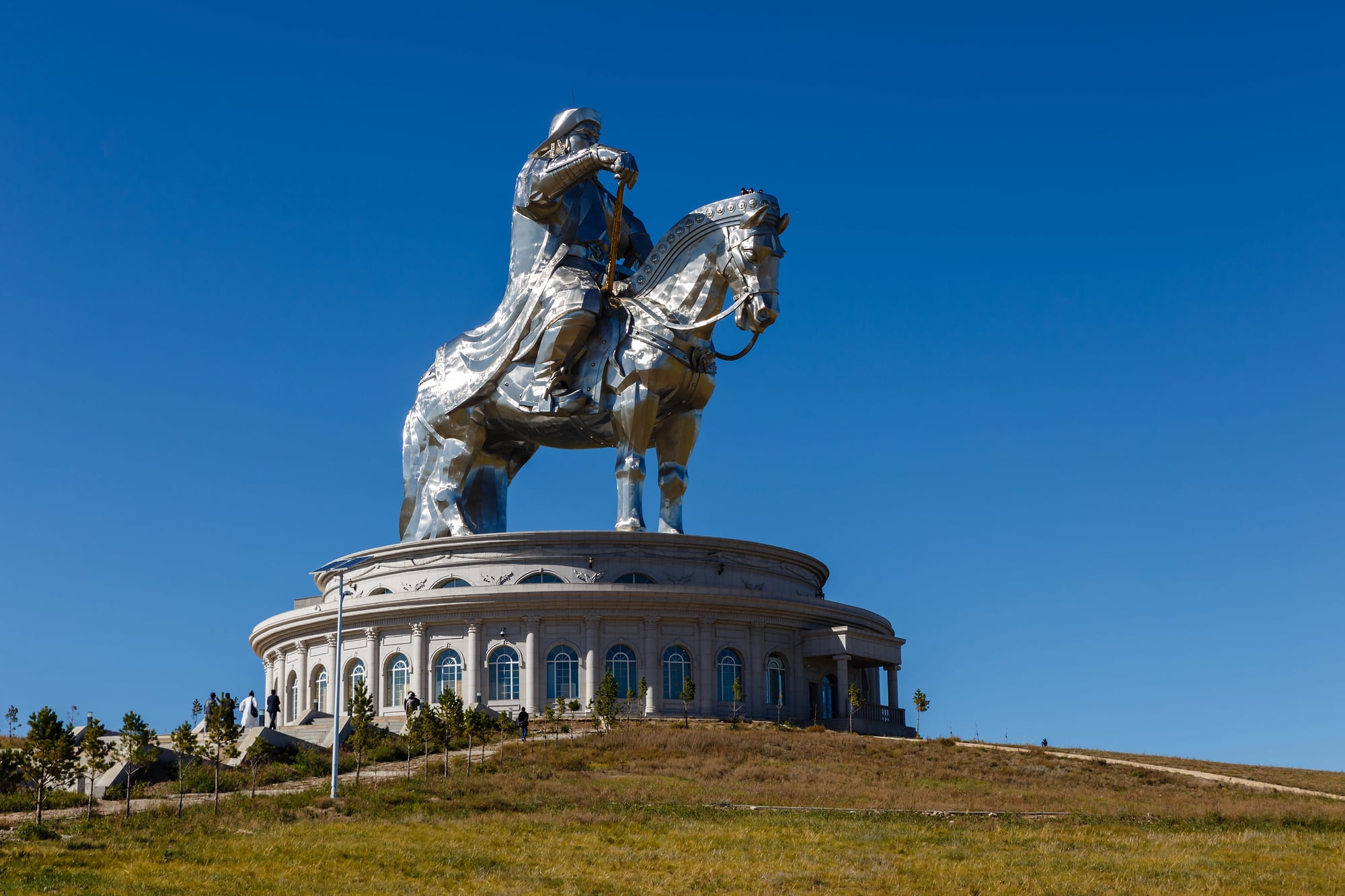
Mongolia decided to commemorate Genghis Khan with the world’s largest equestrian statue. It stands 130 feet tall on the steppes outside Ulaanbaatar, and visitors can take an elevator up to the horse’s head for panoramic views of the countryside Khan once conquered (which, to be fair, included most of the known world at the time, so the view is appropriately expansive).
The statue gleams silver against the endless sky, and there’s something both magnificent and unsettling about its scale — as if the monument is trying to match the outsized impact of the man it commemorates. So here’s the strange part: standing on the observation deck inside the horse’s skull, looking out over the same landscape that Khan’s armies swept across eight centuries ago, the statue stops feeling like a tourist attraction.
It becomes a reminder that some human ambitions are simply too large for normal-sized monuments.
The Headless Businessman

La Défense business district in Paris features a bronze businessman walking purposefully forward. His head is missing.
The sculpture, called “Le Pouce” (The Thumb), suggests that corporate life might cost more than just time and energy. The headless figure strides with the same confidence as any executive late for a meeting.
Which makes the missing head even more disturbing. Some losses go unnoticed until someone points them out.
Giant Baby Head
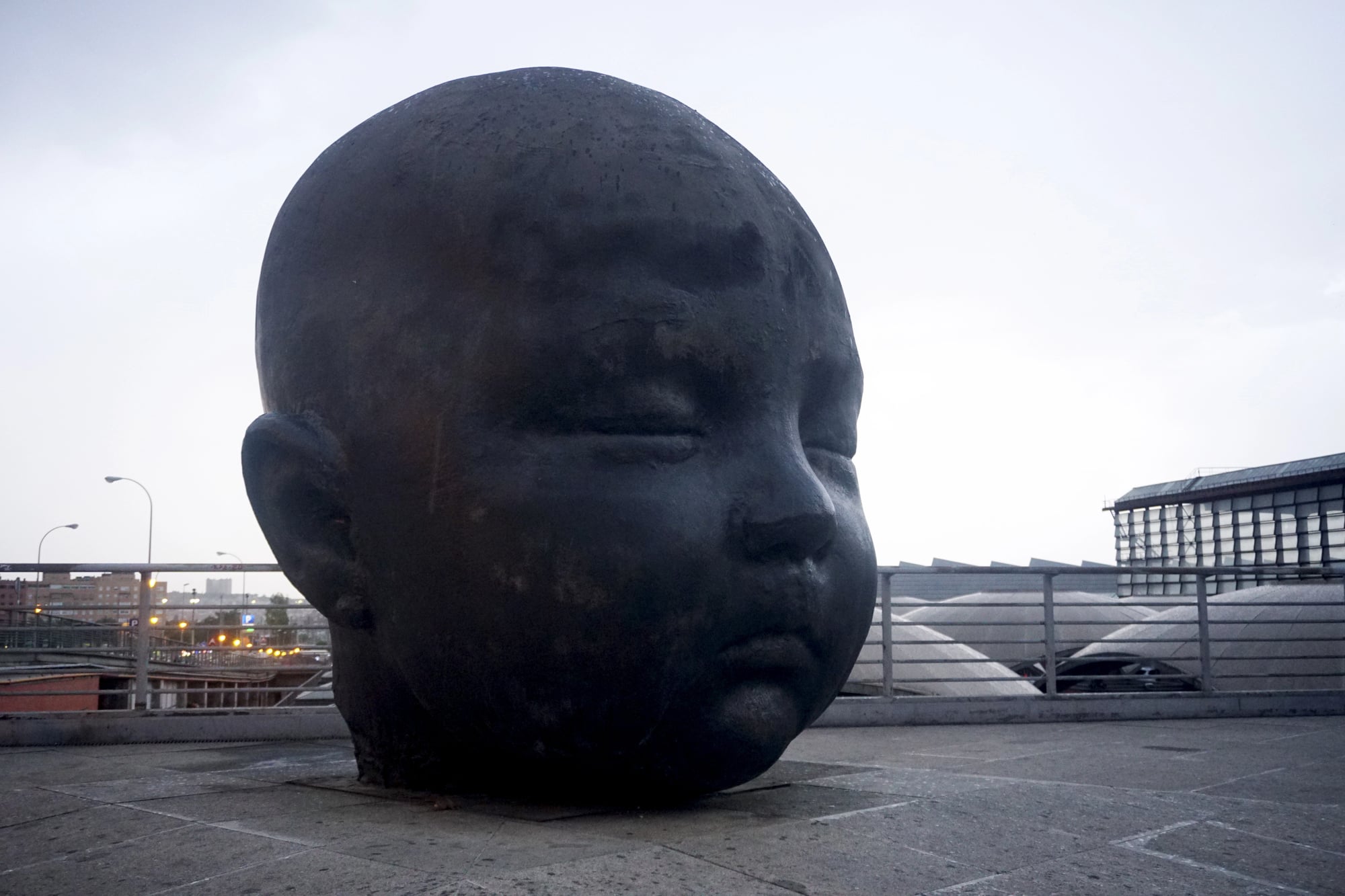
The Angry Baby isn’t the only oversized infant making people uncomfortable. Antonio López’s massive baby head in Madrid measures 20 feet across and sits in a park like a discarded toy from some mythological nursery.
Children love it. Adults find it deeply unsettling. Maybe that’s the point.
Babies are supposed to be small, manageable, cute. Scale one up to architectural proportions and it becomes something else entirely — a reminder of how helpless and demanding we all were once, and maybe still are.
The Mustangs Of DIA
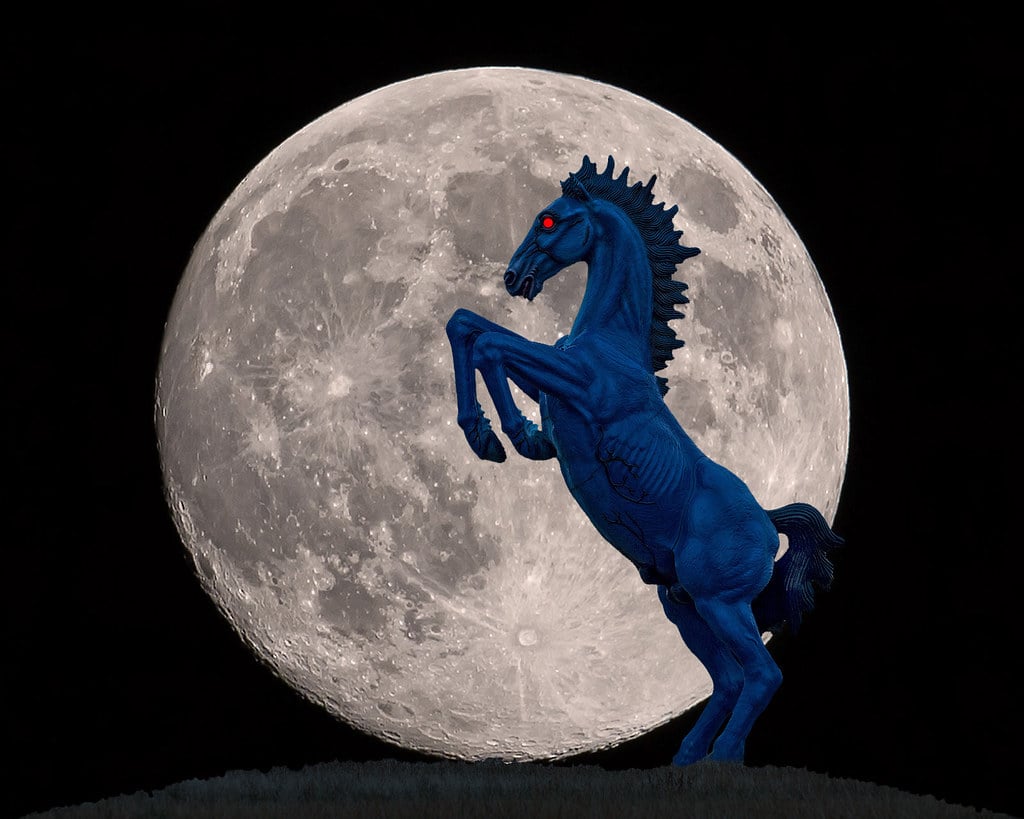
Denver International Airport’s blue horse statue has glowing red eyes and a reputation for being cursed. It killed its creator when a piece fell on him during construction, which doesn’t help its image.
The 32-foot fiberglass mustang rears up like something from a fever dream (and given that it’s the first thing most visitors see when they arrive in Denver, it sets a very particular tone for the city, though whether that tone is “wild western spirit” or “apocalyptic nightmare” depends largely on whether you’re seeing it in daylight or after a delayed red-eye flight). The red eyes glow at night, visible from miles away, and locals have nicknamed it “Blucifer” — which tells you everything you need to know about how they feel about their airport’s most prominent artwork.
But here’s what’s strange about the statue: despite its ominous reputation and tragic history, it perfectly captures something essential about Colorado — untamed, powerful, and not entirely safe.
The Giant Fork
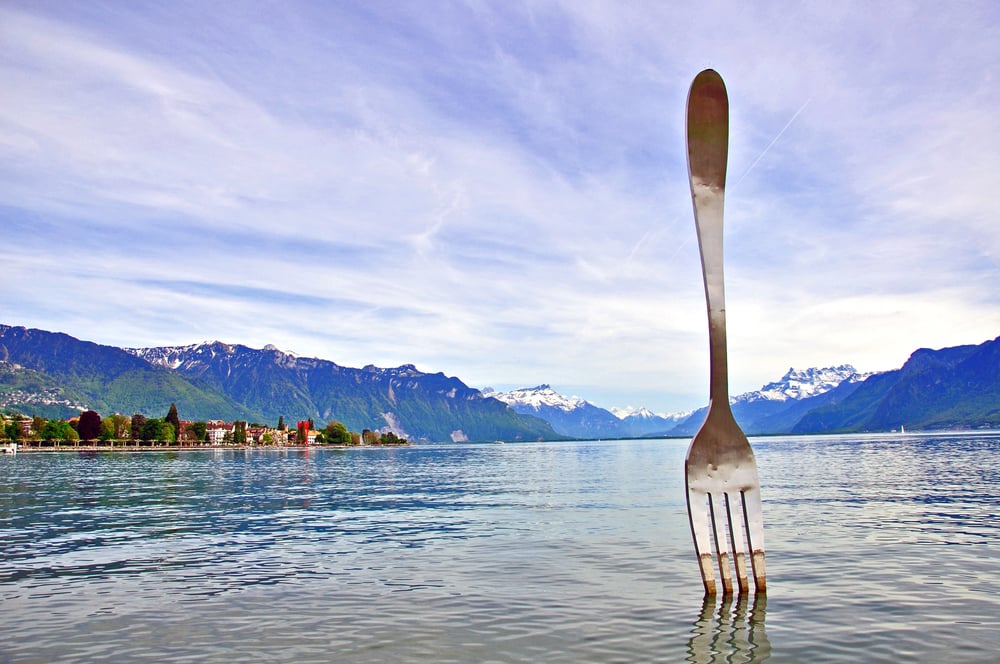
Vevey, Switzerland, decided to commemorate its food museum with a 26-foot stainless steel fork stuck in Lake Geneva. The fork appears to have speared something in the lake bed and stayed there, like Excalibur for kitchen utensils.
The sculpture works because it’s so matter-of-fact. No metaphorical complexity, no hidden meaning.
Just a giant fork in a lake, as if some cosmic diner abandoned their meal mid-bite.
The Upside-Down Statue
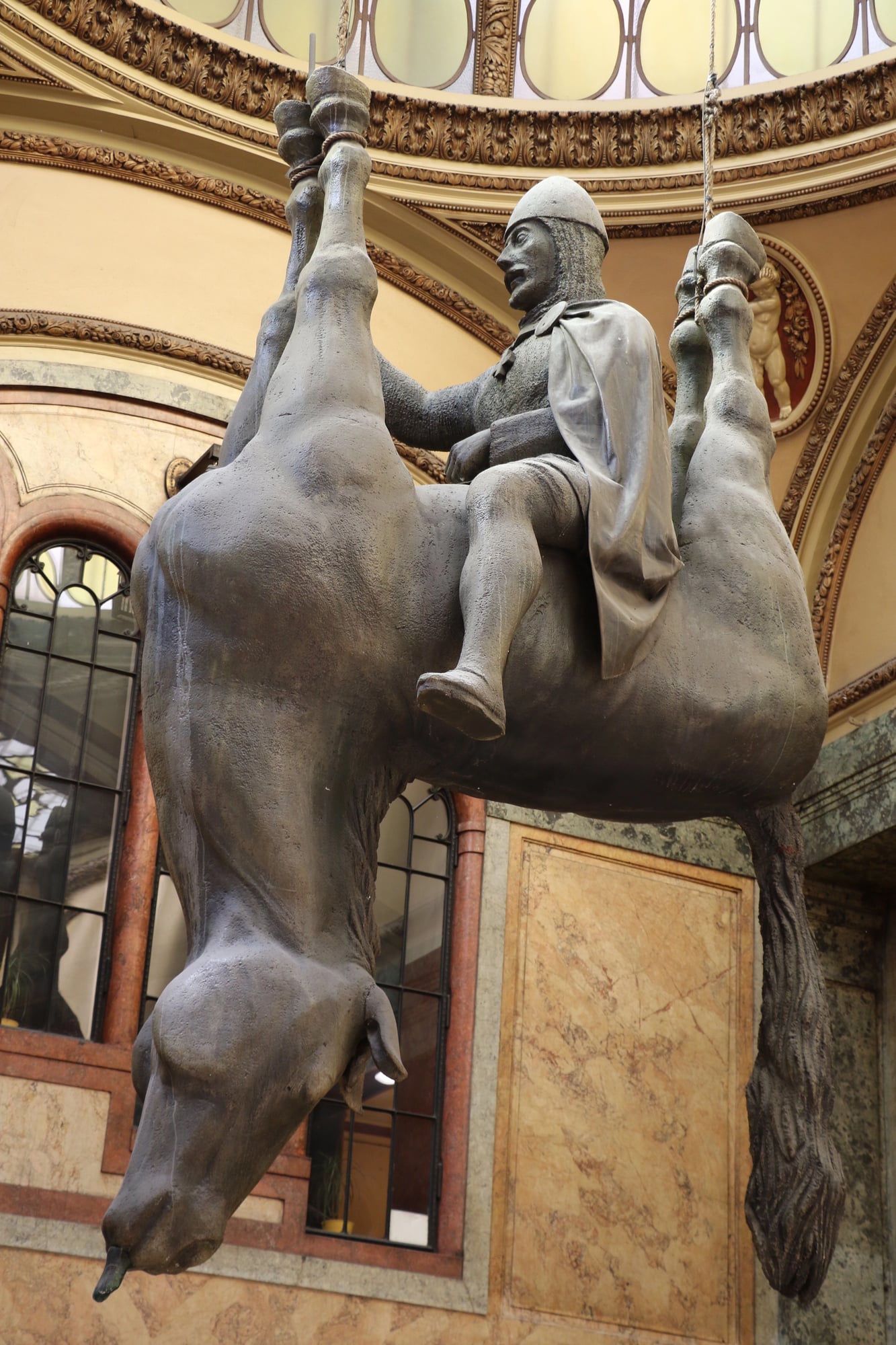
Prague’s St. Wenceslas sits upside-down on his upside-down horse in a shopping mall, dangling from the ceiling like a forgotten Christmas ornament. David Černý strikes again with another sculpture that makes people crane their necks and question everything.
The piece comments on the commercialization of Czech identity, but it works even if you don’t get the political subtext. Sometimes art’s job is just to make the familiar feel strange again.
The Knotted Gun
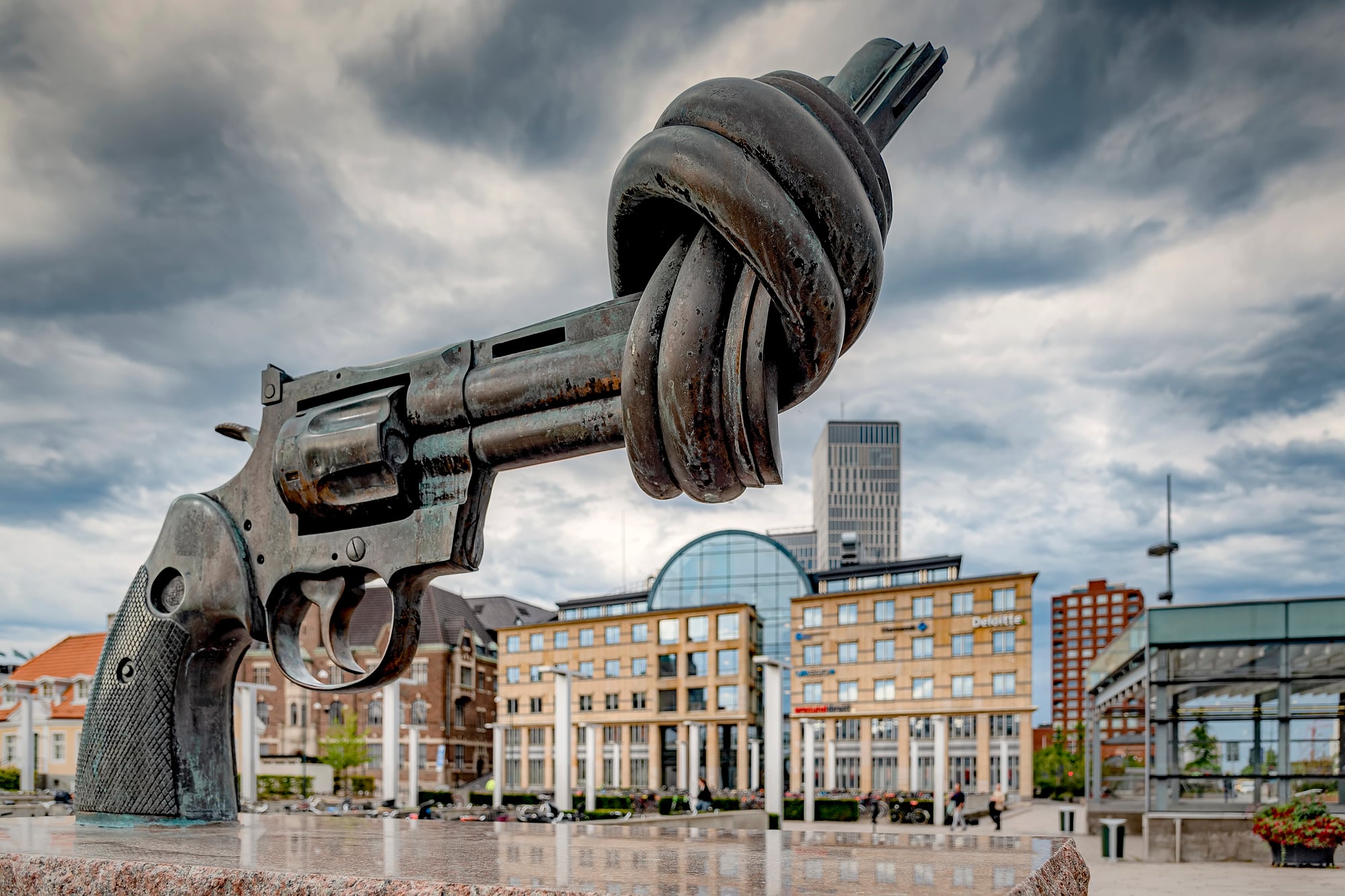
Carl Fredrik Reuterswärd’s bronze revolver with its barrel tied in a knot sits outside the UN headquarters in New York. The “Non-Violence” sculpture was created after John Lennon’s murder, and it’s been copied at locations worldwide.
The message is simple: render weapons useless through art. The knotted barrel makes the gun look frustrated, as if it’s trying to remember its purpose and failing.
Which is exactly the point.
The Giant Rubber Duck
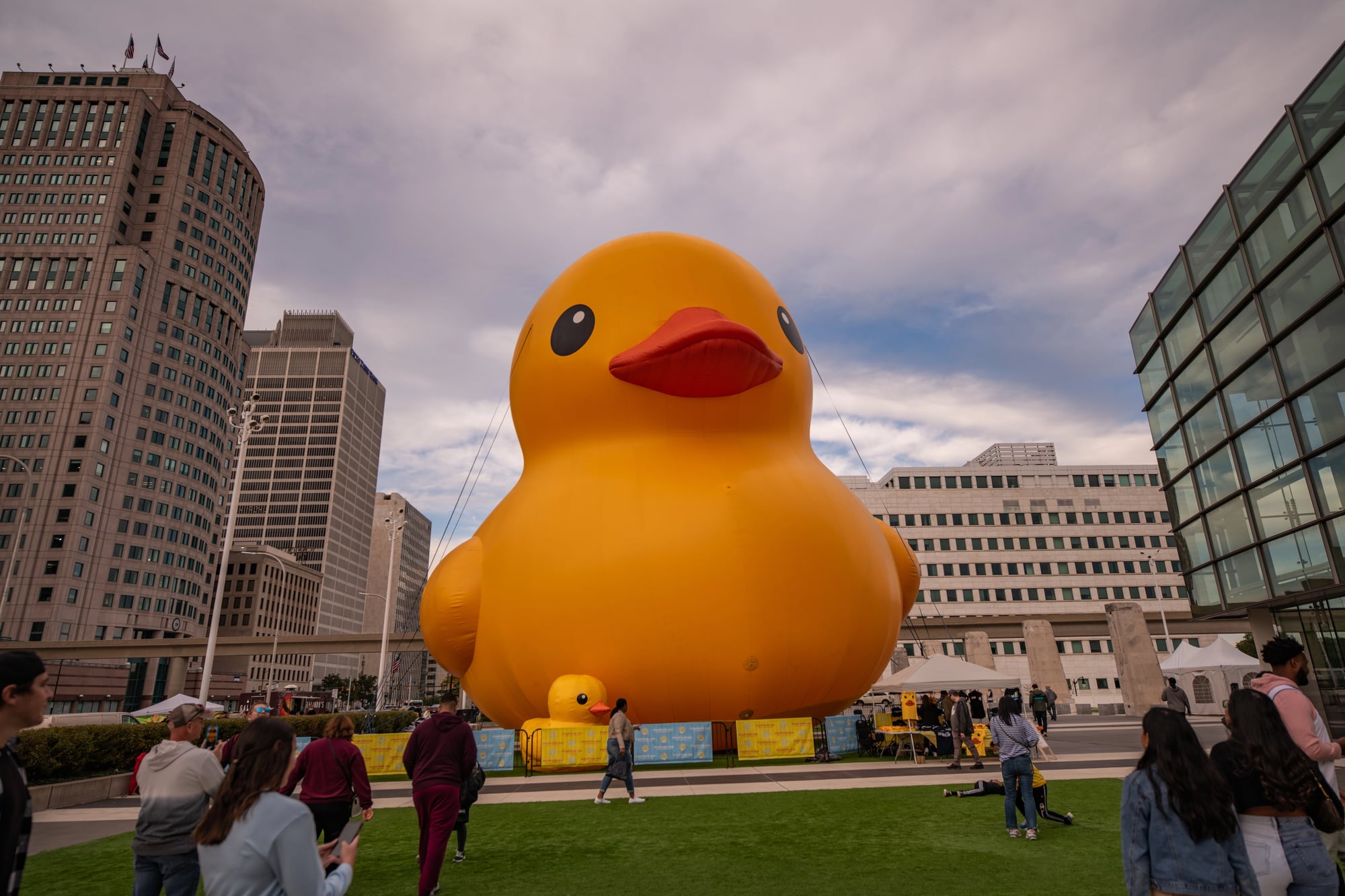
Florentijn Hofman’s 54-foot inflatable duck has traveled the world, appearing in harbors from Hong Kong to Sydney to Pittsburgh. It’s exactly what it appears to be: a bath toy scaled up to ridiculous proportions, bobbing in serious bodies of water where cargo ships and military vessels conduct important business.
The duck succeeds because it refuses to justify itself. It’s not a symbol or a statement — just pure, inexplicable joy floating where joy has no business being.
When Strange Becomes Necessary
These sculptures share something beyond their weirdness: they refuse to fade into the background. In a world oversaturated with images, they demand attention through sheer strangeness.
They make people stop, look twice, and maybe think about why certain combinations of materials and forms can feel so unsettling or delightful. The best public art doesn’t just fill space — it changes how that space feels.
And sometimes, apparently, that requires giant babies, headless businessmen, and rubber ducks the size of buildings.
More from Go2Tutors!

- The Romanov Crown Jewels and Their Tragic Fate
- 13 Historical Mysteries That Science Still Can’t Solve
- Famous Hoaxes That Fooled the World for Years
- 15 Child Stars with Tragic Adult Lives
- 16 Famous Jewelry Pieces in History
Like Go2Tutors’s content? Follow us on MSN.



