16 Ancient Board Games People Still Play Today
Board games have been bringing people together for thousands of years, long before smartphones and streaming services existed to entertain us. What’s remarkable is how many of these ancient games have survived not just as museum pieces, but as living traditions that families and friends still enjoy today. These games have endured because they tap into something fundamental about human nature—our love of strategy, competition, and social connection.
From the royal courts of ancient Egypt to modern game nights in suburban living rooms, these timeless classics have proven their staying power. Here is a list of 16 ancient board games that people continue to play and enjoy in the modern world.
Chess
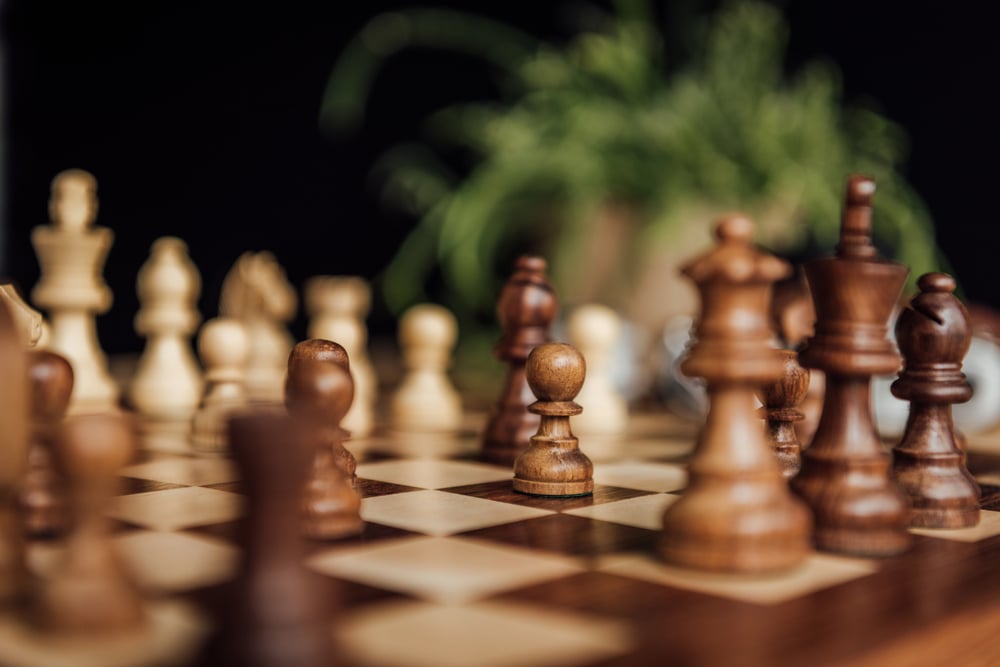
Chess emerged in India around the 6th century as Chaturanga before evolving into the game we know today through Persia and medieval Europe. The strategic depth of moving different pieces across 64 squares has captivated minds for over 1,500 years.
Modern chess remains virtually identical to its medieval form, with millions of players worldwide competing in everything from casual park games to high-level international tournaments.
Go
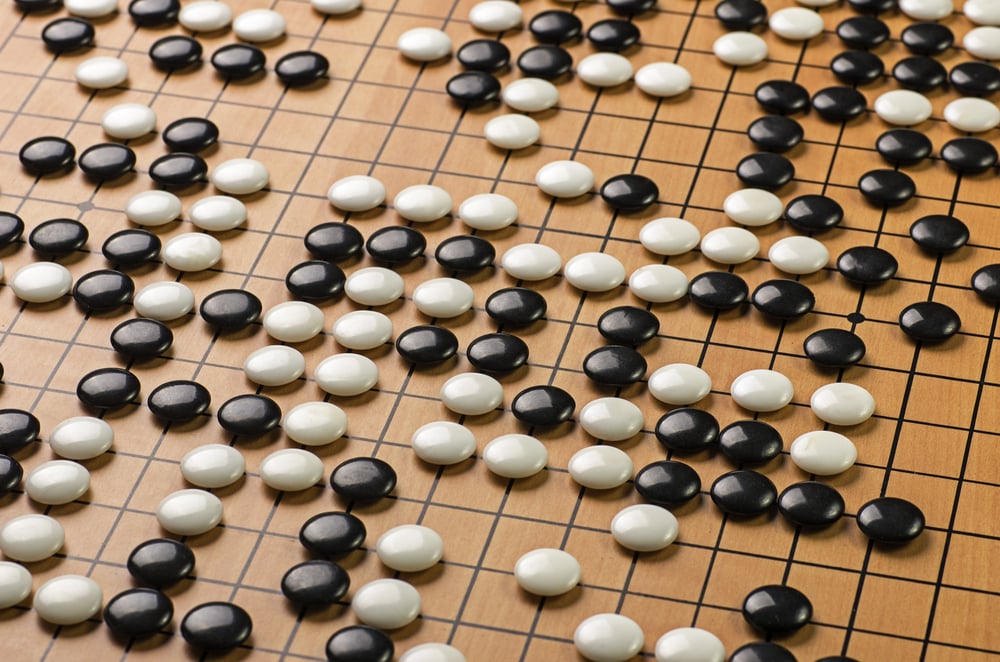
This Chinese strategy game dates back over 4,000 years, making it one of the oldest board games still played today. Two players place black and white stones on a 19×19 grid, attempting to control territory through strategic positioning.
Despite its simple rules, Go offers more possible board positions than there are atoms in the observable universe, which explains why it took until 2016 for a computer to beat a world champion.
Backgammon
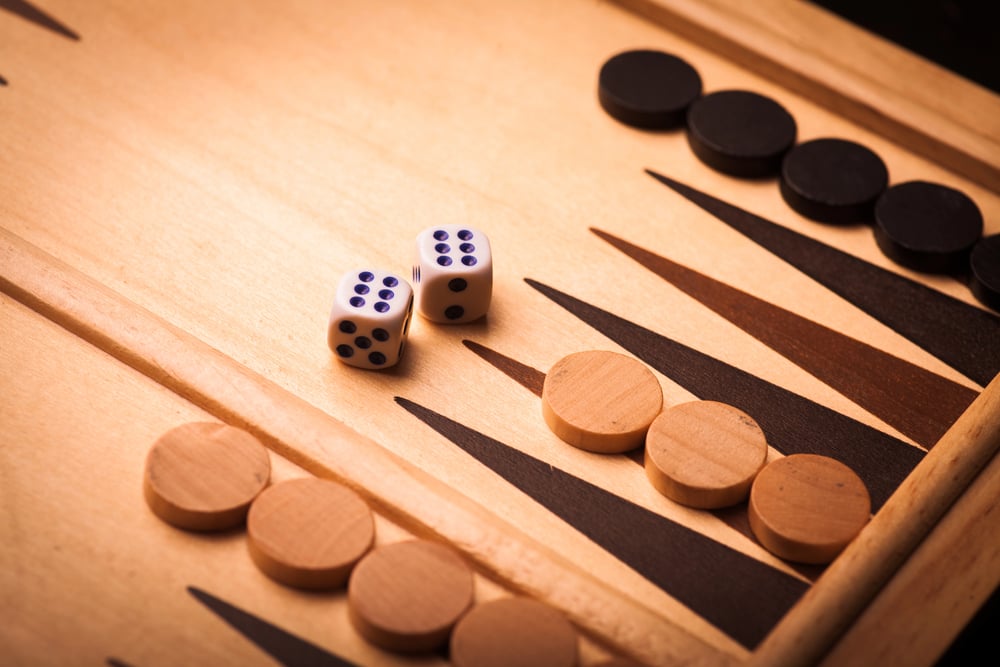
Archaeological evidence suggests backgammon-style games were played in Mesopotamia over 5,000 years ago. The game combines strategy with luck as players race their checkers around the board based on dice rolls.
Modern backgammon tournaments draw serious competitors, and the game remains a popular choice in cafés and homes across the Mediterranean and Middle East.
Mancala
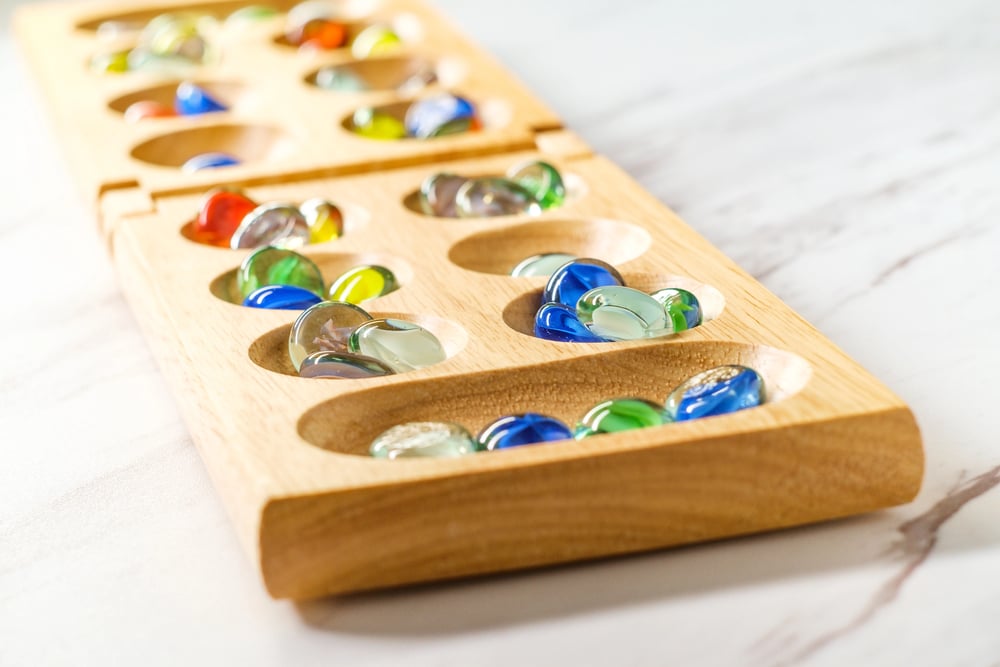
This family of African games involves moving seeds or stones around a board with carved pits or cups. Various versions have been played across Africa for centuries, with the oldest boards carved into stone dating back 1,300 years.
Today, mancala sets are common in toy stores worldwide, and the game is often taught in schools as an introduction to mathematical thinking and strategy.
Nine Men’s Morris
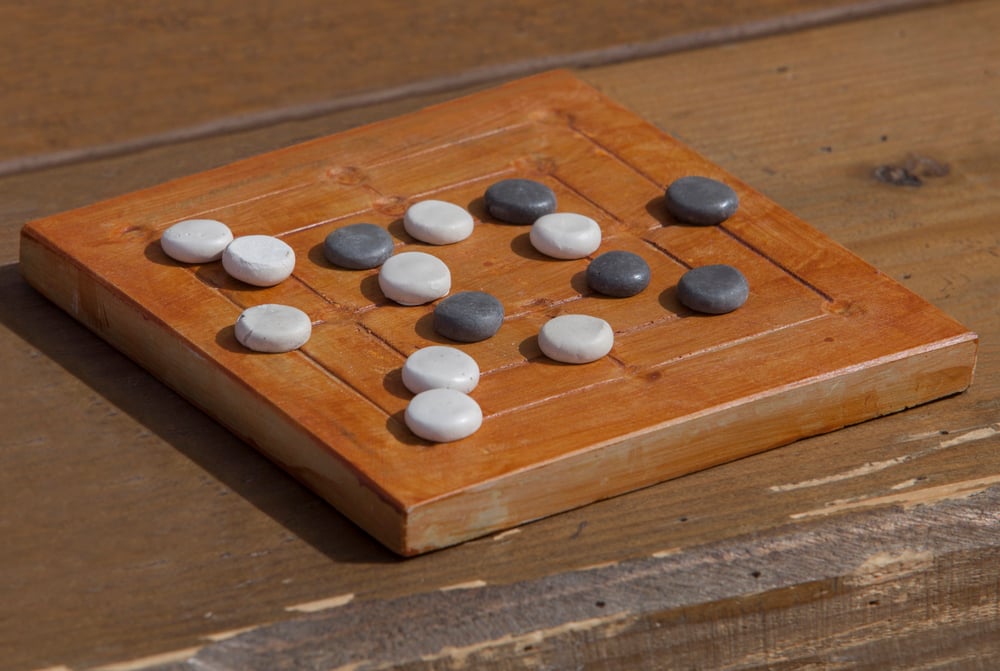
Medieval Europeans loved this alignment game, though versions existed in ancient Rome and Egypt. Players try to form rows of three pieces while blocking their opponent from doing the same.
The game requires only a simple board and 18 pieces, making it easy to scratch into surfaces—archaeologists have found Nine Men’s Morris boards carved into cathedral steps and castle walls.
Checkers
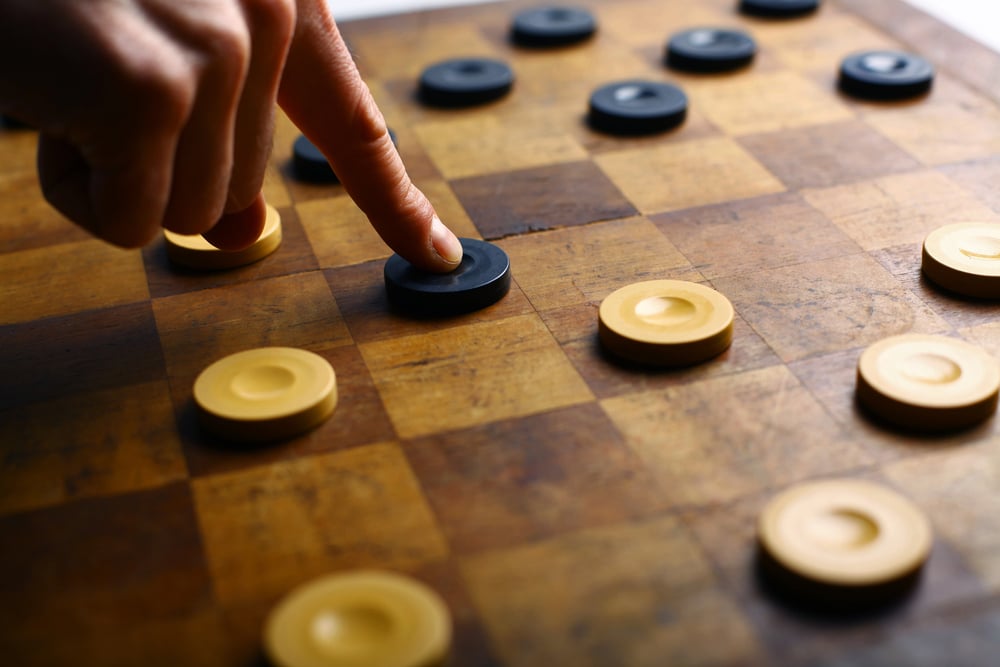
Ancient Egyptians played a checkers-like game called Alquerque around 3,000 years ago, which eventually evolved into modern checkers through various cultural adaptations. The game’s appeal lies in its accessibility—almost anyone can learn the basic moves in minutes.
Yet mastering checkers takes years, with advanced players memorizing thousands of opening sequences and endgame patterns.
Tic-Tac-Toe
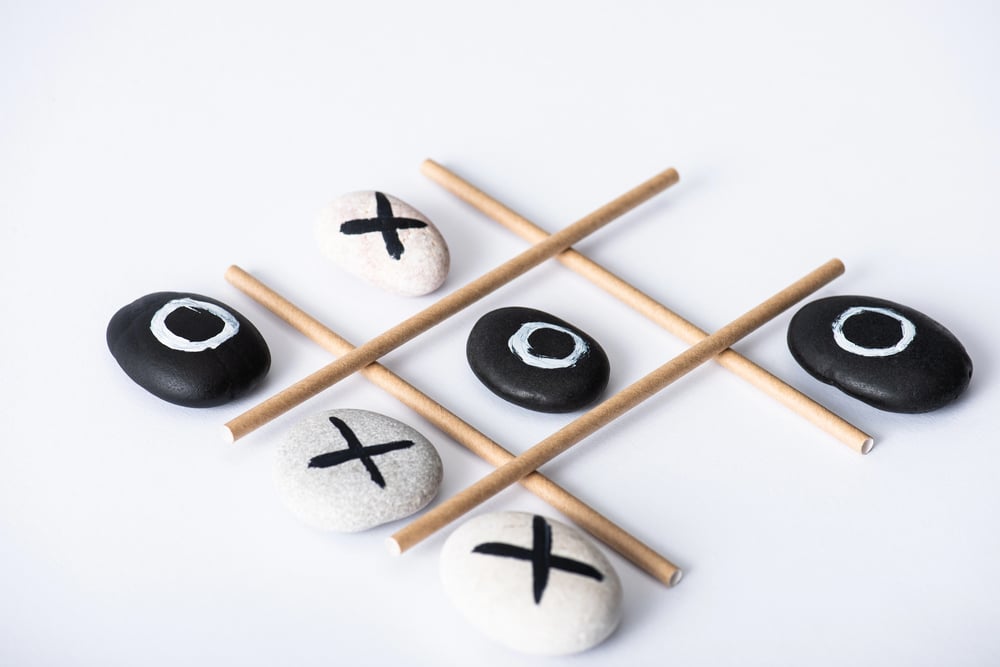
Romans played a version called Terni Lapilli, and the game appears in various forms across many ancient cultures. While most games end in a draw between experienced players, tic-tac-toe remains a perfect introduction to strategic thinking for children.
The simplicity that makes it somewhat boring for adults is exactly what makes it ideal for teaching basic game concepts.
Senet
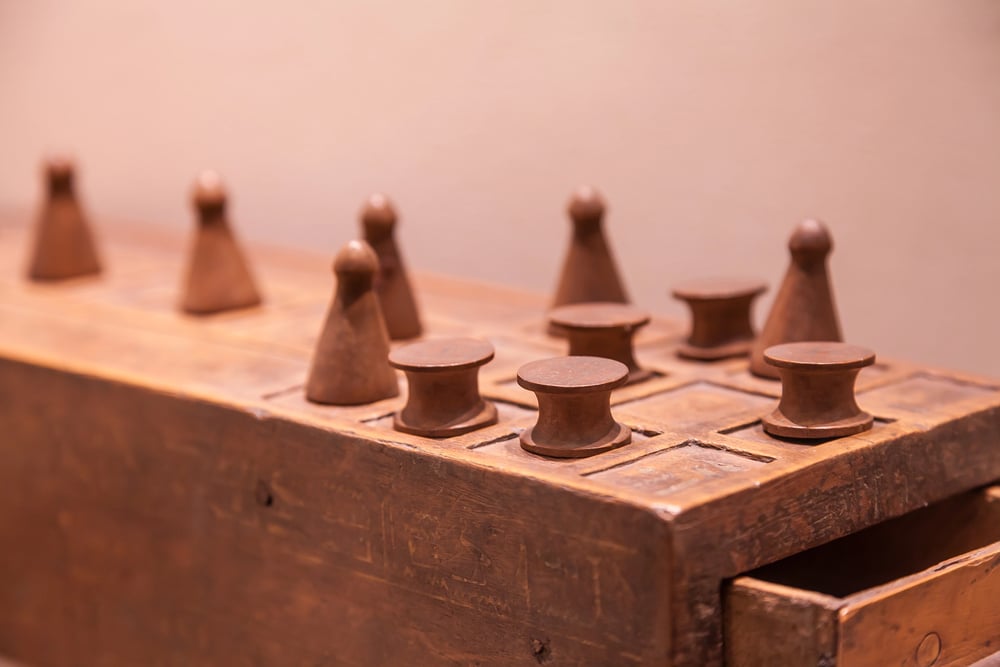
This ancient Egyptian game was so important that game boards were buried with pharaohs for entertainment in the afterlife. Archaeologists have found Senet sets in King Tutankhamun’s tomb and many other royal burials.
While the exact rules have been lost to time, modern reconstructions based on ancient paintings and texts allow people to experience this 5,000-year-old game today.
Pachisi
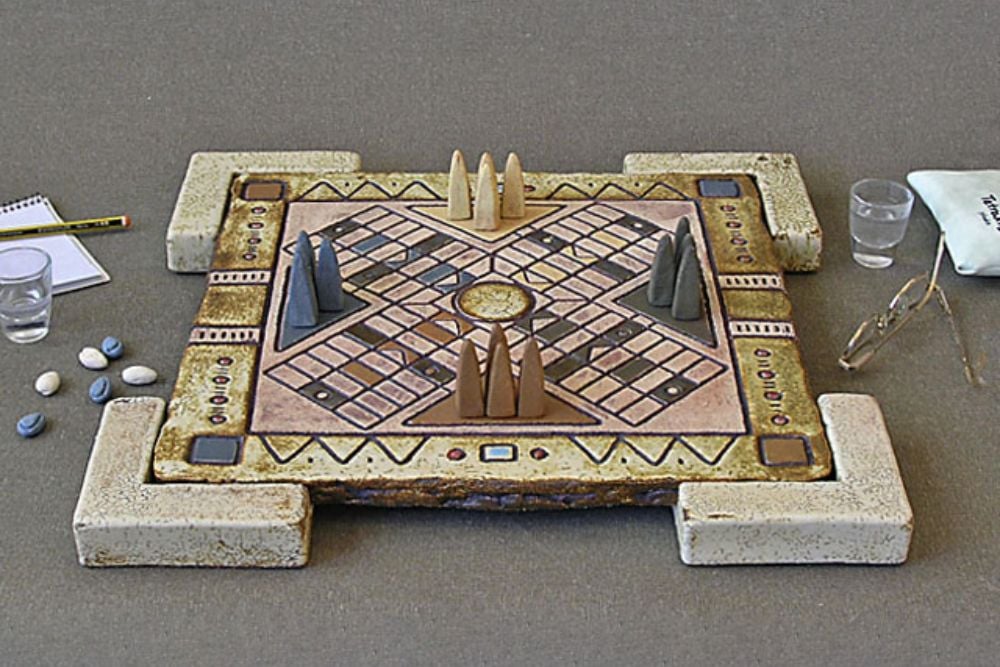
Known as the national game of India, Pachisi has been played for over 1,500 years. The Mughal Emperor Akbar famously played human Pachisi using court ladies as pieces on a giant marble board that still exists today.
The game inspired the popular Western version called Parcheesi, though traditionalists prefer the original Indian rules and cross-shaped board.
Liubo

This ancient Chinese game was popular during the Han Dynasty over 2,000 years ago. Players moved pieces around a square board with a distinctive TLV pattern while using divination sticks instead of dice.
Though it fell out of favor for centuries, modern game enthusiasts have reconstructed Liubo based on archaeological finds and ancient texts, bringing this cosmic game back to life.
Royal Game of Ur
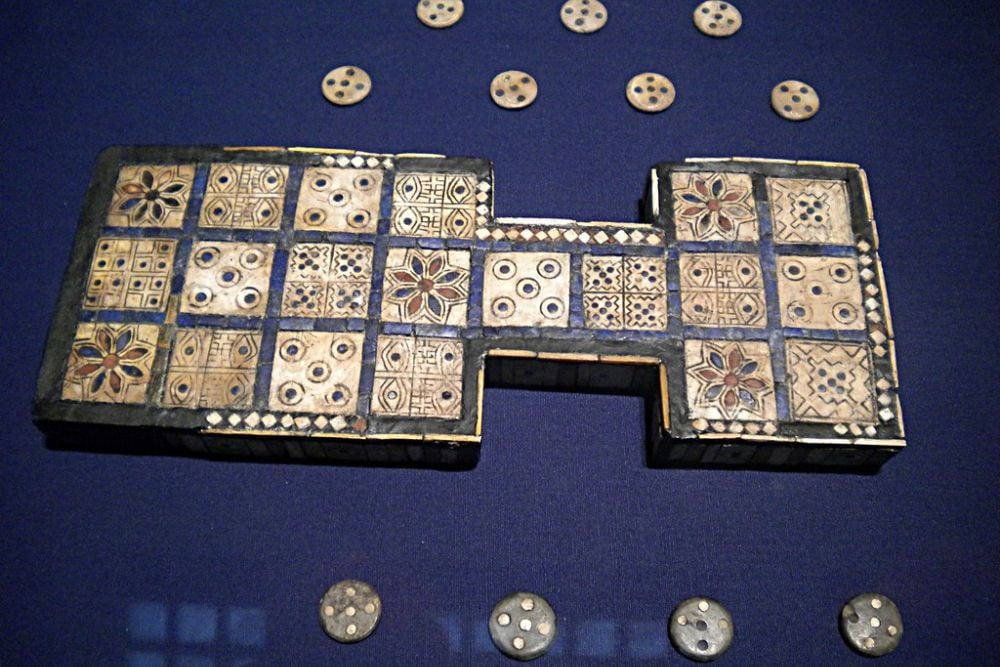
Discovered in ancient Mesopotamian tombs, this 4,500-year-old race game predates Monopoly by several millennia. Players move pieces around a distinctive flower-shaped board using pyramid-shaped dice.
The game gained new popularity after a 1980s recreation, and you can now find modern versions that stay true to the ancient Sumerian rules.
Patolli

The Aztecs and other Mesoamerican civilizations played this cross-shaped race game with beans as dice. Spanish conquistadors were fascinated by Patolli, noting how seriously the Aztecs took their gaming sessions.
Modern reconstructions allow people to experience this pre-Columbian game, though thankfully without the human sacrifice that sometimes accompanied high-stakes matches in ancient times.
Hnefatafl
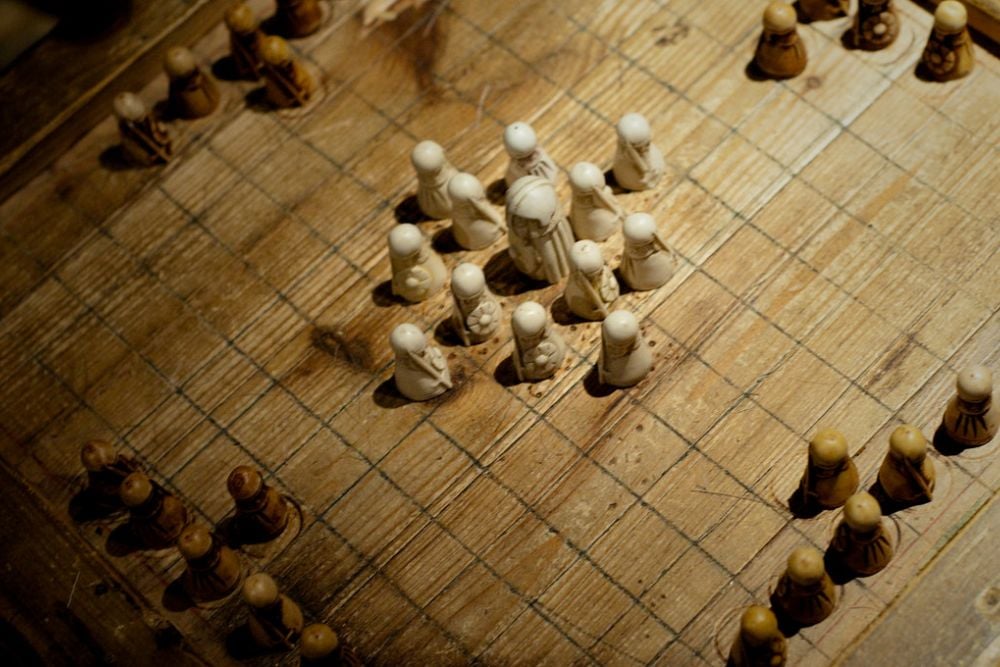
Vikings and other Germanic peoples played this asymmetrical strategy game where one player defends a king while the other tries to capture him. The game reflects the warrior culture of its players—it’s all about tactical positioning and bold moves.
Modern historical reenactment groups have revived Hnefatafl, and it’s gaining popularity among strategy game enthusiasts who appreciate its unique mechanics.
Alquerque

This Spanish game is the direct ancestor of modern checkers, played on a board with intersecting lines rather than squares. Pieces jump over opponents to capture them, but the diagonal movement pattern creates different strategic possibilities than regular checkers.
Alquerque tournaments still happen in parts of Spain, keeping this medieval tradition alive.
Ludus Latrunculorum
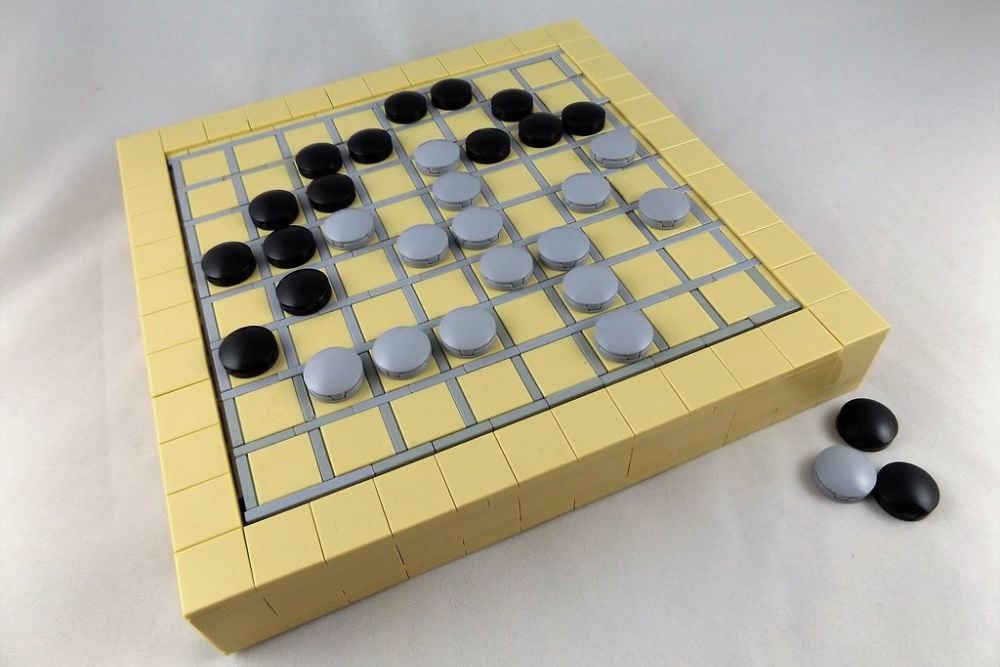
Roman soldiers played this military strategy game to sharpen their tactical skills between battles. Often called ‘Roman Chess,’ it involved moving pieces to capture territory and eliminate opponents.
Modern reconstructions based on ancient writings show a game that’s more complex than checkers but simpler than chess, perfect for players who want historical authenticity with engaging gameplay.
Fox and Geese
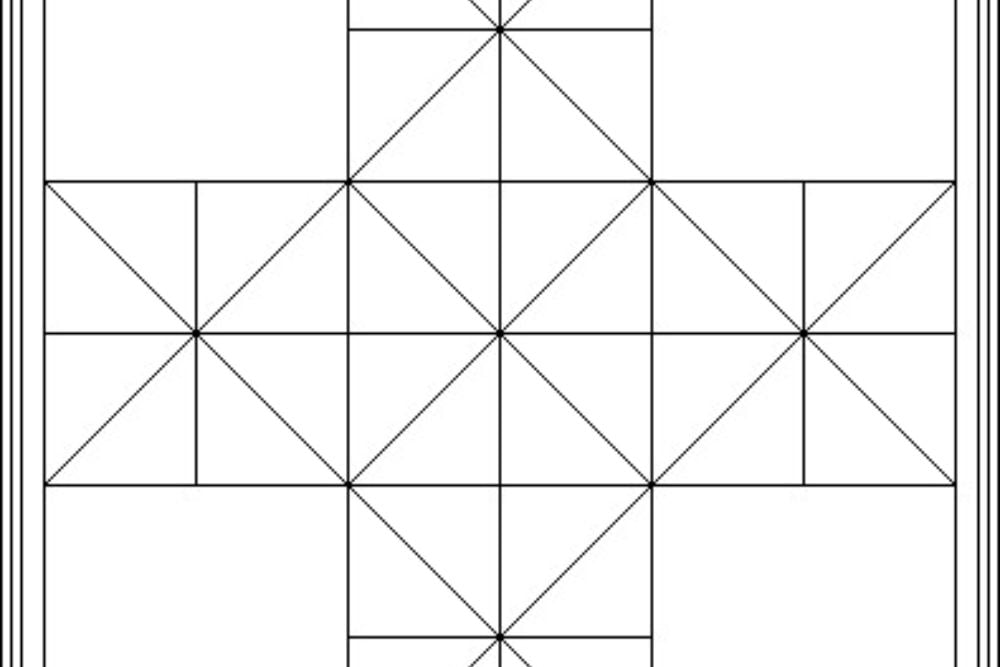
This medieval hunting game pits one fox against multiple geese in an asymmetrical battle of wits. The fox tries to capture the geese while they attempt to trap it in a corner.
Different regions developed their own versions with varying board sizes and rules, and the game remains popular among folk game enthusiasts who appreciate its simple yet tense gameplay.
From Ancient Halls to Modern Tables
These games have survived wars, technological revolutions, and massive cultural shifts because they offer something timeless—the joy of mental competition and social interaction. While ancient players might be amazed by our modern gaming devices, they’d immediately recognize the satisfaction of a well-planned move or the tension of a close match.
The boards may be mass-produced plastic instead of hand-carved wood, but the fundamental human pleasure of outsmarting an opponent remains exactly the same. In our digital age, these ancient games remind us that the best entertainment often comes from the simplest tools: a board, some pieces, and another person willing to play.
More from Go2Tutors!

- The Romanov Crown Jewels and Their Tragic Fate
- 13 Historical Mysteries That Science Still Can’t Solve
- Famous Hoaxes That Fooled the World for Years
- 15 Child Stars with Tragic Adult Lives
- 16 Famous Jewelry Pieces in History
Like Go2Tutors’s content? Follow us on MSN.



