16 Ancient Buildings Over 2000 Years Old
Standing before an ancient structure that has weathered over two millennia feels like touching eternity itself. These remarkable buildings have witnessed the rise and fall of empires, survived countless wars, natural disasters, and the relentless march of time. Each stone and beam tells stories of civilizations that mastered engineering and artistry long before modern technology existed.
What makes these structures even more extraordinary is that many remain functional today, still serving their original purposes or welcoming visitors from around the world. Their survival speaks to both exceptional craftsmanship and the dedication of countless generations who preserved them. Here is a list of 16 ancient buildings that have stood for over 2,000 years — monuments to human achievement that continue to defy time.
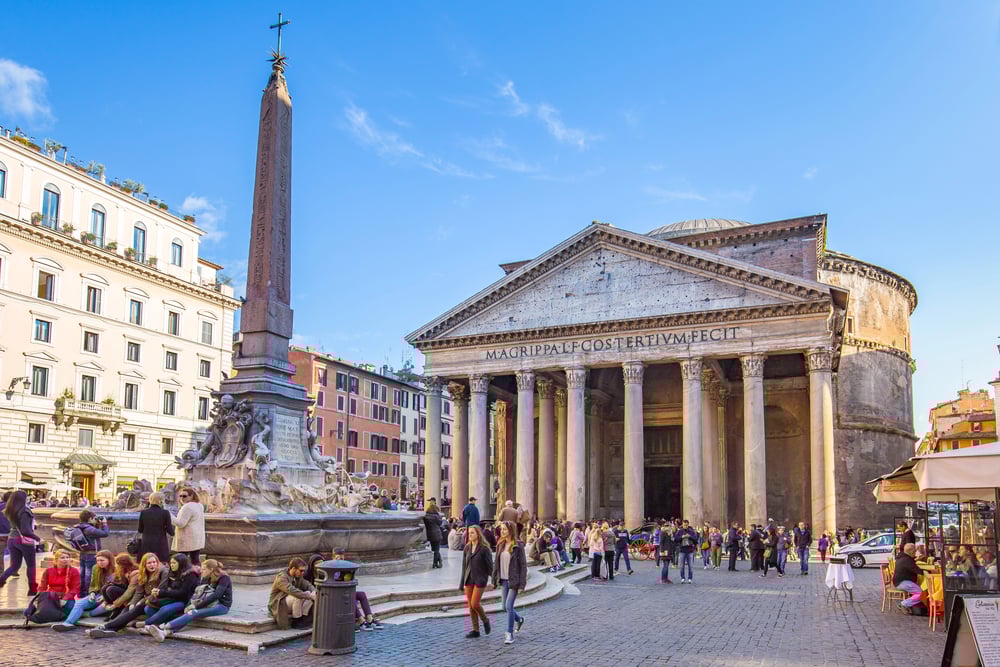
Pantheon
— Photo by ixuskmitl@hotmail.com
Rome’s magnificent Pantheon has stood virtually unchanged since Emperor Hadrian rebuilt it around 126 AD — making it nearly 1,900 years old. The massive concrete dome remains the world’s largest unreinforced concrete dome, showcasing Roman engineering prowess that wasn’t matched for over a millennium.
Great Wall of China
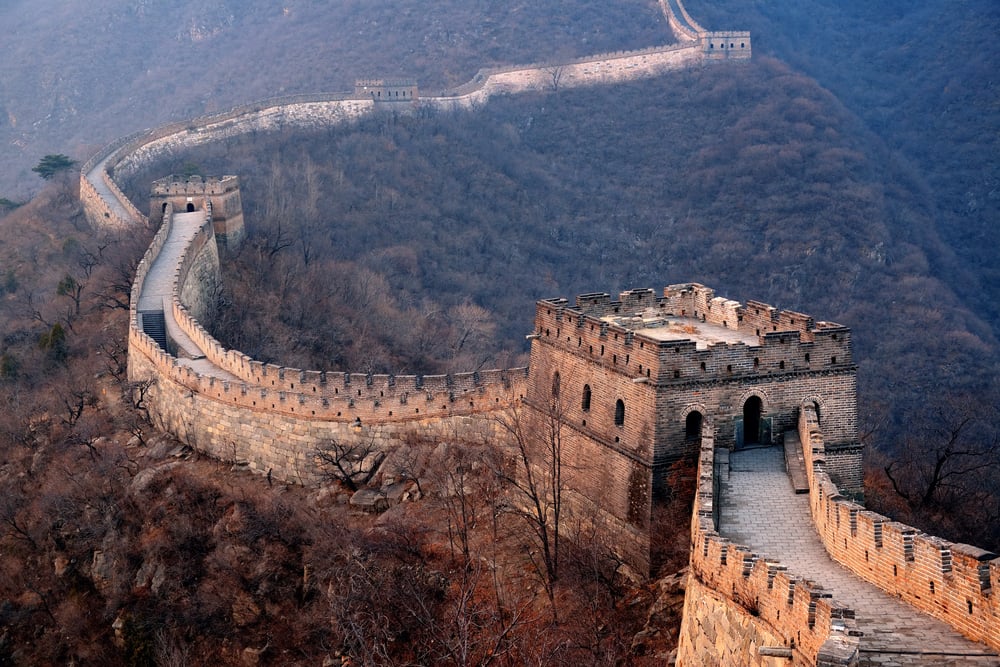
While various wall sections span different periods, the earliest defensive walls date back over 2,700 years — with major construction occurring during the Qin Dynasty around 220 BC. This massive fortification system stretches over 13,000 miles across northern China, representing one of humanity’s most ambitious construction projects.
Petra Treasury

Jordan’s iconic Al-Khazneh, carved directly into rose-colored sandstone cliffs by the Nabataeans around 100 BC, has mesmerized visitors for over 2,100 years. This elaborate facade — standing 130 feet tall — served as either a tomb or a temple while showcasing incredible precision in rock-cutting techniques.
Colosseum

— Photo by IgorVetushko
Rome’s legendary amphitheater opened in 80 AD and hosted gladiatorial contests for over 400 years — entertaining crowds of up to 80,000 spectators with elaborate games. The four-story structure featured advanced engineering including elevators, trapdoors, and a complex system for flooding the arena for naval battles.
Tower of London

London’s formidable fortress began with William the Conqueror’s White Tower around 1078, though the complex expanded over centuries into the massive castle standing today. This UNESCO World Heritage site has served as a royal palace, prison, armory, and treasury — housing the Crown Jewels for over 600 years.
Angkor Wat

Cambodia’s stunning temple complex was constructed in the early 12th century as a Hindu temple dedicated to Vishnu — later transitioning to Buddhist use. The massive structure covers over 400 acres, making it the largest religious monument in the world with intricate bas-reliefs depicting epic Hindu stories.
Machu Picchu

This remarkable Incan citadel, built around 1450 AD high in Peru’s Andes Mountains, remained hidden from Spanish conquistadors and wasn’t revealed to the outside world until 1911. The precisely fitted stone construction demonstrates incredible engineering skill — with blocks cut so perfectly that not even a knife blade can fit between them.
Hagia Sophia

— Photo by antonaleksenko82.gmail.com
Istanbul’s architectural marvel was completed in 537 AD as the world’s largest cathedral — serving as the crowning achievement of Byzantine architecture for nearly 1,000 years. The massive dome seemingly floats above the interior space, creating an ethereal effect that influenced religious architecture across both Christian and Islamic traditions.
Borobudur

Indonesia’s magnificent Buddhist temple was completed around 825 AD — featuring nine stacked platforms crowned by a central dome and decorated with over 2,600 relief panels. This massive mandala in stone represents the Buddhist cosmology while serving as a pilgrimage site where visitors ascend through symbolic realms toward enlightenment.
Chichen Itza
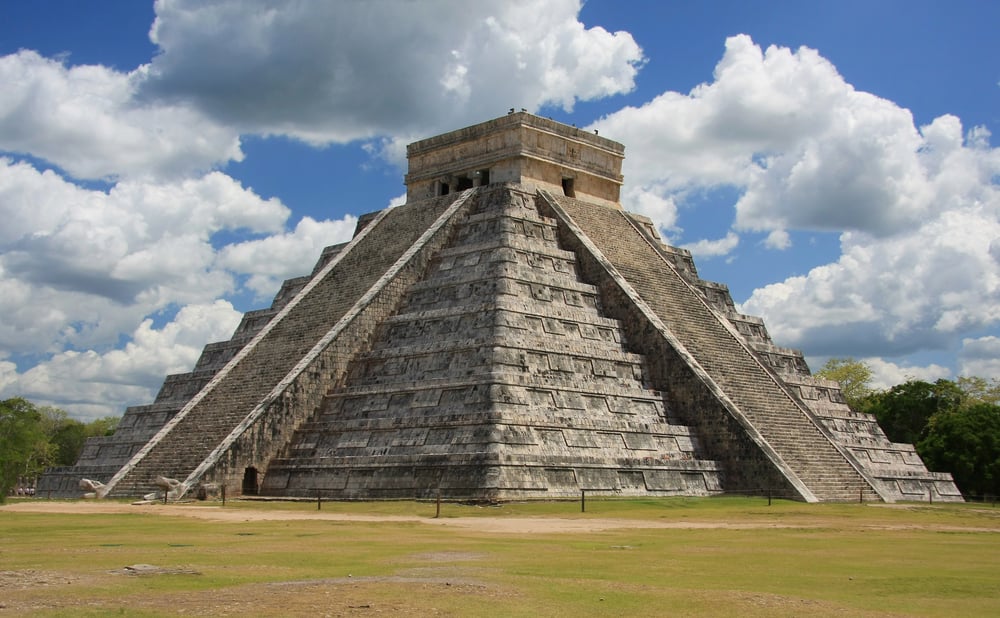
Mexico’s famous Maya city flourished between 600-1200 AD — with the iconic El Castillo pyramid demonstrating sophisticated astronomical knowledge through its precise solar alignments. During spring and autumn equinoxes, shadows create the illusion of a serpent descending the pyramid’s stairs, showcasing the Maya’s advanced understanding of celestial mechanics.
Pompeii

Though destroyed by Mount Vesuvius in 79 AD, Pompeii’s remarkably preserved buildings provide an unparalleled snapshot of Roman daily life over 1,900 years ago. Volcanic ash created a natural time capsule, preserving everything from elaborate villas to humble bakeries with loaves still in their ovens.
Newgrange
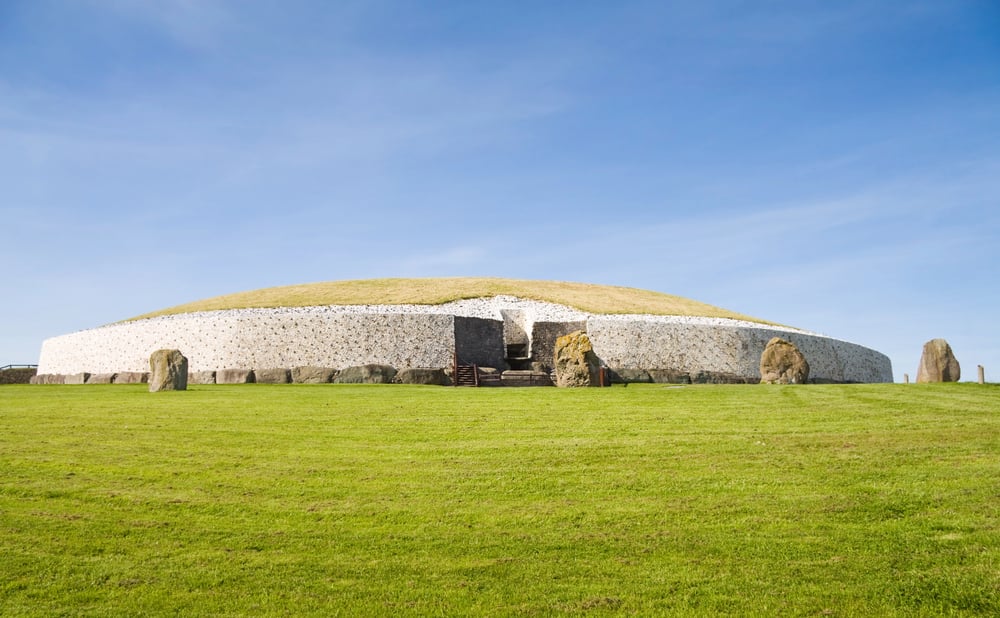
Ireland’s mysterious passage tomb predates Stonehenge and the Egyptian pyramids by several centuries, having been constructed around 3200 BC over 5,000 years ago. During the winter solstice, sunlight penetrates the narrow passage to illuminate the inner chamber in a spectacular display that still occurs today exactly as intended.
Stonehenge
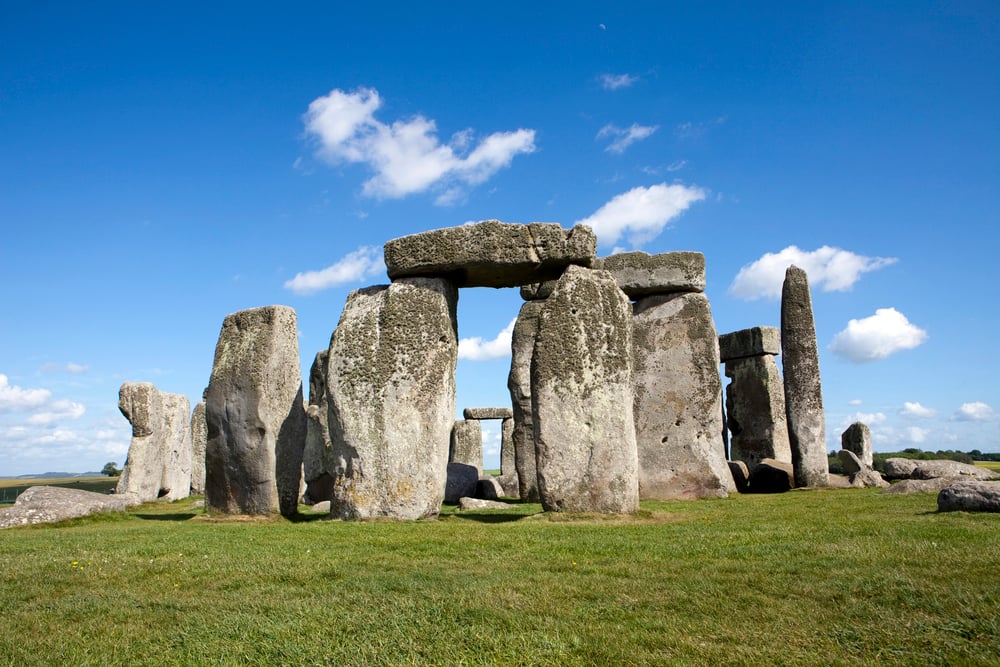
England’s iconic stone circle has puzzled visitors for over 4,500 years, with its massive trilithons and precise astronomical alignments suggesting sophisticated prehistoric knowledge. Recent discoveries reveal Stonehenge as part of a larger sacred landscape including burial mounds, ceremonial pathways, and other mysterious structures.
Parthenon

Athens’ crowning architectural achievement was completed in 438 BC as a temple to Athena, showcasing the golden age of classical Greek civilization. The temple’s perfect proportions and optical illusions create an appearance of straight lines where none actually exist, demonstrating Greek mastery of mathematical principles in architecture.
Karnak Temple Complex

Egypt’s vast religious complex at Karnak developed over 2,000 years beginning around 2055 BC, eventually becoming the largest ancient religious site in the world. The complex includes the famous Great Hypostyle Hall with 134 massive columns, each capable of holding 50 people in its capital.
Abu Simbel

Pharaoh Ramesses II ordered these massive rock-cut temples around 1264 BC to demonstrate Egyptian power along the Nubian border and honor both himself and his queen Nefertari. The main temple’s facade features four colossal statues of Ramesses, each standing 65 feet tall and carved directly from the cliff face.
Echoes Across Centuries

These extraordinary survivors connect us directly to ancestors who shared the same human drives for beauty, meaning, and permanence that motivate us today. Each structure represents not just individual achievement but collective effort spanning generations of builders, craftsmen, and preservationists who ensured these monuments would outlast their creators. As we face our own challenges with climate change, urban development, and cultural preservation, these ancient buildings remind us that our greatest accomplishments often come from thinking beyond our own lifetimes and building for the ages.
More from Go2Tutors!

- 16 Historical Figures Who Were Nothing Like You Think
- 12 Things Sold in the 80s That Are Now Illegal
- 15 VHS Tapes That Could Be Worth Thousands
- 17 Historical “What Ifs” That Would Have Changed Everything
- 18 TV Shows That Vanished Without a Finale
Like Go2Tutors’s conte



