16 Fascinating Historical Artifacts Stored in the Library of Congress
The Library of Congress holds more than books. Behind its neoclassical facade and reading rooms lies a vault of American memory that extends far beyond printed pages.
Here, tucked into climate-controlled storage and carefully catalogued archives, rest the physical remnants of moments that shaped a nation. Some artifacts arrived through deliberate acquisition, others through happenstance, but each carries weight that transcends its material form.
These objects don’t just document history — they preserve the texture of lived experience in ways that written accounts cannot. A letter bears the pressure of its writer’s hand.
A photograph captures light that once fell on faces now gone. A recording holds breath that was drawn centuries ago.
Together, they form a collection that rivals any museum, yet remains largely hidden from public view.
Walt Whitman’s Notebooks
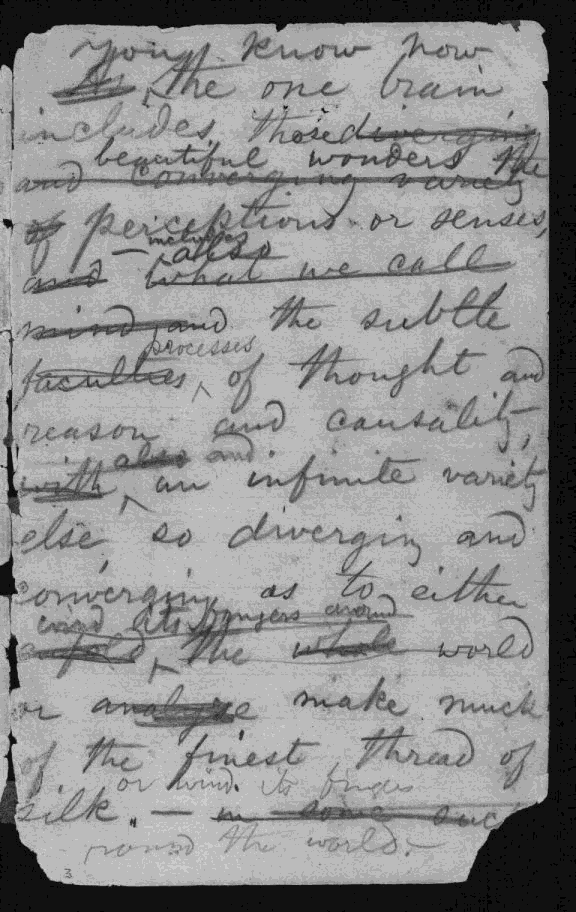
Whitman carried these small notebooks everywhere, scribbling fragments that would become “Leaves of Grass.” His handwriting sprawls across pages in different inks, showing how poems evolved over months and years. Some entries are crossed out so heavily the paper nearly tears.
The notebooks reveal Whitman’s process wasn’t romantic inspiration but stubborn revision. He’d return to the same phrase dozens of times, hunting for the right rhythm.
Lincoln’s Pocket Contents from the Night He Was Shot
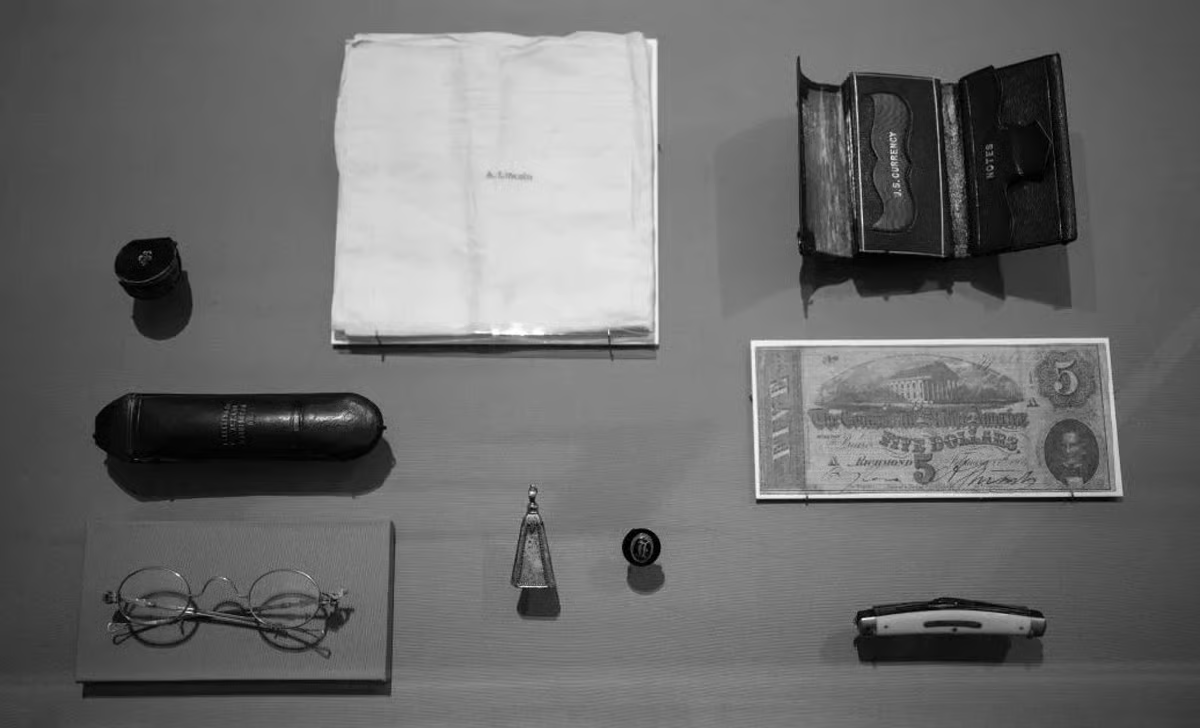
The contents of Lincoln’s pockets that night read like an inventory of interrupted life (theater ticket, handkerchief, a pair of spectacles in a silver case, and strangely, a Confederate five-dollar bill). But there’s something about seeing these ordinary objects — things he touched hours before his death — that makes the assassination feel immediate rather than historical.
The handkerchief still bears the monogrammed “A.L.” in his wife’s careful stitching, and you realize that even presidents carried tokens of domestic care. The spectacles are worn smooth where his fingers habitually adjusted them, a small gesture repeated thousands of times that somehow survived when the man didn’t.
And that Confederate bill remains a mystery: was it a curiosity, a reminder, or something else entirely? The objects don’t answer the question — they just hold it, the way artifacts do, keeping their secrets while revealing everything around them.
Alexander Graham Bell’s Voice on Wax
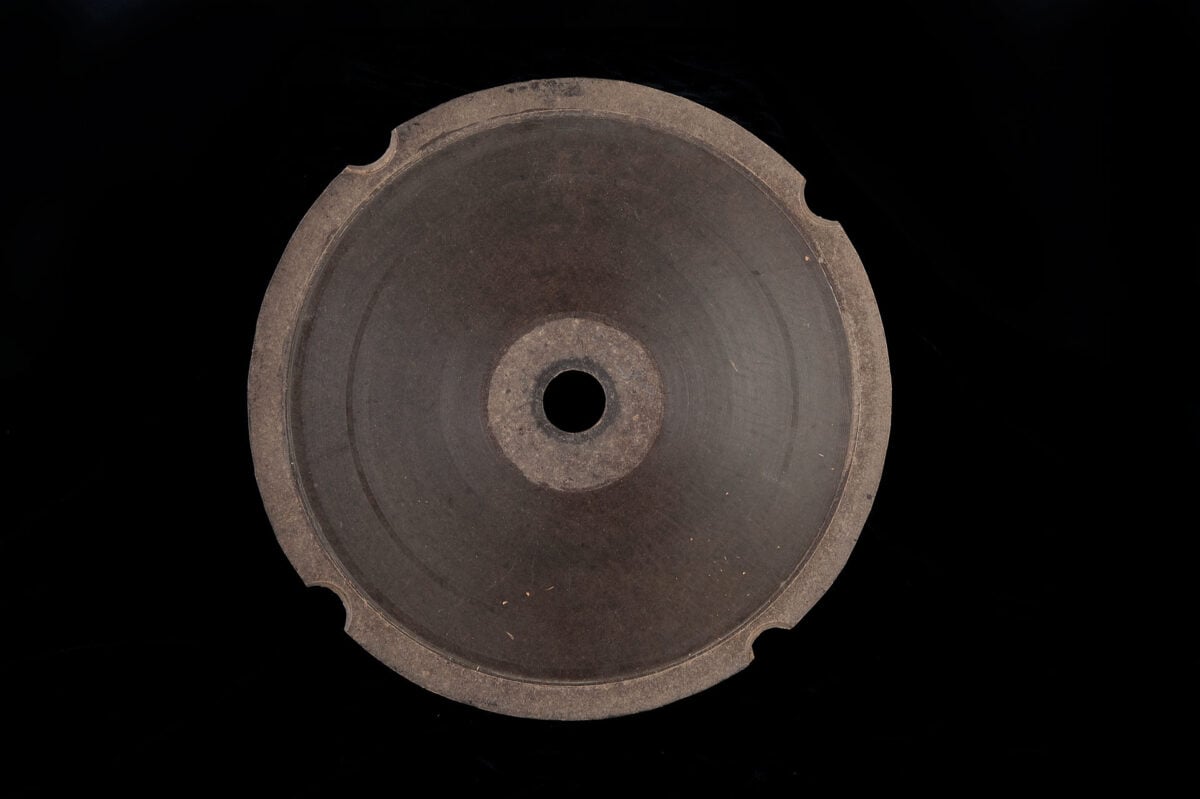
Bell’s voice exists on experimental wax cylinders from the 1880s. The quality wanes, but you can hear him speaking the date, testing the recording quality, occasionally laughing when the machine fails to capture his words properly.
These weren’t meant for posterity. Bell was troubleshooting.
The casual nature makes hearing his voice more unsettling than any formal recording could.
Susan B. Anthony’s Handcuffs
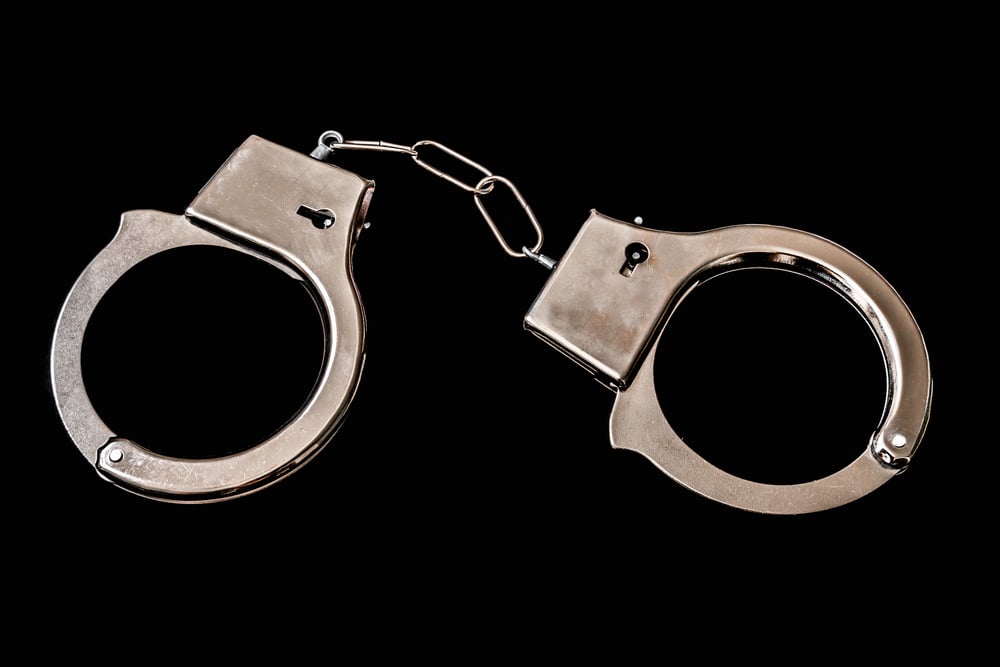
Anthony wore these steel cuffs after voting illegally in the 1872 presidential election — a calculated act of civil disobedience that landed her in federal court. The metal shows wear patterns from that day and subsequent arrests, small scratches that map moments when principle collided with law.
They’re surprisingly delicate for restraints, more decorative than brutal, which somehow makes them more pointed (as if the message was clear: even the gentlest chains remain chains). The lock mechanism still works, clicking shut with the same metallic finality Anthony heard when they closed around her wrists.
She refused to pay her hundred-dollar fine, preferring the moral weight of an unpaid debt to the compromise of compliance. These cuffs didn’t just restrain one woman’s hands — they became the physical symbol of a democracy that claimed to represent people it refused to let vote.
Babe Ruth’s Piano
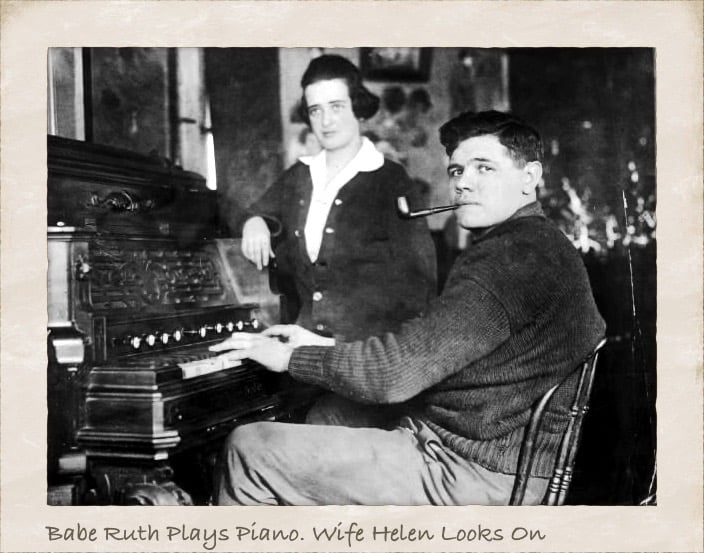
Ruth owned a baby grand piano that now sits in the Library’s collection. He couldn’t read music but played by ear, entertaining teammates and friends with popular songs of the day.
The piano bench is worn smooth where Ruth sat. His sheet music remains tucked inside, annotated in his handwriting with chord changes he figured out himself.
Clara Barton’s Civil War Nursing Kit
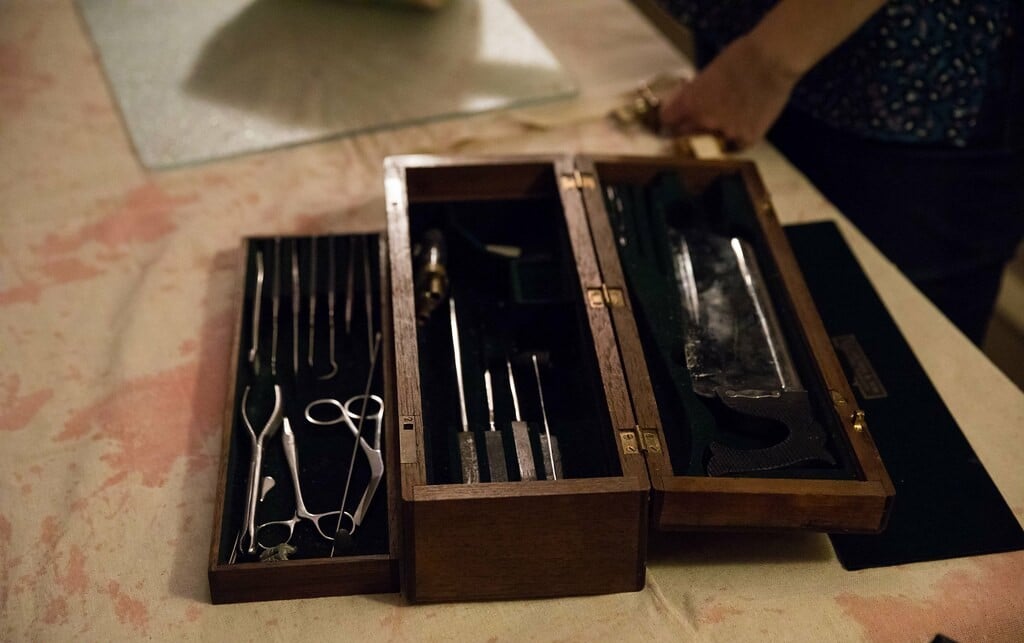
Inside Barton’s leather medical bag: morphine bottles with cork stoppers, bone needles for suturing, scissors dulled from cutting fabric and flesh, and small glass vials that once held chloroform. The leather shows water stains from field hospitals where rain leaked through canvas, and the brass fittings have turned green with age and exposure to the elements.
Some bottles still contain residue from medicines that were experimental then — compounds mixed in desperation when proper supplies ran short. The bag smells faintly of leather and something medicinal, though whether that’s memory or reality is impossible to say.
And there’s a small notebook inside, pages filled with names and symptoms in Barton’s precise handwriting, each entry representing a soldier whose face she remembered long after the war ended. So many entries.
The pages are soft from handling, as if she returned to them often, reading names like a rosary of the wounded.
Thomas Edison’s Last Breath
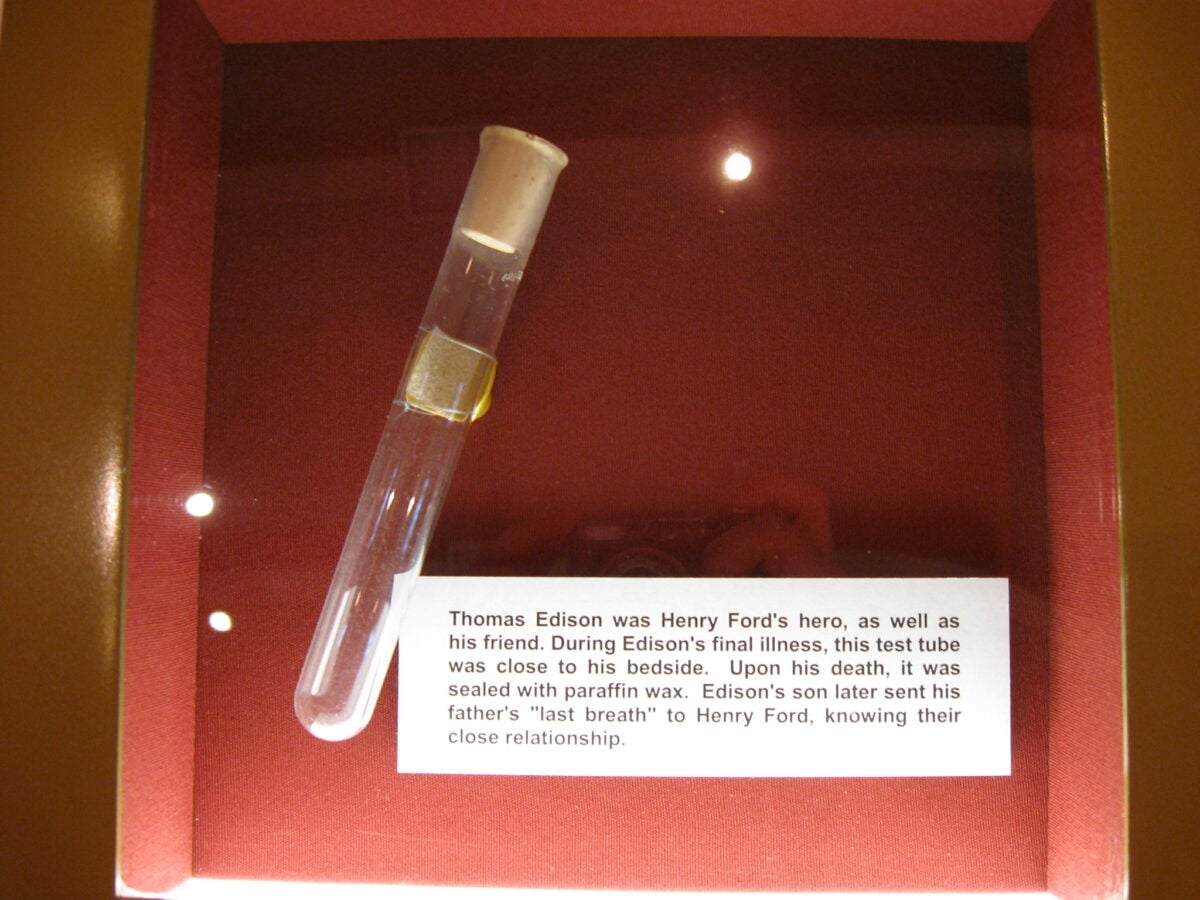
Edison’s son captured his father’s final breath in a glass tube, sealing it with wax while the inventor lay dying. The tube sits in a small wooden box, labeled in careful script with the date and time.
Whether any breath actually remains inside is unknowable. But the gesture speaks to something deeper about how we preserve what cannot be preserved.
Frederick Douglass’s Personal Library
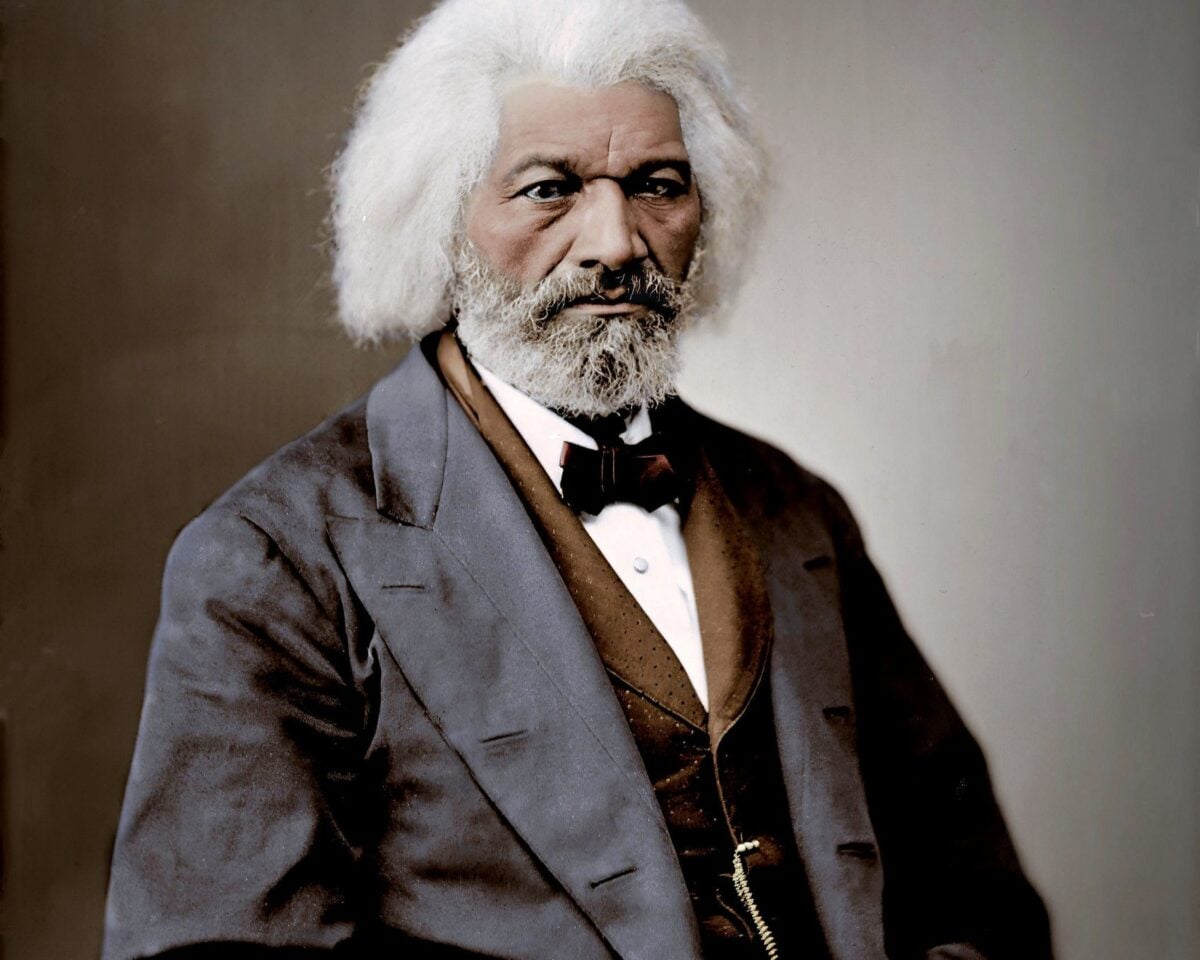
Douglass collected books the way other men collected land — as proof of territory claimed in a world that denied his right to occupy it. His personal library spans multiple languages, with margins filled in his careful handwriting, responses to arguments made by authors who never expected their ideas to be challenged by someone who’d lived slavery from the inside.
Greek philosophy sits next to contemporary political theory, Shakespeare next to abolition pamphlets, each volume bearing the weight of a mind that refused the limitations others tried to impose. The binding on many books is cracked from repeated reading, pages soft from turning, and there’s something profound about seeing which passages Douglass underlined, which arguments he found worth returning to.
His copy of the Constitution is particularly marked up, with amendments noted in different inks as the document evolved — as if he was tracking democracy’s slow, stubborn progress toward its own stated ideals. These weren’t just books to him — they were weapons, tools, proof of capacity in a society that questioned his humanity.
Rosa Parks’s Personal Papers
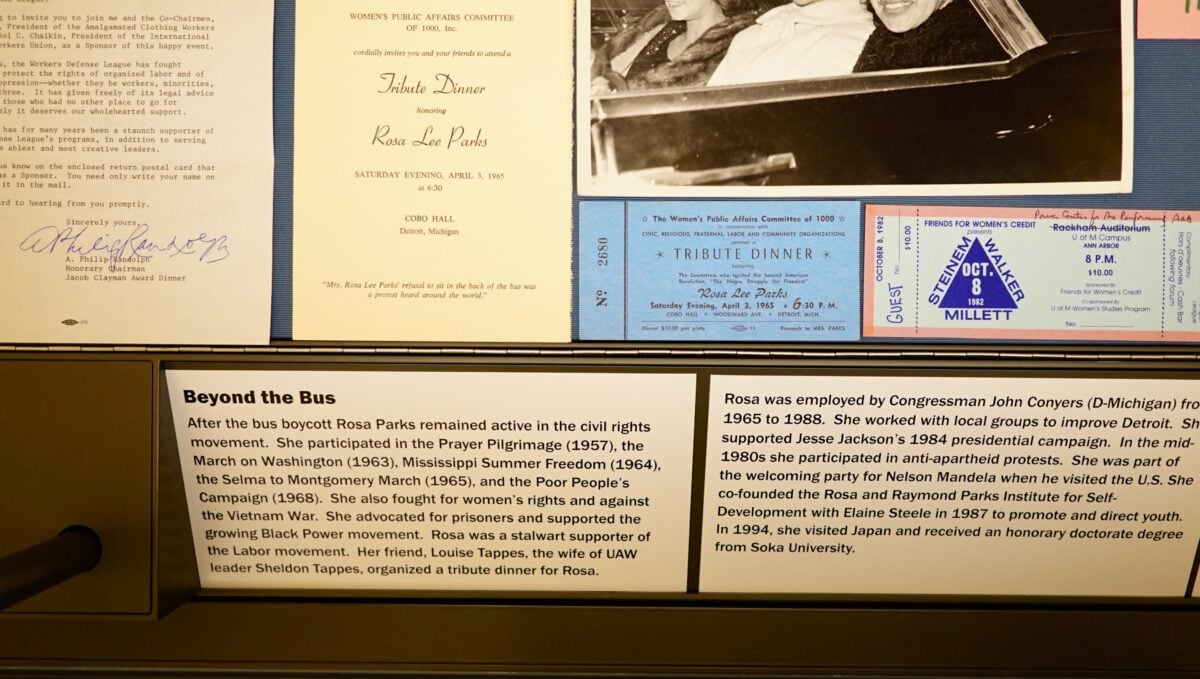
Parks kept meticulous records of her activism, far beyond the bus boycott that made her famous. Her files document decades of work with the NAACP, correspondence with other civil rights leaders, and detailed accounts of incidents that never made headlines.
The papers reveal Parks as a strategic thinker, not just a symbol. Her arrest wasn’t spontaneous — it was calculated, planned, and part of a larger campaign she helped organize.
Woody Guthrie’s Guitar Case Stickers
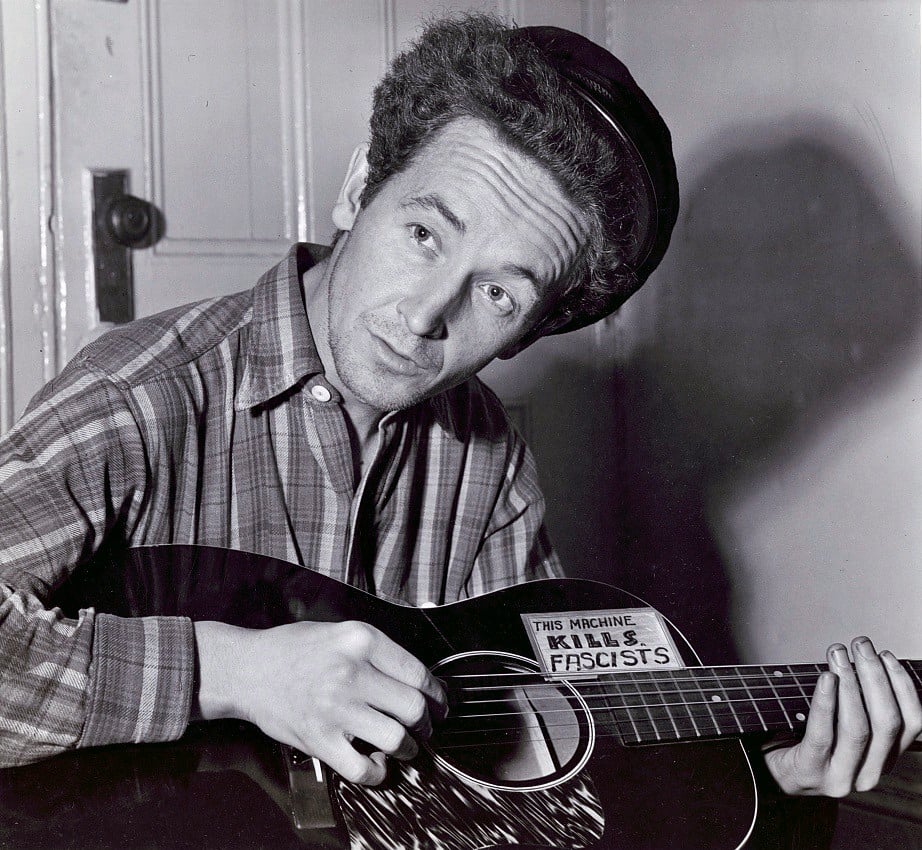
Guthrie’s guitar case tells its own story through dozens of travel stickers — hotels, train stations, bus terminals from across Depression-era America. Each sticker marks a place where he played, slept, or caught a ride to the next town.
The case itself is battered from constant travel, corners reinforced with tape, handle rewrapped with cord where the original leather wore through. Inside the lid, Guthrie wrote song lyrics in pencil, fragments that became famous later but started as ideas scribbled during long bus rides.
You can trace his routes by the stickers: Oklahoma to California, New York to Texas, up and down the coasts and across the plains. Some stickers have partially peeled off, leaving ghostly outlines and half-visible letters that suggest places he’d rather forget.
But others are carefully preserved under layers of clear tape, destinations worth remembering. And there, in the corner, his most famous declaration scrawled in marker: “This machine kills fascists” — though on the guitar case, the words are faded from handling, the political slogan worn smooth by a working musician’s hands.
Margaret Mead’s Field Notes
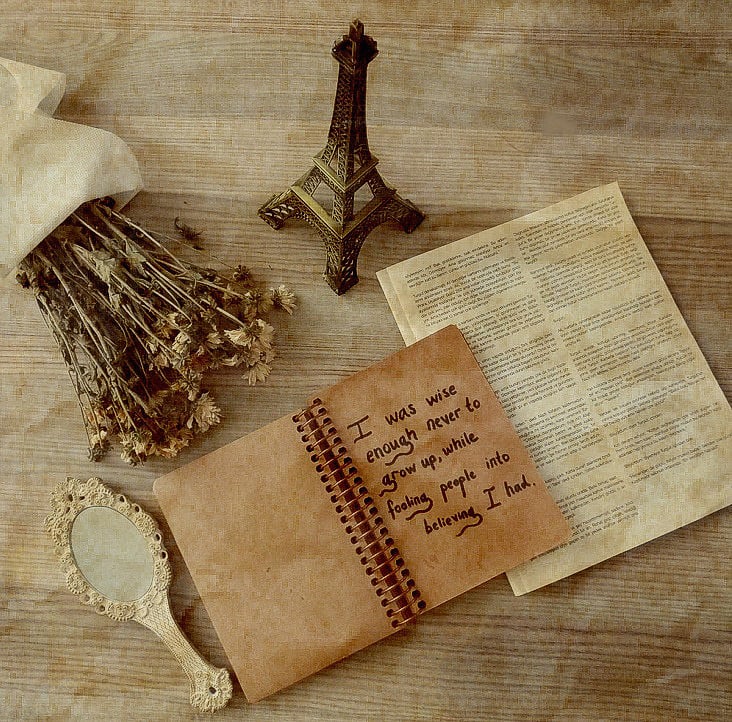
Mead’s handwritten observations from Samoa fill dozens of notebooks, written in various colored inks depending on what pen she had available. Her handwriting changes throughout the pages, becoming more hurried when recording conversations, more careful when analyzing behavior patterns.
The notebooks capture anthropology being invented in real time. Mead was creating methodology as she worked, figuring out how to study culture without destroying what she observed.
Wright Brothers’ Wind Tunnel Data
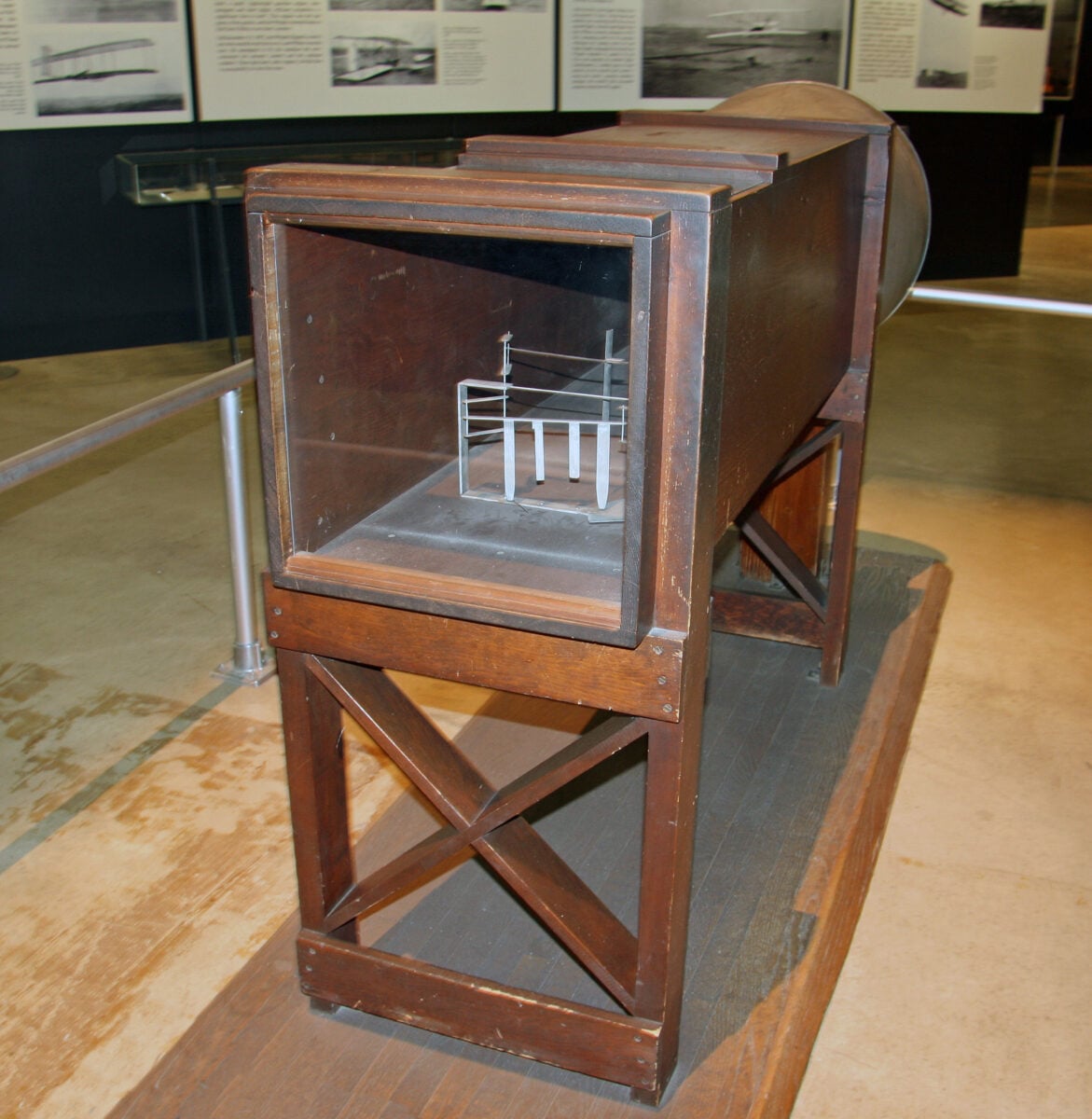
Before Kitty Hawk, the Wright brothers built a wind tunnel in their bicycle shop and methodically tested wing shapes, recording lift and drag measurements for hundreds of configurations. Their data sheets are filled with numbers, sketches, and calculations that solved the problem of flight through pure persistence.
The paper is brown with age, corners soft from handling, but the engineering is still sound — other aviation pioneers used these same calculations for decades after. You can see where they made corrections, erasing measurements that didn’t match their predictions, refining their understanding one test at a time.
The breakthrough wasn’t inspiration — it was better data than anyone else had. And there, in margins filled with calculations, occasional sketches of birds in flight, as if they kept returning to nature for confirmation that their mathematics matched reality.
Their systematic approach turned flight from dream to engineering problem, from miracle to solved equation.
Martin Luther King Jr.’s Personal Correspondence
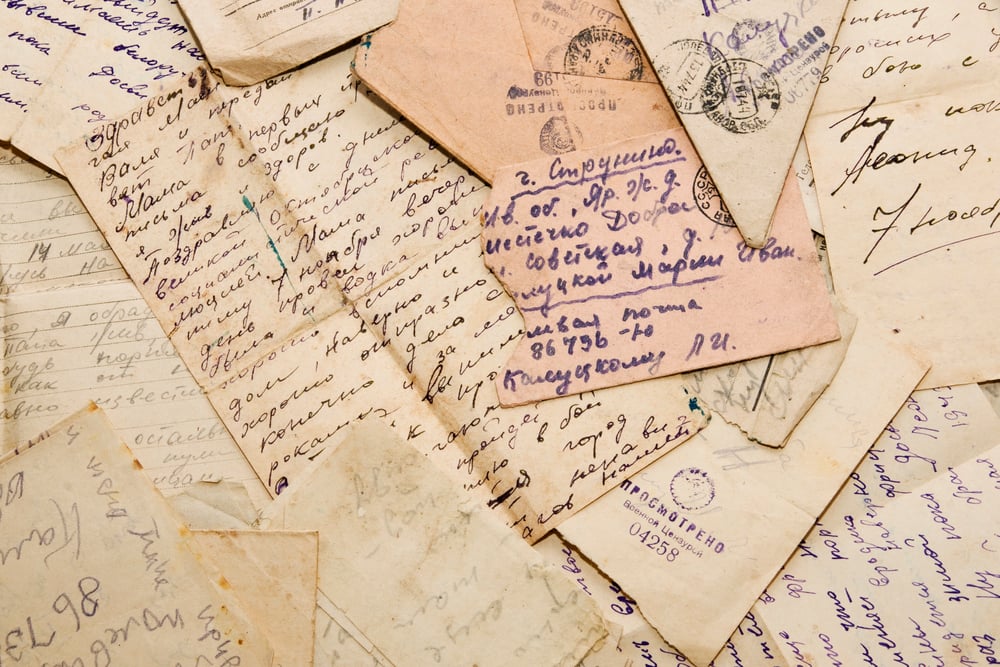
King’s letters reveal the loneliness of leadership in ways his public speeches never could. He wrote to friends about exhaustion, doubt, and the weight of representing a movement that demanded perfection from imperfect humans.
Some letters were never sent, drafts that show him working through arguments he’d later make famous, testing ideas on paper before speaking them to crowds. Reading these private thoughts makes his public courage more remarkable, not less.
He felt fear and proceeded anyway.
Thurgood Marshall’s Legal Briefs
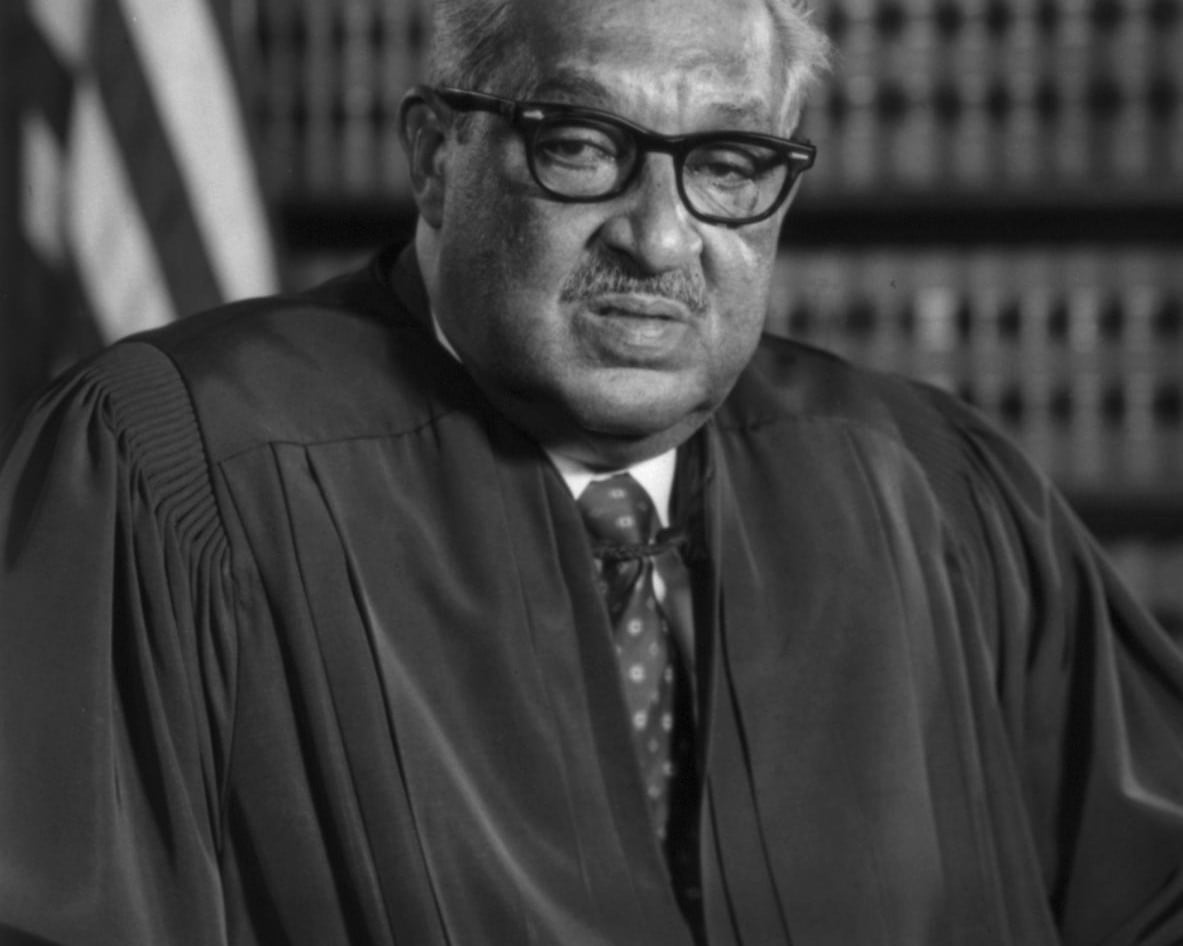
Marshall’s handwritten notes in case margins show a legal mind dissecting precedent and building arguments that would dismantle segregation. His copy of the Constitution is annotated heavily, with cross-references to cases that supported his interpretation of equal protection under law.
These aren’t just legal documents — they’re battle plans. Marshall was engineering the legal strategy that would end Jim Crow, one carefully constructed argument at a time.
Eleanor Roosevelt’s Appointment Books
Roosevelt scheduled her days down to fifteen-minute intervals, cramming meetings, speeches, travel, and personal obligations into calendars that read like endurance tests. Her handwriting gets smaller as days fill up, notes squeezed into margins when unexpected commitments arise.
The books cover decades of public service, showing how she balanced competing demands while redefining what a First Lady could accomplish. Some entries are crossed out and rescheduled, others marked with exclamation points or question marks, small signals of priority and uncertainty that humanize someone history remembers as unflappable.
But perhaps most telling are the personal notations scattered throughout — birthdays remembered, friends’ concerns noted, family obligations that couldn’t be postponed even when history was calling. She didn’t choose between public and private life — she found ways to honor both, though the schedule suggests the cost was sleep, rest, and any moment that wasn’t accounted for in advance.
Langston Hughes’s Jazz Records
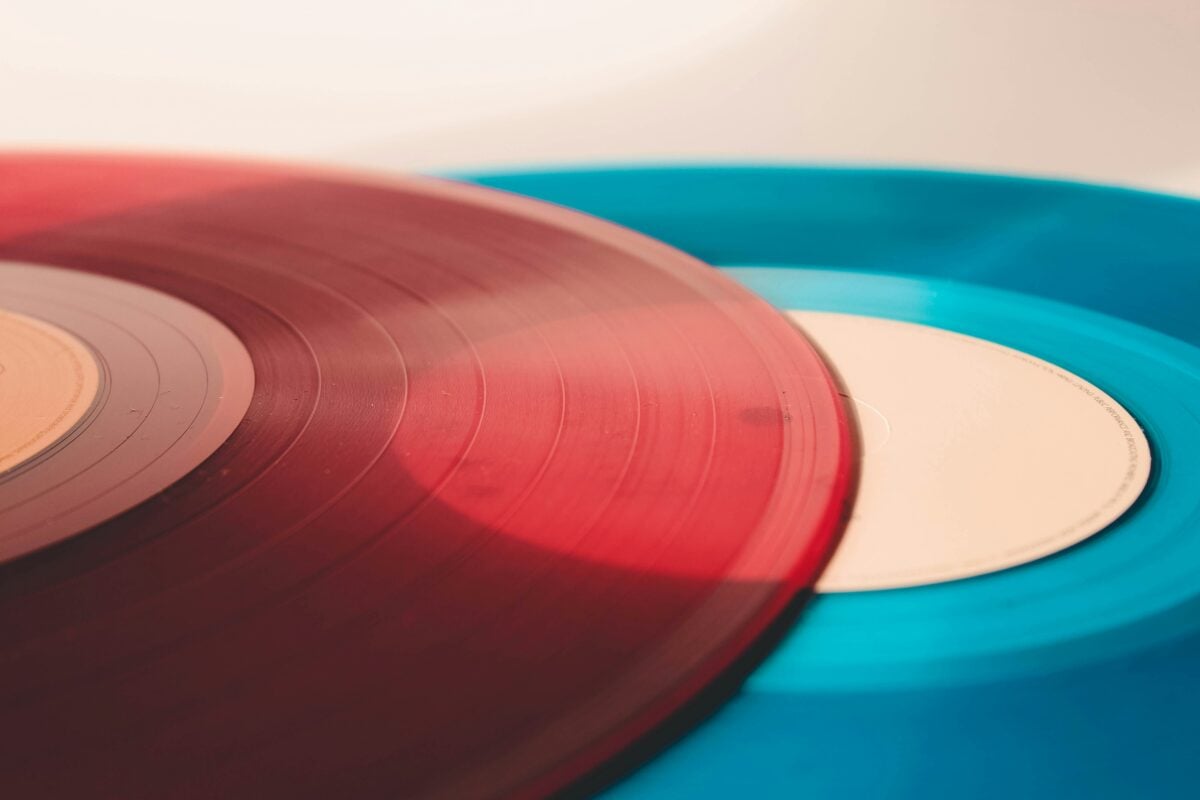
Hughes collected jazz albums obsessively, building a library of recordings that influenced his poetry’s rhythm and language. His collection spans decades, from early Louis Armstrong to bebop pioneers, each album worn from repeated listening.
Hughes wrote liner notes on many of the sleeves, connecting musical phrases to poetic techniques. His poetry wasn’t just influenced by jazz — it was jazz, translated into words that swung.
A Treasure Trove of American Memory
These artifacts don’t just preserve history — they preserve the texture of moments when history was still happening. Each object carries the weight of human hands, the mark of decisions made in real time without the benefit of hindsight.
Together, they form a collection that rivals any museum, yet most remain hidden in climate-controlled storage, available primarily to researchers willing to navigate bureaucratic procedures and appointment schedules. But maybe that’s fitting. These aren’t objects meant for casual viewing — they’re fragments of lives lived with purpose, preserved for anyone curious enough to seek them out.
They wait in the dark, holding their stories, ready to speak to anyone willing to listen.
More from Go2Tutors!

- The Romanov Crown Jewels and Their Tragic Fate
- 13 Historical Mysteries That Science Still Can’t Solve
- Famous Hoaxes That Fooled the World for Years
- 15 Child Stars with Tragic Adult Lives
- 16 Famous Jewelry Pieces in History
Like Go2Tutors’s content? Follow us on MSN.