16 Incredible Migration Journeys of Wildlife
Every year, billions of animals embark on journeys that would challenge even the most seasoned human travelers. From tiny hummingbirds crossing vast oceans to massive whales navigating polar waters, these migrations represent some of nature’s most remarkable feats of endurance and navigation. Here’s a list of sixteen incredible migration journeys that showcase the extraordinary lengths animals will travel for survival, reproduction, and the changing seasons.
Arctic Tern
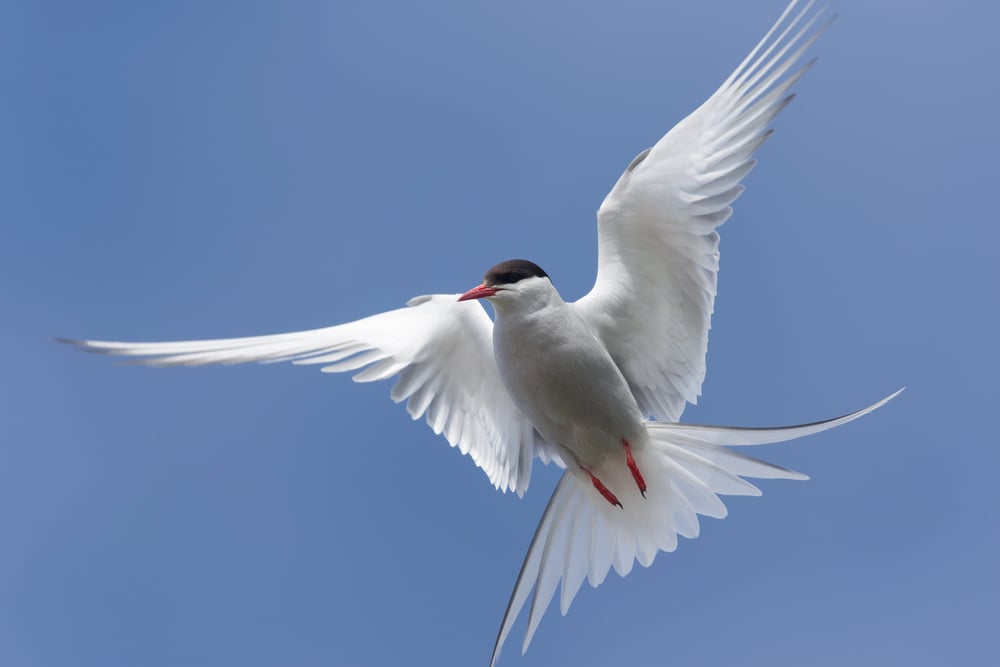
The Arctic tern holds the record for the longest migration on Earth, traveling roughly 44,000 miles annually from Arctic to Antarctic and back. These small seabirds experience two summers each year, following the sun across the globe in an endless pursuit of daylight.
Their journey takes them over every ocean and continent. Not bad for a bird that weighs less than four ounces.
Ruby-throated Hummingbird
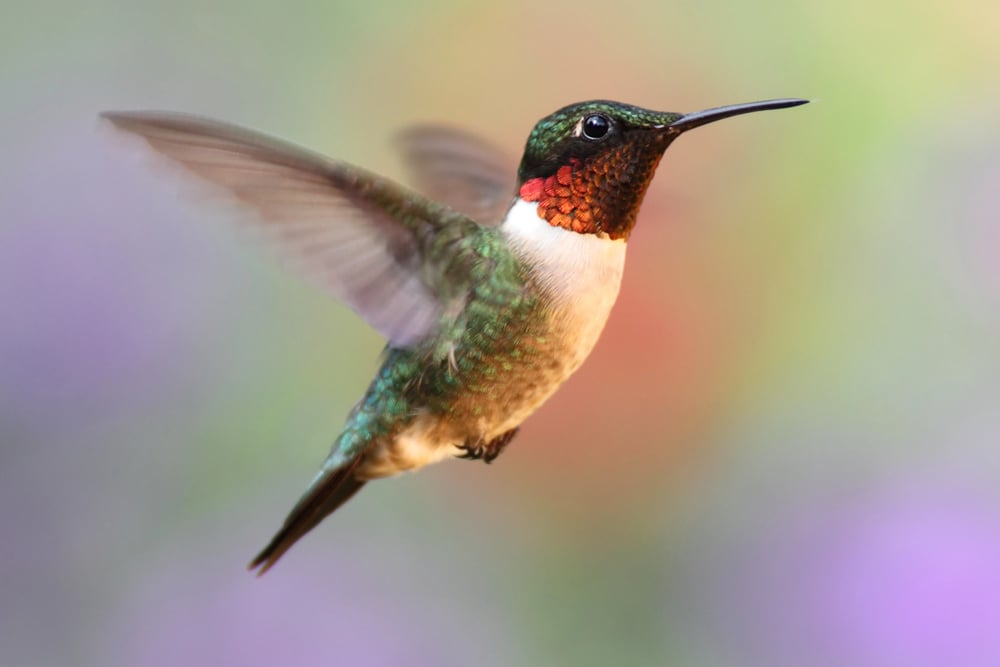
Despite weighing less than a nickel, ruby-throated hummingbirds make a nonstop 500-mile flight across the Gulf of Mexico twice yearly. They fuel up on nectar and insects beforehand, doubling their body weight in preparation for what amounts to an aerial marathon.
The journey takes 18-22 hours of continuous flight. Many don’t make it. Those that do reach their wintering grounds in Central America, where tropical flowers await like nature’s reward system.
Monarch Butterfly
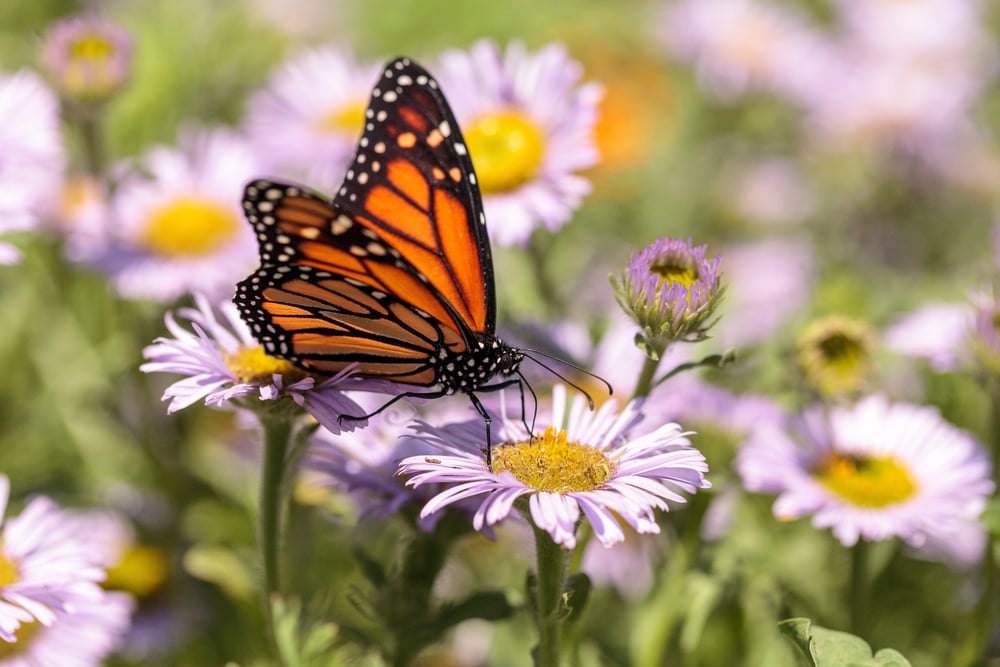
Monarch butterflies travel up to 3,000 miles from Canada to central Mexico, using a navigation system that scientists still don’t fully understand. What makes this migration truly remarkable is that it takes multiple generations to complete the round trip, like a relay race passed through butterfly families.
The butterflies that return north in spring are the great-great-grandchildren of those that left the previous fall. Somehow, they find their way to the exact same trees their ancestors used, despite never having been there before.
Gray Whale
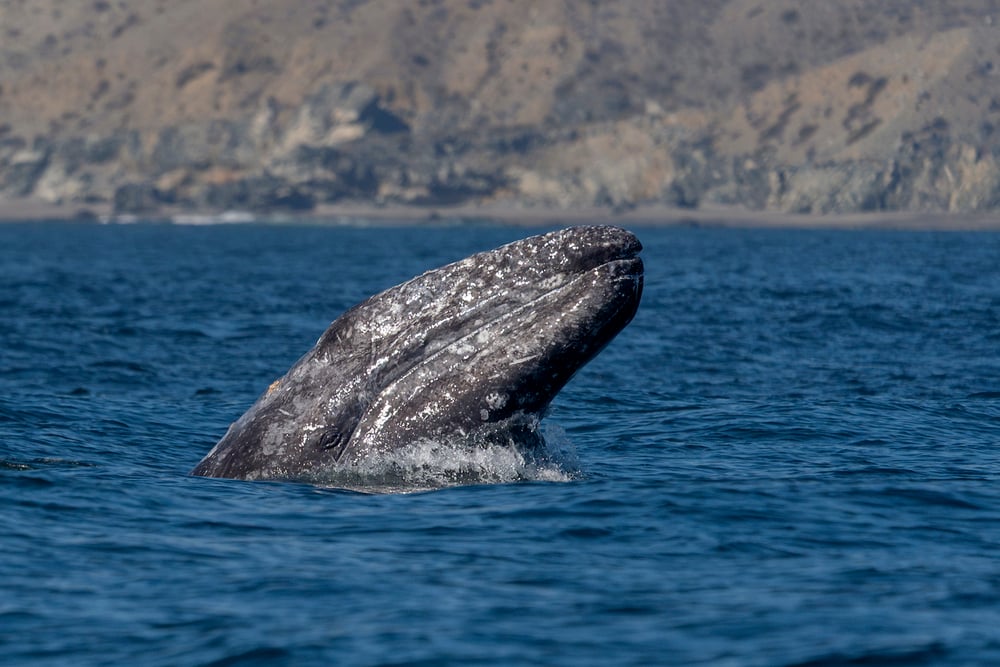
Gray whales make one of the longest migrations of any mammal, traveling 12,000 miles round trip between Alaska and Mexico. Mothers give birth in the warm lagoons of Baja California, then lead their calves back to Arctic feeding grounds where krill and amphipods wait in cold, nutrient-rich waters.
The journey is brutal, especially for newborns. Calves must keep up with their mothers while learning to dive and surface properly. Those too weak to continue become food for orcas that patrol the migration route.
Wildebeest
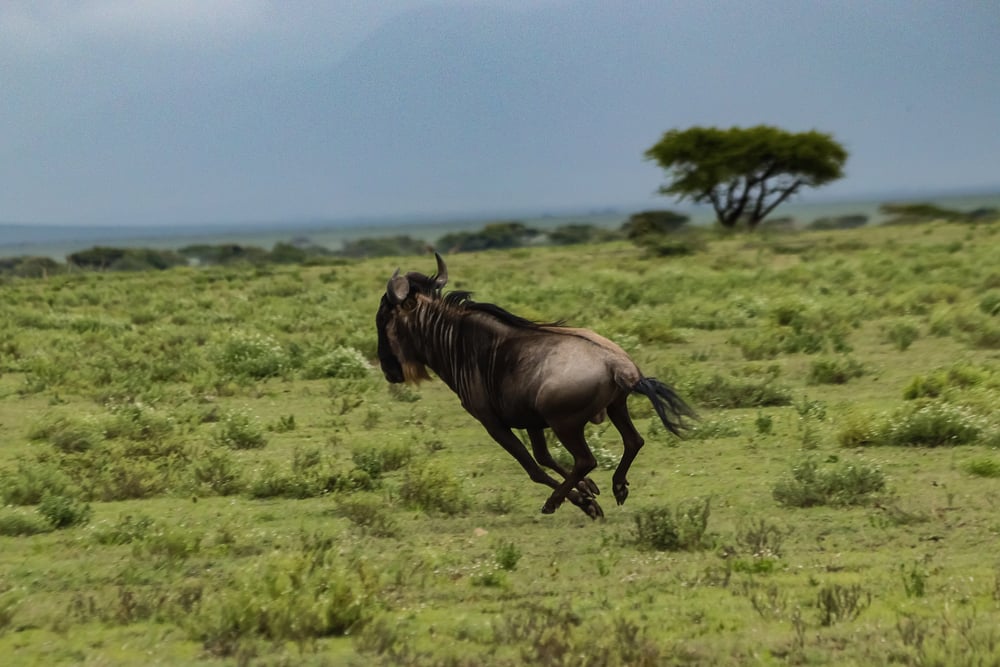
The Great Migration of East Africa sees over two million wildebeest, zebras, and gazelles moving in a continuous loop through Kenya and Tanzania. They follow the rains and fresh grass in a 1,200-mile clockwise circuit.
River crossings provide the most dramatic moments:
- Crocodiles wait in the murky water
- Fast currents sweep away the weak
- Trampling becomes a constant danger
- Predators gather on both sides
The smell of dust and sweat hangs heavy in the air during these crossings, mixing with the sound of hooves thundering across dry earth.
Leatherback Sea Turtle

Leatherback turtles traverse entire ocean basins, with some individuals traveling over 10,000 miles in a single year. They follow jellyfish blooms across the Pacific, Atlantic, and Indian oceans, diving as deep as 4,000 feet to feed.
These ancient mariners use magnetic fields to navigate. Their migrations can span decades, with some turtles crossing the Pacific multiple times during their lifetimes.
Caribou

Caribou herds in Alaska and northern Canada cover up to 3,000 miles annually, following ancient routes passed down through generations like well-worn highways carved into the landscape. The Porcupine Caribou Herd alone includes nearly 200,000 animals moving between calving grounds and winter ranges.
Wolves shadow the herds throughout the journey. The old, sick, and young fall behind and become easy prey. Harsh? Yes. But it keeps the herd strong.
Bar-tailed Godwit
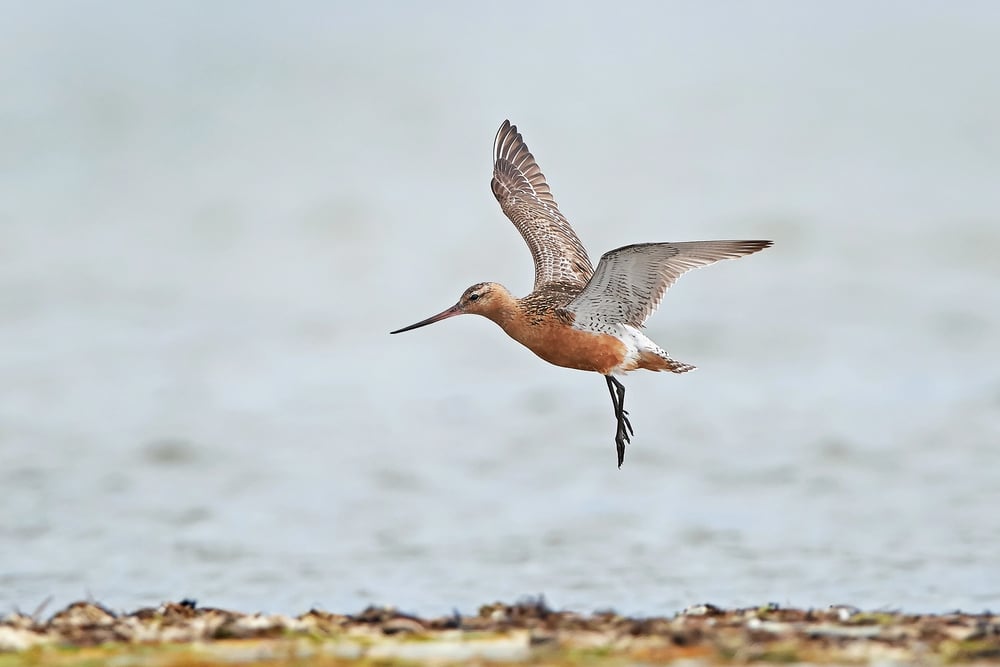
Bar-tailed godwits make the longest nonstop flight of any bird, covering 7,000 miles from Alaska to New Zealand without landing once. They shrink their internal organs before departure to make room for more fuel, essentially redesigning their bodies for the journey like living aircraft preparing for takeoff.
Nine days of flight. Nine days without food, water, or rest. Some birds lose half their body weight during the crossing.
Red Knot

Red knots time their migration to coincide with horseshoe crab spawning along the Delaware Bay. These small shorebirds double their weight in just two weeks, gorging on protein-rich eggs before continuing to Arctic breeding grounds.
Still, climate change and overharvesting of horseshoe crabs have disrupted this ancient timing. Many knots now arrive to find empty beaches where abundance once waited.
Humpback Whale

Humpback whales travel up to 16,000 miles annually between feeding and breeding areas. They fast during their months-long journey to tropical waters, living entirely off stored blubber while courting, mating, and giving birth.
Males sing complex songs during migration, their haunting melodies carrying for miles through the ocean depths. Each population has its own dialect, like underwater cultures passing through the sea.
European Eel

European eels begin life in the Sargasso Sea, then drift as larvae across the Atlantic to European rivers. After growing to adulthood in freshwater, they return to their birthplace to spawn and die.
The round trip can take 15-20 years. Scientists still debate exactly how these eels navigate thousands of miles of open ocean to find their precise spawning grounds.
Sandhill Crane

Over 500,000 sandhill cranes gather along Nebraska’s Platte River each spring, creating one of North America’s greatest wildlife spectacles. They rest and refuel for several weeks before continuing to Arctic breeding grounds.
Their calls echo across the prairie at dawn and dusk. Ancient. Primordial. The sound connects modern observers to something wild and untamed that still survives in our ordered world.
White Stork

White storks migrate from Europe to Africa, splitting into eastern and western populations that take different routes around the Mediterranean. They rely on thermal updrafts to soar efficiently, avoiding long water crossings where thermals don’t form.
Younger birds sometimes get lost and end up in Britain instead of Africa. Definitely not ideal when winter arrives.
Painted Lady Butterfly

Painted ladies undertake a multi-generational migration spanning continents, with some populations traveling from tropical Africa to the Arctic Circle. Unlike monarchs, their migrations are more opportunistic, following favorable weather and abundant flowers.
These delicate insects can cover 100 miles per day when conditions align. They ride wind currents like aerial hitchhikers, conserving energy for the long journey ahead.
Chinook Salmon

Chinook salmon spend most of their lives in the ocean but return to their natal streams to spawn, sometimes traveling over 2,000 miles upriver while fighting waterfalls, rapids, and dams to reach their birthplace.
They stop eating once they enter freshwater. Using stored energy to swim upstream and fight for spawning territory, their bodies deteriorate rapidly, turning from silver to dark red as death approaches.
Bar-headed Goose

Bar-headed geese fly over Mount Everest during their migration between breeding grounds in Central Asia and wintering areas in India. They’ve been recorded flying at altitudes exceeding 29,000 feet, where oxygen levels would incapacitate most birds.
Special adaptations in their blood and lungs allow them to function in the thin air. While humans struggle to breathe at base camp, these geese soar over the world’s highest peaks twice yearly.
The Pull of Ancient Paths

These migrations remind us that wildness still moves across our planet in patterns older than human civilization. Despite roads, cities, and climate change, billions of animals continue following routes written in their genes, connecting distant places through journeys that span continents and generations.
More from Go2Tutors!

- 16 Historical Figures Who Were Nothing Like You Think
- 12 Things Sold in the 80s That Are Now Illegal
- 15 VHS Tapes That Could Be Worth Thousands
- 17 Historical “What Ifs” That Would Have Changed Everything
- 18 TV Shows That Vanished Without a Finale
Like Go2Tutors’s content? Follow us on MSN.