16 Inventors Whose Own Creations Backfired
Innovation has always come with risks. Throughout history, brilliant minds have pushed the boundaries of science and technology, creating inventions that changed the world. But sometimes, the very creations meant to improve life ended up claiming the lives of their creators instead.
These stories serve as sobering reminders of the double-edged nature of progress. Here is a list of 16 inventors whose groundbreaking work ultimately backfired in the most tragic way possible.
Marie Curie
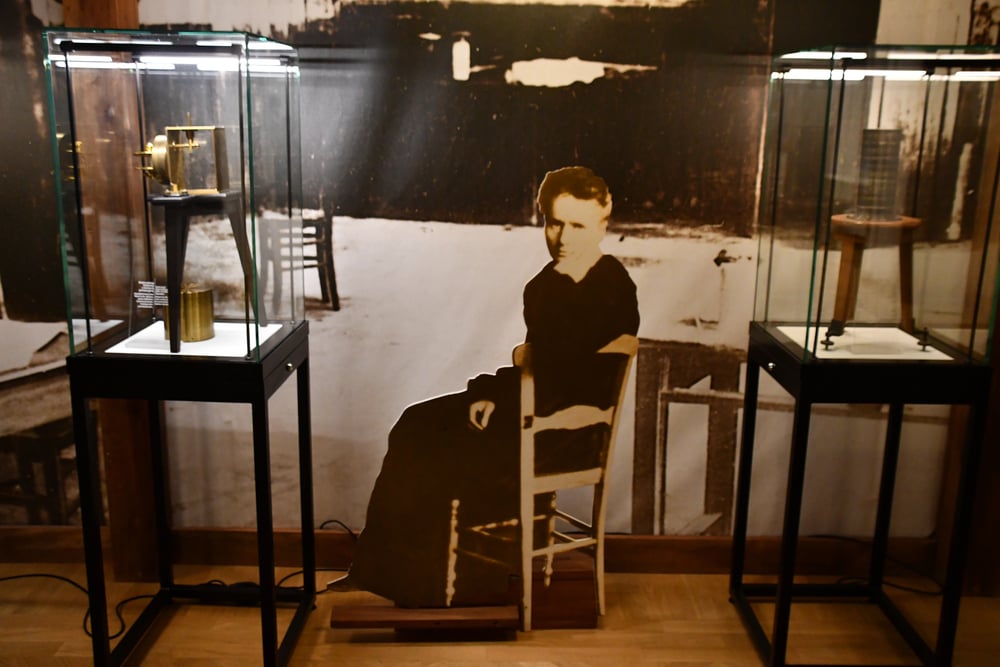
— Photo by sainaniritu
The two-time Nobel Prize winner revolutionized our understanding of radioactivity and discovered both radium and polonium. Marie Curie died on July 4, 1934, from aplastic anemia caused by long-term exposure to radiation, some of which came from the very devices she created. Her pioneering research laid the foundation for modern nuclear physics and cancer treatments, but the dangers of radiation weren’t understood at the time. Curie often carried radioactive materials in her pockets and stored them in her desk drawers, unknowingly sealing her fate through years of exposure.
Franz Reichelt

This Austrian-French tailor became obsessed with creating a wearable parachute that could save aviators’ lives in the early days of flight. After successful tests using dummies, he was so confident in his design that in 1912 he decided to test it himself by jumping from the lower level of the Eiffel Tower in Paris. The parachute failed to open properly, and Reichelt fell 187 feet to his death. Tragically, his invention might have worked if he had stuck to using test dummies instead of becoming his own guinea pig.
Thomas Midgley Jr.

— Photo by Rinsvind100
Few inventors have left such a complicated legacy as Midgley. He invented both chlorofluorocarbons (CFCs) and leaded gasoline, two innovations that would later cause massive environmental and health problems. Ironically, neither of these inventions killed him directly. After contracting polio at age 51, he invented a complex pulley system to help him get out of bed, but on November 2, 1944, he became entangled in the device and was strangled to death. His family suspected it might have been intentional, but officially, his own invention claimed his life.
William Bullock

The printing industry owes much to Bullock’s innovations, particularly his web rotary printing press that revolutionized newspaper production. Several years after perfecting his invention, his foot was crushed during the installation of a new machine in Philadelphia. The crushed foot developed gangrene, and Bullock died during the amputation surgery. His death came just as his revolutionary printing press was transforming the industry and making mass media possible.
Dr. Sabin Arnold von Sochocky

This Ukrainian chemist created luminescent paint using radium for watch dials and instrument panels. He founded the United States Radium Corporation, where some workers later died from radium poisoning. Von Sochocky eventually succumbed to the effects of radiation himself, dying in 1928 of aplastic anemia caused by bone marrow damage. His invention made it possible to read clocks and instruments in the dark, but the radioactive materials he worked with daily ultimately proved fatal.
Henry Winstanley

An English engineer and inventor, Winstanley designed the first lighthouse built on rock—the Eddystone Lighthouse off the coast of Devon. Winstanley was so confident in his structure that he expressed a desire to shelter inside it ‘during the greatest storm there ever was’. He got his wish in 1703 when the Great Storm hit, completely destroying the lighthouse with Winstanley and five other men inside—no trace of them was ever found. His lighthouse had successfully warned ships away from dangerous rocks for five years before claiming its creator’s life.
Stockton Rush

The recent tragedy of OceanGate’s submersible brought this modern case into global headlines. Rush designed the ‘Titan’ submersible intended to take passengers down to view the Titanic wreck. In 2023, Rush died when his Titan submersible imploded during a deep-sea expedition, killing all five people aboard. Despite warnings from experts about the vessel’s safety, Rush continued to pilot the experimental craft, ultimately becoming a victim of his own controversial design choices.
Max Valier

This Austrian rocket pioneer was instrumental in developing liquid-fueled rocket engines as part of the German rocket society in the 1920s. On May 17, 1930, an alcohol-fueled engine exploded on his test bench in Berlin, killing him instantly. Valier was only 35 years old when his rocket experiment went wrong, just ten minutes after the explosion occurred. His work helped pave the way for modern space travel, but he paid the ultimate price for pushing the boundaries of rocket science.
Karel Soucek

This Czech-Canadian daredevil gained fame by surviving a barrel ride over Niagara Falls in 1984. His custom-built barrel was counter-weighted to remain upright during the fall, making the stunt successful. However, a few months later, he died while demonstrating a new shock-absorbent barrel design when he was dropped from the roof of the Houston Astrodome—instead of hitting the water tank, his barrel struck the rim. Even legendary daredevil Evel Knievel had warned him against the stunt, calling it extremely dangerous.
Valerian Abakovsky

This young Soviet inventor created the Aerowagon, an experimental high-speed railcar powered by an aircraft engine and propeller. The vehicle was designed to transport Soviet officials quickly across the vast country. On July 24, 1921, after a successful trip from Moscow, the Aerowagon derailed at high speed on the return journey, killing Abakovsky and six other passengers. He was only 25 years old when his innovative transport experiment claimed his life and those of several European diplomats.
Henry Smolinski

The dream of a flying car captivated this Polish-American inventor, leading him to create the AVE Mizar by combining airplane wings with a Ford Pinto body. Smolinski and his fellow engineer Harold Blake built their prototype by attaching wings and tail from a Cessna Skymaster to the car. After an emergency landing during their first test flight, they took the invention out for a second flight in 1973, but it crashed moments after takeoff, killing both inventors. Their deaths ended any chance of the flying car being featured in the James Bond film ‘The Man with the Golden Gun’ as originally planned.
Thomas Andrews
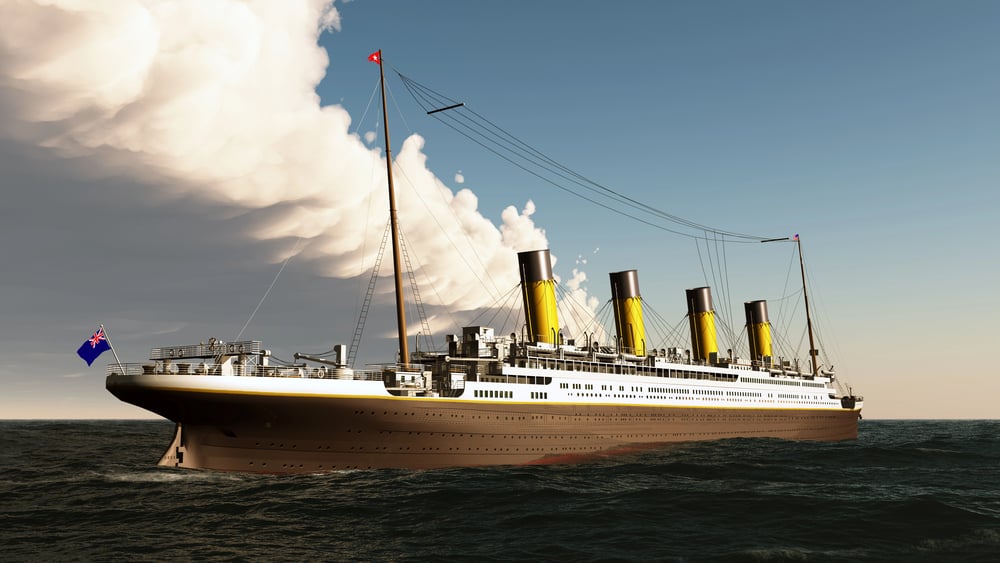
The principal designer of the RMS Titanic, Andrews was responsible for creating what was marketed as an ‘unsinkable’ ship. Despite being overruled about the height of watertight bulkheads and the number of lifeboats the ship should carry, Andrews made the fateful decision to travel aboard the Titanic’s maiden voyage. He died on April 14, 1912, when his ‘unsinkable’ ship sank after hitting an iceberg, taking over 1,500 people with it. Andrews spent his final hours helping passengers find life jackets and directing them to lifeboats, going down with his creation.
Sylvester H. Roper

A pioneer in early automobile and motorcycle development, Roper built one of the first steam-powered vehicles in America. He died of a heart attack or from injuries sustained in a subsequent crash during a public speed trial of his steam-powered bicycle in 1896. It remains unclear whether the crash caused the heart attack or if the heart attack caused the crash. His innovative steam-powered vehicles were ahead of their time, but his passion for demonstrating their capabilities proved fatal.
Otto Lilienthal

— Photo by 4eX
Known as the ‘flying man,’ this German aviation pioneer conducted over 2,000 glider flights and wrote influential books on flight. Lilienthal died in a glider crash in 1896 when his aircraft stalled and dove into the ground from about 50 feet. His final words were reportedly ‘sacrifices must be made,’ showing his dedication to advancing human flight. Lilienthal’s systematic approach to studying flight dynamics laid crucial groundwork for the Wright Brothers, who succeeded just seven years after his death.
Alexander Bogdanov

This Russian physician and revolutionary believed blood transfusions could extend life and reverse aging. Starting in 1924, Bogdanov performed 11 blood exchanges on himself over four years, initially feeling more energetic and clear-minded. In 1928, he received blood from a student infected with tuberculosis and malaria, suffered a severe reaction, and died days later at age 54. His pioneering work in blood transfusion research was valuable, but his willingness to experiment on himself proved deadly.
William Nelson

This young General Electric employee was working on motorizing bicycles when tragedy struck in 1903. Nelson invented a new way to motorize bicycles but fell off his prototype during a test run on a hill near his father-in-law’s house. The 24-year-old was killed instantly in the crash. The New York Times noted that ‘Nelson was regarded as an inventor of much promise,’ making his early death all the more tragic for the potential innovations that died with him.
The Price of Progress

These inventors shared a common thread—they were willing to risk everything for their vision of a better future. From Curie’s groundbreaking research that advanced nuclear science to Rush’s deep-sea exploration dreams, each pushed boundaries that others wouldn’t dare cross. Their deaths weren’t in vain, as many of their innovations eventually led to safer, more refined versions that benefit us today. The irony remains striking: those who sought to improve human life often paid for progress with their own lives, leaving behind legacies written in both triumph and tragedy.
More from Go2Tutors!

- 16 Historical Figures Who Were Nothing Like You Think
- 12 Things Sold in the 80s That Are Now Illegal
- 15 VHS Tapes That Could Be Worth Thousands
- 17 Historical “What Ifs” That Would Have Changed Everything
- 18 TV Shows That Vanished Without a Finale
Like Go2Tutors’s content? Follow us on MS