16 Longest-Running Festivals in American History
Some festivals happen once and disappear. Others take root so deeply in the culture around them that generations of families show up year after year without ever questioning whether they’ll continue.
The ones on this list belong to that second group. They’ve survived wars, economic collapses, changing tastes, and the slow drift of time.
A few predate the United States itself. All of them say something true about why people gather in the first place.
1. Mardi Gras — New Orleans, Louisiana (c. 1699)
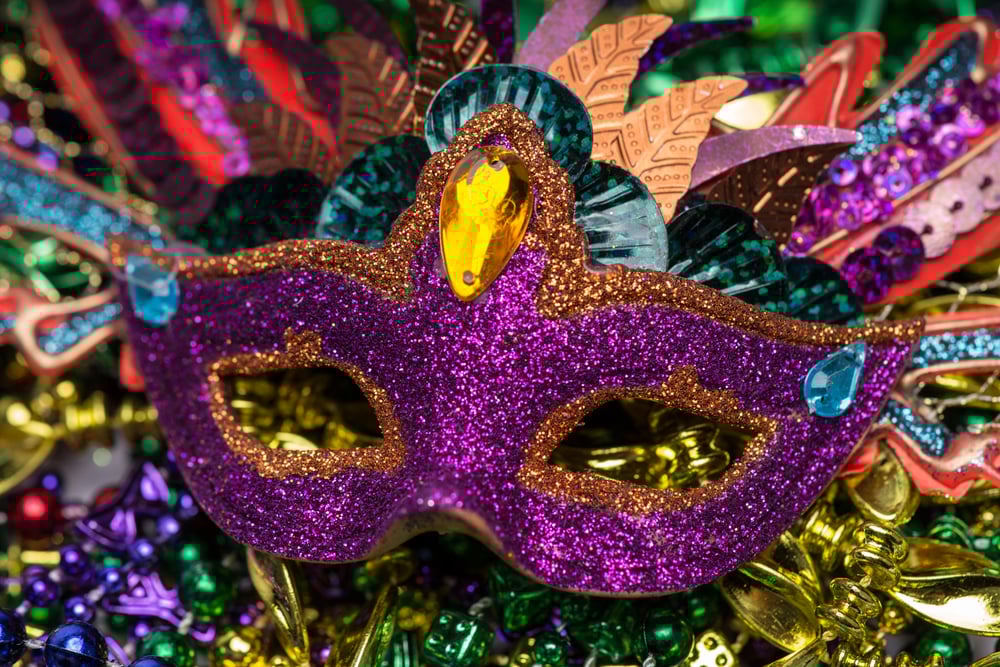
Mardi Gras predates just about everything else on this list by at least a century. French explorers brought the Catholic pre-Lenten tradition to the Gulf Coast in 1699 when the expedition of Iberville and Bienville landed near present-day New Orleans on Fat Tuesday.
The city formalized the celebration over the following decades, and by the early 1800s it had grown into something unmistakably its own. Today it’s the oldest and most recognized festival in American history.
The parades, the beads, the brass bands, the king cake — none of it is accidental. It reflects centuries of layered culture: French, Spanish, African, Creole, and Caribbean traditions folded into one sprawling, weeks-long celebration.
The krewes, the secret societies that organize the parades and galas, date back to 1857. Some families have ridden the floats for six or seven generations.
2. New York State Fair — Syracuse, New York (1841)

The first state fair in the United States took place in Syracuse on September 29, 1841. The New York State Agricultural Society organized it with $8,000 from the state government and a modest program: a livestock exhibition, a plowing contest, and a handful of agricultural displays.
About 15,000 people showed up, which was considered a remarkable turnout for the time. Nearly 185 years later, the Great New York State Fair still runs every summer in the same city, drawing over a million visitors annually.
It’s shifted from a strictly agricultural event to something broader — concerts, carnival rides, competitive exhibitions, and an enormous midway — but the livestock barns and farm competitions remain. The butter sculpture is a tradition unto itself.
3. Iowa State Fair — Des Moines, Iowa (1854)

Iowa’s state fair has been running almost continuously since 1854, skipping only a few years during the Civil War. It started as most fairs of that era did: a gathering of farmers competing for prizes in livestock, crops, and domestic skills.
Over time it grew into one of the largest state fairs in the country. The Iowa State Fair holds a particular place in American mythology.
E.B. White wrote about it. It inspired a famous musical.
Presidential candidates make a point of stopping there during election years, partly because it draws hundreds of thousands of people, and partly because what appeals to fairgoers there tends to say something about the American heartland. The butter cow has been carved there since 1911.
4. St. Paul Winter Carnival — St. Paul, Minnesota (1886)
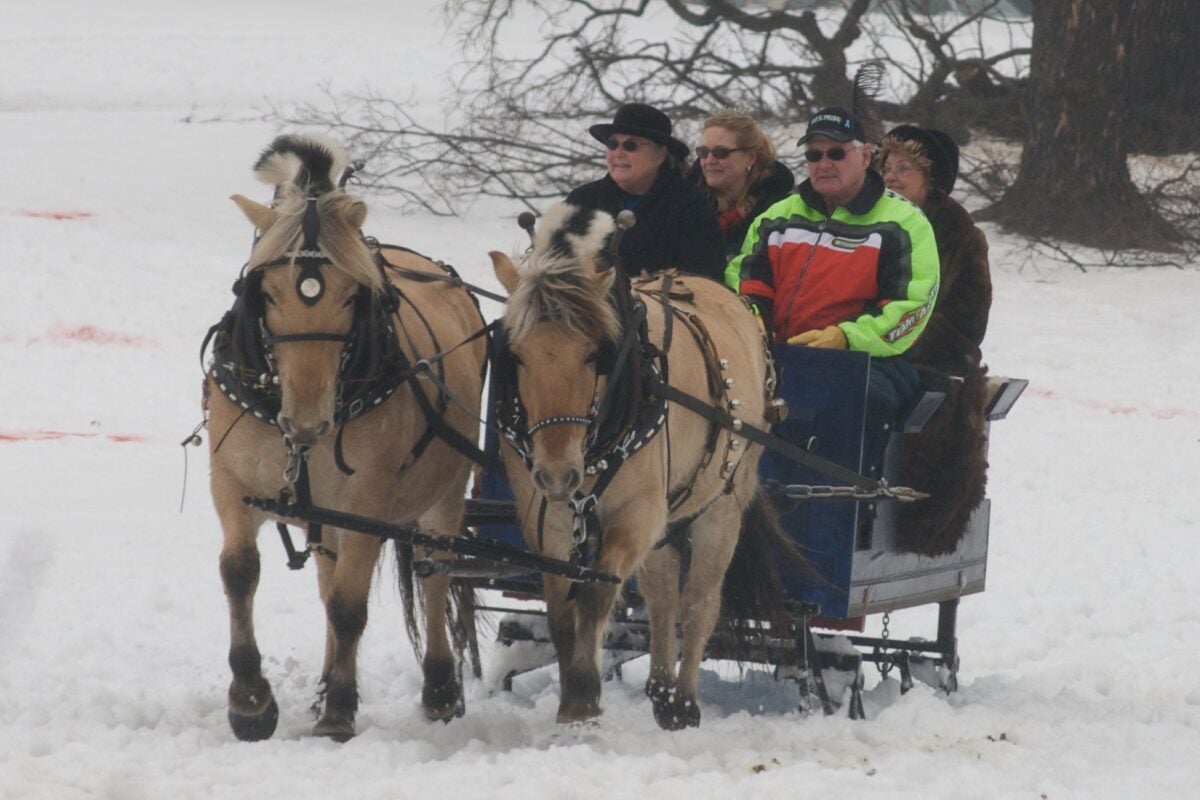
A New York newspaper reporter once called St. Paul “another Siberia, unfit for human habitation” during a particularly brutal winter. The city’s response was to throw a party.
In 1886, civic leaders organized the first St. Paul Winter Carnival as a direct rebuttal — proof that Minnesotans didn’t just survive the cold, they celebrated it. The festival built an elaborate ice palace for the occasion, a structure so large it could be seen from miles away. The tradition stuck.
The carnival has run for well over 130 years, complete with ice sculptures, snow activities, a coronation ceremony, and a mythology involving the mythical King Boreas and the Fire King Vulcanus Rex, who stage a theatrical battle each year. It’s one of the oldest winter festivals in the world.
5. Tournament of Roses — Pasadena, California (1890)

On January 1, 1890, members of the Valley Hunt Club in Pasadena decorated their horse-drawn carriages with fresh flowers and paraded through town to celebrate the mild California winter. The idea was simple: show the rest of the country what January looks like when you live somewhere where the roses bloom in the snow season.
That parade eventually became the Rose Parade, now one of the most-watched events in the United States. The accompanying Rose Bowl game followed in 1902.
The floats are now massive, engineered over months, and required by official rules to be covered entirely in flowers and other organic materials. More than a million people line the route each year, some camping overnight on the sidewalk to claim a spot.
6. Fiesta San Antonio — San Antonio, Texas (1891)

Fiesta San Antonio began in 1891 as a single parade honoring the heroes of the Alamo and the Battle of San Jacinto. A group of women organized the event, tossing flowers at a carriage carrying a portrait of President Benjamin Harrison as it passed.
From that small start grew one of the largest festivals in Texas. Today Fiesta runs for ten days each April and draws more than 3.5 million people.
There are over 100 events spread across the city — street parties, parades, carnivals, musical performances, and food vendors representing the region’s mix of cultures. The festival is officially managed by the Fiesta San Antonio Commission, but more than 100 nonprofit organizations run individual events.
Medals and pins have become their own collector culture within the festival.
7. Blossomtime Festival — Southwest Michigan (c. 1906)

The Blossomtime Festival in southwest Michigan is the oldest and largest multi-community festival in the state, with over a century of continuous celebration. It began as a way to mark the blooming of the fruit trees that blanket that corner of Michigan each spring — apple, peach, cherry, and pear orchards turning white and pink across the hills simultaneously.
The Grand Floral Parade draws participants from dozens of communities across the region, and the crowning of the Blossom Queen is a central event each year. What makes Blossomtime unusual is how many towns it involves.
It’s not one city’s festival — it belongs to an entire agricultural region.
8. Nisei Week Japanese Festival — Los Angeles, California (1934)
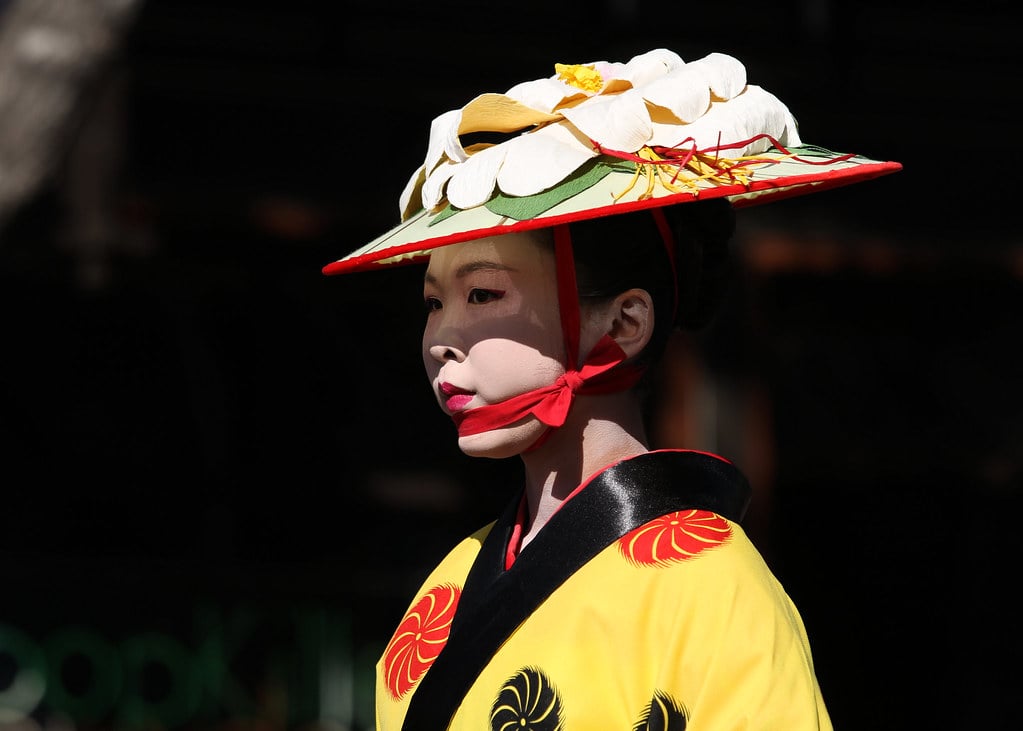
Nisei Week started in the Little Tokyo neighborhood of Los Angeles in 1934, organized by second-generation Japanese Americans (nisei means “second generation”) to celebrate Japanese culture and strengthen the community during a period of significant economic hardship. The festival was suspended during World War II when Japanese Americans were forcibly sent to internment camps, but it resumed in 1949 and has continued every year since.
The festival runs for nine days each August and includes a grand parade, traditional dance performances, a pageant, a golf tournament, and cultural demonstrations. For many Japanese American families in Southern California, Nisei Week is a touchstone — the one event that connects them to community history and cultural identity across multiple generations.
9. National Folk Festival — Various Locations (1934)

The National Folk Festival is the oldest of its kind in the United States. It was founded in 1934 in St. Louis, Missouri, by folk music advocate Sarah Gertrude Knott, who believed that traditional American music and folk arts deserved a dedicated national platform.
The festival brought together performers from across the country representing the full range of regional and ethnic traditions. For decades it traveled from city to city, serving as a kind of roving showcase for living folk traditions.
The format has evolved over the years — the festival now partners with cities for multi-year residencies — but the mission has stayed consistent. It remains one of the most comprehensive gatherings of traditional American musical and artistic heritage anywhere in the country.
10. Newport Jazz Festival — Newport, Rhode Island (1954)

The Newport Jazz Festival changed what a music festival could be. Launched in 1954 by impresario George Wein, it was the first outdoor jazz festival in the United States and the first to treat jazz as concert music worthy of serious attention in an open-air setting.
Louis Armstrong, Ella Fitzgerald, Thelonious Monk, and Miles Davis all performed there in its early years. The 1955 festival was documented in the film “Jazz on a Summer’s Day,” which introduced the festival format to a wide audience.
Newport has survived cancellations, riots, relocations, and changing musical landscapes. It moved to New York’s Saratoga Performing Arts Center for a period in the 1970s before returning to Rhode Island.
It has now run for over 70 years and still draws major jazz names to the waterfront in Newport each summer.
11. Newport Folk Festival — Newport, Rhode Island (1959)
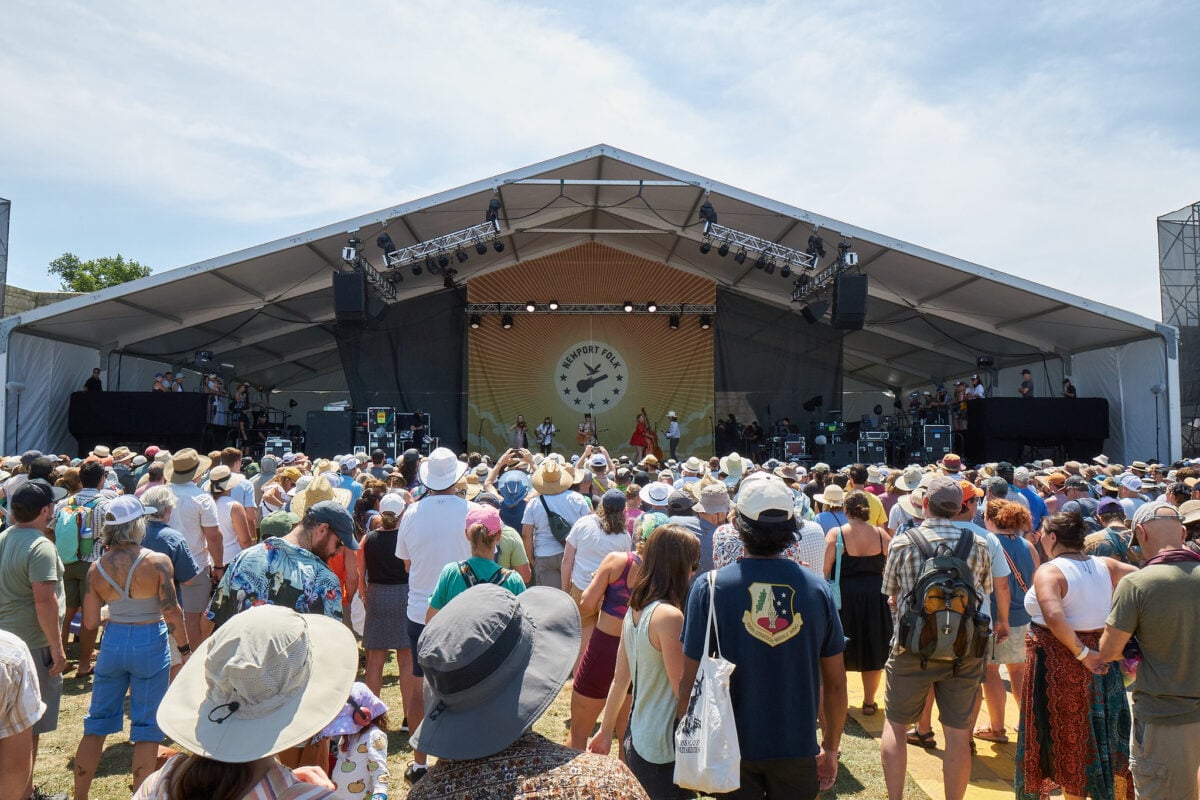
George Wein followed up his jazz festival success with the Newport Folk Festival in 1959, and within a few years it had become the most important stage in American folk music. Joan Baez played there at 18 years old.
Pete Seeger was a fixture. In 1965, Bob Dylan walked out with an electric guitar and changed the direction of popular music — and folk purists in the crowd booed him for it. The festival was suspended from 1970 to 1985 before coming back.
It’s now held at Fort Adams State Park with a view of Narragansett Bay, and its modern lineups extend well beyond folk to include rock, R&B, and Americana. But it still carries the weight of its history.
Playing Newport Folk means something different than playing most other festivals.
12. Philadelphia Folk Festival — Upper Salford Township, Pennsylvania (1962)

The Philadelphia Folk Festival has been running since 1962, making it the longest-running folk festival in North America. It was organized by the Philadelphia Folk Song Society and held on a farm outside the city, a tradition it continues to this day on the grounds of the Old Pool Farm in Montgomery County.
The festival started with about 2,500 attendees and Pete Seeger performing in the rain. Decades later, it regularly draws tens of thousands of people, many of whom camp on the grounds for all four days.
For regulars, the campground itself — the late-night jams around fires, the informal picking circles, the community that forms between strangers with guitars — is as much the festival as the main stage. That culture has stayed intact for over 60 years.
13. Summerfest — Milwaukee, Wisconsin (1968)
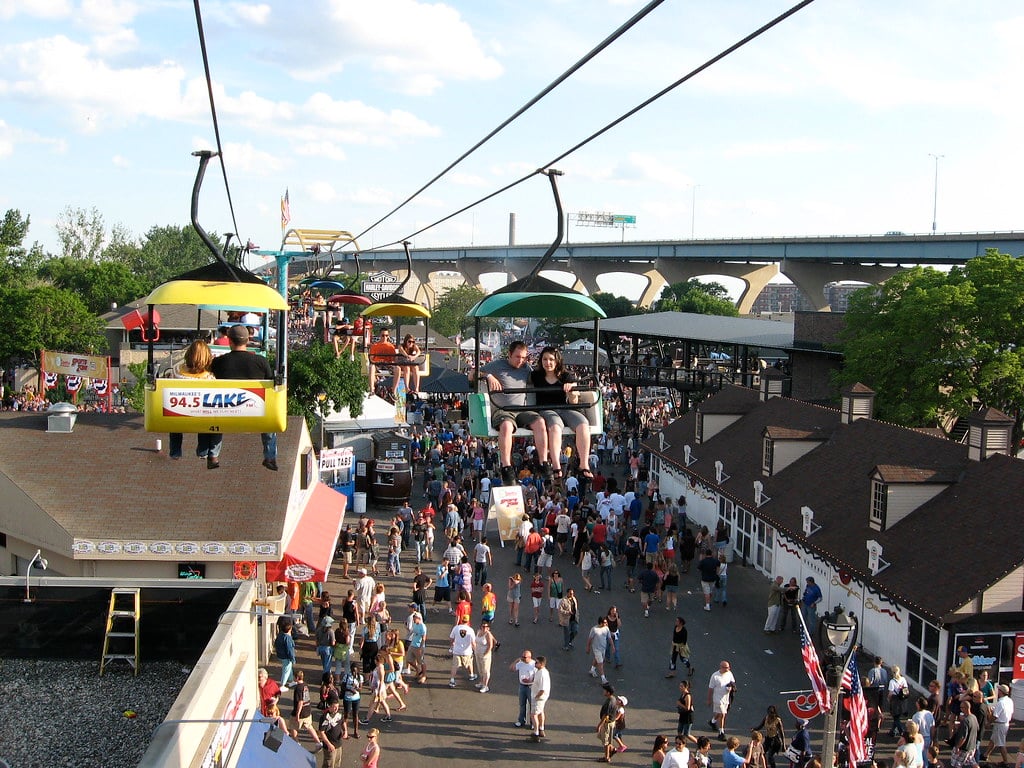
Summerfest was conceived in the late 1960s by Milwaukee’s mayor, who was inspired by the Oktoberfest tradition in Germany and wanted to create something similar for the city on Lake Michigan. The first festival in 1968 was modest.
Within two decades, it had earned recognition from the Guinness Book of Records as the world’s largest music festival. Today it runs across three consecutive weekends each summer at Henry Maier Festival Park, with 12 stages hosting over 600 acts.
The range of performers is deliberately wide — country, rock, hip-hop, electronic, and everything in between. Attendance runs into the hundreds of thousands. The lakefront setting and the sheer scale of the programming make it unlike any other American music event.
14. New Orleans Jazz & Heritage Festival (1970)
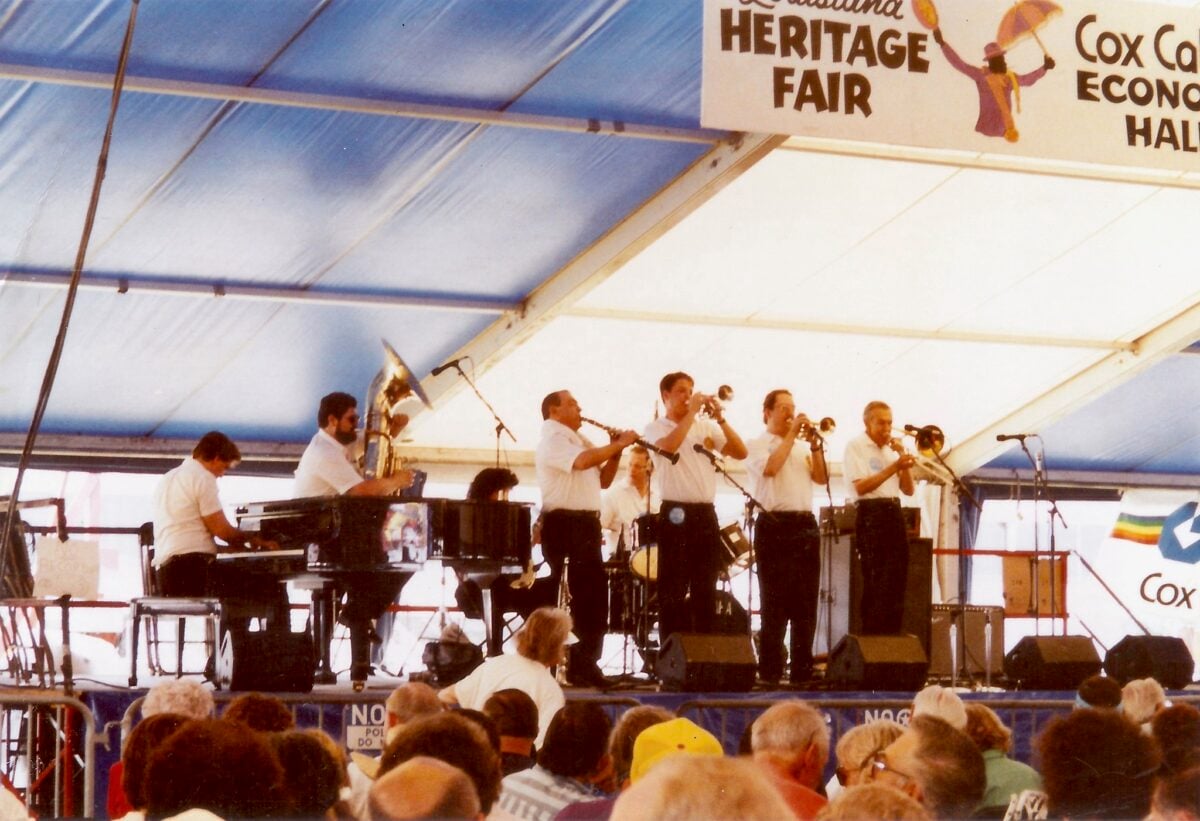
The New Orleans Jazz & Heritage Festival launched in 1970 with a single afternoon in a local park and an audience of a few hundred people. Mahalia Jackson performed. So did Duke Ellington and Pete Fountain. The organizers — including George Wein again — understood from the start that this wasn’t just about jazz. It was about the full spectrum of Louisiana music and culture.
Jazz Fest, as it’s universally called, now draws close to half a million people across two weekends each spring. The music programming spans jazz, blues, gospel, Cajun, zydeco, R&B, rock, and more.
But the food is equally serious — the fair food here isn’t the typical festival fare. Crawfish étouffée, cochon de lait, and Creole cooking of every variety compete for attention with the stages.
The combination makes Jazz Fest one of the most culturally specific festivals in the country.
15. South by Southwest (SXSW) — Austin, Texas (1987)

Flickr/Kris Krug
South by Southwest started in 1987 as a modest regional music conference in Austin. The idea was to give independent musicians a venue to meet industry people, and to give the Austin music scene national visibility.
About 700 people attended the first event. The programming was entirely music.
Over the following decades SXSW expanded into film, then technology and interactive media, becoming a convergence point for the entertainment and tech industries that no other American festival replicates. It transformed Austin’s identity as a city, drawing hundreds of thousands of attendees each March and turning the entire urban core into a festival venue.
The music portion alone now features thousands of acts across hundreds of venues over five days.
16. Lollapalooza — Chicago, Illinois (1991)

Perry Farrell stood up one day and said it was time to say goodbye – he led Jane’s Addiction, after all, and wanted a final trip across America. That journey became something else entirely: shows stacked with strange bedfellows like Nine Inch Nails, Ice-T, Living Colour, and Siouxsie and the Banshees.
Different sounds. One stage each stop. Crowds showed up fast, every single date wiped clean by eager fans before sun even set.
Lollapalooza traveled from city to city until 1997 before stepping away. Back again in 2005, it settled into one spot – a long weekend each summer in Chicago’s Grant Park.
Ever since then, it has stayed that way. Spread across eight stages, more than 170 artists perform each year.
Around 400,000 show up over those four days. Other versions now happen too – in Brazil, Chile, Argentina, Germany, France, even India. Still, the oldest one, in Chicago, pulls in the biggest crowd.
They Keep Showing Up

Strange how none of these festivals were stopped by disaster. Not one gave up after wars, rumors, lost approvals, changing times, or sickness.
What stands out is how they returned again and again. People who believed in them simply would not walk away.
Good planning does more than just keep a festival running. What truly holds it together is how it connects with those who come back each summer – tying into who they are, what they remember, where they belong, or moments of pure delight found nowhere else.
One might picture corn dogs under hot sun at Des Moines, another sees crowds dancing in Chicago parks. Yet both point toward a deeper need: being part of something shared, feeling time move forward among others.
It’s not scheduled or permitted. It’s presence. Oldest of all traditions, that one stands.
More from Go2Tutors!

- The Romanov Crown Jewels and Their Tragic Fate
- 13 Historical Mysteries That Science Still Can’t Solve
- Famous Hoaxes That Fooled the World for Years
- 15 Child Stars with Tragic Adult Lives
- 16 Famous Jewelry Pieces in History
Like Go2Tutors’s content? Follow us on MSN.



