16 Lost Languages and How We Know of Them
Languages die in many ways. Sometimes they fade slowly as communities shift to speaking something more useful for trade or politics. Other times they vanish suddenly when disasters strike or entire civilizations collapse. The fascinating part isn’t just that these languages disappeared—it’s how we’ve managed to piece together their existence from fragments left behind.
Archaeologists and linguists work like detectives, gathering clues from clay tablets, stone inscriptions, and even random notes scribbled on old letters. Here is a list of 16 lost languages that tell remarkable stories about how human communication once flourished in corners of the world we’re still discovering.
Linear A

The Minoan civilization left behind thousands of clay tablets covered in mysterious symbols that scholars call Linear A. No texts in Linear A have yet been deciphered, making it one of archaeology’s most stubborn puzzles.
We know the Minoans used this script around 1450 BCE because the tablets were preserved when fires destroyed their palaces—ironically, the disasters that ended their civilization also baked their records into permanent form.
Sumerian
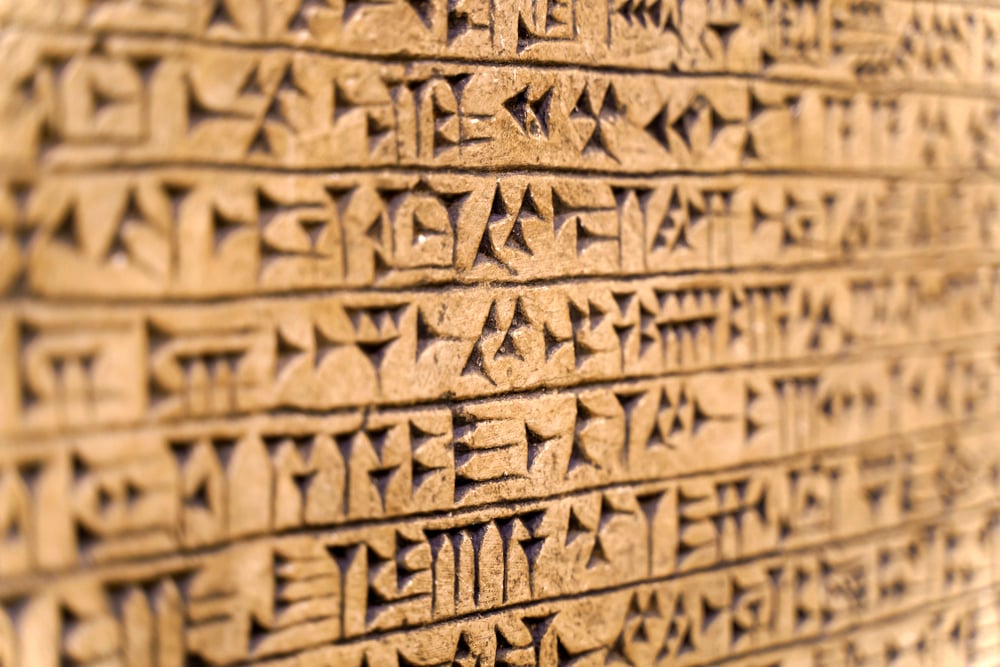
Since decipherment began in the early 20th century, scholars have tried to relate Sumerian to a wide variety of languages, but it remains a linguistic island with no clear relatives. This ancient Mesopotamian language shows up in cuneiform tablets dating back over 5,000 years, making it one of humanity’s earliest writing experiments.
We understand Sumerian today because scribes kept bilingual dictionaries and because later civilizations continued using it for religious ceremonies long after people stopped speaking it daily.
Etruscan
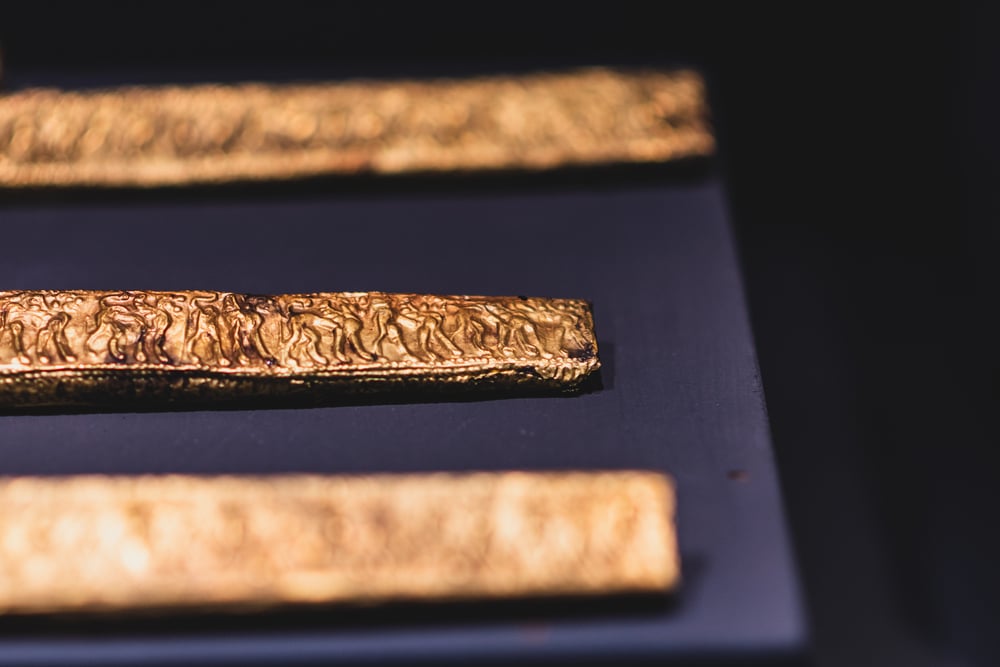
The Etruscans dominated central Italy before Rome rose to power, and their language puzzles us in a unique way. The language is not written in cipher or some unknown code, it is written in an alphabet which is well known, so we can pronounce Etruscan words perfectly—we just don’t know what most of them mean.
Thousands of tomb inscriptions and bronze mirrors give us glimpses of Etruscan life, but without a bilingual text like the Rosetta Stone, full understanding remains elusive.
Linear Elamite
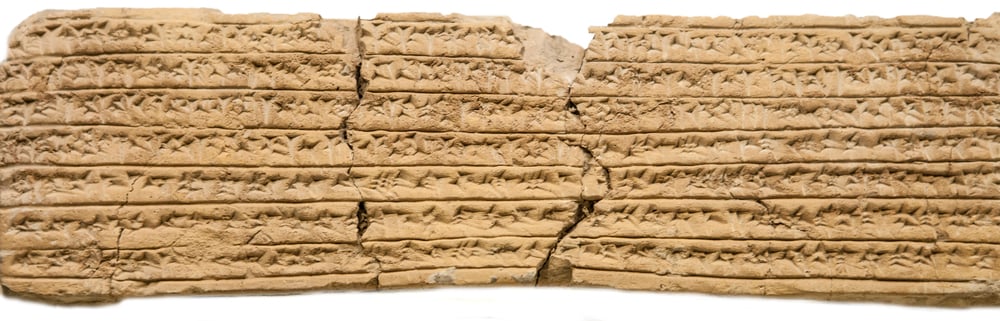
Hidden away in ancient Iran, Linear Elamite appeared on silver cups and stone tablets around 2300 BCE. Thanks to a team of European scholars led by French archaeologist Francois Desset, one of the last holdouts might finally be deciphered: Linear Elamite.
The breakthrough came from studying identical texts written in both Linear Elamite and Akkadian cuneiform, giving researchers the bilingual key they needed to crack the code.
Arin

The Arin language, now long extinct, was one of several Yeniseian tongues spoken across central Siberia, and recent research suggests it might have been the mysterious language of the Huns. We know about Arin from 18th-century Russian explorers who documented it before the last speakers died out.
This discovery shows how colonial records, despite their problematic context, sometimes preserve the only evidence of vanished languages.
Tushani

The evidence for the language they spoke comes from a single clay tablet, which was preserved after it was baked in a fire that destroyed the palace in Tušhan at some point around the end of the 8th century BCE. This language was discovered recently in Turkey, proving that archaeologists are still finding completely unknown languages.
The tablet contains a list of names from 60 different cities, suggesting Tushani speakers controlled a significant territory before vanishing from history.
Cretan Hieroglyphs

Before Linear A, the Minoans experimented with a more picture-based writing system that archaeologists call Cretan Hieroglyphs. Despite extensive studies, it has not been conclusively deciphered, and there is even debate over whether it represents a language or a more symbolic system of proto-writing.
Clay seals and stone inscriptions preserve these symbols, but without longer texts, scholars can’t determine if they represent full sentences or just names and titles.
Lemnian
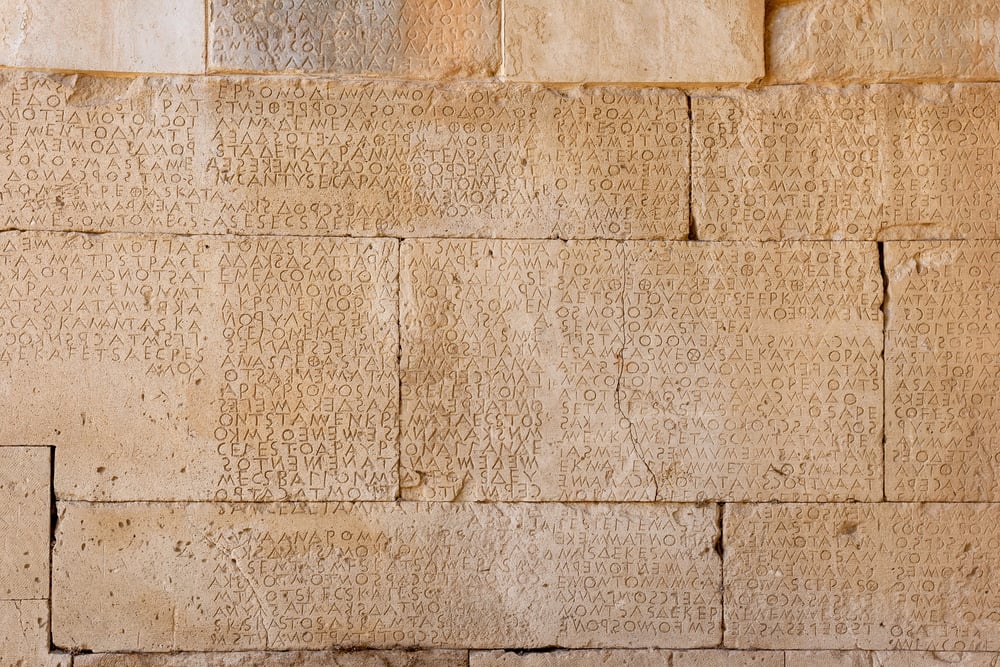
This language survived on just a handful of inscriptions from the Greek island of Lemnos, dating to around 600 BCE. Scholars believe Lemnian connects to Etruscan and forms part of a larger Tyrsenian language family that once spanned the Mediterranean.
The longest Lemnian text comes from a funeral stele, giving us tantalizing glimpses of burial customs and religious beliefs from this forgotten culture.
Proto-Elamite

Before Linear Elamite, ancient Iran produced an even older writing system called Proto-Elamite around 3200 BCE. These tablets from cities like Susa contain what appear to be administrative records—lists of goods, animals, and people—but the underlying language remains a mystery.
The symbols clearly represent numbers and commodities, but bridging the gap to actual speech has proved nearly impossible.
Raetic

High in the Alpine valleys of ancient Europe, people carved Raetic inscriptions into rocks and bronze objects between 500-50 BCE. This language likely connects to Etruscan, suggesting both descended from a common ancestor.
We know Raetic from about 280 inscriptions, mostly short dedicatory texts and names, discovered across what’s now northern Italy, Austria, and Switzerland.
Camunic
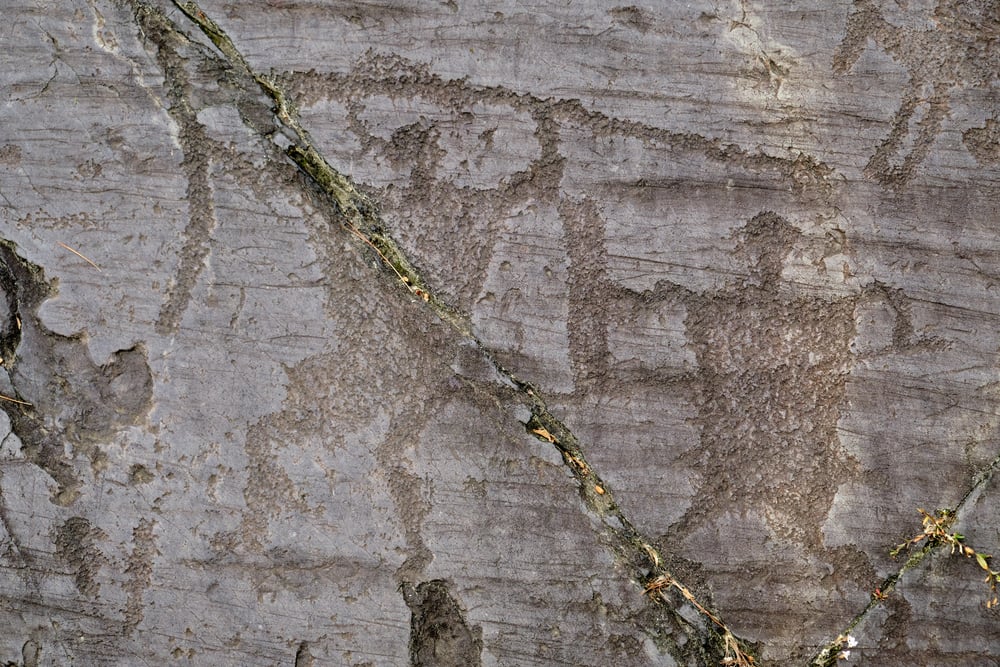
The Camunni people left over 10,000 rock carvings in northern Italy’s Val Camonica, but only a few dozen contain actual writing in their lost language. These inscriptions date from around 500 BCE and often appear alongside elaborate pictures of warriors, animals, and religious ceremonies.
Camunic probably belonged to the same language family as Etruscan and Raetic, representing another branch of Europe’s pre-Roman linguistic diversity.
Hurrian

Ancient Mesopotamia wasn’t just home to Sumerian and Akkadian—the Hurrian language flourished there too, especially around 1500 BCE. We understand Hurrian from thousands of tablets found at sites like Nuzi and Ugarit, including the world’s oldest known piece of written music.
Hurrian scribes often worked as translators, creating multilingual texts that help modern scholars understand ancient diplomatic and trade relationships.
Hattian
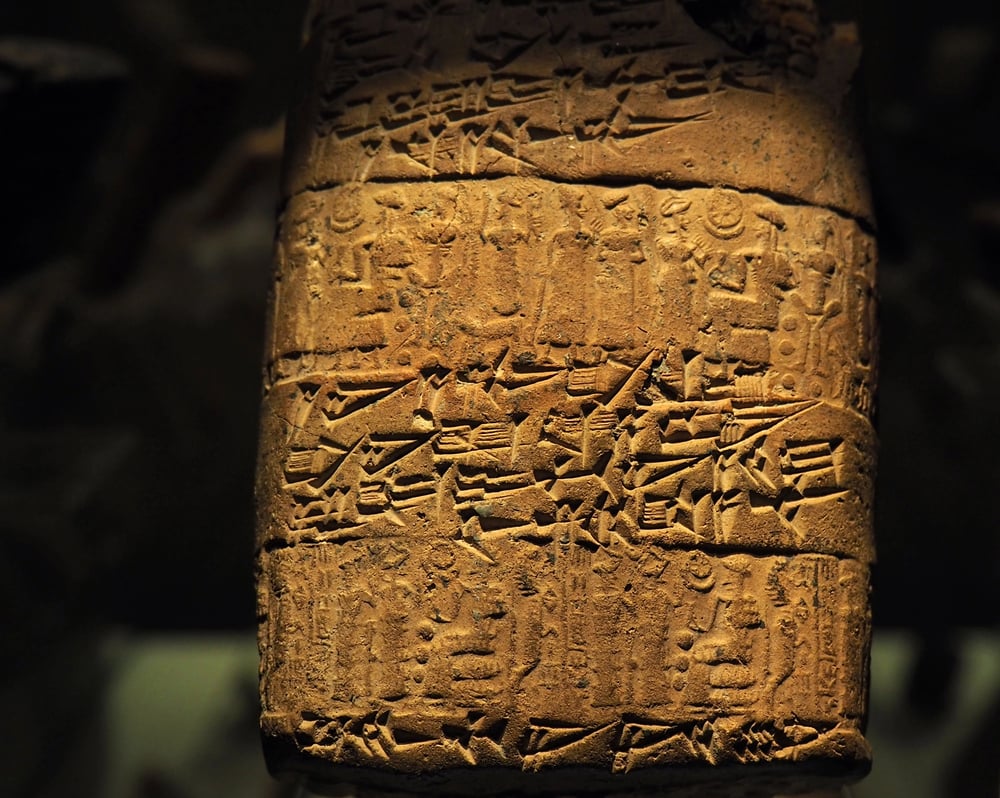
Before the Hittites dominated central Turkey, the Hatti people spoke a language that survives only in religious ceremonies recorded by their Hittite successors. Hattian appears in ritual texts where priests invoke old gods and perform ancient ceremonies, preserved because religion tends to maintain archaic language long after daily speech changes.
These ceremonial fragments give us glimpses of pre-Indo-European religious practices in Anatolia.
Gutian

The Gutians swept down from the Zagros Mountains around 2150 BCE and briefly controlled Mesopotamia, but their language barely survives in historical records. Sumerian and Akkadian texts mention Gutian personal names and a few administrative terms, suggesting their language differed significantly from the region’s dominant tongues.
Most of what we know comes from enemy accounts, which makes reconstructing Gutian culture particularly challenging.
Kassite

After conquering Babylon around 1600 BCE, the Kassites ruled Mesopotamia for over 400 years, yet their original language remains largely mysterious. Kassite words appear mainly as personal names in Akkadian and Sumerian texts, plus a few glossaries that Mesopotamian scholars compiled.
These fragments suggest Kassite belonged to a language family completely unrelated to anything else in the ancient Near East.
Ancient Peruvian Language

In the early 1600s in northern Peru, a curious Spaniard jotted down some notes on the back of a letter. Four hundred years later, archaeologists dug up and studied the paper, revealing translations between Spanish and a completely unknown indigenous language.
This chance discovery shows how even casual colonial-era notes can preserve linguistic evidence. The paper contains number words and basic vocabulary, offering a brief window into a language that vanished during Spanish colonization.
Echoes in Modern Times

These lost languages didn’t simply disappear—they left traces that continue shaping how we understand human communication and cultural development. Every deciphered tablet reveals how ancient people organized their societies, conducted business, and made sense of their world.
From the Rosetta stone to the Enigma Code, there are two main ways to decipher ancient languages, but artificial intelligence is helping to modify translations, suggesting that future discoveries might unlock secrets still hidden in museum storage rooms. The search for lost languages reminds us that human creativity in communication extends far beyond anything we experience today.
More from Go2Tutors!

- The Romanov Crown Jewels and Their Tragic Fate
- 13 Historical Mysteries That Science Still Can’t Solve
- Famous Hoaxes That Fooled the World for Years
- 15 Child Stars with Tragic Adult Lives
- 16 Famous Jewelry Pieces in History
Like Go2Tutors’s content? Follow us on MSN.