16 Surprising Things You Never Knew About Dinosaurs
Most people think they know dinosaurs pretty well. After all, who hasn’t watched Jurassic Park or wandered through a natural history museum, craning their neck up at those towering skeletons?
But the truth is, our understanding of these ancient creatures has exploded in recent decades, revealing details that would surprise even the most devoted dinosaur enthusiasts. From their unexpected colors to their parenting skills, dinosaurs were far more complex and fascinating than the lumbering reptiles we once imagined them to be.
Many Dinosaurs Had Feathers
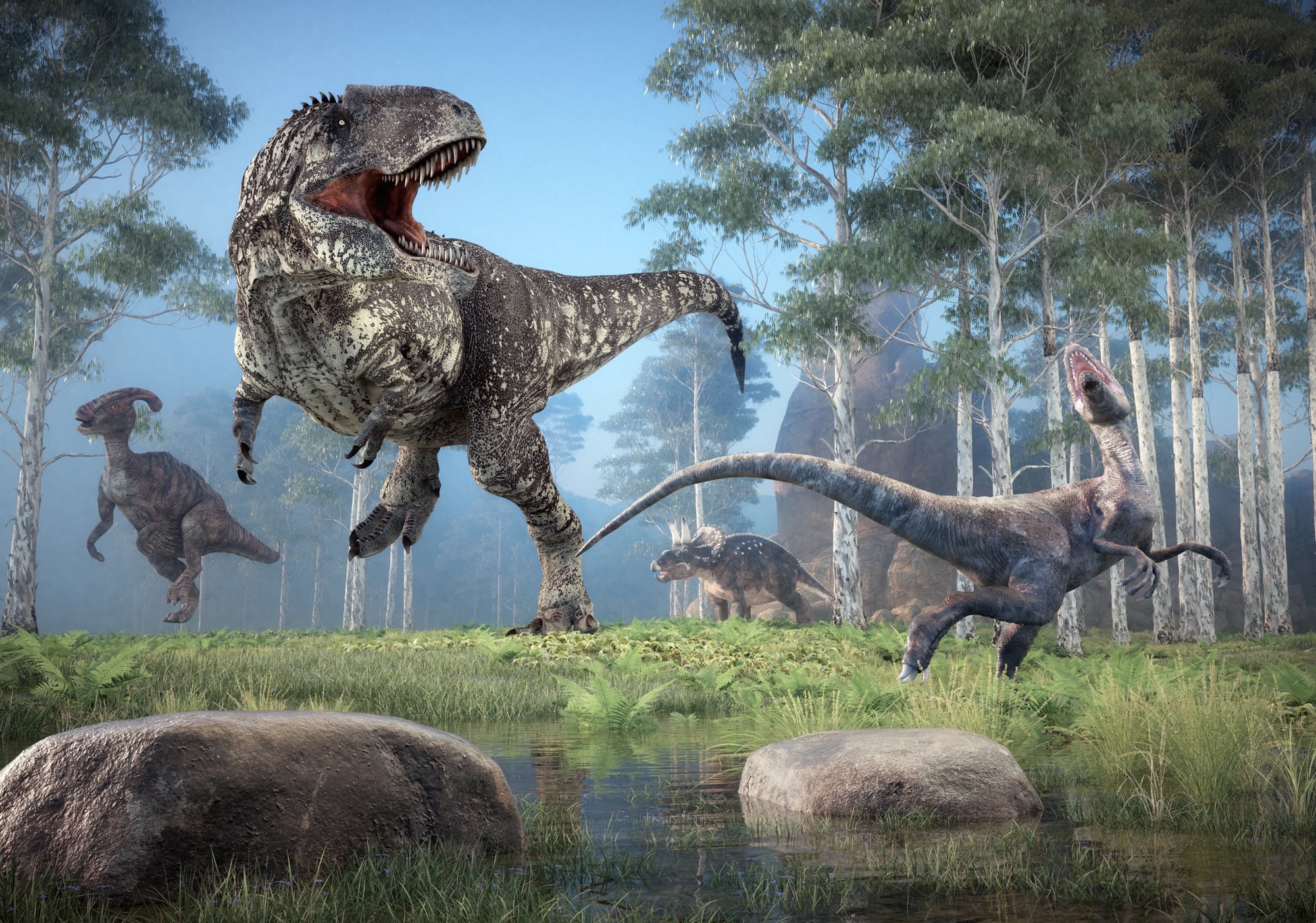
Feathers weren’t just for flying. Most dinosaurs never got off the ground, yet many species sported elaborate plumage anyway.
These feathers served as insulation, display features, and camouflage. The discovery has completely rewritten how scientists picture these ancient creatures.
Instead of scaly, lizard-like beasts, many dinosaurs resembled oversized, flightless birds.
Some Dinosaurs Were Smaller Than Chickens
One of the smallest known dinosaurs, Microraptor, weighed about two pounds and could fit comfortably in your hands. Compsognathus wasn’t much bigger than a house cat.
These tiny predators scurried through undergrowth, hunting insects and small mammals. Hollywood got it backwards.
For every massive Tyrannosaurus, there were dozens of species you could step over without noticing.
Dinosaur Colors Have Been Discovered
Scientists can now determine the actual colors of dinosaurs by studying fossilized melanosomes (the structures that contain pigment in feathers and skin), and what they’ve found challenges every assumption we had about how these creatures looked.
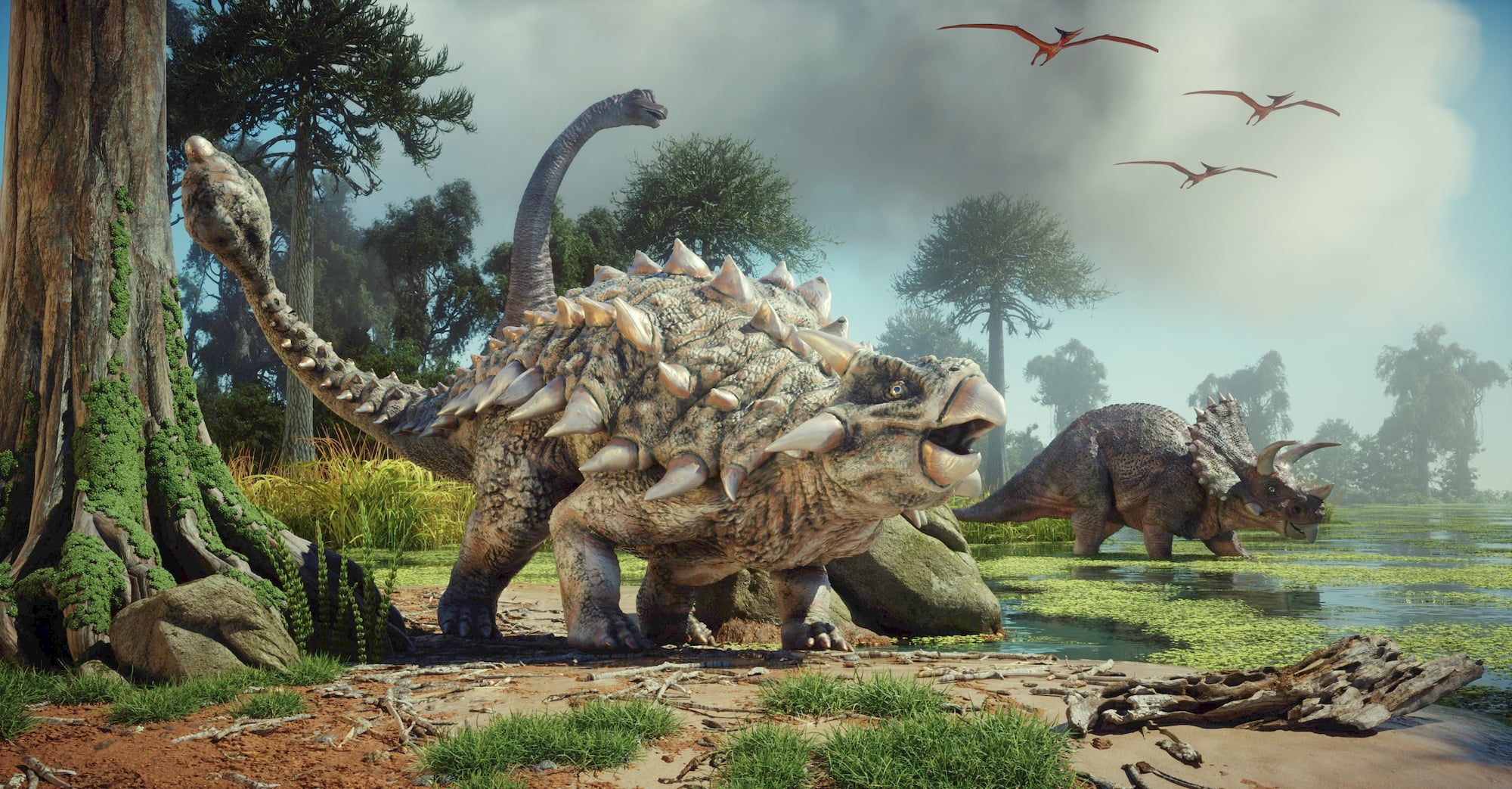
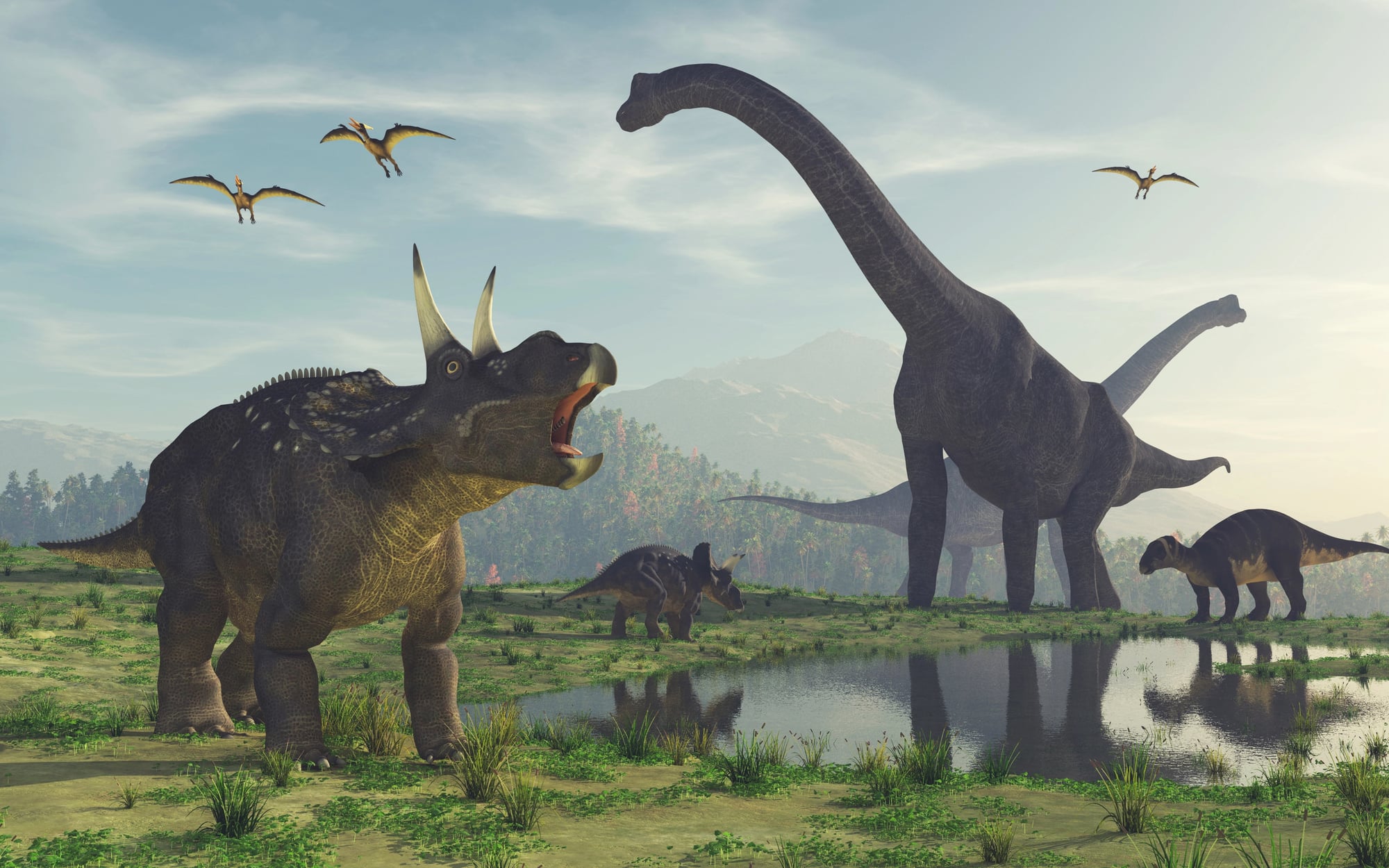
Borealopelta, for instance, was reddish-brown on top and light-colored underneath — classic countershading that made this heavily armored herbivore blend into its environment despite weighing as much as a rhinoceros.
But here’s where it gets interesting: the fact that such a well-defended animal still needed camouflage suggests the predators of its time were so formidable that even walking tanks couldn’t rely on armor alone. So much for the drab, uniformly gray monsters of old movies.
Sinosauropteryx sported a striped tail, while Anchiornis was mostly black with white-striped wings — more striking than most birds alive today.
They Lived in Every Environment on Earth
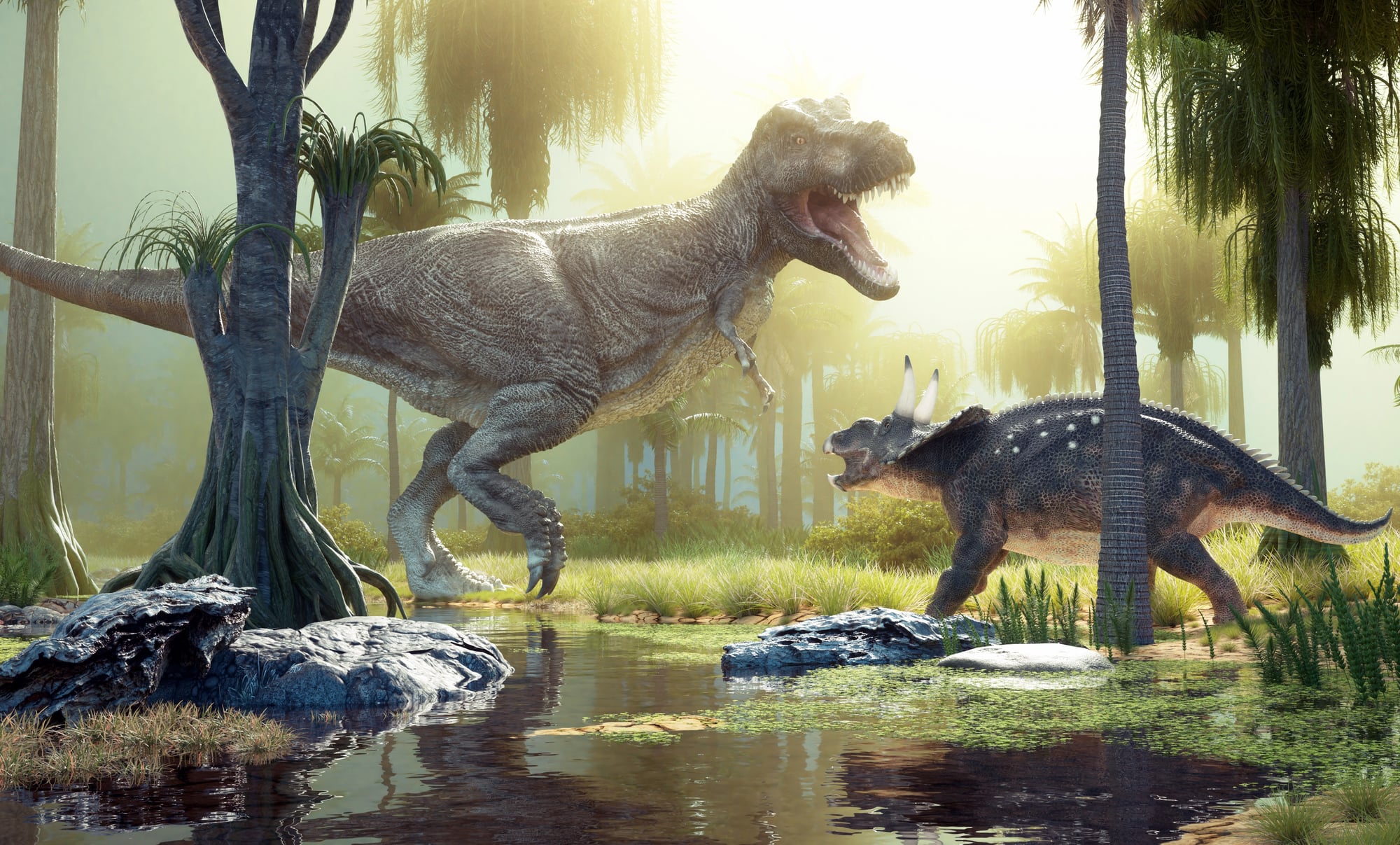
Picture a dinosaur, and you probably imagine something trudging through a swamp or stomping across a desert plain. But dinosaurs inhabited every conceivable environment on the planet — from polar forests where they endured months of darkness to high-altitude mountain ranges where the air was thin and cold.
They lived in dense jungles, open grasslands, coastal areas, and even islands. Some species were so adapted to their specific environments that they developed unique characteristics: polar dinosaurs grew faster during the brief summer months and may have hibernated, while island species often became dwarfed versions of their mainland cousins.
The adaptability wasn’t just impressive — it was almost stubborn in its thoroughness. Dinosaurs didn’t just survive in different places; they thrived there for over 160 million years.
T. Rex Had Excellent Vision and Hearing
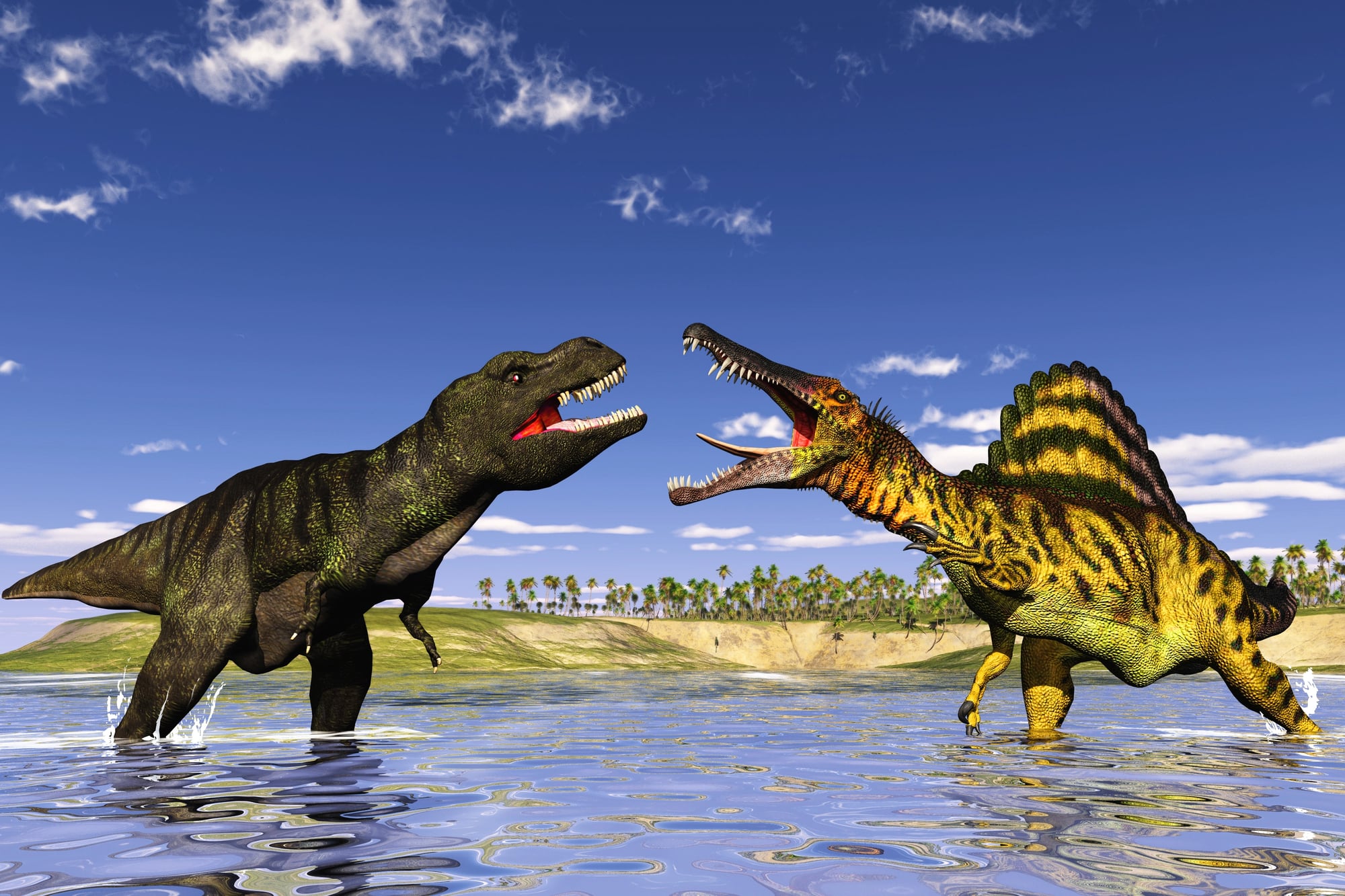
Tyrannosaurus rex wasn’t a half-blind scavenger stumbling around looking for carrion. This apex predator had vision superior to modern hawks and could detect movement from miles away.
Its sense of smell rivaled that of modern vultures. The brain-to-body ratio was surprisingly high for such a large animal.
T. rex was built for hunting, not scavenging, though it certainly wouldn’t turn down an easy meal.
Dinosaurs Were Social Creatures
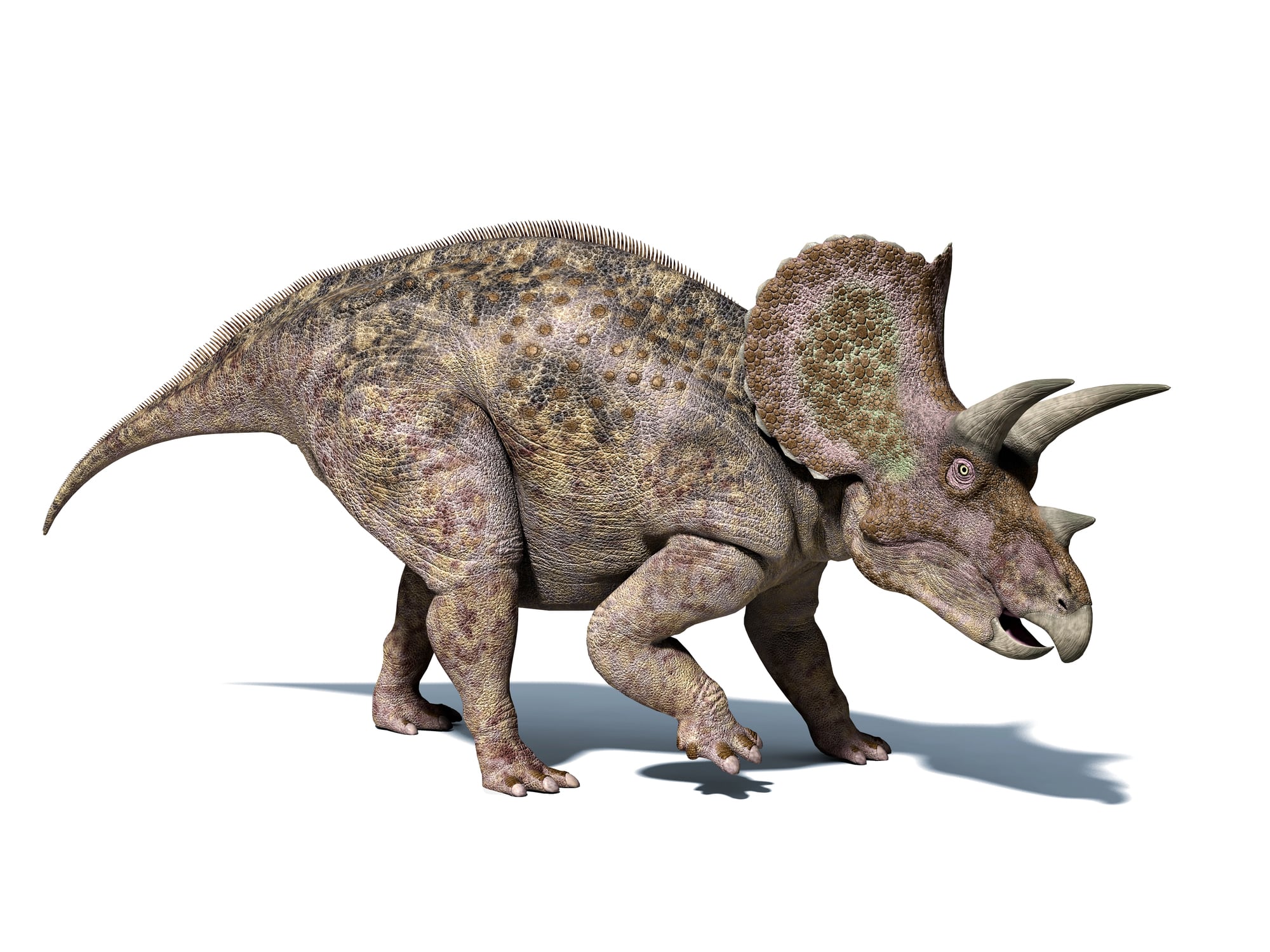
The image of the solitary dinosaur — a massive, territorial beast ruling its domain alone — dissolves completely when you look at the fossil evidence, because what emerges instead is a picture of creatures that lived, traveled, and hunted together in ways that mirror the social structures of modern animals.
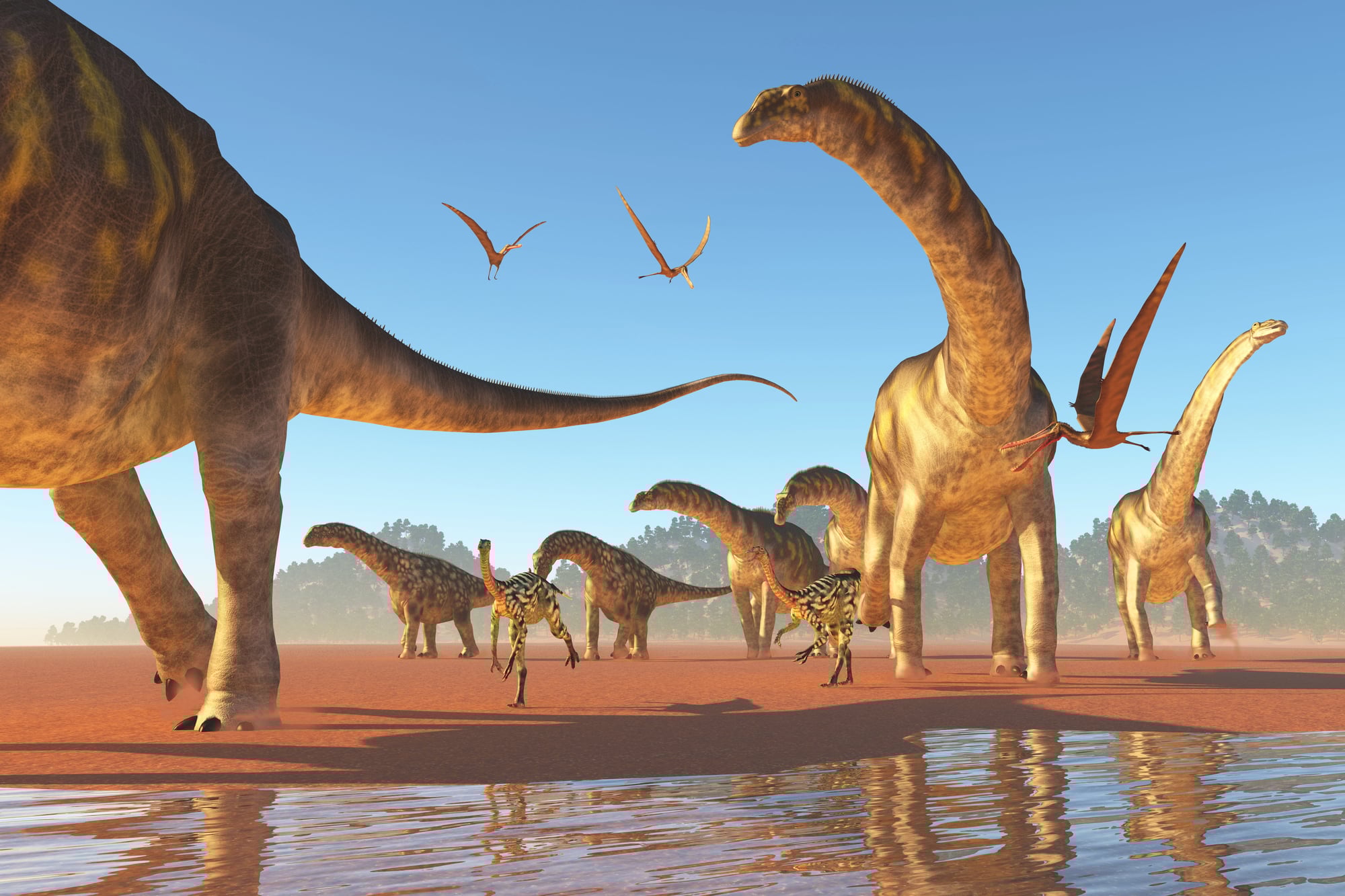
Maiasaura nested in colonies, with hundreds of individuals caring for their young in close proximity, while trackway evidence shows that many species of sauropods moved in herds with the young protected in the center and adults on the perimeter.
Even some of the large predators appear to have hunted in coordinated groups, with fossil sites in Montana revealing multiple Deinonychus individuals found alongside a single large herbivore — suggesting pack behavior that required communication and strategy.
And yet the popular image persists: the lone dinosaur, master of its territory. Reality was far more complex and, frankly, more interesting.
They Made Sophisticated Nests
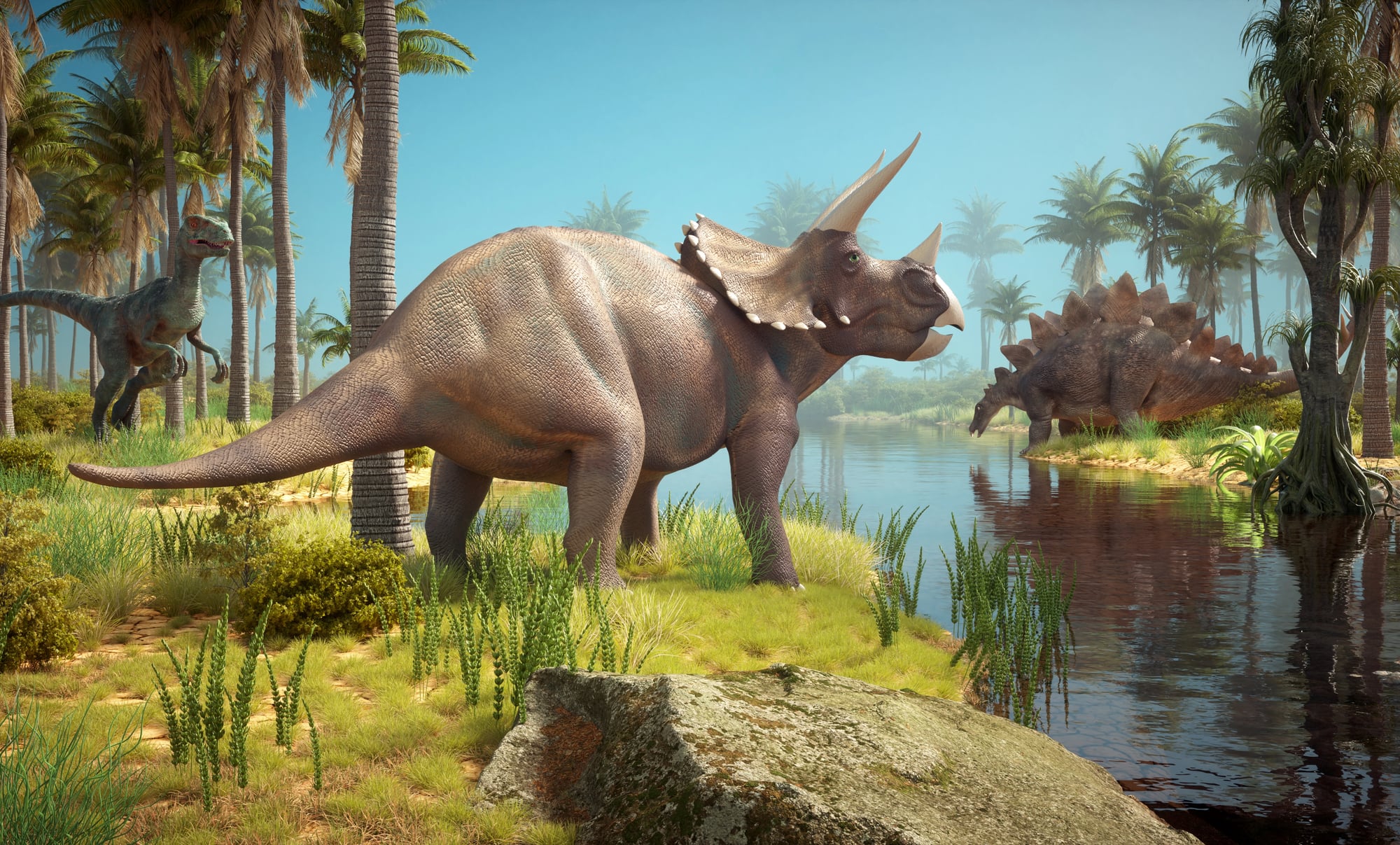
Dinosaur parenting puts most modern animals to shame. Maiasaura built elaborate mud nests six feet across and brought food back to their babies for months.
Some species arranged their eggs in precise spiral patterns and covered them with vegetation to maintain consistent temperatures. Triceratops appears to have had nursery areas where multiple families raised their young together.
The level of care rivaled what you see in modern birds and mammals.
Dinosaurs Survived the Asteroid Impact
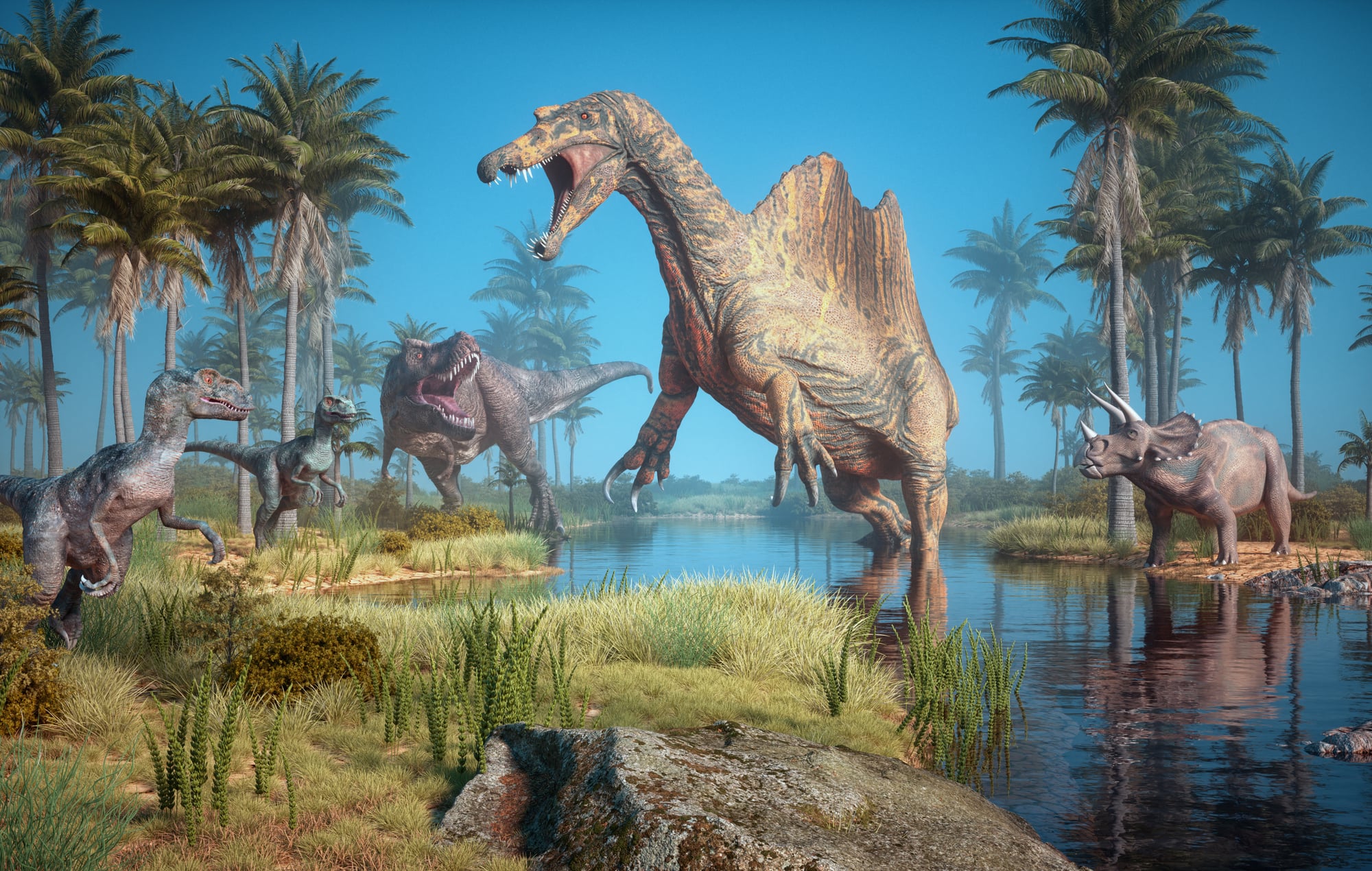
The asteroid that struck Earth 66 million years ago didn’t actually kill all the dinosaurs — it just killed the non-avian ones, which is a distinction that matters more than it might seem at first glance.
Birds are dinosaurs, not descendants of dinosaurs, and this isn’t some semantic game that paleontologists play to sound clever; it’s a fundamental truth about how evolution works and how life persists through catastrophe.
The small, feathered dinosaurs that could fly, regulate their body temperature, and adapt quickly to changing food sources survived while their larger, ground-bound relatives perished, but they carried the dinosaur lineage forward in an unbroken chain that leads directly to the robin outside your window.
So when someone says dinosaurs went extinct, they’re only telling half the story. The other half is singing in your backyard.
Some Dinosaurs Could Swim
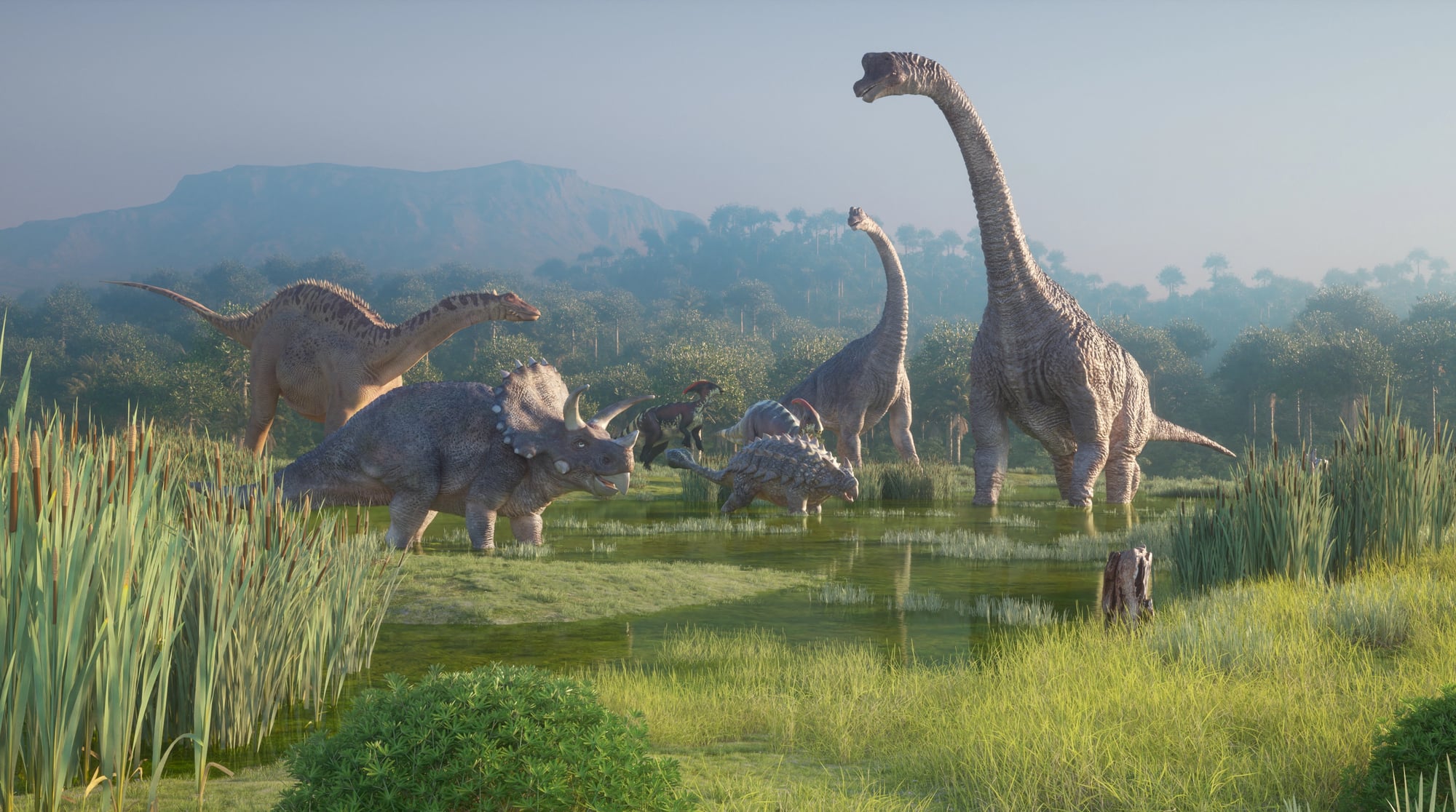
Most dinosaurs stuck to dry land, but several species took to the water with surprising skill. Spinosaurus spent much of its time in rivers, using its paddle-like tail to propel itself after fish.
Its nostrils were positioned high on its skull, like a crocodile’s. Halszkaraptor had flipper-like arms and strong terrestrial legs.
This duck-sized predator was basically a dinosaur penguin, diving for aquatic prey in shallow lagoons.
Dinosaur Brains Were More Complex Than Expected
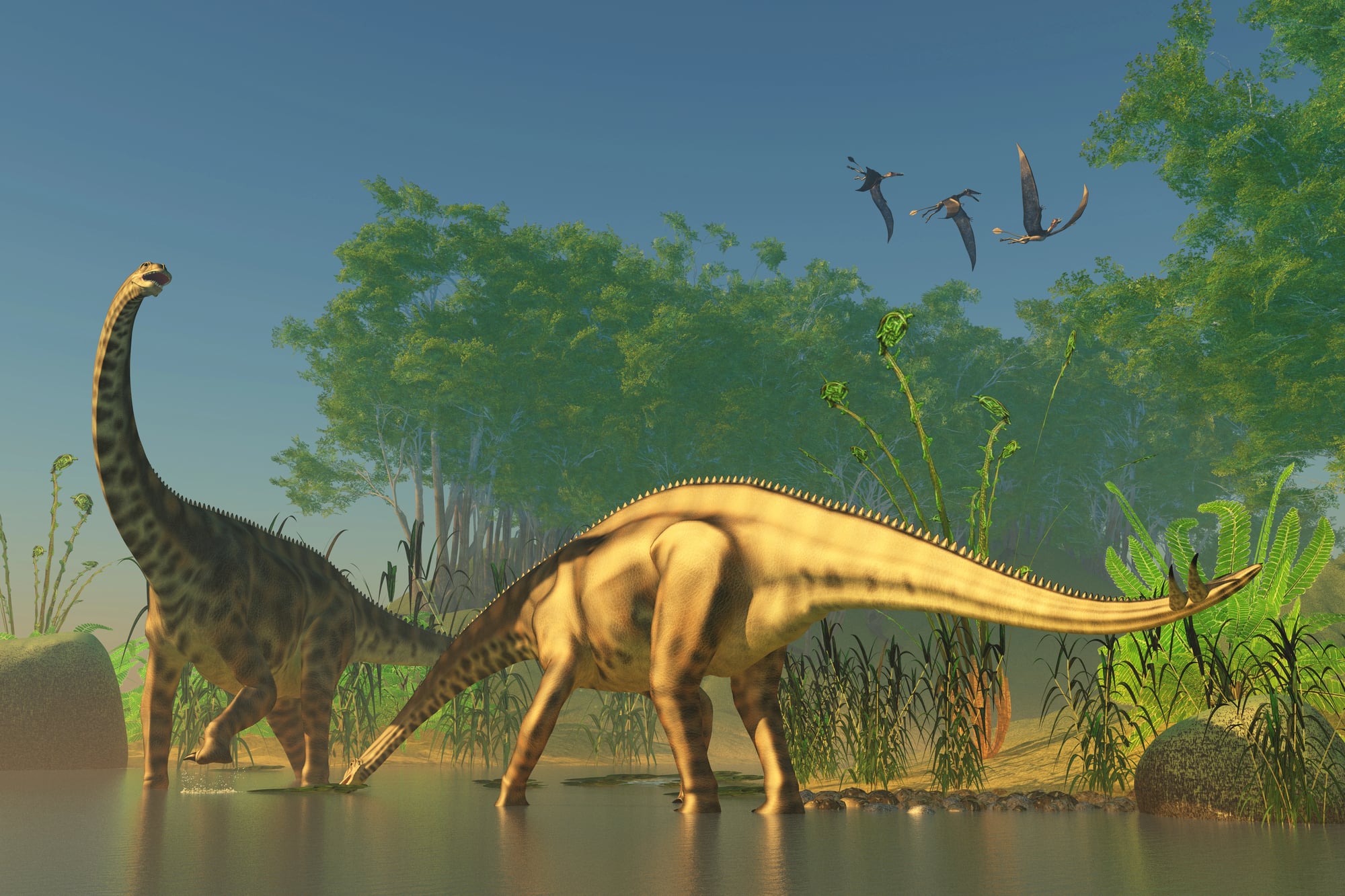
The old stereotype of dinosaurs as dim-witted, lumbering giants falls apart when you examine their brain structure, and what’s particularly fascinating is how different species evolved different types of intelligence based on their ecological needs — Troodon had a brain-to-body ratio similar to modern birds and likely possessed problem-solving abilities that would put many contemporary animals to shame, while the massive sauropods developed specialized neural pathways for processing the complex social signals required to coordinate movement in herds of dozens or even hundreds of individuals.
But perhaps most intriguing is the evidence that some species, particularly the smaller theropods, showed signs of what researchers cautiously call “behavioral flexibility” — the ability to adapt their hunting strategies, modify their nesting sites, and even alter their migration patterns based on changing environmental conditions.
Which raises an uncomfortable question: how many opportunities for complex behavior did we miss simply because we assumed these animals were too primitive to be interesting?
They Had Diverse Diets
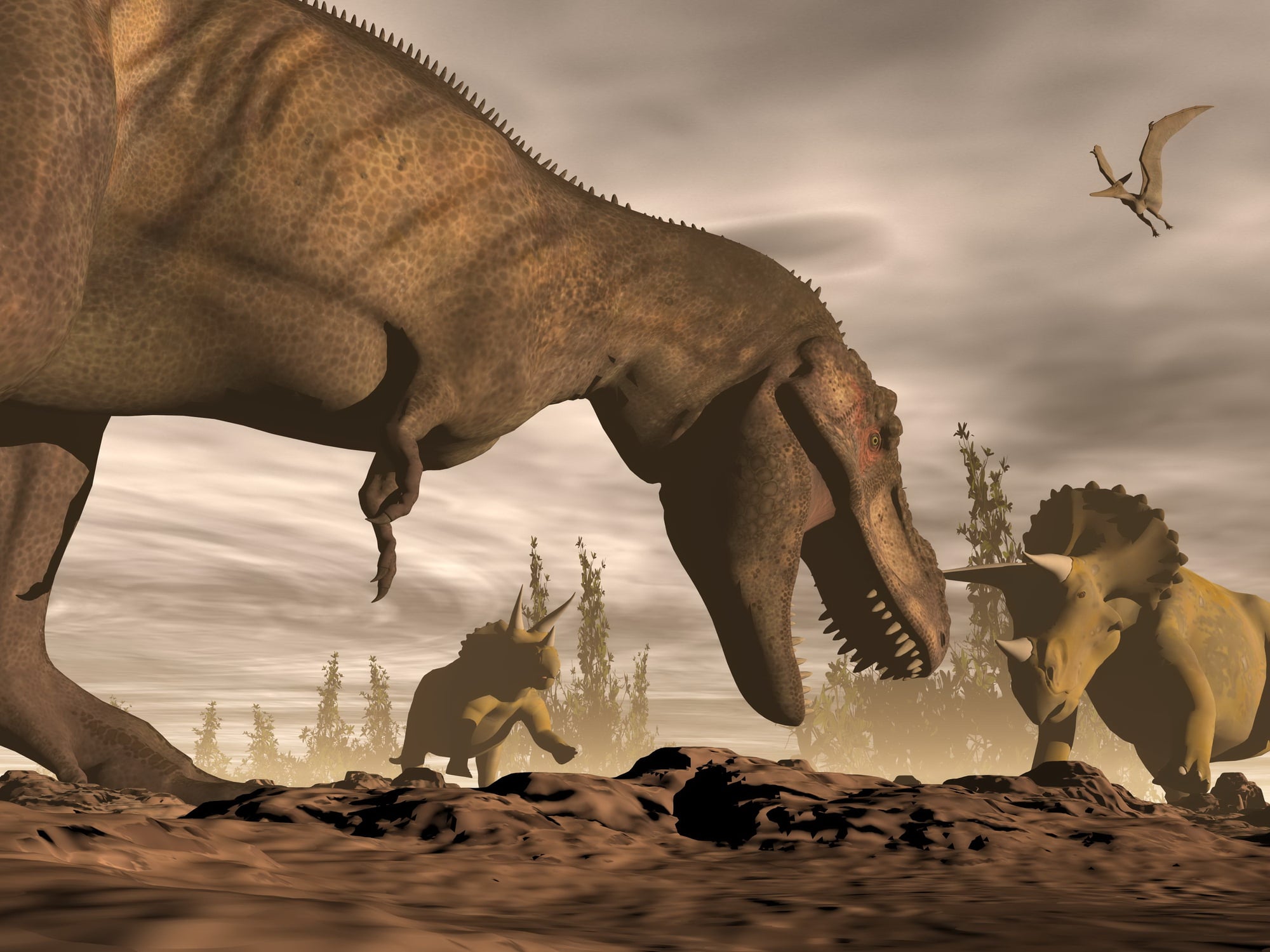
Not all large dinosaurs were vegetarians, and not all small ones were meat-eaters. Therizinosaurus stood 16 feet tall and sported massive claws, but used them to strip leaves from trees.
Carnotaurus was built like a race car and hunted by running down prey at high speeds. Some species were opportunistic omnivores, eating whatever was available.
Oviraptor, despite its name meaning “egg thief,” primarily ate shellfish and small animals.
Dinosaurs Lived for Millions of Years Longer Than Humans Have Existed
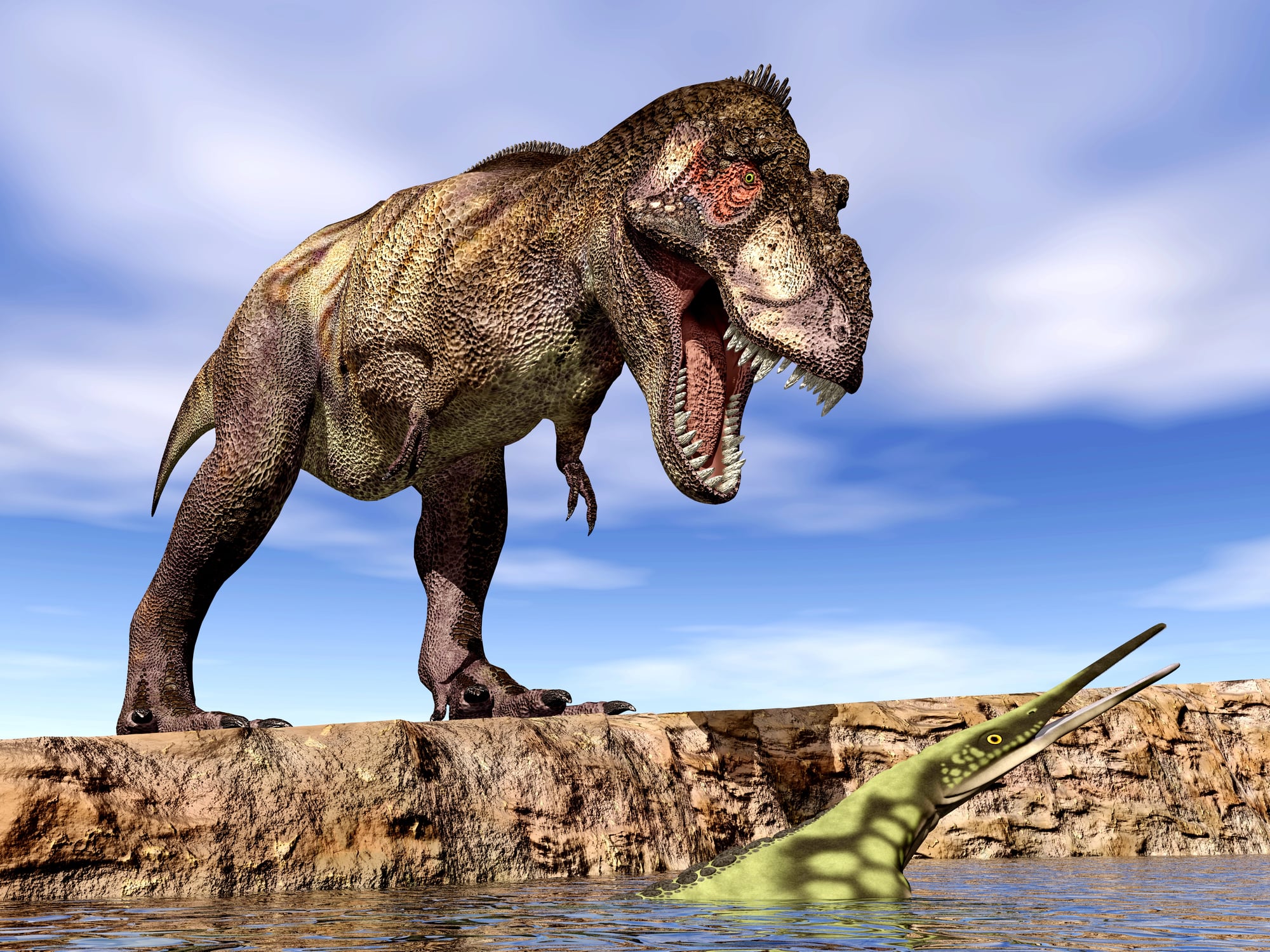
Time has a way of making the distant past feel compressed, like flipping through a photo album where everything happened at once, but the reign of the dinosaurs stretched across such an enormous span that it dwarfs human existence by orders of magnitude — they ruled the Earth for roughly 165 million years, while our entire species has been around for maybe 300,000 years, which means that Stegosaurus is closer in time to us than it was to Tyrannosaurus rex.
The gap between early dinosaurs and late dinosaurs is so vast that entire ecosystems rose and fell, continents drifted across the globe, and the climate shifted from tropical to temperate to tropical again multiple times over.
And yet we tend to think of them as contemporaries, as if all these creatures were wandering around the same Mesozoic landscape at the same time. The scale is almost impossible to grasp.
But it explains why dinosaur diversity was so staggering — they had geological ages to experiment with different body plans and ecological niches.
Some Dinosaurs Were Incredibly Fast
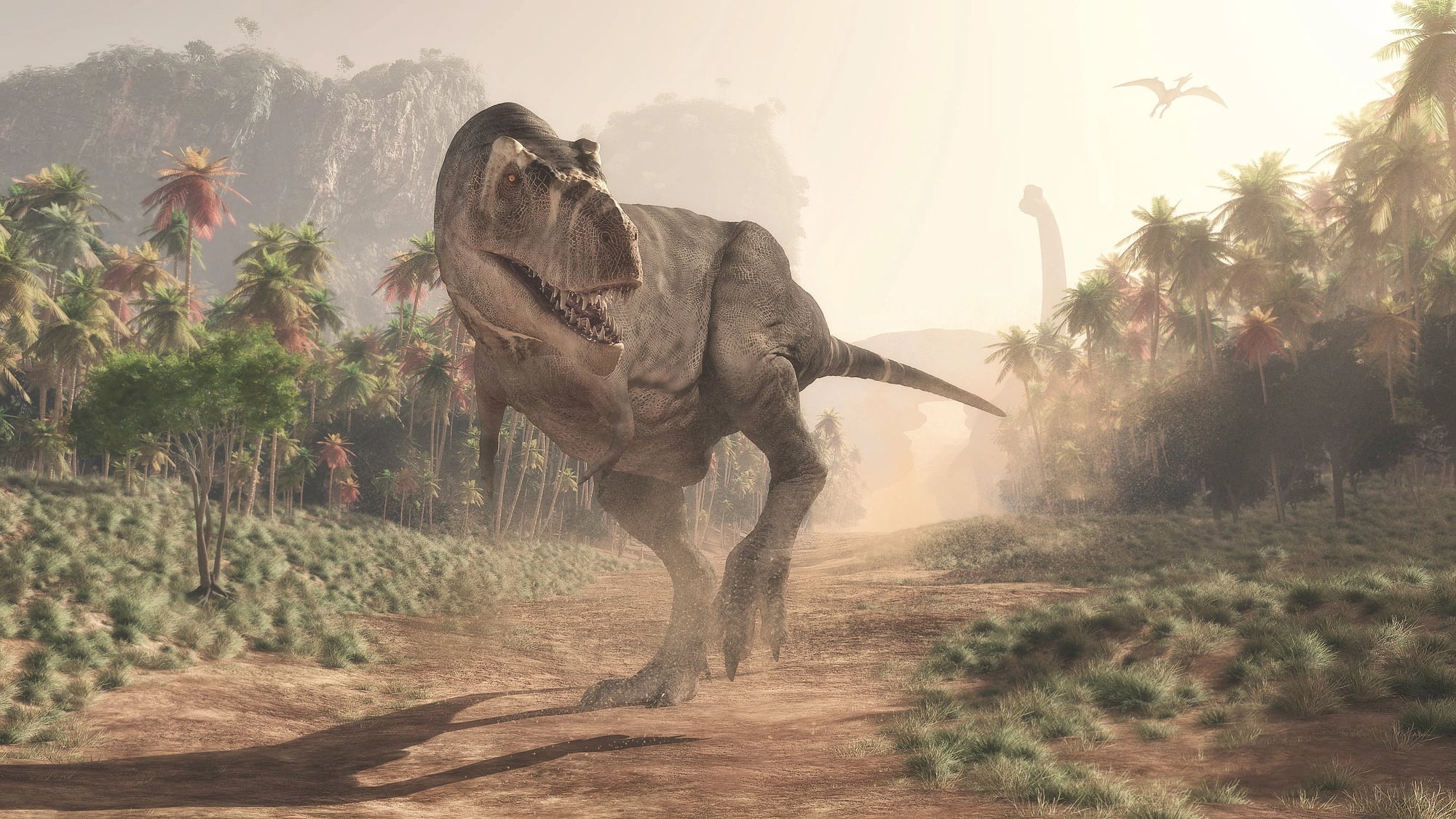
Ornithomimus could hit speeds of 40 miles per hour, making it faster than most cars driving through a residential neighborhood. Compsognathus was even quicker relative to its size, darting around like a feathered bullet.
Speed was often the difference between eating and being eaten. The fastest dinosaurs developed long, powerful legs and lightweight bones that prioritized agility over strength.
Dinosaurs Had Complex Mating Displays
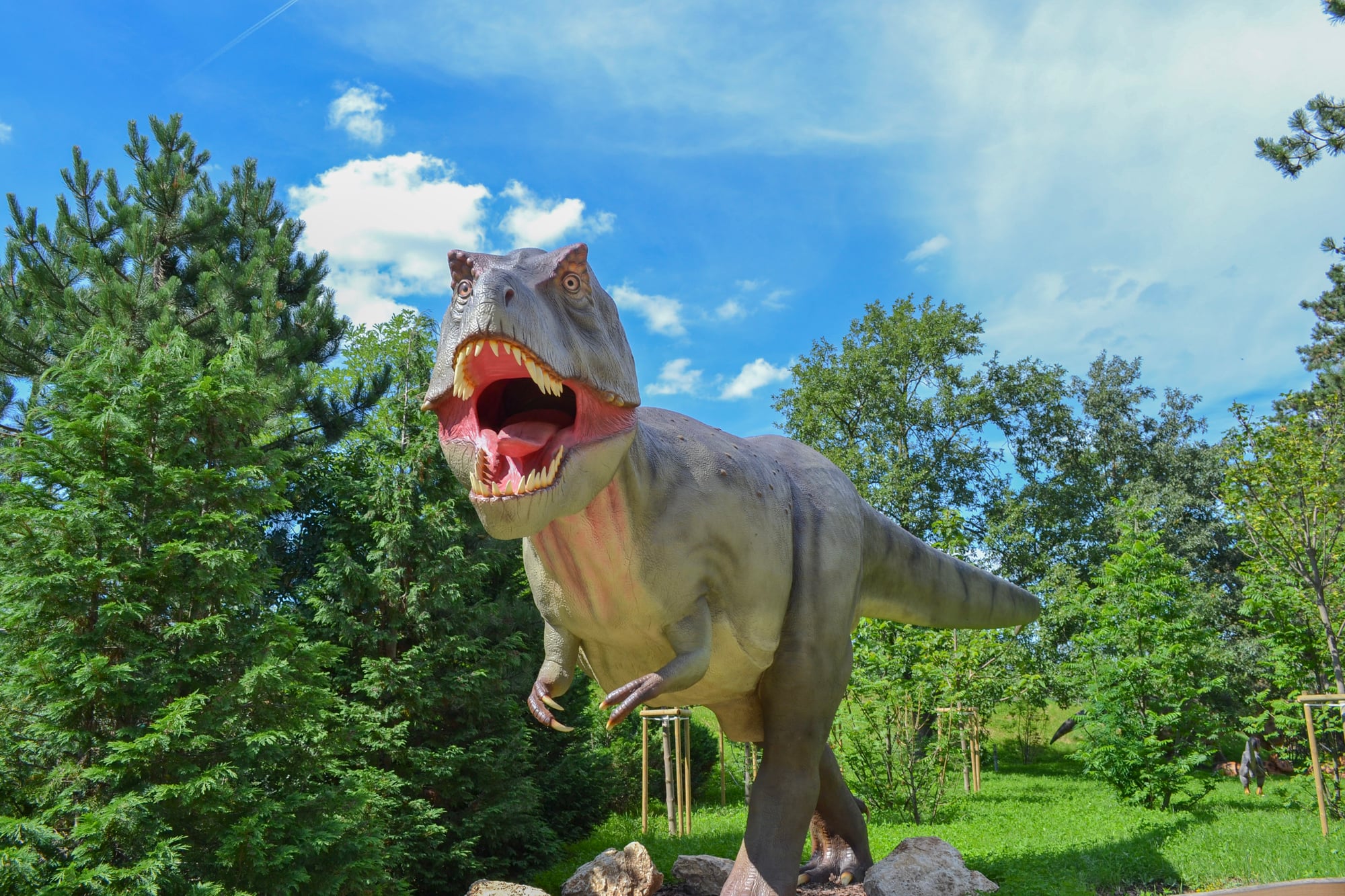
The peacock’s tail makes perfect sense once you realize it’s following a pattern that dinosaurs established millions of years ago, because the fossil record is filled with evidence of elaborate courtship behaviors that put modern animal displays to shame — Carnotaurus had prominent horns that were likely used for head-butting competitions, while some hadrosaurs developed hollow crests that functioned as resonating chambers for producing specific musical notes during mating season.
Therizinosaurus may have used its massive claws not for defense, but for creating elaborate scrape displays in the ground to attract mates, much like modern birds do today.
Even the colors we’ve discovered suggest that many species developed bright plumage or skin patterns specifically for courtship, with males likely being more colorful than females. So the next time you watch a bird’s mating dance, remember: you’re watching a performance that’s been refined over 150 million years.
They Were Warm-Blooded
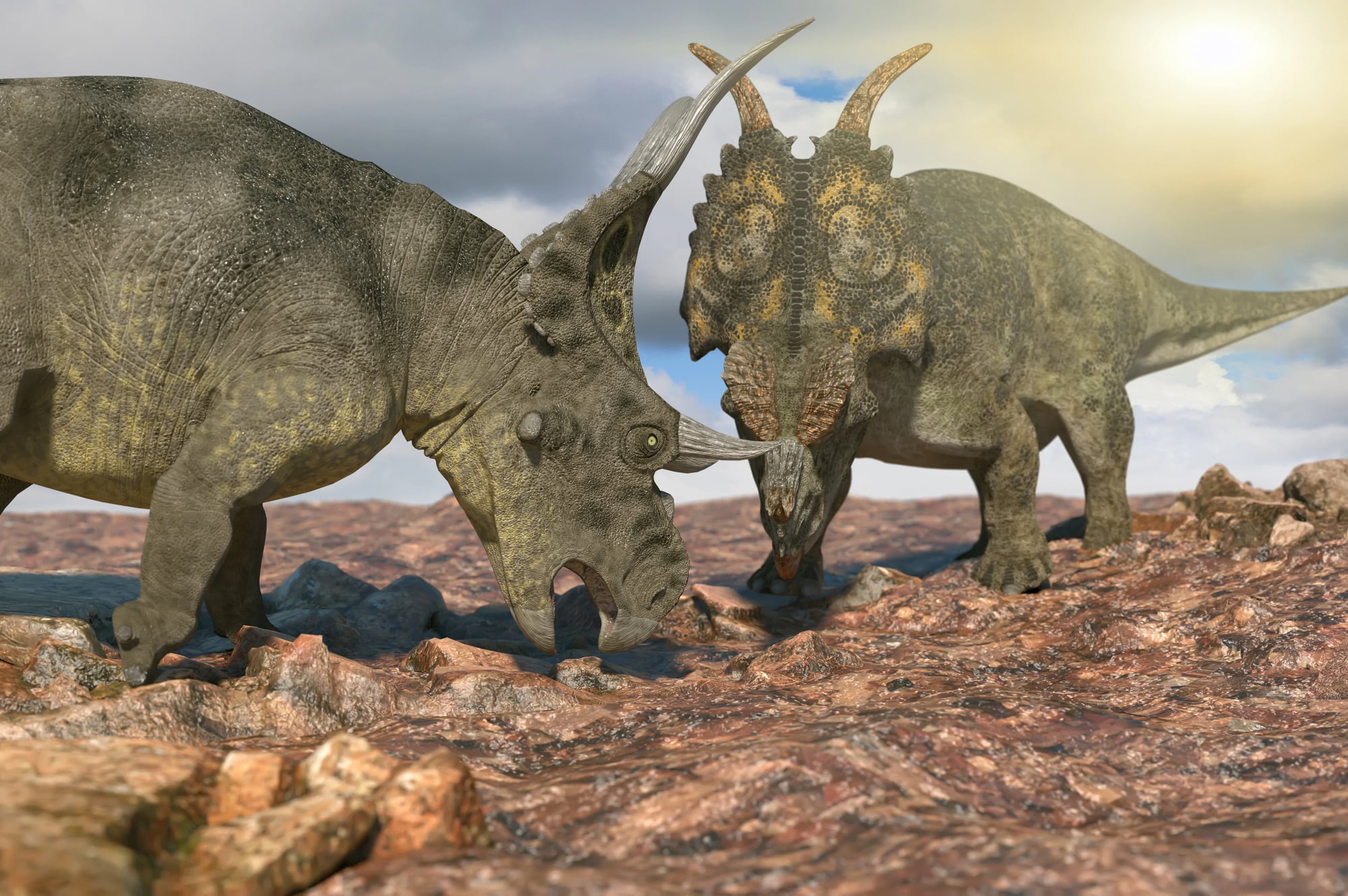
The debate lasted decades, but the evidence now strongly suggests that most dinosaurs were warm-blooded creatures with active metabolisms. They could regulate their body temperature internally, just like modern birds and mammals.
This explains their global distribution and complex behaviors. Cold-blooded animals simply couldn’t have sustained the energy levels required for the social structures and migration patterns we see in the fossil record.
Dinosaurs Made Sounds We’re Only Beginning to Understand
Forget the roars from Jurassic Park — real dinosaurs likely made sounds closer to bird songs, crocodile bellows, and elephant rumbles. Parasaurolophus could produce deep, resonant notes through its hollow crest that traveled for miles across ancient landscapes.
Some species probably cooed to their young, while others may have produced complex vocalizations for coordinating group hunts. The soundscape of the Mesozoic was far richer and more musical than anyone imagined.
The Giants That Never Were
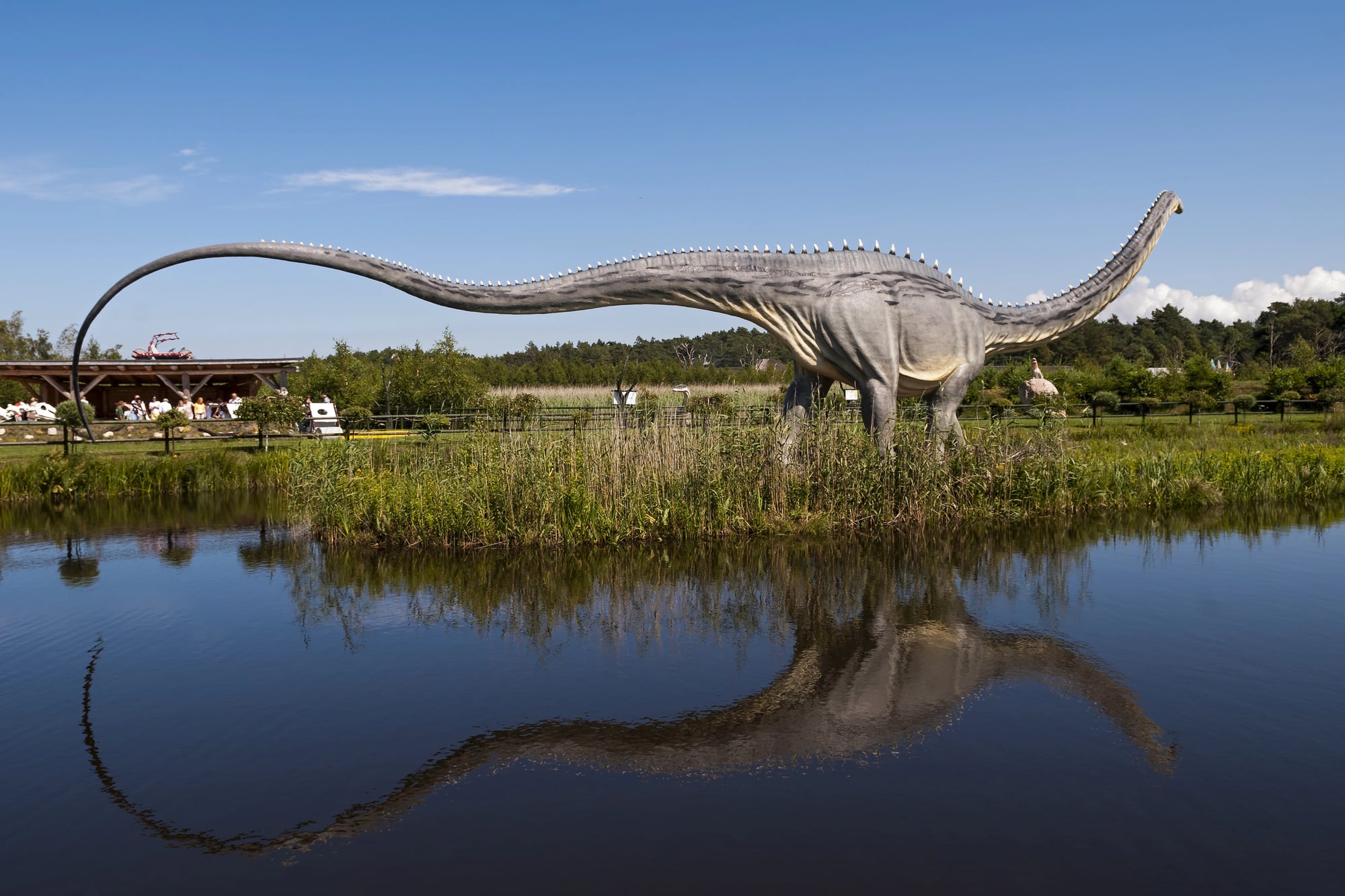
Standing in a museum next to a Brontosaurus skeleton, it’s easy to assume that bigger was always better in the dinosaur world, but the fossil record tells a different story — one where the most successful dinosaurs were often the most adaptable ones, not necessarily the largest ones.
The massive sauropods that capture our imagination were actually relatively rare in their ecosystems, outnumbered by smaller, more agile species that could exploit diverse food sources and survive environmental changes.
Size came with costs: these giants required enormous amounts of food, were vulnerable to climate shifts, and couldn’t adapt quickly to new threats. Which makes their survival for millions of years all the more remarkable.
They found their niche and dominated it, but they were never the whole story. The real story of dinosaurs is one of endless experimentation with form and function — and that story is still being written today, every time a bird takes flight.
More from Go2Tutors!

- The Romanov Crown Jewels and Their Tragic Fate
- 13 Historical Mysteries That Science Still Can’t Solve
- Famous Hoaxes That Fooled the World for Years
- 15 Child Stars with Tragic Adult Lives
- 16 Famous Jewelry Pieces in History
Like Go2Tutors’s content? Follow us on MSN.