17 Ancient Punishments That Sound Unbelievable Today
Throughout history, societies have devised some truly bizarre ways to deal with lawbreakers. While modern justice systems focus on rehabilitation and proportional punishment, our ancestors had wildly different ideas about making criminals pay for their crimes.
Some punishments were so outlandish they’d make even the most creative Hollywood scriptwriter scratch their head in disbelief. From public humiliation rituals to elaborate physical tortures, ancient civilizations got pretty inventive when it came to deterring bad behavior.
Here is a list of 17 ancient punishments that sound absolutely unbelievable by today’s standards.
Scaphism

The ancient Persians came up with one of the most horrifying punishments imaginable called scaphism, also known as ‘the boats’. The condemned person would be trapped between two small boats or wooden tubs, with only their head, hands, and feet sticking out.
They’d be force-fed milk and honey until they developed severe diarrhea, which would attract insects to feast on their exposed body parts. This slow torture could last for days or even weeks until the victim finally died from a combination of dehydration, starvation, and septic shock.
Damnatio ad Bestias

Roman emperors loved their spectacles, and damnatio ad bestias was the ultimate crowd-pleaser at the Colosseum. Criminals would be thrown into the arena completely unarmed to face hungry lions, tigers, bears, or other wild animals.
Sometimes they’d get creative and stage elaborate mythological scenes where the condemned would play characters who met grisly ends in ancient stories. It was basically dinner and a show for Roman audiences, though the ‘dinner’ part was pretty literal for the animals involved.
The Breaking Wheel

Medieval Europeans perfected the art of slow, public torture with the breaking wheel. The victim would be tied to a large wooden wheel, and executioners would systematically break their limbs with iron bars or hammers.
After thoroughly destroying their bones, they’d be left on the wheel to die slowly from their injuries, sometimes taking days to finally expire. The wheel would often be mounted on a pole and displayed as a warning to other potential criminals, creating a gruesome roadside attraction.
Keelhauling

Sailors who broke maritime law faced keelhauling, a punishment that combined drowning with severe scraping injuries. The offender would be tied to a rope and dragged underwater along the entire length of the ship’s hull from bow to stern.
Sharp barnacles and rough wood would shred their skin while they struggled not to drown during the lengthy underwater journey. Many victims died from blood loss or drowning, while survivors bore permanent scars as reminders of their maritime crimes.
Lingchi

Chinese courts reserved lingchi, or ‘death by a thousand cuts’, for the most serious crimes like treason or killing one’s parents. Executioners would carefully slice away small pieces of the victim’s flesh over an extended period, keeping them alive as long as possible.
The process could take hours or even days, with skilled executioners knowing exactly how to inflict maximum pain while avoiding vital organs. Photographs of lingchi executions from the early 1900s still exist, showing just how methodical and horrifying this punishment really was.
Crucifixion

While most people associate crucifixion with Jesus Christ, Romans used this method to execute thousands of criminals and slaves. Victims would be nailed or tied to wooden crosses and left to die slowly from exhaustion, dehydration, and asphyxiation.
The process typically took several days, during which the condemned person would struggle to breathe as their body weight pulled down on their arms. Romans often crucified people along busy roads to maximize the deterrent effect, creating literal highways of horror.
Brazen Bull
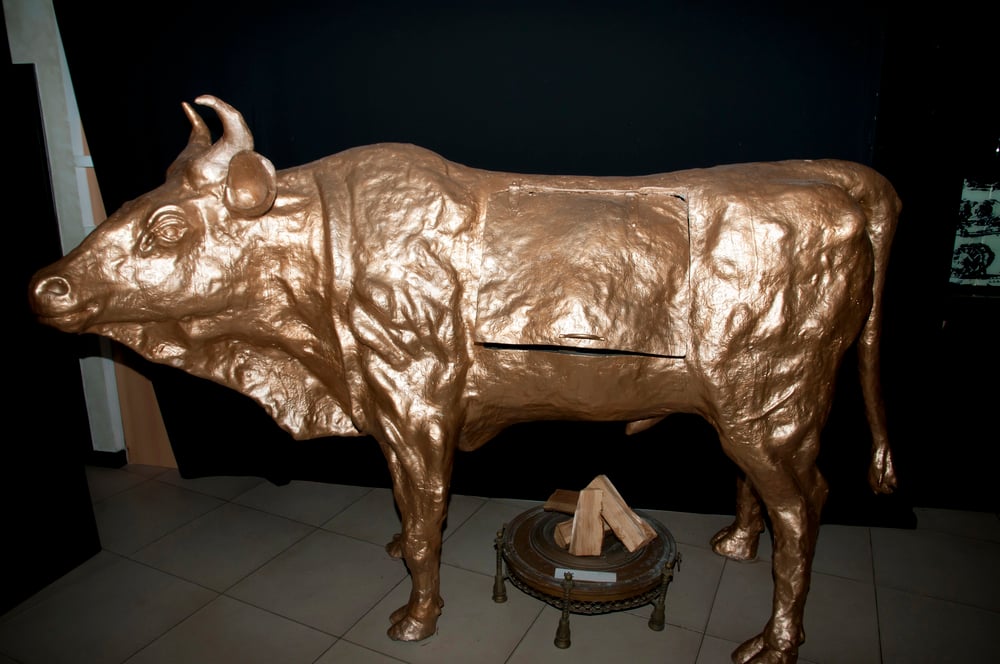
The ancient Greeks invented the brazen bull, a hollow bronze statue designed to roast people alive. Victims would be locked inside the metal bull, and a fire would be lit underneath to slowly heat the bronze.
As the person inside screamed in agony, the bull was designed with special acoustic pipes that made their cries sound like an angry bull’s roar. Legend says that Perillos, the inventor of this device, became its first victim when he demonstrated it to the tyrant Phalaris of Sicily.
Flaying

Several ancient civilizations carried out flaying, where executioners would carefully remove a person’s skin while they were still alive. Assyrians were particularly notorious for this punishment, often flaying conquered enemies and displaying their skins as trophies.
The process required considerable skill to keep the victim alive throughout the ordeal, making it both a form of execution and a demonstration of the executioner’s expertise. Some cultures would stuff the removed skin and display it as a warning to others.
Sawing

Medieval executioners sometimes literally sawed people in half, starting from between their legs and working upward. The victim would be hung upside down to ensure blood flow to the brain, keeping them conscious for as long as possible during the sawing process.
This method was particularly popular during the Spanish Inquisition and in various Germanic regions. The upside-down position meant victims often remained alive until the saw reached their vital organs, making it an exceptionally cruel form of execution.
Poena Cullei

Roman law prescribed poena cullei for people who killed their parents, involving a bizarre combination of drowning and animal companionship. The condemned would be sewn into a leather sack along with a dog, rooster, viper, and monkey, then thrown into a body of water.
The idea was that these animals represented different negative qualities, and the parricide would die alongside creatures that symbolized their moral corruption. The thrashing animals would claw and bite the victim as they all drowned together in the sack.
Elephant Execution

Various Asian cultures used trained elephants as executioners, taking advantage of these animals’ intelligence and strength. Elephants could be taught to slowly crush victims underfoot, prolonging the agony by applying pressure gradually rather than delivering a quick fatal blow.
Some elephants were trained to tear people apart limb from limb, while others would use their tusks to impale condemned criminals. The spectacle served as both entertainment and a powerful deterrent, as few things are more terrifying than an angry elephant with a job to do.
Hanged, Drawn, and Quartered
England reserved its most elaborate punishment for traitors, combining multiple forms of torture into one horrific spectacle. The victim would first be hanged until nearly dead, then cut down and disemboweled while still alive.
Finally, they’d be chopped into quarters, with different body parts sent to various locations throughout the kingdom. The entire process was designed to be as public and gruesome as possible, with thousands of spectators gathering to watch these executions that could last for hours.
The Judas Cradle

Medieval interrogators used the Judas cradle to extract confessions through prolonged agony rather than quick death. This pyramid-shaped device would be positioned under the victim’s pelvis, and they’d be slowly lowered onto the pointed tip.
The torture could continue for hours or days, with the victim’s own body weight gradually impaling them on the wooden point. Interrogators could control the pace by adjusting ropes and pulleys, making it an effective tool for breaking even the most stubborn prisoners.
Blood Eagle

Vikings developed the blood eagle as their most brutal execution method, reserved for enemies who had particularly offended them. The victim’s ribs would be cut away from their spine and pulled outward to resemble wings, while their lungs were removed and draped over these ‘wings’.
Some accounts suggest salt would be rubbed into the wounds to increase the agony. While historians debate whether this punishment was actually practiced or just existed in Viking literature, the detailed descriptions suggest it was at least considered a real possibility.
Bamboo Torture

Asian torturers discovered that bamboo’s rapid growth could be weaponized into a slow, horrifying execution method. Victims would be tied over freshly planted bamboo shoots, which could grow several inches per day under the right conditions.
The sharp bamboo would gradually pierce through the victim’s body as it grew, creating wounds that slowly expanded over days or weeks. This method required perfect timing and conditions, but when executed properly, it combined the horror of impalement with the psychological torture of knowing exactly how you were going to die.
Rat Torture

Interrogators in various cultures used rats’ natural behavior to break prisoners without leaving obvious marks. A metal container filled with rats would be placed on the victim’s stomach or chest, and then heated from the outside.
As the container became uncomfortably hot, the panicked rats would claw and gnaw their way through the victim’s flesh to escape the heat. This method was particularly effective for extracting information because it could be stopped and started repeatedly, giving prisoners multiple chances to confess.
Immurement

Medieval societies sometimes punished people by walling them up alive in buildings, tombs, or specially constructed chambers. The victim would be given just enough food and water to survive for a few days, then left to die slowly from starvation and dehydration.
Archaeological evidence shows that some immured people survived for weeks by eating their own clothing or body parts. This punishment was often used against people who broke religious vows, with some victims being walled up in the very buildings they had served.
When Justice Meant Something Very Different

These ancient punishments reveal just how dramatically our concept of justice has evolved over the centuries. What once passed for legitimate legal consequences would today be considered war crimes or torture, showing how much human society has progressed in terms of basic decency and human rights.
While modern critics sometimes complain that contemporary justice systems are too lenient, these historical examples remind us that there’s real wisdom in proportional punishment and due process. The creativity that ancient societies put into devising these horrific punishments ultimately says more about their own brutality than about the effectiveness of extreme deterrence.
More from Go2Tutors!

- The Romanov Crown Jewels and Their Tragic Fate
- 13 Historical Mysteries That Science Still Can’t Solve
- Famous Hoaxes That Fooled the World for Years
- 15 Child Stars with Tragic Adult Lives
- 16 Famous Jewelry Pieces in History
Like Go2Tutors’s content? Follow us on MSN.



