17 Countries Leading in Electric Car Adoption
The electric car revolution is happening right now, and some countries are way ahead of the pack. While plenty of places are still stuck in the gas-guzzling past, forward-thinking nations have embraced electric vehicles with impressive results. We’re talking about countries where electric cars aren’t just a trendy option for wealthy environmentalists – they’re becoming the normal choice for regular people buying cars.
Here’s a list of 17 countries leading in electric car adoption, where going electric has become mainstream rather than experimental.
Norway

Norway reached near-total electrification of sales, with 88% of car sales being battery electric and just under 3% plug-in hybrid, achieving 91.6% combined electric share in 2024. The country has the world’s largest EV ownership per capita, and over 10% of all cars on Norwegian roads are now electric.
Their success comes from years of smart policies like tax exemptions, free parking, and access to bus lanes for EVs.
China

China maintained its lead among major markets, with electric car sales exceeding 11 million in 2024 – more than were sold worldwide just 2 years earlier. Electric cars accounted for almost half of all car sales in China, and one in ten cars on Chinese roads is now electric.
The government has spent $30 billion on EV production and extended tax exemptions through 2027, making China both the world’s largest EV market and manufacturing hub.
Like Go2Tutors’s content? Follow us on MSN.
Iceland

The plug-in car segment in Iceland reached impressive adoption rates, with the country ranking second in Europe after Norway for several years. In 2017, registrations of new plug-in electric cars totaled 2,990 units, up 157% from the previous year, achieving a record 14% market share globally.
The government eliminated VAT and CO2-based fees on new EV purchases, making electric cars significantly more affordable.
Denmark

Denmark shows strong northern European EV leadership with 66-67% combined electric and plug-in hybrid market share in 2025. The country recorded combined BEV and PHEV market shares well above the European average, consistently ranking in the top tier of European nations.
Denmark also has about 40% of electric bus sales shares, showing commitment to electrifying public transport.
Sweden

Sweden achieved 58-61% combined electric vehicle market share in 2025, with particularly strong growth in both battery electric and plug-in hybrid vehicles. Around 60% of all cars sold in Sweden were electric in recent data, making it one of the most electrified major European markets.
The country also leads Europe in plug-in hybrid adoption with a 23% PHEV market share.
Like Go2Tutors’s content? Follow us on MSN.
Netherlands

The Netherlands shows 48-55% combined electric vehicle market share and leads Europe with 180,000 public charging points by 2024. The country has the highest density of EV charging stations in the world, with new BEV registrations reaching an all-time high of 47% in December 2024.
Even after EV purchase subsidies ended, electric car sales continued growing strongly.
Finland

Finland achieved 50% combined electric vehicle market share, crossing the halfway point for new car sales in 2024. The country recorded combined BEV and PHEV market shares well above the European average and has about 40% of electric bus sales shares.
Finland also has strong government support with goals of 250,000 plug-in cars on roads by 2030.
Belgium

Belgium showed 41-43% combined electric vehicle market share and recorded the highest increase in BEV registrations among major European markets in 2024. Shares increased 9 percentage points compared to 2023, demonstrating rapid acceleration in adoption.
The country benefits from strong corporate car policies, with company cars representing a significant portion of total vehicle sales.
Like Go2Tutors’s content? Follow us on MSN.
Germany

Germany maintained its position as Europe’s largest EV market by volume, with over 350,000 new completely electric car registrations in 2022 and reaching 27-28% combined electric vehicle market share in 2025. Despite a temporary dip after subsidies ended, BEV registrations grew 38% in 2025, showing market resilience.
The country leads Europe in total charging infrastructure with 160,000 public charging points.
United Kingdom

The United Kingdom achieved nearly 30% electric vehicle market share in 2024, up from 24% in 2023, driven by the Vehicle Emissions Trading Scheme requiring 22% of new registrations to be battery electric. The country saw strong EV growth despite ending purchase subsidies, instead dedicating £1.6 billion to charging infrastructure with plans for 300,000 public chargers by 2030.
France

France shows around 25% electric vehicle market share among major European countries, with 155,000 public charging points ranking third in Europe. The country maintained steady EV adoption even as some subsidies were adjusted, demonstrating market maturity.
France is also a major European market for the Tesla Model 3 and other popular electric models.
Like Go2Tutors’s content? Follow us on MSN.
Austria

Austria achieved 30-31% combined electric vehicle market share in 2025, recording combined BEV and PHEV shares above the European average. Total passenger car registrations grew 9% compared to 2024, with particularly strong growth in electric vehicles.
The country benefits from its central European location and strong environmental policies.
United States

The United States saw electric car sales rise about 20% in 2024, reaching more than 1 in 10 cars sold nationwide. California leads all states with EVs making up over 25% of new car sales, while other states like New York and Washington follow closely behind.
The Inflation Reduction Act provides significant tax credits for new and used electric vehicles, supporting continued growth.
Thailand

Thailand doubled its BEV market share compared to 2023 and reached 18% electric vehicle share by 2024. The country is both a rapidly growing EV market and a major production hub, home to 43% of motor vehicle production in the ASEAN region.
Thailand has set ambitious goals for zero-emission vehicles to account for 30% of all vehicle production by 2030.
Like Go2Tutors’s content? Follow us on MSN.
Vietnam

Vietnam reached 22% BEV market share in 2024, nearly doubling from the previous year, with Q1 2025 showing approximately 36% of new car registrations being electric vehicles. This growth has been driven by strong domestic production led by local manufacturer VinFast and supportive government policies such as registration fee exemptions for EVs.
The country represents one of the fastest-growing EV markets in Southeast Asia.
Costa Rica

Costa Rica emerged as a leader in the all-electric passenger car segment in the Americas, with 4,854 light-duty all-electric vehicles and 1,098 all-electric motorcycles in operation by 2022. The country shows impressive adoption rates considering its size and economic status, demonstrating that EV leadership isn’t limited to wealthy developed nations.
Brazil

Brazil represents the largest car market in Latin America, with electric car sales more than doubling to 125,000 in 2024, reaching a market share of over 6%. In the first quarter of 2025, sales exceeded 30,000 units, 40% more than the same period in 2024.
Policy support and relatively affordable electric car imports from China played a central role in this rapid growth.
Like Go2Tutors’s content? Follow us on MSN.
The Electric Future Is Already Here
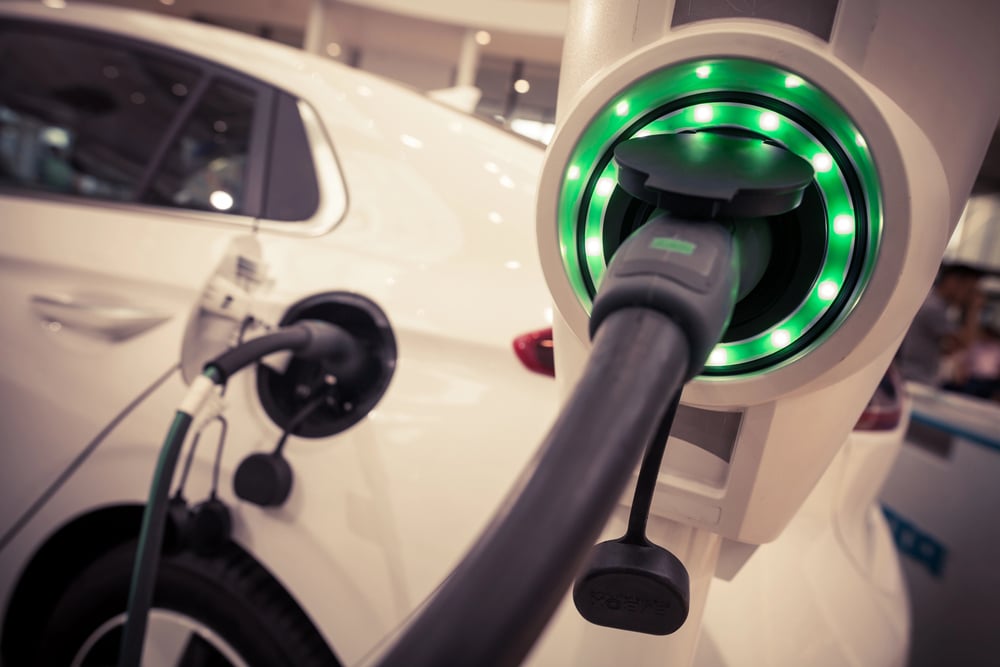
These 17 countries prove that electric car adoption isn’t some distant future dream – it’s happening right now. From Norway’s near-complete electrification to China’s massive manufacturing scale, these nations show different pathways to EV success.
Some focused on generous subsidies and tax breaks, others built extensive charging networks, and many combined smart policies with environmental awareness. Electric car sales are expected to exceed 20 million worldwide in 2025, representing more than one-quarter of all car sales globally, with the first quarter alone seeing 35% growth.
What’s remarkable is how quickly this transformation happened – just five years ago, electric cars were still considered experimental by most people, but these leading countries have made them mainstream. The success stories range from small Nordic countries with strong environmental policies to massive markets like China and the US, proving that EV adoption can work in very different economic and cultural contexts.
More from Go2Tutors!

- 16 Historical Figures Who Were Nothing Like You Think
- 12 Things Sold in the 80s That Are Now Illegal
- 15 VHS Tapes That Could Be Worth Thousands
- 17 Historical “What Ifs” That Would Have Changed Everything
- 18 TV Shows That Vanished Without a Finale
Like Go2Tutors’s content? Follow us on MSN.



