17 Mysterious Signals We Still Can’t Explain
Transmissions that defy explanation are picked up by radio telescopes; some show up once and disappear, while others repeat with a clockwork precision that seems almost too well-organized for nature. Thousands of these mysterious signals have been cataloged by scientists, but most still lack definitive explanations.
Through these transmissions, the cosmos continues to test our assumptions about the universe. Here is a list of 17 mysterious signals that continue to confound scientists and spark speculation about what might be out there.
The Wow! Signal

J. Ehman was reviewing data from Ohio State University’s Big Ear radio telescope in 1977 when something extraordinary caught his attention. He grabbed a red pen and scribbled ‘Wow!’ in the margins — the signal had lasted exactly 72 seconds from Sagittarius constellation’s direction.
The transmission carried hydrogen’s natural frequency, yet despite decades of searching, it’s never been detected again. This makes it either a cosmic anomaly or potentially our most famous candidate for extraterrestrial communication.
Fast Radio Bursts

Cosmic flashbulbs that pack more energy into milliseconds than our sun produces in a full day. Scientists first discovered these phenomena in 2007 while examining old Parkes telescope data, initially thinking they were one-time events.
Research revealed they’re actually happening constantly — roughly 1,000 per day across the entire sky, with some repeating in patterns while others fire once and disappear completely.
Like Go2Tutors’s content? Follow us on MSN.
The Lorimer Burst

This fast radio burst started the entire field of study, though it took six years to recognize its significance. Detected in 2001 but not identified until 2007, the Lorimer Burst lasted merely 5 milliseconds — yet released energy equivalent to what our sun produces in 300,000 years.
Having traveled 3 billion light-years to reach Earth, it suggested these events are both incredibly powerful and surprisingly common throughout the cosmos.
Repeating FRB 121102

Most fast radio bursts are one-time phenomena, but FRB 121102 keeps returning. This signal repeats every few hours or days from a dwarf galaxy 3 billion light-years away — its behavior changes over time in ways that don’t match known natural processes.
The repetition allowed scientists to pinpoint its exact location, revealing it originates near a powerful magnetar in an environment unlike anywhere in our local universe.
The Big Ear Recurrent Transient

Ohio State’s Big Ear telescope detected something unusual between 1989 and 1999 — a signal appearing roughly every 462 days from the same sky location. The pattern was so regular that researchers initially suspected interference from human satellites, though the timing didn’t match any known orbital mechanics.
After 1999, the signal simply ceased, leaving only a decade of data and an unsolved mystery.
Like Go2Tutors’s content? Follow us on MSN.
Sagittarius A* Radio Emissions
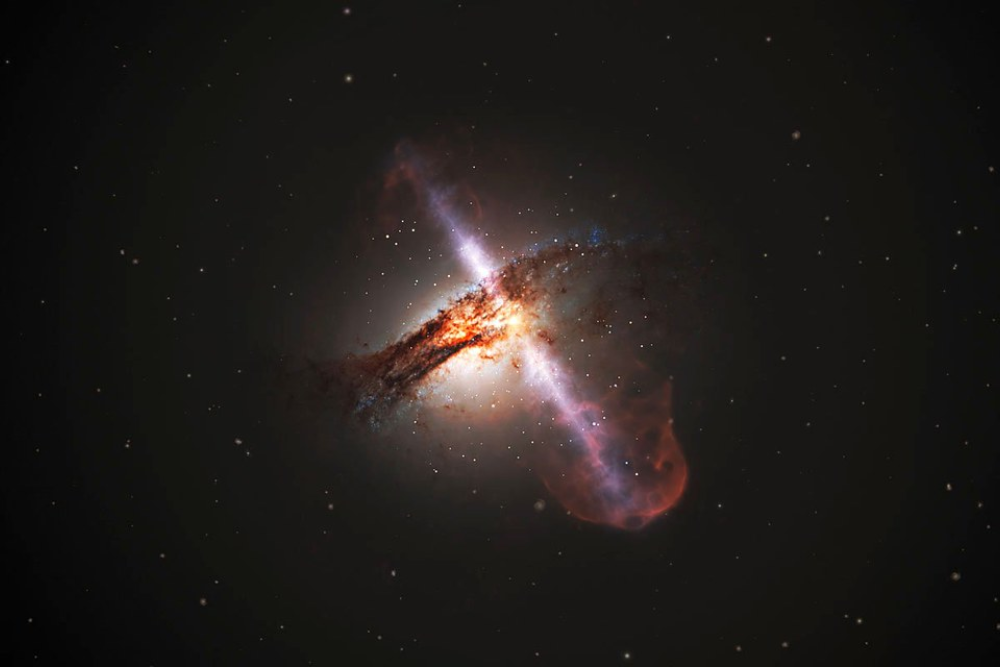
Our galaxy’s central supermassive abyss occasionally erupts with radio waves that don’t follow typical patterns. These emissions occur randomly, lasting anywhere from minutes to hours — sometimes thousands of times brighter than the great void’s normal radio output.
While scientists know the general source region, the exact mechanism behind these flares remains unclear.
The Vela Pulsar Glitches
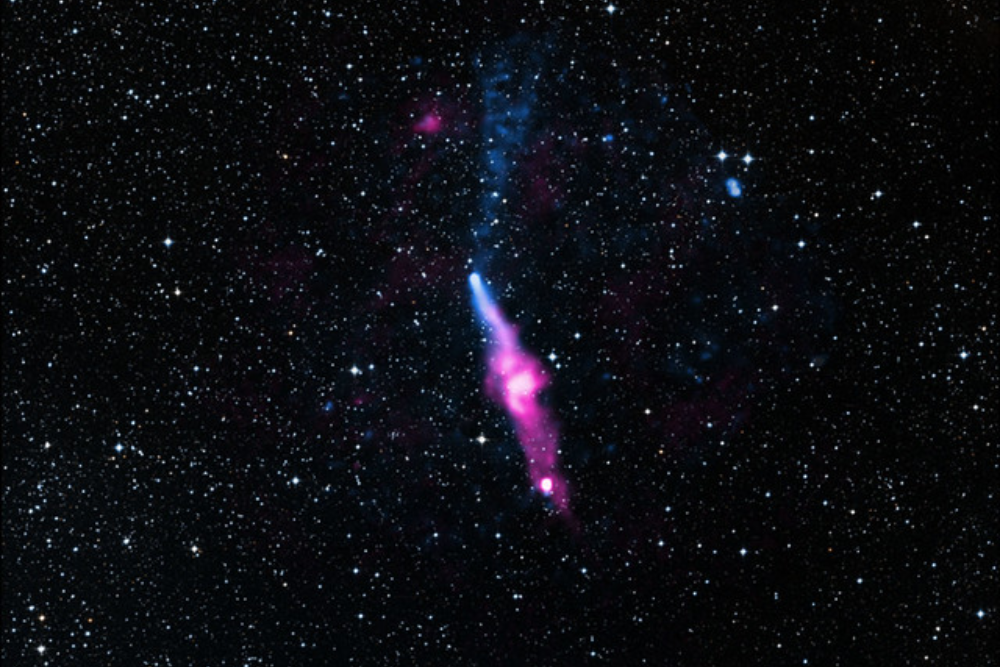
Pulsars function as cosmic metronomes, spinning with precision rivaling atomic clocks. However, the Vela Pulsar occasionally ‘glitches’ — suddenly spinning faster before gradually slowing back down over several months.
These events happen roughly every three years, involving rotation speed changes that shouldn’t be possible given current understanding of neutron star physics.
FRB 180916.J0158+65

This fast radio burst follows a 16-day cycle that’s unprecedented in astronomy. For four days, it fires bursts every few hours — then goes completely silent for 12 days before restarting the pattern.
The regularity suggests orbital mechanics might be involved, though no known system can explain both the precise timing and incredible energy output.
Like Go2Tutors’s content? Follow us on MSN.
The South Pole Neutrino Anomaly

Deep beneath Antarctica’s ice, the IceCube detector picks up high-energy neutrinos from apparently empty sky regions. These particles carry more energy than our sun could produce, yet they don’t correspond to any known gamma-ray sources or high-energy phenomena.
The neutrinos suggest incredibly powerful processes are occurring in space regions that appear completely quiet to other instruments.
Tabby’s Star Light Curves

KIC 8462852, nicknamed after astronomer Tabetha Boyajian, dims in ways that break conventional rules. Rather than regular, predictable dips expected from orbiting planets, this star’s brightness drops up to 22% in irregular patterns lasting days or weeks.
Explanations have ranged from dust clouds and comet swarms to artificial megastructures — none perfectly fit the observed data.
The Galactic Center GeV Excess

NASA’s Fermi telescope has detected a mysterious gamma-ray glow from our galaxy’s center that doesn’t match any known sources. The signal peaks in regions with numerous old stars and extends roughly 25,000 light-years in all directions from the galactic center.
Some scientists theorize it might be evidence of dark matter particles annihilating each other, while others argue it could originate from thousands of previously unknown pulsars.
Like Go2Tutors’s content? Follow us on MSN.
Peryton Signals

The Parkes radio telescope in Australia detected brief, intense radio bursts for years that seemed extraterrestrial yet had oddly earthly qualities. These ‘perytons’ lasted just milliseconds and appeared to originate from various sky directions, but their frequency patterns didn’t quite match what astronomers expected from cosmic sources.
The mystery was solved in 2015 when researchers discovered the signals came from facility microwave ovens being opened while still running.
The Northern Cross Fast Transient

In 2019, Italy’s Northern Cross radio telescope detected a powerful radio burst lasting just 70 milliseconds that never repeated. What made this signal special wasn’t only its intensity, but its location in a sky region monitored for years without unusual activity.
The burst was strong enough for detection across multiple frequency bands simultaneously, yet follow-up observations found absolutely nothing.
Rotating Radio Transients

These signals appear for seconds, then vanish for minutes to hours before reappearing. Unlike regular pulsars that maintain steady timing, rotating radio transients seem to activate and deactivate randomly, making detailed study nearly impossible.
Some might be pulsars with extremely weak signals that only become detectable during brief moments of increased activity, though others don’t fit this explanation.
Like Go2Tutors’s content? Follow us on MSN.
The Arecibo Message Echo

Scientists used the Arecibo telescope in 1974 to broadcast a message toward globular cluster M13, demonstrating our interstellar communication capabilities. Crop circles appeared in England in 2001 that seemed to respond to this message, containing corrections and additions showing knowledge of our solar system and biology.
While most researchers attribute this to human activity, the technical complexity and timing continue generating debate.
FRB 190523

This fast radio burst was detected simultaneously by multiple telescopes, allowing researchers to triangulate its exact position in real-time. The signal originated from a galaxy 7.9 billion light-years away and was associated with a fading optical afterglow lasting several days.
Its mystery lies in the afterglow’s properties not matching theoretical predictions for what should occur when fast radio bursts are produced.
The Kepler-1625b Transit Anomaly

When planet Kepler-1625b passes in front of its star, the dimming pattern suggests something else might be orbiting alongside it. The additional signal could indicate the first confirmed exomoon orbiting a planet outside our solar system.
However, the data sits right at the edge of what current instruments can reliably detect, leaving researchers uncertain whether they’re observing a genuine moon or just measurement noise.
Like Go2Tutors’s content? Follow us on MSN.
The Continuing Mystery

Even as we detect gravitational waves and take pictures of the vast emptiness, these inexplicable signals remind us that there are still many mysteries in the universe. Every mysterious transmission adds to our knowledge of cosmic phenomena, ranging from the possibility that we are not alone to the behavior of exotic matter in harsh environments.
As technology develops, some mysteries will probably be solved in a traditional way, but others could drastically alter how we think about physics and our role in the universe.
More from Go2Tutors!

- 16 Historical Figures Who Were Nothing Like You Think
- 12 Things Sold in the 80s That Are Now Illegal
- 15 VHS Tapes That Could Be Worth Thousands
- 17 Historical “What Ifs” That Would Have Changed Everything
- 18 TV Shows That Vanished Without a Finale
Like Go2Tutors’s content? Follow us on MSN.