17 Times Military Technology Was Years Ahead
Throughout history, military necessity has driven some of humanity’s most groundbreaking technological advances. When lives hang in the balance and national security is at stake, innovation happens fast—often decades before the civilian world catches up. These aren’t just incremental improvements; they’re quantum leaps that completely change how we live, work, and communicate.
The pattern is remarkably consistent: what starts in a classified lab or battlefield testing ground eventually transforms everyday life. Here is a list of 17 times military technology was light-years ahead of its time.
The Internet

Before social media and streaming videos, there was ARPANET—a military project that would eventually become the internet we know today. The internet originated from ARPANET, a project funded by the U.S. Department of Defense in the late 1960s.
The goal wasn’t connecting people for fun; it was creating a communication network that could survive a nuclear attack. The first message sent over ARPANET happened in 1969, but regular folks didn’t start using the internet until the 1990s.
Radar Technology
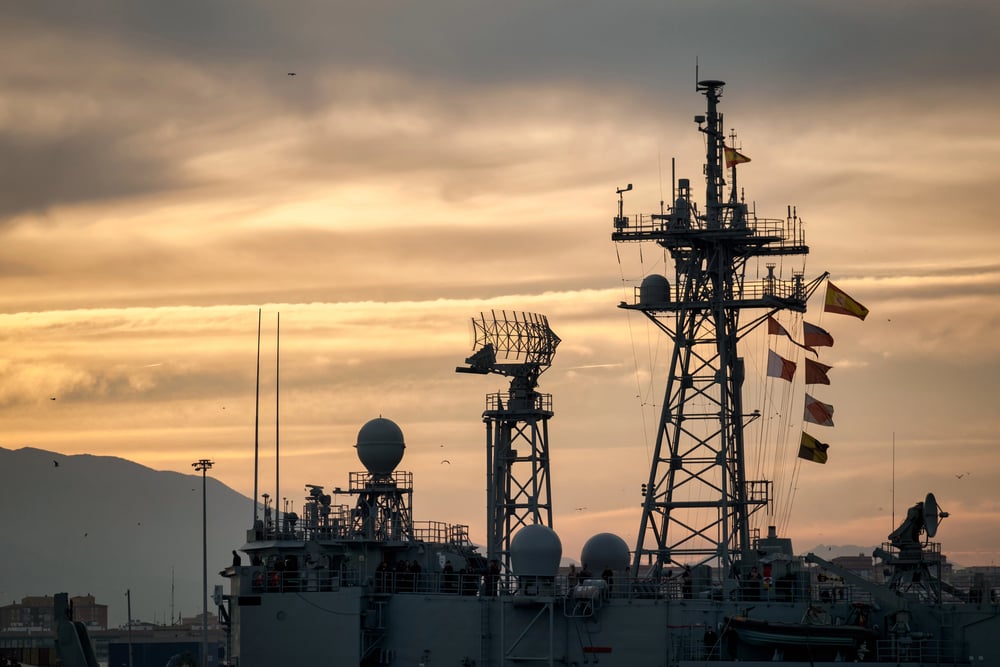
Radar changed everything about air warfare, but its military applications preceded civilian use by decades. The Battle of Britain showcased the effectiveness of radar technology, as the Royal Air Force used it to detect and intercept incoming German aircraft, a technique that has since evolved into modern air traffic control systems.
What began as a way to spot enemy planes became the foundation for weather forecasting, air traffic control, and even automotive safety systems. The military was using sophisticated radar networks throughout World War II, while civilian aviation didn’t widely adopt the technology until the 1950s and 1960s.
Like Go2Tutors’s content? Follow us on MSN.
GPS Navigation

Your smartphone’s GPS capability traces back to a military satellite system called NAVSTAR, developed in the 1970s. The military had pinpoint navigation capabilities for missiles and troops while civilians were still using paper maps and asking for directions at gas stations.
The first GPS satellites were launched in 1978, but selective availability kept civilian users from accessing the full accuracy until 2000. That means the military enjoyed precise, global positioning for over two decades before regular people could use it for driving directions.
Stealth Technology

The first aircraft employing this technology, the single-seat Lockheed F-117A Nighthawk ground-attack fighter, became operational in 1983. While the F-117 was flying secret missions, the rest of the world had no idea such technology existed.
The angular, faceted design looked like something from science fiction, but it could effectively disappear from radar screens. The F-117 Nighthawk was the first operational aircraft explicitly designed around stealth technology.
Nuclear Technology

The Manhattan Project created the atomic bomb in the 1940s, representing a technological leap that civilian nuclear power couldn’t match for years. Military nuclear reactors powered submarines and aircraft carriers decades before civilian nuclear plants became common.
The USS Nautilus, the first nuclear submarine, launched in 1954, while the first commercial nuclear power plant didn’t come online until 1957. The precision and miniaturization required for nuclear weapons drove advances in materials science, electronics, and engineering that eventually benefited civilian industries.
Like Go2Tutors’s content? Follow us on MSN.
Jet Engines

Military jets were screaming across battlefields while civilian aviation was still using propeller-driven aircraft. The technologies employed at the end—jet aircraft, radar and proximity fuzes, and the atomic bomb—were radically different from pre-war technology.
The first operational military jet, the German Me 262, flew combat missions in 1944. Commercial jet travel didn’t take off until the de Havilland Comet in 1952, and jet travel didn’t become commonplace until the 1960s.
Satellite Communication

Military satellites were orbiting Earth and providing communication links long before civilians had access to satellite phones or television. The first military communication satellite, SCORE, launched in 1958 and could store and relay messages.
Commercial satellite communication didn’t become widespread until the 1970s and 1980s. Early military satellites provided global communication capabilities that were essential for coordinating forces across vast distances.
Night Vision Technology

Soldiers were seeing in the dark with infrared technology while civilians were still fumbling for flashlights. Early night vision devices appeared in World War II, but the technology remained classified and exclusively military for decades.
Consumer night vision equipment didn’t become available until the 1990s, and even then, it was far less sophisticated than military versions. The image intensification technology that makes modern night vision possible required advances in photocathode technology and sophisticated electronics that took years to develop for civilian markets.
Like Go2Tutors’s content? Follow us on MSN.
Composite Materials

Advanced composite materials revolutionized military aircraft construction decades before they appeared in civilian applications. Carbon fiber, Kevlar, and other high-strength, lightweight materials were developed for military use where weight savings could mean the difference between mission success and failure.
The aerospace industry used these materials in military aircraft throughout the 1960s and 1970s, while civilian applications like sports equipment and automotive parts didn’t adopt them widely until the 1980s and 1990s. The cost and manufacturing complexity kept these materials out of civilian reach for years.
Precision-Guided Munitions

Smart bombs and guided missiles represented a technological leap that civilian applications couldn’t match for decades. The guidance systems, miniaturized electronics, and precision manufacturing required for these weapons drove advances in multiple fields.
GPS-guided munitions were operational years before civilian GPS became available. These systems required integrating multiple technologies—inertial navigation, GPS, laser guidance, and sophisticated computing—in packages that could withstand extreme conditions.
Computer Technology

Military computers were processing complex calculations and running simulations while civilian computers were room-sized monsters available only to universities and large corporations. The ENIAC, built for the U.S. Army in 1946, could perform calculations that would have taken human computers days or weeks.
Military applications drove advances in miniaturization, reliability, and processing power. The Defense Department’s Advanced Research Projects Agency (DARPA) funded much of the early computer research that eventually led to personal computers.
Like Go2Tutors’s content? Follow us on MSN.
Laser Technology

Laser rangefinders and targeting systems gave military forces precision capabilities that civilian applications couldn’t match for years. The first laser was demonstrated in 1960, but military applications for rangefinding, communication, and targeting were operational long before civilian uses like barcode scanners and laser printers became common.
Military laser systems required precision, durability, and performance specifications that pushed the technology far beyond early civilian applications. Laser-guided weapons systems were operational in the 1970s, while civilian laser applications remained mostly experimental.
Sonar Technology

Military sonar systems could detect submarines and map ocean floors with precision that civilian marine applications couldn’t approach for decades. Active and passive sonar arrays on military vessels provided underwater detection capabilities that remained classified and unavailable to civilian users for years.
The signal processing, hydrophone technology, and sophisticated electronics required for military sonar systems drove advances that eventually benefited civilian marine navigation, fishing, and underwater exploration. Military systems could detect targets at ranges and depths far beyond civilian capabilities.
Electronic Warfare Systems
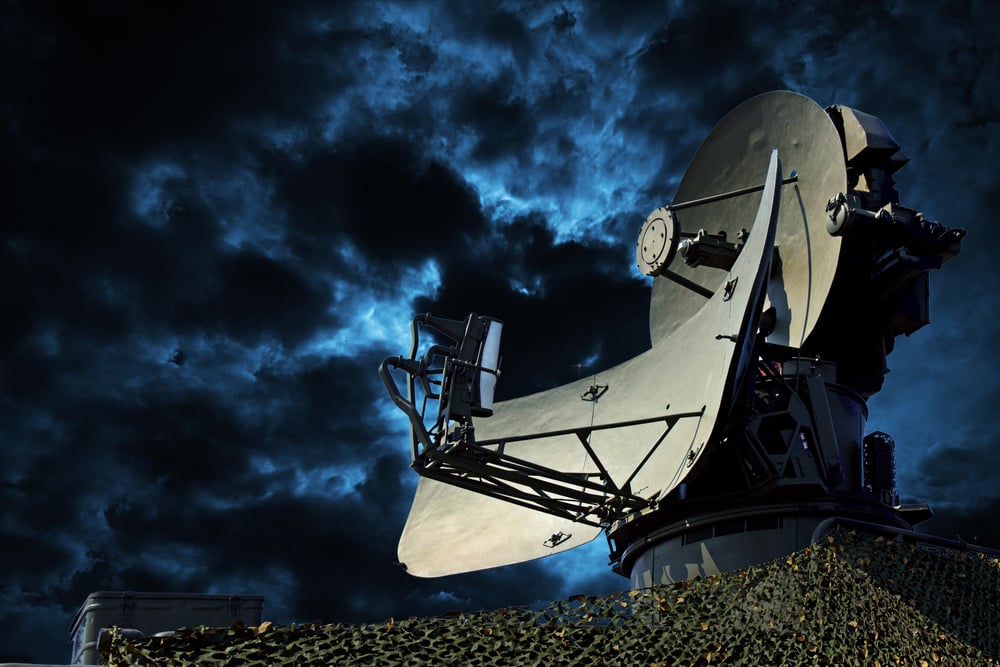
Military electronic countermeasures could jam enemy communications and radar systems using techniques that remained classified for decades. The ability to disrupt enemy electronics while protecting friendly systems required advances in signal processing, antenna design, and frequency management that were years ahead of civilian technology.
These systems could generate precisely controlled interference, analyze enemy signals, and adapt to changing threats in real-time. The sophistication required for electronic warfare pushed radio frequency technology far beyond civilian communication needs.
Like Go2Tutors’s content? Follow us on MSN.
Turbofan Engines

While the basic concept emerged earlier, military necessity heavily influenced the rapid development and refinement of powerful and fuel-efficient turbofan engines. These engines, offering superior thrust and efficiency, were adopted by military transport aircraft and bombers around the same time they began powering the first generation of large commercial airliners in the late 1950s and early 1960s.
The demands of military performance certainly pushed the technological envelope, eventually benefiting the civilian aviation sector.
Advanced Metallurgy

Military applications drove the development of titanium alloys, superalloys, and specialized metals that civilian industries couldn’t access for years. Aircraft engines, missile components, and submarine hulls required materials that could withstand extreme temperatures, pressures, and corrosive environments.
The development costs and manufacturing complexity kept these materials exclusively military for extended periods. These advanced materials enabled military systems to operate in environments and conditions that would destroy conventional materials.
Inertial Navigation Systems

Military inertial navigation provided precise positioning without external references long before civilian systems had similar capabilities. Submarines needed navigation systems that worked underwater, and missiles required guidance that couldn’t be jammed or intercepted.
These systems used gyroscopes and accelerometers with precision that civilian applications couldn’t justify economically. The manufacturing tolerances and calibration requirements for military inertial systems pushed precision engineering to new levels.
Like Go2Tutors’s content? Follow us on MSN.
The Technology Pipeline Continues
These examples represent just a fraction of military technologies that entered civilian life years or decades after their military debut. The pattern continues today with artificial intelligence, quantum computing, and advanced robotics following similar paths from classified research to everyday applications.
What seemed like science fiction in military labs yesterday becomes tomorrow’s consumer technology, proving that necessity truly is the mother of invention.
More from Go2Tutors!

- 16 Historical Figures Who Were Nothing Like You Think
- 12 Things Sold in the 80s That Are Now Illegal
- 15 VHS Tapes That Could Be Worth Thousands
- 17 Historical “What Ifs” That Would Have Changed Everything
- 18 TV Shows That Vanished Without a Finale
Like Go2Tutors’s content? Follow us on MSN.



