18 Famous Landmarks That Were Almost Built Somewhere Else
Often defining cities and nations, great architecture and famous structures become symbols recognized everywhere. Still, several of these buildings almost ended erected in quite different places because of political decisions, financial constraints, or just plain chance events.
Their other histories provide amazing narratives about what might have been. Here is a list of 18 famous landmarks that were almost built somewhere else, showing how close we came to experiencing these icons in entirely different settings.
The Statue of Liberty
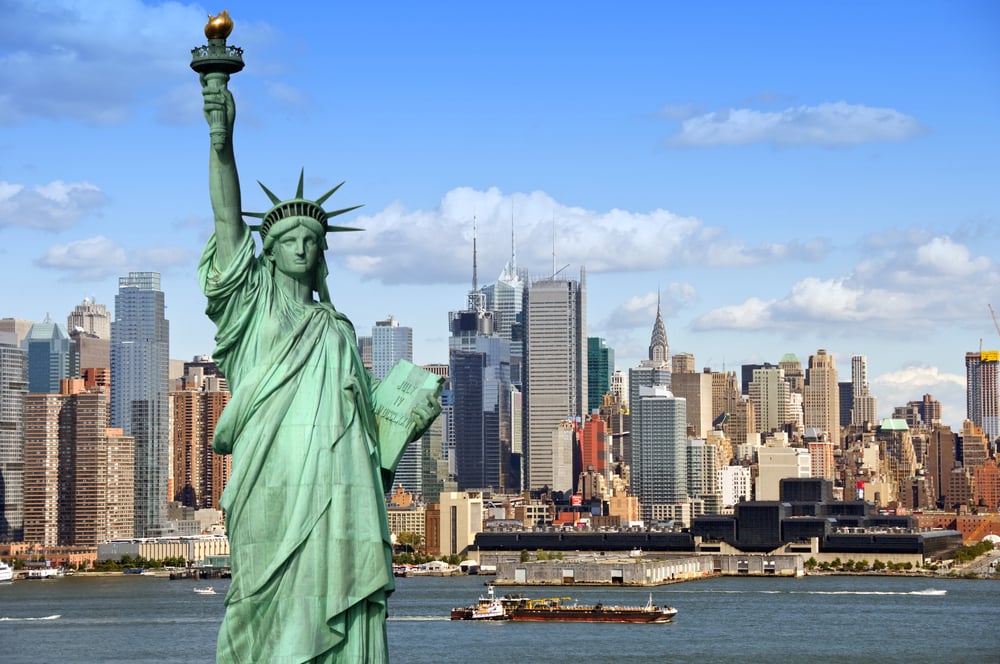
The Statue of Liberty was originally designed to stand at the entrance of the Suez Canal in Egypt. French sculptor Frédéric Auguste Bartholdi first pitched his concept of a colossal neoclassical statue to the Egyptian government, envisioning it as a lighthouse called “Egypt Carrying the Light to Asia.”
When Egypt couldn’t finance the project due to economic troubles, Bartholdi redesigned his concept and eventually offered it to the United States.
The Eiffel Tower
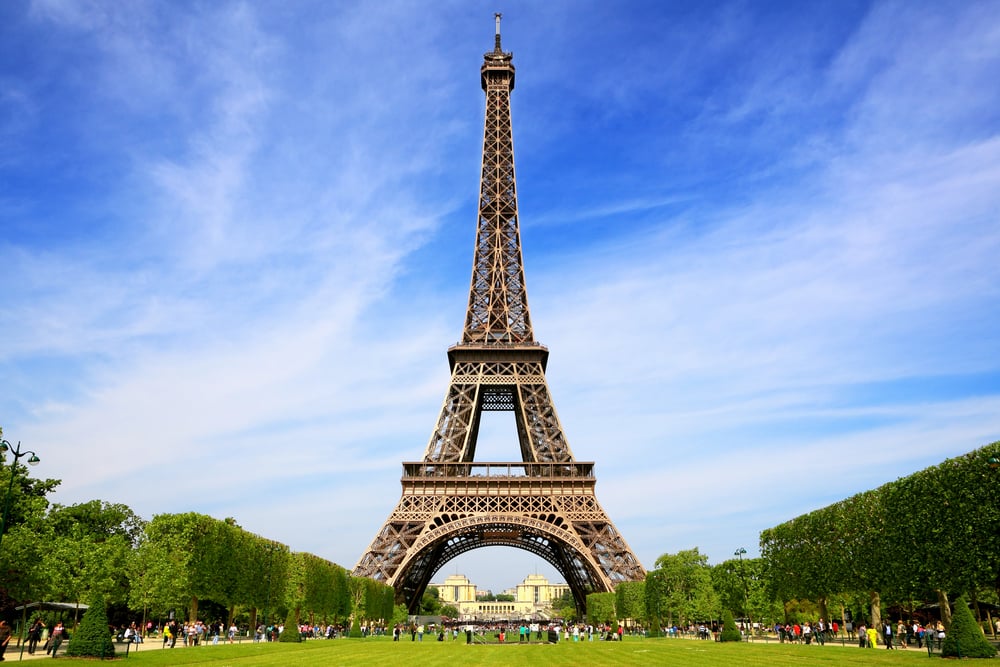
The Eiffel Tower was almost built in Barcelona, Spain. Gustave Eiffel initially presented his design to Barcelona officials for their 1888 Universal Exposition, but the city rejected it as too expensive and impractical. Paris swooped in and accepted the project for their 1889 World’s Fair, transforming the Parisian skyline forever with what was meant to be a temporary structure.
The Space Needle
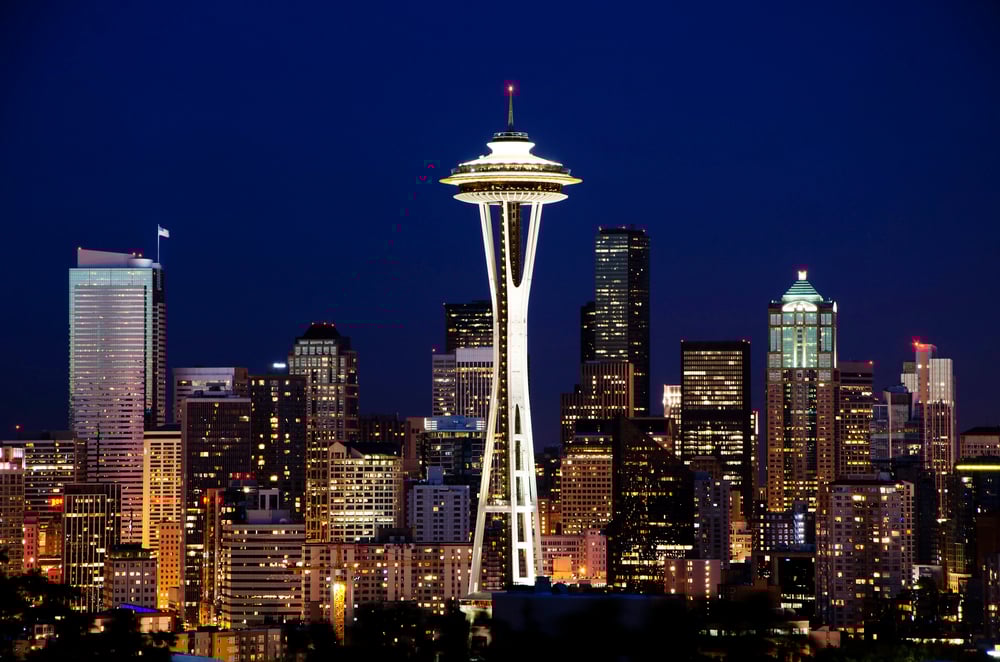
Seattle’s Space Needle was originally planned for Phoenix, Arizona. Hotel executive Edward Carlson first sketched the flying saucer-shaped structure for a potential Phoenix development. When the Arizona plans fell through, Carlson brought his design to Seattle for the 1962 World’s Fair, where it became the city’s defining landmark.
The Gateway Arch
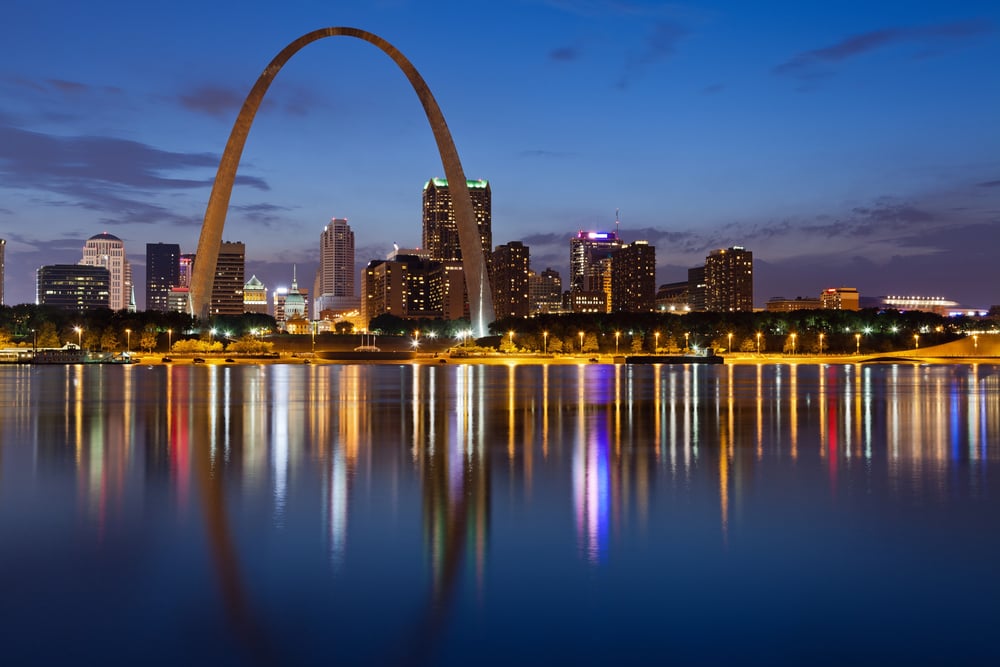
St. Louis’ Gateway Arch was almost built in New Orleans. The memorial’s architect, Eero Saarinen, submitted his design for a riverside monument competition in New Orleans, but the project was abandoned during the Great Depression. Years later, when St. Louis held a competition for its Jefferson National Expansion Memorial, Saarinen submitted a revised version of his arch design, which was selected and constructed between 1963 and 1965.
The Sydney Opera House
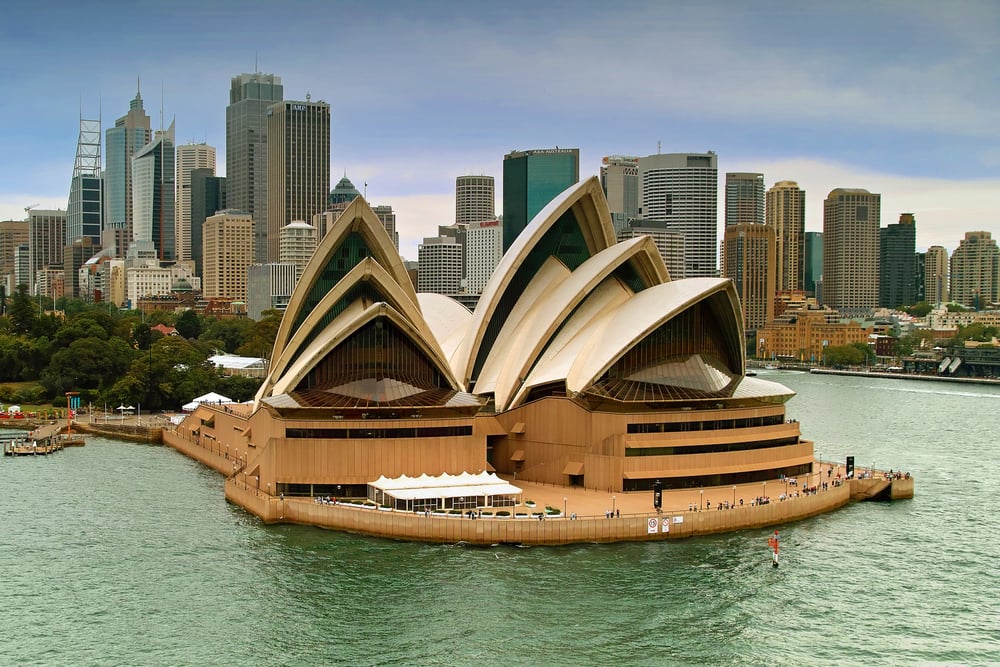
The Sydney Opera House design was nearly built in Mexico City. Architect Jørn Utzon’s revolutionary design was initially rejected by the Sydney Opera House committee before being rescued from the discard pile. Previously, Utzon had submitted a similar concept for a national theater in Mexico City, but political changes there halted the project, freeing him to adapt the design for the Australian competition.
The London Eye
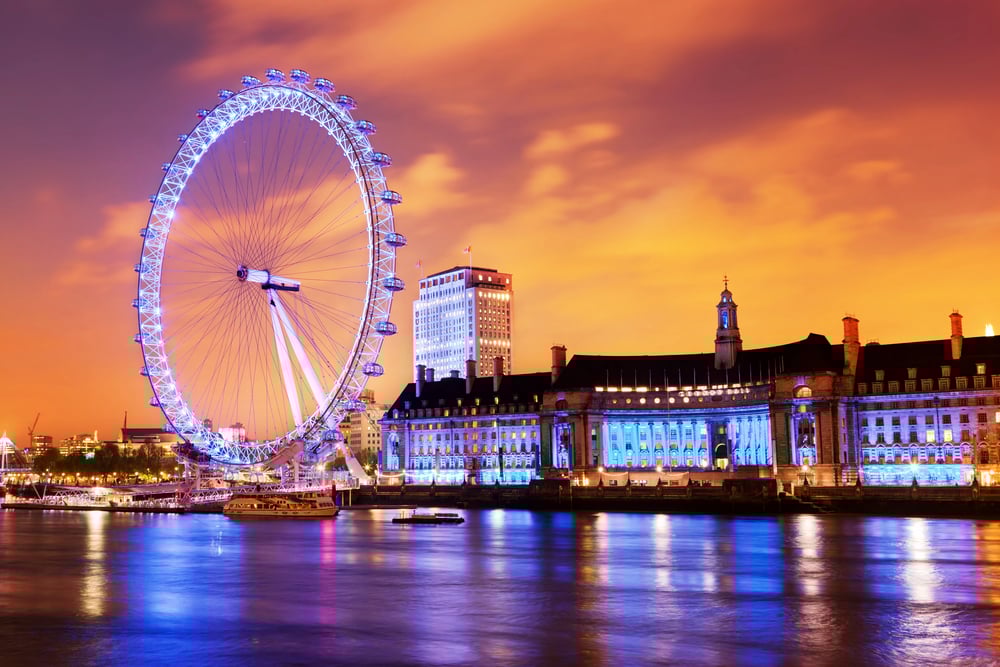
The London Eye was almost constructed in Paris. The massive observation wheel was designed by architects David Marks and Julia Barfield for a competition to create a landmark celebrating the millennium in France.
When their design wasn’t selected in Paris, they brought it to London, where it became one of the city’s most popular attractions despite initially being planned as a temporary installation.
The CN Tower
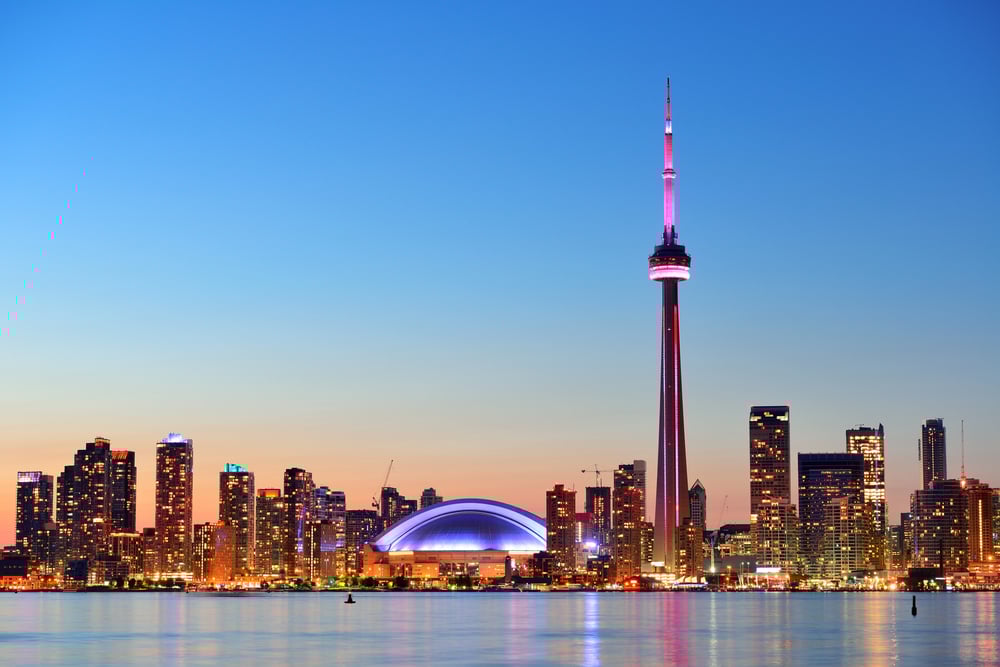
Toronto’s CN Tower was originally conceived for Montreal. The initial plans for the communications tower were drawn up for Montreal’s expo, but financial considerations and technical challenges led to the project being relocated to Toronto.
The tower was ultimately built between 1973 and 1976, becoming the world’s tallest freestanding structure at the time.
The Guggenheim Museum
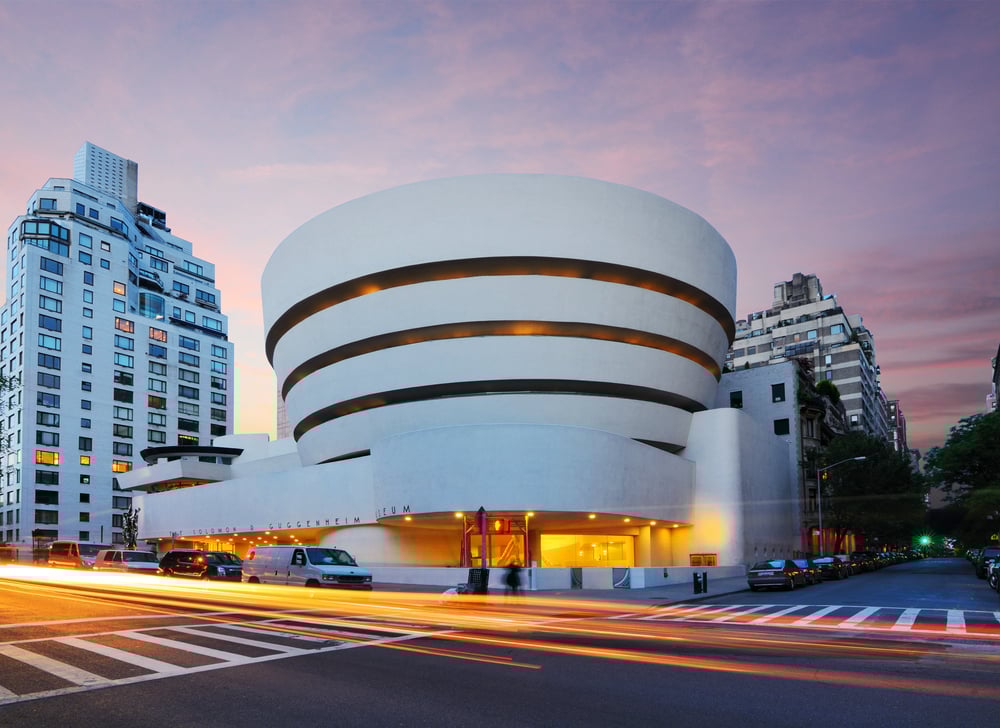
The iconic Guggenheim Museum in New York was almost built in Chicago. Frank Lloyd Wright’s distinctive spiral design was first proposed for a plot in Chicago’s Gold Coast neighborhood.
When negotiations with the city fell through, the Solomon R. Guggenheim Foundation secured a site on Fifth Avenue in New York, where the museum opened in 1959 after 16 years of planning and construction.
The Washington Monument
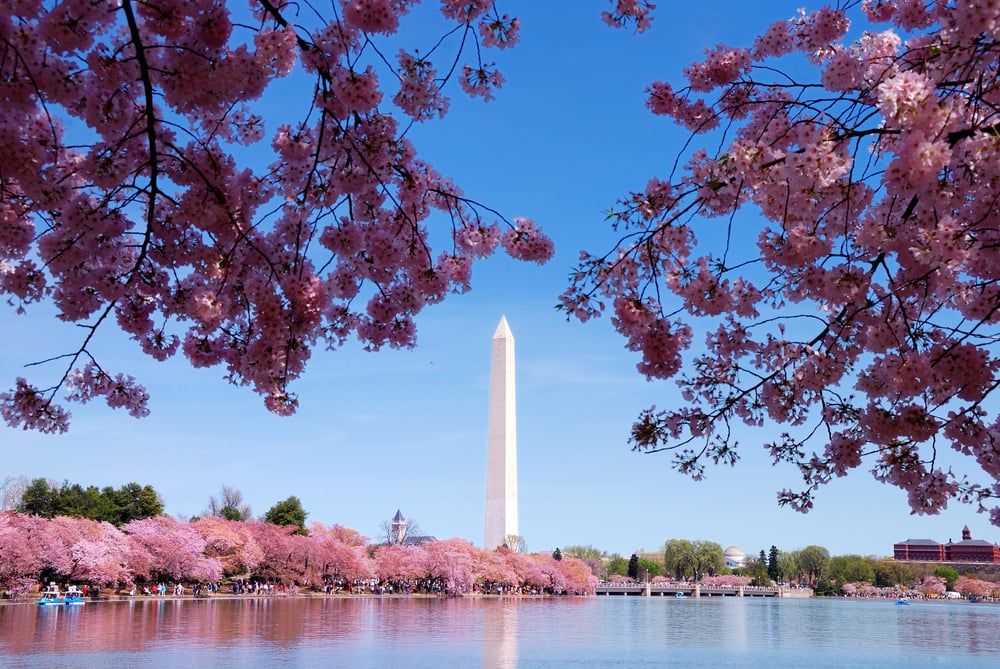
The Washington Monument was nearly built with a completely different design in a different location in DC. The original winning design by architect Robert Mills included a pantheon base with columns and statues at the bottom of the obelisk.
Funding issues and the Civil War led to decades of delays, resulting in a simplified design and a slight shift in location from the spot initially chosen by Pierre L’Enfant in his plan for the capital.
The Golden Gate Bridge
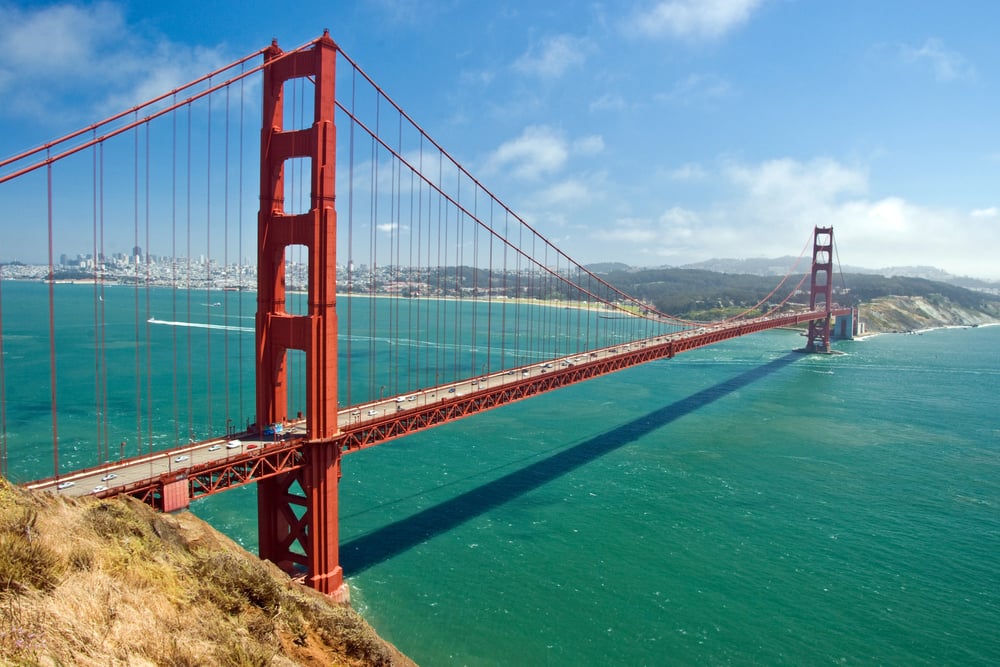
The Golden Gate Bridge was almost built several miles away at a different crossing point. Early plans for spanning San Francisco Bay focused on a crossing between Oakland and San Francisco. Engineer Joseph Strauss eventually convinced authorities that the narrower Golden Gate strait was a better location, despite the more challenging conditions, leading to the construction of one of the world’s most recognizable bridges.
The Empire State Building
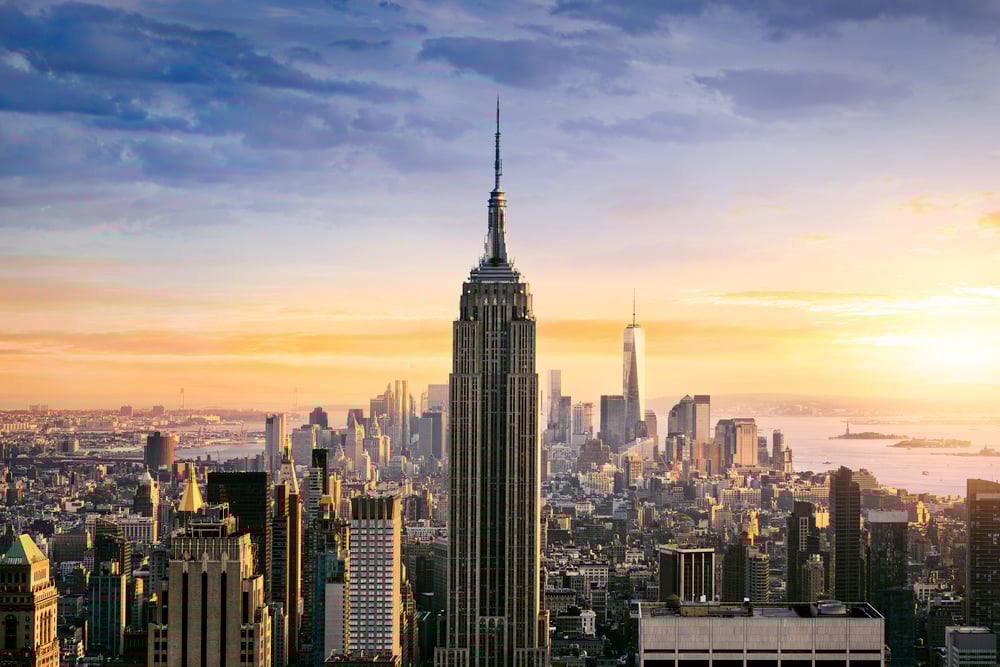
The Empire State Building was originally planned for a different site in midtown Manhattan. The initial plans called for the skyscraper to be built on the corner of 34th Street and Broadway.
When the developers acquired the current site at Fifth Avenue and 34th Street, they moved the project there, allowing for a larger footprint and more ambitious design that helped the building claim the title of world’s tallest for nearly 40 years.
The Louvre Pyramid
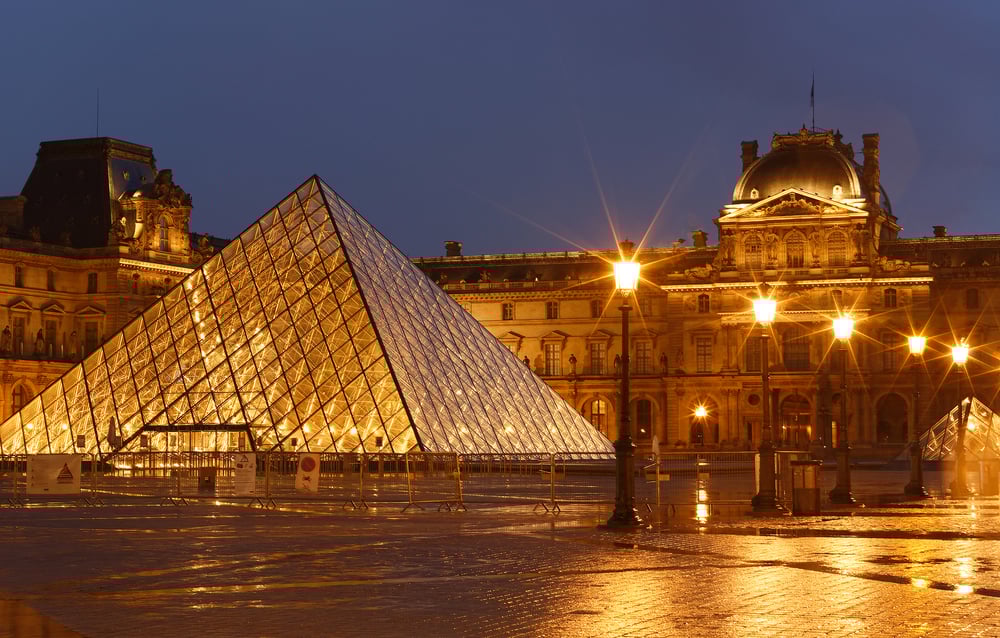
The Louvre Pyramid was almost built in London. Architect I.M. Pei’s glass pyramid design was first considered for the British Museum in London during renovation discussions. When those plans stalled, French President François Mitterrand commissioned Pei to design a new entrance for the Louvre, resulting in the controversial but now-beloved pyramid that opened in 1989.
Christ the Redeemer
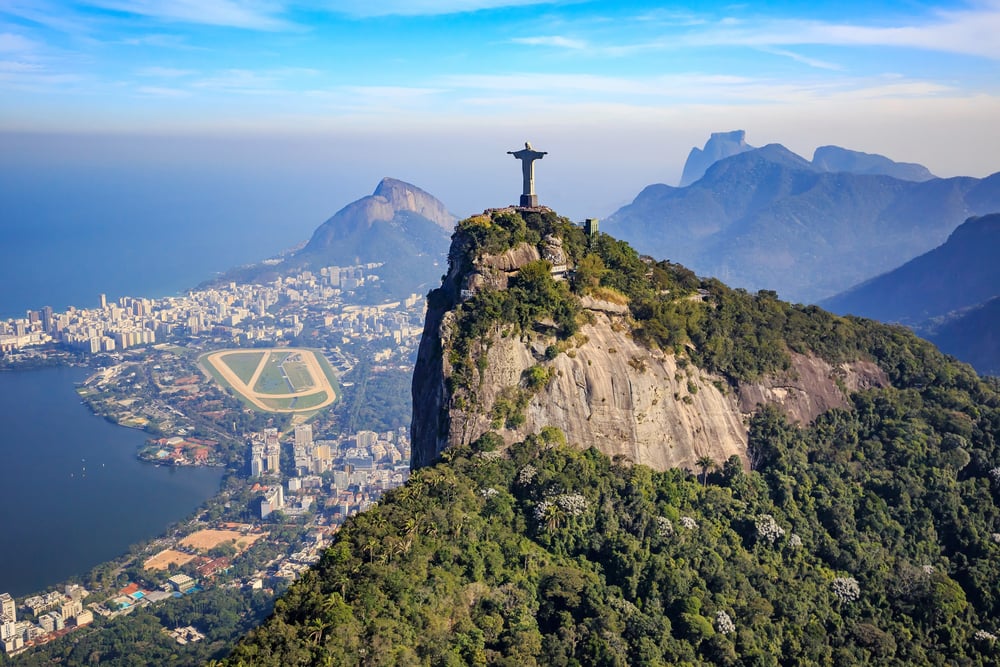
Brazil’s Christ the Redeemer statue was initially planned for a peak called Corcovado in Peru. The concept for a large statue of Christ overlooking a city was first proposed for Lima, but financial constraints prevented it from moving forward.
The idea was later embraced by Rio de Janeiro, where it was constructed between 1922 and 1931, becoming one of the most recognizable symbols of Brazil.
The Leaning Tower of Pisa
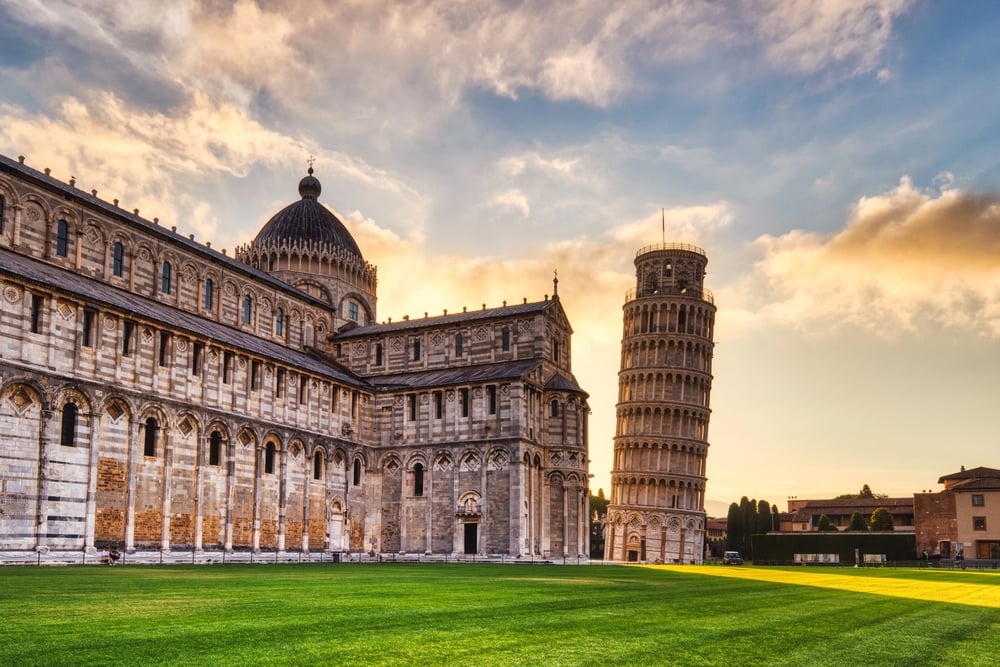
Florence was intended to see the Leaning Tower of Pisa constructed there. Originally commissioned for Florence’s cathedral complex, disagreements among architects and local officials resulted in the project being moved to Pisa.
Beginning in 1173, the tower’s famous lean evolved early from soft ground on one side, producing an unintentional but unique characteristic.
The Lincoln Memorial
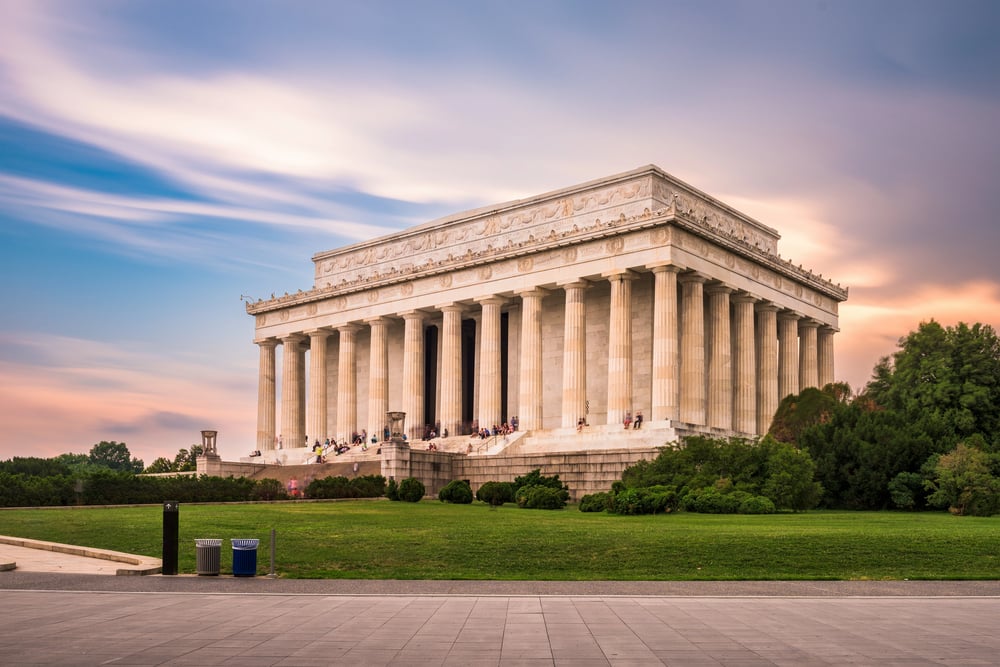
Almost erected in Illinois as a pyramid, the Lincoln Memorial was an early plan for honoring Abraham Lincoln called for a giant Egyptian-style pyramid at Springfield, Illinois. Eventually, Congress chose a neoclassical memorial in Washington, DC, created by Henry Bacon, which was finished in 1922 and has since grown to be among the most treasured monuments in America.
The Burj Khalifa
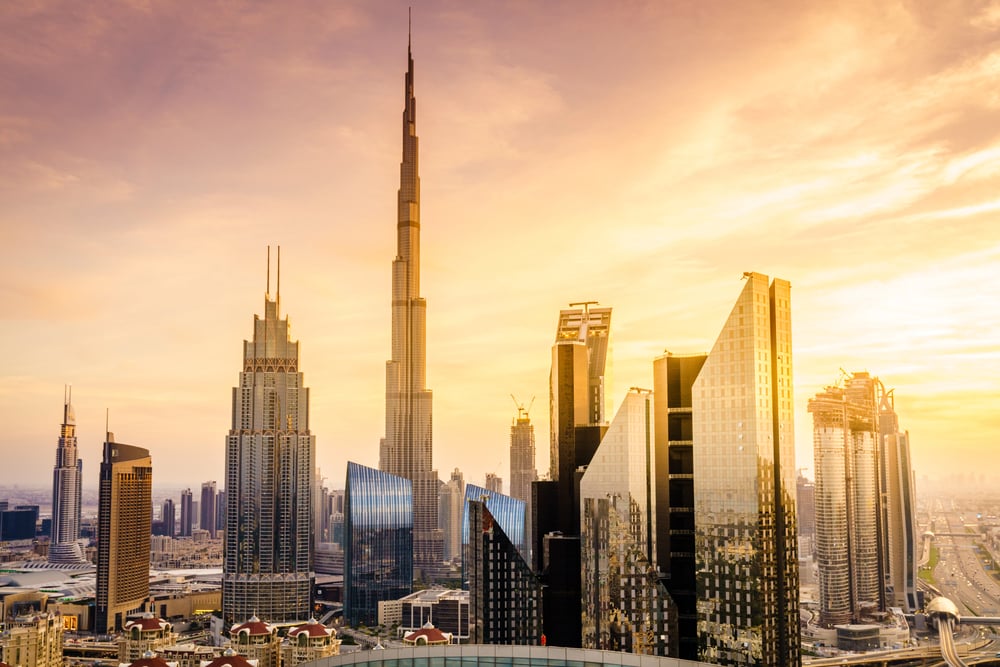
The Burj Khalifa was originally planned for construction in neighboring Abu Dhabi. Initial designs for the world’s tallest building were created for a site in Abu Dhabi, but economic considerations led developers to move the project to Dubai.
The location change necessitated design modifications, resulting in the current 828-meter tall structure that opened in 2010.
Machu Picchu
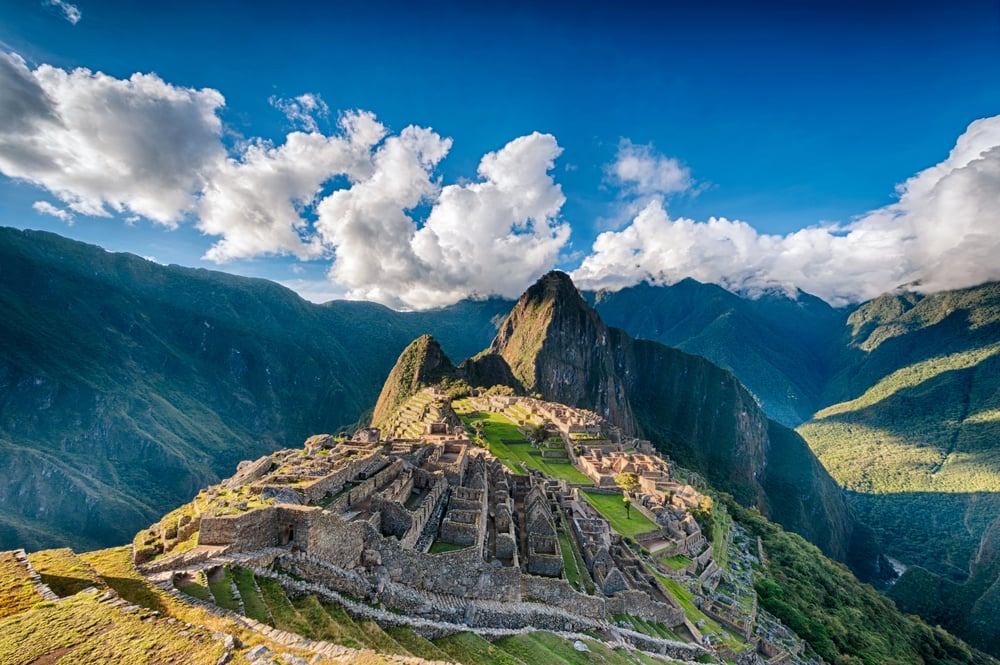
Machu Picchu’s structures were almost built at a lower elevation in Peru. The Inca initially planned to establish their estate in the valley below, but concerns about flooding and defense led them to choose the more difficult but strategic mountain ridge location.
This decision inadvertently preserved the site when Spanish conquistadors missed it during their conquest of the Inca Empire.
The Parthenon
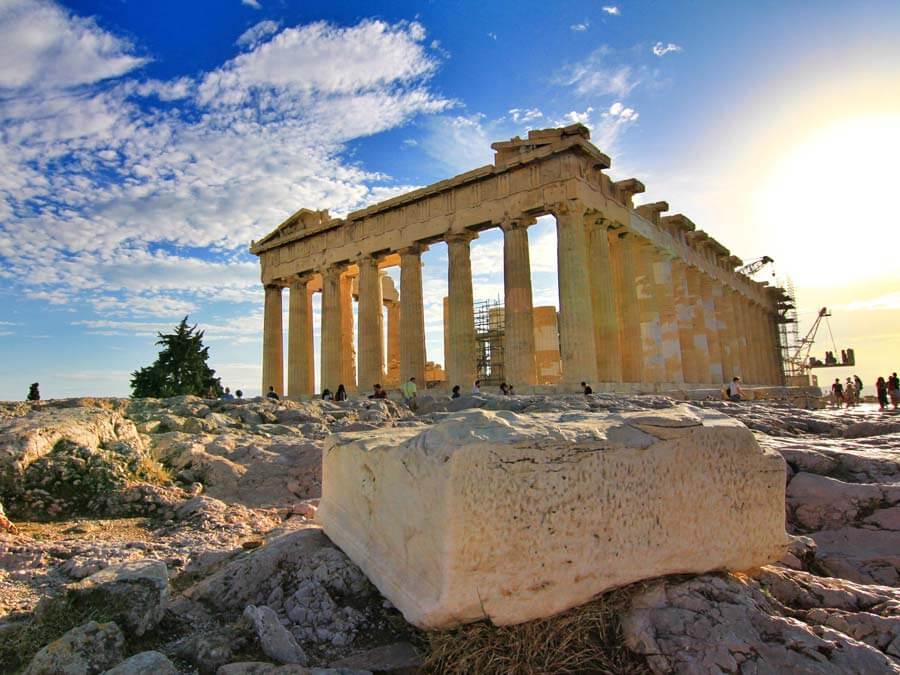
The Parthenon was nearly built at a different location on the Acropolis. The original plans placed the temple on the northern side of the Acropolis, but after the Persian Wars, Pericles and his architects decided to rebuild it on the highest point of the plateau.
This strategic repositioning maximized its visibility across Athens and created the iconic silhouette we associate with the city today.
The Meaning of Location
These famous landmarks remind us how significantly place shapes identity and perception. The relationship between these structures and their eventual locations has become so intertwined that imagining them elsewhere seems almost impossible.
Their alternate histories reveal the delicate balance of politics, economics, and vision that determines which architectural dreams materialize and where they ultimately stand.
More from Go2Tutors!

- The Romanov Crown Jewels and Their Tragic Fate
- 13 Historical Mysteries That Science Still Can’t Solve
- Famous Hoaxes That Fooled the World for Years
- 15 Child Stars with Tragic Adult Lives
- 16 Famous Jewelry Pieces in History
Like Go2Tutors’s content? Follow us on MSN.



