18 Language Origins That Will Surprise You
Language is like a living museum, storing centuries of human history in the words we use every day. Most of us go about our daily conversations without thinking twice about where our words came from, but the stories behind them are often more fascinating than fiction. From ancient trades to forgotten customs, the origins of common words reveal surprising connections across cultures and time periods.
The English language, in particular, has borrowed and adapted words from countless sources, creating a rich tapestry of linguistic influences. Here is a list of 18 language origins that will make you see everyday words in a completely new light.
Salary

Your monthly paycheck has a surprisingly salty history. The word ‘salary’ comes from the Latin ‘salarium,’ which referred to the money given to Roman soldiers to buy salt.
Salt was so valuable in ancient times that it was literally worth its weight in gold, making it a practical form of currency for preserving food and maintaining health.
Disaster

When something goes terribly wrong, we call it a disaster, but this word originally blamed the stars. It comes from the Italian ‘disastro,’ meaning ‘ill-starred’ or ‘unfavorable star.’
Ancient people believed that celestial bodies controlled human fate, so when bad things happened, they figured the stars were simply in a bad mood.
Like Go2Tutors’s content? Follow us on MSN.
Muscle

The next time you flex your biceps, remember that you’re showing off your ‘little mice.’ The word ‘muscle’ derives from the Latin ‘musculus,’ which literally means ‘little mouse.’
Ancient Romans thought that flexing muscles looked like mice running under the skin, which is both adorable and slightly unsettling when you think about it.
Quarantine

This pandemic-era word has medieval Italian roots that might surprise you. ‘Quarantine’ comes from ‘quaranta giorni,’ meaning ‘forty days’ in Italian.
During the Black Death, ships entering Venice had to wait forty days before unloading, giving birth to our modern understanding of isolation periods.
Tycoon

Business magnates owe their title to Japanese politics. The word ‘tycoon’ comes from the Japanese ‘taikun,’ meaning ‘great lord’ or ‘prince.’
American merchants brought this term back from Japan in the 1850s, and it eventually evolved to describe any powerful business leader.
Like Go2Tutors’s content? Follow us on MSN.
Thug

This word for a violent criminal has surprisingly specific origins in Indian history. ‘Thug’ comes from the Hindi ‘thag,’ referring to members of a religious cult in India who robbed and murdered travelers as offerings to the goddess Kali.
British colonial forces eventually suppressed these groups, but the word stuck around.
Boycott

Sometimes a person’s name becomes a verb, and Charles Boycott learned this the hard way. In 1880, Irish tenants refused to work for or do business with this English land agent during a dispute.
The tactic was so effective that his surname became synonymous with organized refusal to engage with someone or something.
Sandwich

The Earl of Sandwich gave us more than just a noble title. John Montagu, the 4th Earl of Sandwich, was reportedly so addicted to card games that he had his servants bring him meat between two pieces of bread so he could eat without leaving the table.
His gambling habit accidentally created one of the world’s most popular foods.
Like Go2Tutors’s content? Follow us on MSN.
Vandal

The Vandals were a Germanic tribe that sacked Rome in 455 AD, but they probably weren’t any more destructive than other conquering armies. However, their name became forever linked with senseless destruction, showing how history is often written by the winners and their PR teams.
Serendipity

This beautiful word for happy accidents comes from a Persian fairy tale. Writer Horace Walpole coined it in 1754, inspired by ‘The Three Princes of Serendip’ (modern-day Sri Lanka), whose heroes were always making fortunate discoveries by accident.
The word perfectly captures those moments when you find something wonderful while looking for something else entirely.
Maverick

Independent spirits everywhere can thank a Texas cattle rancher for their label. Samuel Maverick refused to brand his cattle in the 1840s, making his unmarked animals stand out from the herd.
Soon, any unbranded cattle were called ‘mavericks,’ and the term expanded to describe anyone who goes against the grain.
Like Go2Tutors’s content? Follow us on MSN.
Sabotage

French workers gave us this word for deliberate destruction through their footwear choices. ‘Sabotage’ comes from ‘sabot,’ the wooden shoes worn by factory workers.
During labor disputes, workers would allegedly throw their shoes into machinery to break it, though historians debate whether this actually happened or if it’s just a colorful myth.
Berserk

When someone goes completely crazy, they’re channeling ancient Norse warriors. ‘Berserk’ comes from ‘berserkr,’ referring to Viking warriors who fought in a trance-like fury while wearing bear skins (‘ber’ means bear, ‘serkr’ means shirt).
These warriors were so feared that their fighting style became synonymous with wild, uncontrolled behavior.
Deadbeat

This term for someone who doesn’t pay their debts has surprisingly lively origins. In 19th century America, a ‘beat’ was a lazy person, so a ‘deadbeat’ was someone so lazy they might as well be dead.
The financial meaning came later, but the original insult was about work ethic rather than money management.
Like Go2Tutors’s content? Follow us on MSN.
Gossip
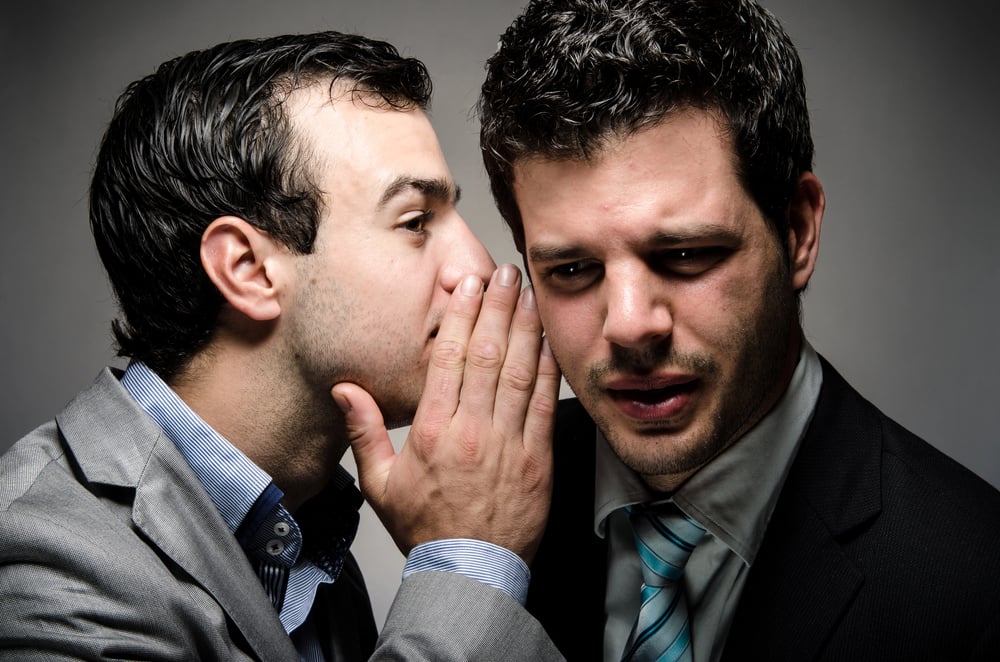
Your chatty neighbor carries on a tradition that goes back to medieval godparents. ‘Gossip’ originally meant ‘godsibling’ or ‘godparent’ in Old English.
Since godparents often shared family news and neighborhood updates, their title gradually shifted to describe anyone who spreads information about others.
Sinister

Left-handed people got a raw deal in ancient Rome, and this word proves it. ‘Sinister’ simply meant ‘left’ in Latin, but Romans considered the left side unlucky and associated it with evil omens.
Meanwhile, ‘dexter’ (right) gave us ‘dexterous,’ showing how language can reflect ancient prejudices.
Clue

Mystery lovers can thank Greek mythology for this essential word. ‘Clue’ comes from ‘clew,’ meaning a round of yarn or thread.
This references the myth of Theseus, who used a round of thread given by Ariadne to find his way out of the labyrinth after slaying the Minotaur.
Like Go2Tutors’s content? Follow us on MSN.
Silhouette

This word for a shadow outline honors a French finance minister who was deeply unpopular. Étienne de Silhouette implemented harsh economic policies in 1759, and anything cheap or stripped-down was mockingly called ‘à la silhouette.’
Portrait artists began offering inexpensive shadow profiles as budget alternatives to painted portraits, and the name stuck.
Words That Bridge Worlds

These linguistic detective stories remind us that language is never static – it’s constantly evolving, borrowing, and adapting to new circumstances. Every word we speak carries the DNA of human experience, from ancient Roman paychecks to Japanese politics to medieval Italian quarantine procedures.
The next time you use any of these words, you’ll be participating in conversations that span centuries and continents, proving that communication truly is humanity’s greatest collaborative art form.
More from Go2Tutors!

- 16 Historical Figures Who Were Nothing Like You Think
- 12 Things Sold in the 80s That Are Now Illegal
- 15 VHS Tapes That Could Be Worth Thousands
- 17 Historical “What Ifs” That Would Have Changed Everything
- 18 TV Shows That Vanished Without a Finale
Like Go2Tutors’s content? Follow us on MSN.



