18 Oldest Suspension Bridges Spanning US Rivers
There’s something about a suspension bridge that refuses to be ignored. The cables sweeping overhead, the towers standing like sentinels, the whole structure somehow holding itself together through tension and geometry — it’s a kind of engineering poetry.
The United States has been building these bridges since the early 1800s, and some of them are still standing, still carrying traffic, still spanning the same rivers they crossed more than a century ago. What follows is a look at 18 of the oldest suspension bridges ever built over American rivers — from a former canal aqueduct in rural Pennsylvania to the bridges that defined New York’s skyline.
1. Roebling’s Delaware Aqueduct (1847–1848) — Delaware River, Pennsylvania/New York

This is the oldest surviving wire cable suspension bridge in the United States. John A. Roebling built it not as a road bridge but as a water-carrying aqueduct for the Delaware and Hudson Canal, allowing canal boats to float across the Delaware River.
Its construction methods — spinning wire cables on-site, anchoring them deep in masonry — were the same techniques Roebling would later refine for the Brooklyn Bridge. The National Park Service now owns the structure, and you can walk across it. Almost all of the original ironwork is still in place.
2. Wheeling Suspension Bridge (1849) — Ohio River, West Virginia
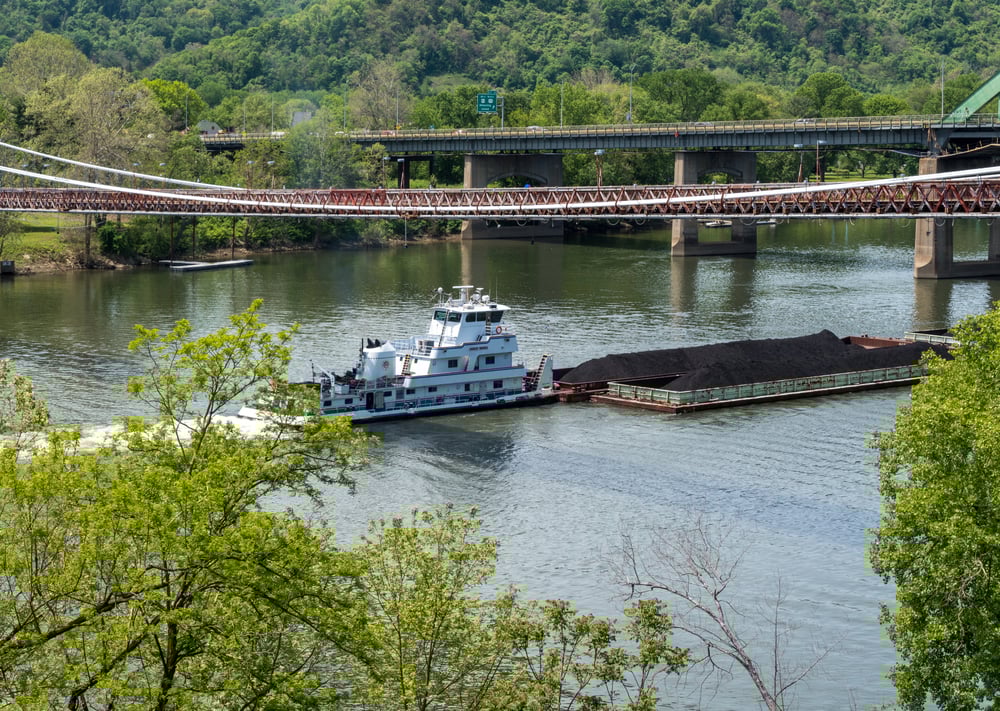
When Charles Ellet Jr. completed this bridge in 1849, it was the longest suspension bridge in the world, stretching 1,010 feet across the Ohio River. It was also the first suspension bridge to carry a public road across Ohio, and it immediately became a vital link for westward migration.
A fierce windstorm collapsed the deck in 1854, but the bridge was rebuilt and has been carrying traffic, more or less continuously, ever since. It’s now the oldest vehicular suspension bridge in the United States still in use — a remarkable distinction for a structure that watched the Civil War pass beneath it.
3. Niagara Falls International Suspension Bridge (1855) — Niagara River, New York
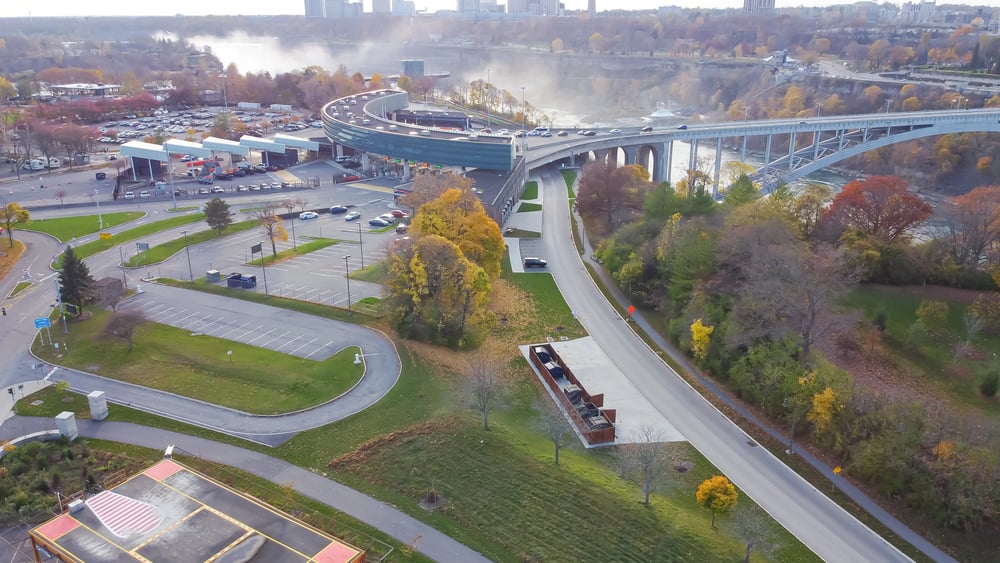
John A. Roebling designed this two-deck bridge to carry both rail and road traffic across the Niagara Gorge, solving an engineering problem that had stumped others. The Niagara River’s gorge is deep and dramatic, and building any bridge there required creative thinking about wind resistance and load distribution.
Roebling stiffened the deck with a series of trusses — an approach that would become standard in bridge engineering. The original structure stood until 1897, when it was replaced by the current steel arch bridge. Its short life belied its outsized influence on bridge design worldwide.
4. John A. Roebling Suspension Bridge (1866) — Ohio River, Kentucky/Ohio

Standing between Covington, Kentucky, and Cincinnati, Ohio, this bridge was the longest suspension bridge in the world when it opened. Its main span reached 1,057 feet, and Roebling used it deliberately as a proving ground for the ideas he was developing for his next, far more ambitious project across the East River.
The design of the towers, the method of spinning the cables, the way the deck was stiffened — all of it was tested here first. The bridge is still in use today, carrying car traffic across the same river it has spanned for over 150 years.
5. Waco Suspension Bridge (1869) — Brazos River, Texas
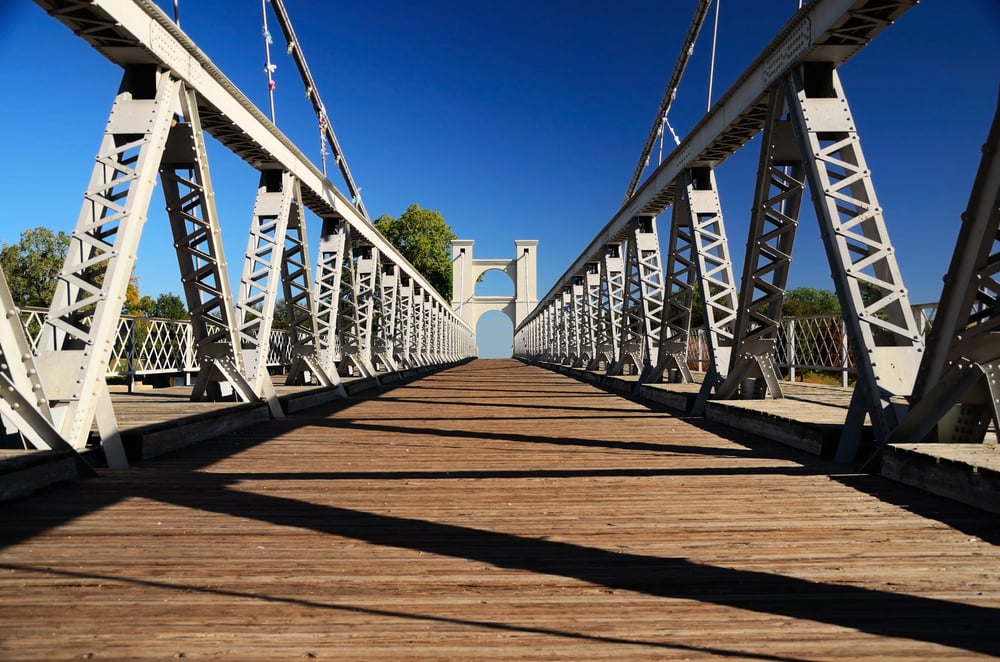
When this bridge opened in Waco in 1869, it was the longest single-span suspension bridge west of the Mississippi, and for a time it was the only bridge across the lower Brazos River. Before it existed, crossing the Brazos meant a ferry ride — slow, unreliable, and dangerous in flood season.
The bridge transformed the region, making Waco a major waypoint for cattle drives heading north. Today it’s a pedestrian bridge in the heart of a city park, and it carries joggers and tourists instead of longhorn cattle. The original iron cables were replaced in the 1910s, but the tower foundations are original.
6. Brooklyn Bridge (1883) — East River, New York

Few bridges in the world carry as much cultural weight as this one. When it opened in May 1883, the Brooklyn Bridge was the longest suspension bridge ever built, with a main span of 1,595 feet.
It was also the first wire suspension bridge to use steel instead of iron for its cables — a change that made longer spans possible for the next generation of builders. John A. Roebling designed it, his son Washington supervised the construction after John died from an injury, and Washington’s wife Emily directed operations for years after Washington was incapacitated by decompression sickness. The bridge is still carrying traffic today, and it remains one of the most recognizable structures in the world.
7. Williamsburg Bridge (1903) — East River, New York
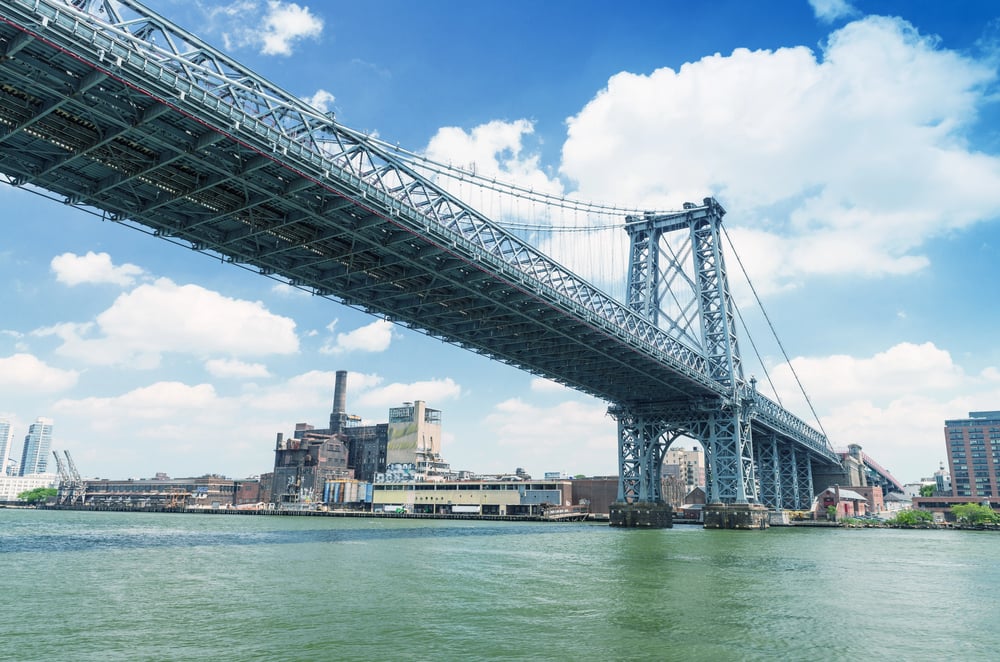
When it opened in 1903, the Williamsburg Bridge surpassed the Brooklyn Bridge in span length — just barely, at 1,600 feet — and its designers used all-steel towers instead of stone, making it lighter and faster to build. It connected the Lower East Side of Manhattan to Brooklyn at a time when both neighborhoods were packed with recent immigrants, and it quickly became one of the busiest crossings in the city.
The bridge went through a serious deterioration crisis in the 1980s and was nearly torn down before a major rehabilitation brought it back to good condition.
8. Manhattan Bridge (1909) — East River, New York
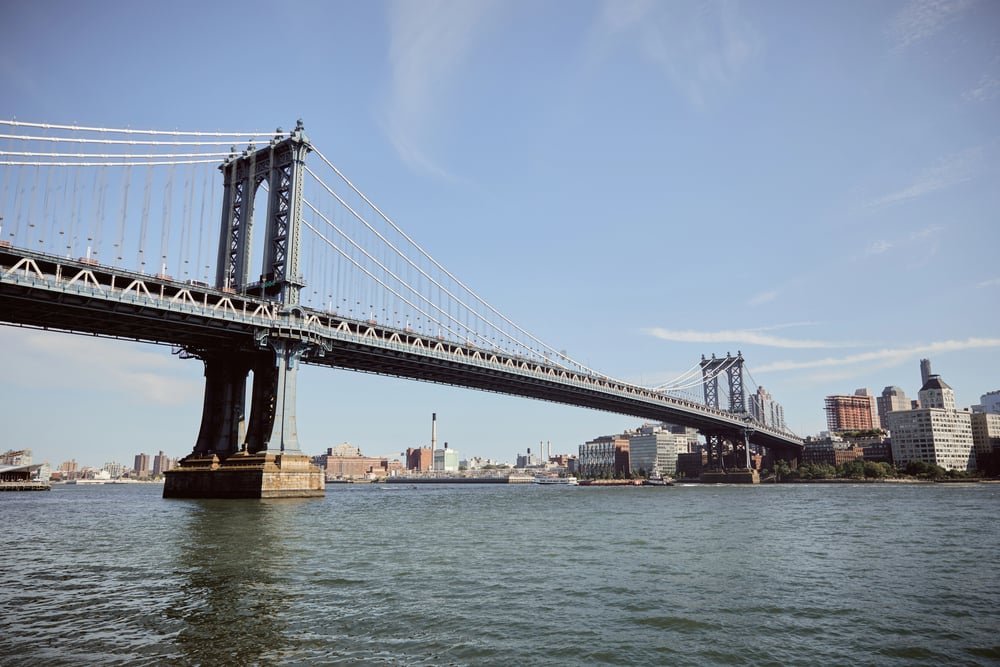
The Manhattan Bridge opened just six years after the Williamsburg Bridge, and it was the first major suspension bridge in New York to use a deflection theory design — a more mathematically sophisticated approach to distributing loads through the cables. Its designers were confident enough in the theory to use a shallower deck truss than earlier bridges, making the structure more elegant but also more prone to twisting under heavy loads.
Decades of subway traffic eventually caused serious fatigue damage to the anchorages, requiring a major rehabilitation in the 1980s and 1990s. The bridge carries four subway lines and several traffic lanes today.
9. Bear Mountain Bridge (1924) — Hudson River, New York
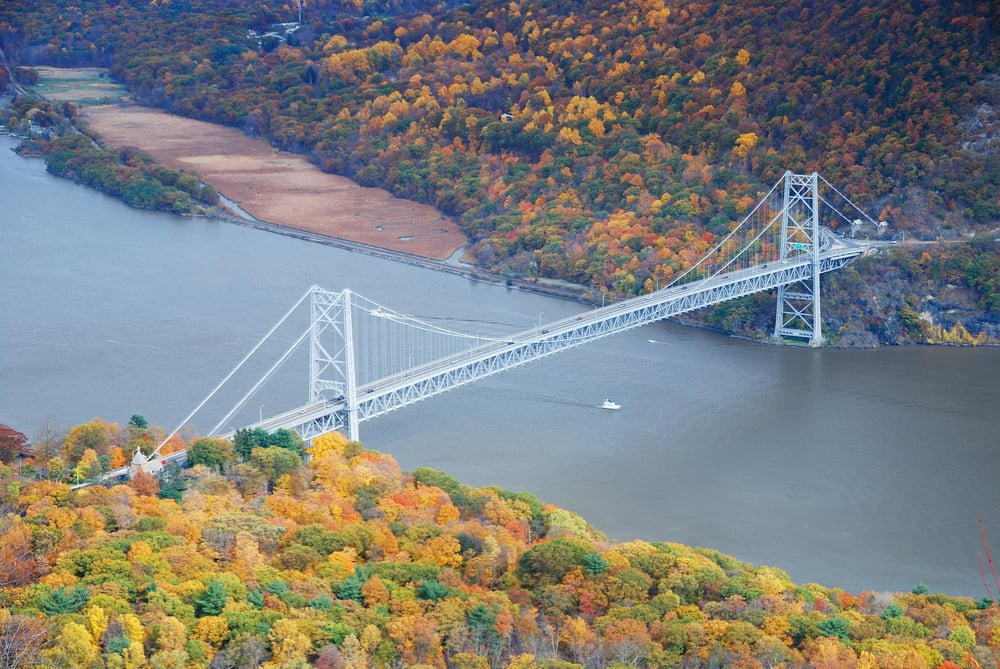
Built by a private company to serve the growing crowds visiting Bear Mountain State Park, this bridge opened in 1924 as the longest suspension bridge in the world — a title it held for just two years before the Benjamin Franklin Bridge in Philadelphia took it away. It was the first major suspension bridge in the United States to use a concrete deck rather than a steel grid, and the construction methods developed here directly influenced the building of the George Washington Bridge and, later, the Golden Gate.
Mary Harriman presided over the opening ceremony on Thanksgiving Day.
10. Benjamin Franklin Bridge (1926) — Delaware River, Pennsylvania/New Jersey

Spanning the Delaware between Philadelphia and Camden, this bridge opened in 1926 as the longest suspension bridge in the world, with a center span of 1,750 feet. It was the first major bridge designed to carry subway trains alongside road traffic, and its cable anchorages — built to accommodate a trolley line that was never actually installed — are among the largest and most over-engineered anchor structures on any bridge in the country.
The bridge is still painted its original shade of blue and remains a defining element of the Philadelphia waterfront.
11. Royal Gorge Bridge (1929) — Arkansas River, Colorado
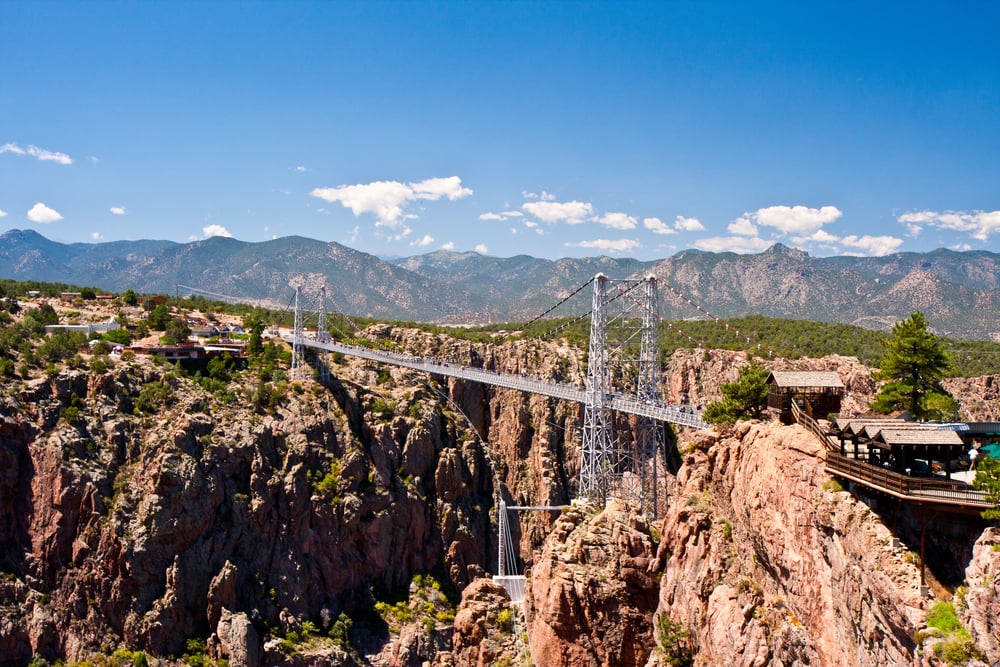
This bridge was not built for transportation. It was built as a tourist attraction, and it delivered on that promise: at 956 feet above the Arkansas River, it was the highest suspension bridge in the world for more than 70 years.
The Royal Gorge’s canyon walls are so close together and so sheer that the bridge’s towers rest directly on the canyon rim without needing traditional anchorages in the rock below. Visitors walk across it on a wooden deck planked with 1,292 wooden boards, looking straight down at the river threading through the gorge far below. A fire in 2013 destroyed much of the park around it, but the bridge itself survived.
12. Ambassador Bridge (1929) — Detroit River, Michigan

Connecting Detroit to Windsor, Ontario, the Ambassador Bridge opened just days before the stock market crash of 1929. For a time it was the longest suspension bridge in the world — the same claim made by several of its contemporaries, as bridge spans were growing rapidly in the late 1920s.
It carries one of the busiest international trade crossings in North America, handling a significant portion of the commercial traffic between the United States and Canada. The bridge has been privately owned for most of its life, which has made discussions about a replacement crossing complicated for decades.
13. Mid-Hudson Bridge (1930) — Hudson River, New York
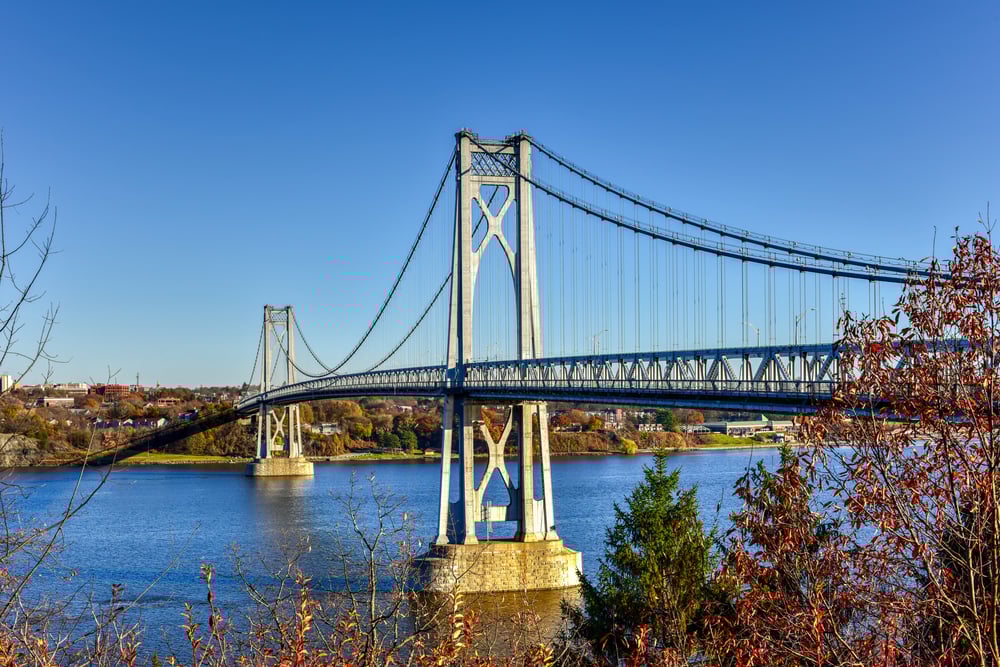
Officially named the Franklin D. Roosevelt Mid-Hudson Bridge — though most locals just call it the Mid-Hudson — this bridge opened in 1930 to connect Poughkeepsie with Highland, New York. It gave the Hudson River valley a crossing point between the George Washington Bridge to the south and the Bear Mountain Bridge to the north, filling a long gap in regional transportation.
The bridge is still operated by the New York State Bridge Authority and carries a significant volume of daily traffic.
14. George Washington Bridge (1931) — Hudson River, New York/New Jersey
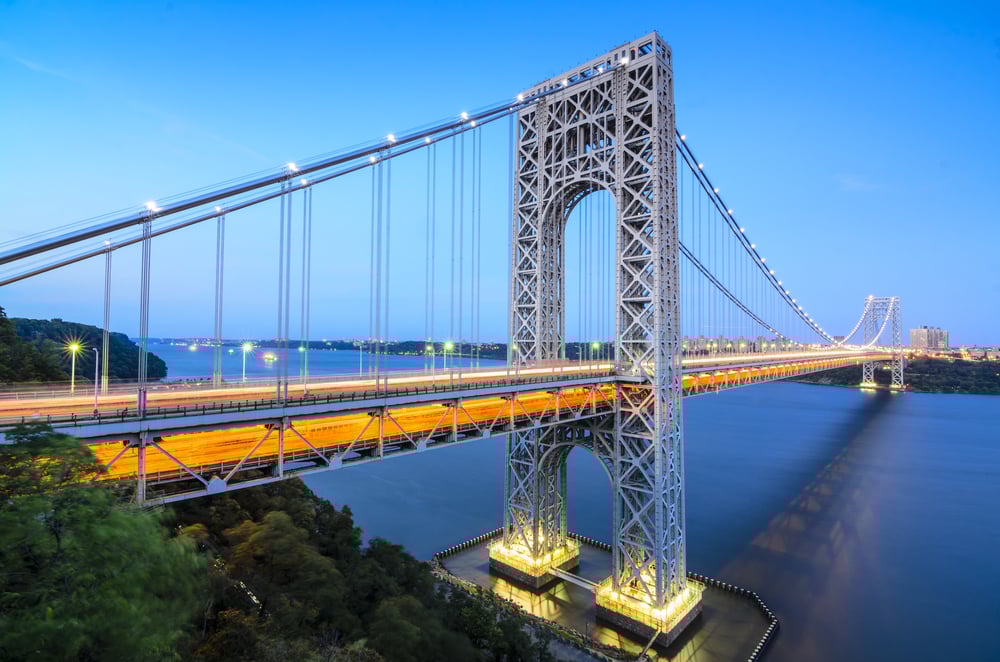
When it opened in 1931, the George Washington Bridge doubled the record for the longest suspension bridge span, reaching 4,760 feet between anchorages. Its towers were designed to be clad in stone and granite, but the Depression halted those plans, and the exposed steel became so admired that it was never covered.
Le Corbusier called it the most beautiful bridge in the world. The bridge now carries more vehicles daily than any other bridge on earth, and a lower deck added in 1962 nearly doubled its capacity without requiring any changes to the original cable system.
15. Delaware Memorial Bridge (1951) — Delaware River, Delaware/New Jersey

The Delaware Memorial Bridge was the longest suspension bridge in the world when it opened in 1951, though only briefly. A second, parallel span was added in 1968, making the crossing a twin-span bridge — one of only a few in the United States.
The two decks are nearly identical but not exact copies, as engineers made adjustments based on what they learned from the first span’s construction. Carrying Interstate 295, the bridge handles millions of vehicles a year on one of the busiest corridors on the East Coast.
16. Walt Whitman Bridge (1957) — Delaware River, Pennsylvania/New Jersey
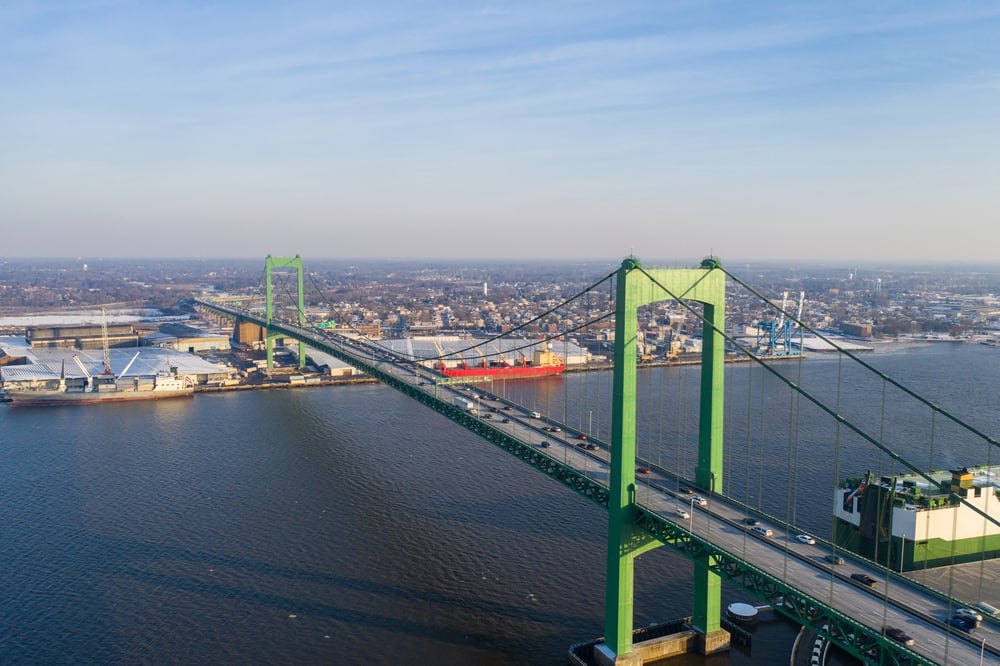
Named for the poet who spent much of his later life in Camden, New Jersey, the Walt Whitman Bridge was built to relieve pressure on the Benjamin Franklin Bridge to the north. Its main span of 2,000 feet was, at the time of its completion, the fifth-longest suspension bridge span in the world.
The bridge connects South Philadelphia to Gloucester City, and it handles a large share of the commercial truck traffic moving between Philadelphia and southern New Jersey. A major cable rehabilitation in the 2010s addressed concerns about the original wire cables and extended the bridge’s operational life significantly.
17. Throgs Neck Bridge (1961) — East River, New York
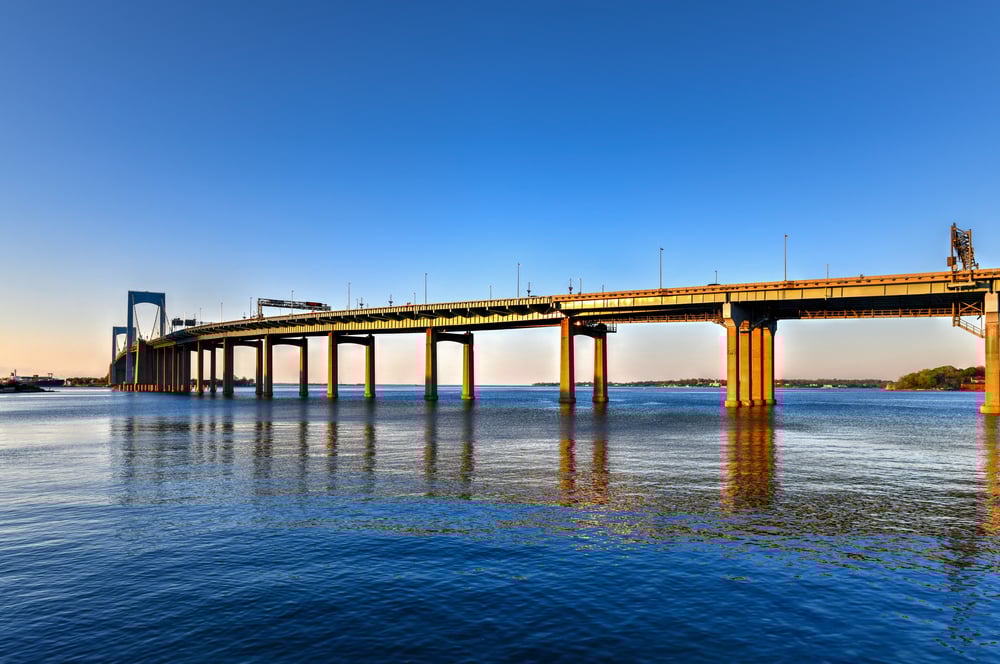
The Throgs Neck Bridge spans the point where the East River opens into Long Island Sound, connecting the Bronx to Queens at the northeastern edge of New York City. It was designed by Othmar Ammann, the same engineer responsible for the George Washington Bridge and the Verrazano-Narrows Bridge, and like his other work it reflects a clean, functional aesthetic that let the structure speak for itself.
The bridge was built to reduce congestion on the nearby Bronx-Whitestone Bridge, and both crossings remain essential parts of the regional highway network.
18. Commodore Barry Bridge (1974) — Delaware River, Pennsylvania/New Jersey
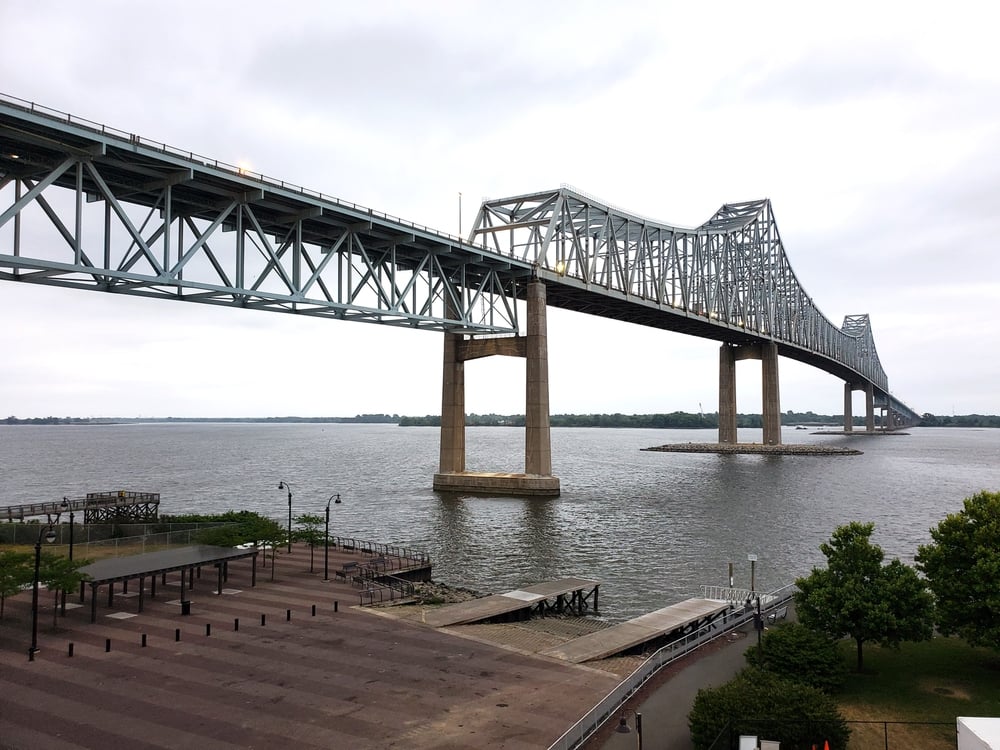
A stretch of steel and concrete links Chester, Pennsylvania, with Bridgeport, New Jersey, known as the Commodore Barry Bridge. Rising above the water, its longest gap between towers measures 1,644 feet.
Before engineers shifted toward cable-stayed styles, this was among the final large suspension bridges raised across the country. Honor goes to John Barry, born in Ireland, who helped shape the early American Navy.
Travelers on US Route 322 roll steadily over it – trucks moving goods, people heading to work. Even though crews finished building it not so long ago, federal rules now list it as historic. That status hints at something quieter: big new structures hardly go up anymore.
Steel Cables Rivers

Looking at these entries, certain patterns catch the eye. Across decades, key rivers like the Delaware, Ohio, and Hudson became common sites – not by chance, but because trade and people clustered there during America’s industrial growth.
Among builders, one name repeats more than others: Roebling. Each time he designed another span, lessons from earlier ones shaped what came after.
Still around today, plenty of these bridges keep moving cars despite aging past what engineers first planned. Not meant to endure endlessly, yet a few push on regardless – showing how long those rivers have sat there, outlasting every span ever built above them.
More from Go2Tutors!

- The Romanov Crown Jewels and Their Tragic Fate
- 13 Historical Mysteries That Science Still Can’t Solve
- Famous Hoaxes That Fooled the World for Years
- 15 Child Stars with Tragic Adult Lives
- 16 Famous Jewelry Pieces in History
Like Go2Tutors’s content? Follow us on MSN.