19 Notorious Women in History
History has a habit of remembering women in soft, flattering light — the devoted wife, the tragic muse, the quiet saint. But not all of them fit that mold.
Some women left behind records that are hard to look at and impossible to ignore. They were killers, spies, pirates, and rulers who made men tremble.
Their stories are dark, complicated, and in some cases, still unsettled. Here are 19 of the most notorious women history has ever produced.
1. Elizabeth Báthory — The Blood Countess

Elizabeth Báthory was a Hungarian noblewoman born in 1560, and the stories attached to her name are among the most disturbing in European history. She was accused of torturing and killing hundreds of young women, mostly peasant girls lured to her castle with the promise of work.
Estimates of her victim count range from 80 to over 600. In 1610, she was found guilty and walled into a set of rooms in her own castle, where she died four years later.
Whether the charges were entirely true or partially fabricated by rivals eager to seize her land is still debated. But the testimonies collected against her were specific and numerous.
Whatever the full truth, her name has endured as a byword for aristocratic cruelty.
2. Lizzie Borden — The Woman with the Axe

In 1892, in Fall River, Massachusetts, Andrew and Abby Borden were found dead in their home, killed with a hatchet. Their daughter Lizzie was charged with both murders.
The trial was a sensation. She was acquitted, but the question of who did it was never truly answered.
The evidence against her was circumstantial. A dress she burned shortly after the murders, her strange calm during the investigation, and some inconsistencies in her story kept suspicion pointed in her direction.
She lived out the rest of her life in Fall River, wealthy and largely shunned by polite society. The case remains open in the popular imagination.
3. Ching Shih — The Pirate Queen of the South China Sea
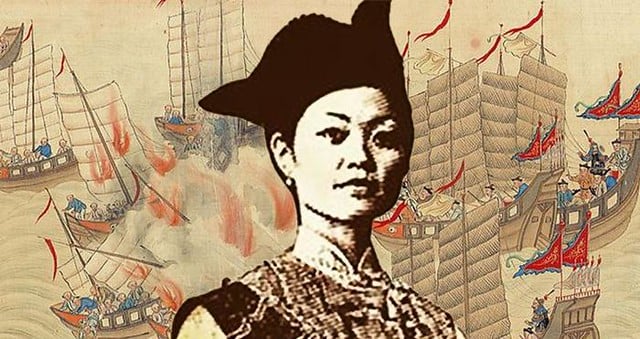
Ching Shih started life as a worker in a floating brothel in Canton. She ended up commanding the largest pirate fleet the world had ever seen — somewhere between 1,500 and 1,800 ships and as many as 80,000 sailors at her peak.
When her husband died in 1807, she took over his operation and ran it with strict, documented laws. Violations meant death.
The Chinese government, the Portuguese navy, and the British East India Company all tried to stop her and failed. She eventually negotiated her own retirement on favorable terms, keeping her wealth and living out her days running a gambling house.
She was one of the very few pirates in history who retired peacefully.
4. Catherine de’ Medici — The Serpent Queen

Catherine de’ Medici ruled France not once but three times — as queen consort to Henry II, as regent after his death, and as the power behind her sons’ reigns. She was shrewd, patient, and deeply political in an era when women were supposed to stay out of statecraft.
Her reputation darkened permanently after the St. Bartholomew’s Day Massacre of 1572, when thousands of Huguenots were killed across France. She is believed to have had a hand in triggering the violence, though historians still argue over exactly how much.
The term “Machiavellian” fits her better than almost anyone else in the French monarchy.
5. Mary I of England — Bloody Mary
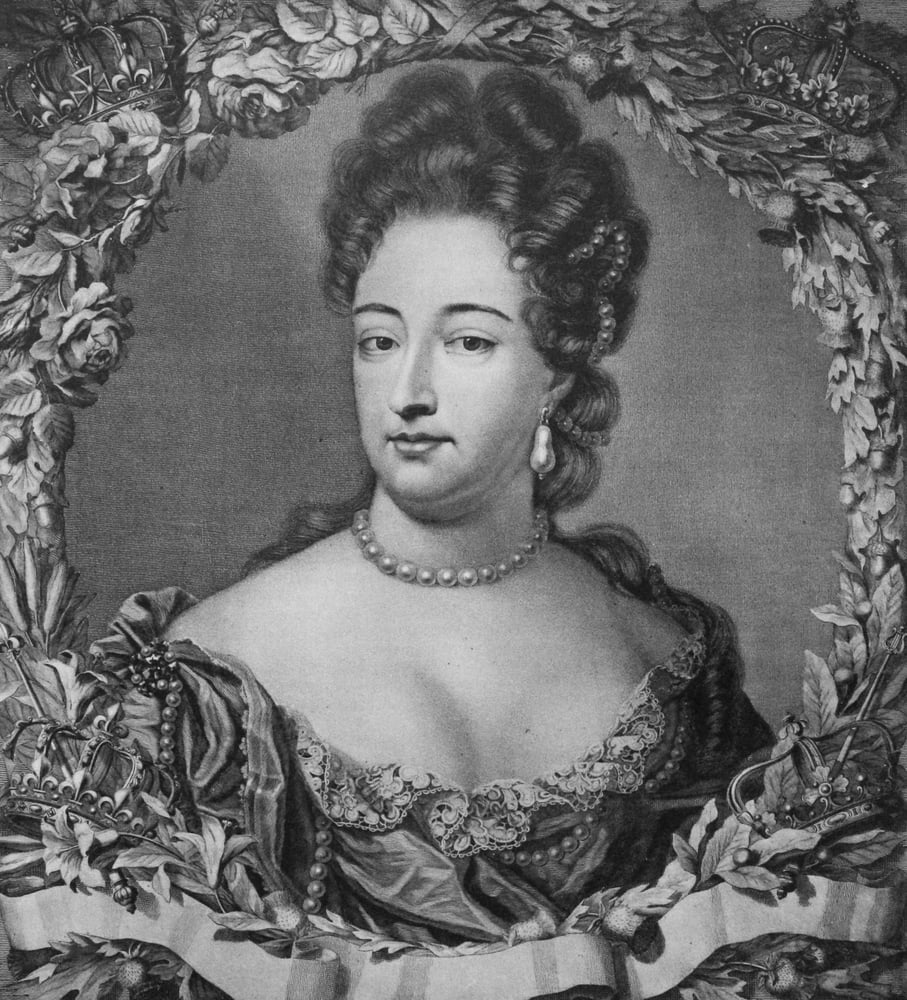
Mary Tudor became the first queen regnant of England in 1553 and spent her reign trying to restore Catholicism to a country that had already moved on. To achieve this, she authorized the burning of nearly 300 Protestants at the stake, which earned her the nickname that has stuck for centuries.
What gets lost in the nickname is that she was a capable administrator who rebuilt the navy and managed the loss of Calais with more dignity than the situation deserved. But 300 people burned alive is a hard thing to argue around.
Her nickname outlasted everything else she did.
6. Lucrezia Borgia — The Poisoner Who May Not Have Poisoned Anyone

The Borgia name carries so much weight that Lucrezia’s actual history gets buried under it. She was the daughter of Pope Alexander VI and the sister of Cesare Borgia, two of the most feared figures in Renaissance Italy.
She was accused of poisoning enemies, carrying out seductions on her father’s behalf, and worse. Most historians now believe she was more victim than villain — used as a political pawn, married off three times to suit her family’s ambitions.
But the legend stuck. She became the symbol of Renaissance treachery, and the truth of her life was largely irrelevant to how she was remembered.
7. Belle Gunness — The Lady Bluebeard

Belle Gunness was a Norwegian immigrant who settled in Indiana and, over a period of years, killed an unknown number of people — husbands, suitors, and possibly her own children. She placed newspaper ads targeting lonely, wealthy men, inviting them to come meet her with their savings.
Most of them were never seen again. When her farm burned in 1908, several dismembered bodies were found on the property, but the headless body believed to be hers was never positively identified.
Some suspected she staged her own death and vanished. Her victim count is estimated at between 25 and 40, making her one of the most prolific female killers in American history.
8. Mata Hari — The Spy Who Became a Symbol
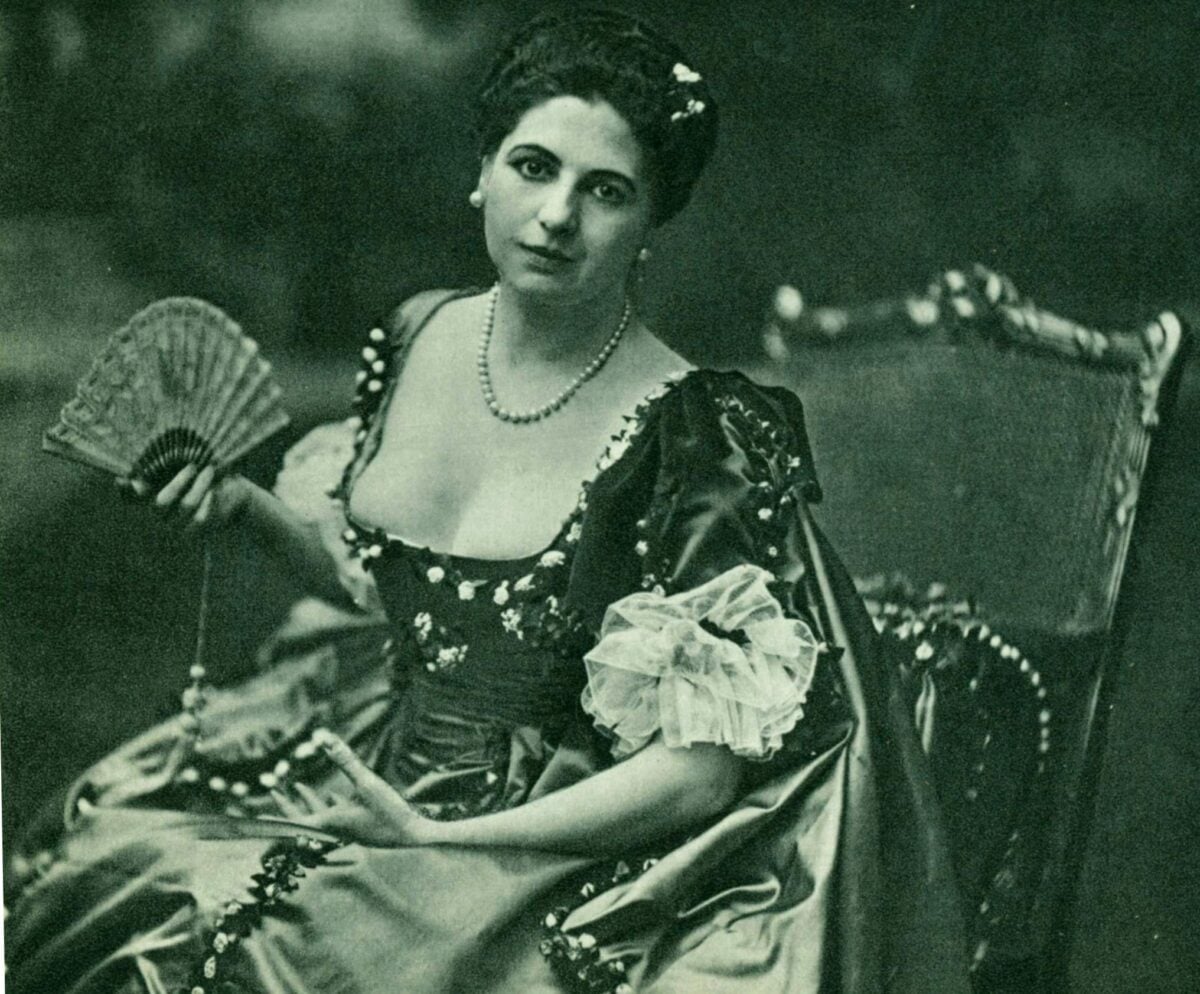
Mata Hari was a Dutch dancer who reinvented herself in Paris as an exotic performer and courtesan. During World War I, she was arrested by the French on charges of spying for Germany and executed by firing squad in 1917.
She reportedly refused a blindfold. The truth of her guilt has been disputed ever since.
Some historians believe she was a genuine double agent. Others think she was an easy scapegoat for military failures the French government needed to explain.
Either way, her name became permanently linked to the idea of the femme fatale spy, a concept that overshadowed almost everything factual about her life.
9. Mary Queen of Scots — The Queen Who Kept Losing

Mary Stuart spent most of her adult life fleeing, imprisoned, or outmaneuvered. She was queen of Scotland, briefly queen consort of France, and had a claim to the English throne that made her a permanent threat to Elizabeth I.
Her second husband was murdered. She married the main suspect weeks later. Her own lords imprisoned her and forced her abdication.
She escaped to England, where Elizabeth kept her under house arrest for 19 years before finally having her executed in 1587. The execution took three blows of the axe.
She was not a villain in the conventional sense, but her name has carried notoriety for the chaos that followed her wherever she went.
10. Ilse Koch — The Witch of Buchenwald

Ilse Koch was the wife of the commandant of Buchenwald concentration camp and is remembered as one of the cruelest figures to emerge from the Nazi system. She was accused of having lampshades and other objects made from the skin of prisoners, as well as ordering random killings for personal amusement.
She was tried twice — first by a U.S. military tribunal in 1947 and again by a West German court in 1951, which sentenced her to life in prison. She died by self-harm in her cell in 1967.
The specific accusations about lampshades were disputed by some investigators, but her personal cruelty toward prisoners was documented extensively by survivors.
11. Aileen Wuornos — The Highway Killer

Aileen Wuornos killed seven men along Florida’s highways between 1989 and 1990. She claimed self-defense — that all of the men had assaulted or attempted to assault her.
The courts rejected that argument for most of the cases, and she was executed by lethal injection in 2002. Her life before the killings was a long record of poverty, abuse, and homelessness.
Some people have argued that the justice system treated her more harshly than it would have treated a man in comparable circumstances. Others point out that at least some of the killings were premeditated.
She remains one of the most studied female serial killers in American history.
12. Myra Hindley — The Moors Murderer

Between 1963 and 1965, Myra Hindley and her partner Ian Brady kidnapped, abused, and murdered five children in England, burying several of their victims on Saddleworth Moor. The case shocked Britain in a way few crimes had before.
Hindley spent the rest of her life in prison, dying there in 2002. Over the years she claimed rehabilitation and expressed remorse, but public opinion never shifted in her favor.
Brady’s body was cremated at sea per his instructions. The remains of one victim were never found, and Hindley’s refusal to help locate them for much of her imprisonment stayed in public memory.
13. Queen Ranavalona I — The Mad Queen of Madagascar

Ranavalona I ruled Madagascar from 1828 to 1861 and was called everything from a tyrant to a nationalist defender, depending on the source. She expelled European traders and missionaries, banned the practice of Christianity, and ordered the execution of thousands of her own subjects, including people who tried to convert or who failed traditional trials by ordeal.
Under her reign, Madagascar’s population dropped significantly — though estimates vary widely and some historians argue European accounts exaggerated her brutality to justify later colonization. Whatever the final count, her methods were brutal by any standard, and she held her country independent from European powers for her entire reign.
14. Madame LaLaurie — New Orleans’ Darkest Secret

Delphine LaLaurie was a New Orleans socialite in the 1830s known for her elegant dinner parties. When a fire broke out in her mansion in 1834, rescuers broke into a locked room and found enslaved people chained and mutilated in ways that horrified even a city accustomed to the violence of slavery.
LaLaurie and her husband fled to France before a mob could reach them. She never faced legal consequences.
The house still stands in the French Quarter and has been called one of the most haunted buildings in the United States. Whether or not you believe in hauntings, the building’s actual history is dark enough on its own.
15. Ma Barker — The Crime Family Matriarch

Arizona “Kate” Barker, known as Ma Barker, was the mother of the Barker gang, one of the most active criminal organizations in Depression-era America. Her sons — Fred, Herman, Lloyd, and Arthur — were responsible for kidnappings, bank robberies, and murders across the Midwest throughout the 1930s.
How much Ma Barker herself directed the criminal operations is genuinely unclear. The FBI under J. Edgar Hoover portrayed her as the mastermind to justify her death in a 1935 shootout.
Others who knew the gang said she was simply a doting mother who ignored her sons’ crimes. She died in that Florida standoff with a machine gun nearby, though whether she fired it is still debated.
16. Irma Grese — The Hyena of Auschwitz
Irma Grese was an SS guard at Auschwitz and Bergen-Belsen who became one of the most feared people in both camps. She was 22 years old when she was tried at the Nuremberg Belsen trial in 1945.
Survivor testimony described her as someone who inflicted cruelty on prisoners with apparent enjoyment, including beatings and selections for the gas chambers. She was convicted and hanged in December 1945.
At the time of her execution, she was 22 — one of the youngest war criminals executed after the war. She showed no remorse at her trial and walked to the gallows without hesitation.
17. Typhoid Mary — The Cook Who Kept Spreading Death

Cooking jobs took Mary Mallon across wealthy homes in early 1900s New York. Unseen by her, germs rode along – typhoid hiding inside a healthy body.
Doctors later named her America’s first symptom-free spreader of the disease. Fifty-one cases tied back to her meals; death touched three families.
Records probably miss others she reached. Twice, they locked her away against her will.
After the first stretch, they let her go – only if she promised to stop cooking for good. Under a new name, she returned to the kitchen anyway.
They found her once more, then held her until death on North Brother Island, twenty-three years passing behind walls. One moment she walked free, the next she didn’t – no charges filed, yet no release granted.
Caught between systems that rarely speak to one another: care, control, labor.
18. Erzsébet Szilágyi – Power Through Strength
Fierce when needed, Erzsébet Szilágyi raised the future King Matthias Corvinus while guiding Hungary through shaky times. Power stayed in her grasp at first, since young kings can’t always fend off hungry rivals alone.
Nobles challenged the crown – she answered with sharp decisions and tighter control. Her grip never softened much; softness wouldn’t have lasted back then.
Rule by strength kept threats at bay, especially when loyalties shifted like wind. Not a familiar name to most, yet her readiness to command killings, trade captives, then silent dissent tied her closely to those leaders who left scholars unsettled.
Staying true to her son came naturally. What she did to keep him in power stirred different feelings.
19. Bonnie Parker – the girl who ran with outlaws

A nineteen-year-old Bonnie Parker crossed paths with Clyde Barrow one restless afternoon. Soon after, they vanished into a life on the run, wanted in nearly every state.
Across southern backroads and flat midwestern towns, they hit banks, then gas stops – always moving. At least nine cops died during their escapes, along with some bystanders caught in the wrong place.
In quiet motel rooms, she filled notebooks with poems instead of sleep. Four years later, both were dead – but the words remained.
Twenty three years old when police gunfire ended everything on a stretch of road through Louisiana in 1934. Right after, tales painted her life in softer colors.
Truth leaned harder – petty thefts strung together, endless fleeing, waves of brutality landing hardest on struggling workers just doing their jobs. Most reports say she didn’t shoot at officers.
Still, she stood beside every moment of it.
The Shadow They Cast
These women grab attention not because of the harm they did, though there were plenty. What sticks is how their lives mirror the times around them.
When rules kept most female voices quiet, a few still bent those rules until something broke. A rare few seized control in brutal fashion.
Not everyone deserved the label evil. The past paints some as villains simply to have someone to blame.
Others wore the mask fully, yet showed cracks underneath. Being part sinner, part survivor – that confusion feels familiar.
Long after others faded, theirs stayed. Just that fact deserves a pause.
More from Go2Tutors!

- The Romanov Crown Jewels and Their Tragic Fate
- 13 Historical Mysteries That Science Still Can’t Solve
- Famous Hoaxes That Fooled the World for Years
- 15 Child Stars with Tragic Adult Lives
- 16 Famous Jewelry Pieces in History
Like Go2Tutors’s content? Follow us on MSN.



