20 Photos of Famous Landmarks While Being Built
Construction photos have a strange power over us. Maybe it’s seeing something iconic stripped down to its skeleton, or realizing that what seems eternal actually had a beginning.
These landmarks feel so permanent in our minds that catching them mid-creation almost feels like traveling back in time. The scaffolding, the exposed framework, the workers posed casually on beams hundreds of feet in the air—all of it reminds you that someone had to build these things, piece by piece.
The Eiffel Tower Rising Over Paris

The iron lattice took shape between 1887 and 1889, and Parisians hated it at first. Photos from the construction show the tower growing in stages, with each platform creating a new silhouette against the sky.
Workers climbed the structure using wooden scaffolding and primitive elevators. The metalwork looks delicate in the images, almost fragile, which makes the finished result even more impressive.
Critics called it an eyesore. They wanted it torn down after the 1889 World’s Fair ended.
Statue of Liberty’s Copper Skin
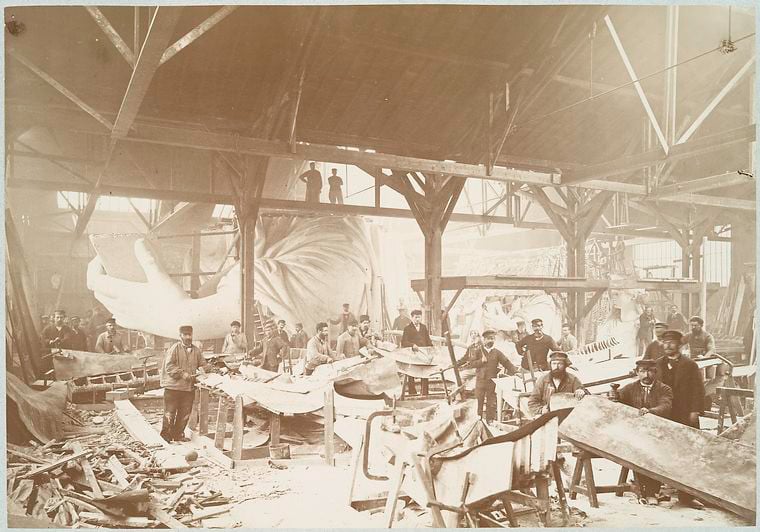
Lady Liberty came to life in a Paris workshop before making her Atlantic crossing. The copper sheets were hammered over wooden molds, each piece numbered for reassembly.
Photos show the statue’s arm and torch displayed at the Philadelphia Centennial Exhibition in 1876, just standing there in a field like a giant prop. The head sat in a Paris park for years while fundraising continued.
Workers assembled her final form on Bedloe’s Island starting in 1886, fitting the copper skin over Gustave Eiffel’s iron framework.
Golden Gate Bridge Suspended in Progress
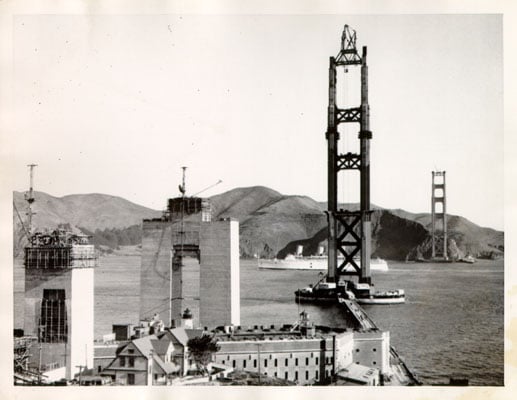
The bridge took four years to complete, from 1933 to 1937. Construction photos capture workers spinning the massive cables that would hold up the roadway.
They used a technique called aerial spinning, sending wire back and forth across the bay. The towers rose first, then the cables, then the deck sections were lifted into place.
Fog rolls through many of these images, making the partially complete bridge look like it’s floating. Eleven workers died during construction, which was considered remarkably low for a project this size.
Sydney Opera House’s Shell Structure
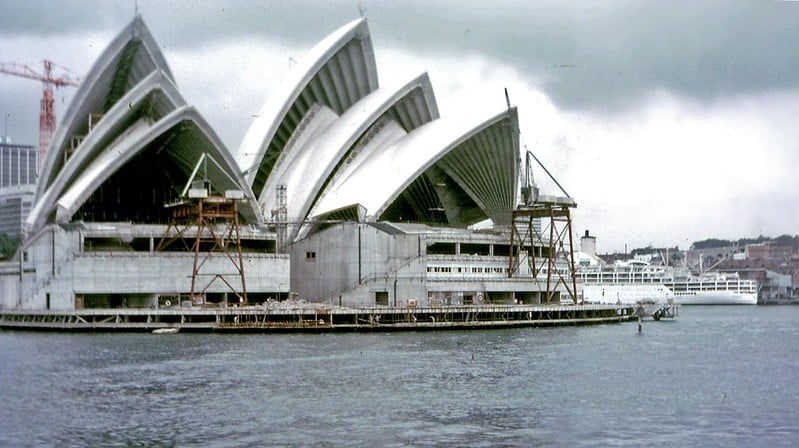
The opera house took 14 years to build and nearly bankrupted the project multiple times. The distinctive shell roof created engineering problems nobody had solved before.
Early construction photos show the massive concrete podium taking shape, then the ribs of the shells rising up like the skeleton of some prehistoric creature. Danish architect Jørn Utzon resigned in 1966 before completion, frustrated with budget battles and interference.
The shells finally came together using a design based on sections of a sphere.
Mount Rushmore Taking Form

Carving faces into a mountain sounds impossible until you see the photos. Work began in 1927 and continued through 1941.
Images show workers dangling from the rock face in harnesses, using jackhammers and dynamite. The faces emerged gradually—Washington first, then Jefferson, Roosevelt, and finally Lincoln.
The scale throws you off in the photos. Those workers look like ants crawling across a giant’s face.
Sculptor Gutzon Borglum died before the final touches were complete.
Brooklyn Bridge’s Gothic Towers
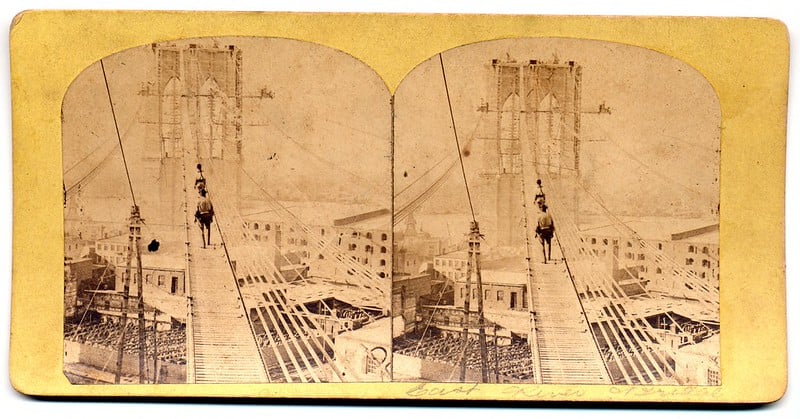
Construction started in 1869 and the bridge opened in 1883. The stone towers rose first, built using caissons sunk into the riverbed.
Workers descended into these pressurized chambers to dig out the riverbed and lay foundations. Many got decompression sickness—they called it “the bends”—and some died.
Chief engineer Washington Roebling was paralyzed by it and directed construction from his apartment window using a telescope. His wife Emily became the liaison, learning engineering to relay his instructions.
Photos show the towers complete while the cables were still being strung across the river.
Hoover Dam’s Concrete Pouring
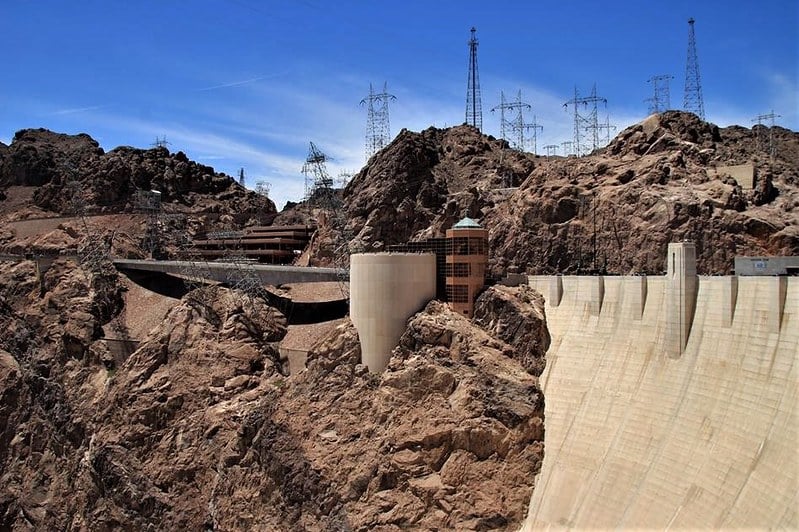
Flickr/PHOTOGRAPHY by DM & DBM
The dam took five years to build, from 1931 to 1936. Construction photos reveal the massive scale of the operation.
Workers poured concrete in blocks, not one continuous pour, because the heat from curing would have taken 125 years to dissipate. They built a refrigeration plant and ran cooling pipes through the concrete.
Images show the dam rising in sections, with the Colorado River diverted through tunnels blasted into the canyon walls. Summer temperatures reached 120 degrees in the canyon.
More than 100 workers died during construction.
Christ the Redeemer on His Mountain

The statue took nine years to build, from 1922 to 1931. Materials had to be carried up Corcovado Mountain by a narrow-gauge railway.
The reinforced concrete structure was covered with thousands of triangular soapstone tiles. Construction photos show the statue’s arms being assembled on the ground, then lifted into place.
The head was cast in sections. The Art Deco styling came from French sculptor Paul Landowski, but Brazilian engineer Heitor da Silva Costa led the project.
Lightning strikes the statue regularly now, but it was designed to take the hits.
Big Ben’s Clock Tower Rising
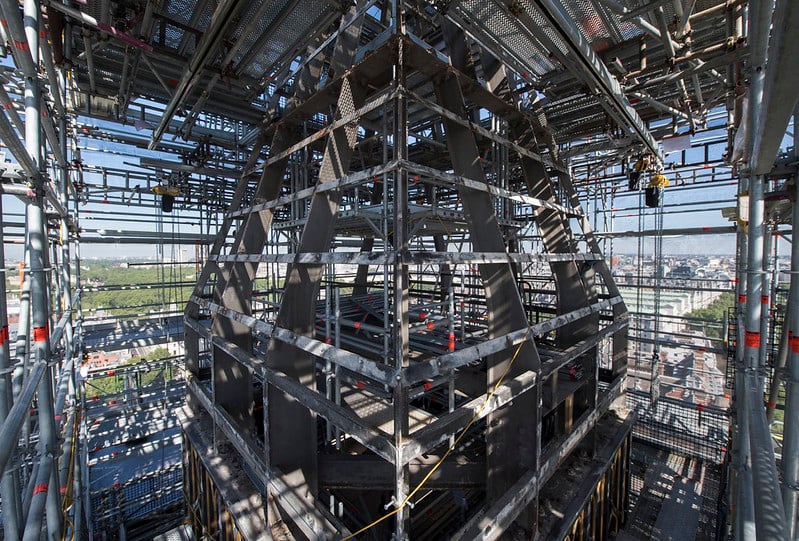
The tower’s construction ran from 1843 to 1859. The name “Big Ben” actually refers to the bell inside, not the tower itself.
Photos from the era show the neo-Gothic architecture taking shape brick by brick. The clock faces are 23 feet in diameter—workers could walk around inside them during installation.
The bell cracked during testing and had to be recast. It cracked again after installation, giving Big Ben its distinctive tone.
The tower leans slightly northwest, about 8.66 inches, but it’s stable.
Burj Khalifa Climbing Skyward

The world’s tallest building took six years to complete, from 2004 to 2010. Time-lapse photography shows the tower rising at a rate of one floor every three days during peak construction.
The foundation alone required 58,900 cubic yards of concrete. The building’s Y-shaped floor plan reduces wind forces.
Construction photos reveal the intricate geometric patterns of the exterior cladding being installed panel by panel. Workers built in temperatures that regularly exceeded 100 degrees.
At its peak, 12,000 workers were on site daily.
The Great Wall’s Ancient Progress

While most of the wall we see today dates from the Ming Dynasty (1368-1644), construction spans over 2,000 years. Ancient construction methods involved compressed earth, stone, brick, and whatever materials were available locally.
Historical records and archaeological evidence show how different sections evolved. Workers used rice flour in the mortar mix, making it incredibly strong.
The wall served multiple purposes—defense, border control, and a road for moving troops and supplies. Watchtowers were built at regular intervals.
The wall stretches over 13,000 miles if you count all the branches and offshoots.
Space Needle’s Futuristic Design
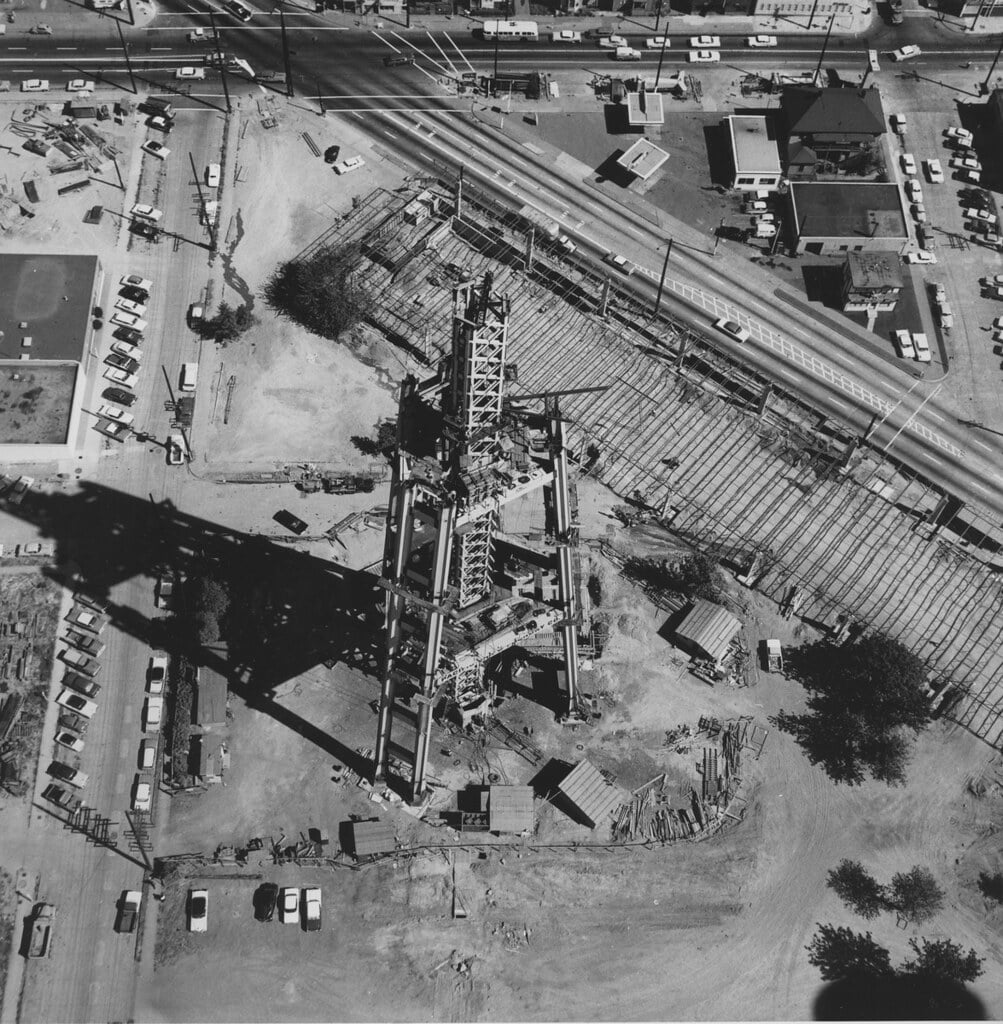
Seattle’s iconic structure went up in less than a year for the 1962 World’s Fair. The foundation required 467 cement trucks pouring concrete continuously for 12 hours.
Photos show the three legs rising separately, then meeting at the top house. The design had to withstand earthquakes and winds up to 200 mph.
The rotating restaurant was a novel feature in 1962. Workers completed construction in April 1962, just in time for the fair’s opening.
The structure weighs 9,550 tons, and the foundation weighs 5,850 tons, making it balanced for stability.
Sagrada Familia’s Ongoing Creation

Construction began in 1882 and continues today. Antoni Gaudí took over as architect in 1883 and devoted his life to the project.
He died in 1926 after being hit by a streetcar, with the basilica only 15-25% complete. Photos spanning over a century show the slow, painstaking progress.
The Spanish Civil War destroyed Gaudí’s original plans and models, forcing architects to interpret his vision from fragments. Modern technology has accelerated construction.
The projected completion date is 2026, the centenary of Gaudí’s death.
Willis Tower’s Bundled Design

Formerly known as Sears Tower, construction ran from 1970 to 1973. The building uses a “bundled tube” design—nine tubes of varying heights creating the distinctive stepped profile.
Construction photos show the steel framework going up in sections. At its completion, it was the world’s tallest building at 1,450 feet.
The construction crew worked through Chicago’s brutal winters. The black aluminum and bronze-tinted glass exterior was installed as the structure rose.
The building’s design allows for maximum interior space with minimal structural steel.
Colosseum’s Ancient Engineering

Construction of Rome’s amphitheater began in 72 AD under Emperor Vespasian and was completed in 80 AD under Titus. While we don’t have photos from Roman times, archaeological evidence and historical accounts reveal the construction process.
Travertine stone was quarried miles away and transported to the site. The Romans used concrete—volcanic ash mixed with lime and seawater—for interior sections.
A complex system of pulleys, ramps, and cranes lifted materials into place. The building could hold 50,000 spectators and featured a retractable awning system for shade.
Gateway Arch’s Geometric Precision
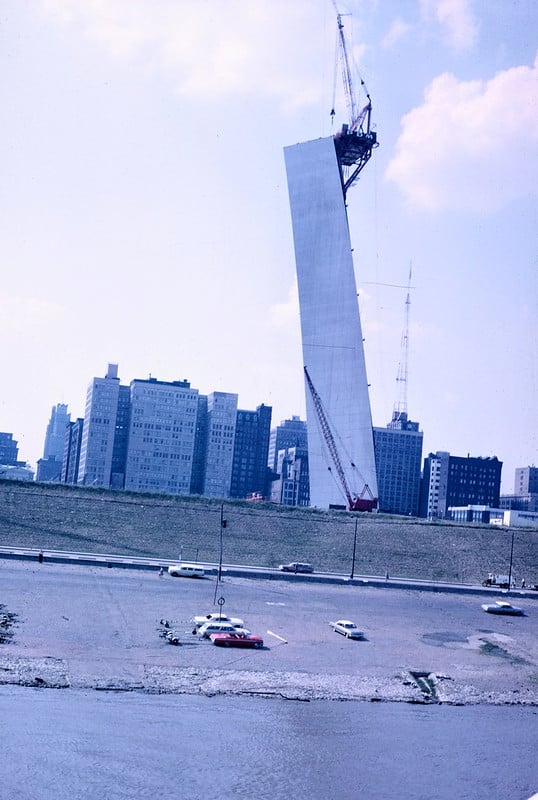
St. Louis’s stainless steel arch took two and a half years to build, from 1963 to 1965. Photos show the two legs rising simultaneously from opposite bases.
The sections were prefabricated triangles that locked together. The final piece, a keystone section, was scheduled for installation on October 28, 1965.
Engineers worried thermal expansion from the sun might prevent it from fitting. They used fire hoses to cool the south leg on that hot morning.
The keystone slid into place within 16 minutes of the target time. The arch stands 630 feet tall and spans 630 feet wide.
Panama Canal Cutting Through

Construction spanned from 1904 to 1914, after a failed French attempt in the 1880s. Photos from the American effort show massive steam shovels excavating millions of cubic yards of earth.
The Culebra Cut through the Continental Divide posed the biggest challenge. Landslides repeatedly buried the progress.
Workers dealt with yellow fever and malaria in the early years until disease control measures took effect. Over 25,000 workers died during construction across both attempts.
The canal uses a system of locks to lift ships 85 feet above sea level to cross the isthmus.
Tower Bridge’s Victorian Engineering
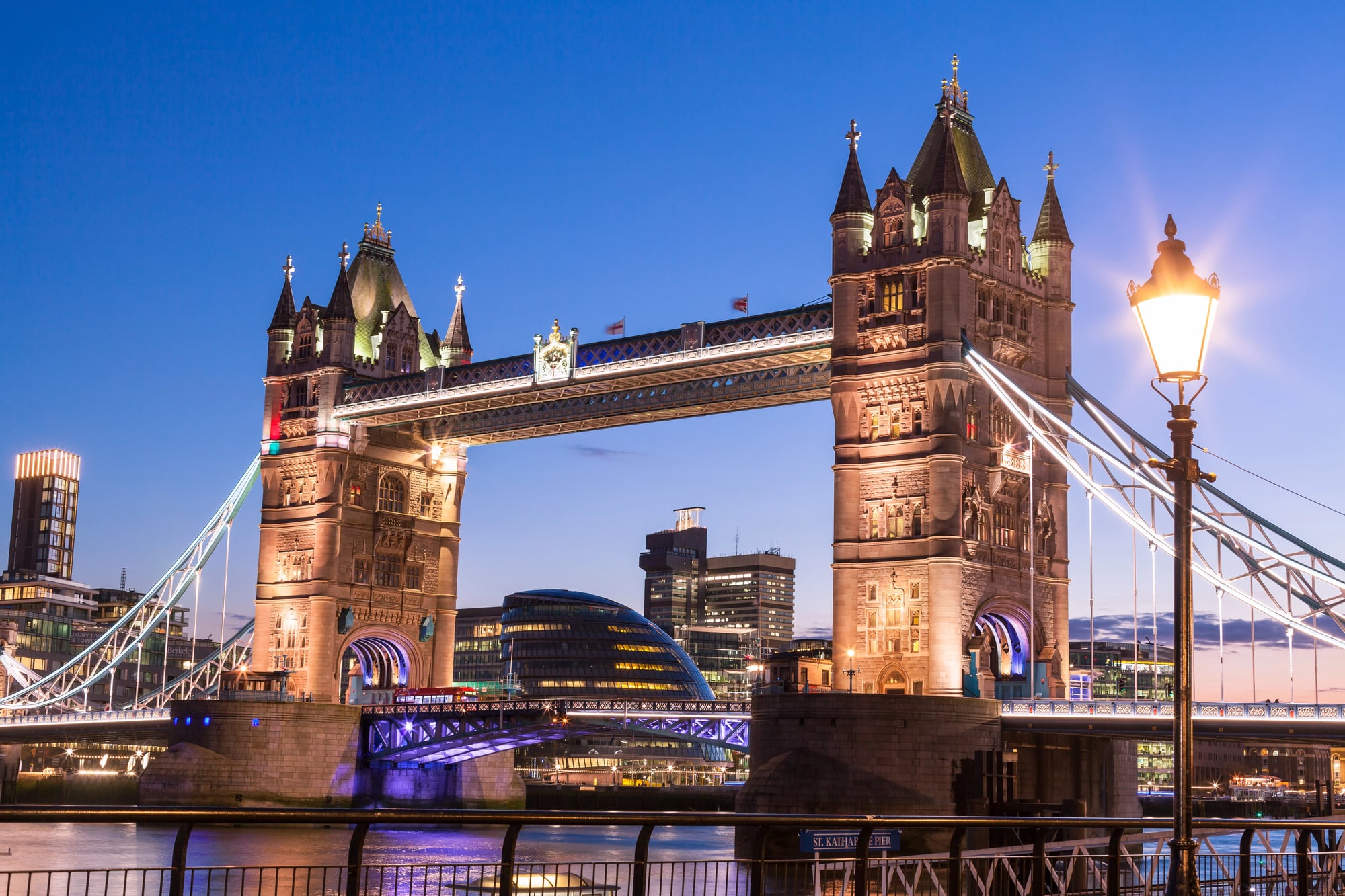
London’s iconic bridge took eight years to build, from 1886 to 1894. Photos show the two massive towers being constructed on piers sunk into the Thames riverbed.
The bridge combines suspension spans on the sides with a bascule (drawbridge) in the center. Over 11,000 tons of steel formed the framework, which was then clad in Cornish granite and Portland stone to give it a Gothic appearance.
The bascules were originally powered by steam, with huge counterweights helping lift the roadway sections. The bridge was designed to allow tall ships to pass through to the Pool of London.
Taj Mahal’s Marble Assembly
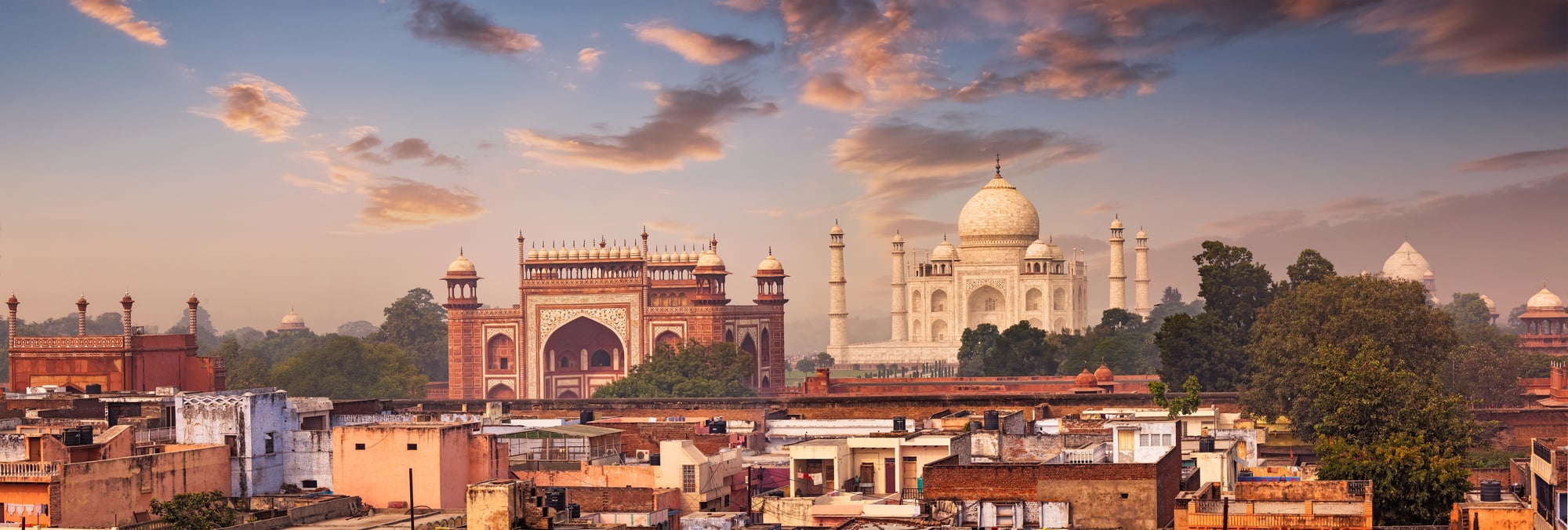
Construction of this mausoleum took 22 years, from 1632 to 1653. Emperor Shah Jahan commissioned it after his wife’s death.
Over 20,000 workers and 1,000 elephants participated in the construction. Marble was quarried 200 miles away and transported via a specially constructed 15-kilometer ramp.
Historical records describe the scaffolding, which was said to be so extensive that builders estimated it would take years to dismantle. Shah Jahan supposedly ordered it dismantled overnight by telling locals they could keep any bricks they carried away.
The white marble was inlaid with semi-precious stones in intricate floral patterns.
CN Tower Piercing the Sky
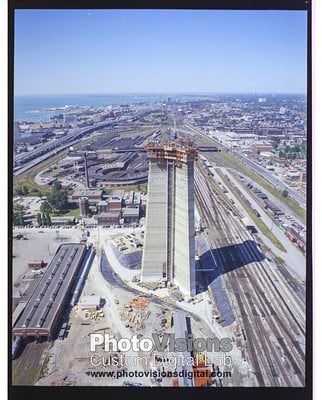
Toronto’s broadcasting tower took 40 months to build, from 1973 to 1976. The structure required 56,250 tons of concrete and 3,720 tons of steel.
A hydraulic slip form moved up the structure continuously as concrete was poured. The tower rose about 20 feet per day.
Photos show the main shaft climbing first, then the distinctive pod sections being lifted into place by a massive crane called Olga. Workers installed the 335-foot antenna in 30 sections, helicoptered to the top.
Upon completion, it was the world’s tallest free-standing structure at 1,815 feet. It held that record for 32 years.
When the Cranes Come Down
These construction photos reveal something we usually ignore: the temporary nature of permanence. What feels eternal was actually assembled, argued over, redesigned mid-build, and sometimes nearly abandoned.
The Golden Gate Bridge almost ran out of funding. The Sydney Opera House changed architects.
Mount Rushmore was left incomplete. Yet these structures became icons anyway, not despite their difficult births but perhaps because of them.
Every landmark in finished form hides a story of scaffolding and doubt, of workers who couldn’t see the final vision but showed up anyway. The cranes eventually came down.
The workers went home. And what remained was something worth photographing for entirely different reasons.
More from Go2Tutors!

- The Romanov Crown Jewels and Their Tragic Fate
- 13 Historical Mysteries That Science Still Can’t Solve
- Famous Hoaxes That Fooled the World for Years
- 15 Child Stars with Tragic Adult Lives
- 16 Famous Jewelry Pieces in History
Like Go2Tutors’s content? Follow us on MSN.