Most Useful Knots for Camping
A shaky breeze tests the flap of the tent, yet everything holds – mostly because someone tied things down earlier. Modern gadgets help, true, but friction and tension often decide what stays up when wind picks up.
A coil of nylon lies coiled by the pack, unremarkable until needed. That loop under pressure becomes the difference between shelter and chaos.
Skill shows not in speed, but in how tight a bowline grips after hours of strain. A few basic ties stand out once night sets in.
Even with stiff fingers, these hold fast without needing perfect attention. Some have lasted simply because they never fail mid-task.
Reliability shows up quietly – through what gets done, not how it looks. Focusing closely on certain knots shows which ones stay useful in camping, even as equipment changes over time.
Square Knot

Their lasting role comes down to reliability when it counts. The square knot is often associated with simplicity, but its usefulness lies in how cleanly it solves a common problem.
When two ropes of similar thickness need to be joined for a short-term task, this knot provides a stable, balanced connection that stays neat and manageable. Campers frequently rely on it for bundling firewood, securing rolled sleeping pads, or tying gear together for transport.
What makes the square knot appealing is how predictable it feels once tied correctly. The tension distributes evenly, and the knot lies flat rather than twisting awkwardly.
That visual clarity makes it easy to check, even at a glance. While it is not designed for heavy strain or shifting loads, it performs exactly as intended in calm, controlled situations.
In a campsite setting, reliability matters more than raw strength.
Taut-Line Hitch
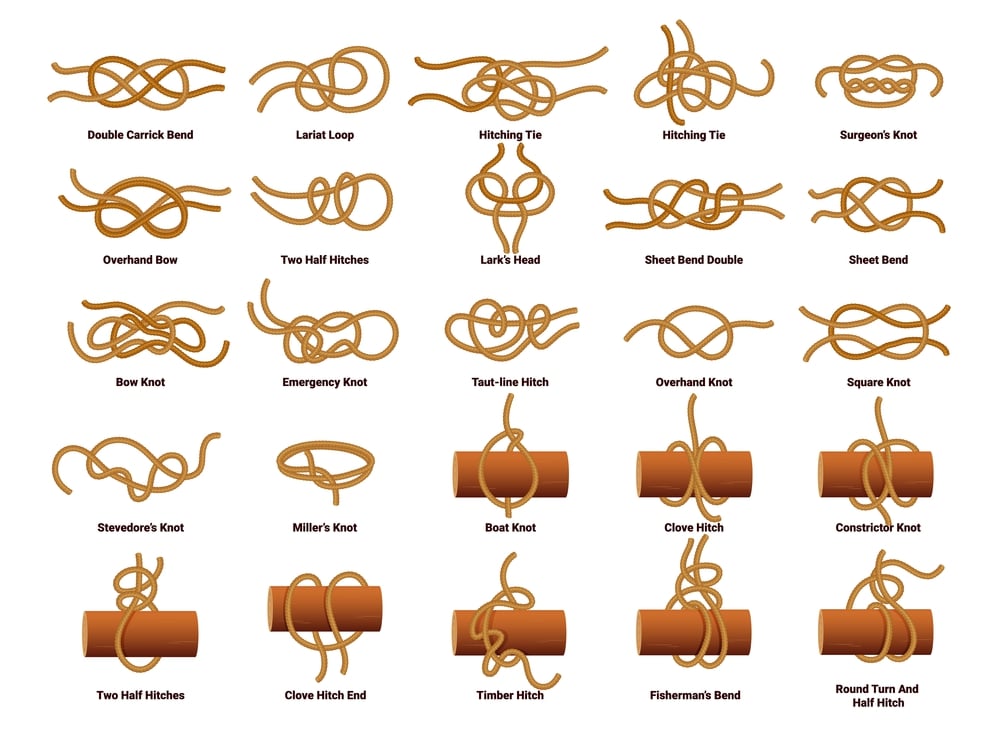
The taut-line hitch has become one of the most widely used camping knots because it addresses an issue that never fully disappears outdoors. Fabric stretches.
Cordage relaxes. Weather changes.
This knot allows a line to be adjusted without untying it completely, making it especially valuable for shelters and tarps. What sets this knot apart is its balance between movement and grip.
When tension is applied, it holds firm. When adjusted by hand, it slides smoothly into a new position.
That adaptability saves time and energy, especially during long trips where shelters are adjusted repeatedly. Rather than rebuilding a setup, campers can fine-tune it in seconds, maintaining stability without unnecessary effort.
Clove Hitch
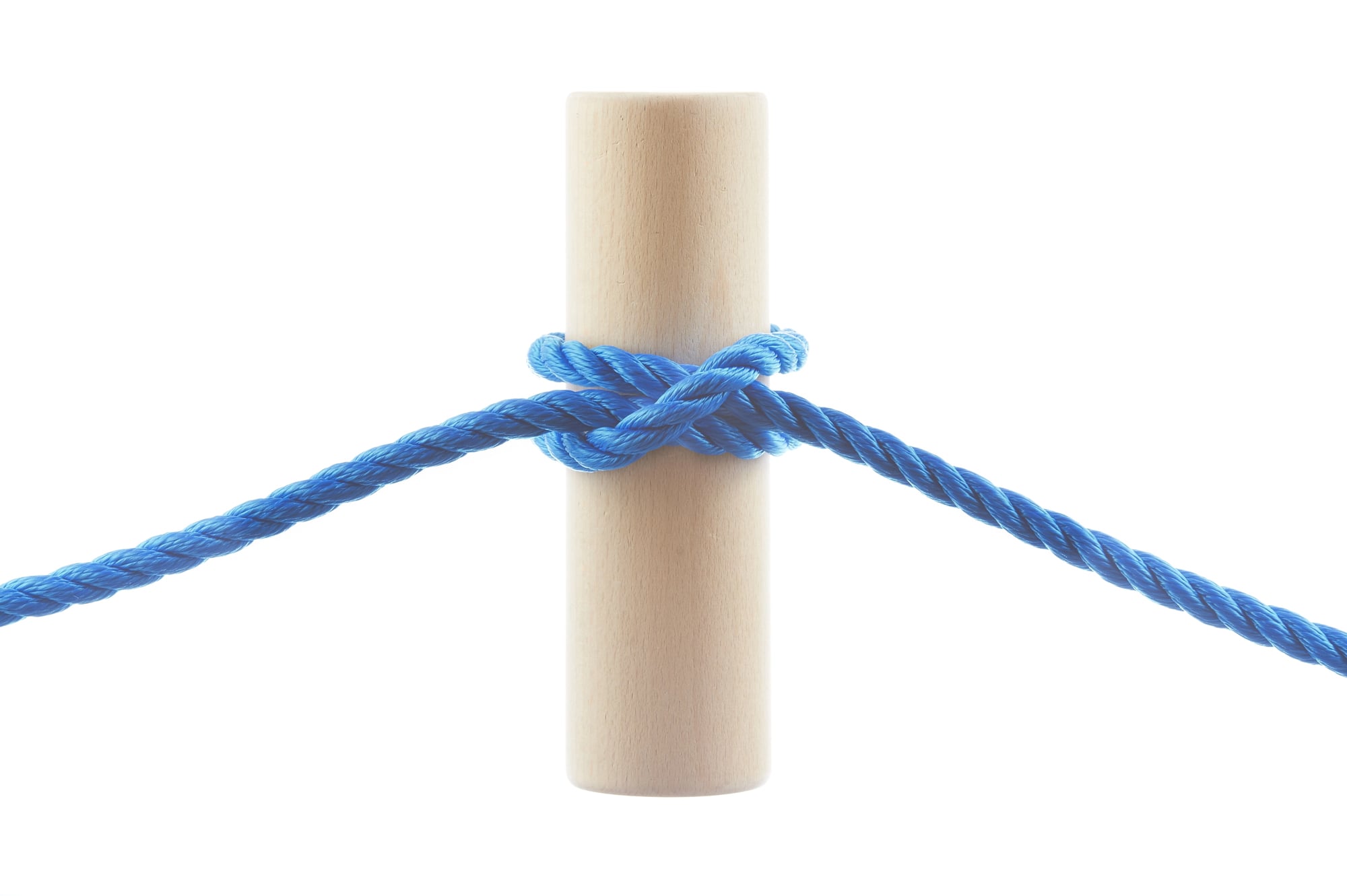
Speed defines the clove hitch. It can be tied quickly around a tree, post, or pole, which makes it ideal for moments when gear needs to be secured immediately.
Campers often use it when starting a ridgeline, hanging items temporarily, or anchoring something during setup. Its strength lies in convenience rather than permanence.
The clove hitch holds well under steady conditions, but it is best treated as a temporary solution or a starting point. Many campers reinforce it with another securing knot when longer-term stability is required.
Even so, its ability to be tied and released quickly gives it lasting value, particularly during fast-paced setup and breakdown.
Bowline

The bowline has earned a reputation as one of the most trusted knots in outdoor use, and that trust is well deserved. It creates a fixed end that holds its shape under tension without tightening further over time.
This makes it especially useful when securing a rope to a tree or anchor where easy release is important. Campers turn to the bowline for tasks that demand consistency.
Hanging food away from wildlife, anchoring tarps, or securing heavier gear all benefit from a knot that behaves predictably. Once set, it stays stable.
When the task is done, it unties without a struggle. Its long-standing use across outdoor disciplines speaks to how well it balances strength with practicality.
Sheet Bend
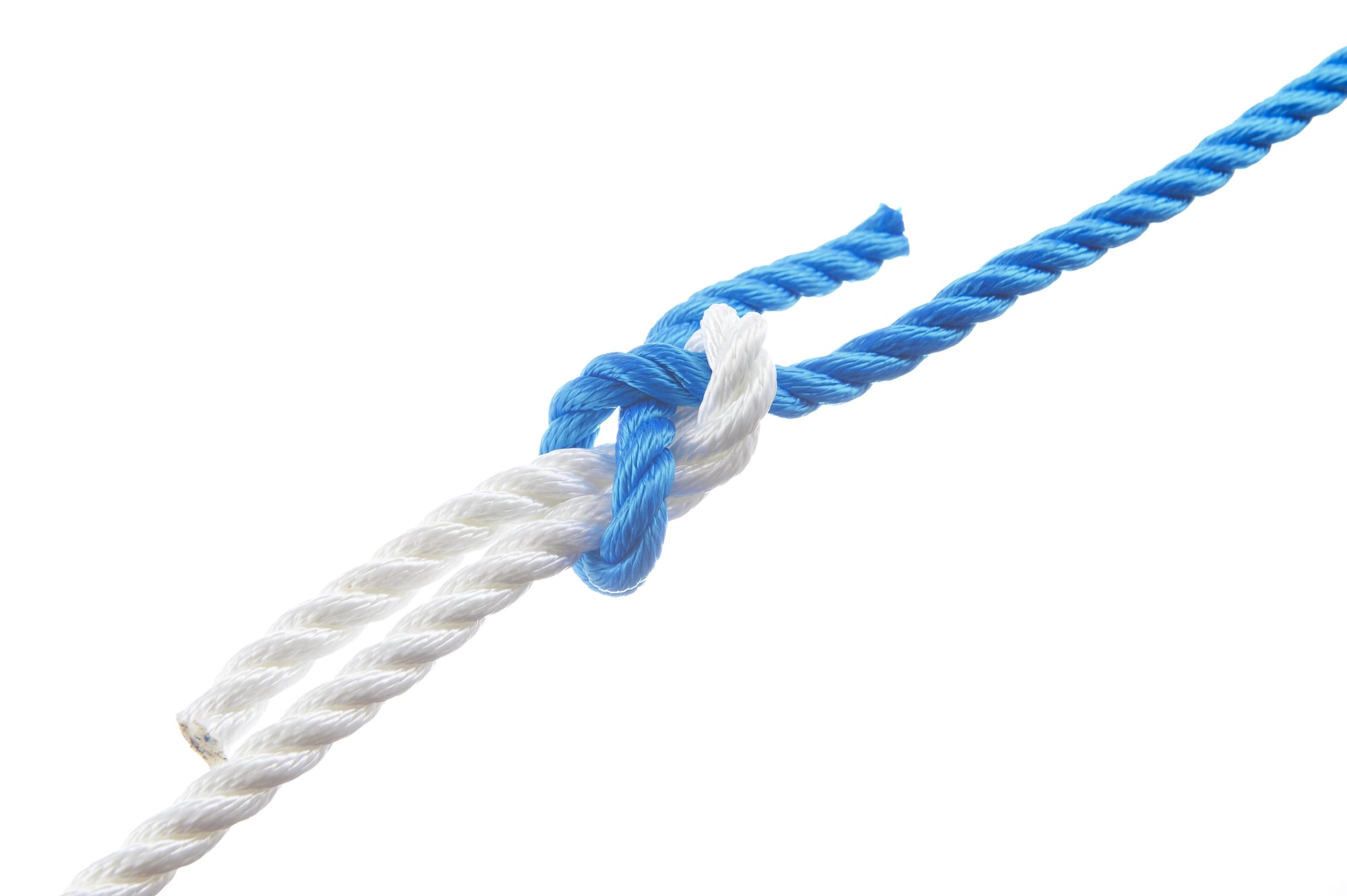
Camping rarely offers perfect materials. Ropes vary in thickness, condition, and length, especially when improvising repairs or extensions.
The sheet bend is designed specifically for joining ropes of different thicknesses in a way that remains stable under load. Its design allows the thicker rope to carry most of the strain while the thinner rope locks into position.
This makes it especially useful when replacing a damaged section or extending a line with spare cordage. In situations where adaptability is required, the sheet bend offers a dependable solution without unnecessary complexity.
Figure-Eight Knot

The figure-eight knot is valued for its clarity and strength. Once tied, it forms a clean, symmetrical shape that resists slipping and is easy to recognize.
Campers often use it to create secure end stops or reinforce lines that will experience consistent tension. One of its greatest advantages is how well it balances security with ease of release.
Even after being loaded, it can usually be untied without excessive force. That makes it well suited for repeated use over the course of a trip.
When reliability and reusability matter, this knot continues to earn its place.
Timber Hitch

The timber hitch excels at tasks involving logs or long pieces of wood. It grips securely under tension but comes apart easily when the load is released.
Campers often rely on it when dragging firewood or stabilizing large branches during campsite setup. Its strength lies in how it tightens naturally under strain.
As pressure increases, the grip improves rather than loosens. Once the task is complete, the knot releases cleanly without fuss.
This makes it especially useful for temporary tasks where control is needed without permanent fastening.
Alpine Butterfly Bend

The alpine butterfly bend is prized for its ability to create a stable midpoint in a rope without weakening the surrounding sections. Campers may use it to isolate a damaged area, create attachment points, or distribute load evenly along a line.
What makes this knot particularly useful is its stability under tension from multiple directions. Once set, it maintains its structure and remains easy to untie.
In situations where flexibility and load management matter, it provides options without requiring additional rope.
Why These Knots Continue to Matter

Camping knots endure because they tolerate imperfection. They account for uneven tension, human error, and changing conditions.
Rather than failing outright, they adapt. Over time, campers gravitate toward knots that reduce frustration rather than add to it.
Each of these knots represents a solution shaped by repeated use. They are not theoretical tools, but practical responses to problems encountered outdoors.
Their continued popularity reflects experience rather than tradition alone.
The Quiet Foundation of a Reliable Campsite

Modern camping gear has changed dramatically, but knots remain essential. Adjustable straps and modular systems still rely on the same principles of tension, balance, and control.
When something needs to be secured quickly and confidently, a well-chosen knot often does the job better than any accessory. Knowing these knots is less about memorization and more about understanding purpose.
Each one exists because it solves a specific problem efficiently. When shelters stay firm through the night and gear remains exactly where it should, knots rarely get credit.
Even so, they remain one of the quiet skills that hold everything together.
More from Go2Tutors!

- The Romanov Crown Jewels and Their Tragic Fate
- 13 Historical Mysteries That Science Still Can’t Solve
- Famous Hoaxes That Fooled the World for Years
- 15 Child Stars with Tragic Adult Lives
- 16 Famous Jewelry Pieces in History
Like Go2Tutors’s content? Follow us on MSN.



