20 Strange Historical Facts They Never Taught in School
History class had a way of making the past feel predictable. Kings rose and fell, wars were fought, inventions happened.
But the version of history most people learned left out the parts that make you stop and say, “Wait, that actually happened?”. The real past is stranger, messier, and far more entertaining than any textbook suggested.
Here are 20 facts that prove it.
Ancient Romans Used Urine as Mouthwash

And not just their own — Roman merchants actually imported urine from Portugal because it was considered particularly effective. The ammonia in urine was used to whiten teeth and clean clothes.
The practice was so widespread that Emperor Nero taxed the urine trade. There’s even a Latin saying that came from this: pecunia non olet, meaning “money doesn’t smell.”
It was Nero’s response when his father questioned the dignity of the tax.
A Bear Once Held the Rank of Corporal in the Polish Army

During World War II, a Syrian brown bear named Wojtek was adopted by Polish soldiers and eventually enlisted as a private in the Polish Army. He learned to carry artillery shells, salute officers, and smoke cigarettes — though that particular habit will go unmentioned here.
He was promoted to corporal after the Battle of Monte Cassino. After the war, he lived out his days at Edinburgh Zoo, where Polish veterans would visit and wrestle with him for old times’ sake.
Cleopatra Lived Closer in Time to the Moon Landing Than to the Building of the Great Pyramid

The Great Pyramid of Giza was completed around 2560 BC. Cleopatra was born in 69 BC. The moon landing happened in 1969 AD.
That means roughly 2,500 years separated Cleopatra from the pyramid, but only about 2,000 years separated her from astronauts walking on the moon. Ancient history isn’t as far away as it feels — it’s just unevenly distributed.
Napoleon Was Once Attacked by Rabbits

In 1807, after signing the Treaties of Tilsit, Napoleon ordered a celebratory rabbit hunt. His chief of staff rounded up the rabbits — except he collected domesticated rabbits instead of wild ones.
When released, hundreds of them swarmed Napoleon and his men, treating them as the people who normally brought food. Napoleon reportedly retreated to his carriage.
His military record against actual enemies was considerably better.
The Great Wall of China Is Not Visible from Space

This one has been repeated so often it became accepted as fact, but it simply isn’t true. The wall is long but narrow — nowhere near wide enough to see from orbit with the unaided eye.
Even Chinese astronaut Yang Liwei confirmed he couldn’t spot it during his 2003 spaceflight. The myth probably spread because people confused “visible from space” with just being very, very long.
Ancient Egyptians Used Moldy Bread as Medicine

Long before penicillin, Egyptians applied moldy bread to infected wounds. They had no idea why it worked, but they observed that it did.
Alexander Fleming’s 1928 discovery of penicillin was technically a rediscovery of something humans had stumbled onto thousands of years earlier. The Egyptians, Serbians, and various Chinese traditions all had some version of this practice.
Oxford University Is Older Than the Aztec Empire

Teaching at Oxford began around 1096 AD and developed rapidly after 1167. The Aztec city of Tenochtitlan wasn’t founded until 1325.
When Europeans arrived in the Americas and encountered the Aztec civilization, they were already dealing with a university that had been running for centuries. It’s a useful reminder that “old” and “new” mean very different things depending on where you’re standing.
A 75-Year War Ended Without a Single Casualty
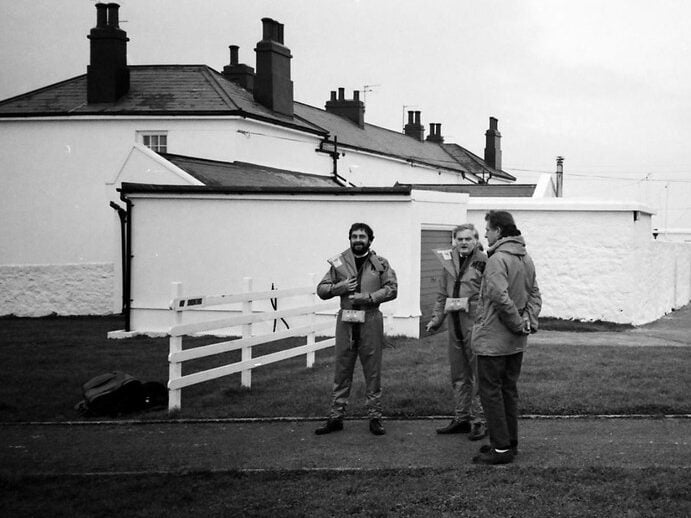
The Three Hundred and Thirty Five Years’ War was fought between the Netherlands and the Isles of Scilly, a small archipelago off the coast of England. It began in 1651 and was never officially ended — until a historian brought it to everyone’s attention in 1985, at which point the Dutch ambassador traveled to Scilly and signed a peace treaty.
Not one person died during those 335 years of “conflict.”
Vikings Never Wore Horned Helmets

The iconic image is almost entirely the invention of 19th-century romantic painters and costume designers. Actual Viking helmets were simple, rounded iron caps — practical for combat, not theatrical for operas.
The one well-preserved Viking helmet that archaeologists have found has no horns whatsoever. The horned version became popular during a 1876 production of Wagner’s opera cycle Der Ring des Nibelungen.
Marie Curie’s Notebooks Are Still Radioactive

Curie died in 1934 from aplastic anemia caused by radiation exposure. Her personal notebooks — along with her cookbook — are so contaminated that they’re stored in lead-lined boxes in France.
Researchers who want to study them must sign a waiver and wear protective gear. The notebooks will remain radioactive for another 1,500 years or so.
Her dedication to science was, in the most literal sense, written in her own health.
Abraham Lincoln Was a Skilled Wrestler

Before politics, Lincoln was one of the best wrestlers in his county — and possibly the state. He had a reach and strength that made him nearly impossible to beat.
In roughly 300 matches over his career, he reportedly lost only once. The National Wrestling Hall of Fame has honored him with an Outstanding American distinction.
The image of the tall, bookish president doesn’t quite account for this.
A Town in Peru Has Been at War With Itself Every New Year’s Day for Centuries

In the town of Santo Tomás in Chumbivilcas province, residents celebrate New Year’s Day with a ritual called Takanakuy, where community members settle disputes through organized fistfights. After the fighting, everyone celebrates together.
It’s considered a way to start the new year with a clean slate — grievances aired, scores settled, grudges officially over. It has roots in pre-Columbian tradition and continues today.
The Shortest War in History Lasted 38 Minutes

The Anglo-Zanzibar War of 1896 holds the record. Zanzibar’s sultan died and was replaced by a man Britain didn’t approve of.
Britain delivered an ultimatum: step down or face bombardment. When the new sultan refused, the British Navy opened fire.
About 38 minutes later, Zanzibar surrendered. The new sultan reportedly fled through a back door before the fighting even ended.
Ancient Greeks Thought the Brain Was for Cooling Blood

Aristotle, one of the most influential thinkers in history, believed the brain was essentially a radiator. He thought thinking happened in the heart, and the brain’s job was to cool the blood flowing up from it.
Egyptian embalmers, working from the same assumption, removed the brain through the nose and discarded it when preparing mummies. They preserved the heart carefully.
Being very smart and being exactly right are not always the same thing.
The Eiffel Tower Was Supposed to Be Demolished

When Gustave Eiffel built the tower for the 1889 World’s Fair in Paris, the plan was always to tear it down after 20 years. Many Parisians hated it — artists and writers signed petitions calling it an eyesore.
What saved it was the radio. Engineers realized the tower made an excellent antenna, and its practical value outweighed the aesthetic objections.
The world’s most visited monument survived because of telecommunications.
A Dead Man Won a U.S. Congressional Election

In 2000, Missouri governor Mel Carnahan died in a plane crash just weeks before the Senate election. His name remained on the ballot because there wasn’t enough time to remove it.
He won. His wife was appointed to fill the seat in his place.
It wasn’t the only time this happened — dead candidates have won elections at various levels of government across the country at different points in history.
Medieval Europeans Thought Carrots Were Purple

They were, originally. The orange carrot most people know today was cultivated in the Netherlands in the 17th century, likely through selective breeding.
Whether this was done to honor William of Orange — the Dutch royal house — is debated by historians. Purple, yellow, white, and red varieties of carrot existed long before orange became the standard.
The vegetable’s modern color is essentially a political accident.
The First Computer Bug Was an Actual Bug

One day in 1947, while Grace Hoppers group tinkered with the Harvard Mark II, strange errors began appearing. A real insect had wedged itself inside a relay switch, causing chaos.
Instead of tossing it out, they stuck the critter into their notebook. Scribbled beside it: first actual case of bug being found.
That page, complete with fragile wings and all, lives today at the Smithsonian Institution. Though people already used bugs for flaws long before that moment, this odd event made it stick forever.
Russia Sold Alaska to US at Two Cents Per Acre

Back then, the U.S. paid $7.2 million for nearly 586,000 square miles. Newspapers laughed – calling it “Seward’s Folly,” named for diplomat William Seward who made it happen.
Moscow had doubts; keeping control near British Canada felt shaky, so selling seemed smarter. Not long after, gold glittered in the Klondike, drawing crowds north within three decades.
These days, oil wells pump out fortunes across Alaska every single year.
Ancient Spartan Boys Trained to Steal but Punished When Caught

Boys in Sparta’s tough training program learned early how to sneak meals without getting caught. This trick taught them to think fast while depending only on themselves.
Yet capture brought consequences – not because taking food broke rules, but for failing to stay hidden. A tale told by Plutarch speaks of one youth who carried a stolen fox beneath his robe.
Even as its claws tore into him, silence held firm. Truth or stretched detail, the moment shows exactly what that harsh mindset valued.
History Was Never Boring

School lessons usually stick to facts you can quiz on – kings’ names, peace deals, years carved into memory. Missing pieces?
The odd twists: choices made by chance, gadgets born from mistakes, battles called off last minute, even animals given officer titles. Look into any of these facts and you’ll find them buried in tales that stretch further than they first seem.
One tale drags another along behind it, then another after that. Here’s what happens when you dig through history – instead of clean lines and clear order, things get tangled fast.
It stops looking like a straight path. More like real existence: cluttered, unpredictable, sometimes ridiculous, full of people being exactly who they are.
More from Go2Tutors!

- The Romanov Crown Jewels and Their Tragic Fate
- 13 Historical Mysteries That Science Still Can’t Solve
- Famous Hoaxes That Fooled the World for Years
- 15 Child Stars with Tragic Adult Lives
- 16 Famous Jewelry Pieces in History
Like Go2Tutors’s content? Follow us on MSN.