22 Small Errors and Miscommunications That Had Enormous Historical Consequences
History tends to be narrated as though the outcomes were inevitable. The better army won.
The lesson is not that history is arbitrary — the underlying forces of economics, politics, and military power shape the range of possible outcomes. But within that range, the specific event that triggers a specific outcome is often embarrassingly contingent on something that could easily not have happened.
The Charge of the Light Brigade (1854)
On October 25, 1854, during the Battle of Balaclava in the Crimean War, approximately 670 British cavalry soldiers rode directly into a heavily armed Russian artillery position, suffering devastating casualties in a charge that accomplished nothing militarily. The cause was a miscommunicated order.
Lord Raglan, observing the battlefield from high ground, could see Russian forces preparing to withdraw with captured British guns and sent an order to recover them. The order was carried down to Lord Lucan by an aide named Captain Nolan, who could not see the same guns from lower ground.
Lucan, uncertain which guns were meant, asked Nolan to clarify; Nolan, possibly misunderstanding or frustrated, gestured vaguely toward the Russian main battery. Lucan ordered the Light Brigade to charge it.
Alfred Lord Tennyson immortalized the event in verse. The miscommunication was immortalized as an administrative problem.
Columbus’s Calculation Error (1492)
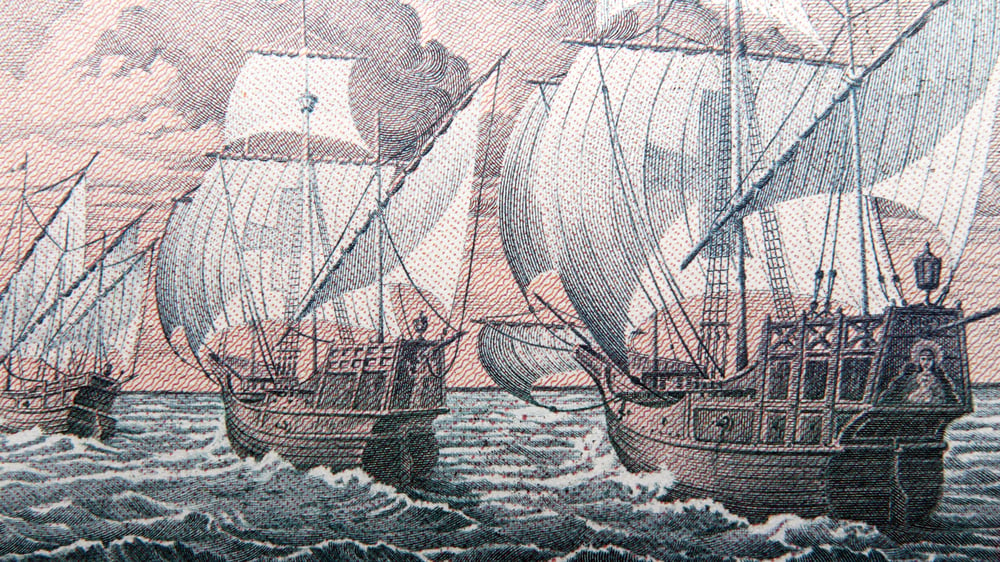
Christopher Columbus reached the Americas in 1492 on the basis of a series of calculations that were significantly wrong. He underestimated the circumference of the Earth, overestimated the size of the Eurasian continent, and used a shorter Arab mile in his calculations while applying it to figures derived from a longer Roman mile — errors that compounded into an estimate of the distance to Asia roughly one-third of the actual figure.
Columbus died believing he had reached the outskirts of Asia. His error about geography opened the Americas to European contact, with consequences that remade the entire political and demographic structure of the planet.
The Mariner 1 Missing Hyphen (1962)
On July 22, 1962, NASA’s Mariner 1 spacecraft was destroyed by mission controllers approximately five minutes after launch when incorrect guidance signals began veering it off course. The cause, as subsequently investigated, was a missing hyphen in the hand-transcribed mathematical code that guided the rocket’s steering system.
Arthur C. Clarke described the incident as “wrecked by the most expensive hyphen in history.” The cost of the vehicle was approximately $18.5 million.
A backup spacecraft, Mariner 2, launched successfully five weeks later and completed the first successful planetary flyby of Venus.
The Mars Climate Orbiter Unit Conversion Error (1999)

NASA’s Mars Climate Orbiter, built at a cost of $327.6 million, was lost in September 1999 when it entered the Martian atmosphere at the wrong angle and disintegrated. The cause was a mismatch in measurement units: Lockheed Martin, which built the spacecraft, provided thruster performance data in pound-force seconds while the NASA navigation team expected metric newton-seconds.
Nobody had checked the conversion. The orbiter had been transmitting incorrect position data throughout its nine-month journey.
NASA’s advisory council member John Logsdon called it simply “so dumb.”
The Fall of the Berlin Wall Announcement (1989)

On the evening of November 9, 1989, East German Communist Party spokesman Günter Schabowski held a press conference at which he announced new regulations allowing East Germans to travel freely to the West. A journalist asked when the new rules would come into effect.
Schabowski, who had not been briefed on the planned gradual implementation, consulted his notes and replied, “Immediately, without delay.” The announcement was broadcast live.
Within hours, crowds gathered at the Berlin Wall’s checkpoints; overwhelmed border guards, receiving no counter-orders, opened the gates. The Berlin Wall fell not through the exercise of military or diplomatic power but because a bureaucrat had not been fully briefed before a press conference.
The Assassination of Franz Ferdinand’s Driver Error (1914)
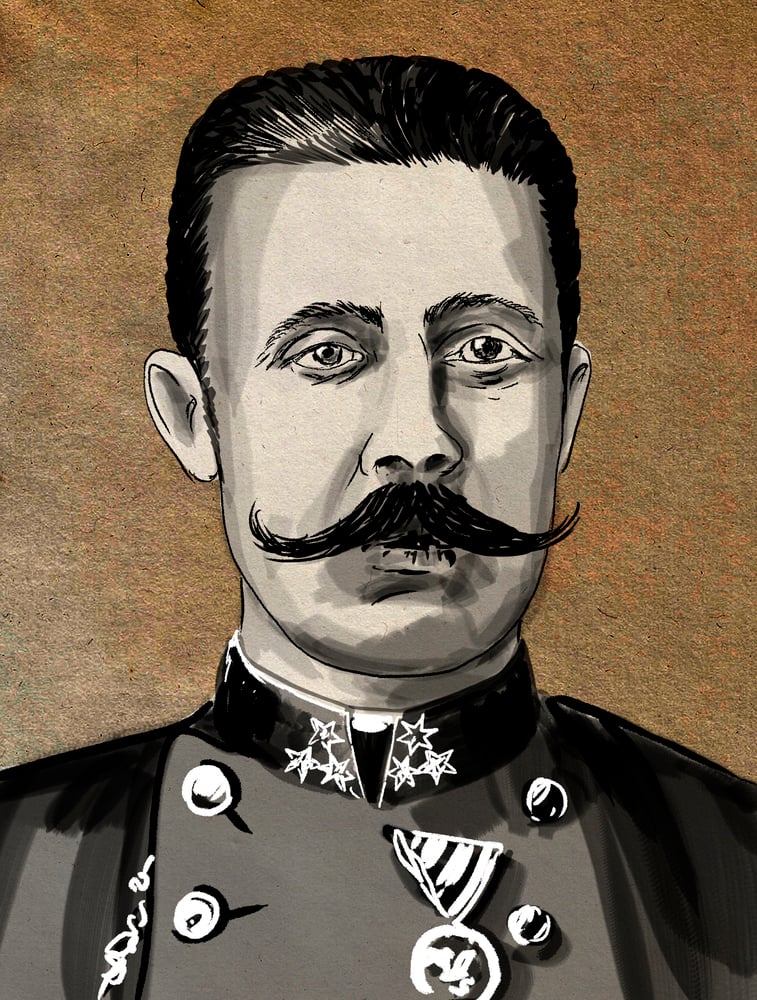
Archduke Franz Ferdinand’s motorcade in Sarajevo on June 28, 1914, had successfully escaped the first assassination attempt and was proceeding to the hospital to visit a wounded aide. Franz Ferdinand’s driver, Franz Urban, made a wrong turn and began heading down Franz Josef Street before being told this was not the planned route.
He stopped the car and began to reverse — directly in front of a delicatessen where Gavrilo Princip happened to be standing after abandoning the failed plot. Princip stepped forward and fired twice.
The wrong turn produced the assassination that produced World War I.
The Ems Dispatch Editing (1870)
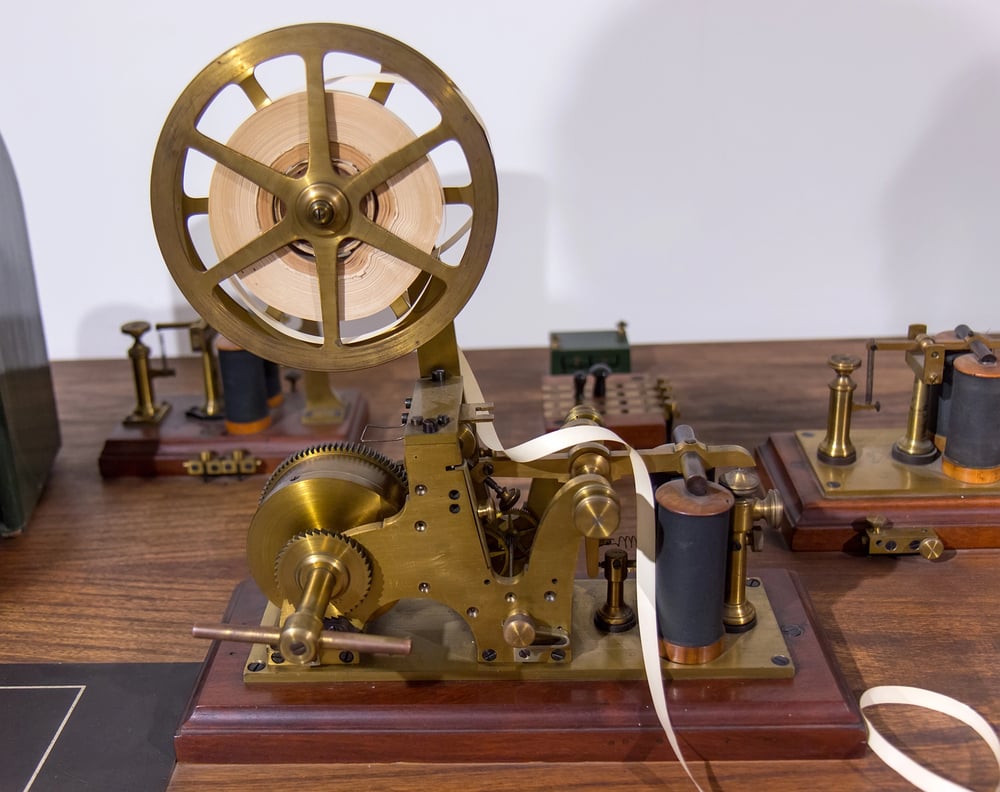
The Ems Dispatch was a telegram sent by King Wilhelm I of Prussia to his chancellor, Otto von Bismarck, reporting a diplomatic exchange with the French ambassador. Bismarck received the telegram and edited it before releasing it to the press — not altering the substance of what had happened but condensing the language in ways that made the Prussian king appear more dismissive of France than the original conversation warranted.
The edited dispatch, published in newspapers across Europe, was read in France as a deliberate insult. French public opinion surged toward war.
The Franco-Prussian War that followed produced the German Empire, the loss of Alsace-Lorraine, and conditions that contributed to World War I forty-four years later.
The Treaty of Waitangi Translation Discrepancy (1840)
The Treaty of Waitangi, signed between the British Crown and Māori chiefs in New Zealand in February 1840, exists in two versions — an English text and a Māori translation — and the two versions say meaningfully different things. The English version has the Crown acquiring sovereignty over New Zealand.
The Māori text, as scholars have argued, transfers to the Crown something closer to governorship or administrative authority — kawanatanga — while the Māori chiefs appear to retain rangatiratanga, the authority of chieftainship over their land and people. The discrepancy has been the source of ongoing legal and political dispute about indigenous rights in New Zealand for over 180 years.
The Versailles Treaty “War Guilt” Clause Translation

Article 231 of the Treaty of Versailles required Germany to accept responsibility for losses caused by the war. The German translation of the phrase was understood by German readers and politicians to assign sole moral guilt for the war to Germany — a reading that fueled resentment and nationalist politics throughout the Weimar period.
Whether this was intentional construction or a translation that carried implications beyond what the drafters intended remains debated by historians, but the political consequences of how the clause was read in German were substantial.
Napoleon’s Russian Campaign Supply Miscalculation (1812)
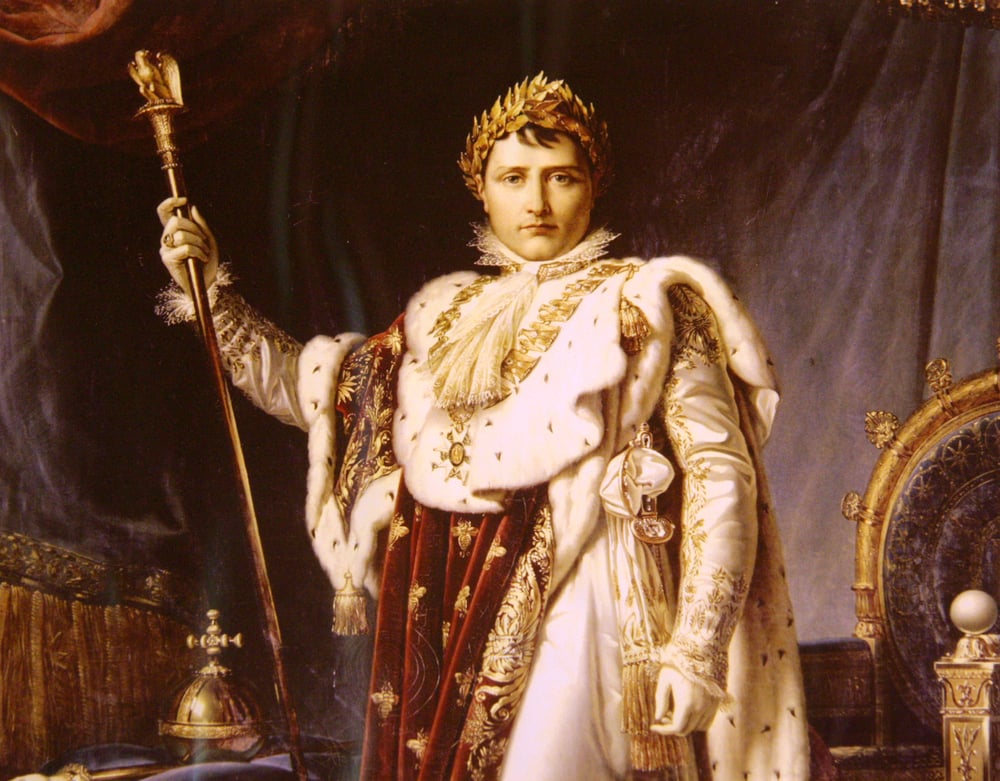
Napoleon’s invasion of Russia in 1812, which began with an army of approximately 600,000 men and ended with the near-total destruction of that force, was built on a logistical miscalculation about supply rates and campaign duration. Napoleon expected the campaign to conclude within twenty days through a decisive engagement.
His supply calculations assumed a battle that would not come. The Russian strategy of retreat drew the army deeper into territory it could not supply, in a campaign season too short to complete before the onset of winter.
The logistical failure — rooted in an assumption about campaign duration that proved wrong by months — contributed to the loss of approximately 400,000 men.
The Canadian Gimli Glider Fuel Error (1983)

A Boeing 767 operated by Air Canada on a flight from Montreal to Edmonton on July 23, 1983, ran completely out of fuel at an altitude of 41,000 feet over Gimli, Manitoba, becoming a glider for the remainder of its flight. The cause was a unit conversion error: the plane required fuel measured in kilograms, but the ground crew, in the process of transitioning from Imperial to metric measurements, calculated and loaded fuel measured in pounds — a factor of approximately 2.2 difference.
The aircraft carried roughly half the fuel required. Captain Robert Pearson, a former glider pilot, managed to land the unpowered aircraft on a closed runway at Gimli, injuring twelve of the sixty-nine people aboard but killing nobody.
The Great Molasses Flood Structural Error (1919)

On January 15, 1919, a large industrial storage tank of molasses in Boston’s North End district failed catastrophically, releasing approximately 2.3 million gallons of molasses in a wave estimated at eight to fifteen feet high that traveled at roughly thirty-five miles per hour. Twenty-one people died and 150 were injured.
Investigation revealed that the tank, built in 1915, had been structurally inadequate from the start — a structural engineering error compounded by the company’s documented habit of painting the exterior to disguise leaking seams. The disaster prompted the first engineering licensing laws in Massachusetts.
The Spanish Armada’s Incorrect Charts (1588)
The Spanish Armada’s catastrophic losses in 1588 resulted from multiple factors, but among the least-discussed was the poor quality of the charts available to Spanish navigators attempting to sail around the British Isles. The charts significantly underestimated the hazards of the western Irish coastline, and when storms drove the Armada north and around Scotland and then south along the Irish coast, ships attempting to anchor or seek shelter ran onto rocks that their charts had not mapped accurately.
An estimated twenty-four ships were lost off the Irish coast alone — more than were lost to English naval action. The cartographic errors did not cause the storm, but they determined where the storm’s damage fell most heavily.
Gallipoli’s Navigation Error (1915)
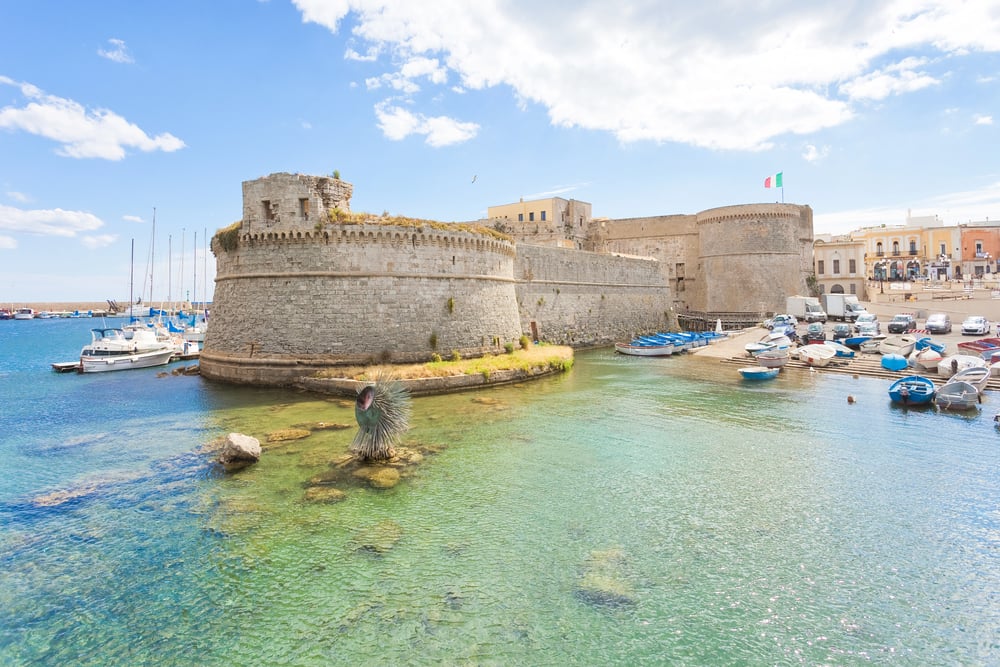
The Allied landing at Anzac Cove on April 25, 1915, during the Gallipoli campaign began with navigational errors that placed troops approximately a mile north of the intended landing site. The error resulted in the troops landing in terrain significantly more difficult than planned — steep ridges and ravines rather than the relatively flat approaches to the intended beach.
The consequence was that the Allied forces found themselves in positions they were not prepared for, with objectives that became progressively more difficult to achieve. The campaign failed at a cost of approximately 250,000 Allied casualties.
The Chernobyl AZ-5 Button (1986)

The Chernobyl nuclear disaster of April 26, 1986 resulted from a combination of a flawed reactor design and a series of human errors during a safety test. Among the contributing errors was the pressing of the AZ-5 button — the emergency shutdown — at a moment when the reactor design caused the control rods being inserted to initially increase, rather than decrease, reactivity.
The button intended to stop the reactor contributed to the explosion. The disaster produced radioactive contamination across large portions of Europe and directly contributed to the political delegitimization of the Soviet state.
The Pharaoh Thutmose III’s Incorrect Army Count
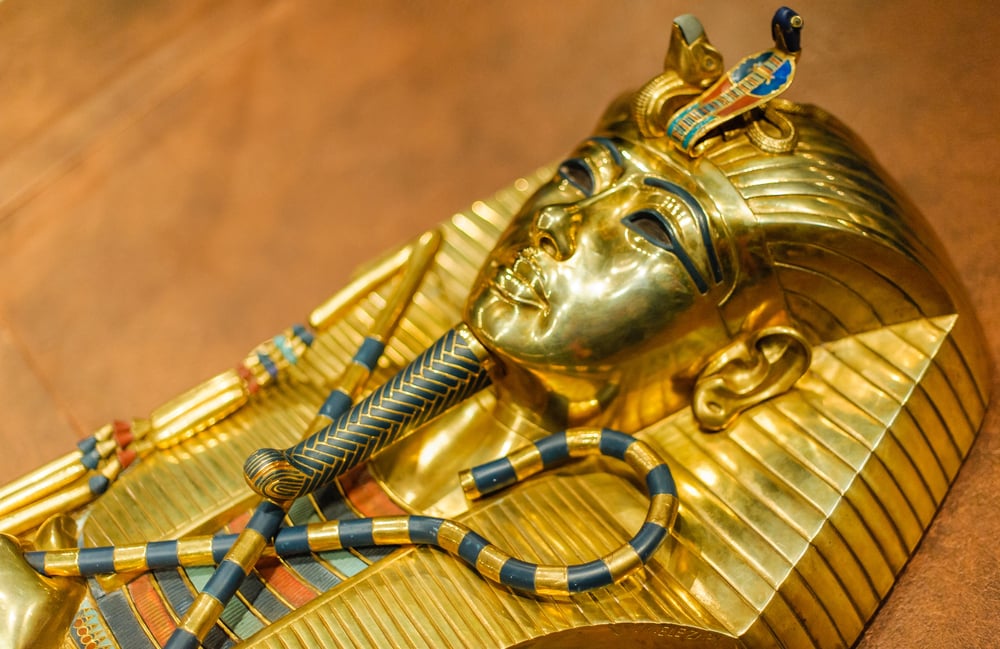
Ancient Egyptian records of military campaigns by Pharaoh Thutmose III at the Battle of Megiddo around 1457 BCE include detailed administrative tallies of captured and killed enemies. Scholars examining the records have identified what appear to be scribal errors in the tallying of prisoners and livestock that produced totals inconsistent with the subtotals.
Whether these represent deliberate inflation for propaganda purposes or genuine numerical mistakes by the scribes is a matter of ongoing discussion. What the errors demonstrate is that administrative inaccuracy in ancient documents is a consistent feature that historians must account for when interpreting ancient numerical claims.
The Incorrect Dosage That Created Penicillin’s Reputation

When Howard Florey and Ernst Chain developed penicillin into a practical treatment at Oxford in 1940, their first human trial — on a police officer named Albert Alexander who had an infection from a rose-thorn scratch — showed dramatic initial results. When the supply of penicillin was exhausted mid-treatment, the patient relapsed and died.
The trial was understood as a demonstration of penicillin’s power rather than a failure, and it accelerated production development. The patient’s death at the moment of partial recovery established the urgency that drove the drug’s rapid industrialization.
The Error That Created the First Modern Computer Bug

On September 9, 1945, computer pioneer Grace Hopper’s team at Harvard University found that a Mark II calculator had malfunctioned due to a moth that had become trapped inside a relay. Hopper taped the moth into the lab’s logbook with the annotation “First actual case of bug being found.”
The term “bug” for a software or hardware error had existed in engineering contexts before this moment — Thomas Edison had used it in the 1870s — but Hopper’s log entry attached the literal version of the metaphor to a specific incident and helped cement “debugging” as a standard term in computing. The moth is preserved in the National Museum of American History in Washington.
The Typo in the Enabling Act (Germany, 1933)

Legal historians have noted that the Enabling Act of March 23, 1933, which granted Hitler’s government the power to enact laws without the Reichstag’s approval, contained a technical procedural irregularity in the manner it was passed — the required two-thirds majority included members whose attendance had been prevented by Nazi SA forces surrounding the building. The act was, in procedural terms, passed under duress and with a majority achieved partly through intimidation rather than free voting.
The constitutional irregularity did not prevent the act from taking effect, but it was subsequently cited by critics and jurists as evidence that the legal foundation of the Nazi dictatorship was procedurally defective from its origin.
The Davy Crockett Land Deed Error

In the early 1820s, Tennessee politician Davy Crockett filed for land grants in western Tennessee on behalf of his constituents, and an administrative error in the recording of deed boundaries — using imprecise survey markers based on trees and creek bends rather than fixed coordinates — created overlapping claims that resulted in litigation lasting decades. The same type of error was endemic throughout the American frontier land grant system, where the limitations of early nineteenth-century survey methods combined with rapid settlement produced overlapping claims, disputed boundaries, and litigation that in some cases continued into the twentieth century.
The Mariner 1 Legacy in Software Standards

The Mariner 1 incident prompted a fundamental reconsideration of how mission-critical software and mathematical code should be transcribed, reviewed, and verified. The practice of transcribing hand-written mathematical notation directly into computer guidance systems — which had been standard — was recognized as an unacceptable source of human error.
The investigation that followed produced requirements for multiple independent verification of guidance equations that became standard practice across the space program. A missing hyphen, in other words, did not merely destroy one spacecraft; it changed how all subsequent spacecraft code was checked before launch.
The Rohwer Census Transcription Error

During the final decades of the twentieth century, scholars discovered that a transcription error in a mid-nineteenth century British census had caused thousands of genealogists in the United States and Britain to misidentify the ancestry of particular family lines — tracing ancestry to a village in County Cork when the family had actually originated in a different county entirely. The transcription error, made by a single census enumerator, had been copied into subsequent indexes and had served as the accepted reference for over a century.
The scale of genealogical misdirection from a single handwriting ambiguity in a government document illustrates how documentary errors compound across time.
When Small Things Compound

What these cases have in common is not their scale at origin but their scale at consequence. A wrong turn, a missing character in a line of code, a bureaucrat who read his notes without being properly briefed — none of these looks, at the moment it occurs, like a world-historical event.
What made them significant was not the error itself but the system it operated within: the political tensions already at breaking point, the spacecraft already in motion, the army already committed to a campaign with no margin for error. The error didn’t create the conditions. It just found them.
This does not mean that precision is irrelevant or that careful procedures cannot prevent disasters. It means that consequences are rarely proportionate to causes, and that the effort spent preventing small errors is almost always disproportionately valuable relative to the scale of what those errors can trigger.
More from Go2Tutors!

- The Romanov Crown Jewels and Their Tragic Fate
- 13 Historical Mysteries That Science Still Can’t Solve
- Famous Hoaxes That Fooled the World for Years
- 15 Child Stars with Tragic Adult Lives
- 16 Famous Jewelry Pieces in History
Like Go2Tutors’s content? Follow us on MSN.



