25 Cold War Secrets That Took Decades to Declassify
The Cold War was, among other things, a masterclass in institutional secrecy. For roughly four decades, two superpowers stared each other down across an invisible line, and the machinery running beneath that standoff — the spies, the weapons programs, the near-misses, the outright disasters — stayed buried in classified archives long after the era ended.
Some of these secrets came out in trickles, released through Freedom of Information requests or reluctant declassifications. Others surfaced because a former official wanted to confess before they died.
A few only emerged because someone accidentally left a document where a journalist could find it. What they all share is this: the official story, the one told at the time, was incomplete at best and a deliberate fiction at worst.
Here are 25 of the Cold War’s most consequential buried truths.
Operation Paperclip
The United States quietly recruited over 1,600 German scientists after World War II — men whose Nazi affiliations were scrubbed from their files before they were brought stateside. Wernher von Braun, the architect of the Saturn V rocket that carried Americans to the moon, had been an SS officer who used concentration camp labor to build V-2 missiles.
The program wasn’t fully acknowledged in its scope until the 1990s, and even then, the full personnel records took years to surface.
The 1983 Soviet Nuclear False Alarm
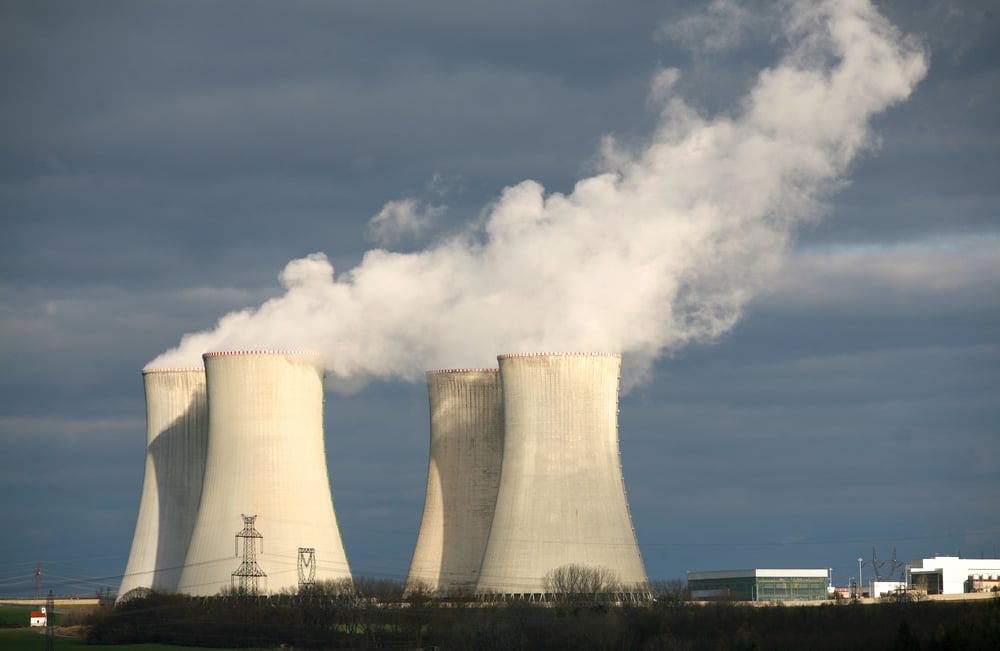
On September 26, 1983, a Soviet early-warning satellite reported that the United States had launched five nuclear missiles. Stanislav Petrov, the duty officer on watch, decided — against protocol — that it was a false alarm and didn’t report it up the chain.
He was right: the system had mistaken sunlight reflecting off clouds for missile launches. The world didn’t learn how close that night came to catastrophe until Petrov broke his silence in the 1990s.
Project MKUltra
The CIA’s mind-control program ran from 1953 to 1973, experimenting on American and Canadian citizens — many of them without consent — using LSD, hypnosis, electroconvulsive therapy, and psychological torture. The program was destroyed by CIA Director Richard Helms in 1973, but a misfiled set of documents survived and was discovered in 1977 during a Freedom of Information request.
What remained was incomplete, which means the full scope of what happened is still unknown.
The Broken Arrow Incidents
The U.S. military’s term “Broken Arrow” refers to an accidental event involving nuclear weapons — and there were at least 32 of them during the Cold War. In 1961, a B-52 broke apart over Goldsboro, North Carolina, releasing two nuclear bombs; one of them had five of its six safety mechanisms fail.
The Department of Defense downplayed the severity for decades, and the full technical details of how close the weapon came to detonating weren’t declassified until 2013.
VENONA
For nearly three decades, a top-secret NSA program called VENONA quietly decoded thousands of Soviet intelligence cables intercepted during and after World War II. The program — which ran from 1943 to 1980 — confirmed that Julius Rosenberg was a Soviet spy and identified hundreds of Soviet agents operating inside the U.S. government.
Its existence wasn’t revealed to the public until 1995, which meant that for fifty years, the evidence sitting inside those cables shaped policy decisions that no one outside a very small circle knew were being driven by decrypted Soviet messages.
The U-2 Incident Cover Story
When Francis Gary Powers was shot down over the Soviet Union in 1960 in his U-2 spy plane, the Eisenhower administration announced that a “weather research aircraft” had gone missing after the pilot reported oxygen difficulties. It was a confident lie, delivered to the press and to Congress — and it collapsed almost immediately when Khrushchev produced both the wreckage and Powers himself, very much alive.
The episode didn’t just embarrass Eisenhower; it torpedoed a planned Paris summit between the two superpowers.
Operation Gladio
NATO’s stay-behind network — code-named Gladio — was a covert program designed to wage guerrilla warfare if the Soviet Union ever occupied Western Europe. Hidden weapons caches were buried across Italy, Belgium, and other NATO countries, staffed by operatives who were never officially acknowledged.
The Italian parliament uncovered the program in 1990, and what emerged was deeply uncomfortable: some Gladio-linked networks had been involved in domestic political violence, including bombings, that had been blamed on left-wing groups.
The Soviet Biological Weapons Program
The Soviet Union signed the Biological Weapons Convention in 1972, agreeing to halt its germ warfare program. It didn’t.
Biopreparat, the Soviet agency that ran the program, employed at its peak roughly 60,000 scientists working on weaponized anthrax, smallpox, and plague — all while Soviet diplomats denied any such work existed. Ken Alibek, a former Biopreparat deputy director, defected to the United States in 1992 and confirmed the scale of the deception in detail.
The Able Archer 83 War Scare
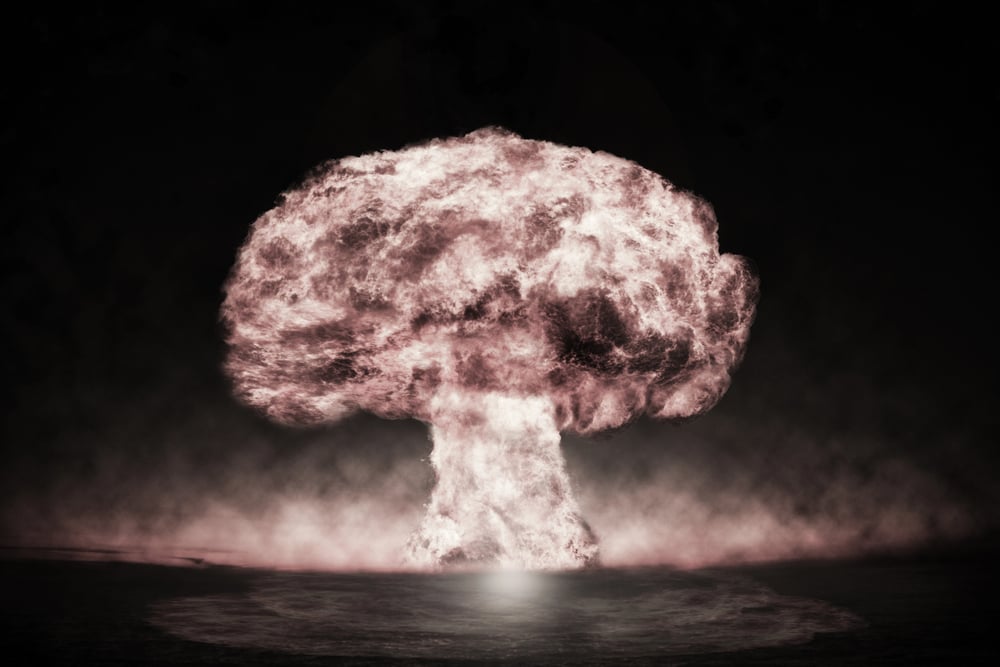
In November 1983, NATO ran a military exercise called Able Archer 83 that simulated a nuclear release procedure so realistically that Soviet intelligence became convinced it was cover for an actual first strike. Soviet nuclear forces in Eastern Europe were quietly placed on alert, and some aircraft were loaded with weapons and kept ready.
The Reagan administration didn’t learn how seriously Moscow had taken the exercise until a KGB defector named Oleg Gordievsky provided a full account — and even then, the classified assessments of how close things got weren’t released until 2015.
Project Azorian
In 1974, the CIA secretly raised a sunken Soviet submarine — the K-129, which had gone down in the Pacific in 1968 — using a specially built deep-sea recovery vessel called the Hughes Glomar Explorer, funded through a cover arrangement with Howard Hughes. The operation was partially successful, recovering a portion of the submarine along with Soviet nuclear torpedoes and the bodies of several Soviet sailors.
The project remained one of the CIA’s most closely guarded secrets for years; even today, some of its technical details remain classified.
The Tsar Bomba
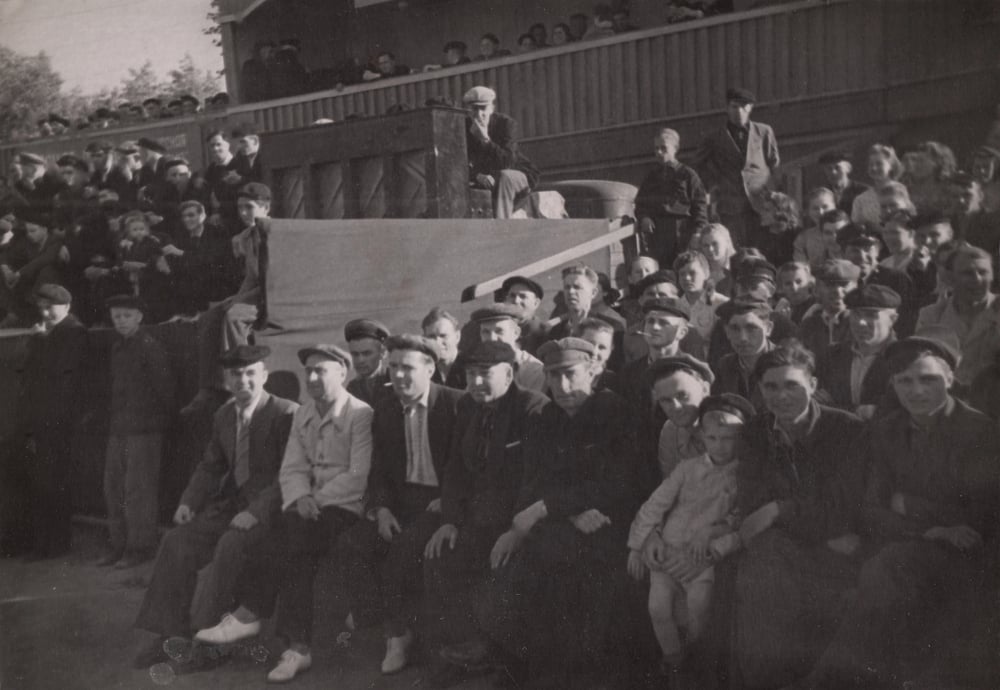
The Soviet Union detonated the largest nuclear weapon ever built on October 30, 1961: the AN602 hydrogen bomb, with a yield of approximately 50 megatons. The shock wave circled the Earth three times.
What took longer to surface was the internal Soviet debate about the weapon — it had originally been designed for a 100-megaton yield, scaled back because a full-yield test would have deposited catastrophic fallout across the Soviet Union’s own territory. The full design specifications and internal communications weren’t released until decades after the USSR collapsed.
Operation Mockingbird
The CIA’s decades-long effort to influence American and foreign media — planting stories, cultivating journalists as assets, and funding publications — was exposed during the Church Committee hearings in 1975. The program had placed CIA-connected journalists at major outlets including The New York Times and CBS News.
The full roster of participants has never been made public, and the CIA has resisted releasing complete records, which means the confirmed names represent a fraction of the actual network.
The Petrov Defection Documents
Anatoli Golitsyn and Yuri Nosenko — two KGB defectors who arrived in the West in the early 1960s — told dramatically contradictory stories, and the CIA’s attempt to determine which one was lying consumed years of resources and destroyed careers. James Angleton, the CIA’s counterintelligence chief, became so convinced of a Soviet “master deception” that he spent years investigating his own colleagues as potential moles.
The full internal damage assessments from that paranoid period weren’t released until the late 1990s and revealed an institution that had, at moments, nearly paralyzed itself with suspicion.
The Dead Hand System
The Soviet Union built a semi-automated nuclear retaliation system — called Perimeter, nicknamed “Dead Hand” in the West — designed to launch missiles automatically if Soviet leadership was killed in a first strike. The system used seismic sensors, radiation detectors, and pressure gauges to determine whether a nuclear attack had occurred, and if command authority had gone silent, it could initiate a launch without a human order.
Its existence wasn’t confirmed publicly until 1993, when a former Soviet general described it to journalists.
Operation Northwoods
In 1962, the Joint Chiefs of Staff submitted a plan to Secretary of Defense Robert McNamara proposing false-flag attacks on American soil — bombings, hijackings, and staged casualties — that could be blamed on Cuba and used to justify a military invasion. McNamara rejected it immediately, and President Kennedy removed the chairman of the Joint Chiefs shortly afterward.
The documents sat in a National Security Archive request for decades before being fully released in 2001.
The Church Committee Revelations
The Senate’s 1975 Church Committee investigation into U.S. intelligence agencies uncovered assassination plots against foreign leaders including Fidel Castro, Patrice Lumumba, and Rafael Trujillo — all authorized or facilitated by the CIA. The committee also revealed the NSA’s mass surveillance of American citizens’ international communications, a program called SHAMROCK that had run uninterrupted since 1945.
To be fair, the CIA did not make the committee’s work easy, and some of the most sensitive documents were withheld or heavily redacted.
Project 112 and Project SHAD
Between 1962 and 1974, the U.S. military conducted chemical and biological warfare tests on American service members — often without their knowledge — under programs collectively known as Project 112 and its shipboard component, Project SHAD. Sailors and soldiers were exposed to nerve agents and biological simulants while the military tracked how the substances dispersed.
Veterans who suffered health consequences spent decades being denied records that would have confirmed their exposure; the Department of Defense didn’t formally acknowledge the tests until 2000.
The Israeli Nuclear Program
The United States was aware by the early 1960s that Israel was developing nuclear weapons at the Negev Nuclear Research Center near Dimona, and successive administrations chose to look the other way. Declassified State Department and CIA documents show that officials understood what was happening and made a deliberate policy decision not to confront it directly.
Israel has never officially confirmed or denied possessing nuclear weapons — a policy called “nuclear ambiguity” — but declassified American documents from the 1960s and 1970s leave little ambiguity about what Washington privately knew.
The NSA’s Room 641A
Long before Edward Snowden made the NSA’s domestic surveillance programs a household conversation, a former AT&T technician named Mark Klein documented in 2006 that the NSA had installed a secret room at AT&T’s San Francisco facility — Room 641A — capable of capturing all internet traffic passing through the building. What emerged later through declassified court documents was that similar rooms existed at multiple major telecommunications hubs across the country, part of a warrantless surveillance architecture that traced its origins back to Cold War-era legal authorities.
Operation Sea Spray
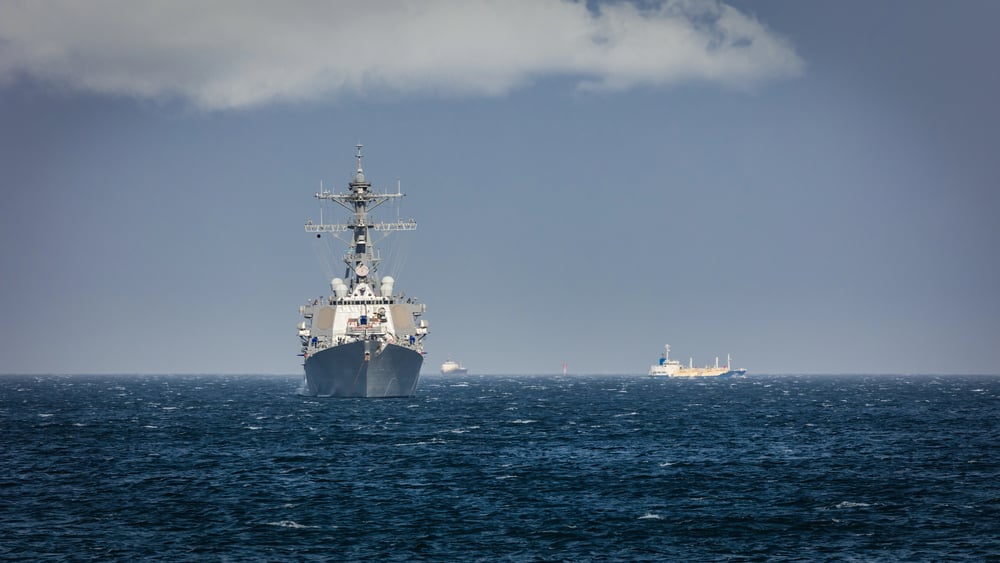
In 1950, the U.S. Navy conducted a test in which two vessels sprayed a bacterial aerosol over San Francisco Bay, exposing an estimated 800,000 residents to Serratia marcescens without any public notification. One person died from a subsequent infection, and a number of others were hospitalized.
The operation remained classified for decades; it wasn’t revealed until a Senate subcommittee investigation in 1977, and the military’s position — that the bacteria was harmless — was contested by medical evidence that emerged afterward.
The Farewell Dossier
In the early 1980s, a KGB colonel named Vladimir Vetrov passed thousands of internal Soviet intelligence documents to French intelligence, who shared them with the CIA. The documents revealed the full scope of Soviet industrial espionage inside the West — the KGB had been systematically stealing Western technology for years, saving the Soviet military-industrial complex an estimated $6.5 billion in research costs.
The CIA, using this intelligence, reportedly allowed flawed technology to be “stolen” by Soviet agents, including software that later caused a catastrophic explosion in a Siberian pipeline.
The Continuity of Government Programs
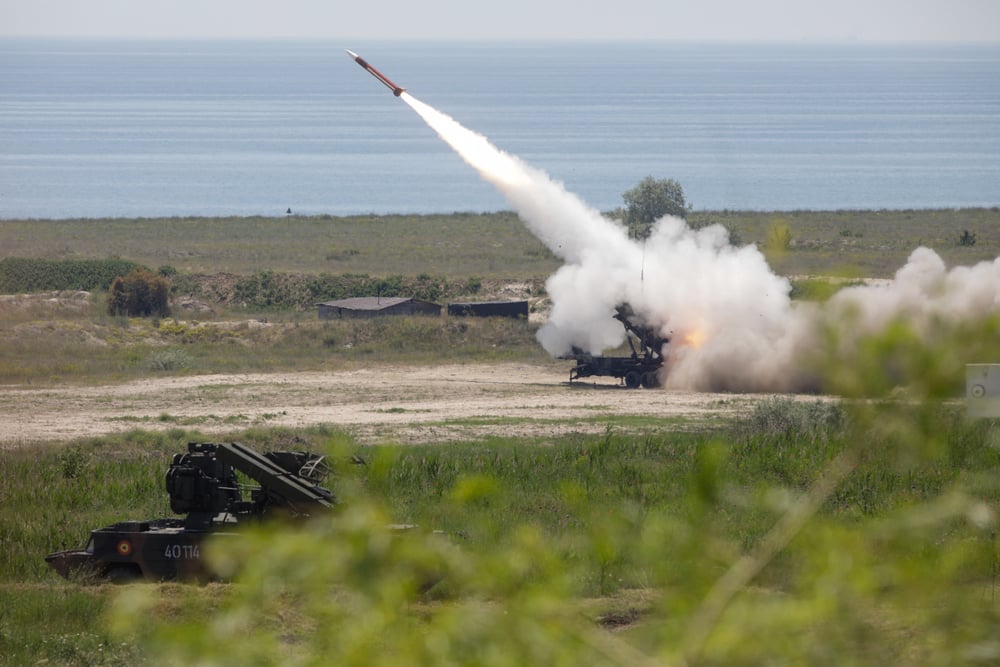
During the Cold War, the U.S. government constructed an elaborate shadow infrastructure — hardened bunkers, duplicate command facilities, secret relocation plans — designed to ensure that government functions would survive a nuclear strike. The Greenbrier bunker in West Virginia, built beneath a luxury resort, sat undisclosed for decades before a Washington Post reporter broke the story in 1992.
What remained classified for much longer were the full protocols for presidential succession and the legal authorities that would govern a post-nuclear American government.
Operation Cyclone
The CIA’s program to arm and fund Afghan mujahideen fighters against the Soviet invasion of Afghanistan — Operation Cyclone — was the largest covert operation in CIA history, ultimately channeling billions of dollars through Pakistan’s ISI. The program was publicly confirmed in general terms during the 1980s, but the full scope of weapons transfers, the specific factions that received funding, and the decision-making around which groups got what took years to surface through declassified documents.
Some of those funding decisions had consequences that outlasted the Cold War by a considerable margin.
The Roswell Documents

The 1947 Roswell incident — officially explained as a crashed weather balloon — generated decades of speculation, but what the declassified record actually revealed was more mundane and more troubling than alien visitors. Project Mogul, the actual balloon program involved, was classified because it was designed to monitor Soviet nuclear tests by detecting sound waves in the upper atmosphere.
The Air Force’s 1994 acknowledgment of Mogul was straightforward; what required a longer fight to extract were the full records showing how aggressively the government had worked to suppress and mock public inquiry into the incident for decades.
The Soviet Space Program Deaths
The Soviet Union’s early space program suffered fatalities that were buried by state censorship for years. Valentin Bondarenko died in a fire during a training accident in 1961 — a year before John Glenn orbited the Earth — but the Soviet government suppressed his death entirely, even airbrushing him out of official photographs.
The 1967 death of cosmonaut Vladimir Komarov, whose Soyuz 1 capsule’s parachute failed on re-entry, was acknowledged, but intercepted communications later revealed that both Komarov and mission controllers knew before launch that the capsule had serious technical faults.
The Weight of What Was Hidden
There’s something specific that happens when a government secret finally surfaces after thirty or forty years. The people who lived through the era it describes are old, or gone, and the crisis that made the secret feel necessary has long since resolved itself into history.
And yet the documents still land with a kind of weight — because what they describe isn’t just past policy, but the distance between what citizens were told and what was actually happening on their behalf. The Cold War’s declassified record isn’t a story about evil governments or incompetent ones.
It’s a story about institutions that decided, again and again, that the truth was something to be managed rather than shared — and it’s worth sitting with that, because the impulse didn’t disappear when the Berlin Wall came down.
More from Go2Tutors!

- The Romanov Crown Jewels and Their Tragic Fate
- 13 Historical Mysteries That Science Still Can’t Solve
- Famous Hoaxes That Fooled the World for Years
- 15 Child Stars with Tragic Adult Lives
- 16 Famous Jewelry Pieces in History
Like Go2Tutors’s content? Follow us on MSN.