25 Laws From History So Strange They Sound Like They Were Made Up as a Joke
Every law begins with a problem someone thought was serious. Governments in every era have criminalised weeping in public, taxed human waste, regulated the precise length of shoe points by social class, and required citizens to carry proof that they had paid a fee to maintain the state of their own faces.
These laws were not jokes when they were passed. Most of them were passed in complete earnest by people who believed they were solving a genuine problem — and understood that the penalty for non-compliance was real.
The comedy, such as it is, belongs entirely to the distance.
The Roman Urine Tax (69–79 CE)

Emperor Vespasian, who began construction of the Colosseum, is perhaps better remembered for the tax he placed on urine collected from Rome’s public latrines. This was not arbitrary: urine’s ammonia content made it commercially valuable for laundering clothes, softening leather hides, and cleaning teeth.
Collectors gathered it from public facilities and sold it to fullers and tanners. Vespasian decided this commercial activity should generate revenue for the imperial treasury. When his son Titus expressed disgust at the scheme, Vespasian held a coin earned from the tax under Titus’s nose and asked if it smelled bad.
The answer — it didn’t — gave rise to the Latin phrase pecunia non olet: money does not stink.
Peter the Great’s Beard Tax, Russia (1698)

Returning from a tour of Western Europe convinced that Russia needed to modernise along Western lines, Tsar Peter I attended a welcome-home party at which he personally shaved the beards off several members of his court. He originally sought to ban beards entirely, but the Russian Orthodox Church declared clean-shaving blasphemous, and the prohibition generated enough resistance that Peter modified his approach.
Instead, men who wished to keep their beards were required to pay an annual tax — as much as 100 rubles for noblemen — and carry a small metal token stamped with the words “the beard is a useless burden” as proof of payment. Police were empowered to shave any bearded man unable to produce his token on demand, in public, immediately.
The Draconian Code, Athens (621 BCE)

Draco of Athens wrote the first systematically compiled legal code in the Greek world, sometime around 621 BCE. The problem was that he appeared to believe the death penalty was the appropriate response to virtually every offence.
Stealing a cabbage: death. Stealing an animal: death. Failing to pay taxes: death. Being idle: death. When asked to justify assigning the same punishment to theft and murder, Draco reportedly replied that minor offences deserved death and he could think of no worse penalty for serious ones, which suggests the code was internally consistent if structurally deranged.
Draco’s successor Solon repealed every part of the code except the penalties for homicide. The word “draconian” has not recovered its neutrality since.
The Spartan Fine for Bachelorhood, Greece (Various Periods)

Sparta fined men who remained unmarried past a certain age. The logic was military: Sparta’s entire social structure was oriented toward producing trained soldiers, and a man who didn’t marry wasn’t contributing to future generations of the military population.
Unmarried men were additionally subject to public humiliation — required to march around the town in winter, sometimes stripped, singing songs about their failure to fulfil civic duty. In a society where a man’s value was measured almost entirely by his capacity for military contribution, the social pressure accompanying the fine was arguably more effective than the financial penalty.
The Restrictions on Rome’s High Priest of Jupiter (c. 300 BCE onward)
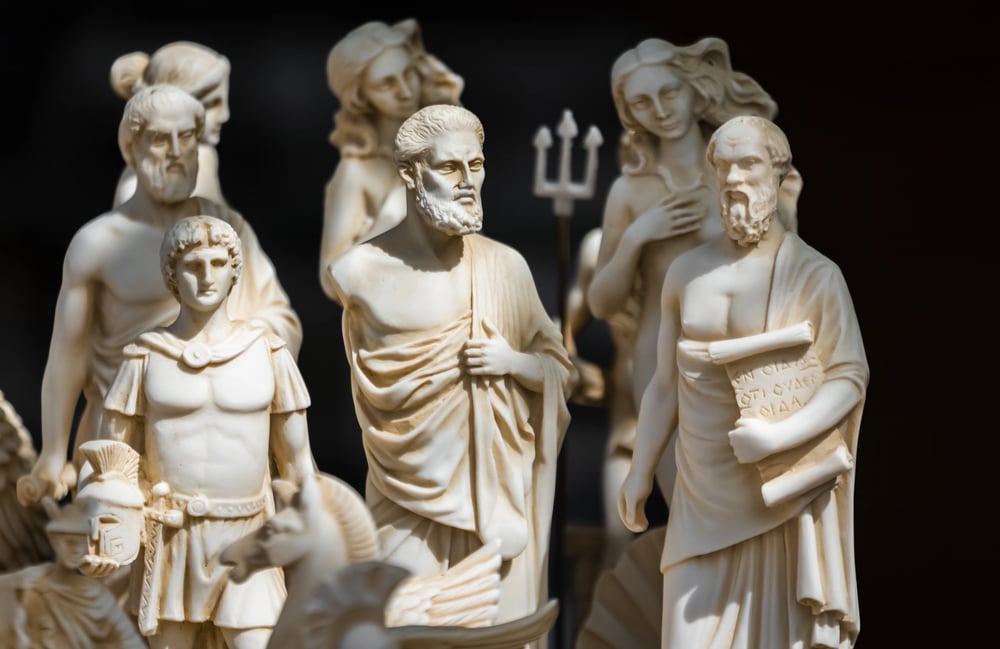
The Flamen Dialis — Rome’s high priest dedicated to the god Jupiter — lived under a set of restrictions so elaborate and intrusive that the position remained unfilled for 75 years at one point because no suitable candidate willing to accept the conditions could be found. The priest could not touch or even name iron, beans, dogs, goats, or raw meat.
He could not ride a horse. He could not spend a single night outside the city of Rome. His bed could have no legs taller than a small measurement. He was not permitted to have a knot in his clothing. His hair and nail clippings had to be buried under a specific tree. He could not touch or see an army in formation.
Violating any of these restrictions was believed to imperil Rome’s relationship with Jupiter, which presumably seemed more important at the time than it does now.
Sumptuary Laws Regulating Pointed Shoes, England (Late Medieval Period)

Medieval England’s sumptuary laws — laws dictating what different social classes could wear — extended to the length of shoe points. The pointy-toed shoes known as “crakows” or “poulaines” became fashionable among the English aristocracy in the 14th and 15th centuries, with points so extreme that some needed to be tied to the wearer’s legs to prevent tripping.
Parliament passed legislation restricting the length of shoe points based on social rank: a nobleman’s points could be longer than a merchant’s, which could be longer than a commoner’s. Violators faced fines.
The law was an attempt to make class status visible at a glance and to prevent lower-status individuals from adopting aristocratic fashions that might cause confusion about who belonged to which social tier.
The English Law Requiring Archery Practice, England (1541)

The Unlawful Games Act of 1541 required all able-bodied Englishmen to own a longbow and to practise archery after church services on Sundays. The law was not whimsical: it was a direct response to the military significance of the English longbow, which had been decisive at Agincourt in 1415, and to anxieties that archery skill was declining as other leisure activities competed for attention.
Dice games among commoners were periodically banned for precisely this reason — not because dice were dangerous but because time spent on dice was time not spent practising archery. The law technically remained on the statute books in England and Wales until 1960.
The Ottoman Law Against Coffee Houses (Various, 16th–17th Centuries)

Coffee was introduced to the Ottoman Empire in the 15th century, and coffeehouses quickly became centres of public conversation, political debate, and social mixing across class lines. Ottoman sultans periodically attempted to ban or severely restrict coffeehouses on the grounds that they facilitated political agitation and subversive discussion — essentially the same argument used against coffeehouses in Restoration England.
Sultan Murad IV issued a death penalty for drinking coffee at various points in the 1630s; the evidence suggests enforcement was patchy. The Ottoman coffeehouses survived.
The bans did not.
The Medieval Law Banning Armour in Parliament, England (1313)

Edward II of England, who had an eventful and ultimately very bad reign, passed a law in 1313 making it illegal to bring weapons, armour, or armed men into Parliament. This sounds sensible enough until you note the specific circumstances: several previous parliamentary sessions had been attended by heavily armed lords with personal retinues, making the basic management of debate somewhat fraught.
The law was less a piece of constitutional architecture than a practical acknowledgement that parliamentary discussion had been going poorly enough that attendees felt they needed protection. The prohibition on bringing armour to Parliament technically remains in force in some form in the United Kingdom today.
The Rule Against Weeping in Qin Dynasty China (221–206 BCE)

The Qin Dynasty — which unified China for the first time and gave the country its name — was militaristic to a degree that extended into emotional regulation. Adult men who wept without what authorities considered a valid reason faced public humiliation: their beards and eyebrows were shaved.
The law reflected a state obsession with martial stoicism — tears were interpreted as a failure of masculine self-control inconsistent with the warrior culture the dynasty promoted. Emperor Qin Shi Huang, who established the dynasty, may himself have been short by the height standards used in legal determinations of adulthood: another Qin law used height — 1.52 metres for men — as a proxy for age when birth records were unavailable.
The Victorian Law Against Being a Minstrel or Acrobat, England (19th Century)

The Vagrancy Act 1824 in England listed a set of activities that could result in arrest, including performing as an “itinerant minstrel or acrobat” on public streets. The law was directed at a broader concern about public order and people without fixed employment or address, but its application to musicians and acrobats was specific enough to criminalise street performance for most of the 19th century.
The Act also criminalised pretending to tell fortunes, which at least had the logic of targeting fraud, and sleeping rough, which targeted poverty directly. The Vagrancy Act remained largely in force in England until partial repeal in 2022.
France’s Ban on Women Wearing Trousers, Paris (1799–2013)

A Paris police ordinance issued in 1799 required women to obtain permission from the police before wearing trousers in public. The ordinance was progressively modified — a 1892 amendment permitted trousers if the woman was “holding a bicycle handlebar or the reins of a horse” — but it was never formally repealed until the French government officially cancelled it in 2013, noting that it “had become incompatible with the principles of equality between women and men.”
It had been legally in force for 214 years. French authorities had long since stopped enforcing it; the significance of the 2013 repeal was almost entirely symbolic, which in French legislative history has its own importance.
The Law Against Dying on the Greek Island of Delos (Various Periods)

The island of Delos was considered sacred in ancient Greece — it was the mythological birthplace of Apollo and Artemis — and the Athenians twice passed purification laws related to the island: first prohibiting births and deaths on the island, then going further by expelling the existing Delian population. The practical management of a community where births and deaths were prohibited involved removing heavily pregnant women and the terminally ill to other islands before they could inconveniently complete their biological processes.
This created a category of Delian resident permanently obligated to leave the island at the worst possible moments.
The Requirement to Offer Whales and Sturgeon to the King, England (14th Century)

English law, dating from roughly the 14th century, declared whales and sturgeon found in English waters to be “royal fish” — the property of the Crown. Any whale or large sturgeon stranded on the English coast or caught by English fishermen was to be presented to the monarch.
This was not purely symbolic: sturgeon were genuinely prized as food for royal feasts, and whales had significant economic value. The law technically remains in force in England and Wales.
In 2004, a Welsh fisherman who caught a sturgeon offered it to the Crown under the ancient provision and received a polite letter declining the offer. He ate it himself.
The Ancient Roman Law Against Women Drinking Wine (5th–3rd Century BCE)

In early Rome, women were legally prohibited from drinking wine. The law’s enforcement was genuinely alarming by modern standards: Roman men were entitled to check whether their female relatives had consumed wine by kissing them on the mouth, a practice known as ius osculi, partly designed as a breath test.
A woman caught drinking wine was considered to have committed an offence comparable in gravity to adultery. The rationale appears to have been a combination of moral anxiety about women and wine and concern that wine-drinking might produce conduct incompatible with Roman female social norms.
The law was eventually abandoned as Roman social norms shifted, but it remained in the legal record for several centuries.
The Spartan Law Against Gold and Silver Currency (c. 600 BCE)

The Spartan lawgiver Lycurgus — to the extent that he existed as a single historical figure rather than a composite of several legislators — reportedly prohibited the use of gold and silver coins in Sparta and required all commercial transactions to be conducted in iron currency. The iron coins were specifically designed to be impractical: they were heavy, their value in iron was low, and they were reportedly quenched in vinegar during manufacture to make them impossible to rework into something useful.
The intent was to discourage the accumulation of wealth and prevent Spartan citizens from engaging in commercial activity that was thought to distract men from military training. Sparta’s economic system was consequentially limited for centuries.
The Medieval English Laws Against Irish Hairstyles

English colonial rule in Ireland produced a series of laws attempting to regulate the cultural practices of the Irish population. The Statutes of Kilkenny (1366) prohibited English settlers from adopting Irish customs, including Irish dress and hairstyles — but subsequent legislation went further, including a prohibition on the “glybe” — a form of hair worn over the forehead and face — because it was seen as a marker of Irish identity the English administration wanted to suppress.
The laws of cultural regulation were consistently among the most contested and the least enforceable aspects of English colonial governance in Ireland.
The Early American Law Against Celebrating Christmas, Massachusetts (1659)

The Puritan authorities of colonial Massachusetts banned the celebration of Christmas in 1659, imposing a fine of five shillings for anyone caught “observing, by abstinence from labor, feasting or any other way, any such days as Christmas Day.” The rationale was theological: Puritans regarded Christmas as a Catholic invention with no biblical basis, and the celebrations typical of the season — feasting, games, public merry-making — were regarded as incompatible with appropriate religious observance.
The ban was repealed in 1681 when a new royal governor overrode it, but the Puritan objection to Christmas celebration persisted in New England culture well into the 18th century.
Japan’s Sword Hunt Law (1588)

Toyotomi Hideyoshi, who had effectively unified Japan after a period of civil war, issued the Sword Hunt Edict in 1588, ordering that all weapons — swords, short swords, bows, lances, and firearms — be confiscated from farmers, peasants, and non-samurai. The stated rationale included a claim that the confiscated metal would be melted down to build a large bronze Buddha, which would earn spiritual merit for those who surrendered their arms.
The actual effect was to create a legal distinction between the warrior class and the non-warrior population that consolidated the social hierarchy Hideyoshi was building. The swords were not primarily used for the Buddha.
Sweden’s 1696 Law Against Telling Scary Stories to Children

A Swedish law passed in 1696 prohibited telling “frightening stories” to children, specifically targeting tales that might cause children to become fearful, disturbed, or excessively credulous about supernatural threats. The law reflected an Enlightenment-influenced anxiety about superstition and its social consequences — the Swedish state was in the middle of a period of witch trial prosecutions and apparently concluded that the solution included restricting the kind of tales children were told at bedtime.
The law was eventually repealed, but it stands as one of the few legal attempts in European history to regulate the content of folklore.
The Conflict Between Rome’s Priestly and Civic Duties (Various)

The Flamen Dialis’s prohibition on leaving the city of Rome for a single night created a specific practical problem when a Flamen Dialis was appointed who was also a consul — the highest office of the Roman Republic, which required travelling to lead armies in war. The conflict between the sacred duty to remain in Rome and the civic duty to command armies was resolved, eventually, by precedent and legal flexibility, but not before several cases in which the question of which obligation outranked the other was genuinely contested.
The Roman legal system contained its own internal contradictions, and this was one of the more conspicuous ones.
The Prohibition on Purple, Byzantine Empire (Various Periods)

In the Byzantine Empire, a specific shade of deep purple dye — Tyrian purple, extracted from sea molluscs in enormous quantities — was reserved by law for the exclusive use of the imperial family. Wearing unauthorised purple was a serious offence; the restriction extended to the specific dyeing process, the specific fabric, and the specific shade.
Children born to the reigning emperor were described as “born in the purple” — porphyrogenitos — referring to the purple-draped imperial birthing chamber, which was both a literal claim about the chamber’s decoration and a statement of the child’s status. The monopoly extended to controlling who could manufacture, sell, or possess purple-dyed cloth anywhere in the empire.
The Rule That Spartan Men Must Buy Stockings After Kissing Women Without Consent

Ancient Sparta’s gender laws were in some ways significantly less restrictive than those of Athens — Spartan women exercised publicly, owned property, and were educated — but they existed within a social framework in which the state had opinions about almost every aspect of personal conduct. Various accounts of Spartan law include a provision requiring men who kissed women without their consent to purchase them new stockings.
The historicity of the specific stocking provision is contested — our knowledge of Spartan law comes primarily from non-Spartan sources — but it is consistent with the Spartan approach of regulating interpersonal conduct in ways other Greek city-states did not.
The Vagrancy Act’s Prohibition on Being a Reputed Thief, England (1824)

Among the Vagrancy Act 1824’s more expansive provisions was a clause allowing police to arrest people suspected of being a “reputed thief” — that is, someone with a known reputation for theft, regardless of whether they had committed any offence at the time of arrest. This created a category of preventive detention for people not caught doing anything illegal, on the basis that they were thought likely to do something illegal.
The provision put an entire class of people permanently at risk of arrest simply for having a reputation, making the law an instrument of social control far beyond the ordinary framework of responding to specific criminal acts.
The Logic Beneath the Absurdity

Every law in this list made sense to someone in its specific context: the beard tax was modernisation policy; the archery requirement was military preparedness; the death penalty for cabbage theft was deterrence theory taken to its logical extreme. Laws become absurd not when they’re passed but when the context that made them plausible disappears and the law outlasts it.
The ones that linger longest are usually the ones where the context is most completely gone — which makes them the most revealing. A law tells you what a society was afraid of, what it valued, and what it thought the state was entitled to regulate.
The urine tax tells you something real about Roman commercial life. The beard token tells you something real about the relationship between the Russian state and the Orthodox Church.
The shoe-point law tells you something real about the anxiety of a society in which social status was visible in everything and anyone might pretend to be something they weren’t. The comedy is secondary. The history is the point.
More from Go2Tutors!

- The Romanov Crown Jewels and Their Tragic Fate
- 13 Historical Mysteries That Science Still Can’t Solve
- Famous Hoaxes That Fooled the World for Years
- 15 Child Stars with Tragic Adult Lives
- 16 Famous Jewelry Pieces in History
Like Go2Tutors’s content? Follow us on MSN.