27 First-Run Movie Posters Found in
Movie posters were never supposed to be collectibles. Studios sent them to theaters as disposable advertising materials, used for the run of the film and then discarded, pasted over, or left to rot in storage rooms at the backs of buildings that eventually closed.
Theater owners had no reason to keep them and no expectation that anyone would ever pay money for them. The result is a collecting category defined entirely by accidental survival — posters that made it out of the waste stream because someone folded them up and stored them in a back room, a basement, or a projection booth that happened to remain sealed for fifty years.
The rarest of them are now worth hundreds of thousands of dollars. Some have never been found.
Fritz Lang’s Metropolis (1927) — German Three-Sheet

The German three-sheet for Metropolis, designed by Heinz Schulz-Neudamm, is considered the single most valuable movie poster in existence. Only four known copies survive.
Its Art Deco design — a stylized robot figure dominating an angular cityscape — is among the finest examples of Weimar-era graphic art. The poster sold for $690,000 in 2005, setting the all-time auction record for a movie poster. In 2012, the same poster resurfaced as part of a lot at a bankruptcy auction in Los Angeles, bundled with King Kong and The Invisible Man posters and original Elvis Presley artwork, with the lot realizing $1.2 million total.
Dracula (1931, Style A One-Sheet)

One of only two known surviving copies of the Style A one-sheet for the original Bela Lugosi Dracula stayed in a private collection for decades before surfacing at Heritage Auctions in 2017. The atmosphere of the image — Lugosi’s face emerging from a dark background — made it an instant benchmark for the horror poster category.
It sold for $525,800, the highest price ever achieved for a movie poster at Heritage Auctions, and one of the highest ever for any film poster.
The Mummy (1932, Boris Karloff)

Inspired by the discovery of Tutankhamun’s tomb, the original poster for The Mummy features Boris Karloff as Imhotep against an Egyptian-themed backdrop. The design’s extreme rarity and visual drama have made it among the most coveted poster categories.
A copy sold at Sotheby’s New York in 1997 for $453,500, establishing the all-time record for film posters at that point. The few surviving examples have passed through major auction houses multiple times since.
Casablanca (1942 — Six-Sheet)

The six-sheet Casablanca poster featuring superior portrait artwork of Humphrey Bogart and Ingrid Bergman sold at Heritage Auctions in 2020 for $384,000.
A separate large-format version sold for $478,000 in 2022. All versions of Casablanca posters have increased significantly in value, with even more modest format examples commanding tens of thousands of dollars. The combination of the film’s cultural permanence and the visual quality of its promotional artwork keeps collector demand consistently strong.
King Kong (1933 — Three-Sheet)

The color three-sheet for the original King Kong depicted the giant ape towering over the Empire State Building in one of the most dynamic images in film advertising history. A copy in remarkably mint condition sold at Heritage Auctions in Dallas in 2012 for $388,375. An earlier example had sold at auction in 1999 for $244,500.
The condition premium on King Kong posters is significant — posters were folded and shipped to theaters rather than rolled, and the fold lines on a poor-condition example can reduce its value substantially.
Frankenstein (1931, Style C Three-Sheet)

The Style C three-sheet for Frankenstein — measuring 41 by 78.5 inches — is one of the most famous discoveries in poster collecting history. A teenager found it in the boarded-up projection booth of a long-shuttered theater on Long Island sometime in the 1970s.
The poster was later sold and restored, and in 2015 Heritage Auctions sold it for $358,500, establishing the record for any Frankenstein promotional material. A one-sheet for the same film found in different circumstances sold at Heritage for $312,000 in 2023.
The Black Cat (1934)

The 1934 Universal horror film The Black Cat, featuring Boris Karloff and Bela Lugosi together for the first time, produced promotional posters that matched the record of The Bride of Frankenstein when one example sold for $334,600.
The film itself has been overshadowed by more famous Universal monster pictures, but the scarcity of surviving posters and the dual-star appeal of Karloff and Lugosi in their first pairing keeps collector demand strong in specialist circles.
The Bride of Frankenstein (1935)

The Bride of Frankenstein produced posters that matched The Black Cat’s auction record at $334,600. One of the known surviving copies at one point belonged to Kirk Hammett, lead guitarist of Metallica and a well-documented collector of horror memorabilia.
When Sotheby’s attempted to auction a similar example in 2018 with an opening bid of $950,000 and an estimate of $1 to $1.5 million, it reflected just how dramatically collector expectations had shifted in the twenty years since The Mummy set the first major poster record.
The Invisible Man (1933)

The original one-sheet for James Whale’s The Invisible Man — featuring the bandaged, goggled figure that became an immediately recognizable horror icon — has survived in very few copies. The 2012 Metropolis lot that sold for $1.2 million also included an original Invisible Man poster, demonstrating that the vintage Universal horror catalog functions almost as a single collecting category where each title reinforces the others’ value.
Jaws (1975 — Original One-Sheet)

The Jaws one-sheet by designer Roger Kastel features the iconic image of a massive great white shark rising toward a lone swimmer that became one of the most reproduced images in film history. First-printing one-sheets for the 1975 original release showed signs of doubling in value over a twelve-month period in recent years, according to collector market observers.
A one-sheet from 1977 Star Wars, which shows comparable collector demographics, realized $10,200 at Heritage Auctions in April 2023; the Jaws market is considered to be tracking similarly.
Star Wars — Episode IV: A New Hope (1977 — Style A, First Printing)

The original 1977 first-printing Style A one-sheet for Star Wars features artwork by Tom William Chantrell for the British release and Howard Chaykin for the US version — and the two are collected as separate items. A 1977 first-printing Style A one-sheet showing only minor signs of wear realized $10,200 in a 2023 Heritage auction.
A printer’s proof of the same one-sheet was estimated at $6,000 to $12,000 in a 2023 Propstore auction. The Star Wars franchise generates the highest overall volume of transactions in the vintage poster category.
The Empire Strikes Back (1980 — Concept Poster)

The concept poster for The Empire Strikes Back sold for $26,400, setting a world record as the most expensive poster from the franchise ever sold at auction — at the time of sale. The concept artwork posters for the original Star Wars trilogy occupy a different collecting niche from standard one-sheets, pursued by collectors interested in the production history of the films in addition to their promotional materials.
The Maltese Falcon (1941)

One of four known copies of the one-sheet for The Maltese Falcon — John Huston’s directorial debut and the film that established Humphrey Bogart as a lead actor — has been valued as a significant collector piece in its own right. It sold at a rate consistent with other Bogart-era classics, reaching prices in the hundreds of thousands at specialist sales.
Bogart’s work generates particularly consistent collector demand across multiple film titles.
Gone With the Wind (1939)
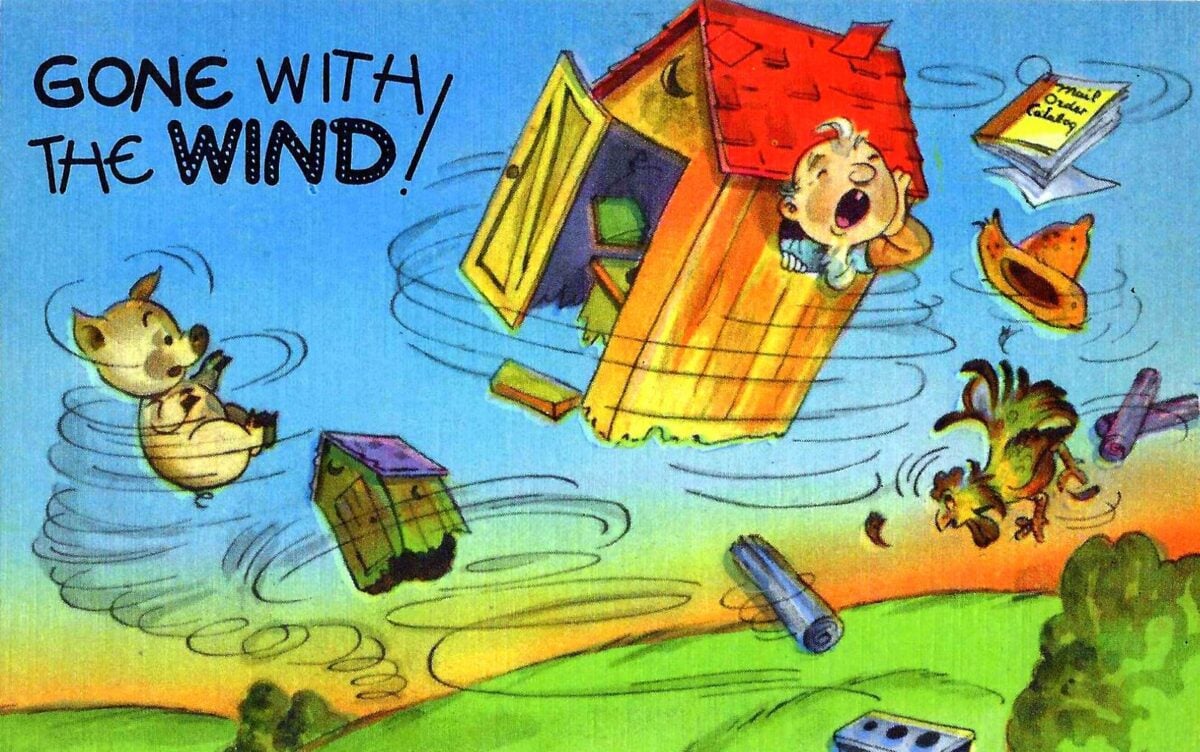
Original Gone With the Wind promotional materials from the 1939 US theatrical release — including one-sheets and half-sheets — are aggressively sought by collectors of Golden Age Hollywood, who regard the film as the benchmark event of its era. Period-correct materials with documented provenance from the original 1939 release (rather than the 1947 or 1954 reissue) command the highest premiums, and the difference between an original and a reissue in this category can represent a price gap of several thousand dollars.
Breakfast at Tiffany’s (1961)
— Photo by alesealesphoto
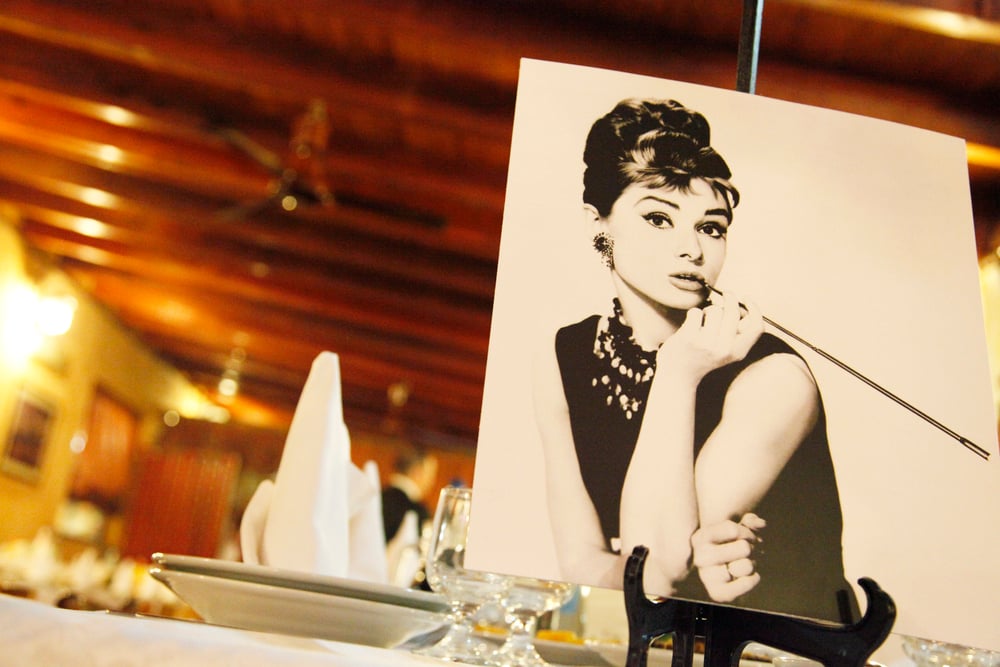
Christie’s sold an original double-sided one-sheet for Breakfast at Tiffany’s featuring Audrey Hepburn as Holly Golightly in 2004 for over £13,145, including buyer’s premium.
The image of Hepburn in her little black dress has become one of the most reproduced images in mid-century popular culture, and the premium on first-run materials from the 1961 US release reflects both the film’s cultural status and the difficulty of finding period-correct examples rather than later reproductions or international variants.
The Godfather (1972 — Original US One-Sheet)
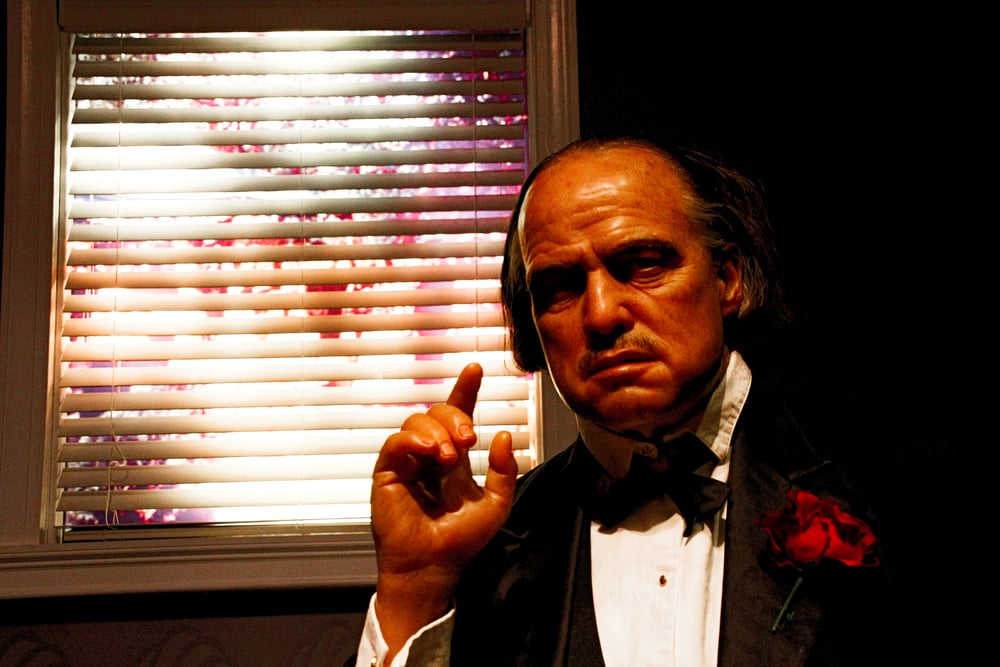
First-run one-sheets for The Godfather are actively traded at specialist poster auctions and increasingly sought by collectors whose primary frame of reference is the 1970s rather than the 1930s.
The “30-year rule” in poster collecting — the idea that demand spikes for films seen by people during their formative years, roughly 30 years after those years — has been working in the favor of 1970s cinema for over a decade, and The Godfather is among the most desired titles in the category.
2001: A Space Odyssey (1968 — Original One-Sheet)
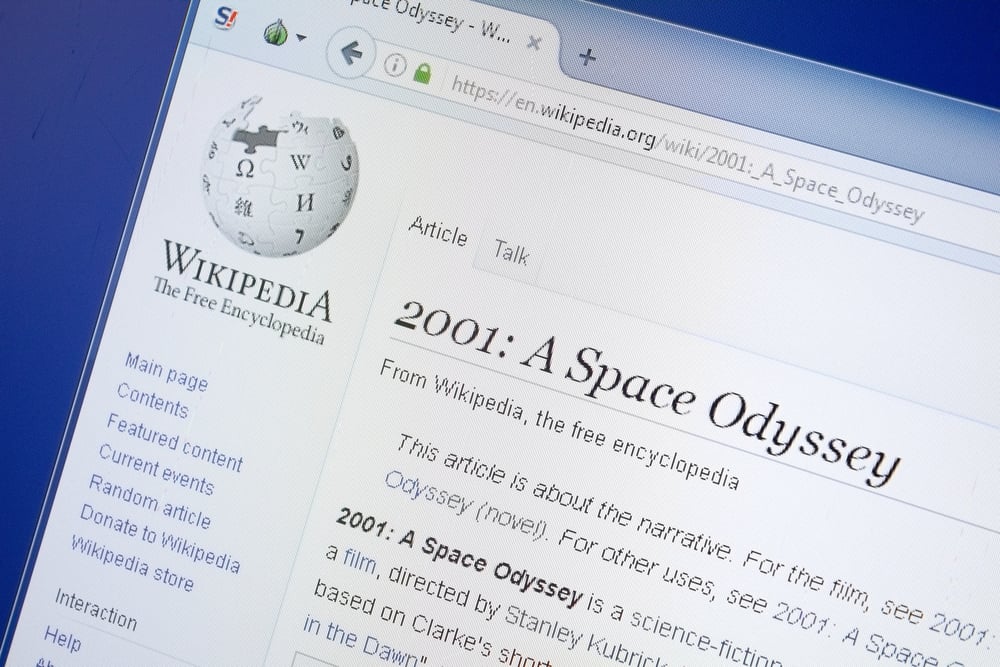
Stanley Kubrick’s 1968 science fiction film generated promotional artwork unlike anything else in its era, with poster designs that ranged from the abstract to the representational depending on the territory and the campaign.
Original US one-sheets for the first theatrical run are collected by both film and graphic design enthusiasts, and the international variants — particularly the Japanese B2 format — have attracted attention from collectors interested in the cross-cultural marketing of landmark cinema.
Psycho (1960 — Alfred Hitchcock Original)

The original Psycho one-sheet — featuring a stark, type-heavy design that deliberately refused to depict the film’s famous scenes — is consistent with Hitchcock’s marketing strategy of creating mystery around the film’s content.
Period-correct one-sheets from the original 1960 US release are actively traded in the $5,000 to $20,000 range at specialist auction, with mint examples commanding premiums. The film’s status as possibly the most discussed thriller in cinema history keeps the demand stable across collector generations.
A Clockwork Orange (1971 — UK Quad Poster)
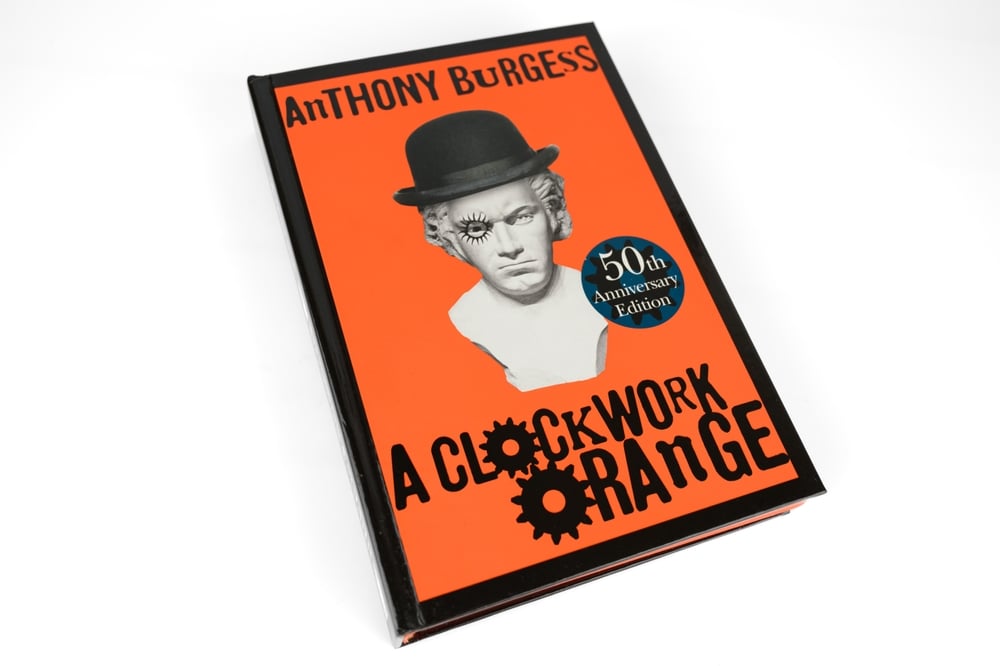
The UK quad format — 30 by 40 inches, horizontal — produced some of the most distinctively designed British film posters of the 1960s and 1970s, and Stanley Kubrick’s A Clockwork Orange generated one of the most collected examples from that period.
Original UK quad posters from the initial 1971 release have traded at specialist auction for several thousand dollars, with the specific graphic design tied to the film’s iconic promotional imagery driving collector demand consistently.
Vertigo (1958 — Hitchcock Saul Bass Design)
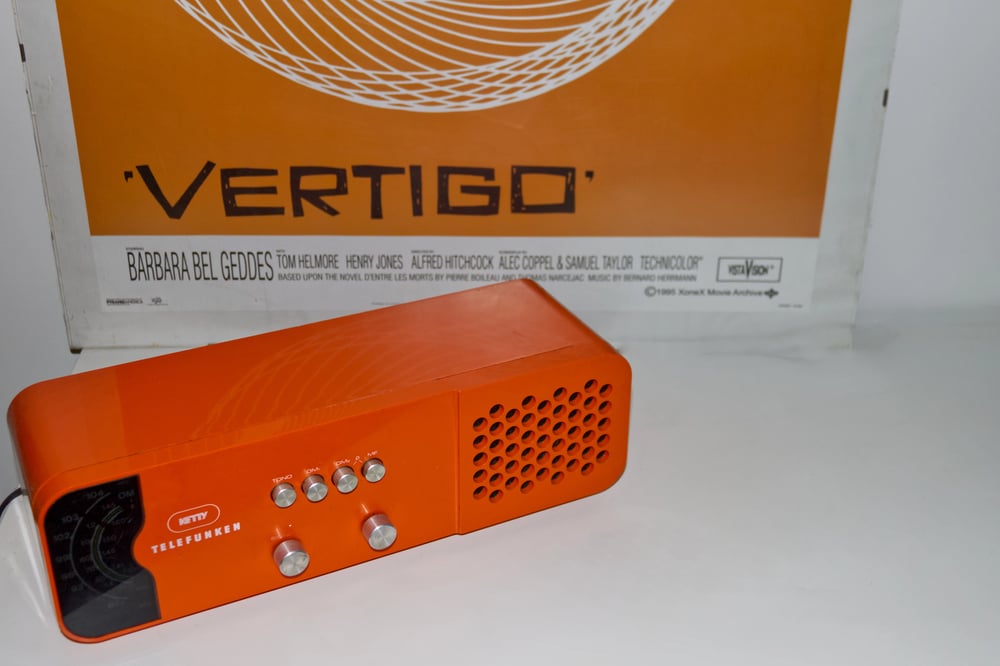
— Photo by savo74
The promotional art for Vertigo, designed by Saul Bass — whose minimalist graphic style defined the visual language of 1950s Hollywood poster design — is among the most art-historically significant examples of promotional film artwork ever produced.
Bass’s swirling spiral design for Vertigo appears in design history texts alongside his work for The Man With the Golden Arm and Anatomy of a Murder. Original one-sheets from the 1958 release are collected simultaneously for their art value and their film history significance.
Pulp Fiction (1994 — Original US One-Sheet)

— Photo by Mirroni
Quentin Tarantino’s 1994 film generated one of the most immediately recognizable poster designs of its era — Uma Thurman reclining with a cig and a paperback novel. First-run original one-sheets from the 1994 US release are actively collected and have appreciated significantly as the generation of viewers who saw the film on initial release entered their collecting years.
The 30-year rule applied here means the market for 1994-era materials is currently at or near the peak of its initial demand surge.
The Exorcist (1973 — Teaser Poster)

— Photo by vampy1
The teaser poster for The Exorcist — featuring the silhouetted figure of the priest standing before a house bathed in a cone of light, with no other imagery — is a landmark of horror film advertising because of what it deliberately omits.
Original one-sheets from the 1973 theatrical run are collected as much for the restraint and effectiveness of their design as for the film’s status as one of the most commercially successful horror productions ever made.
Planet of the Apes (1968 — Original One-Sheet)

The original 1968 Planet of the Apes one-sheet from the first theatrical run is consistently sought by collectors whose interest spans classic science fiction films. The 30-year collecting rule has been in full force for late 1960s and early 1970s science fiction since the early 2000s, and the market for original materials from films like Planet of the Apes, Soylent Green, and the first wave of American New Wave cinema has been strong through multiple auction cycles.
The Good, the Bad and the Ugly (1966 — Italian Premiere 24-Sheet)

The Italian premiere 24-sheet for The Good, the Bad and the Ugly sold for $77,675 at a November 2016 auction. Italian film posters from the 1950s through the 1970s — including the “fotobusta” format and the large-format premiere posters — are an entire subcategory of international poster collecting, pursued by collectors who regard the illustrative quality of Italian poster art as superior to the corresponding American promotional materials.
Rebel Without a Cause (1955 — James Dean One-Sheet)
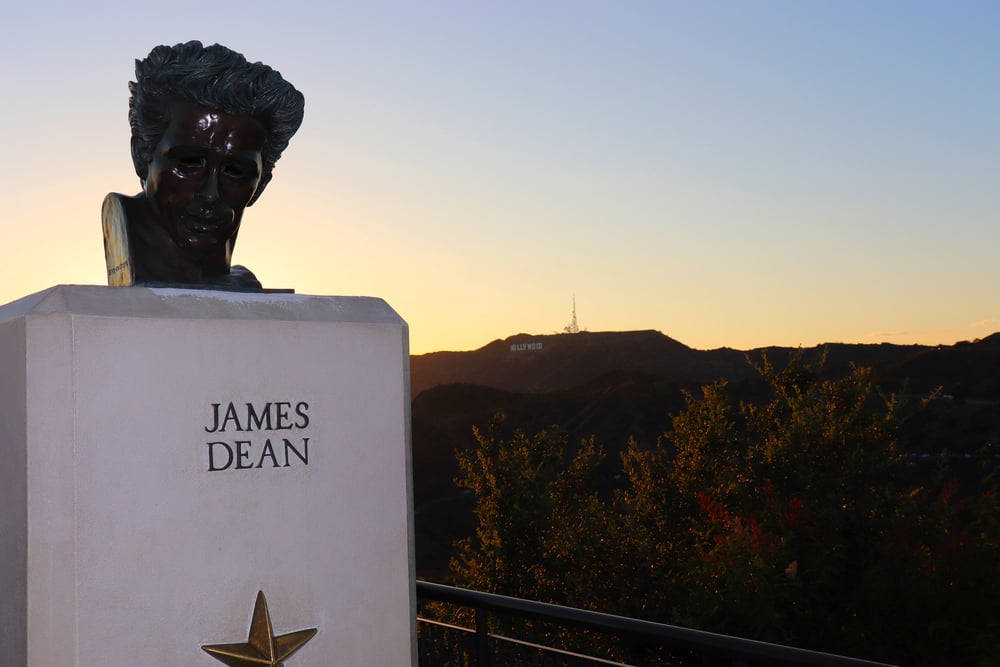
Original US one-sheets for Rebel Without a Cause from the 1955 theatrical release carry the amplified cultural weight of James Dean’s death in a car accident just weeks before the film opened — making every piece of promotional material from the first run a document tied to one of the most discussed moments in American popular culture.
Period-correct examples regularly appear at specialist auctions and consistently generate strong bidding from collectors working in mid-century Americana.
An Attic Find, a Shuttered Lobby, a Folded Survivor

The collector who paid $30,000 for a stack of stuck-together lobby cards and posters found in an attic — part of an archive that included originals from The Public Enemy, Cimarron, The Front Page, and Little Caesar — exemplifies how the category works.
The buyer consigned the find to Heritage Auctions. The initial $30,000 recovered in one purchase what theaters had once considered garbage. The single rarest item in any such find, once authenticated, can return that sum and far beyond it.
The Things That Peeled Off Theater Walls
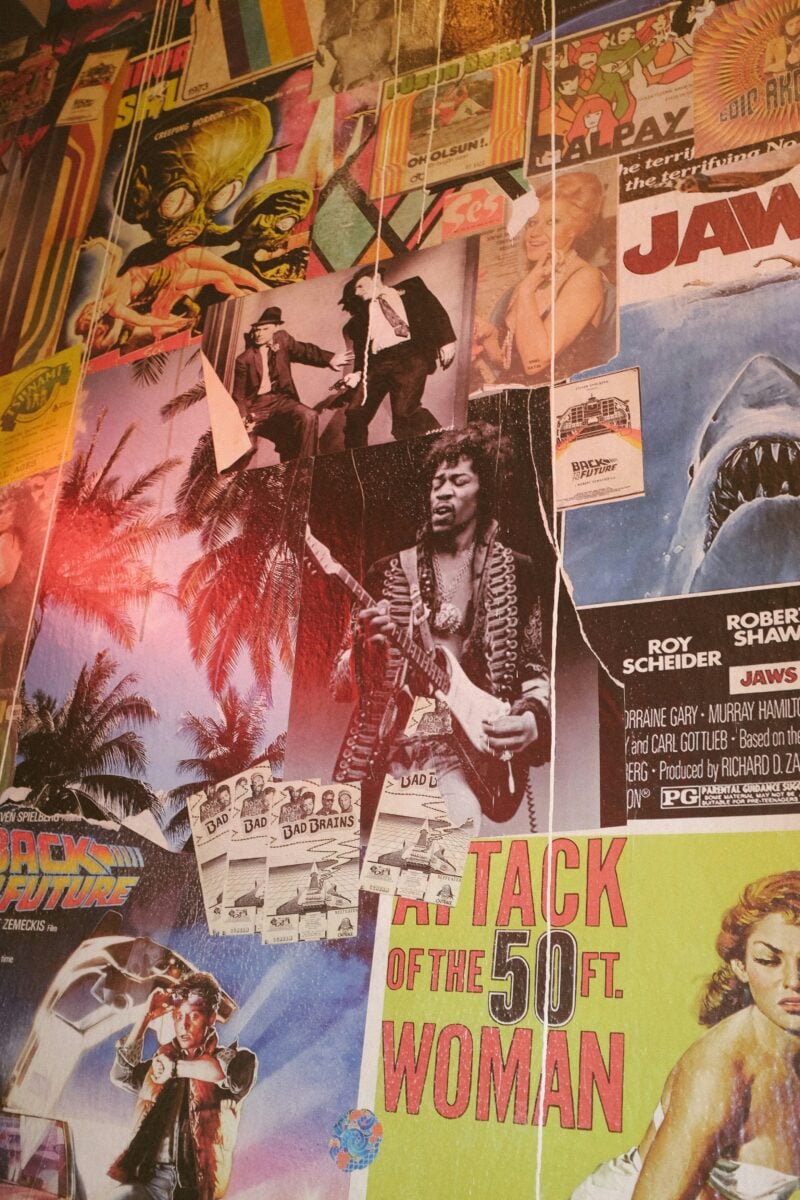
Movie posters found in homes almost always arrived through the same route: a theater employee, a projectionist, a manager, or an owner took them home when the run ended because nobody thought to ask them not to. Single-screen theaters, especially those that closed before the home video era, left behind promotional materials that migrated into houses and basements before ending up in attic boxes that passed through estate sales without labels.
The Frankenstein poster that a teenager found in a sealed projection booth on Long Island spent years in a building that had ceased to function as a cinema — silent and overlooked — until someone looked past the shuttered doors. That is almost always how these things appear: not through dramatic discovery, but through someone paying attention to a room that everyone else had decided wasn’t worth examining.
More from Go2Tutors!

- The Romanov Crown Jewels and Their Tragic Fate
- 13 Historical Mysteries That Science Still Can’t Solve
- Famous Hoaxes That Fooled the World for Years
- 15 Child Stars with Tragic Adult Lives
- 16 Famous Jewelry Pieces in History
Like Go2Tutors’s content? Follow us on MSN.