27 Psychological Tricks That Stores Use to Make Shoppers Spend More Than They Planned
The decision to buy something feels like a choice. It rarely is — at least not entirely. Modern retail environments are engineered spaces where lighting, music, layout, pricing, and product placement have all been deliberately calibrated to influence what you pick up, how long you stay, and how much you spend. Behavioral economists estimate that only around 5 percent of purchasing decisions are made through conscious rational deliberation. The remaining 95 percent happens below the surface, guided by cognitive shortcuts that retailers have spent decades learning to exploit.
None of this is coercive. Nobody forces a cart into your hands or puts a product in your basket. But understanding the specific mechanisms retailers use to influence spending is the first step to making genuine choices rather than manufactured ones. Most of these tactics are well-documented in academic research. They work reliably enough to be industry standard practice, and they work even on people who know about them.
Essentials at the Back

Grocery stores place the most commonly needed items — dairy, bread, eggs — as far from the entrance as possible. Studies consistently show a direct correlation between time spent in a store and total spending. Every item you walk past on the way to the milk is a potential impulse purchase that wouldn’t exist if the milk were by the door.
Charm Pricing and the Left-Digit Effect

An item priced at $19.99 feels meaningfully cheaper than an item priced at $20, even though the difference is a single cent. This is the left-digit effect: the brain anchors on the first number it reads and processes it before finishing the price. Research has confirmed this works even on people who understand the mechanism and actively try to counteract it.
Price Anchoring With a High Reference Point

Place a $200 bottle of wine at the top of a restaurant menu and the $60 bottle suddenly seems reasonable — not because $60 is objectively reasonable, but because the brain recalibrates its sense of “expensive” against the highest number it encountered first. The $200 bottle doesn’t need to sell; its function is to establish a reference point that makes everything else look relatively affordable.
The Decoy Effect

Present two options — a small coffee for $3 and a large for $6 — and most people choose based on their actual need. Add a medium at $5.50 and something shifts: the large suddenly seems like the obvious value, because the gap between the medium and large is only 50 cents. In Dan Ariely’s foundational MIT experiment, the decoy effect redirected 84 percent of consumers toward a premium option they wouldn’t have chosen without the decoy present.
Loss Aversion Framing

Behavioral economists Tversky and Kahneman established that people feel losses approximately twice as intensely as equivalent gains. “Limited time offer” and “only 3 left in stock” aren’t just promotional language; they’re loss-aversion triggers that convert indifference to urgency by framing non-purchase as a loss rather than the absence of a gain.
Larger Shopping Carts

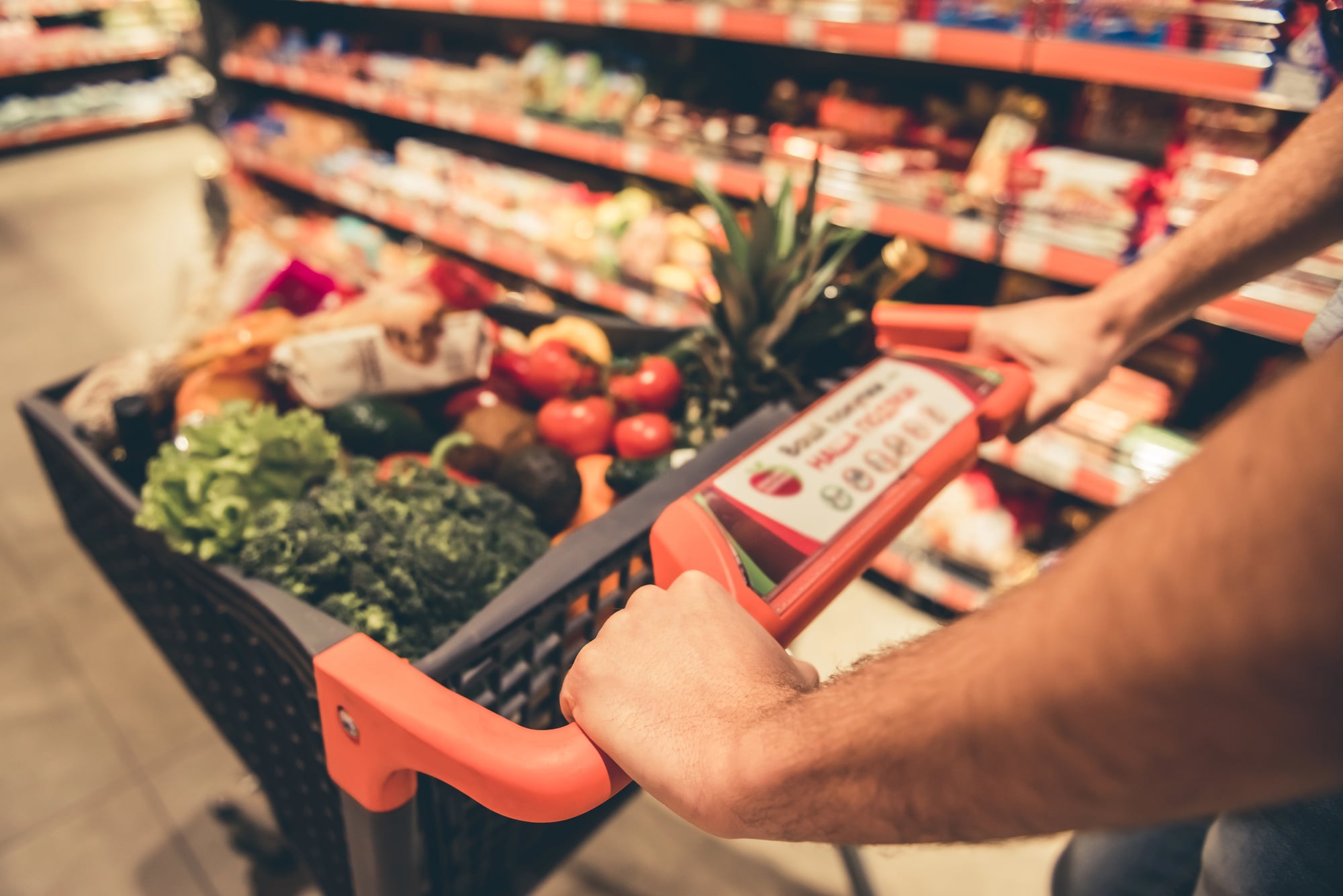
Research by retail design specialists has found that doubling cart size can lead to shoppers buying 40 percent more than they planned. A half-empty large cart gives the visual impression that you haven’t bought much and there’s room for more.
The Gruen Transfer (Intentional Disorientation)

When a shopper becomes slightly lost in a store’s layout, they slow down, look around more, and encounter products they weren’t looking for. This effect, now called the Gruen Transfer, is documented in the design of major retail chains and shopping centers. The layout isn’t confusing by accident; it’s confusing by design.
Scent Engineering

Retailers pump specific fragrances through their buildings to influence behavior and time spent in store. Pleasant ambient scent correlates with longer dwell time, and longer dwell time correlates with higher spending. The scent you notice when you walk into a store was most likely chosen by someone with a spreadsheet showing its effect on average transaction size.
Slow Background Music

Slow-tempo music encourages shoppers to move through stores more slowly. Research has demonstrated the direct relationship between music tempo, shopper pace, and spending. The music in a retail environment is almost never chosen by accident — its tempo is calibrated to serve a commercial objective.
Eye-Level Product Placement

“Eye level is buy level” is one of the most quoted aphorisms in retail. Products placed at eye height receive significantly more attention and are selected more frequently. Manufacturers pay premium slotting fees to have their products placed in these prime positions. The items at eye level aren’t there because they’re the best options in the category — they’re there because someone paid to put them there.
Fake Countdowns and Manufactured Urgency

A PIRG investigation found that 80 percent of countdown timers on retail websites reset without any price change when they hit zero — meaning the urgency was artificial rather than real. The brain’s response to a countdown clock doesn’t require the threat to be genuine; the visual stimulus of numbers decreasing triggers loss aversion regardless of whether the consequence is real.
The Pain of Paying — and Reducing It

Brain imaging research has established that spending money activates the insula — the same neural region involved in physical discomfort and social pain. Casinos use chips and apps use in-game currency because converting real money into abstract tokens measurably suppresses this response. Contactless payment has the same effect: tapping a card produces less payment pain than handing over physical currency, leading to measurably higher average transaction values.
Free Samples and Reciprocity

The psychology of reciprocity is one of the most reliably documented effects in behavioral science: receiving something for free creates a felt obligation to give something back. Free samples at grocery stores aren’t primarily a tasting opportunity — they’re a reciprocity trigger. The obligation created is asymmetrical; a $0.10 piece of cheese can reliably drive the purchase of a $6 block.
Fake Discounts on Permanent Prices

Consumer advocacy group Consumers’ Checkbook tracked prices at major US retailers for six months and found that many large chains maintained the same “sale” prices continuously, creating the impression of savings from an inflated original price that nobody ever paid.
Bundling and the Illusion of Value

“Buy 3 for $5” on items that are $2 each individually doesn’t save the shopper money — it costs them more. But the bundled price creates the sense of a deal. Bundling works by activating the savings mindset even when no saving is occurring. The relevant question “Would I buy this if there were no deal?” is exactly the question most shoppers skip.
“Customers Also Bought” and Social Proof

Displaying “customers also bought” sections and “bestseller” labels is an application of social proof: using other people’s choices as a shortcut for your own judgment. When you see a product has 4,000 five-star reviews, you’re not evaluating the product independently — you’re delegating the judgment to the crowd.
The Compromise Effect

When three options are available, most people choose the middle one. Not because the middle option is objectively the best, but because it represents a comfortable psychological position. Retailers design three-tier product offerings where the margin is highest on the middle option. The middle tier isn’t the compromise the shopper imagines it is — it’s often the product the retailer most wants to sell.
Loyalty Programs That Lock In Spending

The loyalty card in your wallet isn’t primarily a reward system — it’s a switching-cost mechanism. Every accumulated point, stamp, or mile represents a reason not to spend the same money with a competitor. The program shifts the shopper’s mental accounting from price comparison to loyalty tracking, replacing a question about value with a question about progress toward a reward threshold.
Color Psychology at the Point of Sale

Red is used for sale signs because it creates urgency and draws attention. Yellow signals affordability. Green is used in health food and organic sections because it evokes freshness and environmental consciousness. These are applications of color psychology research that has documented specific behavioral effects.
The Endowment Effect in Dressing Rooms

Once you put a jacket on and look at yourself in a mirror, the jacket begins to feel like yours. The endowment effect — the well-documented tendency to value things more once we own or possess them — activates the moment you try something on or pick it up. Retailers design dressing rooms to be comfortable and mirror-rich because the experience of possessing the item temporarily inflates its subjective value.
Product Placement at Checkout

The items placed alongside checkout registers are there because purchase resistance is at its lowest at the end of a shopping trip. The shopper has already committed to spending money in the store; one more small item carries much lower psychological resistance than it would have at the entrance.
Free Shipping Thresholds

“Free shipping on orders over $50” on an online order of $43 creates a specific problem: the shopper needs to find $7 more to spend in order to save $5 in shipping. Spending $7 to avoid a $5 fee is a net loss. But the threshold converts shipping from a cost into a reward for spending more, which reliably drives additional purchases.
Foot-in-the-Door Commitment

Researchers Robert Cialdini and colleagues documented the commitment and consistency effect: once a person has agreed to something small, they’re more likely to agree to something larger. Retailers use this through small requests — email sign-ups, loyalty card enrollment, free trial activations — that establish a commitment to the brand before any significant purchase is requested.
Scarcity Cues and FOMO
“Only 2 left in stock” makes you want something you were indifferent to five seconds ago. This is not a rational response to a supply constraint — it’s a loss aversion trigger. Behavioral research has identified FOMO (fear of missing out), scarcity, and urgency framing as the three psychological triggers with the highest explanatory power for impulsive purchasing. The accuracy of the scarcity signal is secondary to its activation of the emotional response.
Removing Commas From Large Prices

$1999 reads differently from $1,999, even though it’s the same number. Research shows that buyers systematically underestimate prices presented without commas compared to prices presented with them. The effect is reliable enough that high-ticket retailers routinely use unformatted prices on their display tags.
The Sunk Cost Display

Retail membership programs — particularly those with an annual fee — work partly through the sunk cost effect. Once a shopper has paid $150 for a warehouse club membership, there’s psychological pressure to spend enough in the store to justify the fee. The annual fee is a behavioral lock-in.
The Default Option

When a default option is pre-selected, most people leave it in place. Software subscriptions default to annual billing; retail subscriptions default to auto-renewal; food delivery apps default to a tip percentage. Retailers set defaults to maximize their own revenue, knowing that the effort cost of changing them is sufficient to retain most customers in configurations that favor the seller.
Why Awareness Is Not a Cure

Knowing these tactics doesn’t make you immune. Charm pricing still activates the left-digit effect in people who understand the mechanism. Loss aversion still fires when you see a countdown clock, even when you know the clock resets. The brain’s response to these stimuli is automatic — it runs faster than deliberate evaluation.
What awareness does provide is a gap. A brief moment between the stimulus and the response where you can ask whether the choice you’re about to make reflects what you actually want, or whether you’re executing a behavior that was engineered for you by someone else. That gap is small, and using it requires intention. But it’s the only genuine leverage a shopper has against systems designed by professional behavioral economists with years of transaction data and a detailed understanding of exactly how cognitive shortcuts work.
More from Go2Tutors!

- The Romanov Crown Jewels and Their Tragic Fate
- 13 Historical Mysteries That Science Still Can’t Solve
- Famous Hoaxes That Fooled the World for Years
- 15 Child Stars with Tragic Adult Lives
- 16 Famous Jewelry Pieces in History
Like Go2Tutors’s content? Follow us on MSN.



