29 Recording Devices Collectors Still Hunt
Playback machines get the glory, but the rarer skill was always capture. For most of the last 150 years, saving a sound meant owning a heavy, temperamental device that cut, embossed, or magnetized something in real time, with one chance to get it right.
Those machines now attract a mixed crowd of audio engineers, office-history buffs, film people, and musicians chasing a particular sound. Prices below assume honest, complete examples, and every figure swings with condition and whether the thing still runs.
Edison Standard Phonograph With Its Recorder
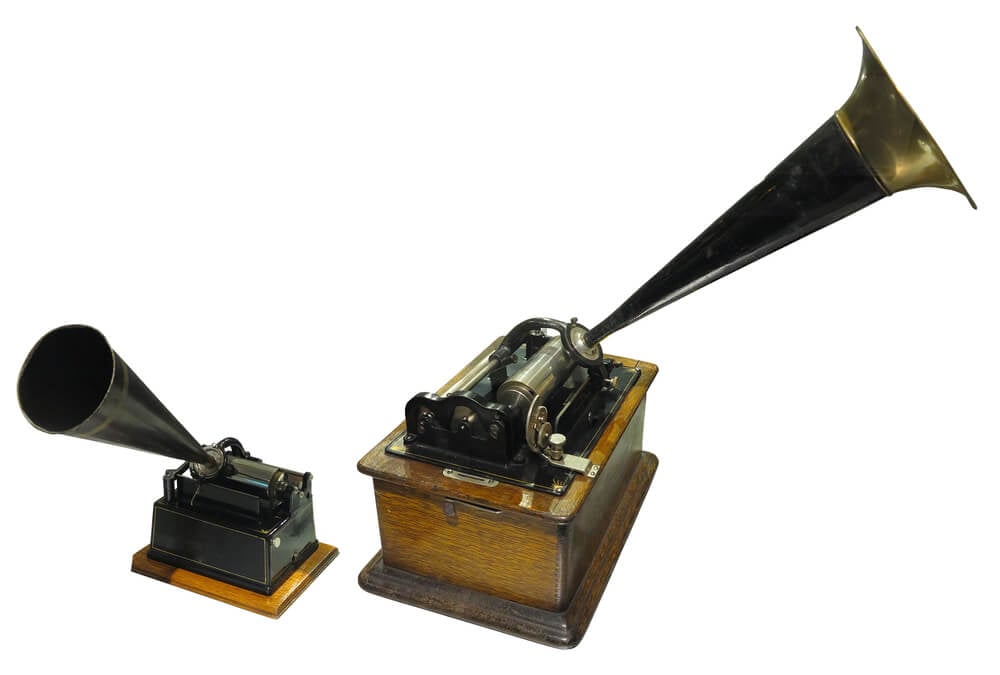
Introduced in 1898 at twenty dollars, the Standard brought sound recording into ordinary parlors, because many early examples shipped with a recording head alongside the reproducer. Owners spoke into the horn, cut a groove in a brown wax blank, then shaved the surface smooth and used it again.
The machines themselves are plentiful and usually bring $300 to $700. Collectors pay a premium for the small parts that went missing first, meaning the recorder, the original brass horn, and the oak lid with its banner decal intact.
A box of home-recorded cylinders alongside is a bonus nobody should discard.
Columbia Graphophone Type B Eagle
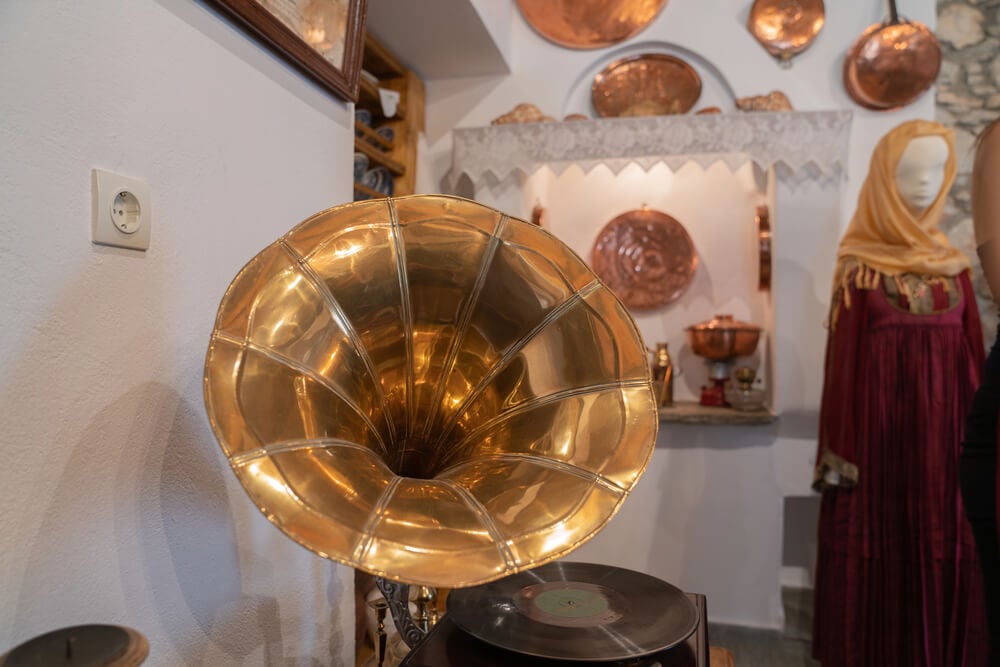
Columbia priced this little spring-wound machine at ten dollars in 1897, the value of the gold eagle coin that gave it a nickname. It played and, with the proper attachment, recorded on the same wax cylinders as its Edison rival.
The open works sit on a simple oak base, so every gear and governor weight is on display. Clean examples with the original carrying cover and aluminum horn sell for roughly $300 to $600, condition deciding everything.
Reproduction horns and replaced decals are common, and an honest seller points them out.
Dictaphone Wax Cylinder Sets
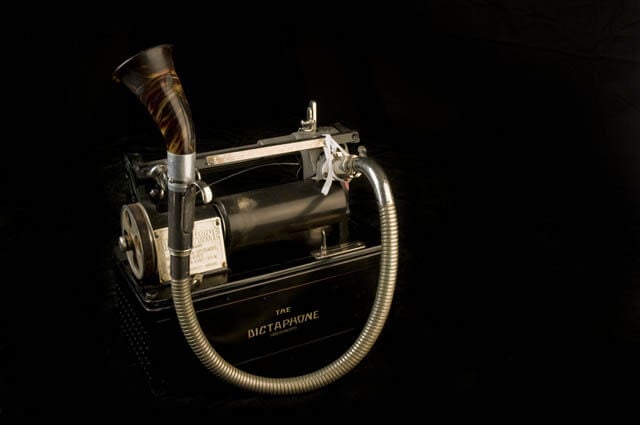
Columbia registered the Dictaphone name in 1907 for its office machines, and the business became a separate company in 1923. A full installation involved three devices: one for the executive to dictate into, one for the typist to transcribe from, and a shaver that planed used cylinders clean.
All three often rode on cast-iron wheeled stands. Single units bring $100 to $400 depending on completeness, and matched sets with the speaking tube and foot controls do better.
Decorators buy them nearly as often as audio historians do.
The Poulsen Telegraphone
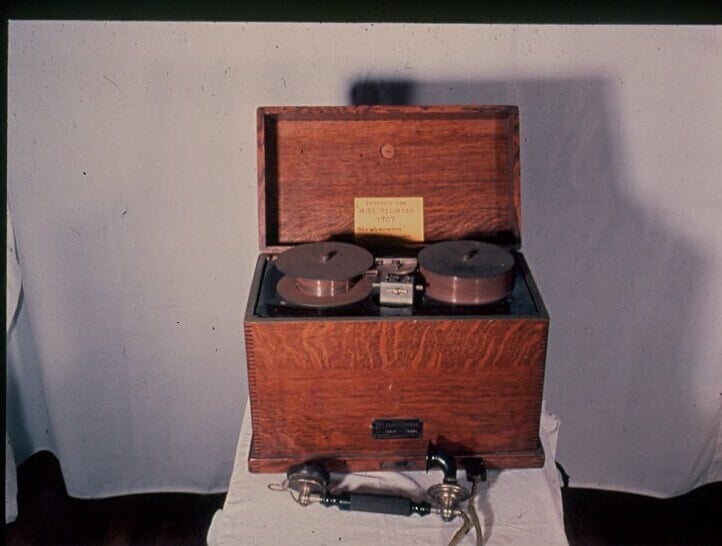
Danish engineer Valdemar Poulsen patented magnetic recording on steel wire in 1898 and won a grand prize at the 1900 Paris Exposition. Emperor Franz Josef of Austria spoke into the machine there, and that wire survives as the oldest magnetic recording known.
An American company in Springfield, Massachusetts, tried to sell the Telegraphone as a dictation and telephone recorder and moved very few. Without electronic amplification the playback was faint.
Surviving machines sit mostly in museums, and any example reaching the market is priced by negotiation between a handful of people.
Presto Disc Recorders
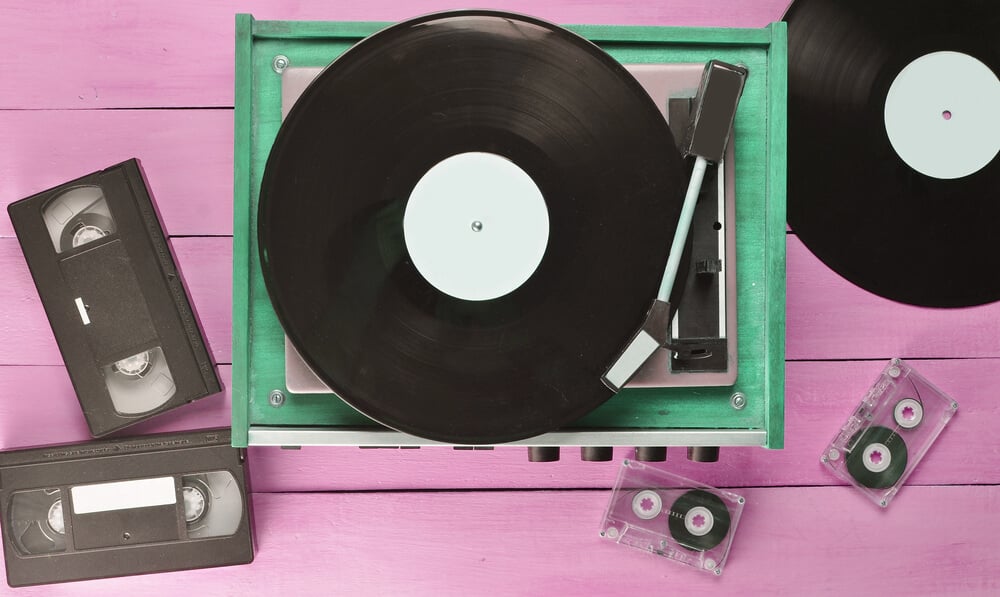
Presto Recording Corporation of New York introduced the lacquer-coated aluminum disc in 1934, and with it instant playback of a quality radio stations could use. Portable models such as the K-8 and studio lathes such as the 6N spread through broadcasters, schools, and recording services.
Folklorists working for the Library of Congress hauled Presto machines into prisons, churches, and front porches across the South. Working recorders bring $300 to $1,500, with condition of the cutting head the main variable.
Replacement styli and fresh blanks are still made for people who insist on cutting their own records.
Wilcox-Gay Recordio
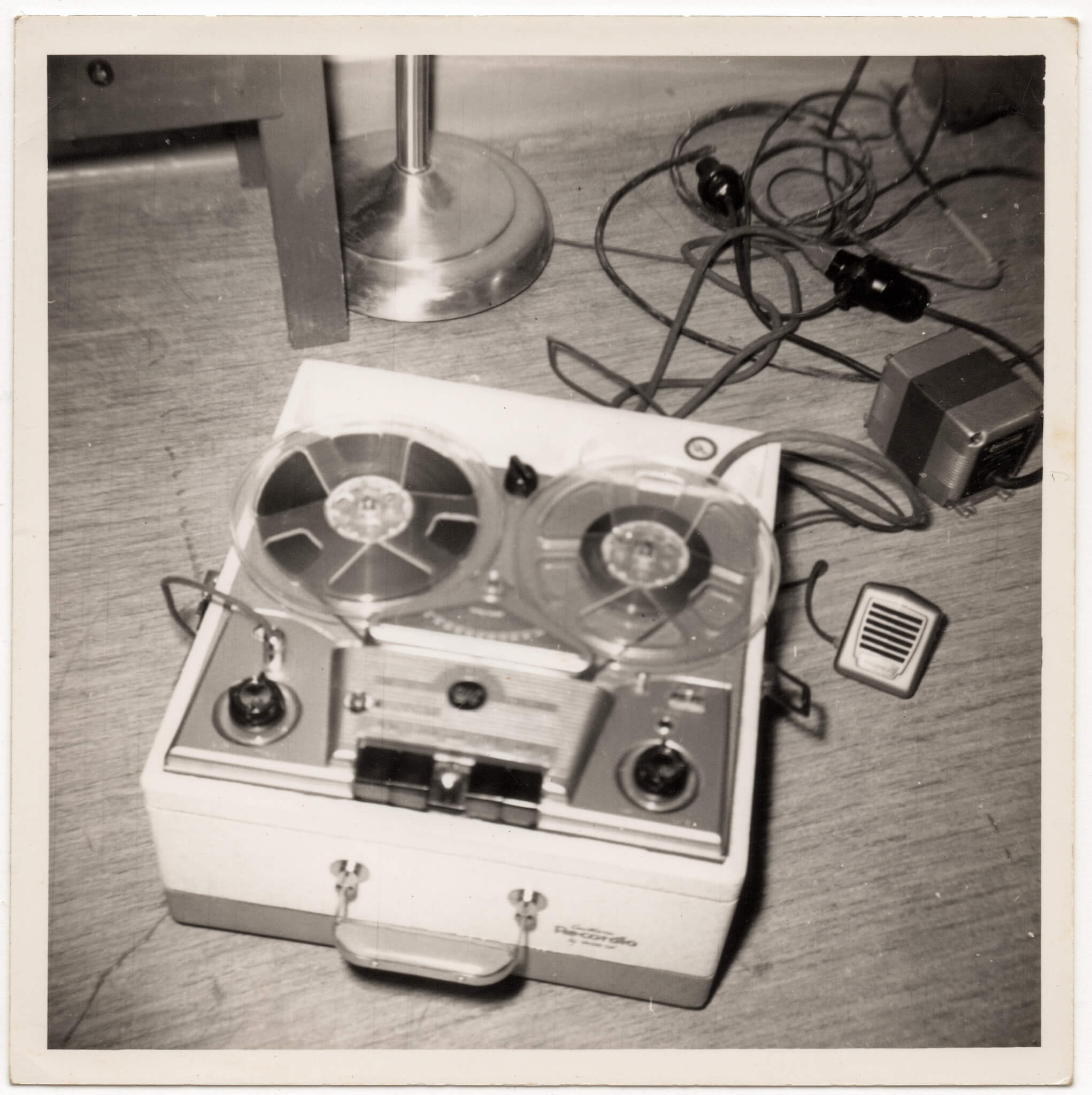
From 1939 this company in Charlotte, Michigan, sold a combination radio, phonograph, and disc cutter that let families record programs off the air or gather around the microphone themselves. The machines sold by the hundreds of thousands.
Most bring a modest $75 to $300 today, more for tabletop models in clean cabinets. The greater interest lies in the discs.
Thrift-store stacks of Recordio blanks hold wartime messages to sons overseas, children’s recitals, and amateur singers, and archives have begun treating them as a record of how ordinary Americans sounded.
Voice-O-Graph Booths
International Mutoscope built these coin-operated booths in the 1940s for arcades, train stations, and military bases. A customer paid thirty-five cents, spoke or sang for about a minute, and received a six-inch disc in a mailing envelope.
Few booths survive in working order. Third Man Records in Nashville restored a 1947 example and opened it to the public in 2013, and Neil Young recorded his album “A Letter Home” inside it the following year.
Complete booths change hands for five figures, and even the empty cabinets find buyers.
SoundScriber Dictation Machines
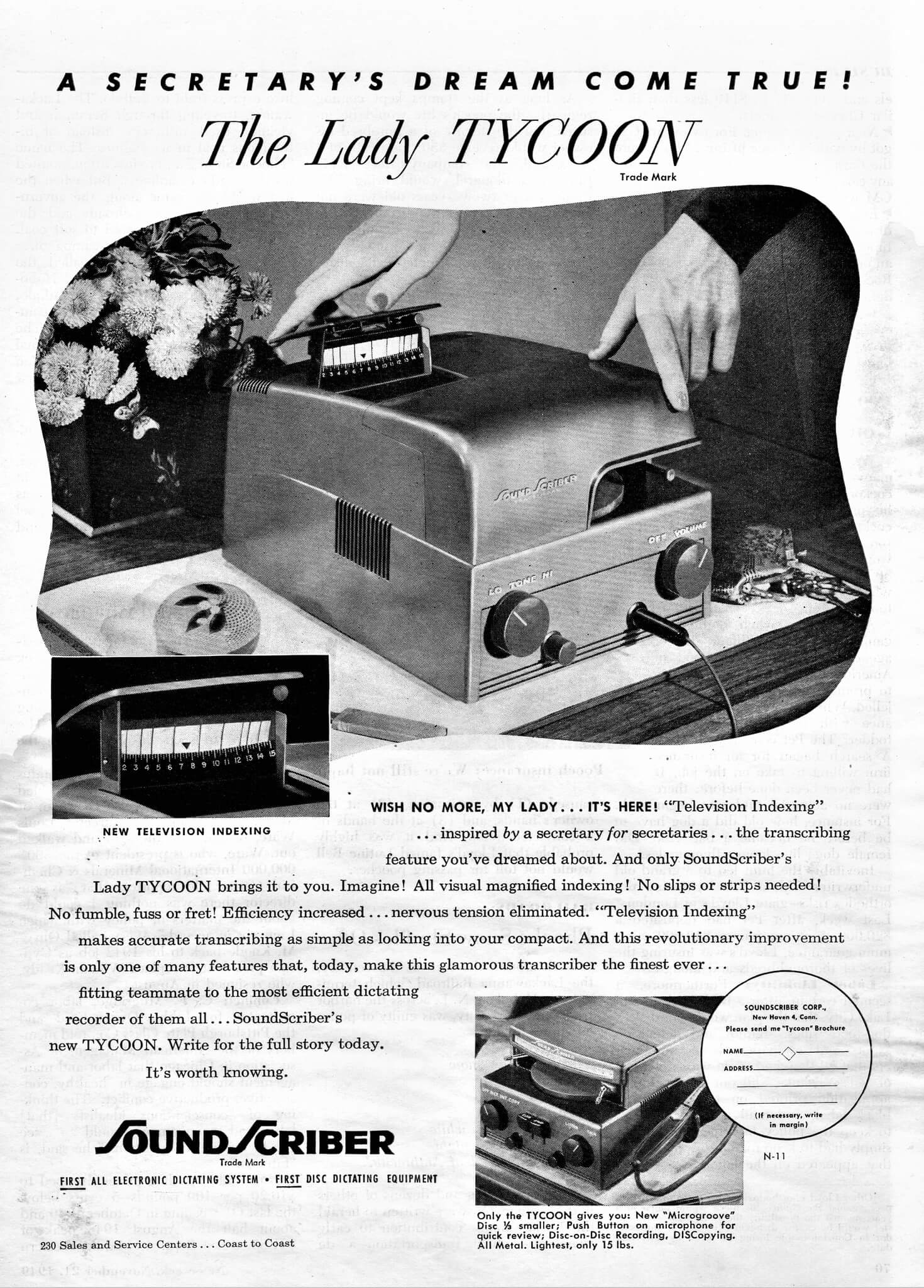
The SoundScriber, made in New Haven, Connecticut, from the 1940s, did not cut a groove at all. It embossed one into a thin flexible disc of green vinyl, which produced no shavings and let a secretary mail the record in an ordinary envelope.
A disc held about fifteen minutes per side. The military used the system during the war, and offices kept it into the 1960s.
Machines bring $50 to $200 depending on condition, making this one of the cheapest doors into disc recording. The discs themselves turn up in estate paperwork, still folded into their mailing envelopes.
Gray Audograph
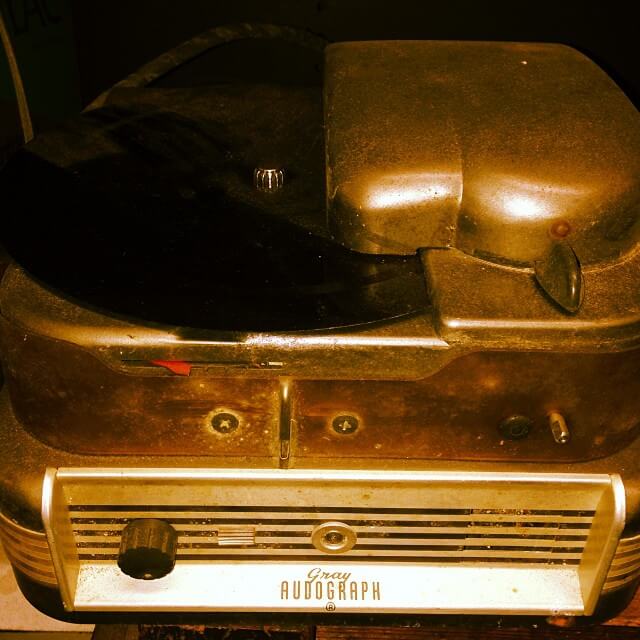
The Gray Manufacturing Company of Hartford introduced this office recorder in 1945. It embossed thin blue vinyl discs from the center outward, the reverse of an ordinary record, and varied the turntable speed to keep the groove moving past the stylus at a constant rate.
One such machine was recording a Dallas police radio channel on November 22, 1963, and its disc became evidence studied for decades. Audographs sell for $75 to $250, condition dependent, and they are rarely found with the microphone and the pile of blank discs they need.
Dictaphone Dictabelt Recorders
In 1947 Dictaphone replaced wax with a flexible plastic belt, originally red, that slipped over two rollers and took an embossed groove. A belt held about fifteen minutes and could be filed flat in a folder.
The Time-Master line became standard in law offices and newsrooms through the 1960s, and President Kennedy used Dictabelt machines to record telephone calls in the Oval Office. Recorders bring $50 to $200, more with belts and the desk microphone.
Old belts crease and crack, so transfer services charge well for coaxing sound from them.
Webster-Chicago Wire Recorders
Wartime research at Chicago’s Armour Institute turned wire recording into a practical military tool, and afterward Webster-Chicago sold it to the public. The Model 80 of the late 1940s stored an hour of sound on a spool of stainless steel wire thinner than a human hair.
A break meant a tangle that owners compared to a bird’s nest, and the repair was a square knot tied in the wire. Machines bring $75 to $250 depending on condition.
Spools of family recordings often come with them, and those are the part worth rescuing.
Minifon Pocket Wire Recorder
Protona of Hamburg launched the Minifon in 1951 as the smallest recorder in the world, a battery-powered wire machine that fit a coat pocket. The company sold accessory microphones disguised as wristwatches, and investigators, journalists, and intelligence services on both sides of the Iron Curtain bought them.
Later versions switched to tape cartridges. Collectors of espionage equipment compete with audio historians for complete kits, which bring $200 to $800 depending on condition and accessories.
The leather case and the wristwatch microphone matter more to the price than the recorder does.
AEG Magnetophon
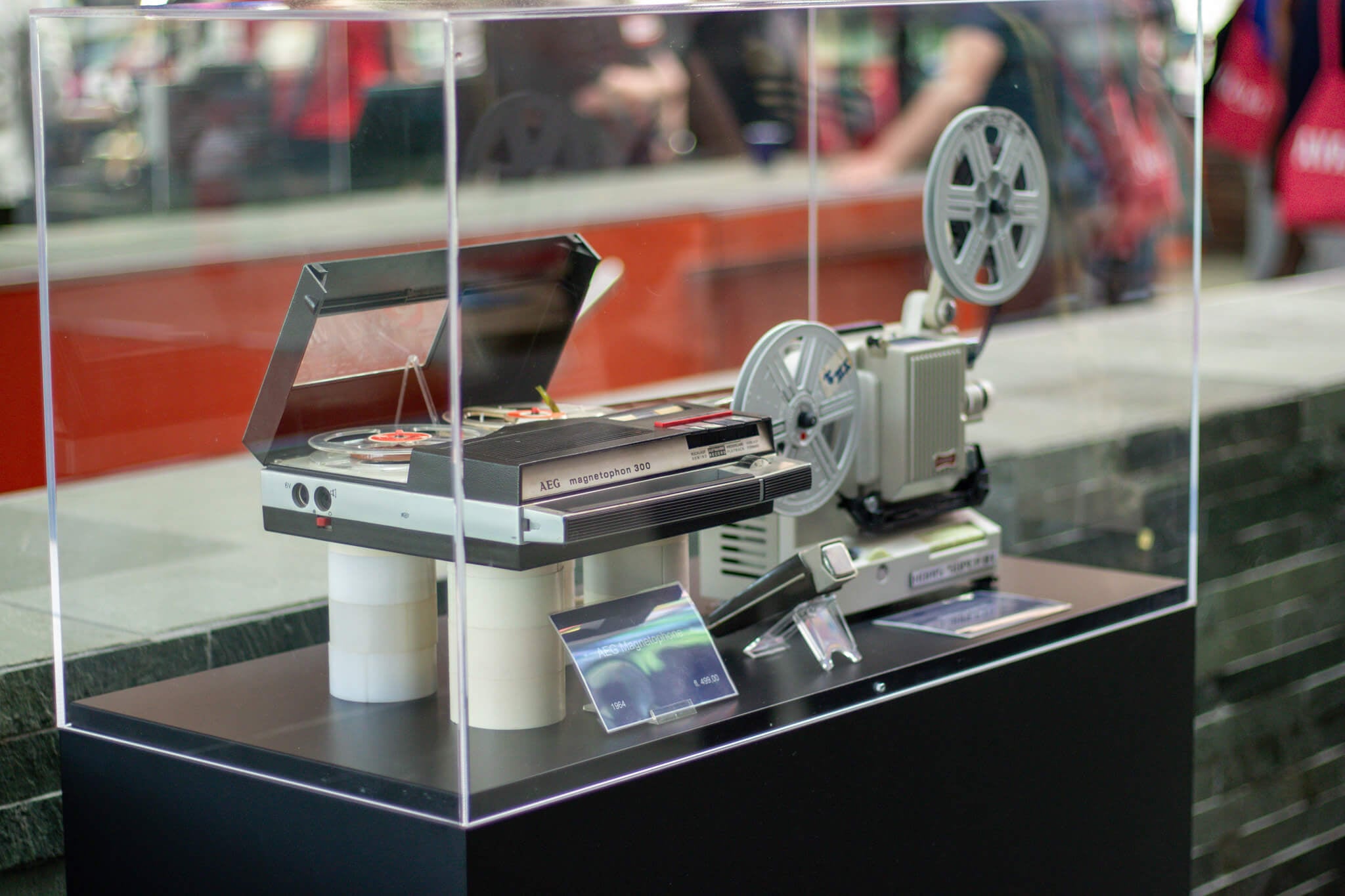
The German electrical firm AEG showed its K1 tape recorder at the 1935 Berlin Radio Exhibition, using coated plastic tape developed by the chemical company now known as BASF. The addition of high-frequency bias in 1940 lifted the sound to a fidelity that baffled Allied monitors, who heard orchestras playing at three in the morning.
American signal officer Jack Mullin shipped two machines home in pieces from a studio near Frankfurt in 1945. Wartime Magnetophons are museum pieces.
The few that reach auction sell on provenance, and no meaningful price guide exists.
Brush Soundmirror
The Brush Development Company of Cleveland put the first American consumer tape recorder on sale in 1946. Its engineer, Semi Begun, had worked on magnetic recording in Germany before emigrating, and the BK-401 used paper-backed tape supplied by 3M.
The machine looks like a tabletop radio with two small reels on top. Fidelity was modest and the paper tape tore easily.
Examples bring $150 to $500, condition dependent, and buyers want the original reels and microphone. Its real significance is the date on the nameplate, two years ahead of any professional American machine.
Ampex Model 200A

Jack Mullin demonstrated his modified German recorders to Bing Crosby’s staff in 1947, and Crosby put up $50,000 so that a small California firm could build an American equivalent. Ampex delivered the first Model 200A machines to ABC in April 1948, at about $4,000 apiece.
Just over a hundred were made. Crosby gave one to guitarist Les Paul, who added an extra playback head and invented sound-on-sound recording in his garage.
Surviving 200As belong mostly to museums and a few determined private owners, and a complete one would command a price well into five figures.
Ampex 350 and 351
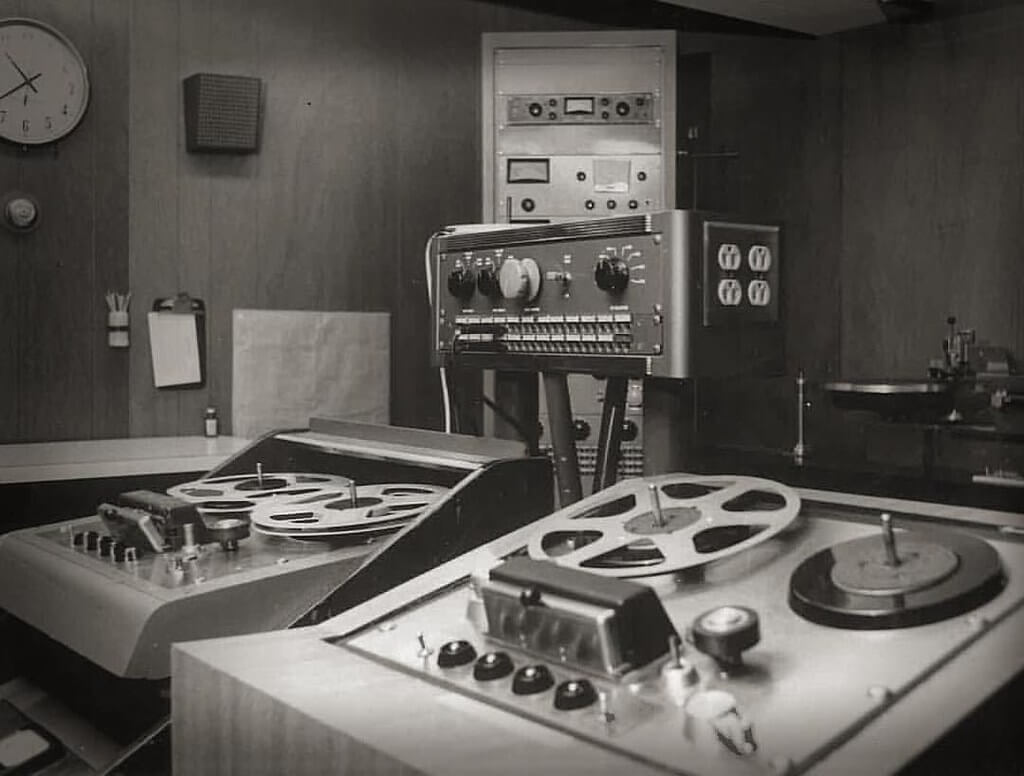
The 350 arrived in 1953 and became the default professional recorder in American studios and radio stations for fifteen years. The transport is a slab of cast metal, and the tube electronics of the 350 and its 1958 successor, the 351, remain prized for a thick, forgiving sound.
Mastering engineers still buy them, often pairing a restored transport with rebuilt electronics. Prices run from $1,500 for a tired mono console to $5,000 or more for a serviced stereo pair, depending heavily on head wear.
A large share of the rock and roll recorded in the 1950s passed across one.
Wollensak T-1500
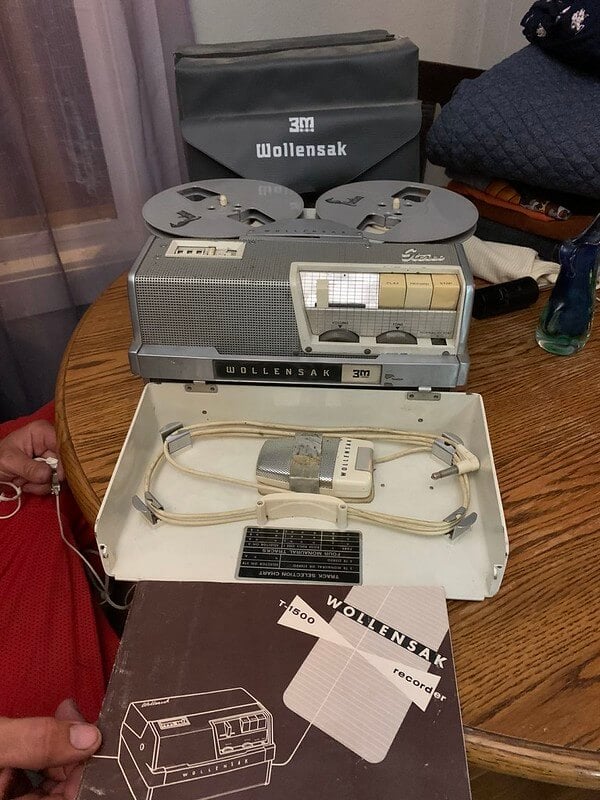
Every American school seemed to own one of these die-cast tanks, built in Chicago from the late 1950s and sold under the 3M name after 1960. The T-1500 weighs about twenty pounds, runs at two speeds, and drives its own speaker with a small tube amplifier.
Survivors are common at $50 to $200, condition deciding the figure. Harmonica players have adopted that amplifier for its gritty overdrive, which has nudged prices up.
Anyone who learned a language or rehearsed a speech in a classroom before 1975 probably did it on this machine.
Nagra III
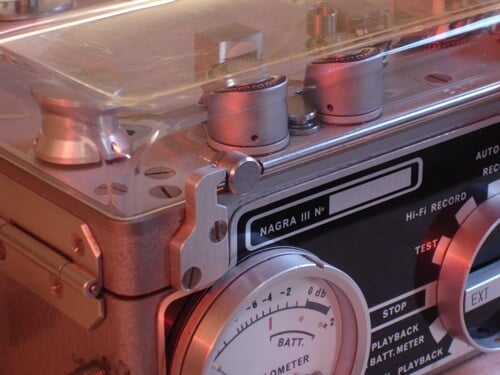
Stefan Kudelski, a Polish-born engineer working in Switzerland, named his recorders with the Polish word for “will record.” The transistorized Nagra III of 1958 ran on flashlight batteries, held its speed precisely, and weighed less than a typewriter.
Once a sync system arrived in the early 1960s, film crews could leave the studio, and the documentary and New Wave movements followed them out the door. Kudelski collected several Academy awards for technical achievement.
Working examples sell for $800 to $2,500 depending on condition, and the leather case and original lid add meaningfully to the price.
Nagra SN
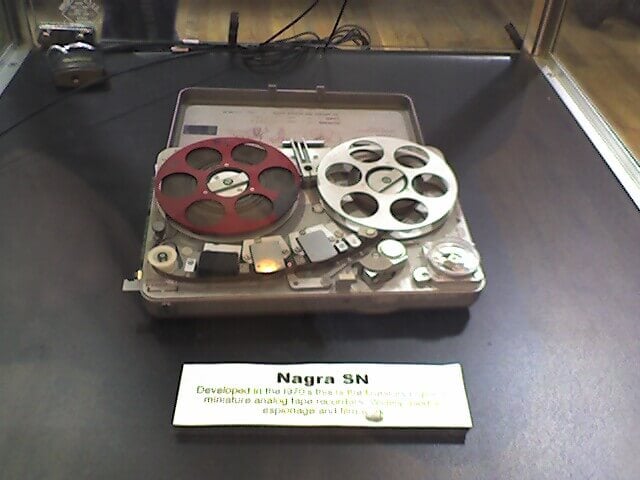
The initials stand for Serie Noire, and the machine is a reel-to-reel recorder roughly the size of a paperback, running tape only an eighth of an inch wide. Kudelski developed it during the 1960s, reportedly at the request of American government agencies, and offered it commercially from about 1970.
Investigators wore it under clothing, and film sound mixers hid it on actors. Build quality resembles watchmaking.
Complete outfits with the tiny reels, crank rewinder, and microphones bring $1,500 to $4,000, condition and accessories deciding where in that range a sale lands.
Uher 4000 Report
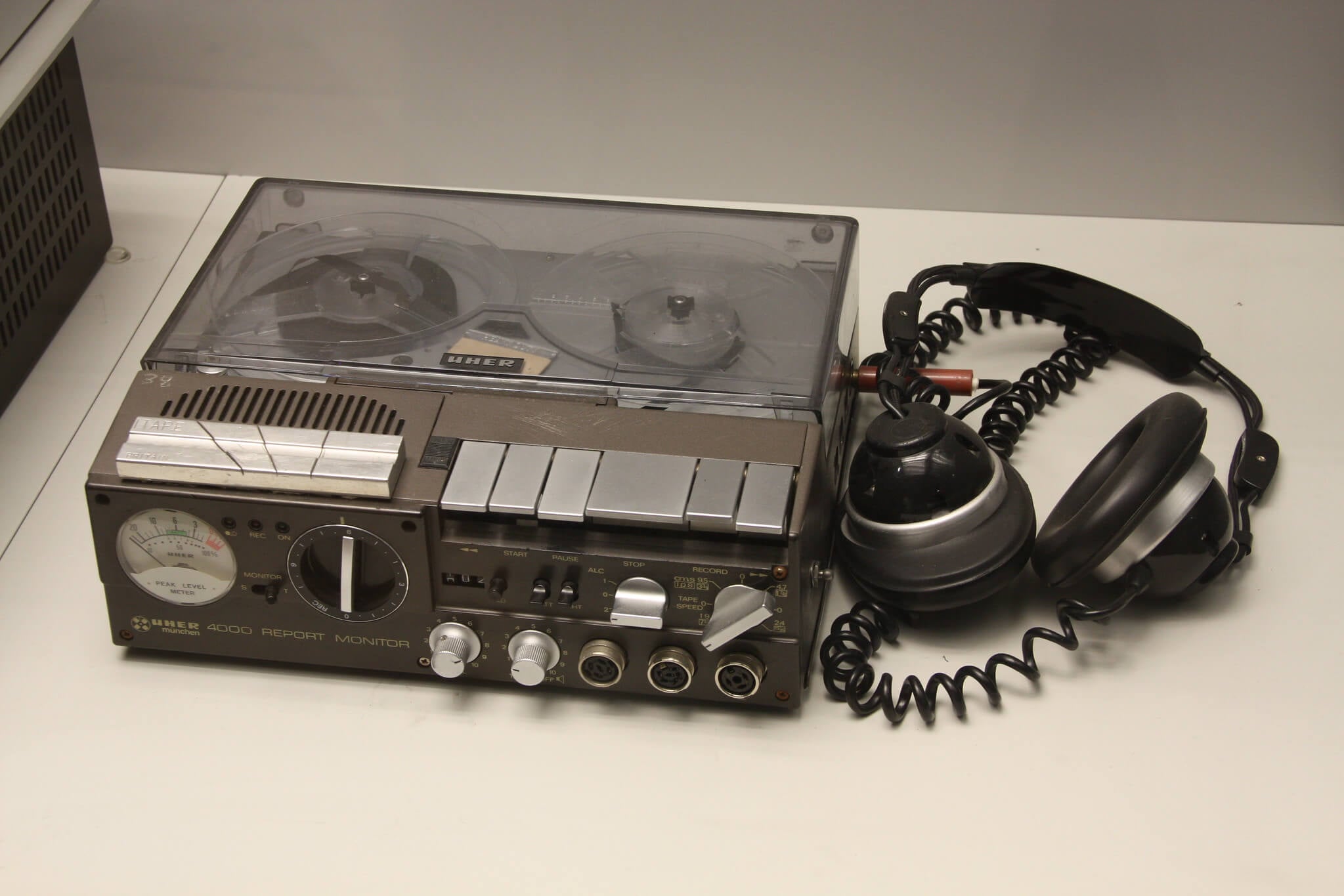
This compact German portable arrived in 1961 and became the radio journalist’s standard tool for two decades. It offered four tape speeds, ran on batteries, and survived being dropped.
The company’s larger office model, the Uher 5000, earned a place in political history when President Nixon’s secretary used one to transcribe White House tapes and an eighteen-and-a-half-minute gap appeared. The 4000 series remains affordable at $150 to $500, depending on condition.
Perished drive belts are the usual fault, and replacements are easy to find.
Studer J37
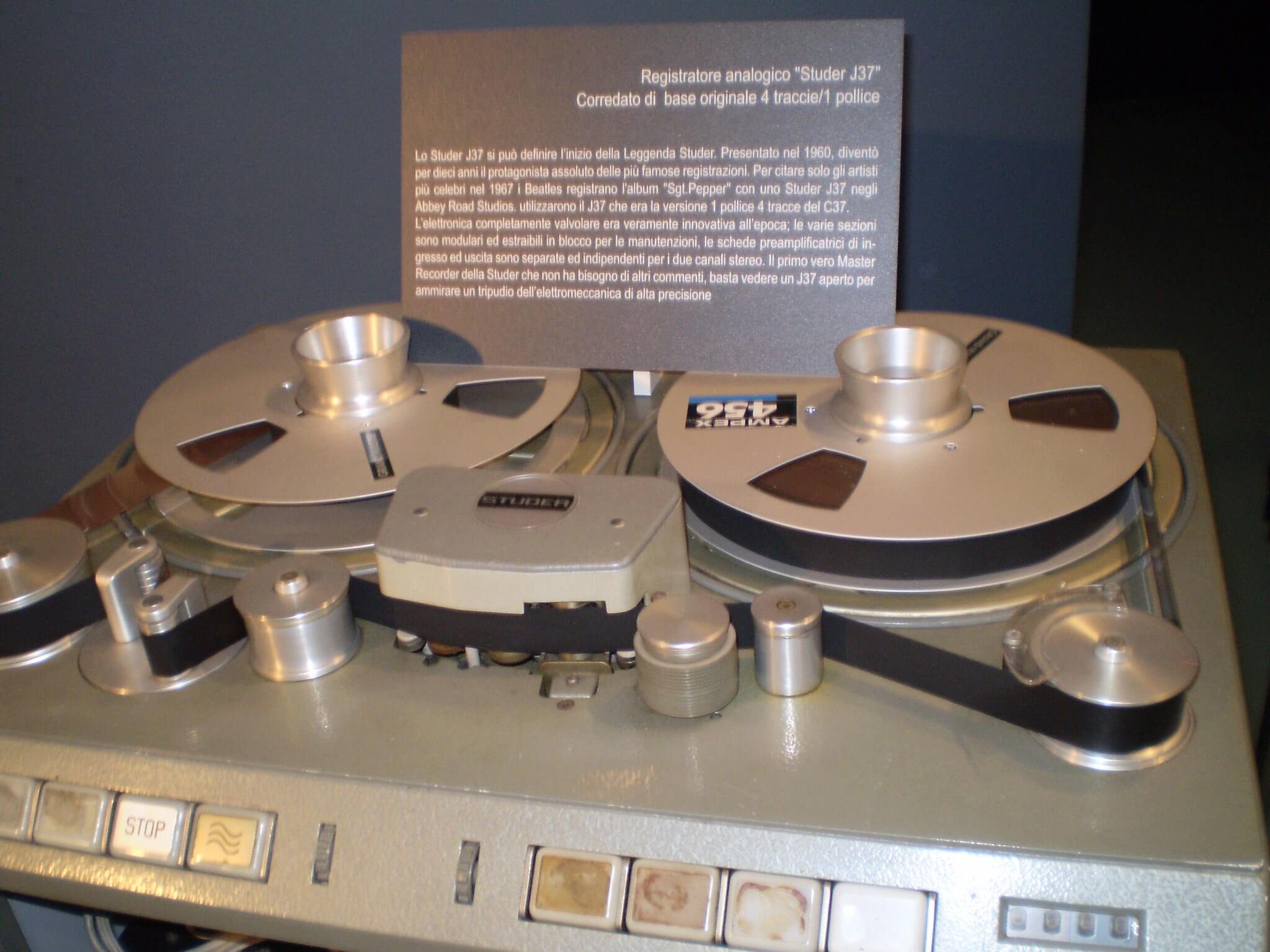
Willi Studer’s four-track, one-inch tube recorder of 1964 stood as tall as a kitchen range and contained more than fifty valves. EMI bought several for its Abbey Road studios, and the Beatles made “Sgt. Pepper’s Lonely Hearts Club Band” by bouncing tracks between them.
Production was small, and many machines were scrapped when eight-track arrived. A documented J37 brings a five-figure sum, with Abbey Road provenance multiplying that.
Software companies have modeled its sound in detail, which has only increased the appetite for the three-hundred-pound original.
Revox A77
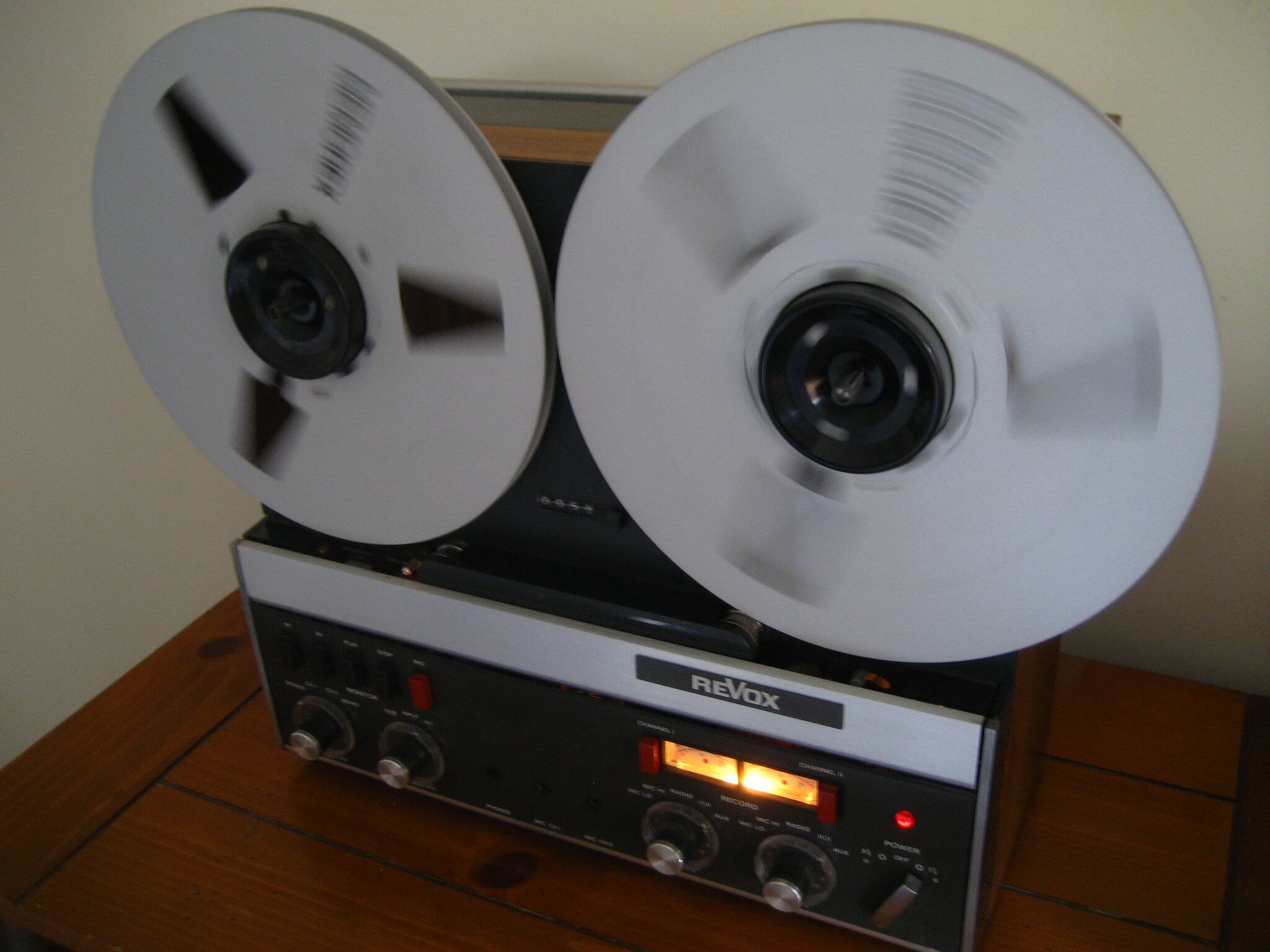
The A77 appeared in 1967 as the domestic cousin of Studer’s professional machines, and it sold in the hundreds of thousands over the next decade. It used three motors, plug-in circuit cards, and a transport that could be aligned by a patient amateur.
Musicians bought it for demos, and broadcasters bought it as a cheap spare. Serviced examples bring $400 to $1,200 depending on version and condition, with high-speed and half-track models at the top.
Its aging capacitors tend to fail with a puff of acrid vapor, a repair that owners treat as a rite of passage.
Technics RS-1500
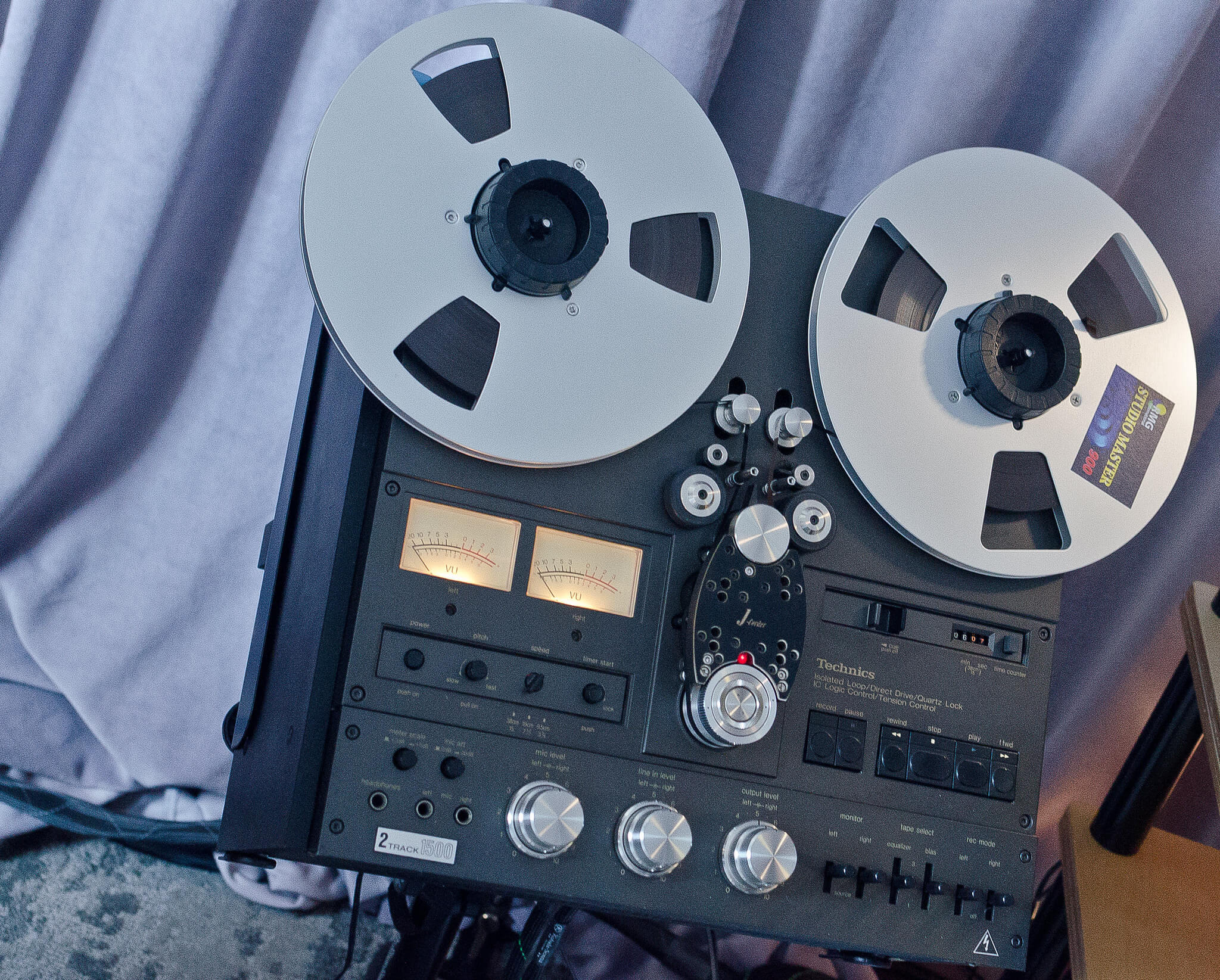
Technics launched this deck in 1976 with a transport unlike anything else on the consumer market. The tape follows a U-shaped path around a single large direct-drive capstan with two pinch rollers, isolating the heads from reel tension.
Speed stability rivaled studio machines costing several times more. The revival of prerecorded reel tapes among audiophiles has pushed serviced examples to $3,000 and well beyond, condition dependent, roughly triple what they brought fifteen years ago.
Worn heads and a failed logic board are the expensive problems, so buyers ask for a demonstration.
Teac A-3340S
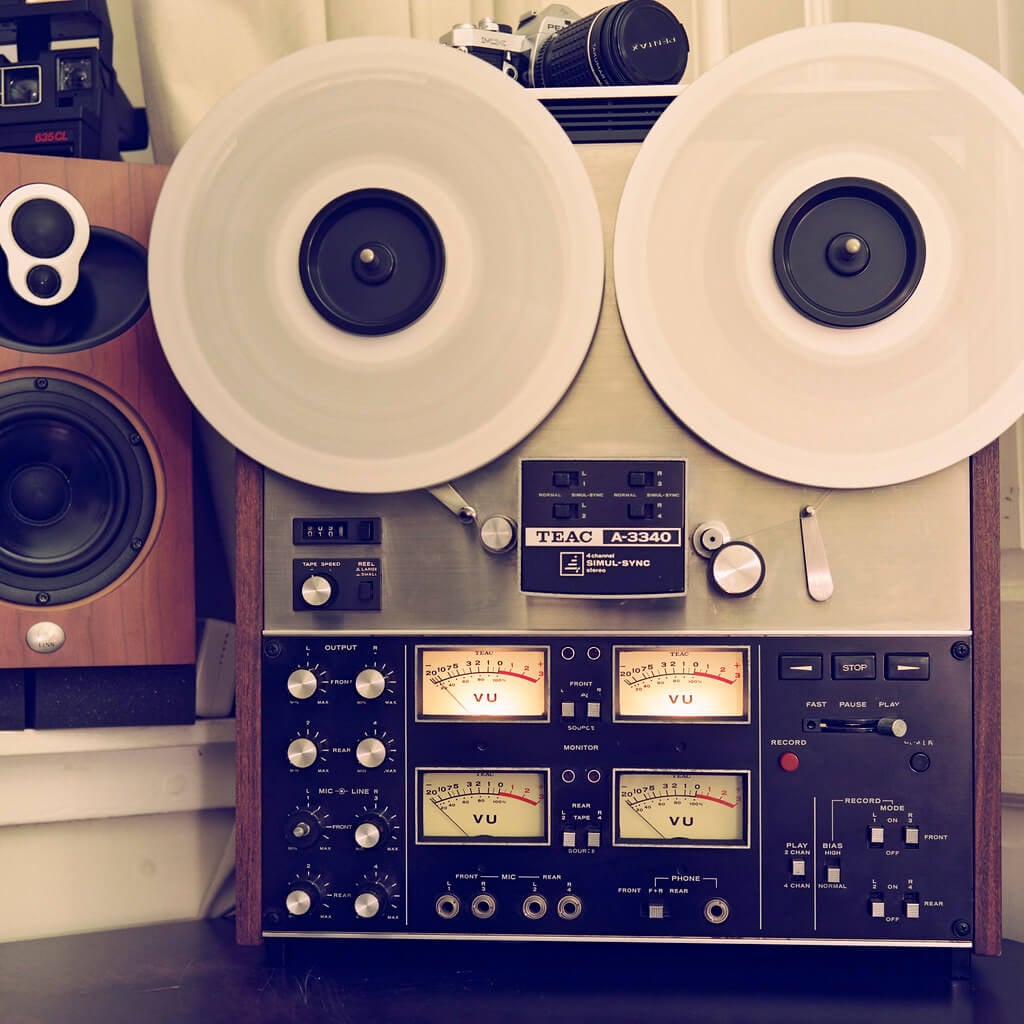
This four-channel deck of the early 1970s carried a feature Teac called Simul-Sync, which let a musician listen to finished tracks through the record head while adding a new part in perfect time. That single switch moved multitrack recording from rented studios into spare bedrooms.
Countless demos and a fair number of released albums began on one. The machine’s Simul-Sync feature appealed to musicians creating layered arrangements in home studios.
Tascam Portastudio 144
Introduced in 1979, the 144 combined a four-track recorder and a mixer in one box and ran ordinary cassettes at double speed. Bruce Springsteen recorded the songs for “Nebraska” on one in a rented New Jersey farmhouse in early 1982, intending them as demos for his band.
The full-band versions never matched the tape, so the cassette became the album. Clean units sell for $500 to $1,200 depending on condition.
Worn belts and heads are common, and few technicians still service them, which is why tested examples earn a premium.
Philips EL 3300
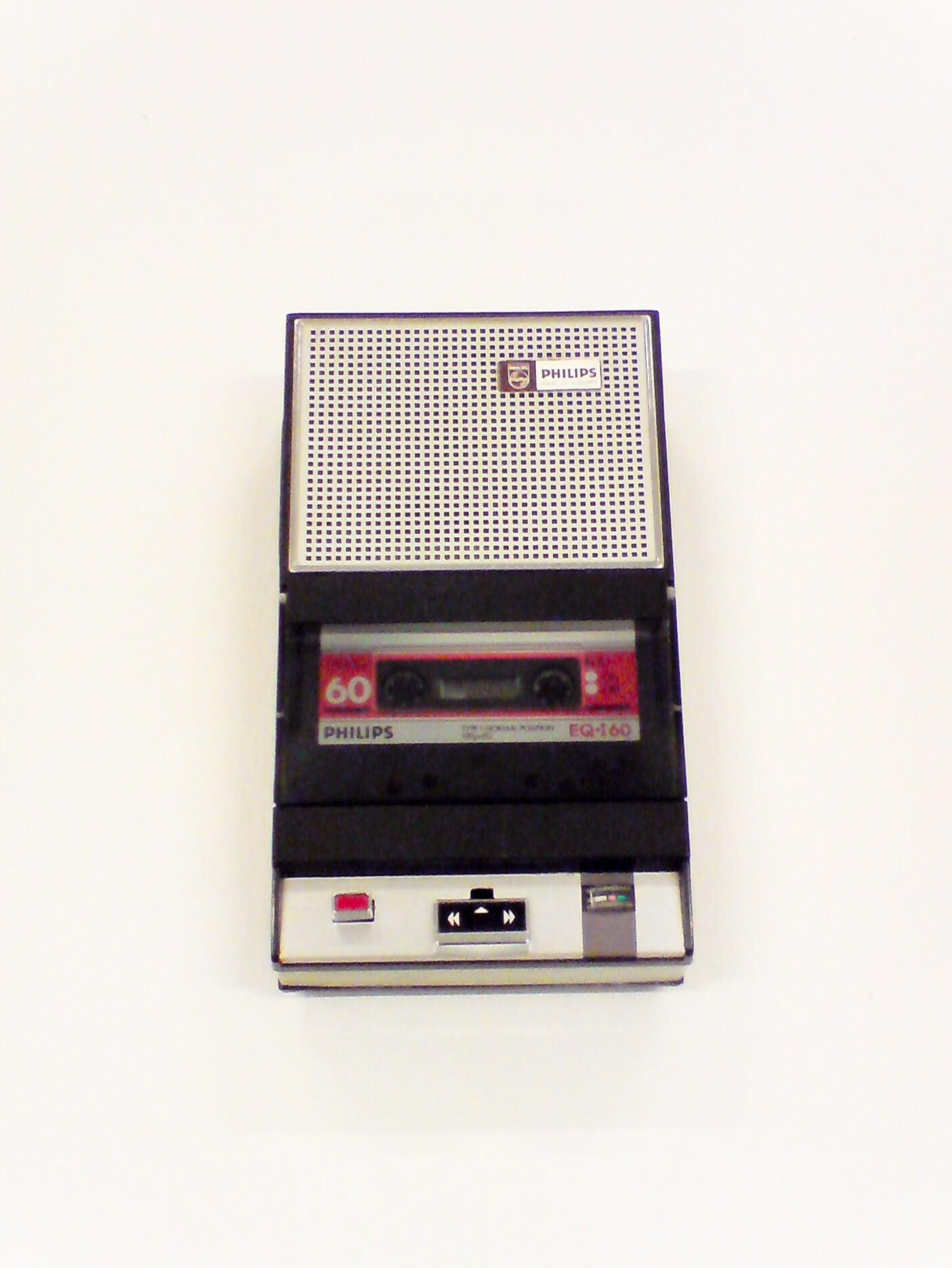
A team under Lou Ottens at the Philips plant in Hasselt, Belgium, designed the compact cassette and the first machine to use it, unveiled at the Berlin Radio Show in August 1963. Philips intended the format for dictation and was surprised by everything that followed.
The company licensed the design to competitors free of charge, which is how it became a world standard. An EL 3300 complete with its leather case, remote microphone, and an original Philips cassette brings $150 to $500, depending on condition.
The American version carried the Norelco name.
Nakamichi Dragon
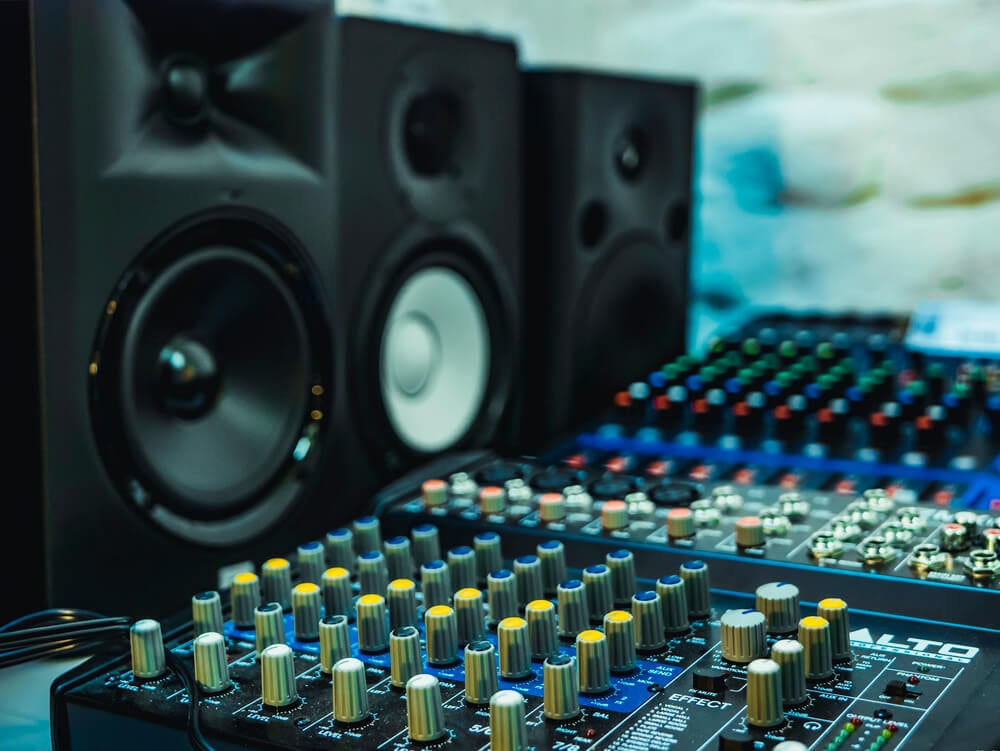
From 1982 to 1993 this was the cassette deck by which others were judged. Its signature feature was a motor-driven playback head that continuously corrected its own azimuth, so tapes recorded on misaligned machines still sounded right.
The Dragon also reversed direction automatically without flipping the cassette. Serviced examples sell for $1,500 to $4,000, condition and documentation deciding the figure, and unserviced ones are a gamble.
Its idler tires and belts degrade with age, and the handful of technicians who know the mechanism keep waiting lists.
Sony Walkman Professional WM-D6C
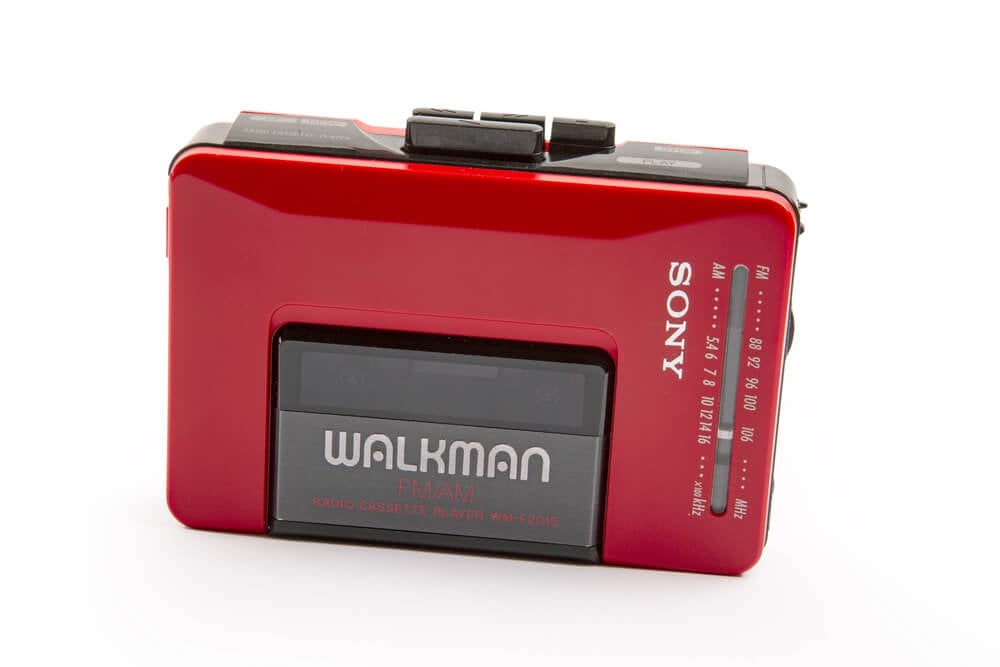
Sony sold this recording Walkman from 1984 until 2002, an extraordinary run for a consumer electronics product. It offered Dolby B and C noise reduction, a quartz-locked motor, manual level control, and a line input, all in a body barely larger than the cassette case.
Radio reporters carried it, and concert tapers hid it under jackets for two decades of bootlegs. Working examples bring $400 to $1,000 depending on condition, with boxed late-production units at the top.
A failing center gear is the known weak point.
Fisher-Price PXL-2000
In 1987 the toy company released a plastic camcorder for children that recorded black-and-white video onto a standard audio cassette. The tape ran at high speed, so a ninety-minute cassette held about eleven minutes of grainy, ghostly picture.
It sold poorly and vanished from stores within roughly a year. Experimental filmmakers then discovered it, notably teenage artist Sadie Benning, and the look acquired a name, Pixelvision.
Working cameras now sell for $300 to $800, condition dependent, which is several times the original price. Perished belts stop most of them.
Machines Built to Remember

Every device here solved the same problem with whatever its decade had available, whether wax, lacquer, steel wire, or rust glued to plastic. Each solution left fingerprints on the sound.
Engineers spent a century trying to remove them, and musicians now pay thousands to get them back.
The more durable value sits in what the machines captured. A Recordio disc or a spool of wire holds a voice that exists nowhere else, and most of those carriers are decaying faster than the hardware.
Collectors who keep a player running are also keeping the only key to somebody’s archive.
More from Go2Tutors!

- The Romanov Crown Jewels and Their Tragic Fate
- 13 Historical Mysteries That Science Still Can’t Solve
- Famous Hoaxes That Fooled the World for Years
- 15 Child Stars with Tragic Adult Lives
- 16 Famous Jewelry Pieces in History
Like Go2Tutors’s content? Follow us on MSN.



