33 Pool Rules from Growing Up That Applied at Any Pool in Any Neighborhood
Every public pool had a laminated sign near the entrance. The rules were printed in blue or red, occasionally illustrated with a cartoon figure performing some prohibited behavior with a red X through it.
You read these signs approximately once per summer and ignored most of them before you hit the water. But there was another set of rules — the ones nobody printed, the ones that were simply understood by every child who had ever spent an afternoon at a community pool, a backyard pool, or a neighbor’s above-ground with a garden hose running into it.
These rules were universal. You knew them before anyone told you.You enforced them on each other with the seriousness of law.
You Had To Shower Before You Got In
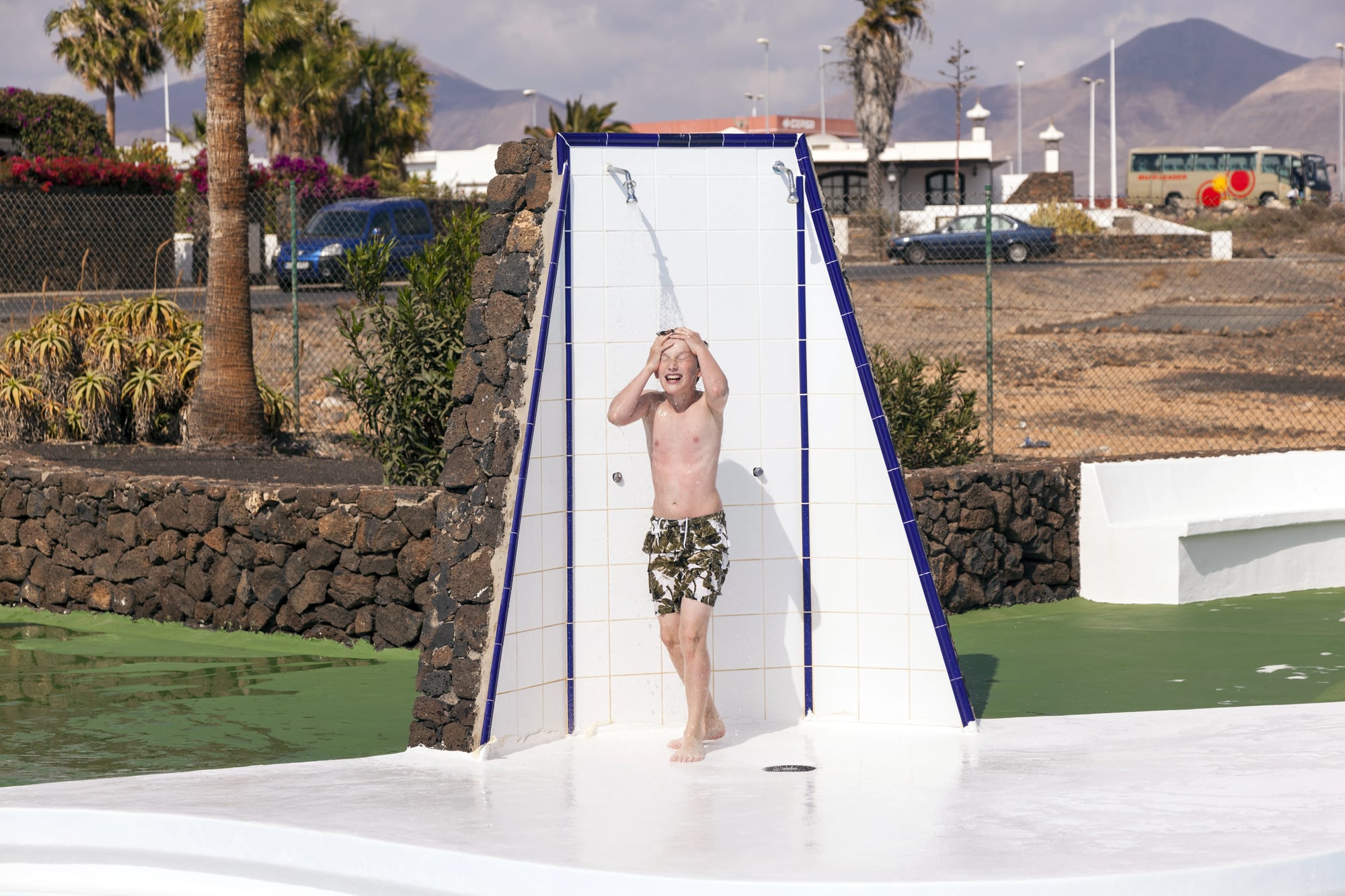
The outdoor shower near the entrance was not optional, regardless of how clean you were. The rule was posted.
The lifeguard watched. You stood under the cold water for four seconds and considered your obligation fulfilled.
Everyone did this, and everyone suspected everyone else of fulfilling the minimum, and nobody said anything about it because the shower itself was the ritual, not the cleanliness.
No Running On The Deck

This was the sign’s most prominent rule and the most universally violated. The solution was a modified gait — faster than walking but technically not running, a power-walk so aggressive it was physically indistinguishable from a slow jog — that most kids had perfected by their second summer at the pool.
The lifeguard blew the whistle. You slowed for exactly the duration it took the lifeguard to look elsewhere.
The Deep End Had A Separate Standard
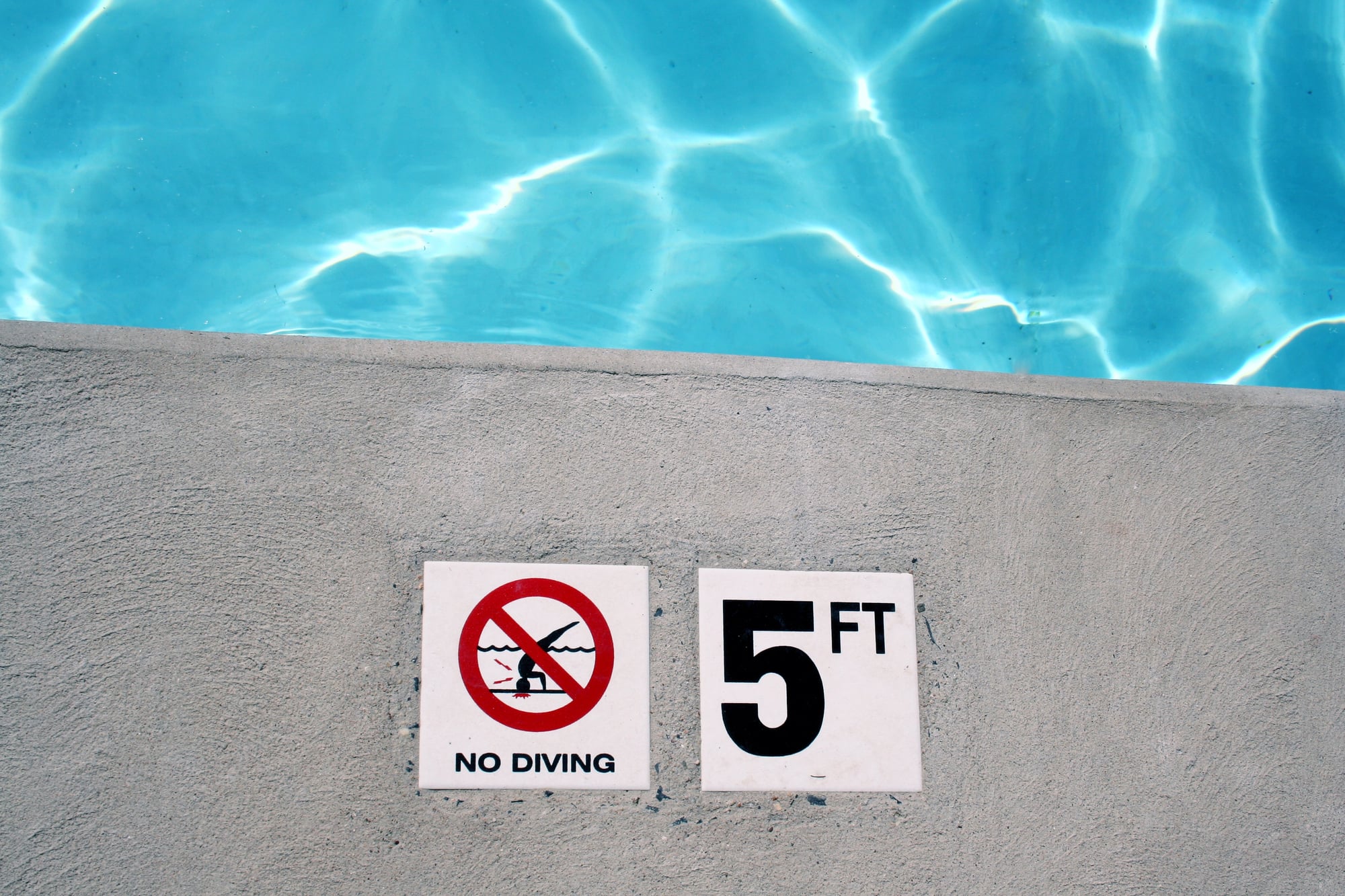
Not everyone could go in the deep end. To swim in the deep end at a public pool, you needed to pass a swim test — swim the length of the pool and back, in most versions — and receive a colored wristband or a marker on your hand.
This system was taken extremely seriously by the pool management and extremely seriously by the kids who had passed the test, who spent the afternoon in the deep end demonstrating its significance.
You Could Not Save Your Chair With Just A Towel

A towel on a chair without a person nearby was a point of active negotiation. Ten minutes away was forgivable.
Thirty minutes made the chair fair game. An hour with no visible owner made the towel a target for rearrangement.
The legal opinion on this was always disputed in real time and resolved by whoever was more committed to the position.
Cannonballs Were For The Deep End

A cannonball required sufficient depth to be safe, which is why the rule about cannonballs technically being reserved for the deep end existed.In practice, the cannonball was performed wherever the opportunity arose, and the splash produced was the metric of success.
The perfect cannonball — knees pulled in tight, maximum displacement of water achieved — required a running approach off the edge and was worth the lifeguard’s whistle.
Marco Polo Had Official Rules And Nobody Agreed On What They Were
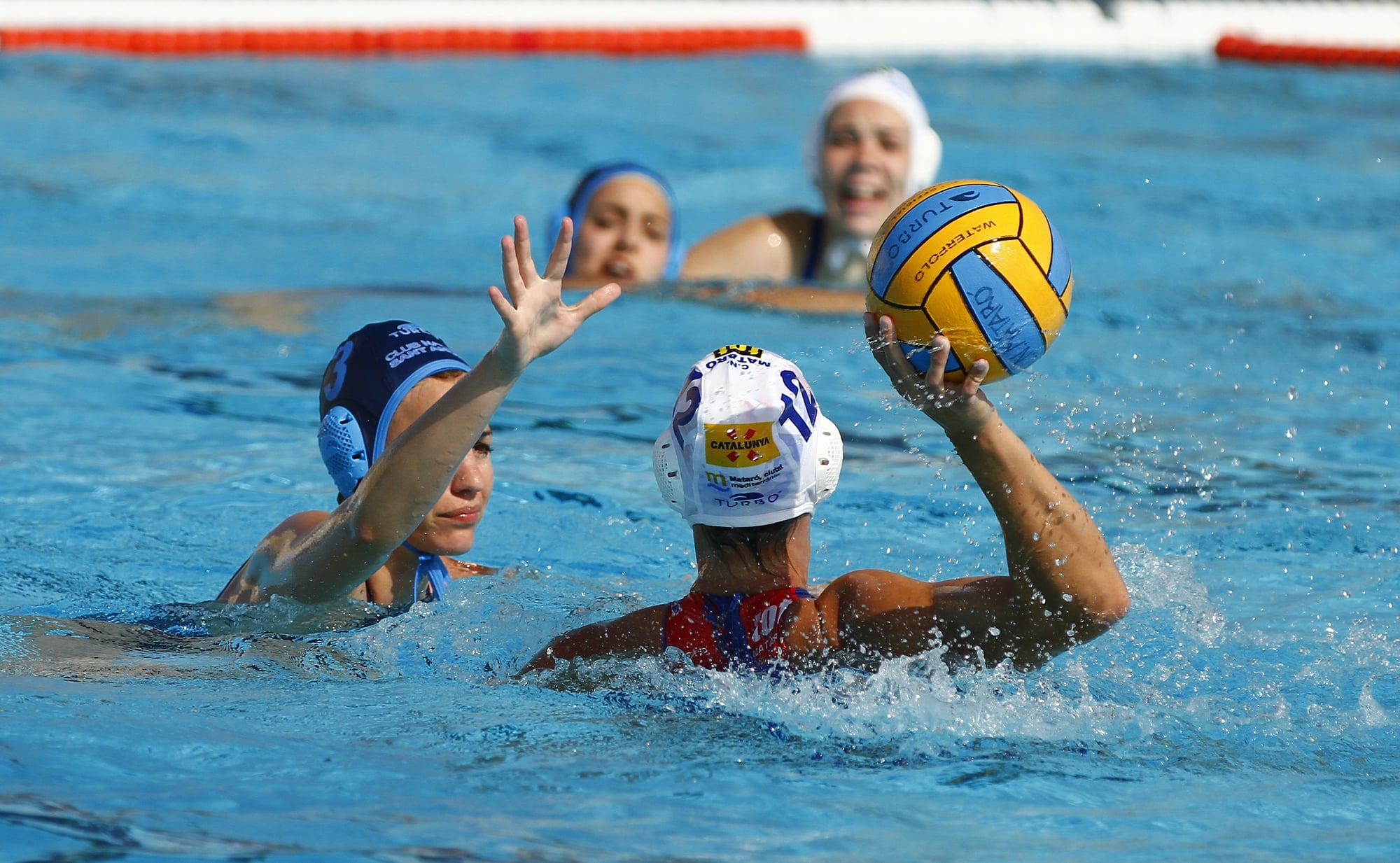
Every group that played Marco Polo had its own interpretation of the edge rule: whether the “Marco” player could call “Fish out of water” when someone got out of the pool, whether going to the steps counted as out, whether you could go underwater to avoid being heard.
These rules were argued as if constitutional law depended on the outcome and resolved differently every time, usually in favor of whoever had been most certain and loudest.
The Diving Board Had A Line With A Protocol
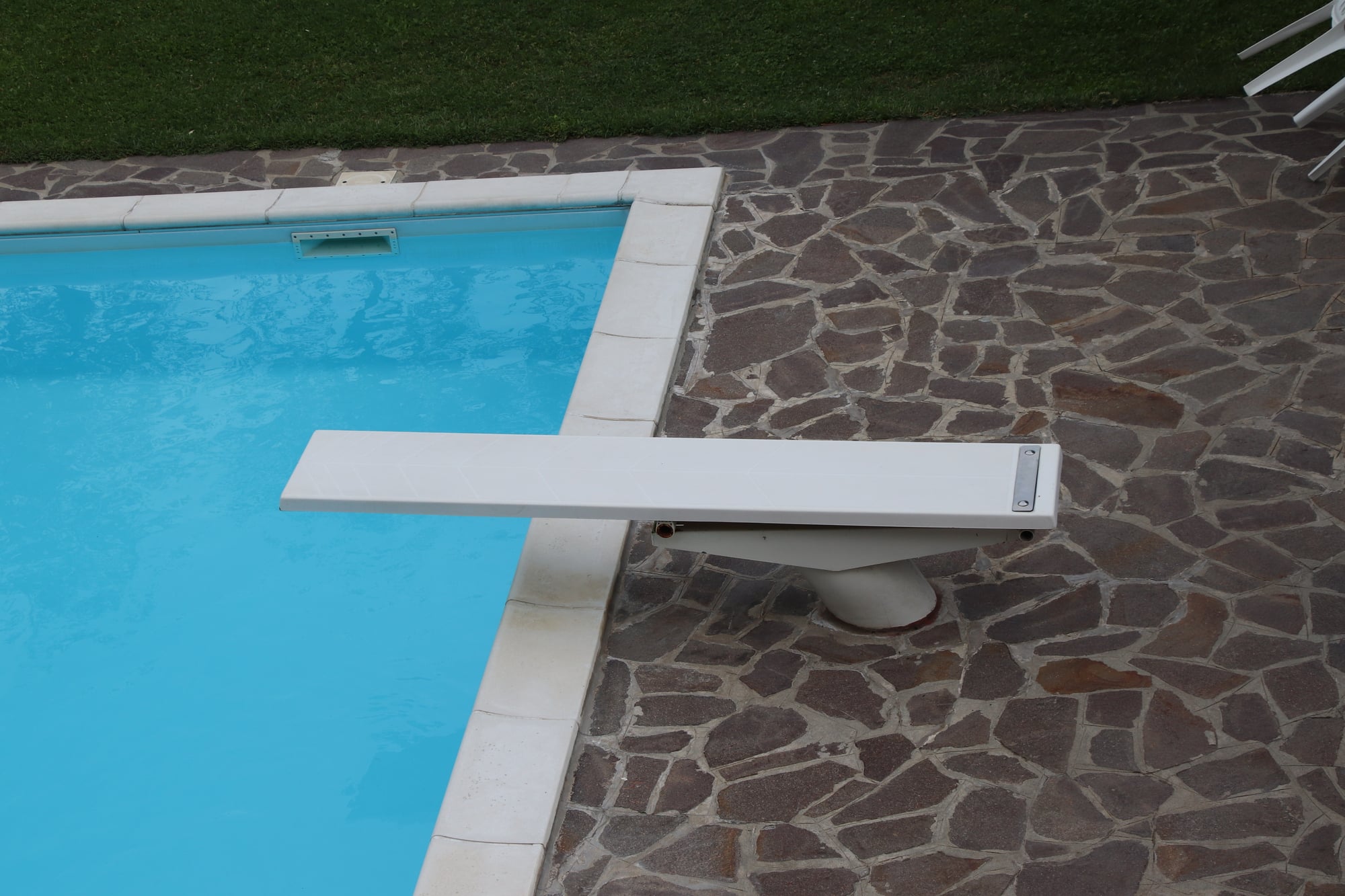
You got to the diving board by joining a line at the bottom of the ladder. One person on the board at a time.
You couldn’t go to the ladder until the previous jumper had cleared the splash zone. Running on the board itself was a whistle offense.
Bouncing twice before jumping was expected and correct. Any variation on this protocol — approaching the edge, stopping, considering, then walking back down — was viewed with collective impatience by the line behind you.
You Couldn’t Go Off The Board Until The Previous Jumper Cleared The Zone
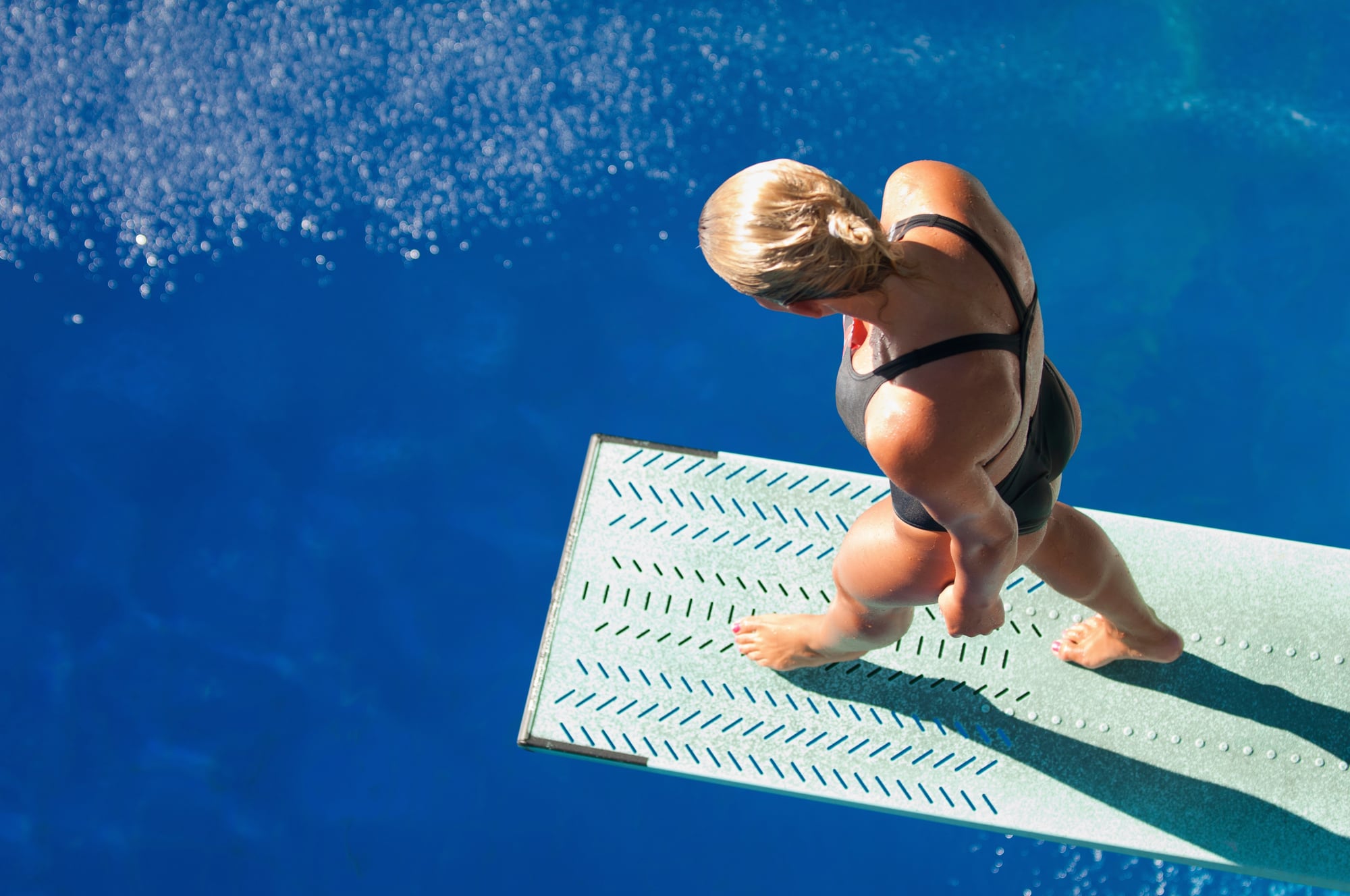
This rule was both printed and universally honored, because the alternative was landing on someone’s head. The lifeguard enforced it regardless of whether there was a line.
You stood at the end of the board and waited for the previous jumper to reach the ladder, and jumping before that happened was considered reckless even by children who were reckless about most other things.
The Swim Test Was A Serious Event

At a public pool, the swim test to access the deep end was administered at specific times and treated with a gravity that exceeded most childhood examinations.You swam, they watched, and the result was either a wristband or a polite direction back to the shallow end.
Failing was not catastrophic, but it was a specific social experience that remained a data point about you for the rest of the summer.Passing was not celebrated openly, but it was noted.
Chlorine Fixed Everything
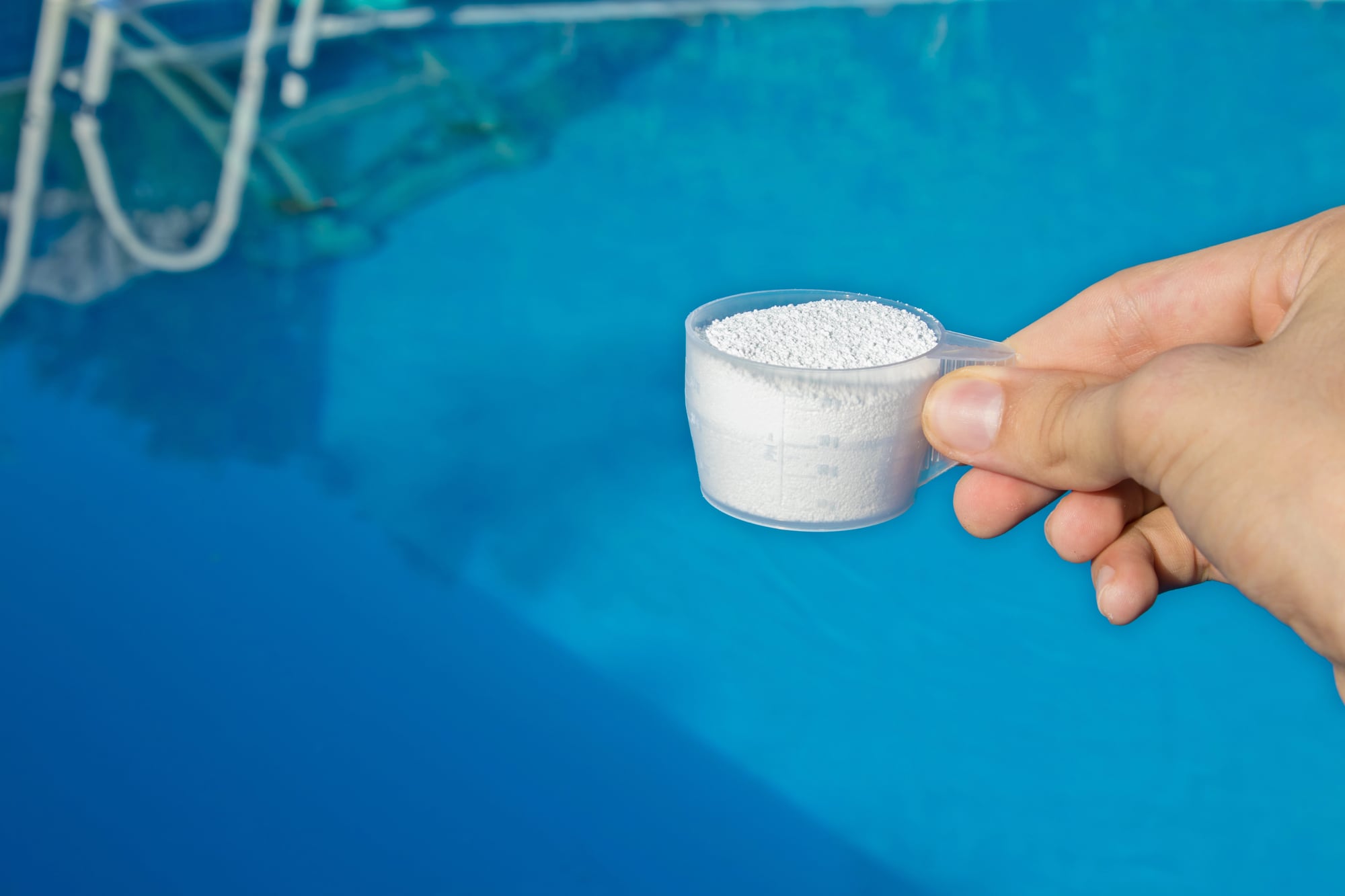
Cuts, scrapes, minor skin issues of unspecified origin — the pool’s chlorine was understood by children (incorrectly) to neutralize most of them.This logic was used to justify getting into the pool when perhaps you shouldn’t have, and also to explain why minor wounds stung in the water, which they did, which you pretended they didn’t.
Splashing Someone Who Wasn’t In The Water Was A Declaration
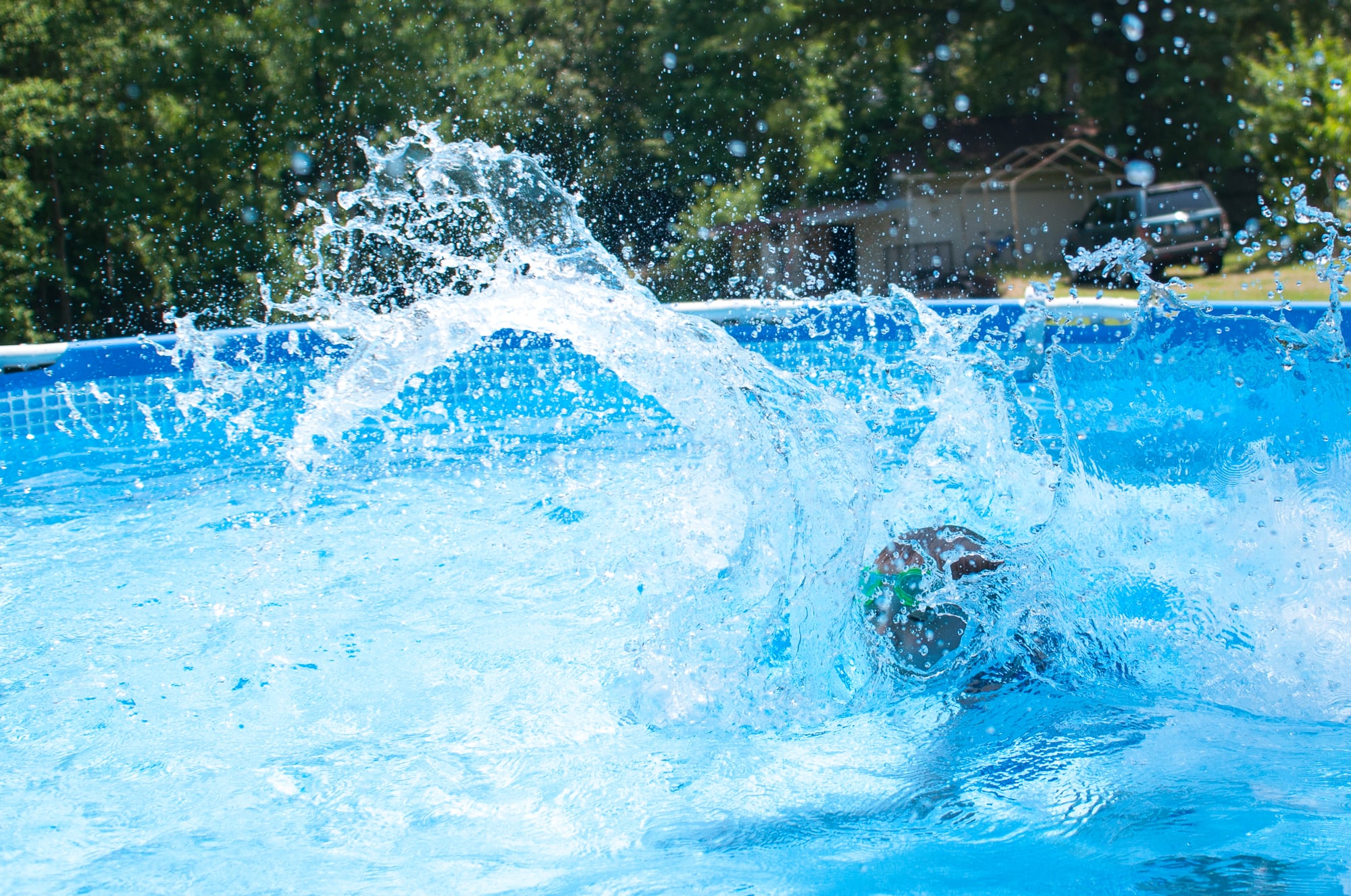
Splashing a person standing on the deck who had not yet entered the water — especially if they were trying to work up to cold water by entering gradually — was an act of either great friendship or borderline hostility depending on the relationship.The person being splashed was expected to respond with theatrical outrage regardless of their actual feelings.
Splashing someone’s parent or a stranger was a different category entirely.
You Ate Outside The Fence, Not Poolside

Most public pools had a strict no-food-in-pool-area rule that was observed more faithfully than most rules, because the consequences of violating it — a closed pool pending cleaning — were understood to affect everyone.
The concession stand was outside the pool fence or in a designated area. You ate, dried slightly, and returned.
Eating on a wet towel on concrete in the sun was normal and unremarkable.
The Buddy System Was Real

Camp pools and organized summer programs ran on a buddy system with a whistle signal: at a specific call, you grabbed your buddy’s hand and raised it.If any pair was unaccounted for, the pool cleared until they were found.
Every child who experienced this system remembers exactly what two whistle blasts meant, and the slightly anxious scan for a buddy that followed.It was one of the first systems of organized accountability most kids encountered.
You Didn’t Ask To Use The Bathroom — You Just Went

This was understood by everyone who was in the pool and addressed by no one. The pool’s chlorine, specifically the chloramines produced when chlorine reacts with certain biological matter, produces the smell most people associate with pools.
The smell is not chlorine alone. Children knew this.
Adults suspected it. Nobody said anything directly, and the pool continued to be used and enjoyed by everyone present.
Your Towel Lived On The Fence, Not The Chair
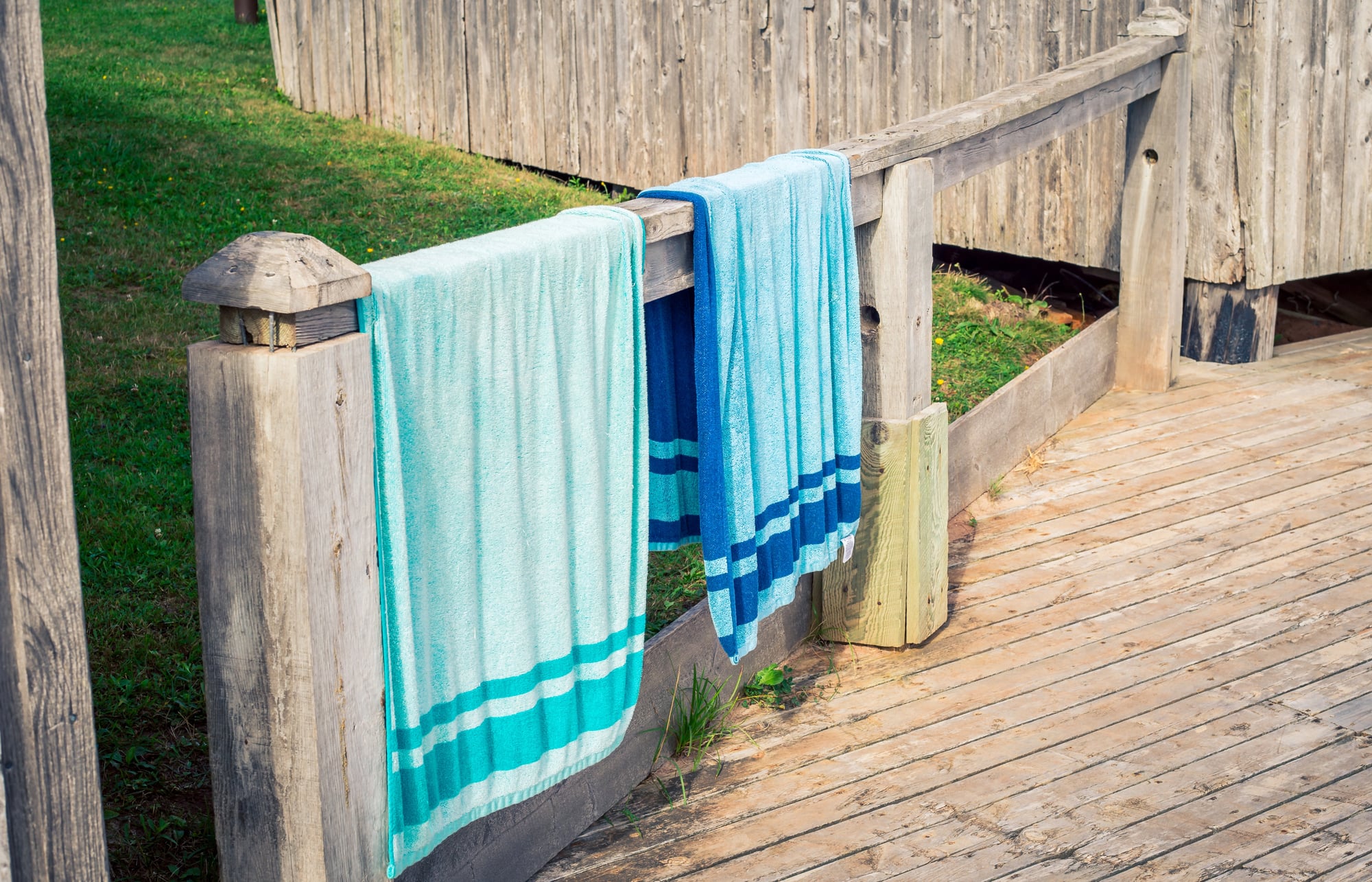
At busy public pools, the chairs filled by mid-morning and didn’t turn over until families with small children left in the early afternoon.The solution was a portion of chain-link fence on which you draped your towel, creating a territory without furniture.
The fence spot was easier to maintain and less contentious than a chair, and the towel dried faster in the afternoon sun than it would on concrete.
The Ladder Was For Getting Out, Not Getting In
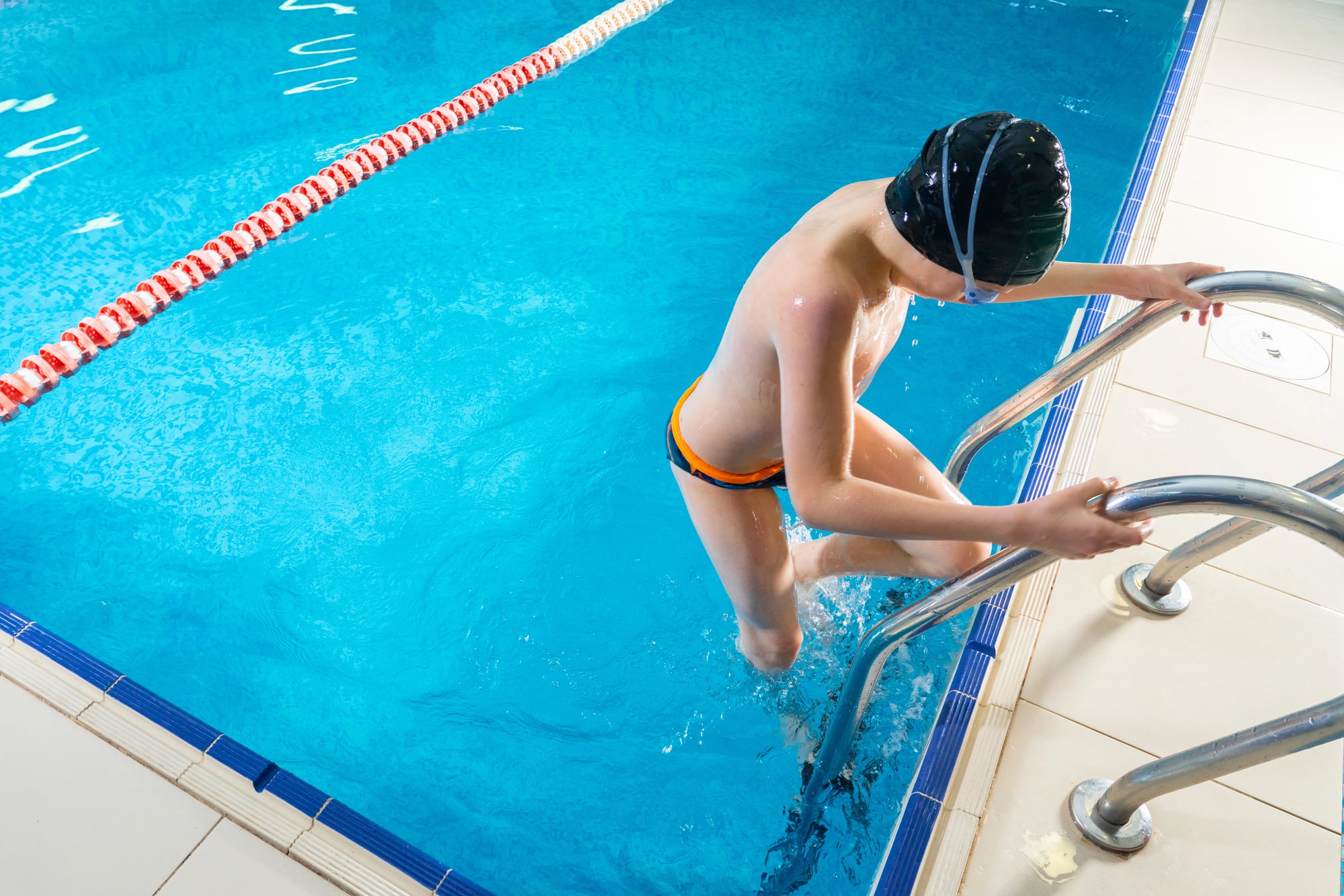
Jumping in was correct. The ladder was for getting out, or for very young children who couldn’t manage the jump and the subsequent treading water.
Using the ladder to enter the pool as an older child was acceptable only if you were entering the shallow end very deliberately, which itself raised questions.The ladder was slow.
Getting in required a jump.
Goggles Were Required For The Underwater Handstand Contest

The underwater handstand was a specific competition available to anyone who had mastered both the handstand and holding their breath simultaneously.Judges — other children standing around the edge in various depths — assessed form and duration.
Goggles allowed you to see whether you were actually upside down or had drifted sideways.The results were disputed. The competition ran for most of the afternoon.
The Last Hour Of The Session Was The Best Time

Public pools often ran in sessions — morning and afternoon — with a brief break between them.In the final thirty minutes of a session, the pool’s energy changed.
Lifeguards prepared mentally to clear the water. Kids pushed the remaining time harder.
Games got more intense. The cannonball that had seemed too ambitious at 2 PM became inevitable at 3:45 with fifteen minutes left.
This compressed urgency produced the most memorable portion of any given pool afternoon.
Chicken Fights Required Four People And An Agreement

Chicken fights — one person sitting on another’s shoulders, attempting to topple an opposing pair in the water — required a minimum of four willing participants, a water depth appropriate for the participants’ heights, and an informal agreement on whether hair-pulling was permitted (it was not).The match ended when one pair fell. Rematches were expected.
Three consecutive losses typically ended the rivalry for the day.
You Weren’t Supposed To Be In The Pool During Lightning

At the first sound of thunder, the lifeguard cleared the pool with no negotiation.The timeline for re-entry was thirty minutes from the last visible lightning.
This rule had clear scientific justification and was observed correctly.Children stood under the awning near the concession stand eating chips in wet swimsuits, watching the sky with the focused attention of people who had exactly one thing they wanted to be doing.
Dry Before You Get In The Car

The pre-departure ritual required wrapping in a towel, sitting on the hot car seat with the towel between you and the upholstery, and spending the drive home going from wet to merely damp.
The towel went home smelling of chlorine and sun.
The car seat had a faded watermark from every previous summer.
This was the standard system and required no discussion.
You Left Your Shoes At The Entrance
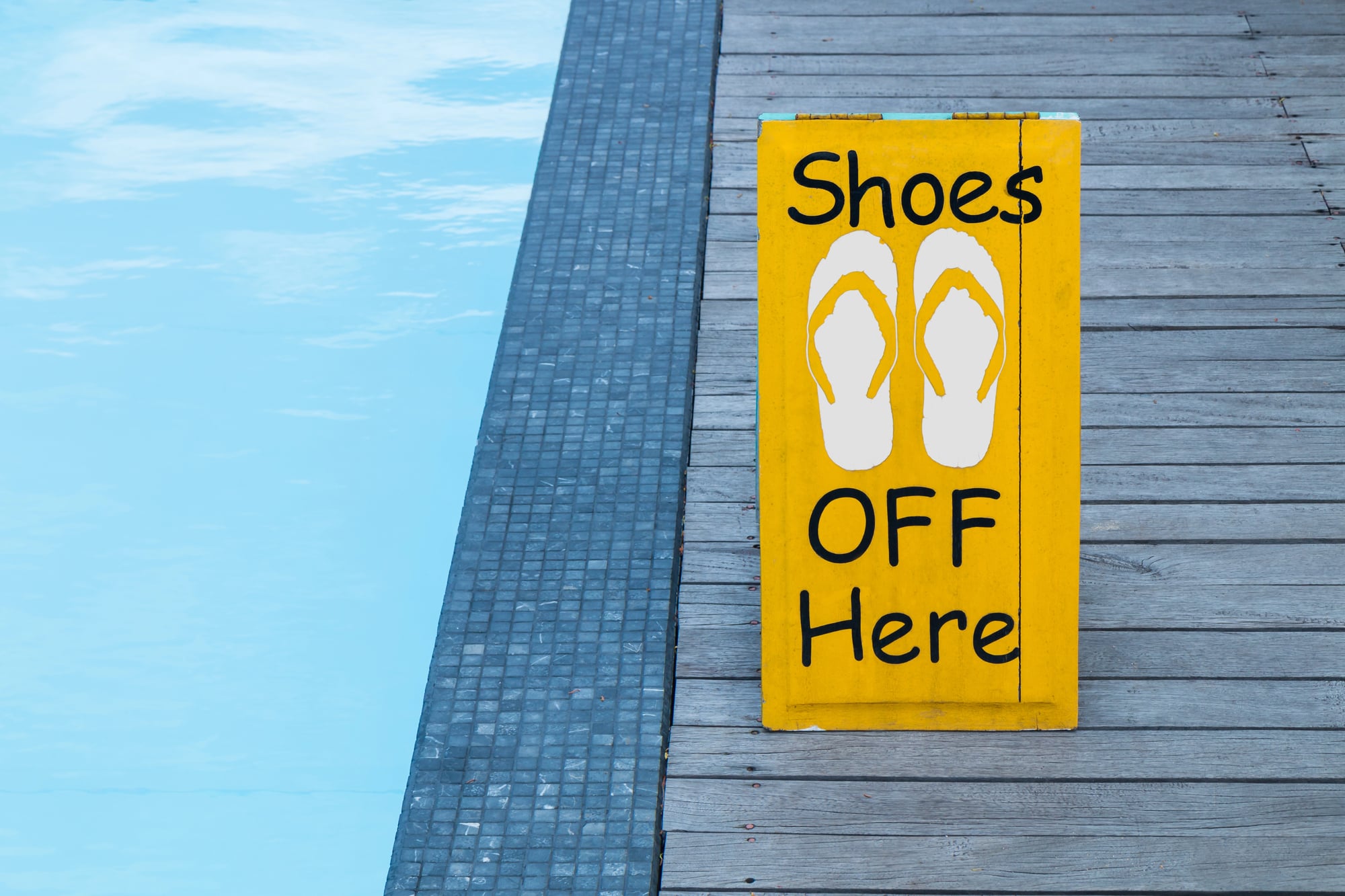
Shoes came off before the pool gate and went on before it.This was both posted rule and sensible practice.
The deck was sometimes hot but required bare feet.The grass outside the fence was a different surface and required shoes, or didn’t.
The decision to leave shoes at the gate and trust that they’d still be there when you left was made automatically, without deliberation, and was usually correct.
The Best Spot Had To Be Established Early

The optimal pool territory — shaded in the afternoon, close to the concession stand, at a reasonable distance from the splash zone of the diving board — was occupied by ten in the morning at any popular pool and not available after eleven.Regular pool-goers understood this.
First-timers did not, and the pool’s social geography operated at a level of silent fluency that couldn’t be explained without sounding ridiculous.
You Didn’t Mess With Someone’s Stuff When They Were Swimming

Personal items left at a spot — bag, shoes, sunscreen, book — were inviolable.The pool operated on a low-crime social compact that was observed without enforcement.
Taking someone’s towel was a category of wrong that went beyond merely rude and into something closer to a community failure.This was understood by everyone and tested by almost no one.
The Armband Meant You’d Passed, And That Mattered

For pools that issued armbands or hand stamps to permit deep end access, the physical token was significant.It meant something you’d earned it in front of witnesses using a real skill.
Children who had the armband were discreet about it in the way that people are discreet about qualifications they actually care about — they didn’t mention it, but they absolutely noticed who else had one.
You Couldn’t Run To Get Back In Line

After your turn at the diving board, returning to the back of the line immediately was acceptable.Running back was not.
The walk back to the line was part of the protocol — it gave the person behind you time to jump, and it gave you time to commit to whatever you were planning to do next.
Running to the back of the line was widely recognized as the behavior of someone who hadn’t fully absorbed the culture of the pool.
Squirt Guns Had Territorial Limits

A squirt gun at a public pool with a crowded deck was a social instrument with clear rules of engagement.You could squirt the person who had specifically consented to being squirted.
Spraying a stranger, a sunbathing adult, or someone who was visibly annoyed about it crossed a line that the pool’s general spirit of tolerance did not extend to.The squirt gun’s effective range was approximately one social relationship.
Floaties Were For Babies

The arm floaties, the inflatable rings, the puddle jumpers — these were unambiguously for children below a certain age and weight, and the age varied by pool culture but was generally understood.
An older child in floaties was using a flotation device as a kind of statement that they were still learning, which was fine and accepted, but the transition out of floaties was a real social milestone that pools made visible in ways that other environments did not.
There Was Always A Kid Who Wouldn’t Get Out

At the end of any pool session, the lifeguard cleared the water with a series of whistle blasts.Every child in the pool heard this. Most complied.
One did not — lingering at the far end of the pool, apparently unaware of the signal, until a second and then a third whistle followed.This child was not surprised by the rule.
They simply chose not to honor it until the social cost of continuing exceeded the benefit of remaining in the water.Every pool had one.
Being Pushed In Was An Act Of Friendship
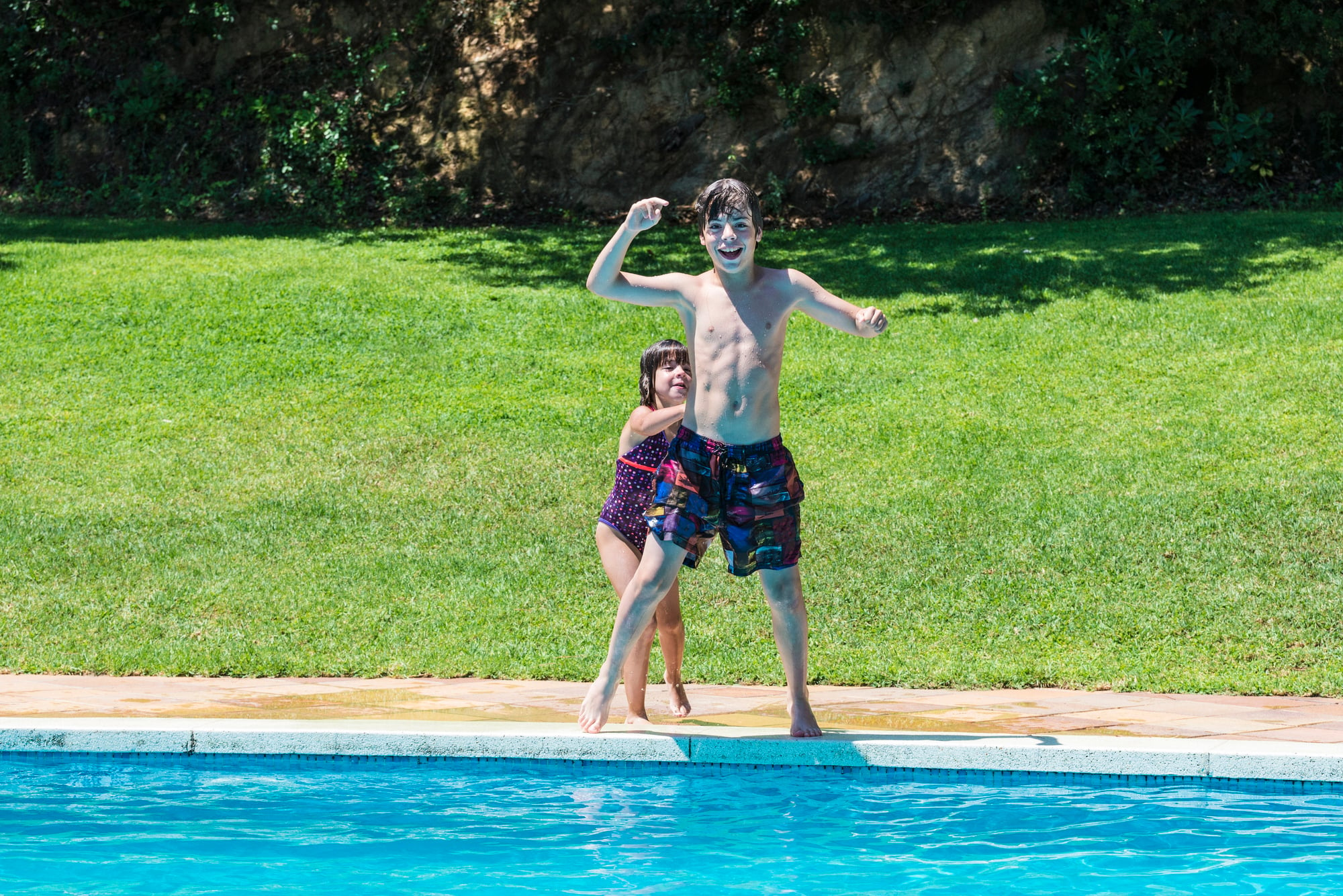
Being pushed in — without your glasses, without being ready, without wanting to — was an act of affectionate aggression that registered differently depending entirely on who did it.From a close friend, it was the fastest possible entry into an afternoon of swimming.
From anyone else, it was the beginning of a conflict.The distinction between these two categories was understood immediately and without the need for any explanation.
The End Of The Pool Day Had A Specific Feeling

Packing up to leave the pool — peeling the wet swimsuit away from your skin, locating the flip-flops, finding the sunscreen cap that had separated from its bottle — produced a specific fatigue that wasn’t unpleasant.You were the particular exhausted of having spent several hours in the sun and water, using your body in ways that don’t apply to any other afternoon.
The car ride home was quiet, salty-smelling, and ended in the kind of deep sleep that summer afternoons were built to produce.
You’d Be Back Tomorrow

The pool’s most important rule was the one nobody stated: that the pool was somewhere you returned to.Not just because summer was long and other options were limited, but because the pool had a community structure — the same lifeguards, the same regulars, the same geography of towels and chairs and fence spots — that rewarded repetition.
The friend you made at the pool was a pool friend, which was its own category, different from school friends and neighborhood friends and the kind you made more slowly.The pool compressed acquaintance into friendship faster than most places, because you were already wet and had nothing to hide.
The Sign Was Beside The Point
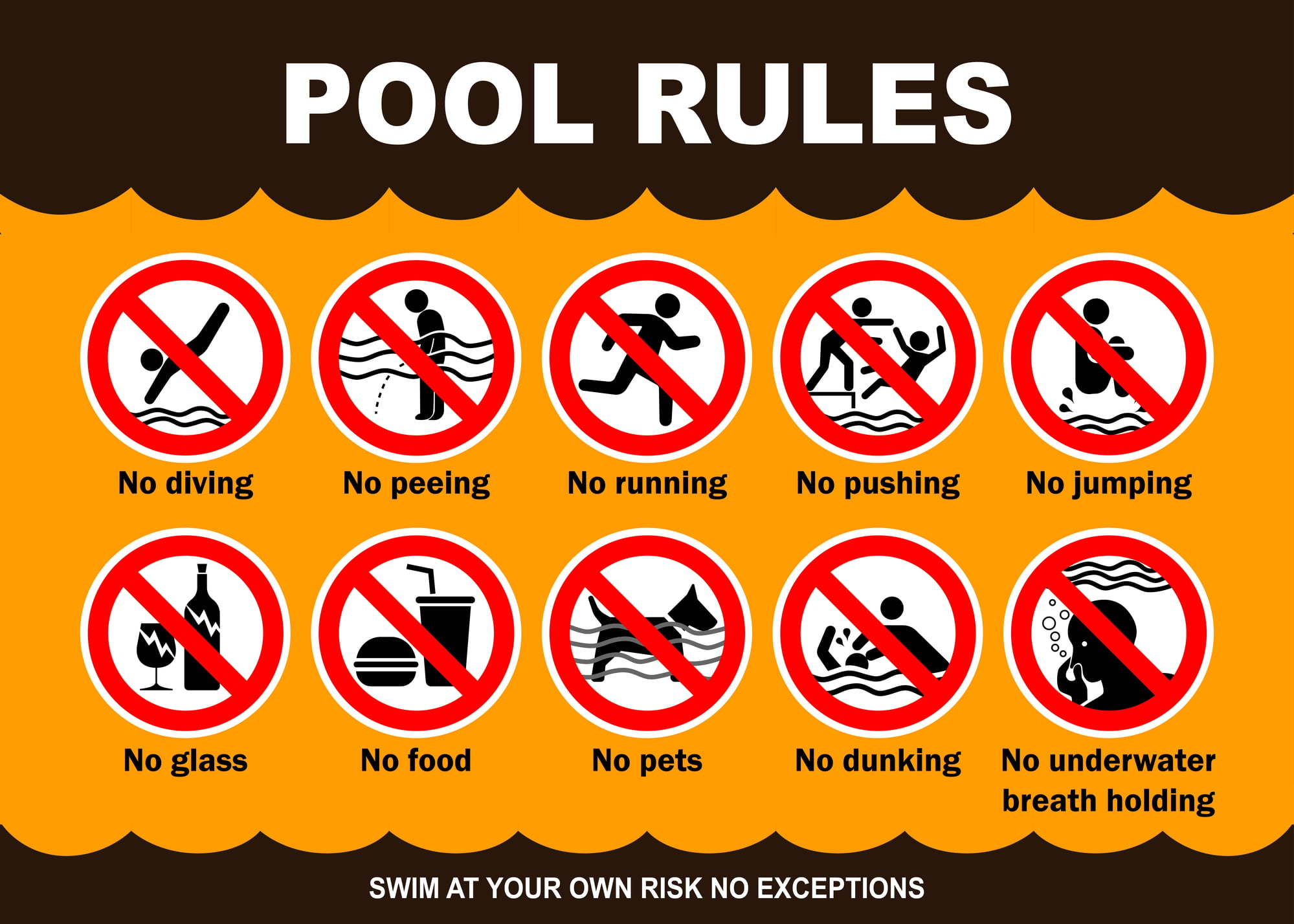
The printed rules were the starting point, not the whole system.The actual culture of the pool — who got the diving board time, what constituted an acceptable delay before re-entering after eating, how far you could push the cannonball rule before the whistle — was a living document managed by the community using it.
Children figured out the edges of every rule within the first visit and navigated the whole system with a social precision they’d learned nowhere in particular and couldn’t have described.The pool taught you to read a room while treading water.
That was the lesson.Nobody posted it on the sign.
More from Go2Tutors!

- The Romanov Crown Jewels and Their Tragic Fate
- 13 Historical Mysteries That Science Still Can’t Solve
- Famous Hoaxes That Fooled the World for Years
- 15 Child Stars with Tragic Adult Lives
- 16 Famous Jewelry Pieces in History
Like Go2Tutors’s content? Follow us on MSN.